High-touch surface disinfection is still important because the problem is not limited to visible dirt. In Canadian healthcare evidence, intensified surface cleaning reduced surface contamination by 94% and was associated with a 35% reduction in colonisation and/or infection involving MRSA, VRE, C. difficile, and multidrug-resistant Acinetobacter spp. (Canadian hygiene review). That matters in offices, schools, clinics, and warehouses, where shared touchpoints keep moving contamination from hands to surfaces and back again.
Table of Contents
The Science Behind High-Touch Surface Transmission
High-touch disinfection stays relevant because pathogen transfer is a chain, not a single event. Inanimate surfaces can hold microorganisms long enough to matter in daily operations, and peer-reviewed evidence links stronger surface cleaning with lower healthcare-associated infection rates (PMC review). The practical point is straightforward. If a contaminated hand reaches a shared touchpoint, that touchpoint can become the next transfer step unless staff clean and disinfect it on a routine schedule.
Why shared touchpoints matter
Bed rails, monitors, door handles, shared office equipment, and similar contact surfaces are repeatedly touched by staff, occupants, and visitors. That creates a steady route for cross-contamination even when the surface looks clean. Public-health-facing guidance in Canada supports routine cleaning and disinfection of high-touch surfaces, with more frequent attention in heavily used areas (Canadian hygiene review).
Practical rule: if several people touch a surface between cleaning cycles, that surface belongs on the disinfection list.
The risk is not theoretical. Facility-cleaning guidance notes that some pathogens can survive on hard, non-porous surfaces for extended periods, which means a missed cycle can carry over into the next shift, class, or client day (CDC facility cleaning guidance). In offices and clinics, the job is not just to remove residue. It is to interrupt microbial transfer before it spreads to the next round of hands and equipment.
What the evidence means in practice
The strongest takeaway from the evidence base is practical as much as clinical. High-touch disinfection has been part of facility hygiene for a long time, and it still matters because the transmission mechanics have not changed. If a facility wants lower surface contamination, fewer opportunities for transfer, and more predictable cleaning outcomes, disciplined attention to the surfaces people use most is still the answer. For a broader operational framework, see covid-conscious cleaning for shared environments.
Identifying High-Risk Surfaces and Settings
Prioritisation starts with contact frequency, not with a surface's appearance. A facility manager can usually identify the highest-risk points by asking one question, which surfaces are touched by many people, many times, and often between hand hygiene moments? In practice, that list usually includes elevator buttons, door handles, light switches, shared desks, reception counters, breakroom touchpoints, restroom fixtures, and common equipment.
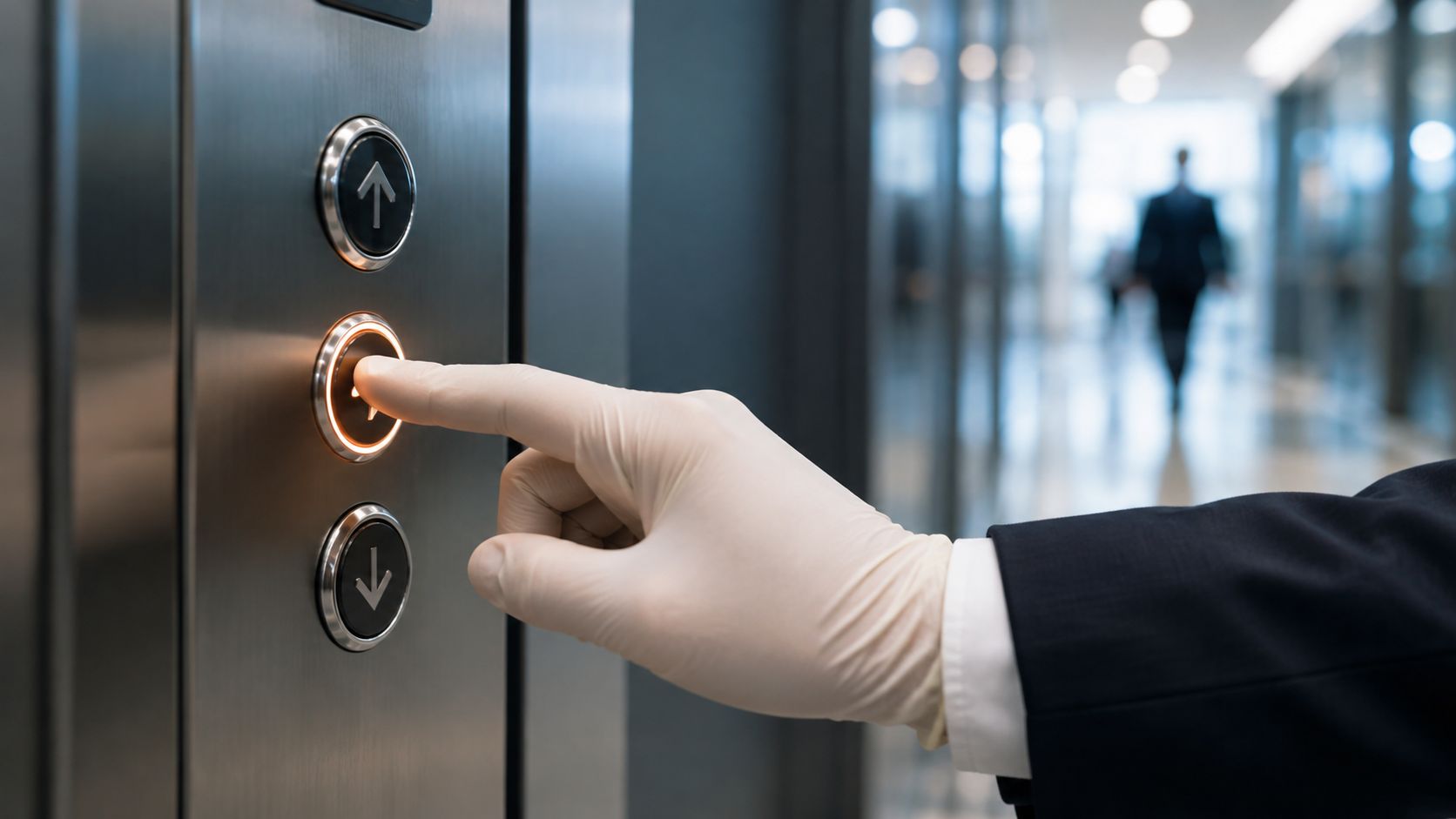
A simple way to rank surfaces
A useful internal check is to sort surfaces into three groups.
- Group 1, shared constantly: handles, switches, counters, and buttons used by many people each day.
- Group 2, shared periodically: meeting-room tables, copier panels, shared phones, and locker hardware.
- Group 3, single-user or low-contact: items touched by one person for a limited time, which still need routine cleaning but not always the same disinfection cadence.
This approach helps a site avoid spreading labour thinly across low-yield tasks. It also fits the public-health guidance that recommends disinfecting high-touch surfaces daily, even when they are not visibly dirty, and more often in heavier-contact zones (Fight BAC! guidance).
Setting-specific priorities
Offices tend to concentrate risk around reception, shared workstations, boardrooms, lunch areas, and washrooms. Educational settings add desks, door hardware, railings, and shared learning equipment. Clinics and healthcare spaces need tighter attention on examination surfaces, waiting areas, call buttons, and reusable equipment. Industrial and warehouse environments add shared controls, time clocks, handheld devices, and break areas, especially where shift changes create rapid turnover.
For a practical planning aid, the office reopening infographic is a useful visual reminder that traffic patterns, not just square footage, should shape disinfection frequency.
Why Disinfectant Chemistry Alone Is Not Enough
A strong product does not rescue a weak process. That is the main operational lesson from disinfectant testing and real facility work. In controlled settings, chemistry performs to spec. In a busy building, performance gets weakened by rushed wiping, missed edges, premature drying, and surfaces that were never fully wetted in the first place.
The gap between product label and real use
The literature on disinfectant testing versus clinical reality points to the same failure points again and again. Efficacy depends on pre-cleaning, full coverage, and keeping the surface wet for the labelled contact time. If a cleaner starts on a dusty surface, wipes only the middle of a touchpoint, or dries the product early to move on to the next room, the chemistry cannot do its job. A useful discussion of that gap appears in the review of execution problems in real facilities (sealshield.com on disinfectant testing and clinical reality).
Disinfectant selection matters, but execution decides whether the product reaches the microbes.
Human factors are the primary source of risk
The baseline problem is not always knowledge. More often it is pace. Staff and contractors in offices, schools, clinics, and warehouses are asked to do a lot between shifts, and high-touch work is easy to compress into a quick wipe that looks complete but is not. Human factors are the primary source of risk, because compliance slips when the room is busy, the turnover is tight, or the task seems routine.
A practical disinfection programme should therefore ask three questions before it asks which bottle to buy, or which cleaning supplies are on hand.
- Was the surface cleaned first?
- Was every contact point fully wetted?
- Did the surface remain wet for the required time?
Those questions matter because a product with the right claims can still underperform if the workflow is rushed. For facilities that use recurring high-touch programmes, a service plan such as detailed disinfection only works when the process is detailed enough to include the hard-to-see edges, undersides, and seams that people skip under time pressure.
Recommended Frequency and Proven Disinfection Practices
High-touch surfaces need a regular disinfection schedule, but frequency alone does not make a programme work. In busy offices, clinics, and shared workspaces, the key issue is execution. A surface that is cleaned on paper can still be missed in practice if the crew is rushed, the coverage is incomplete, or the surface dries before the contact time is met.
The safest rule is straightforward. High-touch surfaces should be cleaned and disinfected every day, even when they are not visibly dirty, and cleaned immediately if they become visibly soiled. Where occupancy is heavy or turnover is fast, more frequent attention is justified because repeated contact shortens the time between contamination and the next touch.
A frequency guide that works in the field
| Surface Type | Low-Risk Setting | High-Risk Setting | Contact Time Requirement |
|---|
| Door handles and push plates | Daily cleaning and disinfection | Multiple checks per day | Follow the product label |
| Shared desks and meeting tables | Daily cleaning and disinfection | Between users and at day end | Follow the product label |
| Elevator buttons and reception touchpoints | Daily cleaning and disinfection | More frequent during peak traffic | Follow the product label |
| Restroom fixtures and flush controls | Daily cleaning and disinfection | More frequent checks in busy periods | Follow the product label |
| Shared equipment and controls | Daily cleaning and disinfection | Between shifts or users | Follow the product label |
What “Effective” Means in Practice
Effective disinfection starts with the surface, the cloth, and the dwell time, not with the label claim alone. Guidance for facility cleaning says disinfecting solutions should be prepared daily or as needed, used with enough liquid to keep the surface wet for the labelled contact time, and not mixed with cleaners unless the label explicitly allows it. If staff spray too lightly, wipe too quickly, or move on before the surface stays wet long enough, the chemical never has the chance to do its job.
The operational gap is usually the same one across sites. People know the task, but the workflow does not support it under pressure. That is why a detailed disinfection service plan matters in settings where edges, seams, undersides, and shared controls are easy to skip during turnover.
For facility leaders who have to budget and scope the work, the planning logic is similar to the way a commercial restoration project lifecycle and costs are broken into phases, constraints, and follow-up tasks. Disinfection has the same kind of dependence on sequence. Each step has to be completed correctly before the next one can deliver a useful result.
The practical benchmark is simple. Use a product that fits the surface, follow the label exactly, and make sure the site can support the required wet time without shortcuts. Health Canada-approved products still need disciplined use, not just a compliant label.
Building Operational Excellence Through Training and QA
Training matters only when it changes what happens on the floor. A good disinfection protocol is therefore a people system, not just a chemical system. Staff need to know where the high-touch points are, how much product to apply, when to replace cloths or wipes, and what a properly wetted surface looks like in real time.
What good training actually covers
A workable programme does four things.
- Teaches surface recognition: staff can identify the touchpoints that matter most in each building.
- Reinforces wet-time discipline: crews understand that contact time is part of the task, not a suggestion.
- Defines coverage standards: wiping once across the middle is not enough for edges, seams, and handles.
- Builds escalation habits: if a product, dispenser, or cloth system is not supporting the workflow, supervisors hear about it quickly.
Training also needs refreshers. That is where many facilities drift. A new hire may know the sequence on day one, but without reinforcement, shortcuts appear and spread through the team.
QA should verify outcomes, not impressions
Visual inspection is not the same as compliance. A surface can look tidy and still carry residual contamination. For that reason, the QA layer should include checklists, spot audits, and feedback loops that confirm the process was done rather than assumed. A structured safety training video guide is useful here because it supports repeatable instruction, especially for high-turnover teams.
Quality rule: if the supervisor cannot tell whether contact time was met, the audit is incomplete.
Documentation matters for the same reason. Logs, sign-offs, and corrective notes create accountability and make trend problems visible. If the same room keeps missing the same touchpoints, that is a workflow issue, not a one-off miss. Strong documentation lets a manager fix the cause instead of only correcting the latest symptom.
The Business Case for High-Touch Disinfection
The business case is not fear, it is continuity. Buildings that keep shared spaces cleaner and more consistently disinfected reduce one more pathway for illness spread, which supports attendance, protects client confidence, and lowers the odds of avoidable operational disruption. That matters in offices where absenteeism hits delivery schedules, and in clinics where trust is part of the service itself.
How decision-makers should evaluate the spend
The right question is not whether disinfection costs money. It does. The key question is whether the programme is cheaper than the disruption it helps avoid. That comparison should include labour, supplies, supervision, and verification on one side, and the cost of illness-related slowdowns, reputation damage, or emergency clean-up on the other.
A disinfection programme is easiest to justify when it is treated as risk management, not as a cosmetic add-on.
For Toronto-based teams comparing coverage options, the office cleaning Toronto service area is a sensible starting point because it keeps the discussion tied to the building type and the traffic it sees. That is where scope, frequency, and staffing should be decided.
Business leaders also tend to respond better to consistency than to intensity. A stable routine, clearly documented and properly staffed, is easier to maintain than a reactive surge that appears only after concerns rise. That steady approach protects reputation in a way that ad hoc cleaning rarely does.
Tailored Recommendations for Different Facility Types
Different sites need different standards because they do not share the same traffic patterns, exposure risks, or operational constraints. An office, a clinic, a school, and a warehouse can all need high-touch disinfection, but the surfaces, timing, and verification methods will not be identical.
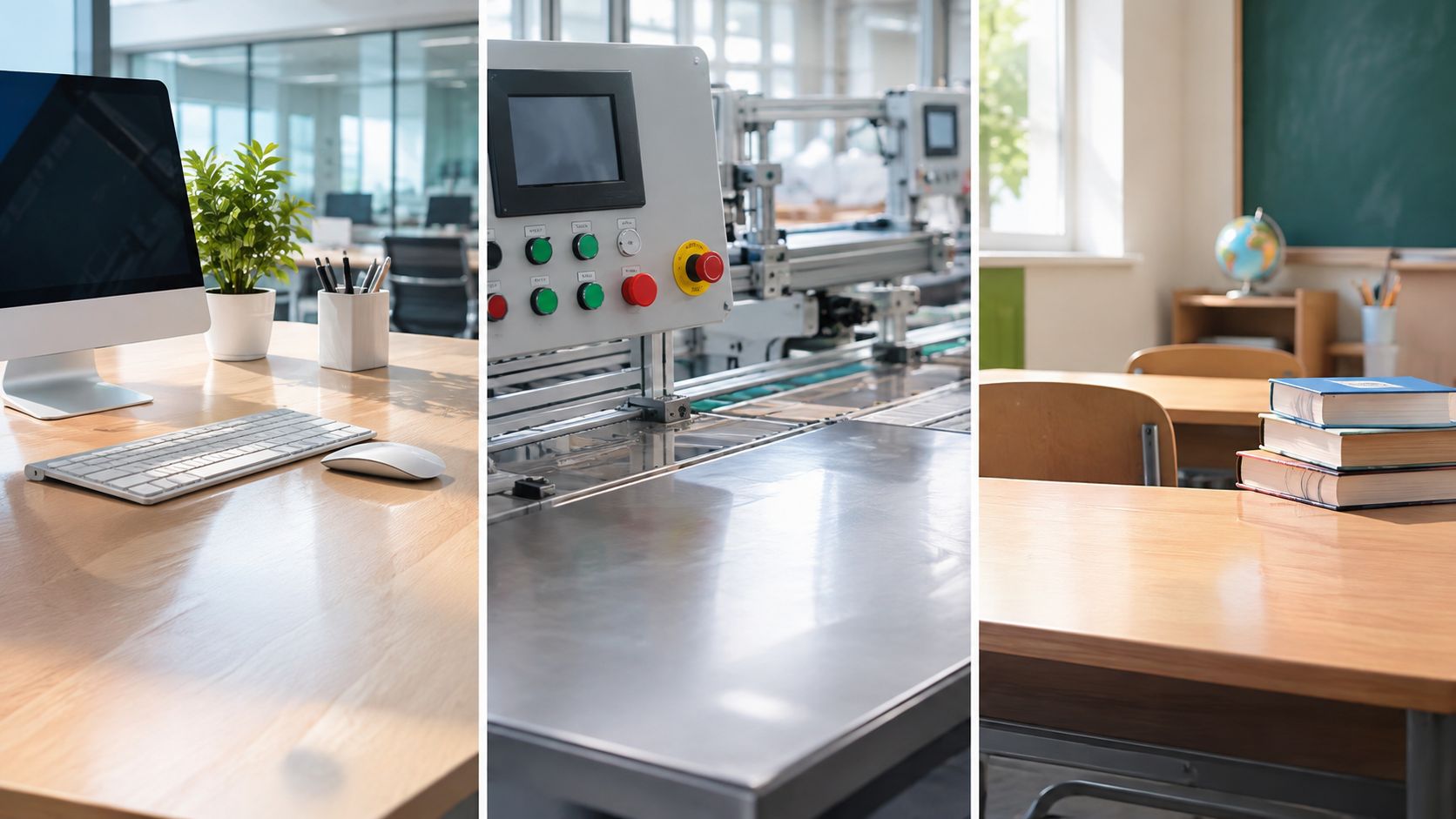
How to match the programme to the site
- Corporate offices: prioritise desks used by multiple people, reception points, meeting tables, pantry hardware, and washrooms. High-turnover spaces need the most disciplined scheduling.
- Healthcare and dental settings: focus on clinical touchpoints, waiting areas, and reusable equipment, then verify product suitability for the materials in use. A PDF for healthcare industry can help teams organise this into a clearer working document.
- Schools and childcare centres: concentrate on desks, railings, learning tools, and shared fixtures, with extra attention during busy arrival, meal, and dismissal windows.
- Industrial and warehouse sites: map controls, time clocks, shared devices, break areas, and any high-contact surfaces near shift changes.
- Mixed-use buildings: treat each zone separately, because one schedule rarely fits lobby traffic, tenant offices, and back-of-house areas equally well.
What to ask before hiring a provider
- Coverage proof: how do they show that high-touch points were reached?
- Contact-time control: how do they keep crews from wiping too early?
- Site-specific planning: do they adjust scope for offices, clinics, schools, and industrial spaces?
- Documentation: are logs, checklists, and supervisor reviews part of the service?
- Product handling: do they explain how the chosen disinfectant is used, not just what it is called?
For organisations that want a structured option, Arelli Cleaning offers detailed disinfection of high-touch items and surfaces after pre-cleaning, using Health Canada and CDC-approved cleaner/disinfectant products. It is one service model among several, and the deciding factor should still be whether the workflow matches the building's contact pattern and staffing reality.
A consistent high-touch programme works best when the steps are written down, the staff are trained on wet time and coverage, and the site is checked with real QA, not guesswork. For Toronto offices, clinics, schools, and industrial spaces, Arelli Cleaning can be one option to review alongside two or three other quotes, as long as the comparison starts with the checklist in this article and the questions that expose execution quality.








.webp)