
Medical office cleaning is a specialized discipline that operates at a much higher standard than general commercial cleaning. It is a professional service built around infection prevention, patient safety, and strict regulatory compliance.
This is not a task for a standard janitorial service. It requires specialized training, the use of Health Canada-approved disinfectants, and adherence to rigid protocols designed to manage the unique risks found in healthcare settings like dental offices, clinics, and medical labs across Ontario, from Toronto to Barrie.
Key Takeaways
- Definition: Medical office cleaning is a specialized service focused on disinfection and sanitization to prevent the spread of pathogens in healthcare environments, adhering to strict health and safety regulations.
- Core Principle: The primary goal is not just to appear clean but to actively eliminate harmful microorganisms using a combination of cleaning and targeted disinfection.
- Critical Zones: High-touch surfaces in waiting rooms, exam and treatment rooms, and washrooms require daily, meticulous disinfection with hospital-grade products.
- Essential Training: Cleaning professionals in this field must have documented training in WHMIS, infection control, bloodborne pathogens, and proper Personal Protective Equipment (PPE) use.
- Informed Vetting: Choosing a provider requires verifying their healthcare-specific experience, insurance, quality assurance systems, and staff background checks.
Defining Medical Office Cleaning Standards
For any facility manager in a healthcare setting, the first step is understanding what professional, medical-grade cleaning involves. Unlike a typical office, a medical facility—whether a small dental practice in Mississauga or a large clinic in Vaughan—is a high-risk environment for spreading infectious diseases. Consequently, cleaning standards are exceptionally high and often dictated by public health and safety regulations.
The objective is not simply to make the space look clean; it is to actively eliminate harmful pathogens from every surface through a layered approach that combines thorough cleaning with targeted disinfection. For clinic managers, understanding the framework of a modern COVID-conscious cleaning strategy offers valuable insight into current infection control best practices.
Distinguishing Sanitization from Disinfection
It is critical to understand the difference between these two terms. In a medical environment, they are not interchangeable, and misapplication can have serious consequences.
- Definition: Sanitization is the process of lowering the number of germs on a surface to a level considered safe by public health standards. It reduces bacteria and viruses but does not guarantee their elimination.
- Definition: Disinfection is a more rigorous process that uses specific, hospital-grade chemicals approved by Health Canada to kill or inactivate nearly all microorganisms on a surface. This is the non-negotiable standard for any high-touch surface or patient care area.
A professional cleaning service specializing in medical facilities will apply disinfection protocols to every critical touchpoint, from doorknobs and reception counters to exam tables and medical equipment surfaces. This meticulous process is what separates medical office cleaning from general janitorial work, creating an environment that protects patient health and builds trust.
A Quick Guide for Medical Facility Managers
As a clinic or medical facility manager, you juggle numerous critical tasks. When it comes to cleaning, the stakes are higher than in a typical office. This is not just about appearance; it’s about ensuring patient and staff safety.
Medical office cleaning is a specialized field where understanding essential facility management best practices is the baseline. For those short on time, here is a summary of the non-negotiables:
- Specialized Training is Mandatory: The cleaning crew must be professionally trained in infection control, WHMIS safety standards, and proper biohazard handling. This is not an area for on-the-job learning.
- Disinfection is the Top Priority: High-touch surfaces—from waiting room door handles and exam room tables to reception desks and washroom fixtures—require meticulous cleaning with hospital-grade disinfectants to break the chain of infection.
- Checklists Are Proof of Compliance: A detailed scope of work is a key to accountability. A professional service will use documented checklists and a robust quality assurance program to ensure nothing is missed.
- Pricing Reflects a Higher Standard of Care: Medical facility cleaning costs more than standard janitorial services. This cost reflects the specialized products, intensive training, and rigorous protocols needed to maintain a healthcare environment. It is an investment in safety.
Your Essential Medical Office Cleaning Checklist
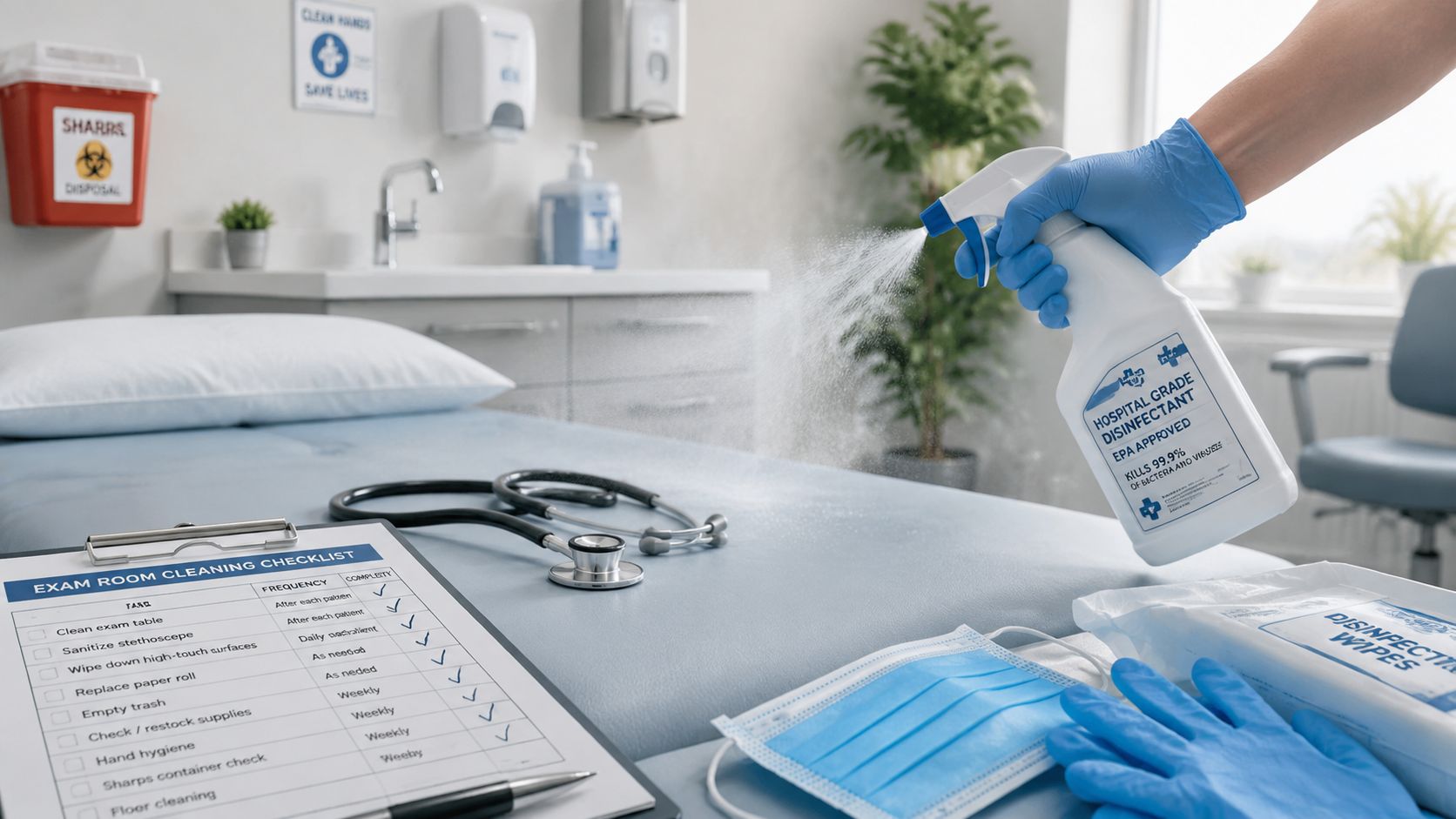
A detailed cleaning checklist is more than a to-do list; it is the foundation of a successful partnership with a commercial cleaning service. This document translates expectations into a clear scope of work, holding everyone accountable and ensuring the required level of clean is achieved consistently.
For a busy facility manager, a solid checklist is the best tool for vetting a cleaning provider. It allows for a clear comparison of whether their proposed services meet the non-negotiable standards of a healthcare environment. A well-structured checklist breaks down tasks by zone, separating daily infection control from less frequent deep cleaning tasks.
Waiting Rooms and Reception Areas
This area creates the first impression and is a critical zone for preventing the spread of germs. Daily, meticulous disinfection is essential.
- High-Touch Point Disinfection: Doorknobs, light switches, reception counters, payment terminals, and chair armrests must be wiped down daily with a hospital-grade disinfectant.
- Surface Cleaning: All horizontal surfaces, from side tables to shelving, must be thoroughly dusted and cleaned.
- Floor Care: Carpets should be vacuumed daily, and hard-surface floors must be mopped to remove dirt and contaminants.
- Glass and Entryways: Fingerprints and smudges on entrance glass should be cleaned to maintain a professional appearance.
Exam and Treatment Rooms
This is ground zero for infection control, where the risk of cross-contamination is highest. While facility staff often handle cleaning between patients, a professional cleaning crew is responsible for the crucial end-of-day terminal clean.
Definition: Terminal Clean is an intensive disinfection process performed after the last patient has left. It prepares the room for the next day by disinfecting every surface, including exam tables, counters, sinks, and all non-porous surfaces of medical equipment.
This level of detail is a non-negotiable part of medical office cleaning. The demand for this specialized work has grown, with a similar trend seen in the Greater Toronto Area as the healthcare sector expands and regulations tighten to reduce infection rates—a top priority for every clinic from Toronto to Richmond Hill.
Sterilization Areas and Washrooms
These areas demand the strictest cleaning and waste-handling protocols to ensure patient and staff safety.
- Washroom Disinfection: Toilets, sinks, faucets, dispensers, and stall partitions must all be disinfected daily.
- Restocking Supplies: A reliable cleaning partner ensures that soap, paper towels, and toilet paper are always stocked. Some providers can also manage your cleaning supplies inventory to simplify operations.
- Waste Disposal: General waste must be handled and removed properly. For regulated medical waste, cleaners must be trained in biohazard protocols to manage receptacles according to strict safety standards.
Understanding Medical Office Cleaning Prices
Calculating the cost of professional cleaning for a medical facility is not as simple as using square footage alone. A dental practice or clinic operates under a different set of rules than a standard corporate office, demanding specialized protocols, highly trained staff, and specific supplies that shape the final price.
Ultimately, the cost reflects the responsibility and risk involved. The crew cleaning a healthcare setting needs proper training in infection control and biohazard management. They use hospital-grade, Health Canada-approved disinfectants that are more robust—and more expensive—than typical all-purpose cleaners. This service is a non-negotiable part of a facility's infection prevention program.
Key Factors Influencing Your Quote
When a commercial cleaning company prepares a quote for a medical office, several variables directly influence the price. Understanding these drivers helps facility managers compare proposals fairly and identify transparent pricing.
- Facility Size and Layout: Total square footage provides a baseline, but the layout is more important. The number of specialized rooms—such as operatories, exam rooms, treatment areas, and labs—is a key factor, as each requires more intensive cleaning than a hallway or administrative office.
- Service Frequency: For most medical facilities, daily cleaning is the standard due to high patient turnover and the need for constant infection control. Less frequent service may be suitable for low-traffic administrative areas but is not an option for patient-facing zones.
- Scope of Work: The specific tasks included, such as terminal cleaning of exam rooms, detailed disinfection of all high-touch surfaces, and proper handling of waste streams, all influence the price. A more detailed and stringent checklist will correlate with a higher cost.
- Specialized Requirements: Unique needs like managing biohazardous waste, cleaning sensitive medical equipment, or adhering to specific regulatory compliance checks add layers of complexity and cost.
Typical Price Ranges in the Greater Toronto Area
Pricing for medical office cleaning reflects the higher standards required for health and safety. In the Greater Toronto Area, medical and dental facilities can typically expect prices ranging from $0.15 to $0.30 per square foot for services that include essential sanitization, disinfection, and compliance measures.
Since 2020, hygiene expectations from both patients and staff have risen significantly. For a 5,000-square-foot dental office, this could translate to monthly costs ranging from $3,000 to $4,500. You can learn more about how different factors affect rates in our dedicated pricing guide.
How to Choose a Medical Office Cleaning Company
When choosing a commercial office cleaning service for a medical facility, the decision must be based on more than cost. You are seeking a partner who understands the high stakes of a healthcare environment. The right choice is founded on proven expertise and a commitment to safety and compliance.
A thorough vetting process is the only way to ensure you hire a team that is properly qualified.
Essential Questions to Ask Potential Providers
Before signing a contract, it is important to ask direct questions. A professional provider will welcome this diligence and have documentation to support their claims.
Here are critical questions for every potential cleaning company:
- Training and Certification: What specific training does your team have for healthcare settings? Can you provide proof of certifications in WHMIS, infection control protocols, and bloodborne pathogen handling?
- Healthcare Experience: Do you currently clean other medical or dental facilities? Can you provide references from clinics in areas like Vaughan, Mississauga, or Toronto?
- Insurance and Compliance: What is your liability insurance limit, and can you provide a certificate of insurance? Are your team members bonded and have they passed criminal background checks?
- Quality Assurance (QA): How do you monitor and guarantee work quality? Is there a documented system, like a mobile app or digital checklist, for tracking performance and flagging issues?
- Communication Protocols: How do we submit a routine request or report an after-hours emergency? What are your guaranteed response times?
Comparing Quotes and Service Proposals
When quotes arrive, resist focusing only on the bottom-line price. A suspiciously low bid can be a red flag, potentially indicating undertrained staff, inadequate insurance, or the use of non-compliant cleaning products—risks that are unacceptable in a medical setting.
A professional medical cleaning service understands that confidentiality and discretion are paramount. Staff should be trained to operate with professional courtesy, respecting patient privacy and the sensitive nature of the facility.
Many reputable commercial cleaning companies offer ways to build trust. Some provide a free sample clean to demonstrate their work quality. For example, some companies like Arelli Cleaning offer a dedicated app for QA inspections and client communication, providing a built-in layer of accountability.
To make an objective decision, use a comparison chart. This moves the focus from price to value, helping you identify the commercial cleaner near you that truly meets the stringent demands of a healthcare facility.
Criteria for Evaluating Medical Office Cleaning Providers
Use this table to organize information and make a side-by-side comparison. This helps you see beyond the sales pitch and focus on what matters for your clinic's safety and compliance.
| Criterion | Provider A | Provider B | Provider C Example |
|---|---|---|---|
| Specialized Training (Infection Control, etc.) | Yes - WHMIS, Pathogen, Disinfection Protocols | ||
| Direct Healthcare References | Yes - 3 local dental clinics | ||
| Liability Insurance Coverage | $5 Million - Certificate provided | ||
| Staff Background Checks & Bonding | Yes - All staff cleared and bonded | ||
| Documented QA System (e.g., App) | Yes - App for digital inspections | ||
| 24/7 Emergency Communication | Yes - Dedicated support line | ||
| Buyer-Friendly Policies (e.g., Sample Clean) | Yes - Free 45-min sample clean |
By comparing providers on these critical points, you ensure your decision is based on capability, not just cost. This methodical approach is the best way to secure a partnership that keeps your facility safe, compliant, and immaculate.
Required Training and Safety Protocols for Cleaners
A professional cleaning service is defined by the discipline and training of its team. In a medical or dental setting, cleaning is a skilled profession where following strict safety standards is non-negotiable. The right training protects cleaners, facility staff, and patients from the unique risks of a healthcare environment.
This goes beyond basic cleaning techniques. It involves structured, ongoing education in managing hazardous materials and preventing the spread of infection. Verifying a provider’s training program is a critical step for any facility manager.
Core Training and Certifications
Any reputable commercial cleaning company will invest in certifying its staff for healthcare environments. Before a cleaner enters your practice, they should have documented proof of specialized training.
This includes:
- WHMIS (Workplace Hazardous Materials Information System): A mandatory standard in Canada, WHMIS ensures cleaners can identify hazardous products, understand safety data sheets (SDS), and safely handle chemicals like hospital-grade disinfectants.
- Infection Control and Bloodborne Pathogens: This is the cornerstone of healthcare cleaning. Team members must be experts in disease transmission, with protocols for handling potentially infectious materials and preventing cross-contamination.
- Personal Protective Equipment (PPE) Usage: Proper use of gloves, masks, and other gear is fundamental. Training must cover correct procedures for donning, doffing, and disposing of all PPE.
Handling Biohazards and Medical Waste
Cleaning a medical office often involves dealing with various biohazardous materials. As experts note, specialized biohazard handling training is essential for safety and compliance. A properly trained cleaner knows how to manage regulated waste, including sharps containers, and follows rigid disposal protocols.
The hallmark of a professional is a documented safety plan. This plan should clearly outline procedures for chemical spills, accidental exposure, and other incidents, ensuring a swift and correct response.
This commitment to training and safety underscores that cleaning a healthcare facility is a serious responsibility. To learn more about specific methods, you can research commercial disinfection and sanitizing services to see how advanced protocols are applied in demanding settings.
Frequently Asked Questions (FAQ)
What is the difference between janitorial services and medical cleaning?
The primary difference is the objective and training. Standard janitorial services focus on appearance and general tidiness for commercial spaces. Medical cleaning is a specialized field focused on infection prevention, using hospital-grade disinfectants and requiring cleaners to have formal training in bloodborne pathogens, cross-contamination, and regulatory compliance.
How often should a medical office be professionally cleaned?
For nearly all medical and dental offices, daily professional cleaning is the industry standard. High patient traffic and the constant risk of contamination mean that critical areas like waiting rooms, exam rooms, and washrooms require daily disinfection to ensure a safe environment for both patients and staff.
Why is a quality assurance (QA) program important for medical cleaning?
A quality assurance (QA) program provides documented proof that cleaning protocols are being followed consistently. In a healthcare setting, this is an essential part of risk management. Modern QA systems, often using mobile apps with digital checklists, create accountability and allow facility managers to track performance, confirm disinfection of high-touch points, and address any service gaps immediately.
What should I expect to pay for medical office cleaning?
Pricing for medical office cleaning is higher than for standard commercial cleaning due to the specialized training, products, and protocols required. In the Greater Toronto Area, expect rates between $0.15 to $0.30 per square foot. The final cost depends on the facility's size, layout, service frequency, and the specific scope of work.
How do I find a reliable medical office cleaning service near me?
Finding a trustworthy cleaner requires careful vetting. Start by searching for companies with specific experience in healthcare facilities in your area, such as the York Region cities of Markham or Richmond Hill. Ask for references from other medical clients, verify their insurance and training certifications, and inquire about their QA system. A provider that is confident in their quality may offer a free sample clean.
What training should cleaners for a medical facility have?
Cleaners must have documented training in WHMIS (Workplace Hazardous Materials Information System), infection control, bloodborne pathogens, and the proper use of Personal Protective Equipment (PPE). They should also be trained in handling biohazardous waste and following strict privacy and confidentiality protocols.
Further Reading
This guide provides a framework for understanding and selecting a medical office cleaning service. For more detailed information, these resources may be helpful.
Internal Knowledge Base
- Service Areas: Explore the full range of locations covered across Ontario and find a commercial cleaner near you.
- Pricing Guide: Get a transparent look at what drives cleaning costs in our Office Cleaning Pricing Guide for Toronto & GTA.
- Hiring Guide: Walk through the entire vetting process with our guide on How to Choose the Right Office Cleaning Company.
Credible Industry Resources
- ISSA (The Worldwide Cleaning Industry Association): For facilities aiming for the highest standards, learn about accreditation programs like the GBAC STAR™ program, which focuses on outbreak prevention and response.
- Janitorial Manager: Get an operational perspective with this guide to cleaning healthcare facilities written for cleaning professionals.
Use the checklists and criteria provided in this guide to obtain and compare 2-3 detailed quotes from qualified providers. A thorough vetting process is the best way to find a partner who prioritizes the health and safety of your patients and staff.
If you are located in Ontario and would like a quote that includes a free, no-obligation 45-minute sample clean, Arelli Cleaning is one option to consider. View our service areas and get in touch today.