Market growth has brought green cleaning into routine procurement for commercial properties, but the stronger case for Toronto businesses is operational. Buyers are no longer assessing these programs as a branding gesture. They are assessing them as a facility standard tied to indoor air quality, chemical exposure, documentation, and asset care.
In Toronto, that shift is significant because several business pressures now converge in one contract decision. Occupants are less tolerant of strong chemical odours. Tenants, visitors, and employees increasingly notice whether a site feels well maintained or irritating to occupy. Regulated environments and multi-tenant properties also need clearer records on product use, procedures, and incident prevention.
For an operations lead reviewing commercial office cleaning services in Toronto, the practical questions are straightforward. Will the cleaning program reduce avoidable occupant exposure. Can the provider support audit trails and procurement requirements. Will the methods protect floors, finishes, and high-touch areas without relying on aggressive chemical cycles that create downstream maintenance costs.
Those questions frame green cleaning as a business decision. In many Toronto facilities, the value comes from small, repeatable gains across compliance, staff experience, and lifecycle cost control rather than from an abstract environmental claim.
Introduction: Why Green Cleaning is Now a Business Standard in Toronto
Occupant expectations have changed faster than many cleaning specifications. In Toronto commercial properties, complaints about chemical odours, irritation, and inconsistent cleaning quality now affect tenant experience, staff comfort, and facilities oversight in ways managers can measure through service tickets, procurement reviews, and maintenance follow-up.
Green cleaning has therefore moved out of the corporate social responsibility file and into routine operations. For business managers, the question is less about signalling environmental values and more about controlling risk, supporting indoor air quality goals, and reducing preventable wear on finishes and fixtures. The combined value makes green cleaning a facilities issue, not just an environmental one.
A manager reviewing Toronto office cleaning services should assess a green program with the same discipline used for any building service contract. Product selection matters. Application methods matter. Documentation matters. A provider should be able to show which chemicals are used, how exposure is limited, how high-touch areas are handled, and what records are available for audits, incident review, or internal reporting.
Practical rule: If a cleaning program cannot explain how it reduces occupant exposure, controls chemical use, and documents procedures, it does not meet the standard most Toronto commercial sites now require.
The business case usually comes from accumulation, not a single dramatic gain. Lower-odour products can reduce occupant complaints. Better dilution control can cut waste. Less aggressive floor-care cycles can help extend finish life and lower downstream maintenance costs. Clearer documentation can also simplify vendor review for procurement, property management, and health and safety teams.
That same scrutiny applies to sustainability claims more broadly. Managers already know that labels can overstate what a product or material does. The same caution behind compostable packaging advice from Afida applies here. Terms such as “green” or “eco-friendly” are less useful than verified product standards, written procedures, and consistent service records.
Defining Green Cleaning for Commercial Spaces
Green cleaning in a commercial setting means using lower-impact products, controlled cleaning methods, and documented procedures to reduce harm to occupants and the facility environment while maintaining cleaning performance.
That definition has three parts.
Products that are selected, not merely labelled
A legitimate green program starts with product choice. The provider should use cleaning chemicals that align with recognised environmental or health-oriented standards, not just vague words such as “natural” or “eco.” In commercial procurement, labels matter less than evidence. A product list, certification status, and intended use matter more.
This is also where managers need to separate cleaning chemistry from packaging claims. For procurement teams reviewing sustainability commitments, practical guidance on material claims can be useful. A short reference on compostable packaging advice from Afida helps clarify why “biodegradable” and “compostable” aren't interchangeable. The same caution applies to cleaning supply language.
Businesses that want a clearer view of how commercial providers handle consumables and product categories can also review cleaning supplies used in commercial service programs.
Processes that reduce waste and exposure
Green cleaning isn't only about what comes in the bottle. It also includes how staff use products. Proper dilution systems, controlled application, microfibre-based cleaning, and equipment maintenance all affect whether chemicals are overused or used precisely.
A weak provider may advertise green products while still relying on sloppy application habits. An organised provider treats process as part of the environmental and health standard.
A facility philosophy, not a one-product swap
The commercial version of green cleaning takes a building-wide view. It considers indoor air quality, waste handling, floor maintenance, stock control, training, and record keeping.
Green cleaning becomes credible when a provider can explain the full operating system, not just the scent of the spray bottle.
That distinction matters because greenwashing often hides in partial claims. A company might switch one visible product but leave the rest of the programme unchanged. A proper green commercial system changes the way cleaning is specified, delivered, and verified.
The Tangible Benefits for Health, Safety, and Compliance
Indoor air quality affects more than comfort. It influences complaint volume, perceived professionalism, staff exposure, and the ease of maintaining a defensible health and safety programme.

For Toronto businesses, that makes green cleaning an operational decision, not a branding exercise. Lower-VOC products, controlled dilution, and lower-residue methods can reduce the chemical burden introduced during routine service, especially in offices, schools, clinics, and other occupied spaces. As noted earlier in the reading list, one industry source also points to preventive floor-care methods such as regular buffing in place of annual chemical stripping as a way to reduce annual chemical use.
Health impact in occupied workplaces
The business impact usually appears first in day-to-day occupancy. Fewer strong odours and fewer irritating residues mean fewer next-morning complaints from staff, tenants, and visitors. In client-facing environments such as dental practices, legal offices, and reception-heavy workplaces, that matters because people often judge cleanliness through air quality as much as through visible appearance.
Absenteeism has many causes, so cleaning should not be presented as a cure-all. But reducing avoidable irritants is still sound risk management. If a cleaning programme repeatedly leaves behind fragrance, aerosol residue, or lingering fumes, the service itself becomes a workplace issue.
A lower-residue system supports more stable conditions.
Safety impact for staff and contractors
The safety case is straightforward. Cleaning staff face repeated exposure to chemicals through handling, dilution, spraying, and surface contact. Products with a lower hazard profile, paired with disciplined application methods, reduce unnecessary exposure and make safe work procedures easier to enforce.
This also improves supervision. A narrower chemical inventory is easier to label, store, train on, and review after an incident. For business managers, that can mean fewer procedural gaps and less ambiguity around what was used, where it was used, and whether it was used correctly.
Compliance and liability
Ontario employers are expected to provide a safe workplace, and cleaning practices sit inside that responsibility. The legal issue is not whether a product is marketed as green. The question is whether the cleaning system reduces foreseeable exposure risks and is documented well enough to support internal policy, staff training, and incident review.
A well-managed green cleaning programme can strengthen compliance in practical ways:
- Simpler chemical control: Fewer high-risk products reduce storage, handling, and labelling complexity.
- Clearer training: Standardised products and application methods are easier to teach consistently across shifts and sites.
- Better documentation: Tighter inventories and defined procedures make audits and investigations more straightforward.
- Lower exposure risk in occupied areas: Lower-VOC and lower-residue methods can reduce complaints tied to odours, irritation, and post-cleaning air quality.
The liability benefit is often overlooked. If a staff member, tenant, student, or patient reports irritation after cleaning, managers need to show that product selection, staff training, and service procedures were reasonable. Green cleaning does not remove that obligation. It can make the programme easier to defend.
Understanding Green Cleaning Certifications and Standards
Certifications determine whether a green cleaning programme can stand up to procurement review, internal audit, and occupant complaints. For a Toronto business manager, that matters more than broad environmental claims because the core question is whether a provider can document safer product selection, consistent procedures, and controlled chemical use.

The practical test is simple. A provider should be able to produce a current product list, identify which items carry recognised third-party certifications, and show how those products are assigned to tasks, dilution systems, training materials, and site logs. If those records are missing, the certification label has limited operational value.
What the core certifications signal
These labels do not guarantee good service on their own. They give buyers a way to screen product claims against defined criteria and reduce the risk of relying on vague terms such as “eco-safe” or “natural.”
| Certification | What It Generally Indicates | Typical Use in Commercial Cleaning |
|---|
| UL EcoLogo 2792 | Certification commonly applied to institutional cleaners used in commercial settings | General-purpose, washroom, glass, and carpet cleaning products |
| UL EcoLogo 2759 | Certification associated with hard-surface cleaning products | Routine hard-surface cleaning in offices, schools, and common areas |
| Green Seal GS-37 | Standard used for institutional cleaning products with defined environmental and health criteria | General-purpose and restroom cleaners |
| US EPA Safer Choice | Label focused on safer chemical ingredient selection | Lower-exposure product lines in occupied spaces |
| GREENGUARD | Standard associated with lower emissions and indoor air quality considerations | Products selected where odour and air quality are procurement concerns |
For buyers, the distinction that matters is product certification versus programme control. A certified product can still be overused, mixed incorrectly, or applied where a lower-impact method would work better. The stronger providers connect product standards to operating discipline.
Why standards matter in contract evaluation
Certification affects cost control in ways that are easy to miss during procurement. Standardised products usually simplify inventory, reduce duplicate SKUs, and make staff training more repeatable across shifts and sites. That can lower waste, cut ordering errors, and reduce time spent resolving service inconsistency.
It also improves bid clarity. When managers review scopes for commercial cleaning services in Toronto facilities, certifications give them a clearer basis for specifying acceptable products and documentation requirements instead of relying on general promises about sustainability.
What to ask a provider to show
A capable green cleaning contractor should be ready to provide more than logos on a brochure. Ask for:
- A site-level product list with certification status
- Safety data sheets and dilution instructions
- Standard operating procedures tied to each service area
- Training records for front-line staff and supervisors
- Cleaning logs or quality-control records that show actual use
Many programmes distinguish themselves in quality through their documentation. Providers with documented systems are usually easier to manage because they can explain why a product was chosen, where it is used, and how staff are expected to apply it.
The Toronto business case
In Toronto, certification has a compliance and risk-management function. Commercial landlords, schools, medical offices, and multi-tenant workplaces often need clearer records on chemical use, indoor air quality concerns, and contractor procedures. A provider that cannot document certified inventory and related operating controls increases administrative work for the client.
The strongest conclusion is practical. Green cleaning standards are procurement controls first and marketing language second. For business managers, the return comes from better documentation, fewer avoidable chemical issues, and a cleaning programme that is easier to audit, defend, and scale.
A Breakdown of Green Commercial Cleaning Services
A green cleaning contract should change how daily work is performed, not just what appears on the invoice. The service model looks different across janitorial work, disinfection, floor care, and specialty cleaning.
Businesses comparing vendors can use commercial cleaning service categories in Toronto facilities as a practical frame for what should be specified in scope documents.
Daily janitorial work
In a green janitorial programme, the biggest difference is consistency of method. High-touch surfaces are cleaned with controlled product use. Microfibre systems reduce unnecessary chemical application. Dusting and vacuuming are done in a way that removes particulates rather than redistributing them.
This matters most in offices and educational settings where occupants return quickly after service. A janitorial team should leave the space clean without leaving a heavy chemical footprint behind.
Disinfection where it's actually needed
Commercial buyers often confuse “green cleaning” with “no disinfection.” That's a mistake. Professional programmes separate routine cleaning from targeted disinfecting. The goal is to use the right product in the right place for the right dwell time, instead of applying the harshest chemistry everywhere.
A disciplined provider will usually define disinfection points by risk profile. Reception counters, washrooms, lunchrooms, and shared devices may need different treatment than low-contact areas.
Floor care and finish preservation
Floor care is where green practice often produces the clearest operational difference. Instead of relying on aggressive strip-and-refinish cycles as the default, a greener programme puts more emphasis on preventive maintenance, top-coat management, and scheduled buffing.
That approach can protect finishes while reducing chemical intensity. It also gives managers a better handle on disruption because maintenance can be staged rather than treated as a major periodic reset.
Post-construction and detailed cleaning
Newly built or renovated spaces create a different challenge. Dust, adhesive residue, and material debris can compromise indoor air quality from day one if cleanup is rushed or poorly controlled.
A green post-construction approach typically prioritises careful dust removal, controlled product use, and methods that help bring a space into occupancy without introducing unnecessary residues.
What to expect in scope documents
A useful green commercial scope should identify:
- Product classes: Which cleaners are used for glass, washrooms, floors, and touchpoints.
- Equipment standards: Whether vacuums, cloth systems, and dilution methods support the stated programme.
- Escalation rules: When stronger chemistry or disinfection is used, and who authorises it.
- Waste handling: How liners, consumables, and recycling support are managed.
A provider that can't define these basics is usually selling a label, not a system.
Analyzing the Cost, Savings, and ROI of Green Cleaning
Procurement teams often test green cleaning on one question first: will it raise the contract price? In practice, that question is too narrow to support a sound operating decision.
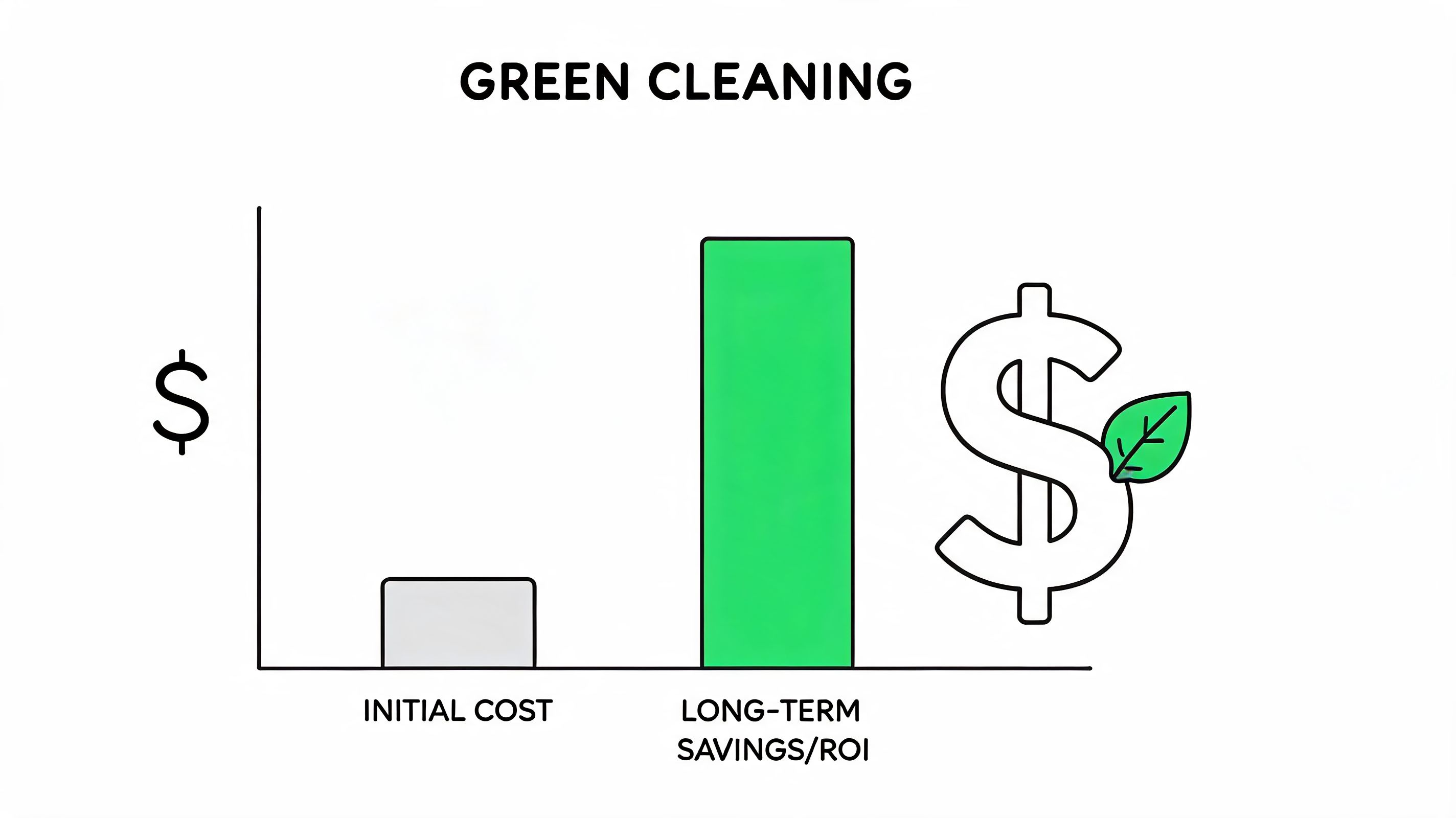
A Canadian healthcare case study, noted earlier in the reading list, reported that green cleaners were often priced at parity with conventional alternatives. The more consistent barrier was weak business-case framing. That distinction matters for Toronto managers because cleaning spend is rarely judged on product invoices alone. It is judged on service stability, complaint volume, audit readiness, and the condition of the asset over time.
Product price is only one cost input
Commercial cleaning budgets are driven more by labour design and building conditions than by the label on a chemical bottle. Frequency, floor type, occupancy density, washroom traffic, after-hours access, and periodic work all have more influence on monthly cost than a small difference in unit pricing.
A provider using controlled dilution, standardised procedures, and preventive maintenance can reduce waste even if some individual products cost more. A provider using cheaper chemistry but inconsistent methods can create avoidable rework, surface damage, odour complaints, and extra management time.
The stronger ROI question is simple. Which cleaning model lowers total operating friction?
Where Toronto businesses usually see savings
The financial return tends to appear across several smaller categories rather than one dramatic line item. That makes it easy to miss during quoting and easy to prove after implementation if the manager tracks the right indicators.
- Reduced product waste: Dilution control and tighter inventory practices can lower overuse and shrinkage.
- Lower floor-care disruption: Preventive programmes can reduce the frequency of aggressive restorative work and the downtime that comes with it.
- Fewer occupant complaints: Lower-residue, lower-odour methods often produce a more acceptable daytime environment in offices, clinics, and mixed-use buildings.
- Less administrative effort: Standard product sets, documented procedures, and cleaner records can shorten procurement reviews, incident follow-up, and compliance checks.
- Better asset protection: Finishes, fixtures, and high-touch surfaces often last longer when maintenance is matched to material requirements instead of corrected after damage appears.
This explainer may help teams discuss the broader cost logic with internal stakeholders:
A practical ROI model for business managers
For most Toronto facilities, the cleanest way to evaluate green cleaning is to compare the current programme against the proposed one over a defined trial period. Use three to six months where possible. A single site or floor is often enough to produce usable data.
Track four categories.
Direct service cost
Compare base contract price, periodic work charges, and consumable use.
Operational impact
Record complaint tickets, odour issues, re-cleans, and disruptions tied to floor care or washroom service.
Risk and compliance support
Review whether the provider supplies product documentation, training records, SOPs, and incident reporting that reduce manager follow-up.
Asset and occupancy outcomes
Assess visible wear, finish condition, and whether the cleaning programme supports normal building use without causing avoidable irritation or service interruptions.
This approach gives finance, operations, and property teams a shared basis for approval. It also helps larger organisations that are finding reliable building maintenance partners across multiple service lines and need cleaning decisions to fit a broader facilities strategy.
Many vendors still sell green cleaning as a values statement. Toronto buyers usually need something more concrete. They need a programme that can hold up under budget review, support compliance, and reduce the indirect costs that sit outside the cleaning invoice.
Checklist: How to Vet and Choose a Green Cleaning Provider in Toronto
The fastest way to assess a green cleaning vendor is to ask for evidence that sits behind the marketing. A manager doesn't need a perfect technical vocabulary. A disciplined question set is enough.
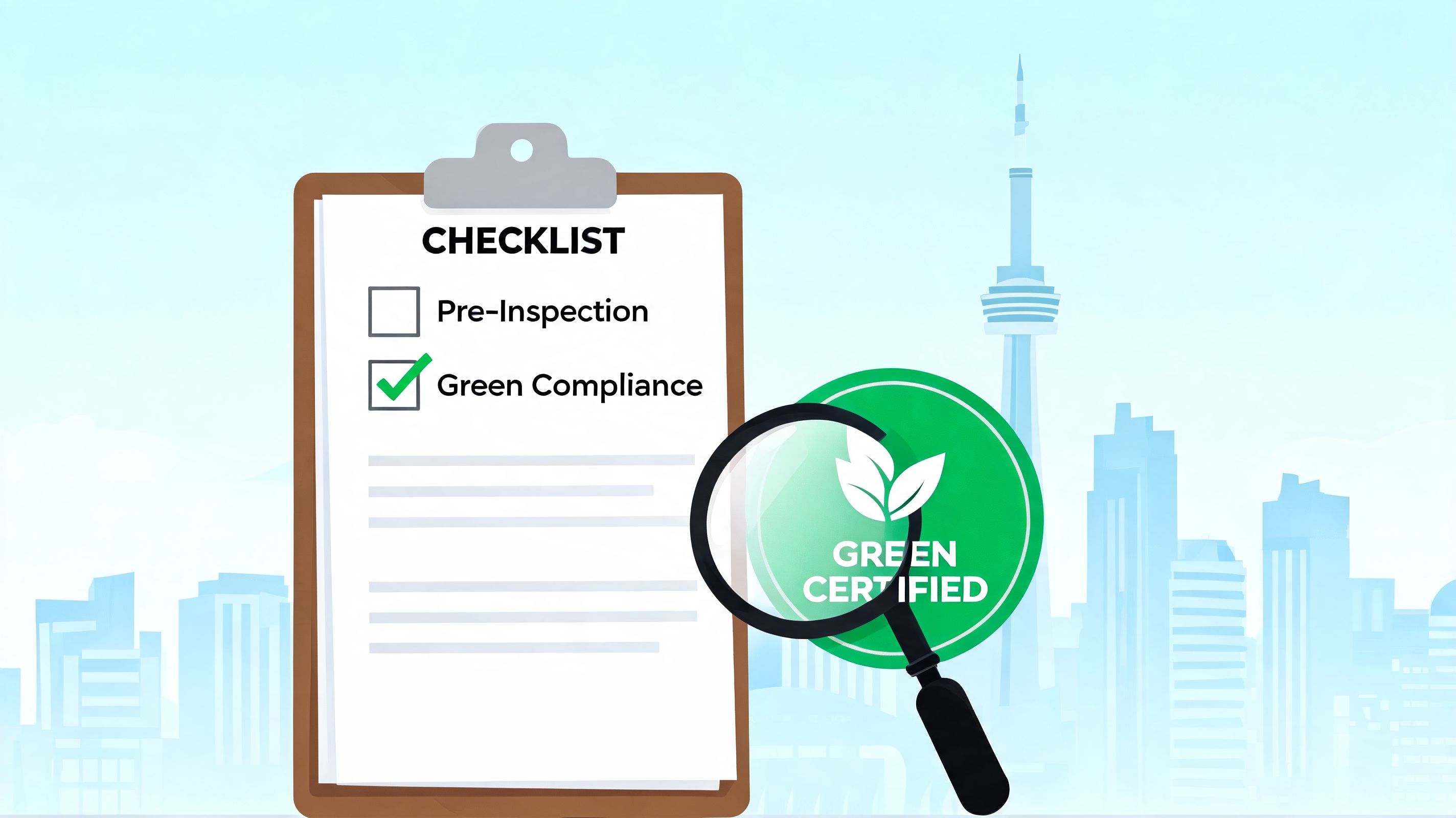
For teams that manage larger properties or bundled vendors, broader guidance on finding reliable building maintenance partners can help frame vendor due diligence beyond cleaning alone.
Questions that verify substance
Use this list during quoting, site walks, or contract review.
- Ask for the product list: Request the main chemicals and consumables used in the facility, plus any certification details.
- Ask how products are matched to spaces: A good vendor should explain why one product is used in washrooms and another in offices or clinical-adjacent areas.
- Ask about dilution control: Overuse is often a process problem, not a product problem.
- Ask for training details: Staff should be trained on SOPs, chemical handling, and escalation rules for stronger products.
- Ask what gets documented: Cleaning logs, inventory records, and periodic reviews matter.
- Ask how floor care is handled: This often reveals whether the programme is preventive or chemically intensive.
- Ask how the provider handles exceptions: Illness events, spill response, and outbreak disinfection should be defined separately from routine cleaning.
Warning signs during the buying process
Some answers should make a buyer cautious.
| What to Ask | What to Avoid |
|---|
| Can the provider show certified products and where they're used? | Vague assurances that “everything is eco-friendly” |
| Is there a written SOP for routine cleaning and targeted disinfection? | No distinction between cleaning and disinfecting |
| How are staff trained and refreshed? | Reliance on informal verbal instructions only |
| Can the company provide logs or inventory records? | No documentation beyond an invoice |
| How is floor care designed to reduce chemical intensity? | Default recommendation of aggressive restoration for every issue |
A simple scoring method
Procurement teams can make the comparison easier by scoring each vendor on three axes:
- Credibility: Evidence of certification, training, and documentation
- Operational fit: Ability to service the actual facility type and occupancy pattern
- Business clarity: Ability to explain cost drivers and expected outcomes without hype
A provider should be able to answer a facility manager's questions in operational language, not branding language.
That distinction usually separates mature commercial operators from companies that are adding green terms to a standard janitorial pitch.
The Arelli Cleaning Approach to Sustainable Service
A sustainable cleaning programme works best when transparency, training, and scope control are built into the operating model. For Toronto businesses that need green cleaning without losing budget discipline, one reasonable benchmark is whether the provider can align product choice, staff process, and reporting expectations.
Arelli Cleaning's company background describes a system-based commercial model that centres on documented service delivery, trained crews, and flexible facility-specific scope. In practice, that's the type of structure a buyer should look for in any provider offering green cleaning services toronto. The provider should be able to use eco-certified or lower-impact products where appropriate, apply Health Canada approved disinfection where required, and adapt the programme to the building's risk profile rather than treating every site the same.
The core point isn't brand preference. It's operational maturity.
Frequently Asked Questions About Green Cleaning
Is green cleaning as effective as traditional cleaning for commercial spaces?
Yes, when the programme is properly designed. Routine cleaning and targeted disinfection are different tasks. A professional provider should use lower-impact cleaning methods for day-to-day maintenance and reserve stronger disinfecting steps for the areas and situations that require them.
What's the difference between eco-friendly, non-toxic, and green certified?
These terms aren't interchangeable. “Eco-friendly” is broad marketing language. “Non-toxic” describes a safety orientation but may still need context. “Green certified” is the strongest procurement term because it points to a recognised third-party standard tied to a specific product or use category.
Can green cleaning help with LEED or BOMA-style building goals?
It can support broader building sustainability objectives when the products, records, and operating methods align with recognised standards. The provider should be able to document what is used, how it is used, and how the programme fits facility policies.
Does green cleaning mean no disinfectants are used?
No. It means disinfectants should be used deliberately, not indiscriminately. High-touch surfaces, illness response, and regulated environments may require disinfection. The key is matching the chemistry to the risk.
Is green cleaning only suitable for offices?
No. It can also fit dental clinics, childcare centres, educational facilities, warehouses, and multi-tenant properties. The exact protocol should change by facility type.
How should a Toronto buyer compare quotes?
Compare the scope, certified product evidence, documentation standards, training approach, and floor-care method. A lower quote with weak process control may create more downstream cost than a better-documented programme.
What's the biggest mistake buyers make?
They often accept a green claim without asking for product lists, SOPs, or logs. The result is a contract that sounds modern but operates like a standard chemical-heavy janitorial service.
Further Reading and Resources
Procurement teams usually make better green cleaning decisions when they review standards documents, operating policies, and implementation evidence together, rather than relying on marketing claims. For a Toronto business manager, the useful question is straightforward: which materials help verify that a programme will hold up under audit, support occupant health, and control total operating cost?
The most useful references tend to fall into four categories: institutional standards, product and process documentation, case-based operating guidance, and service-scope information. Earlier sections referred to several of these resources. Use them here as a final review set when comparing proposals or preparing an internal recommendation.
| Type | What to review |
|---|
| Internal | Arelli Cleaning service areas |
| Internal | Arelli Cleaning's Toronto office, commercial service, and supply pages referenced earlier in the article |
| External | The institutional standards and case materials noted earlier, including public-sector guidance and Canadian examples on implementation and cost parity |
A short review process is usually enough. Confirm that the provider's product list matches its certification claims. Check whether training records, dilution controls, SDS access, and site logs are available. Then compare that documentation against your building's risk profile, tenant expectations, and any procurement requirements already in place.
For companies assessing providers, Arelli Cleaning can be reviewed as one option alongside other qualified vendors. The decision should rest on documented methods, reporting discipline, and service fit for the facility, especially in offices, clinics, and multi-tenant commercial properties where health, compliance, and cost control all matter.








.webp)