A post construction cleaning flyer isn't a design exercise first. It's a sales asset for a buyer who wants the site turned over clean, safe, and ready for inspection or occupancy.
That matters in Toronto because the work behind the flyer is tied to a large construction pipeline. According to Statistics Canada building permit data, the total value of building permits in Canada reached $12.0 billion in a recent month, with $4.7 billion in the non-residential sector. In practical terms, that means a steady stream of commercial, institutional, and mixed-use projects that eventually need a final clean before handover.
Most flyer advice stops at colours, fonts, and templates. Commercial buyers don't hire on aesthetics alone. General contractors, property managers, and facility teams respond to messaging that reduces friction at the end of a project. A strong post construction cleaning flyer connects the service to punch-list timing, dust control, debris removal, walkthrough readiness, and fewer turnover headaches.
Tapping into Toronto's Construction Boom
Commercial construction volume creates steady demand for closeout cleaning, but demand alone does not make a flyer work. In Toronto, the companies that get callbacks usually present themselves as part of project completion, not as another cleaning vendor.
A flyer in this market has one job. It needs to show a GC, project coordinator, or property manager that your crew can help move the site from messy to handover-ready without slowing the schedule.

What the flyer is really selling
The core value offered is risk reduction at the end of the job. Buyers want fewer deficiencies tied to dust, debris, and poor presentation during walkthroughs. They also want a cleaning contractor who understands access restrictions, phased turnover, and the difference between a rough cleanup and a final presentation clean.
That is the business angle many flyers miss. A page full of generic promises does not help a superintendent close out a floor, reopen a retail unit, or turn over a medical office on time. Specific language does.
Use wording that connects directly to project pressure:
- handover-ready cleaning
- dust and debris control before inspection
- final presentation for tenant turnover
- scheduled cleaning around punch-list completion
- crew available for phased commercial closeouts
Those phrases speak to outcomes buyers are already accountable for.
Who should receive it
The target list should stay tight. In practice, four buyer groups drive most of the work:
- General contractors: Focus on schedule protection, site coordination, and clean turnover.
- Property managers: Focus on occupancy readiness, appearance, and reducing complaints on day one.
- Facility administrators: Focus on reopening spaces safely and presenting a finished environment to staff or visitors.
- Developers and project coordinators: Focus on finishing strong, especially during multi-unit or multi-phase delivery.
Each group cares about cleaning, but they do not all care for the same reason. That trade-off should shape the copy. A GC responds to timing and scope clarity. A property manager responds to readiness and presentation. If the flyer tries to speak to everyone with the same message, it usually sounds residential and gets ignored.
The Toronto angle
Toronto adds pressure in ways smaller markets often do not. Access can be tighter. Loading can be slower. Timelines are often compressed near occupancy dates. In mixed-use and tenant improvement work, one delayed clean can affect inspections, furniture delivery, or opening prep.
That is why the flyer should position the service as a practical part of closeout planning. Include language about after-trade cleanup, final dust removal, common-area presentation, and flexible scheduling for commercial sites. If your company also offers related commercial cleaning services for offices, retail units, clinics, and shared facilities, mention that briefly, but keep the core message tied to post-construction outcomes.
The strongest flyer in Toronto does more than look professional. It shows where your company fits in the final stretch of the job and why hiring you helps the buyer finish cleanly, pass walkthroughs, and hand over the space with less friction.
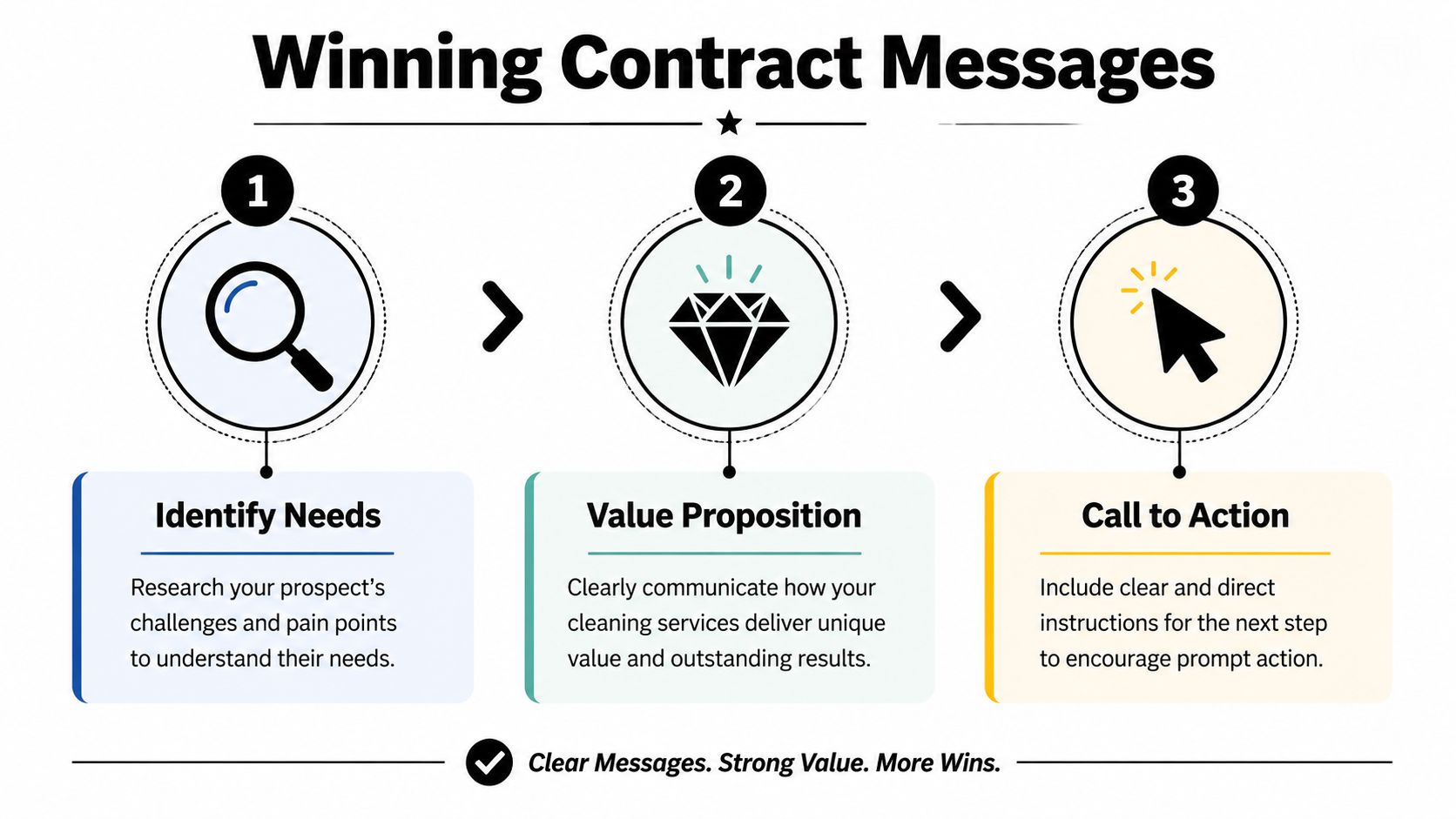
Crafting a Message That Wins Contracts
A commercial flyer gets judged in seconds. In that short scan, a GC or property manager is deciding one thing: does this company help me close out the job with fewer issues?
That standard should shape every line of copy. Post-construction cleaning is rarely bought as a stand-alone service. It is bought because a site needs to move from trade activity to inspection, turnover, leasing, or occupancy without dust, residue, or last-minute complaints slowing the process.
Lead with process, timing, and outcome
Generic claims like "quality service" and "attention to detail" do not help a buyer assess risk. Clear process does.
The flyer should show how the cleaning fits the closeout sequence:
- Rough clean: Remove debris, trash, stickers, and loose material. Clear access routes and get the space ready for follow-on work.
- Light clean: Tackle settled dust on walls, trim, doors, fixtures, sills, ledges, and glass after the heavier trade activity is done.
- Final clean: Detail surfaces, polish floors and glass, remove smudges and residue, and present the space for walkthrough, handover, or opening.
That structure signals operational maturity. It tells the buyer you understand that cleaning is staged work tied to construction progress, not a single visit with a mop and vacuum.
Translate technical work into buyer benefits
Task lists are useful, but only if they answer the buyer's real concern. Will this reduce friction at handover?
Use that filter for every service point:
- HEPA vacuuming: Helps control fine dust that settles on finished surfaces and shows up during final walkthroughs.
- Detailed wiping of vertical and horizontal surfaces: Reduces return visits caused by dust reappearing on trim, doors, frames, and ledges.
- Removal of paint overspray, caulk smears, adhesive residue, and grout haze: Prevents avoidable complaints that make a new space look unfinished.
- Waste handling and disposal practices: Reassure buyers that the cleanup will not create site safety issues or disposal problems at the end of the project.
The message should connect cleaning work to business outcomes. Faster closeout. Fewer deficiencies. Better presentation for owners, tenants, and inspectors.
Write copy that matches how commercial buyers think
Buyers in this category want proof that your crew can work within project constraints. Good flyer copy shows control, not enthusiasm.
Include language that addresses practical concerns:
- cleaning after trades are complete
- support before punch-list review
- touch-up cleaning before handover
- coordination for phased delivery
- attention to common areas, corridors, entrances, and amenity spaces
- readiness for tenant fit-outs, office turnover, retail opening, or property management takeover
That is also the right place to mention broader commercial cleaning services for offices, retail units, clinics, and shared facilities if they support the buyer after the build is complete. Keep the flyer centered on closeout and turnover, then show that ongoing service is available.
What to include in the flyer copy
A strong post-construction cleaning flyer usually includes:
- Clear service label: Post-construction cleaning or post-renovation cleaning for commercial properties.
- Who it serves: General contractors, property managers, developers, and facility teams.
- Cleaning stages: Rough clean, light clean, and final clean.
- Scope details: Glass, floors, fixtures, vents, baseboards, washrooms, entrances, and common areas.
- Dust and residue control: Fine dust removal, HEPA vacuuming, film removal, overspray cleanup, adhesive removal, and grout haze cleanup where applicable.
- Project timing language: After trades, before inspections, ahead of occupancy, or during phased turnover.
- Direct call to action: Book a site visit, request a quote, or send drawings for review.
If the flyer drives to a landing page or quote form, the follow-up has to be just as clear. Teams working on that handoff can borrow ideas from guidance on improving B2B form conversion rates.
What weakens response
Weak flyers usually fail for strategic reasons, not design reasons.
- They describe cleaning without tying it to handover readiness.
- They sound residential.
- They ignore sequencing and project timing.
- They skip safety, dust control, and disposal language.
- They ask for the call before earning trust.
The best-performing message gives the buyer a simple conclusion. This company understands closeout pressure, knows what a finished commercial space needs, and can help get the project over the line cleanly.
Designing for Impact and Professionalism
Commercial buyers make a decision fast. If the flyer looks residential, cluttered, or vague, it gets filtered out before anyone reads the offer.
Design serves one job here. It has to make your company look capable of handling a commercial closeout without creating extra work for the GC, site super, or property manager. Good-looking design helps, but useful design gets calls.
The layout should signal commercial work at first glance. Use jobsite-relevant imagery, restrained branding, and enough white space to let the main promise stand out in a few seconds.

What a commercial buyer expects to see
A strong flyer looks like it belongs in a bid folder, handover package, or site trailer. That means the visual choices need to support credibility, not decoration.
- Commercial photos: Show offices, corridors, lobbies, retail units, clinics, or industrial interiors. Skip residential kitchens and living rooms.
- Readable headings: Use a bold headline, one supporting line, and short content blocks.
- Limited colour palette: Brand colours are fine. Contrast and legibility matter more than style.
- Scannable proof points: Present key service categories, response options, and trust signals in bullets or icons.
Consistency matters after the flyer gets attention. If a QR code or web address sends the reader to a quote page, the page should feel like the same company and ask for the same next step. Teams tightening that handoff can borrow useful ideas from guidance on improving B2B form conversion rates, especially for reducing friction on quote requests.
Choosing between photo-heavy and text-led layouts
The right layout depends on the sales goal.
A photo-heavy flyer works best for polished leave-behinds, introductions to developers, and brand awareness with property management groups. It helps when your company has strong commercial project photos that match the work you want more of. The risk is obvious. If the copy is thin, the flyer looks polished but says very little.
A text-led flyer usually performs better in direct outreach to GCs, site supervisors, and operations-minded buyers. These readers care about whether you understand turnover pressure, finishing standards, and site realities. They do not need a mini portfolio. They need confidence that you can step in, clean properly, and help the job close.
| Layout style | Best use case | Main risk |
|---|
| Photo-heavy | Brand awareness, polished leave-behind pieces | Looks vague if the copy is thin |
| Text-led | GC, PM, and facilities outreach | Can feel dense if hierarchy is poor |
| Balanced layout | Most commercial flyer campaigns | Requires disciplined editing |
In practice, the balanced layout wins most often. One relevant image, one direct headline, one short block explaining the cleaning process, and one response path is enough for a one-page flyer.
Keep one action obvious
A flyer loses response when it asks for too much at once. Call, email, scan, visit the site, follow social channels, and request a quote are too many choices for a reader who is already juggling trades and deadlines.
Set one primary action. Add one backup. For example, "Book a site visit" can lead, with a direct phone number as the secondary option. That structure respects how commercial buyers make decisions. It also makes performance easier to track because you can tell which channel drives qualified inquiries.
A visual explainer can help teams align the print flyer with the digital version:
For teams building repeatable sales material, a library of cleaning service infographics can help keep visuals consistent across flyers, proposals, and web pages.
A flyer gets kept when it respects the reader's time. Clear hierarchy, clear positioning, and one clear next step do that better than decorative design.
Print and Digital Flyer Specifications
A post construction cleaning flyer often fails before distribution because the file was built for the wrong medium. Print and digital need different preparation. If the team treats them as interchangeable, colours shift, text gets fuzzy, and the final piece looks less professional than intended.
The fix is simple. Build separate output files from the same master design and check them before release.
Print requirements that avoid production issues
For print, the priority is clarity in physical form. Text must stay sharp, colours must reproduce properly, and the paper should match the audience.
An office administrator receiving a glossy handout in a presentation folder has a different expectation than a site superintendent getting a practical one-pager. Both can work, but the production choice should fit the distribution method.
Digital requirements that support outreach
Digital flyers are usually used in email follow-ups, PDF attachments, LinkedIn messages, and QR code destination pages. They need to load quickly and remain readable on a phone screen.
That changes the design choices. Small text and dense service blocks that may survive in print often become unusable in digital format.
Print vs. Digital Flyer Specification Checklist
| Specification | Print Flyer | Digital Flyer |
|---|
| Colour mode | CMYK | RGB |
| Best file type | High-resolution PDF | PDF or JPG |
| Resolution approach | Print-ready, high resolution | Screen-optimised and easy to open |
| Common format | Letter-size one-pager or compact leave-behind | Vertical one-page PDF or mobile-friendly image |
| Paper choice | Durable stock with a professional feel | Not applicable |
| Text size priority | Comfortable for hand-held reading | Larger for mobile viewing |
| QR code use | Useful for driving to a quote page | Can be replaced with a clickable link |
| Main risk | Sending a web graphic to the printer | Reusing a print layout that is too dense on mobile |
A few details make a noticeable difference:
- Proof the contact details: A single phone or email error ruins the campaign.
- Test the QR code: It should open a simple, relevant destination.
- Print a sample first: Colours and contrast often look different on paper than on screen.
- Check logo scaling: A stretched or blurry mark weakens trust immediately.
Print is for credibility in the hand. Digital is for speed and follow-up. The design should respect both jobs.
Strategic Distribution in the Greater Toronto Area
A flyer campaign can burn through budget fast if distribution is broad and unfocused. In commercial cleaning, the return comes from getting the piece in front of the people who influence deficiency closeout, final presentation, and occupancy deadlines.
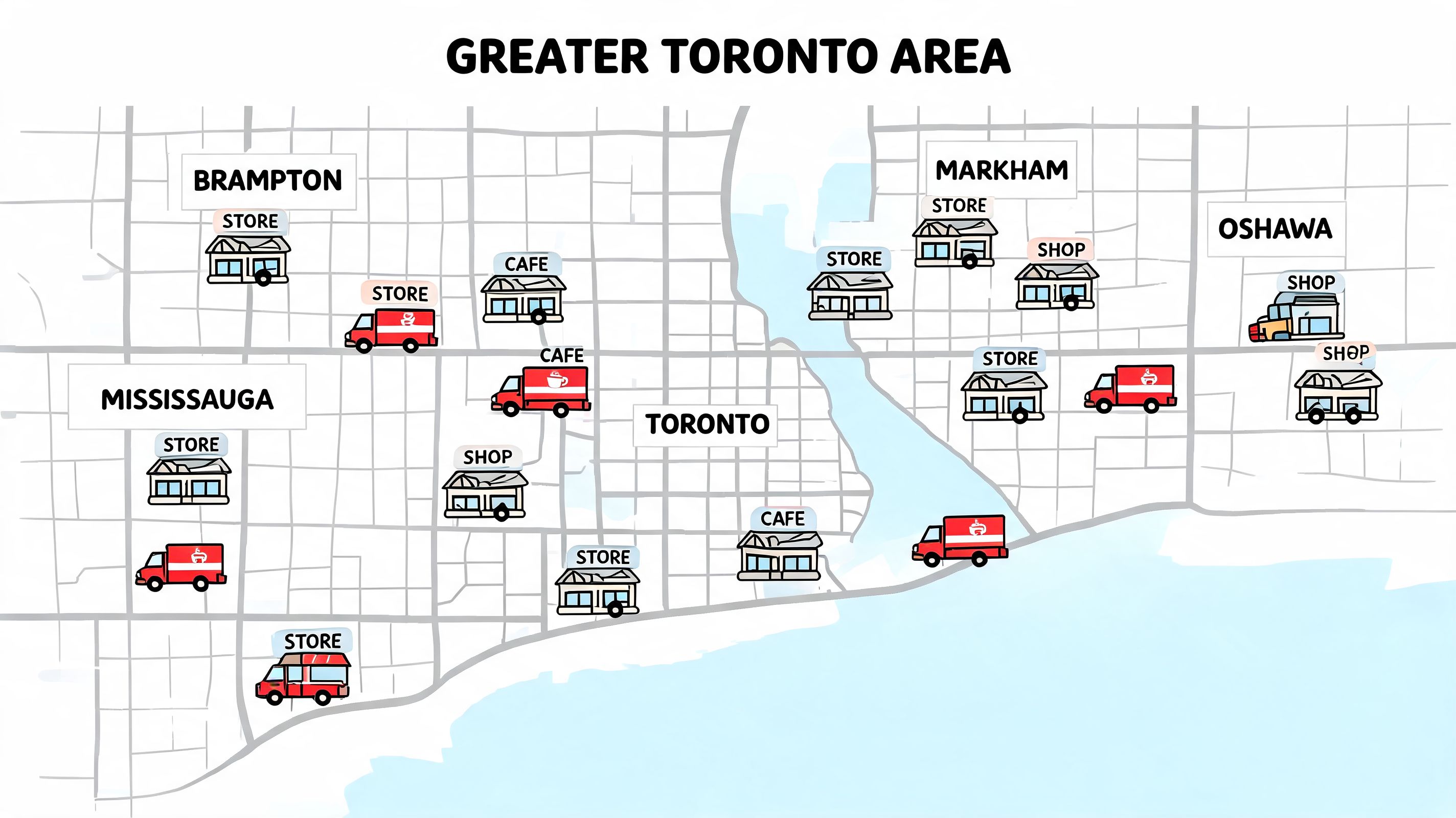
In Toronto, distribution should follow project density and buyer type. A downtown tower fit-out, a retail plaza in Mississauga, and a medical office build in Vaughan can all need post-construction cleaning, but the trigger, urgency, and decision-maker are different.
Scenario one downtown high-rise turnover
In the core, the best targets are active site offices, project coordinators, construction managers, and property teams handling tenant improvements. The flyer should support a short outreach process: introduction, leave-behind, then a fast digital follow-up to the person who can request pricing.
The message needs to connect cleaning to handover readiness. GCs in this setting care about whether the site can be presented to ownership, consultants, and incoming tenants without delay. That means the flyer should stress schedule reliability, detailed dust removal, glass and surface finishing, and crew readiness for tight turnover windows.
Scenario two suburban commercial units
In suburban nodes, buyers often manage multiple units at once. That changes the sales angle. They are less interested in polished brand language and more interested in whether one cleaning contractor can keep several handovers moving without creating site friction.
A flyer for this market should make the service feel easy to scope. Include the work categories they expect to approve quickly, such as debris pickup, fixture wipe-downs, floor dust removal, interior glass, washroom detailing, and final touch-ups before occupancy or inspection.
Distribution channels that produce better commercial leads
The strongest flyer campaigns in the GTA usually combine direct delivery with controlled follow-up. That approach gets better results than blanket neighbourhood drops because it matches how commercial work is awarded.
Use channels like these:
- Site-office drop-offs: Best for active projects where timing and professionalism matter. Bring a small number, ask who handles closeout vendors, and leave the flyer with context.
- Targeted mail to builders and property groups: Useful for reaching offices that oversee multiple projects or recurring tenant turnover work.
- Hand delivery to industrial and commercial clusters: Effective in areas with visible build-outs, especially where several units are nearing completion at the same time.
- Digital resend after first contact: A PDF sent to the estimator, project manager, or operations contact gives the flyer a better chance of being shared internally.
A clear local footprint also helps the message feel relevant. A page showing post-construction cleaning service areas across the GTA supports trust when the recipient wants to confirm coverage before asking for a quote.
What to avoid
Poor distribution usually fails for one of four reasons. The list is weak, the timing is off, the flyer goes to the wrong contact, or nobody follows up.
Avoid these mistakes:
- Mass residential-style drops: They rarely reach commercial decision-makers and usually produce low-quality enquiries.
- Reception-only delivery: Reception can help, but project managers, site supervisors, and property operations contacts are the primary targets.
- Random pinboard posting: It lowers perceived credibility for a service tied to compliance, turnover, and presentation standards.
- No territory logic: Treat downtown, inner suburbs, and outer commercial zones as separate campaigns with different messages and route plans.
The business logic matters more than volume. One flyer in the hands of a project coordinator closing out three units is worth more than hundreds handed out with no account list behind them.
If the team wants to judge whether print, hand delivery, or follow-up emails are producing qualified opportunities, use the same discipline applied in how to measure marketing ROI. Track response by area, project type, and contact role, then keep funding the routes that produce walkthroughs and quotes.
Tracking Performance and Managing Leads
Flyers that generate interest but do not produce traceable leads waste budget. In commercial cleaning, the objective assessment is simple. Did the flyer lead to a site walkthrough, a quote request, or a contract discussion with a qualified buyer?
Set up tracking before distribution starts. If the team cannot tie responses back to a specific version, area, or contact method, there is no reliable way to improve the next campaign.
Simple tracking methods that work
The strongest flyer campaigns use a small number of clear response paths tied only to that campaign:
- Dedicated phone line or extension: Separates flyer calls from general enquiries.
- Campaign-specific email address: Helps the office team sort leads and reply faster.
- QR code to a landing page: Works well for site office handouts and digital PDF versions.
- Short intake form: Pre-qualifies the lead before dispatching an estimator or operations manager.
Teams that want a broader framework can review guidance on how to measure marketing ROI and apply the same logic here. Track the first touch, the quote, and the outcome. That is how a flyer becomes a measurable sales asset instead of a branding exercise.
What to ask when someone responds
The first conversation should qualify fit, urgency, and job value. A vague call wastes estimating time. A structured intake gives the team enough detail to decide whether to book a walkthrough, provide a rough range, or decline a poor-fit enquiry.
Use a short checklist:
- Project type: Office, retail, clinic, school, warehouse, or mixed-use.
- Current phase: Near completion, after trades, before occupancy, or post-renovation turnover.
- Cleaning scope: Debris, dust, glass, floors, residue removal, touchpoint cleaning.
- Timing: Required date and any constraints around access.
- Site conditions: Occupied, unoccupied, phased turnover, or after-hours access.
For commercial clients, these details matter because the buying decision is tied to handover pressure, inspection readiness, and closeout sequencing. A property manager asking for cleaning before tenant possession is a different lead from a GC trying to finish punch-list turnover on a tight schedule.
If the company uses a system-based commercial cleaning model, consistency matters at intake as much as it does on site. Arelli Cleaning, for example, handles commercial and post-construction cleaning in the GTA and gives buyers a direct way to request a quote through its commercial cleaning contact page.
The flyer starts the conversation. The follow-up process determines whether that conversation turns into revenue.
How to judge results
Raw response volume is a weak metric. Ten unqualified calls from small residential renovation jobs are usually worth less than two solid enquiries from a downtown office fit-out or a multi-unit turnover.
Review results by business value. Which postal zones produced qualified calls? Which flyer version led to walkthroughs? Which contact roles responded? Which jobs closed?
That review shows where the ROI sits. It also shows what to cut. If one route produces low-fit leads, stop funding it. If one message consistently attracts buyers who care about occupancy readiness and closeout timing, keep using it and refine the offer.
Post-Construction Cleaning Flyer FAQ
What should a post construction cleaning flyer say first
It should state the service clearly and tie it to project completion. The fastest useful opening is one that tells the reader the company handles post-construction cleaning for commercial spaces and supports inspection, handover, or occupancy readiness.
Should the flyer mention rough, light, and final cleaning
Yes. That structure makes the service easier to understand and gives the buyer confidence that the company knows how cleanup fits around construction closeout.
Is print still worth using for commercial cleaning
Yes, when it's targeted. A physical flyer can work well as a leave-behind after an introduction, a drop-off to a site office, or part of direct outreach to property and facilities contacts. It usually performs best when paired with email or phone follow-up.
What is the biggest mistake on these flyers
The most common mistake is vague messaging. "Deep clean" and "quality service" don't help a contractor decide. The flyer should explain scope, sequencing, and the reason the service reduces closeout friction.
Should pricing be listed on the flyer
Usually not as a fixed figure. Post-construction cleaning scope varies too much by site condition, timing, access, debris level, and finish requirements. It's better to invite the reader to request a quote or site assessment.
What images should be avoided
Avoid residential rooms, stock images that don't match commercial work, and anything that makes the company look consumer-focused. Commercial buyers want to see spaces that resemble the projects they manage.
How long should the flyer be
One page is usually enough. If the company needs more explanation, that extra detail belongs on a landing page or capabilities sheet, not crammed into a handout.
Should the flyer focus on cleaning quality or compliance
Both, but compliance-related language often creates stronger trust in commercial contexts. Dust control, safe disposal, residue removal, and handover readiness sound more credible than broad quality claims alone.
Further Reading
Good flyer strategy starts with understanding how commercial buyers think. General contractors, site supervisors, and property managers do not keep a handout because it looks polished. They keep it because it helps them judge whether your crew can support closeout, reduce deficiencies, and keep handover on schedule.
That is the lens to use for any additional research. Study materials that sharpen scope language, clarify handover expectations, and improve how your team presents risk reduction on the page.
| Resource Type | Title | Description |
|---|
| External | Government and industry updates on construction activity in Toronto and the GTA | Use current market reports, permit summaries, and local development coverage to spot where active project volume is rising so flyer distribution follows demand. |
| External | Commercial property management publications and facility operations resources | These help refine messaging for property managers who care about occupancy readiness, tenant presentation, and reduced post-handover issues. |
| External | Health and safety guidance related to site dust, debris handling, and final clean conditions | Useful for tightening flyer copy around compliance, safe work practices, and site-ready turnover language. |
| External | Print production guides from commercial print shops | Helpful when choosing paper stock, coating, size, and finish for leave-behinds that need to survive jobsite handling. |
| External | Direct mail and local distribution references for B2B campaigns | Worth reviewing if the flyer will support a broader outreach plan across Toronto office towers, industrial sites, and condo developments. |
A practical next step is to build one flyer around a clear commercial promise. Final clean done on schedule, with scope defined in plain language, and a direct call to request a site review. Then test it on a small GTA list and track who replies, who asks for pricing, and which message turns into walkthroughs.
Businesses that want another option for commercial and post-construction cleaning support can review Arelli Cleaning, then compare it with other local quotes and use the checklist above to ask better questions.








.webp)