For facility leaders managing diverse spaces, from industrial plants in Vaughan to professional offices in downtown Toronto, maintaining a clean and healthy environment is a core responsibility. Yet, the process of engaging outsourced commercial cleaning services is frequently undermined by common, preventable mistakes. These oversights can lead to inconsistent quality, strained vendor relationships, and a poor return on investment.
This article provides a clear roadmap for facility leaders, addressing the common mistakes made when outsourcing commercial cleaning and offering an evidence-informed framework to fix them. It includes actionable solutions, detailed checklists, and critical questions to ask potential providers. The goal is to empower facility managers to avoid procurement pitfalls and establish a truly effective partnership.
By understanding these common missteps—from ambiguous contracts and a "set-and-forget" mentality to neglecting compliance and technology—facility leaders can shift their cleaning program from an operational challenge to a strategic asset. The aim is to build a foundation for quality and accountability that actively supports an organization’s health, safety, and productivity goals, whether managing a medical lab in Mississauga or a law firm in Markham.
Key Takeaways
- Active Oversight is Non-Negotiable: A "set-it-and-forget-it" approach leads to service decline. Implement scheduled quality inspections and use clear communication channels.
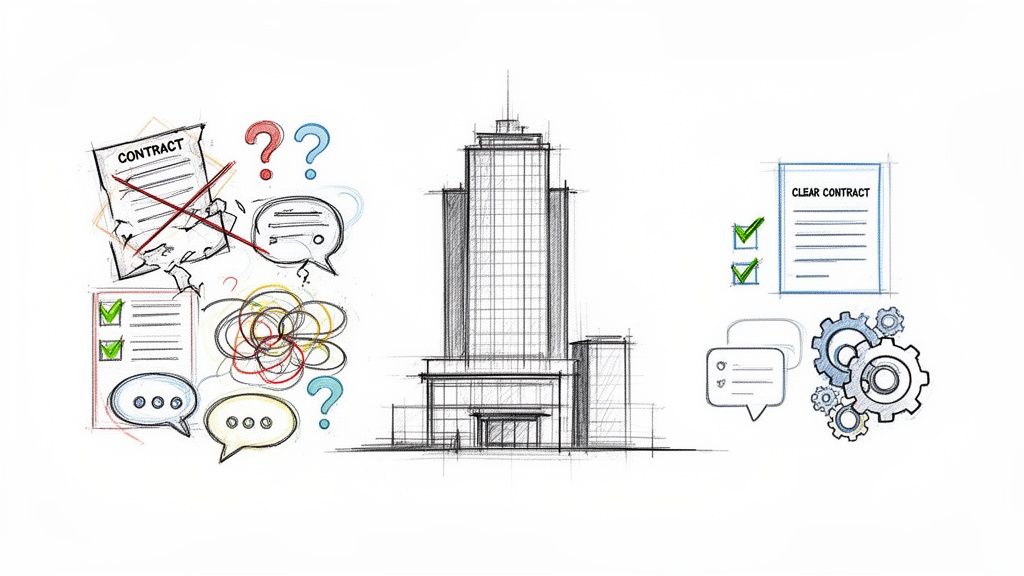
- Clarity Prevents Conflict: A vague scope of work is a primary cause of disputes. Create detailed checklists and define task frequencies for all areas.
- Price is Only One Factor: The lowest bid can carry hidden risks. Evaluate providers on compliance, insurance (WSIB), and quality systems, not just cost.
- Demand Transparency Through Technology: Modern cleaning providers should offer digital tools for real-time tracking of tasks, inspections, and communication.
- Partnership Beats Transaction: A collaborative relationship with clear points of contact and defined response times yields better, more consistent results.
1. Mistake: The "Set It and Forget It" Mindset
One of the most common pitfalls for facility leaders is assuming that a signed cleaning contract guarantees consistent, high-quality service indefinitely. This "set it and forget it" approach is a significant factor in what facility leaders get wrong about outsourced cleaning, often leading to a gradual decline in standards that goes unnoticed until tenant or employee complaints surface. A provider may start strong, but without active client engagement, small misses can compound over time.
This passive approach leaves quality assurance entirely in the hands of the vendor. Without regular, structured oversight from the client, there is less incentive for the cleaning team to maintain peak performance. Small issues like missed trash bins, dusty ledges, or streaky glass can become the norm, eroding the value of the investment and negatively impacting the workplace environment.
The Fix: Implement a Proactive Oversight Framework
To counter service drift, facility leaders must build a system of active partnership and verification. This does not mean micromanaging the cleaning crew, but rather establishing a predictable and transparent process for communication and quality control.
Key Insight: Proactive oversight isn't about catching cleaners doing something wrong; it's about creating a collaborative system that helps them succeed. It transforms the relationship from a simple transaction to a strategic partnership focused on maintaining a healthy and productive facility.
A robust oversight framework should include these key components:
- Scheduled Quality Inspections: Establish a regular cadence for joint walk-throughs with the cleaning company's account manager. This could be monthly for a large office in Toronto or quarterly for a smaller manufacturing facility in Milton. Use a standardized checklist to evaluate key areas like washrooms, kitchens, and high-traffic touchpoints.
- Clear Communication Channels: Define a simple process for reporting issues and providing feedback. Many modern cleaning services offer a client portal or smartphone app for real-time communication, which is more efficient than relying on email chains. This ensures feedback is documented and assigned for resolution.
- Performance Metrics (KPIs): Work with your provider to define 2-3 key performance indicators. These could include inspection scores, issue response time, or supply stock levels. Reviewing these metrics quarterly helps both parties track performance against the agreed-upon standards.
2. Mistake: Unclear Service Scope and Expectations
A significant error facility leaders make is providing a vague or incomplete scope of work. This ambiguity creates a gap between what the facility manager expects and what the cleaning provider has priced and scheduled. The result is often disappointment and disputes over what is ‘included’ versus ‘extra,’ leading to overlooked areas, subpar quality, and unforeseen costs for services assumed to be standard.
This pitfall is a core part of what facility leaders get wrong about outsourced cleaning. For instance, a dental clinic might assume high-touch surface disinfection is standard, only to find it's a specialty service. Similarly, an engineering firm in Vaughan could face conflicts over window cleaning frequency if it wasn't clearly defined. Without a detailed specification, the cleaning partner cannot accurately staff, supply, or execute the job to meet the facility's needs, leading to friction and an unsatisfactory partnership.
The Fix: Develop a Detailed and Explicit Scope of Work
To prevent misalignment, facility leaders must create a granular cleaning specification document. This document acts as the foundational blueprint for the cleaning contract and daily operations. Taking the time to detail these requirements is crucial, and understanding what defines a comprehensive service agreement can help ensure all terms are clearly established.
Key Insight: A detailed scope of work is not about restricting the cleaning provider; it's about empowering them. It provides the clarity needed to price services fairly, train staff effectively, and deliver consistent quality without guesswork.
A complete scope of work should clearly outline the following:
- Detailed Task Checklists by Area: List every task required for each space (e.g., washrooms, kitchens, private offices, reception). Specify actions like "disinfect all door handles and light switches" rather than just "clean office."
- Defined Frequencies: Clearly state the schedule for every task: daily, weekly, monthly, quarterly, or annually. For example, specify that baseboards are wiped quarterly and high-level dusting is done monthly.
- Distinction Between Core and Specialty Services: Separate routine daily cleaning from periodic project work. Clearly define what is covered in the standard commercial cleaning services versus what requires a separate quote, such as floor stripping and waxing.
- Protocols for Specific Situations: Document expectations for seasonal tasks (e.g., increased floor matting maintenance in winter in Toronto), post-event cleanup for a venue, or emergency response procedures.
3. Mistake: Poor Communication and No Single Point of Contact
A common frustration for facility leaders is having cleaning-related information lost in translation. This often happens when there isn't a clear, dedicated channel for communication. When requests are sent to multiple vendor contacts via a mix of emails, phone calls, and texts, critical details fall through the cracks. This misstep is a key part of what facility leaders get wrong about outsourced cleaning, leading to missed special requests, delayed issue resolution, and friction in the client-vendor relationship.
Without a single point of contact, accountability becomes diluted. For instance, an urgent post-illness sanitization request at a childcare centre in North York might be delayed simply because it wasn't clear who was responsible for escalating it. In an office building in Toronto, recurring complaints about unstocked washrooms might persist because feedback is given to a different cleaner each night instead of a designated account manager who can implement a systemic fix. This communication breakdown undermines the effectiveness of the commercial cleaning service.
The Fix: Establish a Centralized Communication Protocol
To prevent information silos and ensure swift action, facility leaders and their cleaning provider must establish a clear and agreed-upon communication framework. This involves assigning a dedicated point of contact and defining the specific channels and response times for all types of requests, from routine feedback to emergencies.
Key Insight: A structured communication plan does more than just solve problems faster; it builds trust. Knowing exactly who to contact and when to expect a response transforms the relationship from a series of chaotic interactions into a reliable, professional partnership.
A strong communication protocol should include these elements:
- Designated Points of Contact: Both the client and the vendor should assign a primary contact person (and a backup). For the vendor, this is typically an account manager responsible for the client's satisfaction. This ensures one person is accountable for receiving, delegating, and confirming the completion of all requests.
- Defined Communication Channels: Agree on the official methods for communication. Many modern commercial cleaning companies offer a client portal or smartphone app that centralizes all messages, photos, and requests into a documented, time-stamped log. This is far more efficient than tracking disparate email threads.
- Response Time Service Level Agreements (SLAs): Clearly define expected response times in the contract. For example, specify a one-hour response for urgent health and safety issues (like a spill or biohazard), a four-hour response for high-priority service requests, and a 24-hour response for routine inquiries.
4. Mistake: Focusing Only on Price Without Evaluating Quality and Compliance
One of the most damaging mistakes a facility leader can make is selecting a vendor based solely on the lowest bid. This "price-first" approach treats cleaning as a simple commodity, ignoring critical factors like quality standards, regulatory compliance, and liability. This false economy often leads to a cascade of problems, including poor cleanliness, health code violations, liability exposure, and ultimately, higher costs to fix the resulting issues.

Choosing the cheapest option without proper vetting can have serious consequences. For instance, a law firm might face client complaints about strong chemical odours from unapproved products, damaging its professional image. A manufacturing facility in a place like Kitchener could fail a WHMIS compliance audit due to its cleaning vendor using undocumented chemicals. This approach doesn't just risk poor service; it exposes the entire organization to significant legal and financial risk.
The Fix: Adopt a Value-Based Procurement Model
To move beyond the price-only trap, facility leaders must implement a robust supplier evaluation process that considers quality, compliance, and risk, rather than focusing solely on cost. This means assessing the total value and security a vendor provides, not just their hourly rate or per-visit price.
Key Insight: The cheapest cleaning quote often becomes the most expensive. A value-based approach protects your facility by prioritizing vendors who demonstrate a clear commitment to safety, compliance, and consistent quality, reducing long-term risk and remediation costs.
A comprehensive, value-based evaluation should include these elements:
- Verify Compliance and Certifications: Request documented proof of key credentials. This includes comprehensive liability and workers' compensation insurance (WSIB in Ontario), and industry certifications like CIMS (Cleaning Industry Management Standard). Also, ask for Safety Data Sheets (SDS) for all cleaning products to ensure they are Health Canada-approved and appropriate for your environment.
- Conduct Thorough Due Diligence: Go beyond the proposal. Request and contact references from facilities similar to yours, such as another dental clinic in Vaughan or an engineering firm in Toronto. For organizations providing professional office cleaning services, asking about their staff background check policies is also a prudent step.
- Evaluate Total Cost of Ownership (TCO): Compare quotes by looking at the bigger picture. A slightly higher price from a reputable vendor might include better insurance, certified training, superior supervision, and reliable supply management, preventing the much higher costs associated with accidents, compliance failures, or service disruptions.
5. Mistake: Not Addressing Specific Industry or Facility-Type Cleaning Needs
A significant error facility leaders make is viewing commercial cleaning as a generic, one-size-fits-all service. This perspective fails to recognize that different facilities have unique cleaning, disinfection, and compliance requirements. A dental clinic, a childcare centre, and an engineering firm exposed to industrial contaminants all require distinct protocols, and overlooking this is a key part of what facility leaders get wrong about outsourced cleaning.
Using a generalist cleaning vendor for a specialized environment often results in unmet needs, regulatory non-compliance, and potential health risks. For example, a childcare centre may not receive adequate post-illness sanitization for toys and equipment, or a dental office might miss the high-level disinfection required for clinical surfaces. These oversights compromise safety and expose the business to liability.
The Fix: Define and Verify Industry-Specific Cleaning Protocols
To ensure a safe and compliant environment, facility leaders must partner with a cleaning provider that understands their specific industry's demands. This involves moving beyond a standard scope of work to one that details specialized tasks, materials, and frequencies based on the facility’s unique function and risks.
Key Insight: Specialized cleaning isn't an upsell; it's a fundamental requirement for risk management and operational integrity in regulated or high-sensitivity environments. The goal is to match the cleaning protocol to the specific activities and populations within your facility.
A robust, industry-specific cleaning plan should include these key components:
- Document Specialized Requirements: Before seeking quotes, identify your facility’s unique needs. For a dental clinic, this means specifying medical-grade disinfection for all clinical surfaces. For a daycare in Vaughan, it involves outlining post-illness sanitization protocols. For a manufacturing plant in Kitchener, it means clarifying dust control, residue removal, and floor care standards. For detailed guidance on medical settings, you can learn more about professional medical office cleaning.
- Vet Vendor Experience: During the procurement process, ask potential providers for proof of experience in your specific industry. Request references from similar facilities, such as other law firms in Toronto or industrial sites in Milton. Inquire about their team’s training on relevant regulations, like infection control standards in healthcare.
- Integrate Protocols into the Contract: Ensure all specialized tasks are explicitly written into the cleaning contract’s scope of work. This includes the types of disinfectants to be used, the frequency of specific tasks (e.g., sanitizing high-touch toys daily), and any required documentation for compliance purposes. This turns expectations into contractual obligations.
6. Mistake: Inadequate Contingency Planning for Staff Turnover and Service Disruptions
Facility leaders often overlook a critical vulnerability in their cleaning contracts: the human element. A key area in what facility leaders get wrong about outsourced cleaning is failing to plan for staff turnover, illness, or other service disruptions. When a dedicated cleaning crew member is unexpectedly absent without a trained backup, the result is an immediate service gap, leading to missed cleanings and a rapid decline in facility hygiene. For example, a Toronto office building went without cleaning for three days when the crew leader fell ill, as no contingency was in place.
This lack of foresight places the entire burden of service continuity on the vendor’s day-to-day operations, which may not have the depth to handle sudden changes. A childcare centre unable to meet mandatory sanitation standards during a cleaner's absence or a manufacturing plant experiencing production delays due to inadequate cleanliness during a vendor transition are real-world consequences. Without a contractually defined continuity plan, facilities are left exposed to operational crises.
The Fix: Build Service Resilience into Your Agreement
The solution is to move beyond assuming coverage and formally require your cleaning provider to demonstrate a robust contingency plan. This involves asking specific questions during the procurement process and codifying expectations within the service agreement itself. The goal is to ensure consistent service delivery regardless of individual staff availability.
Key Insight: A resilient cleaning program isn't dependent on a single person; it's supported by a system. Requiring your vendor to have documented cross-training and backup protocols ensures your facility's standards are protected from predictable disruptions like staff illness or vacation.
A strong service continuity plan should include these components:
- Mandated Backup Staffing: Your contract should require the vendor to maintain a pool of cross-trained backup staff who are familiar with your site's specific needs and security protocols. This ensures a seamless transition when a primary cleaner is unavailable.
- Documented Procedures and Checklists: Insist that the provider maintains and shares detailed, site-specific cleaning checklists and procedures. This allows any trained substitute to step in and perform the required tasks to the correct standard without direct supervision.
- Defined Emergency Coverage Response Time: The service agreement should specify a maximum response time for providing emergency coverage, such as guaranteeing a replacement cleaner within a set number of hours. This prevents minor absences from escalating into major service failures, which is especially critical for facilities needing emergency disinfection services.
- Regular Staffing Updates: Request periodic introductions to key personnel, including backup team members and supervisors. Knowing the chain of command and having established contact points prevents confusion and delays when a disruption occurs.
7. Mistake: Neglecting Health and Safety Compliance in Cleaning Product Selection
A critical oversight that contributes to what facility leaders get wrong about outsourced cleaning is the failure to verify the chemical products used in their buildings. Many leaders assume their cleaning provider uses safe, compliant products, but without confirmation, they risk exposing employees, clients, and cleaning staff to chemical hazards. This lapse can lead to serious health issues, regulatory violations, and significant liability for the business.
Failing to manage chemical safety properly means neglecting crucial compliance frameworks like the Workplace Hazardous Materials Information System (WHMIS). For instance, a dental clinic might face regulatory inspection failure for using improper disinfection products, or a childcare centre could receive complaints about strong chemical odours from unapproved cleaners used near children. These situations are entirely preventable and highlight the importance of product governance.
The Fix: Mandate and Verify Chemical Safety Protocols
To ensure a safe and healthy facility environment, facility leaders must take an active role in the selection and documentation of all cleaning products. This involves establishing clear requirements for your cleaning provider and implementing a system to verify ongoing compliance, transforming product management from an assumption into a documented certainty.
Key Insight: Chemical compliance is not just the cleaning provider's responsibility; it is a shared duty. Facility leaders protect their organization and its occupants by requiring proof of safety, proper documentation, and certified training for all chemicals used on-site.
A robust chemical safety framework should include these key components:
- Require Health Canada Approval and SDS: Mandate that all cleaning products are approved for use in Canada and request a complete file of Safety Data Sheets (SDS) for every chemical. This documentation is non-negotiable and should be kept on-site and accessible.
- Verify WHMIS Compliance and Training: Confirm that your provider adheres to WHMIS standards, which includes proper labelling of all chemical containers and documented training for their staff on safe handling, storage, and emergency procedures.
- Define Product Categories and Procedures: Specify acceptable product types based on your facility's needs, such as medical-grade disinfectants for clinics or eco-friendly, low-VOC options for office environments. You can also request information on specific cleaning supplies to ensure they meet your standards for health and environmental impact. Request documentation of application procedures, including proper ventilation during and after use.
8. Mistake: Ignoring Technology and Real-Time Performance Visibility
A significant error facility leaders make is relying on manual reporting, occasional walk-throughs, or the vendor’s word to gauge cleaning performance. This is a crucial point in what facility leaders get wrong about outsourced cleaning because it leaves them without objective data on when work was completed, what tasks were done, and overall quality metrics. Without technology, service gaps and quality issues remain invisible until they escalate into formal complaints from staff or tenants.

This absence of transparent, real-time data creates accountability problems. For instance, a childcare facility in Markham might have no way to verify that a post-illness deep sanitization was actually performed to standard. Similarly, a manufacturing plant in Guelph might lack the specific documentation needed to validate quality complaints to its commercial cleaning provider. This information gap undermines trust and makes it difficult to manage the service contract effectively.
The Fix: Demand and Use Digital Management Tools
The solution is to move away from outdated, trust-based systems and insist on a cleaning provider that uses modern digital management tools. These platforms provide objective, real-time visibility into crew activity, task completion, and quality verification, enabling proactive management rather than reactive problem-solving.
Key Insight: Technology bridges the gap between expectation and reality in commercial cleaning. It provides the objective proof needed to confirm services are delivered as promised, transforming the vendor relationship into one built on verifiable data and shared accountability.
A strong technology-backed service should offer:
- Real-Time Check-In/Out: Use systems with geolocation tracking to verify that the cleaning crew was on-site during the scheduled hours. This eliminates disputes about whether cleaners showed up, a common issue for office managers in Toronto.
- Digital Task Checklists: Ensure the provider uses a mobile app where cleaners check off tasks as they are completed. Request access to these reports to see exactly what was done each service night. Photo or video documentation for key tasks offers an even higher level of verification.
- Accessible Performance Dashboards: Ask for client portal access to a dashboard that displays key metrics like task completion rates, inspection scores, and issue response times. This data provides a clear, high-level view of performance trends.
- Integrated Communication: Use the provider’s app or portal to report issues, submit requests, and track resolution. This creates a documented communication trail and ensures requests don’t get lost in emails.
A Framework for Evaluating Your Cleaning Contract
FAQs: Getting Outsourced Cleaning Right
What is the single biggest mistake facility leaders make?
The most common mistake is a "set-it-and-forget-it" attitude. Assuming a contract guarantees quality without active, ongoing management leads to a gradual decline in standards. Proactive oversight is essential.
How do I compare commercial cleaning quotes fairly?
Look beyond the total price. Compare the detailed scope of work, task frequencies, insurance coverage (WSIB and liability), compliance protocols (WHMIS), and the technology used for quality assurance. A value-based scorecard is more effective than a simple price comparison.
Why is a single point of contact so important?
It establishes clear accountability. When one person on the vendor's side is responsible for all your requests, it prevents miscommunication, ensures faster resolution, and builds a stronger partnership.
What should I look for in a commercial cleaner near me?
Look for a provider with a strong local presence and positive reviews from businesses similar to yours in cities like Mississauga, Vaughan, or your specific area. Verify their insurance is valid in Ontario and ask for local references.
How can I ensure the cleaning products used are safe for my facility?
Mandate that your provider supplies a complete list of Safety Data Sheets (SDS) for all products used on-site. Ensure they are compliant with Health Canada and WHMIS regulations, and specify any preferences for green or low-VOC products in your contract.
What kind of technology should I expect from a modern cleaning company?
At a minimum, they should offer a digital communication platform (app or portal), real-time task checklists, and digital inspection reports. GPS-verified check-ins provide an additional layer of accountability.
Further Reading
By implementing these strategies, you transform office cleaning from a simple expense line into a valuable investment in your facility's health, your employees' well-being, and your organization's professional image. The path to superior service isn't about finding a magical provider; it's about being an informed and engaged client. Use the checklists and frameworks in this article to guide your next procurement process or to recalibrate your existing partnership.
If your business operates in Ontario—from Toronto and the GTA to York Region—and you’re seeking a partner to implement these best practices, consider getting a quote. Companies that offer a detailed proposal process, including buyer-friendly policies like a free 45-minute sample clean, allow you to verify quality before signing a contract. For one such option, you can learn more about their approach and service areas.








.webp)