Commercial carpet cleaning in the GTA typically falls in the $0.15 to $0.40 per square foot range. That number is only a starting point, because the final quote changes with access, soil levels, furniture, timing, and whether the work is a one-time deep clean or part of a recurring plan.
Most office managers run into the same problem. One company quotes a low per-square-foot number, another gives a flat fee, and a third adds separate lines for stain treatment, deodorising, and after-hours access. The carpet area looks the same on paper, but the prices don't.
That confusion usually comes from comparing commercial cleaning as if it were a household service. In business settings, buyers care about disruption, drying time, traffic patterns, and whether the contractor can work around staff, patients, students, or equipment. Those details shape cost more than many first-time buyers expect.
Decoding Commercial Carpet Cleaning Prices in the GTA
A GTA office manager gets three quotes for the same floor. One looks inexpensive until after-hours access, spot treatment, and furniture shifting appear as extras. Another comes in higher but includes low-moisture cleaning, faster dry times, and a quarterly maintenance schedule. The square footage has not changed. The operating assumptions have.
That is the main reason commercial carpet cleaning prices confuse first-time buyers. In a business setting, you are not only buying soil removal. You are buying labour timing, site access, risk control, and a service plan that fits how the building is used.
For GTA businesses, the better question is not "What does carpet cleaning cost?" It is "What will this cleaning program cost us over a year, including disruption, call-backs, and early carpet replacement?"
Key takeaways
- Commercial pricing reflects operating conditions, not just area. Evening access, security check-ins, elevator booking, and tenant coordination can raise labour time even in a modest suite.
- Low headline prices often exclude services that matter in active buildings. Stain treatment, deodorising, furniture moving, and faster-dry methods are common examples.
- Soil level changes the economics. A lightly used professional office can often stay on a lower-cost maintenance cycle. An entrance corridor, clinic waiting area, or staff lunchroom may need heavier restorative work.
- Frequency affects total cost of ownership. Recurring service can reduce emergency cleanups, tenant complaints, and premature wear.
- A useful quote states the assumptions clearly. If the provider does not define access, scope, and exclusions, the number is hard to compare.
One-time cleaning and maintenance cleaning should never be judged by the same standard. A neglected carpet usually needs slower production, more spotting, and sometimes a different method, such as commercial carpet shampoo services for heavy soil conditions. That can make a higher quote reasonable, not inflated.
This pricing logic shows up in other outsourced services as well. Buyers comparing agencies often run into the same scope problem when they explore AI and SEO service costs. The listed rate matters less than what the vendor included, excluded, and assumed.
Cheap and clear are different things.
A clear quote tells you what happens if technicians must work after 6 p.m., whether stain removal is included, how much furniture they will move, and what level of drying time to expect. For a GTA business, those details affect staff scheduling, tenant experience, and how long the carpet lasts before replacement becomes a capital issue.
How Companies Calculate Carpet Cleaning Prices

A GTA office manager usually sees the same pattern. Two vendors quote the same floor, but one is far cheaper. The gap often comes down to pricing method, production assumptions, and whether the quote reflects your actual operating conditions.
Commercial cleaners usually price work in three ways: per square foot, per room, or flat rate. On paper, those models look simple. In practice, each one shifts risk between the client and the contractor. If your site has evening access restrictions, security sign-in, dense furniture, or winter soil at entrances, the pricing model matters because it affects both the quoted number and the likelihood of change orders.
Per square foot pricing
Per square foot pricing is the standard approach for commercial sites because it scales better across offices, clinics, schools, and mixed-use layouts. It also gives buyers a cleaner basis for comparison.
The catch is that the square foot rate is only one part of the calculation. A contractor still has to estimate production speed. Open cubicle areas, straight corridors, and lightly soiled glued-down carpet clean faster than partitioned suites with many corners, stain treatment needs, and limited hose or equipment access. Two spaces with the same measured area can carry very different labour costs.
This is why a small downtown suite often prices higher per square foot than a larger suburban office. The cleaner still has dispatch time, setup, teardown, parking, and crew travel. Those fixed costs are spread across fewer cleanable feet.
Ask one specific question: what assumptions sit behind the rate?
A useful answer should cover measured carpet area, expected soil level, furniture moving, access time, and cleaning method. If the company cannot explain those inputs clearly, the quote is hard to manage after the work starts.
Per room pricing
Per room pricing is easy to read and difficult to control in a commercial setting.
A private office, boardroom, reception area, and meeting room may all count as one room, even though their size and obstruction level differ sharply. That makes the method common in residential marketing but weak for most GTA businesses. It can still appear for very small offices, especially where the provider wants to simplify a quick phone estimate, but it often hides the production logic that matters to a facilities buyer.
Per room pricing also makes contract comparisons harder. One vendor may count a glass-partition office cluster as four rooms. Another may treat the same area as one open zone plus spot work.
Flat-rate pricing
Flat-rate pricing works best when the contractor already knows the building and the scope rarely changes. Recurring service accounts are the usual example. A provider who cleans the same office every quarter can often price the visit as a fixed amount because traffic patterns, access procedures, and expected results are already established.
For one-time work, flat rates need more scrutiny. They can exclude spotting beyond a basic threshold, extensive furniture shifting, or heavily soiled zones that require slower restorative work. In those cases, the quote may stay flat only until the crew arrives and sees conditions that were not priced in. If your carpet has visible traffic lanes or embedded soil, it helps to compare the quote against the provider's description of commercial carpet shampoo services for heavy soil conditions, since that type of work usually carries different labour and chemical requirements than routine maintenance cleaning.
Here is the practical comparison:
| Pricing model | Best use case | Main advantage | Main caution |
|---|
| Per square foot | Offices, clinics, schools, open-plan spaces | Easier to compare across vendors | Depends on accurate measurement and honest production assumptions |
| Per room | Very small, simple layouts | Fast to quote | Room count often hides size and obstruction differences |
| Flat rate | Recurring sites with stable access and scope | Predictable budgeting | Exclusions and scope drift can raise the real cost |
The business lesson is straightforward. A low unit price does not always mean a low operating cost. If the pricing model ignores after-hours access, security procedures, slow drying requirements, or heavier restoration work, your team pays later through add-ons, complaints, or another cleaning sooner than planned.
That logic shows up in other service categories too. Buyers comparing fixed and variable costs can learn how to compute CPA effectively, because the same principle applies here. Small job volume makes fixed costs more visible, and vague scope makes unit pricing look better than it really is.
The 6 Key Factors That Drive Your Final Cost
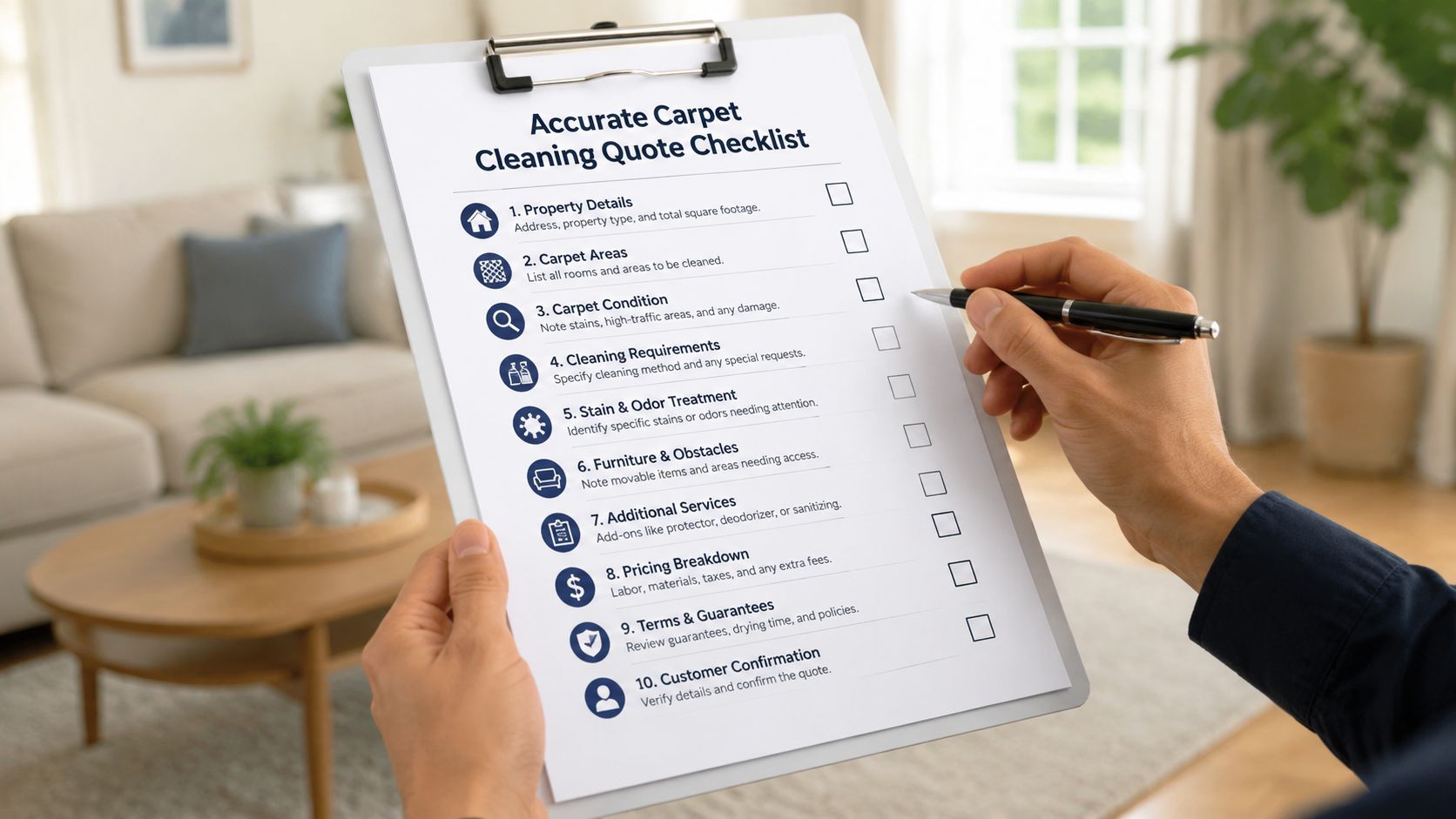
A GTA office manager often sees this problem on the second quote, not the first. Vendor A looks cheaper on paper. Then the scope starts to tighten. Evening access costs extra, spotting is limited, drying time does not fit the next morning's occupancy, and the building requires elevator booking and security sign-in. The invoice ends up closer to Vendor B, or higher.
That is why the final cost of commercial carpet cleaning depends less on the headline rate and more on the operating conditions at your site. Six factors usually explain the difference.
1. Square footage and scale
Size affects cost, but scale affects price.
A 12,000 square foot open office usually gives a contractor better production efficiency than a 1,800 square foot suite with multiple enclosed rooms, shared corridors, and limited staging space. Setup, travel, and equipment handling still happen on both jobs. Larger sites spread those fixed labor costs across more area, which can lower the effective per square foot price.
For small offices, this point matters more than many buyers expect.
2. Soil level and foot traffic
Two offices with the same floor plan can price very differently if one gets light weekday use and the other carries winter salt, rain tracking, food spills, and heavy visitor traffic.
Higher soil loads slow production in several ways. Technicians need more pre-treatment, more agitation, more extraction passes, and more attention to entry lanes and break areas. In business terms, heavy soil also shortens the interval before the carpet looks dirty again. That raises the total cost of ownership, even if the single-service quote looked competitive.
3. Carpet type and current condition
Commercial broadloom, carpet tile, low-pile glue-down carpet, and softer decorative finishes do not clean at the same speed or with the same risk profile.
Older carpet can also change the scope. Traffic lane greying, wick-back from past spills, adhesive issues, and wear in transition areas often mean the goal is improvement rather than full restoration. A careful contractor will price that reality into the proposal and set expectations early. That is usually a good sign, not a reason to reject the bid.
4. Service level and cleaning method
The method matters because it changes labor time, drying time, and how disruptive the service is to your operations.
Routine maintenance cleaning is one thing. Deep extraction for neglected carpet is another. Add-on services such as stain treatment, deodorizing, low-moisture drying requirements, or sanitation-related procedures increase both material use and technician time. If you are comparing proposals, review whether the vendor is quoting interim maintenance or commercial steam cleaning for deep extraction. The lower quote may reflect a lighter method, not better buying.
5. Scheduling, access, and building rules
This is one of the biggest cost drivers in GTA commercial work.
After-hours access often means overtime premiums, tighter production windows, alarm coordination, concierge check-in, elevator reservations, loading dock rules, and restrictions on noisy equipment. A suburban office with easy evening entry will usually cost less to service than a downtown tower floor that must be completed between tenant departure and next-morning occupancy.
The cleaning task may be identical. The site logistics are not.
6. Furniture movement and contract frequency
Furniture handling changes labor more than many quote requests acknowledge. Rolling task chairs are simple. Workstations with cables, file pedestals, waiting room seating, and exam room equipment are slower and carry more liability.
Frequency also changes pricing logic. A quarterly or monthly maintenance contract often costs less per visit than a one-off restorative clean because the carpet stays in better condition and the vendor can plan labor more efficiently. For the buyer, that can reduce complaints, extend carpet life, and make annual budgeting more predictable. A cheaper one-time rate can become the expensive option if irregular service lets soil build up and forces more aggressive cleaning later.
Sample Commercial Carpet Cleaning Scenarios in the GTA
A property manager in Mississauga and an office manager in downtown Toronto can request cleaning for the same square footage and still receive very different quotes. The difference usually comes from access windows, soil load, furniture density, and how often the carpet has been maintained, not from the carpet alone.
That is why sample scenarios are more useful than generic price-per-room ranges. Commercial buyers in the GTA are usually paying for production time, site constraints, and service level.
Estimated Commercial Carpet Cleaning Costs in the GTA 2026
| Business Type | Approx. Size (sq ft) | Common Challenges | Estimated Cost Range (Per Service) |
|---|
| Small professional office | 1,500 to 3,000 | Private offices, chairs to move, coffee spots, limited evening access | $0.15 to $0.40 per sq ft |
| Open-concept tech office | 4,000 to 8,000 | Large open areas, workstation density, recurring maintenance potential | $0.15 to $0.30 per sq ft |
| Medical or dental clinic | 2,000 to 5,000 | Tight scheduling, heavier traffic at reception, odour concerns, treatment rooms | $0.20 to $0.40 per sq ft |
What these scenarios mean in practice
A small professional office often has the highest cost per square foot, even though the total invoice is smaller than a larger site. Crews spend more time working around enclosed offices, desk chairs, and small spill areas. Minimum charge logic also matters here. If the vendor has to mobilise a truck, equipment, and two technicians for a compact site, the setup time represents a larger share of the bill.
An open-concept tech office usually prices more efficiently because crews can clean more area with fewer stops. That does not automatically make it cheap. After-hours access, security sign-in, elevator booking, and requests for fast dry times can still push pricing upward. The main commercial advantage is lower cost of ownership under a regular maintenance plan, because lighter, more frequent cleaning often prevents the need for a disruptive restorative visit later.
A medical or dental clinic tends to sit near the top of the range for operational reasons. Reception zones collect heavy traffic, treatment rooms may require careful sequencing, and the work often has to fit into a narrow evening or weekend window. Buyers are paying for coordination and risk control as much as for extraction or low-moisture cleaning.
The business takeaway is simple. A low square foot rate does not always produce the lowest annual cost. If a cheaper provider can only service your space at long intervals, leaves carpets wet into business hours, or prices spotting and furniture handling as extras, the apparent saving disappears quickly.
Managers comparing GTA vendors should also look at whether carpet cleaning is being priced as a standalone task or as part of broader office cleaning services in Toronto. Bundled service can reduce callout costs and simplify scheduling, but only if the quote clearly separates routine maintenance from periodic restorative carpet work.
Your Checklist for Getting Accurate Quotes
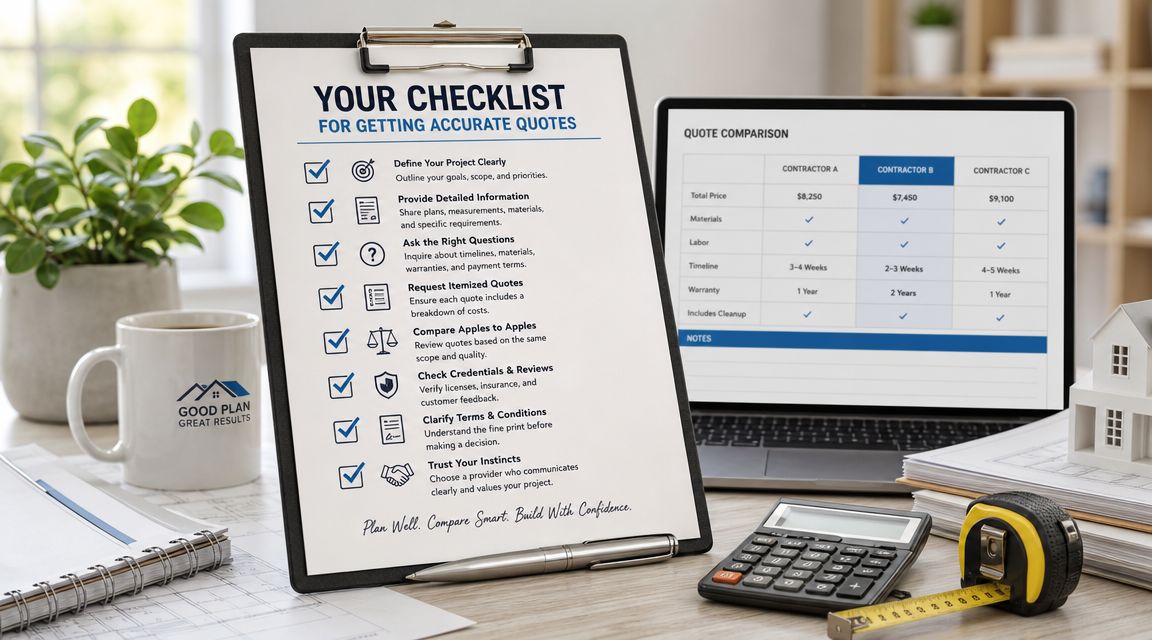
A usable quote does more than name a price. It tells you what the contractor thinks the job is.
Questions to ask every carpet cleaning company
- What cleaning method are you proposing? Ask whether the quote is for hot water extraction, encapsulation, bonnet cleaning, shampoo, or a mixed approach.
- How did you measure the carpeted area? Measured square footage is more reliable than a verbal estimate.
- What is included in the base price? Confirm spotting, pre-treatment, deodorising, drying support, and light furniture movement.
- What is excluded? This matters just as much. Exclusions often create the biggest pricing surprises.
- What site conditions did you assume? Occupied space, elevator access, parking, security check-in, and evening access all affect labour.
- How long will areas stay damp? Drying expectations affect business operations and safety planning.
- What does your team need from us before arrival? A provider who answers this clearly usually has a more organised process.
- How do you handle complaints or rework? The answer shows whether the company prices for quality control or only for first-pass completion.
What to avoid
Some quote formats should slow a buyer down.
- Vague flat fees: If the scope isn't attached to the fee, comparison is weak.
- One-line proposals: They're fast to read and hard to enforce.
- Unclear furniture assumptions: This is a common source of change orders.
- Promises without process: “We'll handle everything” sounds helpful, but it doesn't define labour, timing, or limitations.
Ask vendors to quote the same scope in writing. If each bidder assumes different access, timing, and inclusions, you're not comparing prices. You're comparing different jobs.
A practical extra step is to ask for two versions of the quote. One for a one-time clean, and one for a recurring maintenance plan. That helps expose whether the provider is pricing for restoration or for lifecycle care.
How to Save Money on Commercial Carpet Cleaning
A GTA office manager often sees the same pattern. The first quote looks low, the job gets approved, and the actual cost shows up later through extra stain treatment, weekend access charges, or a second visit because the carpet was too far gone for a maintenance clean. Savings usually come from controlling those variables early, not from choosing the cheapest line item.
The practical goal is to lower total cost of ownership. In commercial settings, that means keeping carpet presentable, extending replacement cycles, and reducing disruption to staff and tenants. A lower invoice on one visit can still be the expensive option if it leads to faster wear, more frequent complaint calls, or repeated restorative cleaning.
Smarter ways to reduce spend
- Buy maintenance before you need restoration: Light, scheduled cleaning usually costs less than bringing heavily soiled carpet back from neglect. This matters in lobbies, corridors, and winter entry paths where soil loads build quickly.
- Set different frequencies by area: High-traffic zones often need more frequent service than private offices or boardrooms. Cleaning the whole site at the same interval can waste budget on low-use space while under-serving the areas that drive appearance complaints.
- Use daytime access where the building allows it: After-hours work can add labour cost through security procedures, locked-floor access, freight elevator limits, or slower production. If even part of the work can be done during business hours in low-sensitivity areas, the unit cost may improve.
- Control dry soil before it becomes extraction work: Entry matting, routine vacuuming, and prompt spot response reduce the amount of embedded soil a carpet cleaner has to remove later. That lowers labour intensity and can improve results.
- Ask for zone-based pricing options: A rotating plan for priority areas can cost less over the year than repeated full-floor cleaning. It also aligns better with how commercial carpet wears.
- Bundle only where the scope is clear: Combining carpet cleaning with janitorial or hard-floor care can reduce mobilisation and admin time, but only if each task is priced and defined separately enough to audit later.
Frequency is where many buyers either save money or create waste.
A monthly visit to a reception area may be cheaper over a year than two heavy cleans plus ongoing appearance complaints. The same logic does not apply to a seldom-used executive office. Commercial carpet pricing works best when the cleaning plan follows traffic patterns, weather exposure, and business use, not a blanket schedule.
Contract structure also affects cost. Vendors usually price recurring work more efficiently because crew planning, route density, and equipment allocation are easier to manage. That gives buyers room to negotiate better rates, clearer service levels, or capped pricing on add-ons such as spot treatment or small emergency callouts. A one-time clean gives you less room to negotiate prices and usually assumes less predictability.
It also helps to ask one operational question before signing. What conditions would cause the quoted price to change? The answer often reveals hidden cost drivers such as furniture density, parking distance, after-hours supervision, or unusually heavy soil. A good provider should be able to explain those triggers clearly in the same way a strong commercial cleaning FAQ for facility buyers explains service assumptions up front.
One local example is Arelli Cleaning, which offers office and commercial cleaning in the GTA and may suit buyers who want carpet care and broader janitorial service under one vendor. That can reduce coordination time, though the scope still needs to be itemised so bundled pricing remains easy to compare and manage.
Frequently Asked Questions About Carpet Cleaning Prices
How often should an office clean its carpets
It depends on traffic, weather exposure, and the kind of work happening in the space. Reception zones, corridors, and lunch areas usually need more frequent attention than enclosed offices. A useful rule is to base frequency on visible wear patterns and business disruption tolerance, not on a generic calendar.
Why are small offices sometimes more expensive per square foot
Small jobs still require travel, setup, equipment preparation, and teardown. Those fixed costs are spread over less area, so the unit price often rises.
Is after-hours cleaning always more expensive
Not always, but it often is. Evening or weekend scheduling can slow access, require tighter coordination, and reduce production speed if crews need to work around building rules.
Does furniture moving usually count as part of the quote
Sometimes, but buyers shouldn't assume it. Many proposals include only light movable items and exclude heavy desks, shelving, or sensitive equipment unless listed.
Can a company guarantee stain removal
No reputable contractor should guarantee every stain will disappear. Some stains respond well to treatment. Others are permanent, previously set, or have altered the carpet fibre.
What's the difference between deep cleaning and maintenance cleaning
Deep cleaning is usually designed to remove embedded soil and reset the carpet's condition. Maintenance cleaning focuses more on keeping appearance and soil load under control before the carpet reaches a heavily impacted state.
Do carpet cleaning companies have minimum charges
Many do, especially for small jobs, but the format varies by provider. If a quote looks unusually low or unusually high for a tiny area, a minimum service charge may be affecting the number.
Where can a buyer compare general service policies
A practical place to start is a company's commercial cleaning FAQ page, which can clarify scheduling, scope, and service expectations before a site visit.
Further Reading and Resources
A GTA office manager usually does not need more generic carpet cleaning articles. The better next step is to gather resources that help with vendor coverage, site fit, and procurement discipline across multiple locations or building types.
Internal resources
Use those materials to confirm whether a contractor serves the municipalities you manage, not just downtown Toronto. That matters in commercial work because travel time, parking constraints, and after-hours access rules can change crew productivity and, in turn, the true cost of the job.
For outside research, avoid reading residential pricing pages as if they apply directly to offices, clinics, retail units, or multi-tenant buildings. Commercial buyers get better results from sources that explain maintenance planning, cleaning methods, and flooring care standards rather than simple per-room price ranges.
The strongest buying process stays disciplined. Define the square footage, note entry restrictions, record furniture density, and ask each bidder to price the same written scope so you can compare labour assumptions instead of headline numbers alone.
If a GTA business wants another option in that comparison set, Arelli Cleaning is one provider to review alongside others. The useful comparison is not only price. It is whether the quote is clear about access timing, spotting limits, drying expectations, periodic maintenance frequency, and how the service will affect normal building operations.






.webp)