Is choosing a disinfectant really the main challenge, or is the harder job proving your team selected the right product, used it on the right surface, followed the label contact time, and documented the work properly?
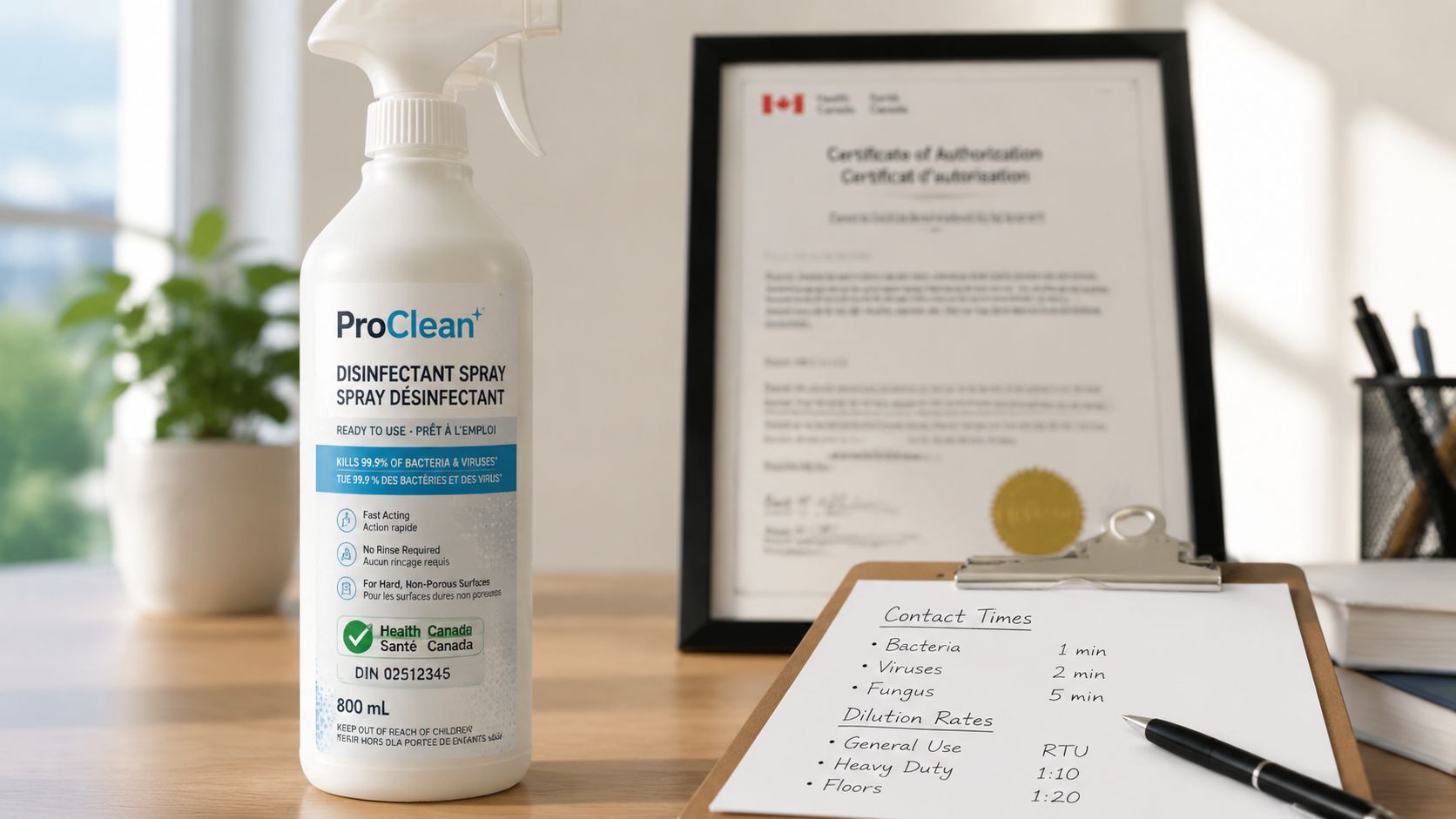
In commercial facilities, disinfection is a compliance process. A product marketed in Canada as a disinfectant needs Health Canada authorization and an 8-digit Drug Identification Number (DIN). The label also governs where the product can be used, how long the surface must stay wet, what PPE may be required, and whether pre-cleaning is necessary. Those details decide whether a disinfection program stands up during an audit, incident review, or client complaint.
That is why product selection starts with authorization, label fit, and repeatable use in your building. A healthcare clinic, school, gym, and office tower may all need a Health Canada approved disinfectant, but they do not need the same chemistry, dwell time, material compatibility, or application method. Wipes reduce mixing errors. Concentrates lower cost per use but add training and dilution-control risk. Sprays cover irregular surfaces well, but overspray and ventilation become real operational concerns.
Facilities that manage this well treat disinfection as part of a larger chemical program, not a one-off purchase. For a useful operations-focused companion read, see optimizing cleaning chemicals for your business. If your team is also reviewing procurement and stock standardization, it helps to align disinfectant selection with the rest of your commercial cleaning supplies and consumables.
This guide focuses on the practical side. How to verify a product, read the label properly, match it to the setting, and apply it in a way your staff can repeat and your facility can defend. The product list matters, but the operating framework matters more.
1. Clorox Healthcare Bleach Germicidal Wipes
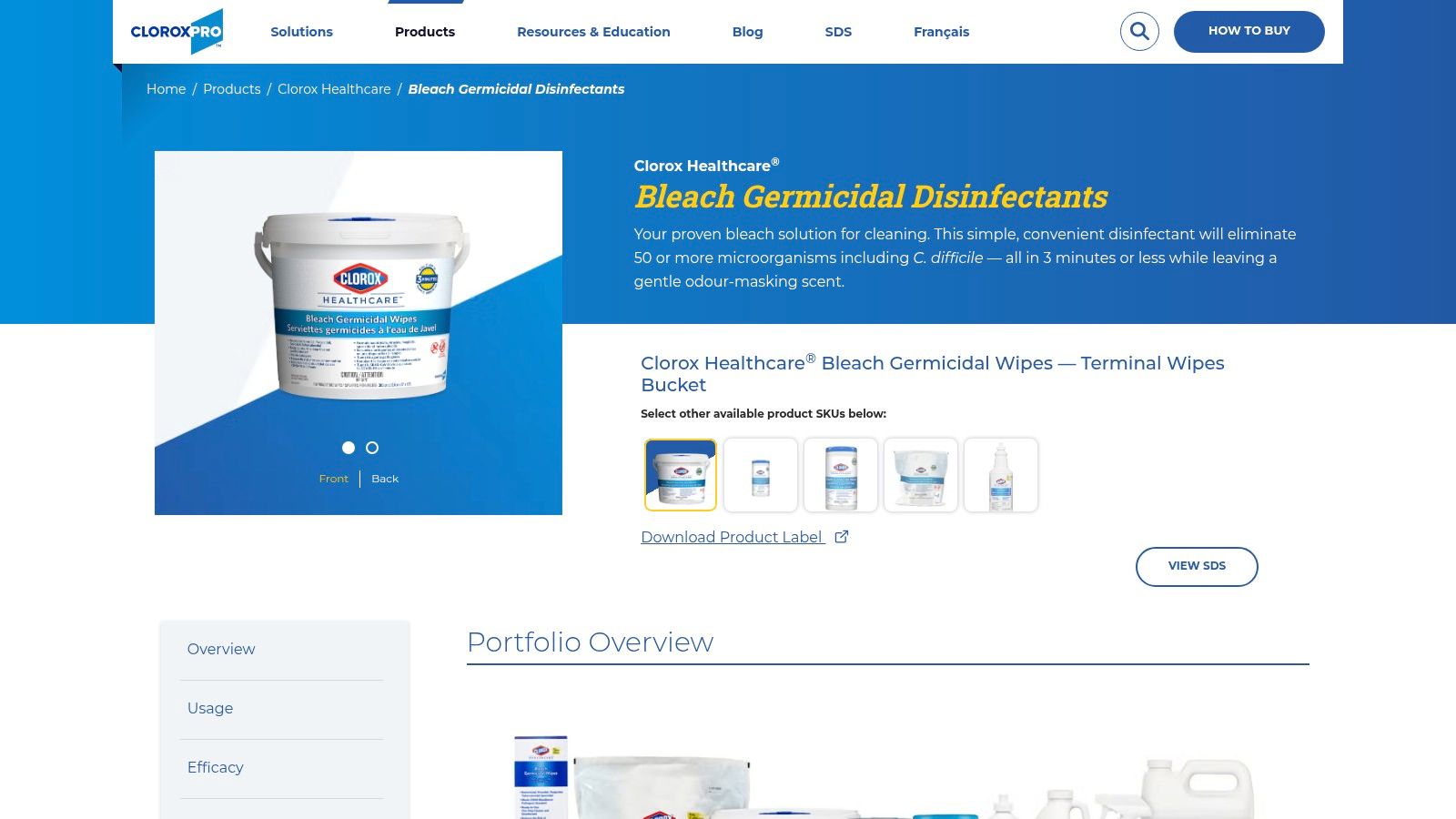
What belongs on the cart when a routine wipe-down is not enough?
Clorox Healthcare Bleach Germicidal Wipes are built for higher-risk disinfection tasks on hard, non-porous surfaces. In practice, that means body fluid incidents, washroom contamination events, healthcare-adjacent spaces, and other situations where a facility wants a bleach-based sporicidal option available and ready to deploy. The ready-to-use format also removes one of the most common operational failures with disinfectants: incorrect dilution.
That convenience does not make bleach the right default across a whole building. It is usually the wrong choice for touchscreens, sensitive metals, some coatings, and decorative finishes. In occupied office areas, odour complaints and ventilation limits can also turn a technically effective product into a poor operational fit.
Where they work best
These wipes earn their place in response work and controlled high-risk use. Supervisors can issue a clear instruction, staff can bring the canister straight to the point of use, and the team does not have to rely on a dispenser station or mixing setup during an urgent cleanup.
From a compliance standpoint, bleach wipes are also easier to standardize than concentrates. Staff use the product as packaged, which reduces variation between shifts. The label still governs the job. Teams need to confirm contact time, required PPE, pre-cleaning steps, and any surface restrictions before putting the product into routine use.
A practical rule works well here: keep bleach wipes for tasks that justify bleach. If most of your touchpoints are finished metal, laminate, acrylic, or electronics, this product should stay in a targeted-response role, not in every cleaner's hand for general rounds.
What to verify before buying
- Surface compatibility: Bleach can damage finishes, corrode some metals, and shorten the life of sensitive surfaces.
- Use conditions: Strong chemistry may be appropriate for incident response but hard to justify in densely occupied client-facing areas.
- Training demands: Ready-to-use wipes reduce mixing errors, but staff still need clear direction on contact time, disposal, and when not to use bleach.
- Cost control: Wipes are simple to deploy, but they become expensive if crews use them as a catch-all product.
Facilities that handle chemical control well usually separate products by task, risk level, and surface type. That approach also makes it easier to align high-risk disinfectants with the rest of the building's cleaning supplies program and avoid casual misuse.
For Canadian buyers, another checkpoint matters before the product ever reaches the cart. Confirm that the disinfectant is authorized for sale in Canada and that the label claims match the intended use in your building. Authorization is only the starting point. The ultimate operational test is whether staff can apply the product correctly, on the right surfaces, under the conditions stated on the label.
For product details, see Clorox Healthcare Bleach Germicidal Disinfectants.
2. Clorox Healthcare VersaSure Alcohol-Free Cleaner Disinfectant Wipes
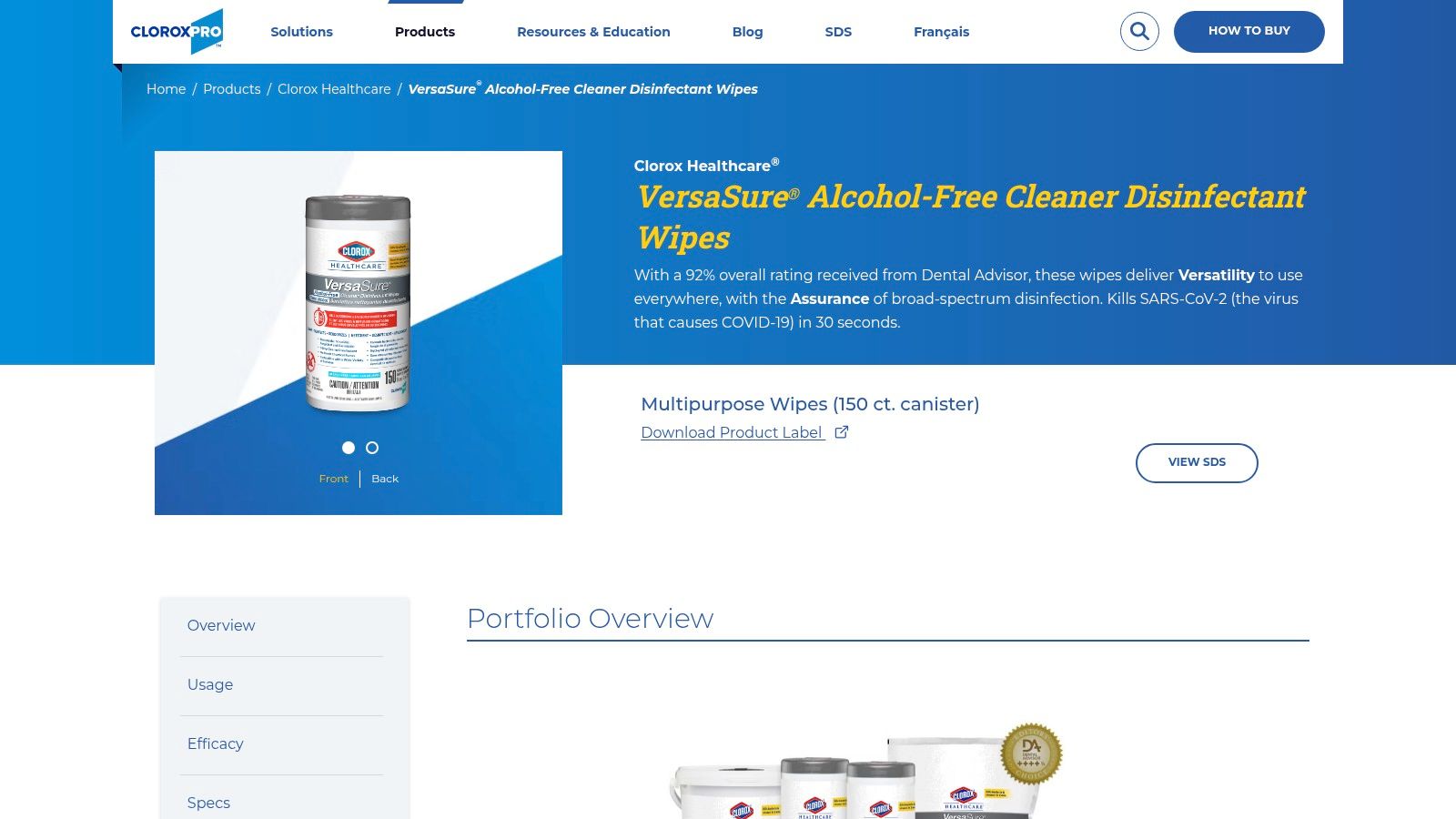
Need a disinfectant wipe that staff can use across reception counters, desks, shared devices, and other finished surfaces without bringing alcohol onto every touchpoint? VersaSure usually enters the discussion in facilities that want simpler daily disinfection with fewer surface-compatibility concerns.
That makes it a practical option for mixed-material environments. Schools, office floors, amenity spaces, front desks, and meeting rooms often contain laminates, plastics, coated metals, and electronics-adjacent surfaces that do not respond well to harsher chemistry or visible residue. An alcohol-free format can reduce those headaches, but only if the product is still matched to the site's risk profile and used exactly as labeled.
From an operations standpoint, VersaSure works best where consistency matters more than maximum kill strength. Crews can carry a canister on routine rounds, supervisors can standardize the steps, and managers can document a repeatable process for common hard surfaces. That is often a significant advantage of a ready-to-use wipe program. Fewer handling steps usually mean fewer execution errors.
Authorization still is not the same as blanket suitability. A DIN confirms the product is authorized for sale in Canada, but facility managers still need to verify contact time, approved claims, surface directions, and any limitations tied to the label. For teams building a verifiable program, that same discipline should carry into commercial disinfection and sanitizing procedures, staff training, and audit records.
Where VersaSure fits best
VersaSure is a strong fit for spaces that need frequent touchpoint disinfection without the operational burden of mixing chemicals or rotating through multiple daily-use products. It suits mobile teams, daytime cleaning, and public-facing areas where odour, residue, and finish preservation affect user experience.
It should still sit inside a broader product plan.
If the building has outbreak response protocols, washroom contamination events, or pathogen concerns that call for a different chemistry, this wipe should not be forced into roles it was not selected for. Good programs separate daily disinfection from higher-risk response work.
Practical checks before rollout
- Label match: Confirm the organism claims and contact time match the actual use case in the building.
- Surface fit: Test against the finishes and equipment your crews touch every day, especially on high-visibility surfaces.
- Storage control: Open lids dry wipes out quickly. Once that happens, staff cannot keep surfaces visibly wet for the required dwell time.
- Use discipline: Wipes are convenient, but crews still need to use enough product to fully wet the surface instead of giving it a quick pass.
The facilities that get the most value from VersaSure are usually the ones that treat it as a controlled daily-use tool, not a universal answer. That approach protects surfaces, supports compliance, and makes it easier to explain why this product is on the cart and where it stops.
For product details, see Clorox Healthcare VersaSure Alcohol-Free Cleaner Disinfectant Wipes.
3. Diversey Oxivir TB Wipes
What matters more in daily operations: the fastest claimed contact time, or a wipe crews will use correctly on every round?
Oxivir TB Wipes are often selected for programs that need repeatable disinfection without the odour and surface complaints that can come with harsher chemistries. In commercial buildings, that trade-off matters. A product can look strong on paper and still fail in practice if staff avoid it on occupied floors, rush the application, or use it inconsistently on sensitive finishes.
These wipes fit best where supervisors need a controlled, ready-to-use method for high-touch surfaces. The routine is simple, but compliance still depends on execution. Surfaces must be fully wetted, the label contact time must be met, and wipe disposal has to stay inside the site's waste-handling process.
Where Oxivir TB Wipes make operational sense
I see these wipes perform well in shared commercial settings where turnover is frequent and the task needs to be easy to verify. Reception counters, elevator buttons, door hardware, shared desks, waiting areas, washroom touchpoints, and staff amenity spaces are typical examples.
They are also useful when a facility wants to reduce friction in its disinfection program. Crews do not have to manage dilution, secondary bottle labeling, or dispenser calibration. That lowers one set of risks while leaving another in place. Wipe systems are only compliant when staff use enough product to keep the surface wet for the full dwell time.
What facility managers should check before approval
- Label fit: Confirm the DIN, organism claims, and contact time match the building's actual risk profile.
- Surface compatibility: Review how the product performs on plastics, coated metals, touchscreens, and other high-contact finishes in the site.
- Workflow control: Use wipes where portability and speed matter, not as a substitute for every disinfecting task in the building.
- Inventory discipline: Monitor lid closure, storage conditions, and refill practices so wipes do not dry out before use.
- Response limits: Keep a separate product in the program if outbreak, spore-related, or higher-risk contamination protocols require different chemistry.
That last point is where many programs weaken. A health Canada approved disinfectant is not interchangeable with every other approved product. Approval confirms permitted use under the label. It does not remove the need to match chemistry, contact time, surface type, and site protocol. Teams building a formal commercial disinfection and sanitizing program should document those decisions during procurement, training, and audit checks.
Fast claims only matter when the surface stays visibly wet long enough to meet the label.
For product details, see Diversey Oxivir TB Wipes.
4. Diversey Oxivir Plus Disinfectant Cleaner Concentrate
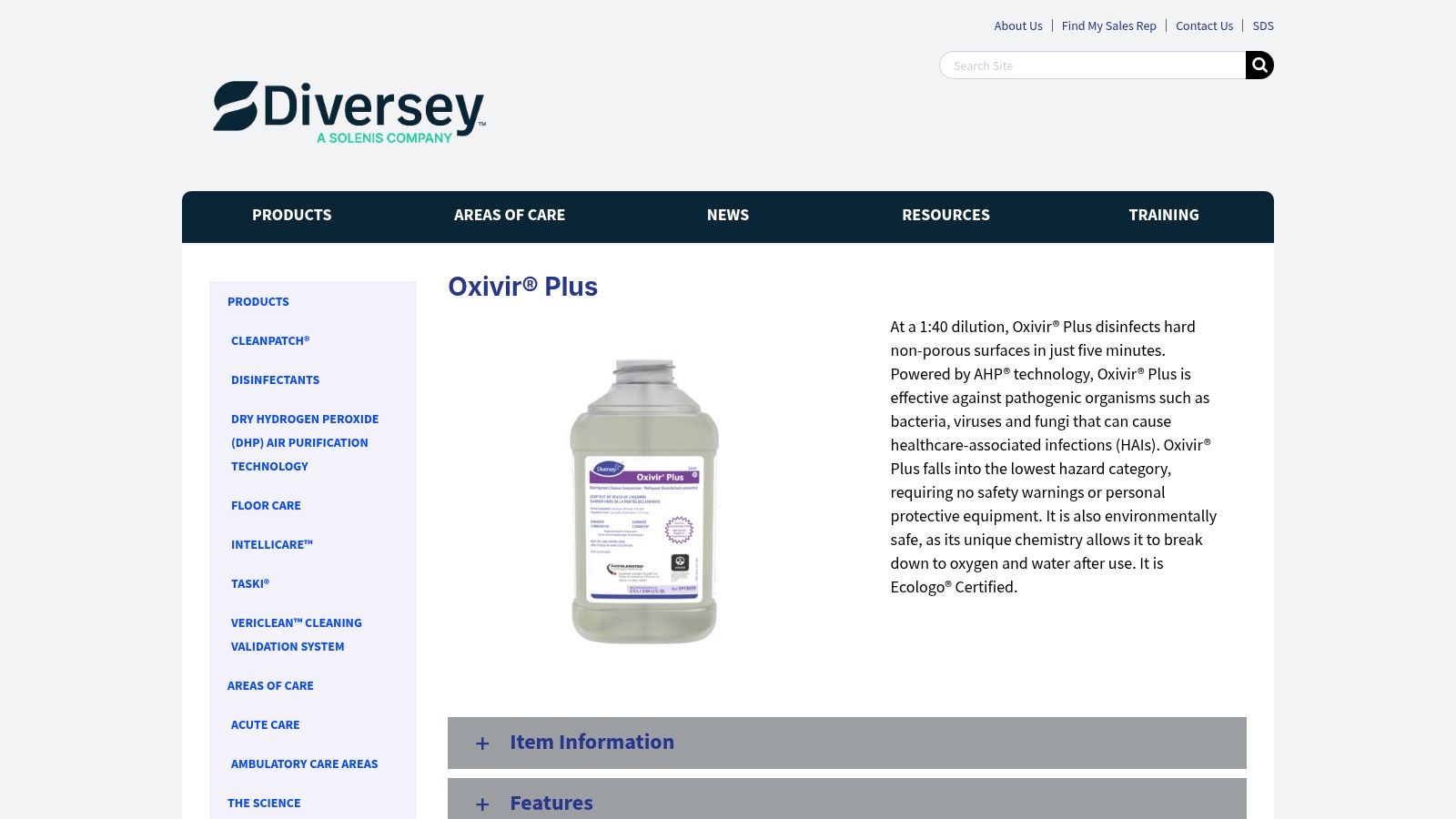
Oxivir Plus is the version of the hydrogen peroxide approach that makes the most sense at scale. If a building has larger floorplates, recurring daytime cleaning, autoscrubbers, or a central chemical dispensing system, concentrates usually outperform wipes on cost control and supply efficiency.
That doesn't mean they're easier. They're harder to manage well. A concentrate introduces dilution control, bottle labeling, dispenser maintenance, training, and verification.
Where concentrates win
This product is a strong fit for larger offices, institutional properties, and mixed-use commercial facilities that need one disinfectant cleaner across many rooms and repeated workflows. Used properly, a concentrate supports consistency without sending crews out with cases of wipes.
It also gives supervisors more flexibility. They can build process around spray-and-wipe work, bucket methods for certain surfaces, and machine-assisted cleaning where the label permits.
What doesn't work is assuming the chemistry alone protects the program. If staff over-dilute, under-dilute, or fill secondary bottles with poor labeling discipline, the whole compliance chain starts to weaken.
The management burden
- Staff training: Crews need to know mixing procedures, PPE expectations, and label directions.
- Quality assurance: Secondary containers, dispenser checks, and clear work instructions are essential.
- Surface planning: One concentrate can cover a lot, but not every surface in every room should be disinfected with the same method.
This is also where Canadian regulatory changes matter operationally. Health Canada's new Biocides Regulations came into force on May 31, 2025, creating a single system for surface disinfectants and surface sanitizers, with a 4-year transition period ending May 31, 2029 for most products and a later May 31, 2031 deadline for certain food-contact-surface sanitizers used in restaurants, commercial kitchens, and food-processing facilities, according to Healthy Cleaning 101's summary of the new framework.
That change won't eliminate the need for site-level verification. It increases the value of disciplined product management.
For product details, see Diversey Oxivir Plus Disinfectant Cleaner Concentrate.
5. Ecolab Peroxide Multi Surface Disinfectant and Cleaner
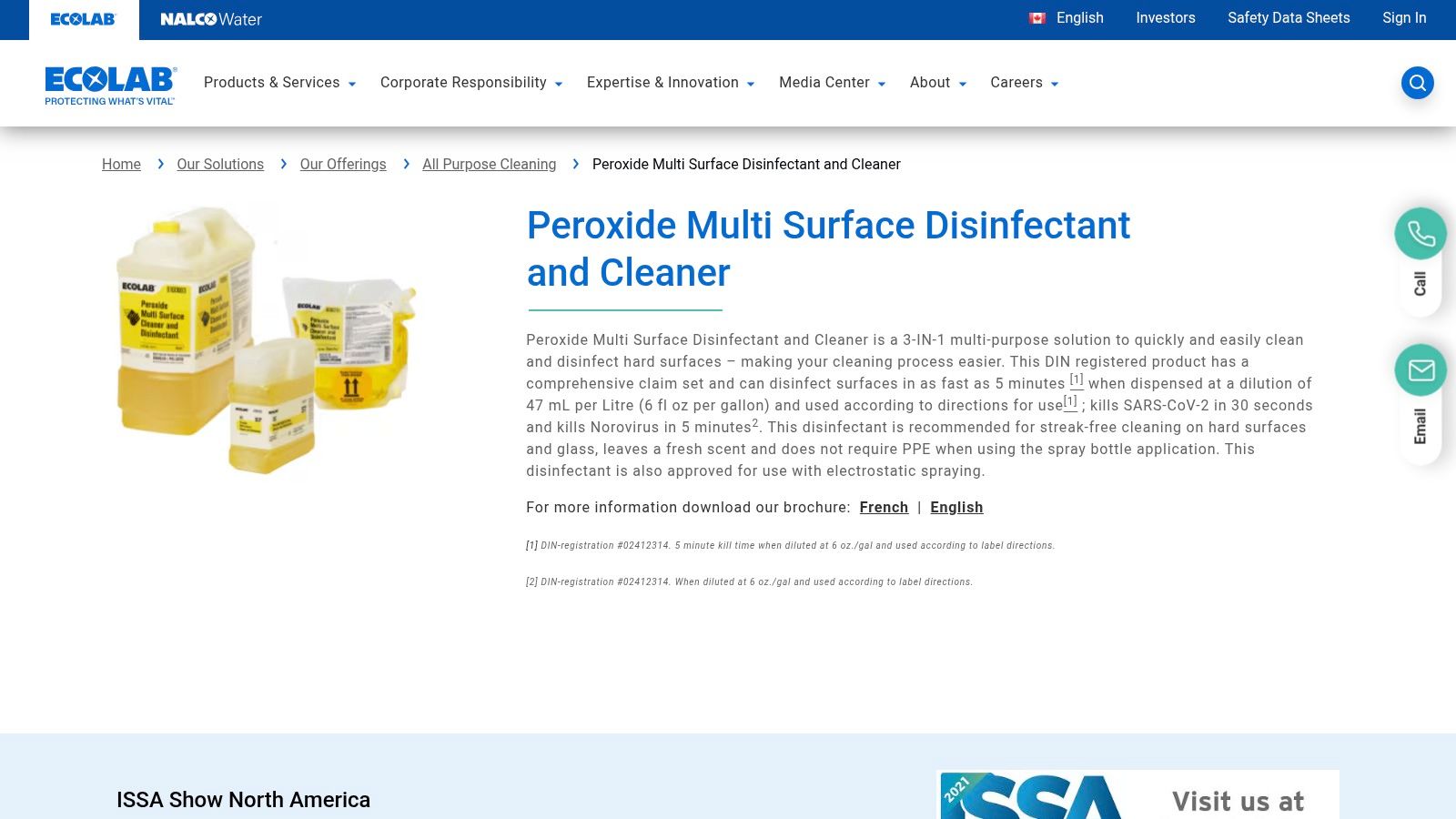
Ecolab's peroxide multi-surface format appeals to facilities that want fewer products in circulation. That's especially useful in hospitality-style offices, retail-facing spaces, and institutional environments where teams clean glass, counters, and general hard surfaces in the same service window.
A multi-purpose disinfectant cleaner can simplify training. Instead of asking staff to switch between a glass cleaner, a neutral cleaner, and a disinfectant for every zone, the facility can narrow the chemical menu. That usually improves compliance.
Where it makes operational sense
This type of product is often strongest in front-of-house environments. Lobbies, boardrooms, glass partitions, café seating, and shared workstations benefit from a peroxide-based option that supports both appearance and disinfection.
It also suits facilities that want program support from a larger supplier. Ecolab systems are commonly paired with dispensing tools, account management, and standardized training materials. For some sites, that's a real benefit. For others, it can feel less flexible than buying open-line products through general distribution.
The caution is familiar to anyone who has managed concentrates. If your dilution control slips, your process slips with it. Secondary bottles need proper identification, and supervisors need a routine for checking that staff are filling and using them correctly.
Real trade-offs
- Good fit: Multi-surface environments, glass-heavy spaces, standardized staff training.
- Potential downside: Account-based supply models may be less convenient for smaller buyers.
- Common failure point: Teams assume “multi-surface” means universal compatibility without reading the label.
In Ontario workplaces, disinfectant choice also affects reopening and occupancy protocols, especially when a site is trying to maintain confidence in shared spaces. For broader context on workplace hygiene expectations, this overview of keeping the office clean as Ontario reopens is useful alongside product-specific review.
For product details, see Ecolab Peroxide Multi Surface Disinfectant and Cleaner.
6. Lysol Disinfectant Spray
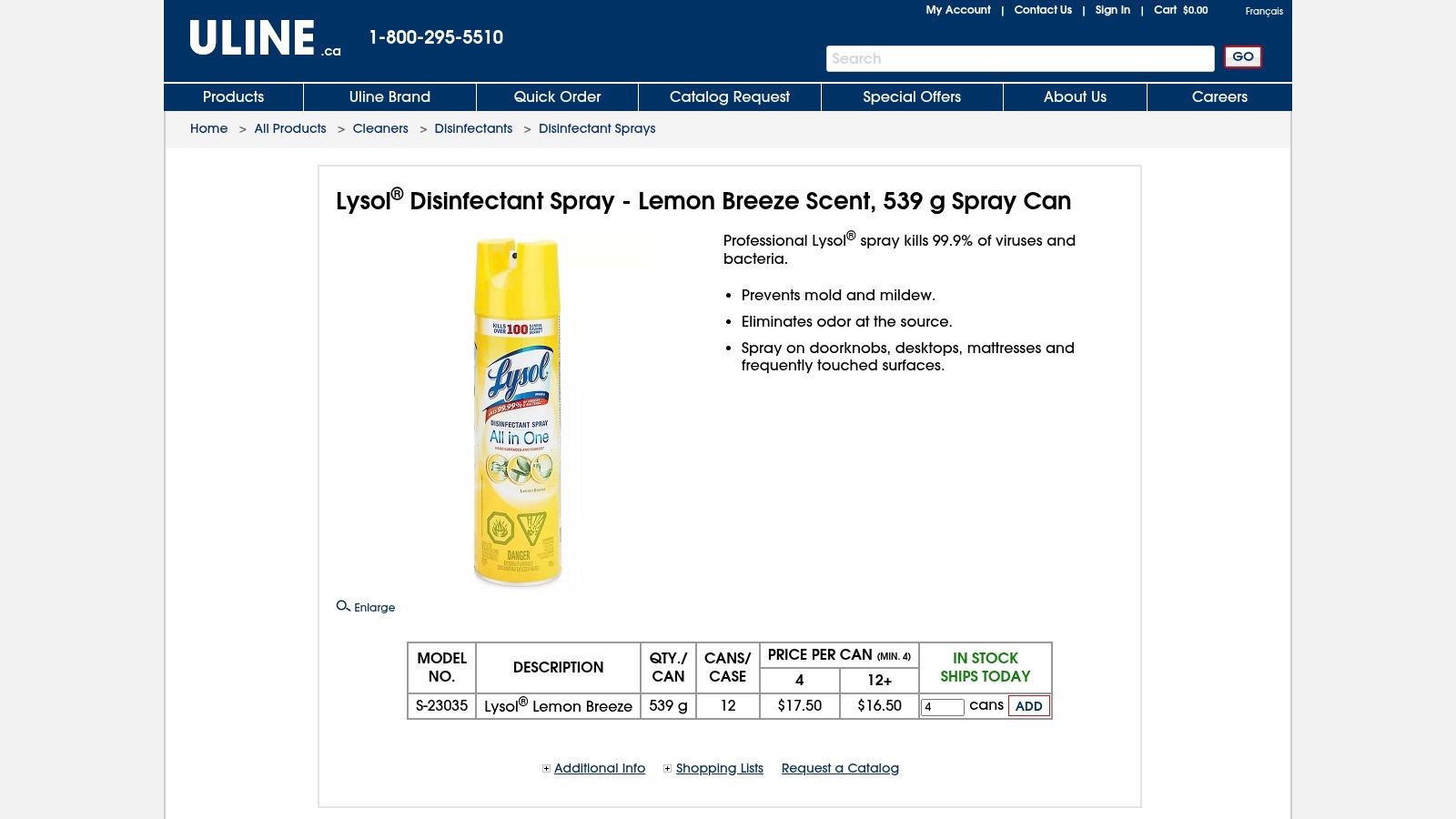
What makes an aerosol disinfectant useful in a commercial facility, and what makes it a compliance problem? The answer is usually application control. Lysol Disinfectant Spray is familiar, easy to store, and practical for targeted treatment of hard, non-porous surfaces. That same convenience also leads teams to spray too broadly, too often, and without enough attention to ventilation or contact time.
In practice, this product fits narrow tasks better than full-room routines. It can make sense at reception desks, in washrooms, on breakroom touchpoints, and in other small areas where staff can apply it directly to the intended surface and keep that surface wet for the full label direction. If the job calls for routine disinfection across large square footage, a wipe or properly prepared liquid disinfectant is usually easier to control and easier to audit.
Where facilities get into trouble
Aerosols create a process issue as much as a product issue. Staff may assume a visible mist equals disinfection. It does not. The label still governs dwell time, surface type, and safe use conditions. If overspray lands on electronics, soft materials, food-contact areas, or adjacent occupied space, the product choice starts creating avoidable risk.
Ventilation also matters. In occupied offices, schools, and mixed-use commercial spaces, product selection should account for indoor air exposure, not just kill claims. Facilities that maintain heightened occupant expectations should pair any aerosol use with clear SOPs, limited application zones, and the same documented standards used in broader COVID-conscious cleaning practices.
Best use cases
- Good fit: Small hard-surface touchpoints, quick response cleaning, backup disinfection supply.
- Less suitable for: Wide-area routine disinfection or spaces with poor air movement.
- Staff need to know: Where spraying is permitted, how to avoid overspray, and how long the surface must stay wet.
From an operations standpoint, Lysol Disinfectant Spray works best as a controlled-use tool, not a default disinfectant program. For product details, see Lysol Disinfectant Spray.
7. Avmor EcoPure EP50 Cleaner Disinfectant
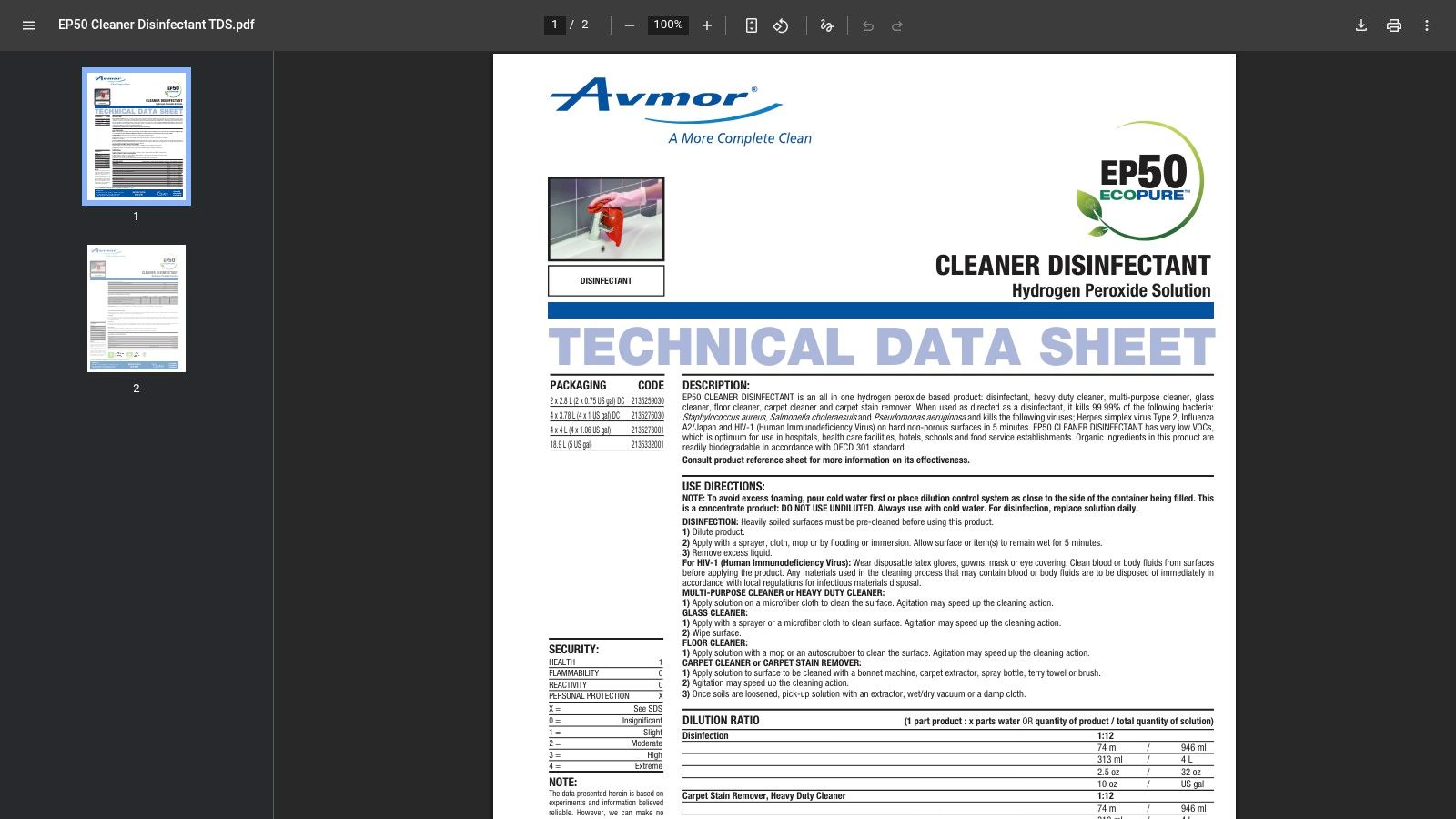
Avmor EcoPure EP50 is the kind of product that often makes sense for small and mid-sized facilities trying to reduce chemical complexity. Instead of carrying separate SKUs for multiple routine tasks, a site can use one peroxide-based cleaner disinfectant across a broad share of everyday surfaces.
That simplification matters more than people think. When a facility has too many overlapping chemicals, staff stop remembering which product belongs where. Errors go up. Training gets shallow. Storage becomes messy.
Why smaller facilities like it
A product like EP50 can support straightforward janitorial programs in offices, schools, and general institutional spaces. It's especially useful where the cleaning team is small, the budget is controlled closely, and procurement wants fewer line items to manage.
It also helps when a facility works through local distributors and wants a Canadian-market product with supporting technical literature. For many managers, that local familiarity improves adoption.
Still, simplification has limits. A general cleaner disinfectant won't cover every risk scenario. If a site has washroom incidents, healthcare-style exposure concerns, or special surface requirements, it may still need a second approved disinfectant in the program.
Practical buying lens
- Good choice for: Routine disinfection in standard commercial environments.
- Less suitable for: Facilities that need a dedicated sporicidal response product.
- Important habit: Match the label claims to the actual surfaces and tasks, not the distributor's summary sheet.
The primary advantage of products like this isn't that they do everything. It's that they reduce confusion when used for the work they were designed to do.
For product details, see Avmor EcoPure EP50 technical data.
Health Canada Approved Disinfectants, 7-Item Comparison
| Product | Implementation complexity | Resource requirements | Expected outcomes | Ideal use cases | Key advantages |
|---|
| Clorox Healthcare Bleach Germicidal Wipes | Low, ready‑to‑use but require surface compatibility checks | Basic PPE, trash disposal; avoid on electronics and some metals | Sporicidal; rapid kill including C. difficile with short dwell times | Terminal cleaning, outbreak control, high‑risk clinical zones | Proven hospital‑grade sporicide; fast, reliable kill |
| Clorox Healthcare VersaSure Alcohol‑Free Wipes | Low, RTU, simple use | Wipes supply; verify organism claims on label | Broad‑spectrum (non‑sporicidal) one‑step cleaning/disinfection | Mixed‑material environments and alcohol‑restricted finishes | Gentler on finishes; good material compatibility |
| Diversey Oxivir TB Wipes | Low, RTU with very short contact time | Wipes supply, routine QA | Broad‑spectrum (virucidal, bactericidal, tuberculocidal) in ~1 minute | Fast turnover areas: healthcare non‑spore settings, schools, offices | Extremely fast dwell times; low odor and residue |
| Diversey Oxivir Plus Concentrate | Moderate, requires dilution control and training | Dilution system or RTD, QA procedures, staff training | Hospital‑grade broad coverage at labeled dilution (≈5 min) | Large facilities, autoscrubber programs, systemized cleaning | Cost‑effective at scale; scalable and lower hazard after dilution |
| Ecolab Peroxide Multi Surface Disinfectant and Cleaner | Moderate, dilution and program management recommended | Dilution equipment, test strips, Ecolab account/support | Fast viral kill (e.g., SARS‑CoV‑2 claims), disinfects and cleans per label | Hospitality, retail, institutional facilities with enterprise programs | 3‑in‑1 versatility; streak‑free; enterprise training/compliance support |
| Lysol Disinfectant Spray | Very low, RTU aerosol, immediate use | Cans, ventilation awareness for aerosols | General hard surface disinfection; longer dwell times versus some AHPs | Spot treatment, small rooms, reception desks, restrooms | Highly convenient and widely available for spot use |
| Avmor EcoPure EP50 Cleaner Disinfectant | Low–moderate, RTU or dilution options | Optional dilution equipment, distributor support, SDS review | Peroxide‑based broad disinfection (typical contact ~5 min); not sporicidal | Offices, schools, food‑service, SMBs seeking SKU simplification | Multi‑purpose product line; Canadian manufacturer support and green attributes |
Integrating Disinfection into Your Cleaning Program
How do you turn a shelf of Health Canada approved disinfectants into a program your team can execute the same way on a Tuesday night, during a staff shortage, and under audit?
Start with scope. Disinfection should be assigned to defined surfaces, frequencies, and risk points, not applied loosely across the entire building. In practice, that means separating routine soil removal from targeted disinfection, identifying high-touch surfaces, and matching the task to the product label. A DIN confirms authorization, but the label still controls where the product can be used, how long the surface must stay wet, what PPE is required, and whether pre-cleaning is needed.
Execution usually breaks down at the same points. Wipes reduce dilution errors and make compliance easier in smaller zones, but they raise unit cost and can be misused on large surface areas. Concentrates lower cost per use and fit larger programs well, but only with dispensing control, labeled secondary containers, staff training, and supervisor checks. Aerosol sprays have a place for spot treatment, but they are rarely the right tool for routine broad-area disinfection in occupied commercial spaces.
Documentation is part of the cleaning program, not extra paperwork. A facility manager should be able to show which disinfectant is approved for the site, where it is used, how workers were trained, and how contact time is verified in day-to-day work. If that record does not exist, the program is relying on memory and individual habits. That creates avoidable risk during incident reviews, customer complaints, and health and safety inspections.
A practical operating standard should cover five points:
- Product verification: Record the product name, DIN, intended use, and the current label or technical sheet kept on file.
- Task assignment: Define which surfaces are cleaned only, which are disinfected, and how often each task is performed.
- Application method: Standardize whether staff use wipes, ready-to-use bottles, concentrates, or sprays in each area.
- Worker protection and surface compatibility: Review ventilation, gloves, eye protection, residue, odour, and finish tolerance before rollout.
- Quality control: Inspect bottles, canisters, dilution stations, storage areas, and observed staff technique on a set schedule.
Procurement should follow the same logic. The right product on paper can fail in the field if crews cannot keep surfaces wet for the required contact time, if the chemistry damages finishes, or if the dilution setup is inconsistent across shifts. Good purchasing decisions account for labor reality, not just label claims.
The same standard applies when assessing a cleaning contractor. Ask for a clear explanation of product selection, DIN verification, crew training, dilution control, and site documentation. A provider such as Arelli Cleaning may be suitable when a facility needs commercial cleaning support tied to written procedures, approved products, and routine accountability rather than informal product substitution.
If your facility is reviewing its disinfectant program, use this guide as an operating checklist. Ask each provider to show how they verify approval status, train staff, document disinfection steps, and correct errors when procedures drift. Arelli Cleaning is one option for Toronto-area businesses that want commercial cleaning and disinfection support built around approved products, documented methods, and ongoing service oversight.






.webp)