A new office manager often notices upholstery problems before anyone says them out loud. The reception sofa looks tired. A boardroom chair has a visible spill mark. Fabric panels near workstations hold odours that routine wiping never seems to fix. At that point, commercial upholstery cleaning stops being a housekeeping detail and starts looking like what it is: part of facility management.
Soft furniture affects how a workplace feels, how it presents itself, and how long expensive assets remain usable. In offices, clinics, childcare settings, warehouses with administrative areas, and educational spaces, upholstered surfaces absorb daily wear in ways hard floors and desks do not. They collect soil, allergens, body oils, and spot stains, and they do so without notice.
Why Commercial Upholstery Cleaning Matters Now
A new office manager can walk through a reception area at 8:15 a.m. and spot a problem before anyone files a complaint. The sofa still works. The chairs are still in place. Yet the fabric holds last quarter's spills, body oils, dust, and odours, and those small signs of neglect start affecting how clients, staff, and auditors read the space.

Delay usually costs more than scheduled care. Upholstery works like an air filter and a sponge at the same time. It traps dry soil deep in the fibres, absorbs moisture and oils on the surface, and hides the buildup long enough for managers to underestimate the problem. Once that contamination settles in, cleaning takes more labour, drying takes more control, and replacement discussions start earlier than they should.
Industry forecasts show why more facilities teams are paying attention. The commercial cleaning market for carpet and upholstery in North America was valued at 2,500 USD Million in 2024 and is projected to reach 4,000 USD Million by 2035, according to North American carpet and upholstery cleaning market projections from Wise Guy Reports.
It protects assets, image, and records
A stained guest chair in a law office suggests poor attention to detail. In a clinic or childcare setting, it raises a different question. What else is being missed?
That is why upholstery cleaning belongs in asset management, not just appearance care. Soft seating is purchased with a useful life in mind. Regular maintenance helps preserve that life, delays capital replacement, and gives facility managers a clearer basis for repair-versus-replace decisions. If a waiting-room chair costs hundreds of dollars to replace, extending its serviceable life by even one budget cycle changes the return on that asset.
The business case also reaches beyond looks. Shared seating is part of the workplace hygiene record. In higher-scrutiny environments, documented service dates, methods used, and fabric-safe sanitation steps support internal cleaning logs and show that the business is following COVID-conscious cleaning practices for shared commercial spaces. That documentation matters when a site is reviewed by leadership, landlords, insurers, or compliance staff.
Why the problem is easy to miss
Hard floors announce their condition quickly. Upholstery does not.
Fabric darkens slowly. Odours build gradually. Soil collects below the surface where daily wipe-downs cannot reach. Staff become used to the look, while visitors notice it in seconds because seating sits at eye level and invites direct contact. That gap between internal familiarity and outside perception is where reputational damage begins.
Material choice adds another layer. Different fibres hold soil, release stains, and react to moisture in different ways. A manager who is still understanding upholstery materials will usually find that a cleaning plan for one reception chair cannot be copied to every sofa, panel, or banquette in the building.
Commercial upholstery cleaning matters now because businesses are judged on the parts of a facility people touch, smell, and sit on. Clean seating supports brand image, helps maintain cleaner indoor environments, and produces a paper trail that supports risk control. For many organisations, that makes it a maintenance decision with measurable financial and compliance value, not a cosmetic extra.
What Is Commercial Upholstery Cleaning
Commercial upholstery cleaning is a planned maintenance service for the fabric-covered furniture people use every day at work. It covers chairs, reception seating, waiting-room sofas, banquettes, panels, cubicle walls, and other soft surfaces that collect body oils, dust, spills, allergens, and odours through repeated contact.
For a new office manager, it helps to view upholstery the same way you would view HVAC filters or floor finishes. The goal is not only to make the surface look better. The goal is to control wear, document care, reduce avoidable replacement costs, and keep shared seating suitable for public and staff use.
That business context changes the job.
A technician is not merely cleaning a sofa. The technician is identifying fabric type, choosing a safe method, limiting moisture, protecting adjacent work areas, managing drying time, and recording what was done. In many workplaces, that record supports internal maintenance logs, health and safety reviews, warranty discussions, or property management reporting.
What the service usually includes
A proper commercial upholstery service starts with assessment. If that step is skipped, the rest of the process becomes guesswork.
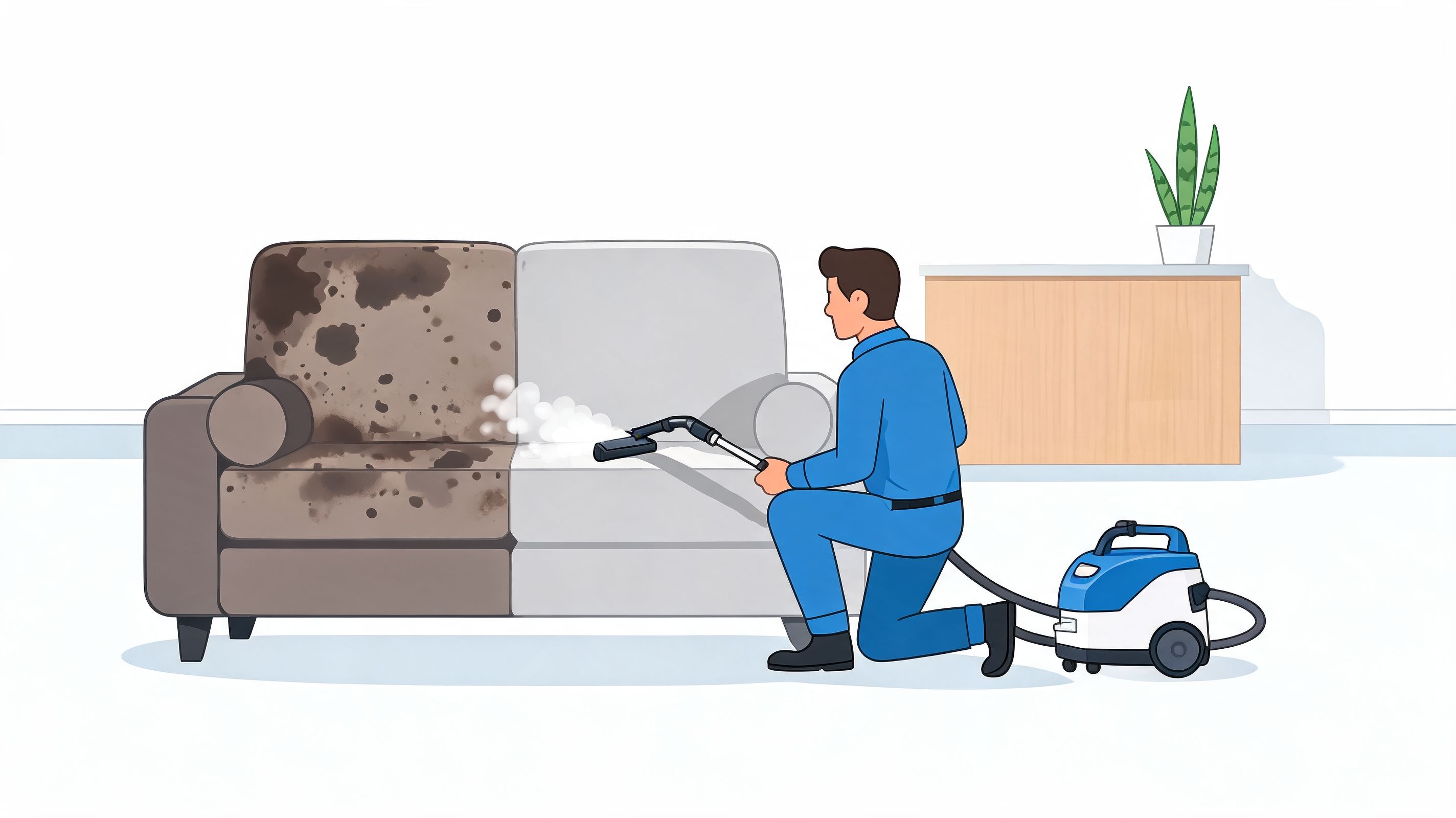
The technician checks what the fabric is made of, how heavily it is soiled, where the wear is concentrated, whether stains are likely removable, and whether past cleaning attempts have changed the colour or texture. That assessment determines whether the furniture needs low-moisture cleaning, extraction, solvent-based treatment, or a more cautious specialty approach such as commercial steam cleaning for upholstered surfaces.
A standard visit may include:
- Fabric identification: matching the cleaning chemistry and moisture level to the material
- Pre-testing: checking colour stability and fibre response before full treatment
- Dry soil removal: vacuuming out grit and particulates that wear fibres like fine sandpaper
- Spot treatment: targeting ink, food spills, oils, and other localized staining
- Primary cleaning: applying the method that fits the fabric condition and site requirements
- Drying control: reducing downtime and lowering the risk of overwetting or odour issues
- Post-service documentation: noting the method used, condition observed, and any stains or damage that remain permanent
Why fabric type changes everything
Office upholstery is not one category. A task chair in a call centre, a decorative sofa in a lobby, and a healthcare waiting-room bench may all require different chemistry, agitation levels, and drying controls. Managers who are still understanding upholstery materials usually find that safe cleaning decisions start with fibre behavior, not with the stain alone.
That point affects cost directly. Using too much moisture on the wrong textile can cause browning, distortion, long drying times, or repeat service calls. Using a method that is too light for the soil level can leave residue in place, so furniture looks tired again quickly. Good commercial cleaning balances immediate appearance with asset preservation over the full life of the furniture.
Direct answer: Commercial upholstery cleaning is a professional maintenance process for workplace furniture that combines inspection, fabric-specific cleaning, stain treatment, drying control, and service records to support hygiene, appearance, asset life, and compliance tracking.
In practice, the strongest value often comes from documentation. A clean chair looks better. A documented cleaning record does more. It shows when seating was serviced, what method was used, what condition issues were found, and whether a problem is a cleaning issue or a replacement issue. That helps managers justify budgets, answer landlord or leadership questions, and show that upholstered assets are being maintained with the same discipline applied to floors, washrooms, and HVAC systems.
In Canada, that paper trail can also matter for product handling, worker safety, and infection-control expectations in regulated or high-traffic environments.
Comparing Professional Cleaning Methods
A cleaning method is a risk decision as much as a cleaning decision. Choose too aggressive a process and you can shorten fabric life, increase downtime, and turn a maintenance task into a repair or replacement cost. Choose too mild a process and soil stays in the textile, appearance drops again quickly, and the site pays for another visit sooner than planned.
For an office manager, the practical goal is straightforward. Match the method to the fabric, the level of soiling, the drying window, and the documentation requirements for the site. That is how upholstery cleaning supports asset management instead of becoming a one-time cosmetic fix.
Commercial upholstery cleaning method comparison
| Method | Best For | Drying Time | Key Advantage |
|---|
| Hot water extraction | Heavily soiled durable commercial upholstery | Longer than low-moisture methods | Deep flushing of embedded soil |
| Low-moisture or encapsulation | Routine maintenance and faster return to use | Faster drying | Lower moisture exposure |
| Dry solvent cleaning | Fabrics that react poorly to water-based cleaning | Varies by fabric and ventilation | Useful where water exposure is risky |
The table provides a preliminary overview. A final decision follows a thorough inspection and testing process.
Hot water extraction
Hot water extraction uses cleaning solution, agitation, and strong recovery to pull suspended soil from the upholstery. It works like rinsing grit out of a filter instead of brushing only the surface. In workplaces with visible build-up, food spills, or body-oil accumulation, that deeper flush can improve both appearance and hygiene.
It also carries more operational risk if the fabric or cushion construction cannot tolerate added moisture. Sensitive fibres, unstable dyes, and slow-drying padding need careful handling. The lesson for a facility team is simple. "Deep cleaning" and "lowest total cost" are not always the same thing if the wrong furniture is selected for the method.
For sites reviewing steam cleaning for specialty surfaces, ask for fabric testing results, moisture-control steps, and expected drying times before approving the scope. Those details affect room availability, odour risk, and the likelihood of repeat service calls.
Low-moisture cleaning
Low-moisture cleaning uses less solution and is often the better fit for scheduled maintenance cycles. It is similar to wiping down equipment before grime hardens into residue. You are controlling accumulation before it turns into a restoration problem.
That makes this method useful for task seating, reception furniture, and meeting-room chairs that need a fast return to service. In a busy office, the business value is clear. Shorter drying times reduce disruption, lower the chance of slip or access issues around cleaned areas, and make after-hours scheduling easier to manage.
Low-moisture methods are usually best when the upholstery is moderately soiled rather than heavily loaded with contamination. They can also support a documented maintenance plan because they are easier to repeat on a predictable cycle.
Practical rule: Ask which method best protects this specific fabric while meeting your reopening time and record-keeping needs.
Dry solvent cleaning
Dry solvent cleaning is a specialized option for fabrics that react poorly to water-based methods. Some textiles can distort, bleed, or show water marks even when the technician is careful. In those cases, solvent-based cleaning may lower the risk.
Office managers do not need to know the chemistry in detail. They do need to know why the method was chosen, what ventilation or access controls are required, and whether the recommendation is based on the manufacturer's code, field testing, or both. That explanation matters for internal approvals and for compliance records in regulated settings.
What to ask when a method is recommended
A good recommendation should sound specific, not generic. If a provider says a method is appropriate, ask them to connect that choice to business consequences.
- What testing was done first? Ask whether the technician checked colour stability, fibre response, and any areas of prior damage.
- How much downtime should we plan for? Drying time affects room turnover, staff use, and cleaning schedules for the rest of the facility.
- What risks does this method avoid? The answer should address over-wetting, shrinkage, dye movement, residue, or solvent sensitivity, depending on the fabric.
- What result should we expect after one visit? A credible provider should distinguish between removable soil, permanent wear, and stains that may improve only partially.
- What will be documented? Request service notes that record the method used, problem areas found, and any limitations or follow-up recommendations.
Those records matter. They help explain why one seating area was cleaned with low moisture while another required extraction or specialized solvent treatment. Over time, that paper trail supports warranty discussions, budget planning, and health or infection-control reviews. It also gives facility managers a clearer way to measure ROI. Lower replacement frequency, fewer complaint-driven callouts, and documented maintenance history are easier to defend than a general claim that the furniture "looked better" after service.
The Business Case for Regular Cleaning
A new office manager often sees upholstery in the budget only after a problem appears. The reception chairs look tired. Staff mention an odour in a meeting room. A client notices a stain before anyone on your team does. At that point, the decision is no longer about routine care. It is about whether you pay for restoration, accept a weaker first impression, or replace furniture earlier than planned.

Asset protection and replacement timing
Upholstery is a working asset, not just decor. In daily use, fabric collects grit, skin oils, food residue, dust, and moisture. That soil does more than change the colour of the surface. It also increases friction in the fibres, which can make seating look worn before the frame or cushioning has reached the end of its useful life.
A practical way to view regular cleaning is to compare it with servicing a fleet vehicle. If maintenance happens on schedule, you get more usable years, fewer surprise failures, and a clearer replacement plan. If maintenance is delayed, the asset ages faster in appearance and often gets replaced for visual reasons before it is structurally finished.
That matters for budget control. Replacing one guest chair is simple. Replacing seating across reception areas, boardrooms, touchdown spaces, and waiting rooms becomes a capital decision that affects procurement, scheduling, staff disruption, and brand presentation at the same time.
For many facilities, upholstery care works best as part of a wider commercial cleaning services programme so cleaning frequency can match actual traffic patterns, seasonal use, and business hours.
ROI is easier to measure than many managers expect
Some benefits are visible. Others belong on a spreadsheet.
The visible side is straightforward. Cleaner seating improves how the space presents to clients, applicants, visitors, and staff. The financial side takes a little more explanation. Regular upholstery cleaning can reduce premature replacement, lower the number of complaint-driven emergency callouts, and help spread maintenance costs across the year instead of concentrating them into sudden purchases.
That shifts the conversation from "Does this chair look better?" to "What did this maintenance step help us avoid?"
Useful ROI indicators include:
- longer intervals before furniture replacement requests
- fewer reactive stain treatments or urgent service visits
- less downtime in front-facing rooms caused by unusable seating
- fewer disputes over whether furniture damage came from neglect or normal wear
- a documented maintenance history that supports budget approvals and asset reviews
Precise ROI will vary by furniture type, traffic level, and the age of the assets. Still, facility teams usually do not need a perfect formula to justify preventive care. They need a defensible record showing that routine cleaning costs less than accelerated wear, avoidable replacement, and repeated service disruption.
Health compliance and documentation have real business value
This is the part many businesses underestimate.
In shared spaces, upholstery sits close to the body and gets touched often, especially on seat edges and armrests. In clinics, childcare environments, waiting areas, and professional offices, cleanliness is tied to trust. In some settings, it is also tied to internal policy, audit preparation, infection-control review, or insurance-related recordkeeping.
A professional cleaning visit should leave more than a visual result. It should leave documentation. Service dates, products used, methods applied, identified problem areas, and notes on limitations all help create a maintenance trail. That trail can support health and safety reviews, answer questions from leadership, and show that the business is following a consistent care standard rather than reacting only when furniture becomes visibly soiled.
Paperwork supports risk control. If a staff member raises a hygiene concern or an auditor asks how soft furnishings are maintained, documented service records are far more useful than a verbal assurance that the furniture is cleaned "from time to time."
Image, staff confidence, and operational standards
Furniture condition shapes how people judge the rest of the facility. Floors may be clean and glass may be polished, but stained seating changes the message. It suggests that the business notices some details and misses others.
That affects different areas in different ways.
- Reception and client spaces: seating condition influences first impressions and perceived professionalism.
- Meeting rooms and executive areas: well-maintained furniture supports confidence during presentations, interviews, and negotiations.
- Staff spaces: cleaner breakout and workstation seating can improve comfort and reduce the sense that shared areas are being neglected.
- Sensitive or regulated environments: documented upholstery care supports consistent facility standards and risk management.
Regular cleaning is not only about appearance. It is part of how a business protects assets, supports hygiene expectations, and shows that workplace standards are managed on purpose.
For office managers, that is the strongest business case. Upholstery cleaning helps extend asset life, makes replacement timing more predictable, creates a record for compliance and internal review, and protects the image of the organisation in the spaces where people notice the details most.
How to Choose Your Cleaning Partner
Buying on price alone often creates problems later. Upholstery cleaning is one of those services where process quality matters because the wrong method can leave furniture too wet, chemically overtreated, or visibly improved for a day and then quickly disappointing. In a fragmented market, careful vetting isn't optional.
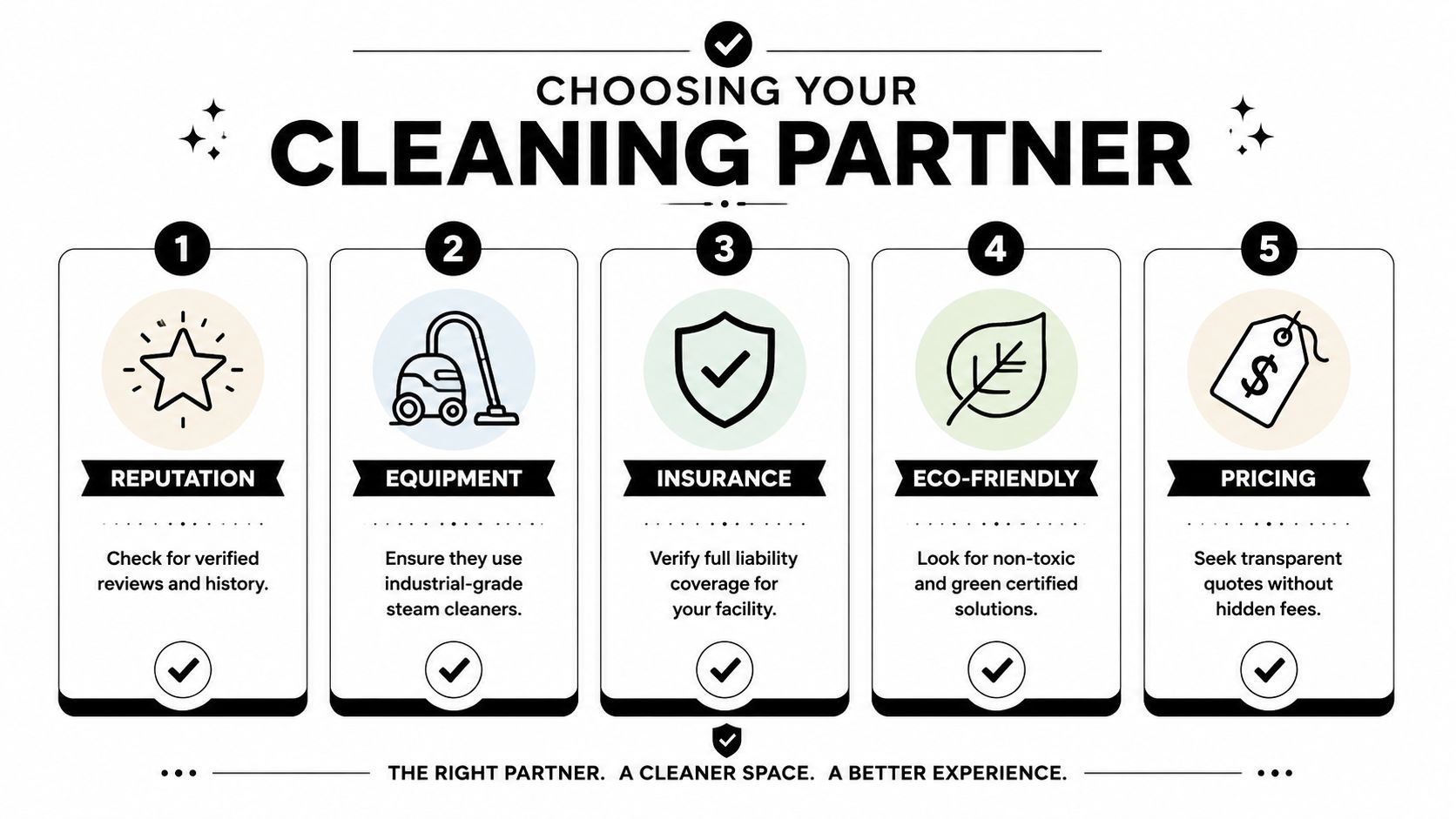
The risk of weak service is real. The commercial cleaning industry faces annual client loss of up to 55%, largely due to poor service quality, according to commercial cleaning industry benchmarks in the U.S.. That doesn't prove any one provider is unreliable, but it does show why buyers should validate process, supervision, and consistency.
A vetting checklist that actually helps
- Insurance and worker coverage: Ask for current proof. Upholstery work happens around occupied business assets, electronics, and walkways.
- Training and method knowledge: Ask who decides the cleaning method and how they identify fabric risk.
- WHMIS and product handling: The provider should explain chemical safety practices in plain language.
- Health Canada alignment: If disinfectants are part of the scope, ask how approved products are selected and documented.
- Written scope: The quote should identify what's included, what isn't, and how stain limitations are handled.
- Drying plan: Ask how they manage re-entry, airflow, and furniture downtime.
- Quality control: Ask how the company handles callbacks, touch-ups, and inspection records.
What regulated facilities should ask
Dental clinics, childcare centres, schools, and some administrative spaces inside industrial sites often need more than a clean appearance. They may need traceability. That means managers should ask whether the provider can issue cleaning records, product lists, service logs, and post-service notes suitable for internal review.
Useful questions include:
- Can the provider document what products were used on which furniture?
- Can they explain how they reduce cross-contamination risk during service?
- Can they provide post-cleaning confirmation for sensitive areas?
- Can they work around occupancy, infection-control rules, or restricted zones?
What to avoid: vague promises, one-line quotes, and any recommendation that skips fabric testing.
Signs of a good commercial fit
A strong partner usually sounds methodical. They ask about furniture age, fabric type, stain history, occupancy patterns, and access restrictions. They don't jump straight to “steam everything” or guarantee complete stain removal without seeing the material.
One option in the GTA market is Arelli Cleaning, which states that it uses system-based communication and safety compliance processes for commercial clients. That kind of operational structure can be useful, but any provider should still be evaluated with the same checklist.
Getting comparable quotes
To compare proposals fairly, each bidder should price the same scope. Managers should provide photos, counts of seating types, access hours, and any special conditions such as privacy areas, healthcare protocols, or after-hours loading restrictions. Without that consistency, one quote may look cheaper because it excludes prep work, stain treatment, or drying management.
The Service Process What to Expect
A service visit often starts with a practical business question. Can your office keep operating while the work happens, and will you have a usable record of what was cleaned, how it was cleaned, and when staff can use the furniture again? A well-run upholstery cleaning appointment should answer both questions before the first tool comes out.
The process usually begins with an on-site review of the furniture, access route, and work zones. Technicians confirm the agreed scope, check fabric condition, and flag risks such as loose seams, weakened backing, colour sensitivity, or pieces that may react poorly to moisture. That early inspection protects two assets at once. It helps prevent damage claims, and it creates a documented baseline for maintenance planning.

Before cleaning starts
The first cleaning step is often dry soil removal. Upholstery works like a filter. Dust, grit, skin cells, and fine debris settle into the fibres long before stains become visible. If that material stays in place and moisture is added too soon, it can turn into muddy residue that is harder to remove and more likely to wick back during drying.
After dry extraction, the crew normally tests the fabric and treats specific spots separately from the general cleaning method. That sequence matters. A coffee mark on a waiting room chair and body oil buildup on a reception armrest may look similar from a distance, but they do not respond to the same chemistry or agitation.
Managers who need better visibility into technician training can review restoration industry standards to understand how recognized certification frameworks connect to inspection, cleaning method selection, and fibre care.
A disciplined provider should also be able to identify what was brought on site and what was used on each furniture type. That may include spotting products, towels, protective tabs, extraction tools, and other commercial cleaning supplies for specialty work. For offices with health and safety reporting requirements, that product traceability is more than a nice extra. It supports internal documentation, incident follow-up, and purchasing review.
During the main cleaning work
Once testing is complete, technicians carry out the selected method in phases. In practical terms, that may mean sectioning off a reception area, cleaning one bank of workstation seating at a time, or finishing executive offices after staff leave. Good crews do not just clean furniture. They manage access, noise, hose placement, drying conditions, and re-entry timing so the service fits the building instead of disrupting it.
This part of the visit often determines the true return on investment. If a provider cleans efficiently, protects surrounding finishes, and shortens downtime, the business gets more than cleaner fabric. It gets fewer interruptions, lower risk of complaints, and a better chance of extending furniture life instead of replacing worn-looking pieces early.
This short video gives a simple visual sense of what professional cleaning activity can look like on site:
After the cleaning is finished
The closeout stage is where many managers can tell whether they hired a vendor or a real service partner. The team should confirm what areas were completed, note any stains that only improved partially, explain drying time, and state when furniture can return to normal use. In sensitive environments, the closeout should also support compliance records, especially if cleaning happened in shared seating areas, wellness rooms, clinics, or high-contact public spaces.
A useful post-service record often includes four things:
- Condition notes: what improved, what remained, and what appears permanent.
- Use guidance: when seating can be used again and whether any ventilation or air movement should continue.
- Product and area records: what was applied and where, for internal review or health and safety files.
- Maintenance value: a dated service trail that helps justify future cleaning budgets and delay replacement costs.
That last point is easy to miss. Upholstery cleaning is not only a cosmetic task. It works like scheduled servicing for any other business asset. A documented visit helps office managers show that furniture is being maintained, occupant-facing areas are being cared for, and cleaning decisions are based on lifecycle cost rather than appearance alone.
FAQs and Further Reading
Frequently asked questions
How often should commercial upholstery be cleaned?
Set the schedule by usage, not by the calendar alone. A reception chair used all day collects wear, skin oils, food residue, and airborne dust much faster than a guest chair in a low-traffic office.
For many office managers, it helps to sort furniture into three groups: high-contact public seating, staff-use seating, and low-use private seating. That approach makes budgeting easier and gives you a record you can defend when finance asks why one area is cleaned more often than another. It also supports asset planning, because frequent cleaning in high-use zones can slow premature replacement.
Can every stain be removed?
No. Some marks change the dye, finish, or fiber structure, so a practical goal becomes improvement rather than full removal.
That distinction matters for budgeting and expectations. A careful provider should explain what is likely to come out, what may lighten only partially, and what appears permanent before work begins. Clear expectations reduce disputes and help you judge the result fairly.
Is commercial upholstery cleaning disruptive?
It can be, but disruption is usually manageable with proper sequencing. Many facilities schedule service after hours, rotate work by zone, or clean one furniture group at a time so staff and visitors still have usable seating.
Drying time matters here. If a vendor cannot explain how long each area will be out of service, the cleaning plan is incomplete.
What affects cost the most?
Cost usually depends on furniture count, fabric type, soil level, access, timing, and the level of documentation you need afterward.
Documentation is easy to overlook, but it has real value. If your workplace needs service logs for internal safety reviews, tenant reporting, healthcare-adjacent standards, or general due diligence, that administrative work should be priced into the scope from the start. A low quote without records may become expensive later if your team has to rebuild the paper trail.
Why is fabric testing necessary?
Fabric testing helps prevent colour bleed, shrinkage, distortion, texture damage, and finish loss. It works like a compatibility check before maintenance on any other business asset.
Skipping that step may save a few minutes at the start and create a much larger replacement cost afterward. For office managers, that is the point to remember. Testing protects the furniture and protects your budget.
What should a client ask for after the job?
Ask for records that match your environment. In a standard office, a completion summary may be enough. In a regulated, high-traffic, or health-sensitive setting, ask for product details, area notes, stain limitations, drying guidance, and a dated service record.
Those records do more than confirm the visit happened. They support health and safety files, show that shared furnishings are being maintained, and help justify future cleaning spend as part of asset management instead of appearance-only spending.
Further reading
Internal resources
A practical next step is to inventory upholstered furniture, note visible problem areas, group items by traffic level, and request 2 to 3 quotes using the checklist above. Businesses that want help evaluating scope, scheduling, or commercial upholstery cleaning options in the GTA can consider Arelli Cleaning as one option.








.webp)