A new business owner in Mississauga often notices the shift in small, annoying moments. The reception desk looks fine at noon but dusty by the next morning. Washrooms need attention before staff arrive. A manager starts refilling soap, wiping the boardroom table, and chasing whoever forgot to empty the dishwasher. At that point, hiring commercial cleaning is no longer a minor office chore. It becomes an operations decision, much like choosing alarm monitoring or HVAC maintenance.
The local market gives buyers plenty of choice, which sounds helpful until the quotes start coming in. One company prices by square footage. Another talks about task frequency. A third offers a low monthly rate but leaves key details unclear. Choosing well takes more than collecting names. It helps to read the service scope the way you would read a lease. What is included, what is extra, how quality is checked, and how problems are handled all affect the day-to-day result.
That is why this guide focuses on the buying process, not just the vendor search. A cleaning contract works like a maintenance plan for your workplace. If the scope is vague, you usually feel the gap first in washrooms, touchpoints, supply restocking, and complaint follow-up. If the training and compliance details are vague, the risk shifts back to your business.
Some owners also find it useful to understand how cleaning companies are built before they hire one. FixyFlow's cleaning company startup guide gives helpful background on staffing, setup, and operating requirements in Ontario. That context can make it easier to spot the difference between a polished sales pitch and a provider with clear systems, documented training, and realistic pricing.
A smart decision in Mississauga usually comes down to three things. Match the service type to the facility, verify the contract terms, and confirm certifications such as CIMS and WHMIS before signing.
Your Guide to Choosing Commercial Cleaning in Mississauga
A company shopping for commercial cleaning in Mississauga usually isn't looking for “cleaning” in the abstract. It's looking for reliability. It needs the office opened to a clean reception area, the clinic disinfected properly, the warehouse washrooms stocked, and the service provider to show up consistently without creating more management work.
That's why a good buying process starts with understanding the industry, then narrowing the service scope, then checking contracts and compliance. A rushed decision often leads to vague scopes, missed tasks, and frustration on both sides.
Key takeaways
- Commercial cleaning is a broad category. Daily janitorial work, deep cleaning, disinfection, floor care, and post-construction cleaning are not the same service.
- The cheapest quote can be the most expensive mistake. Price reflects labour, supplies, supervision, and how well the company manages quality.
- Contracts matter as much as cleaning checklists. Term length, cancellation terms, scope details, and issue-resolution procedures affect day-to-day satisfaction.
- Compliance isn't optional. In Mississauga, buyers should ask about WHMIS training and approved disinfection practices.
- A structured comparison saves time. Two or three detailed quotes are easier to judge when each vendor responds to the same checklist.
Some business owners also find it useful to understand how cleaning companies themselves are built and managed, because it makes vendor behaviour easier to interpret. FixyFlow's cleaning company startup guide is helpful background reading for that reason. It gives context on operations, staffing, and what a well-run provider needs in place behind the scenes.
Direct answer: The right commercial cleaning Mississauga provider is the one whose scope, contract terms, safety practices, and communication system match the needs of the building. Price matters, but clarity matters more.
Decoding Commercial Cleaning Service Types
A lot of first-time buyers in Mississauga ask for a “commercial cleaning quote” when they are really describing three different jobs. One is the day-to-day cleaning that keeps the workplace usable. Another is periodic restorative work that deals with buildup and wear. A third is specialty or regulated work, such as disinfection in higher-risk areas or cleanup after renovations. If those categories get blended together, quotes become hard to compare and contracts get vague before service even starts.
That confusion is common because commercial cleaning covers a wide range of building types and service levels. Industry overviews such as JAN-PRO Canada's look at the commercial cleaning sector describe a market that serves offices, industrial sites, healthcare spaces, and schools. For a buyer, the practical lesson is simple. Define the service type before you discuss price.

Daily janitorial cleaning
Daily janitorial cleaning is the maintenance layer. It keeps the building presentable, supports employee comfort, and prevents small messes from turning into larger hygiene or appearance problems. In many offices, this includes garbage removal, washroom cleaning, vacuuming, mopping, breakroom tidying, touchpoint wiping, and restocking paper or soap supplies.
For a new business owner, it helps to treat this as the building's baseline operating routine. If this routine is defined clearly, everyone knows what “clean” means on a normal Tuesday night, not just before a client visit. If you want to see what recurring office scope usually includes, these office cleaning services for Mississauga and nearby workplaces provide a useful reference point.
Deep cleaning and periodic project work
Periodic work restores areas that routine service can only maintain. Over time, washrooms develop mineral scale, corners collect grime, carpets hold embedded soil, and floors lose their finish. A nightly cleaner may slow that decline, but periodic project work addresses the buildup directly.
The difference is easier to understand by looking at the result. Daily cleaning maintains the current condition. Deep cleaning brings surfaces closer to their original condition.
This category often includes detailed washroom descaling, baseboard scrubbing, interior glass beyond spot cleaning, carpet extraction, high dusting above normal reach, and floor stripping or refinishing. In Mississauga, winter conditions make this especially relevant. Salt, slush, and entry mat saturation can wear down entrances and hard floors faster than many new buyers expect.
Three common triggers usually signal the need for periodic work:
- Higher foot traffic. More staff, visitors, patients, or customers create wear that regular service cannot fully reverse.
- Seasonal buildup. Winter residue and wet weather leave behind grime that standard mopping does not remove well.
- A deadline. Lease turnover, inspections, audits, and special events often reveal neglected details.
Disinfection and sanitising work
Disinfection should be scoped as its own task category. It involves product choice, dwell time, surface compatibility, and staff training. A vendor who says they “sanitize everything” without explaining the process is giving you a marketing phrase, not a workable scope.
Here is the practical distinction. Cleaning removes soil, dust, and visible residue. Disinfection reduces microorganisms on targeted surfaces after proper cleaning steps have taken place.
That matters in clinics, childcare environments, fitness spaces, lunchrooms, reception counters, shared desks, and other high-touch areas. If your business has health-sensitive operations, the contract should identify which surfaces are treated, how often they are treated, and what documentation the vendor can provide if questions come up later.
Post-construction cleaning
Post-construction cleaning deals with a building that looks finished but is not ready for normal occupancy. Fine dust settles on ledges, vents, light fixtures, frames, and floor edges. Adhesive residue, packaging debris, and paint specks can also remain after contractors leave.
This work is usually more detailed than routine janitorial service and may happen in stages. One pass removes debris and dust after major work. A later pass handles finer detailing once trades are fully out of the space. If you are opening a new office or completing tenant improvements, this should be quoted separately so the cleaning company can assign the right labour, tools, and schedule.
Specialty services
Some services sit outside the normal nightly scope and should be listed separately rather than assumed. Failure to do so often leads to contract misunderstandings.
Common examples include:
- Window cleaning. Interior glass, partitions, and sometimes accessible exterior panes
- High dusting. Rafters, ductwork, warehouse ledges, and tops of cabinets
- Floor care. Burnishing, scrub and recoat, strip and wax, or machine scrubbing
- Carpet care. Spot treatment, bonnet cleaning, or full extraction
- Pressure washing. Loading areas, walkways, and exterior hard surfaces
A useful way to organize your request is to divide it into three buckets: routine work, periodic work, and specialty work. That sounds simple, but it changes the quality of the quote you receive. It also gives you a better foundation for reading contract language later, because you can see which tasks are included in the base price, which are scheduled at intervals, and which require separate approval.
Understanding Commercial Cleaning Costs and Contracts
Commercial cleaning pricing can feel opaque because buyers rarely see the inputs directly. They see one monthly figure, maybe a square-foot estimate, and a list of tasks. Behind that figure, however, are labour hours, supervision, supplies, equipment, travel, scheduling complexity, and quality control.
In the North American commercial cleaning sector, gross margins average 25 to 35 per cent, with top operators exceeding 38 per cent, according to this commercial cleaning market discussion. That doesn't mean every quote is inflated. It means buyers should expect pricing to reflect real operating costs, including management systems and service oversight.
Common pricing models
The first thing to understand is that the pricing format is not the same as the true cost driver.
Per-square-foot pricing gives buyers a quick benchmark. It's useful when comparing similar offices, but it can hide complexity. A clinic, warehouse office, and professional services suite may have the same size and very different cleaning demands.
Hourly pricing works well for project work or uncertain scopes. It can also create tension if the buyer expects output while the vendor is charging for time.
Flat monthly pricing is often easiest for budgeting. It usually suits recurring work, especially when the task list and service frequency are clearly defined.
What actually drives the quote
The same square footage can produce very different pricing because usage patterns matter more than size alone.
Key cost drivers usually include:
- Cleaning frequency: A site serviced multiple times per week needs more labour planning than a low-traffic office cleaned less often.
- Facility type: Medical, industrial, and public-facing spaces often need more detailed procedures than standard administrative offices.
- Scope detail: Kitchens, touchpoints, interior glass, floor care, and supply replenishment all add work.
- Time of access: After-hours access, security procedures, and staggered occupancy can affect staffing.
- Special equipment or products: Some environments require specialised floor machines, disinfection methods, or low-odour products.
- Site condition at handoff: A neglected facility usually costs more to stabilise than one already kept in reasonable condition.
Practical rule: If one quote is much lower, the buyer should ask what tasks, frequencies, or standards were removed to reach that number.
How to read the contract, not just the price
A service agreement should answer operational questions before a problem happens. If it doesn't, the buyer is carrying more risk than they may realise.
A strong review checklist includes the following:
Scope of work
The contract should describe what gets cleaned, how often, and any exclusions. “General cleaning” is too vague on its own.
Service schedule
It should say when the work happens and whether service is after-hours, daytime, or flexible by arrangement.
Supplies and consumables
The document should clarify who provides garbage liners, paper products, soap, and specialty items.
Issue reporting and correction
The buyer should know how missed tasks are reported and how quickly the vendor responds.
Termination terms
Long, restrictive agreements can trap a business in an unsatisfactory relationship. Flexible exit language is easier to manage.
Price adjustment language
If pricing can change, the trigger and notice process should be stated clearly.
What to avoid in a service agreement
Some contract terms deserve closer attention before signing.
- Vague task descriptions: If the language is broad, expectations will drift.
- Open-ended extras: Project work should be separated from routine service where possible.
- Unclear liability language: Insurance and responsibility for damage should be easy to locate and understand.
- Automatic renewals without review: These can keep an outdated scope in place long after the business has changed.
A fair contract protects both sides. It tells the cleaning company what success looks like, and it gives the client a practical basis for accountability.
How to Evaluate and Choose a Cleaning Vendor in Mississauga
You get three proposals for your office in Mississauga. One is the cheapest, one is the longest, and one looks polished but leaves half your questions unanswered. That is a normal place to start.
Choosing a cleaning vendor works a lot like hiring a key employee. The monthly price matters, but the better question is whether the company has a clear system for doing the work, checking the work, and fixing problems before they become your problem. In a crowded local market, that structure matters more than sales language.

Start with the same information for every bidder
If each company receives a different description of the job, each quote will reflect a different version of your building. You cannot compare prices fairly after that.
Prepare a short bid package that includes your facility type, approximate square footage, hours of operation, service frequency, access rules, problem areas, and any higher-priority spaces such as washrooms, lunchrooms, reception areas, or medical rooms. If your site still has heightened hygiene expectations, include them in writing and ask vendors to explain their COVID-conscious cleaning protocols for commercial spaces.
A consistent package does two things. It reduces guesswork for the vendor, and it gives you a cleaner way to spot who is quoting carefully versus who is filling in blanks.
Use the walk-through to test the operation, not the pitch
The site visit should answer one basic question. How will this company run your account on an ordinary Tuesday, not just on the day they win the contract?
New buyers often focus on friendliness and speed. Those matter, but cleaning quality usually depends on routines behind the scenes. A good walk-through helps you see those routines.
Ask questions such as:
- Who will supervise the account? Ask for the job title and what that person checks.
- How are new staff trained on your site? A real answer includes site-specific instructions, not only general orientation.
- How is quality inspected? Look for scheduled inspections, documented checklists, and follow-up records.
- What happens if a cleaner is absent or a task is missed? You want a coverage plan, not a vague promise.
- How are urgent issues handled? Spills, washroom failures, and tenant complaints need a defined response path.
- What kinds of buildings like yours do they already service? Experience with a warehouse is different from experience with a clinic or professional office.
Ask for an example of a recent service issue and how it was corrected. Process reveals more than reassurance.
Read the proposal like a manager, not a shopper
At this stage, many business owners jump to the monthly total. That is understandable, but it is how hidden gaps slip through.
A proposal is a working plan. It should show what the vendor believes your building needs, how often each task will happen, who checks the work, and what falls outside routine service. If one quote is lower because it excludes touchpoint disinfection, floor care, or daytime porter support, it is not lower. It is narrower.
This is also the point where your decision-making framework matters. Look at the proposal alongside the contract terms you reviewed earlier. Then ask a second set of questions: Are the service assumptions clear? Do the inspection methods match the promises? Are certifications and staff training easy to verify? Can the vendor explain what drives the price in Mississauga, such as after-hours access, parking constraints, multi-tenant traffic, or specialized floor surfaces?
Signs you are dealing with a well-run provider
Well-managed vendors tend to be specific. They do not hide behind broad phrases like "full janitorial service" and expect you to fill in the meaning later.
Useful signs include:
- Room-by-room or area-based scope descriptions
- Separate pricing for routine work and occasional project work
- Named communication and escalation contacts
- Written inspection or quality-control methods
- Clear explanation of staffing coverage and substitutions
- References to training, safety procedures, and documented processes
- Straight answers about what is excluded from the monthly price
Poorly managed providers often sound flexible at first because the details are missing. Missing details usually become disputes later.
Vendor Evaluation Checklist
| Evaluation Criteria | Vendor A | Vendor B | Vendor C |
|---|
| Scope of work is detailed and room-specific | | | |
| Quote separates routine and periodic services | | | |
| WHMIS training is confirmed | | | |
| Disinfection approach is clearly explained | | | |
| Insurance and liability details are easy to review | | | |
| Contract terms are flexible and understandable | | | |
| Issue reporting process is documented | | | |
| Account supervision is clearly assigned | | | |
| References or examples of similar facilities are available | | | |
| Communication feels prompt and organised | | | |
Compare finalists with a simple scoring method
Once you have two or three serious options, score each one against the same criteria instead of relying on instinct. A basic spreadsheet works well. Give each item a score from 1 to 5, then add notes beside anything unclear.
Focus on four areas:
Fit for your building
A law office, child care centre, and light industrial unit create different cleaning demands. The right vendor should understand your type of site without forcing a generic plan onto it.
Operational control
Look for supervision, inspections, coverage plans, and issue tracking. Cleaning quality is easier to maintain when the company manages by system rather than memory.
Verification
If a vendor mentions training or safety standards, ask what document or record supports that claim. You will examine certifications more closely in the next section, but the buying decision starts here.
True cost
The monthly fee is only one part of cost. Add likely extras, periodic floor care, supply responsibilities, response time expectations, and the risk of service gaps. A lower quote that creates frequent follow-up work for your staff can cost more in practice.
A smart choice usually comes from calm comparison, not from the fastest quote or the lowest number.
Compliance and Certifications A Mississauga Imperative
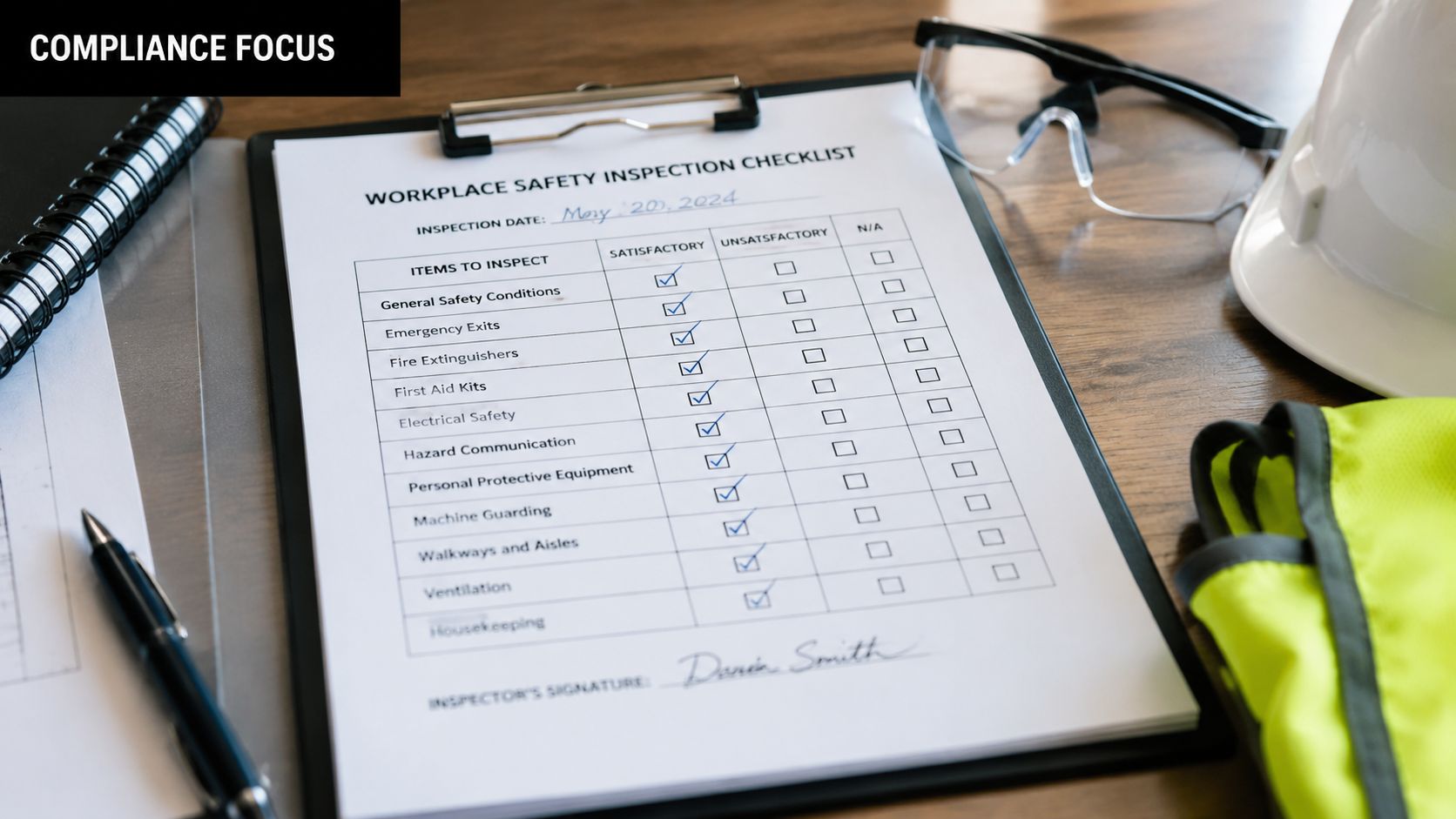
A cleaning contract can look clear on paper and still leave you exposed in day-to-day operations. That usually happens when a buyer checks price and schedule, but does not examine safety practices, training records, and the standards behind the service. In Mississauga, those details matter because your cleaner is working inside an active workplace, around your staff, your visitors, and your building systems.
Compliance is easier to judge if you treat it like building insurance. You hope the paperwork never needs to prove its value, but if there is a spill, an exposure concern, or a complaint about disinfection, the paperwork and the training behind it become very real.
What WHMIS means in practice
WHMIS matters because cleaning teams handle chemical products in occupied spaces. For a client, that should translate into visible habits, not just a verbal assurance. A trained crew should know what each product is for, what risks come with it, how to dilute or use it correctly, and what to do if something goes wrong.
Ask for specifics. A good answer usually mentions current staff training, labelled containers, access to safety data sheets, and procedures for storage and incident response.
You can verify that by looking for signs such as:
- Clear product labelling: Bottles and secondary containers should be identified properly.
- Safe use by area: Staff should know which products belong in washrooms, kitchens, reception areas, or sensitive spaces.
- Orderly storage: Chemicals should be stored in a controlled location, not left in random closets or common areas.
- Response procedures: Supervisors should be able to explain what happens after a spill, splash, or accidental misuse.
If the explanation feels vague, treat that as useful information. A vendor that takes safety seriously can usually describe its process without hesitation.
Disinfection claims should be easy to verify
Many businesses hear the word "disinfection" and assume every provider means the same thing. They do not. One company may include targeted high-touch point treatment. Another may reserve extra disinfection for add-on visits. A third may use the term loosely when it really means routine cleaning.
That is why you should ask three simple questions. Which surfaces receive disinfection attention? What product category is being used? How does the company decide when regular cleaning is enough and when a higher-health protocol is needed?
For buyers who want a clearer example of a health-focused approach, these COVID-conscious cleaning practices show what a more structured disinfection model can include.
How to read CIMS without getting lost in jargon
CIMS stands for Cleaning Industry Management Standard. For a first-time buyer, the label matters less than what it points to. It is a framework for how a cleaning company manages quality, staffing, service consistency, and customer accountability.
A useful way to read CIMS is to compare it to a building operations manual. The manual does not clean the building by itself. It creates repeatable procedures so results do not depend on one person having a good memory on a busy night.
If a vendor mentions CIMS, ask what that looks like in daily work. Do they use documented inspection routines? Is there a defined quality-control process? How are complaints tracked and corrected? A certification only helps you if it changes how the account is run after the sale.
Certifications matter most when they affect contract risk
Many buyers get confused when they hear WHMIS, CIMS, and health protocol language, then file it under "good to have." A better approach is to connect each item to contract risk.
- WHMIS lowers the chance of unsafe product handling in your building.
- Documented disinfection procedures reduce confusion about what is and is not included.
- CIMS or similar management standards suggest the company has systems for quality control and accountability.
That connection helps you ask better contract questions. If the proposal promises special cleaning for touchpoints, where is that written? If the vendor claims trained staff, can they confirm how training is refreshed? If the company says it follows a management standard, what service records can a client review?
Some owners also use digital tracking tools to monitor recurring tasks and service issues across their business. For a broader look at process improvement, practical AI for small businesses offers ideas that can apply to vendor oversight as well.
A clean building should also be a controlled building. Certifications and compliance checks help you confirm that the service is being managed with care, not just delivered at a low monthly price.
The Role of Technology in Modern Cleaning Management
Most cleaning problems are not caused by mops, vacuums, or microfibre cloths. They're caused by missed communication, inconsistent follow-through, and the gap between what was promised and what was checked.
Modern cleaning management tries to close that gap with digital systems. A supervisor can track inspections, log issues, confirm task completion, and keep a service history that both sides can refer back to.
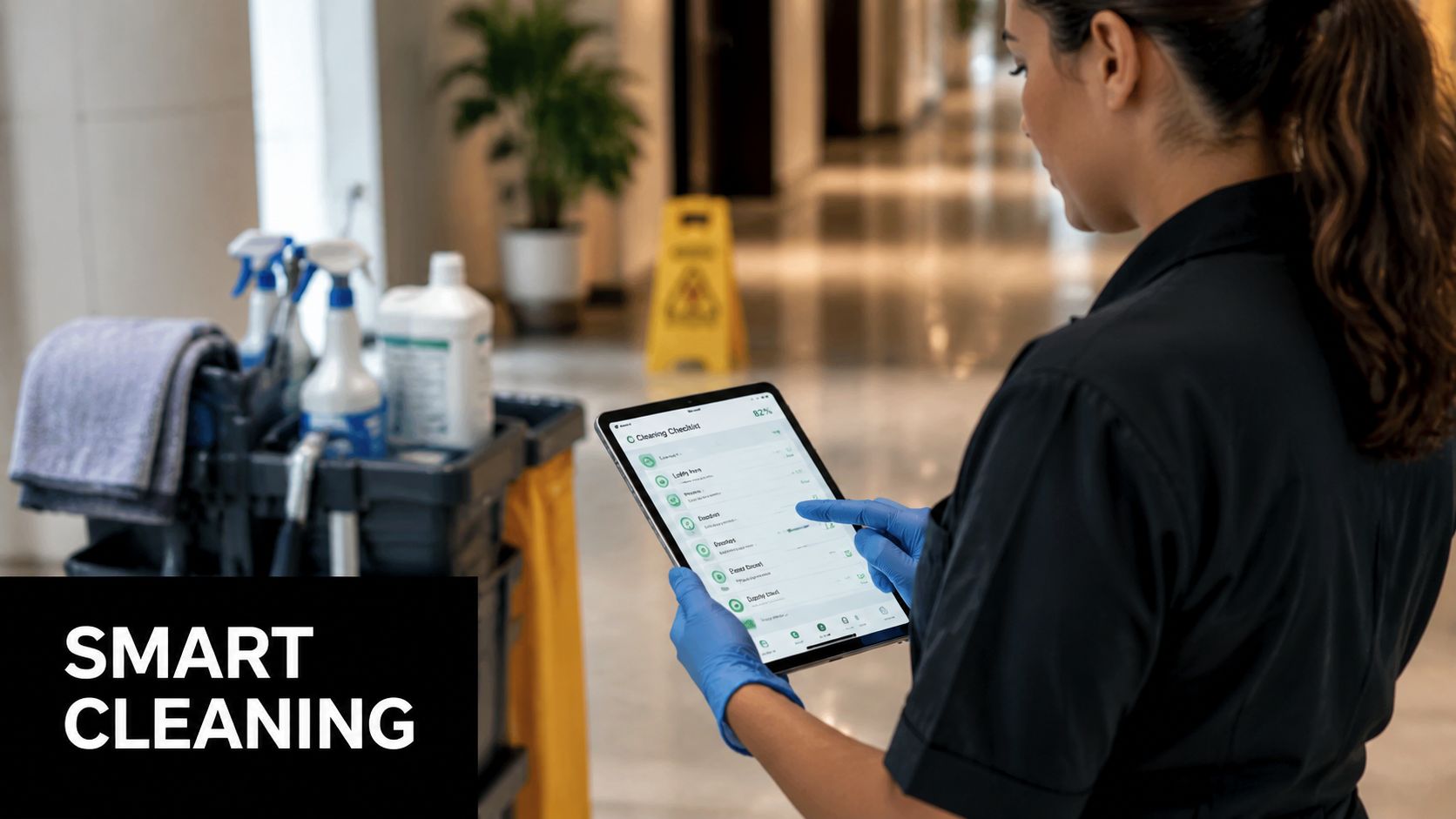
What useful cleaning technology actually does
The best technology in commercial cleaning Mississauga is usually quiet and practical. It doesn't need to impress the client with flashy features. It needs to make the service easier to verify and easier to correct.
Common uses include:
- Inspection tracking: Supervisors record site checks in a consistent format.
- Issue logging: Clients can report concerns without relying on memory or informal texts.
- Photo verification: Certain tasks or problem areas can be documented visually.
- Service notes: Recurring instructions stay attached to the account instead of getting lost between staff changes.
For small business owners exploring broader operational improvements, practical AI for small businesses can also help frame how simple automation tools support admin-heavy service relationships.
Why clients benefit from these systems
A digital checklist doesn't clean a washroom. People still do the work. What the system changes is accountability.
If a lunchroom issue keeps recurring every Monday, the client and vendor can track it clearly. If a cleaner misses a conference room setup area, the supervisor can document correction. That creates a service record instead of a cycle of verbal complaints.
This short video gives a general sense of how digital oversight can support service consistency in cleaning operations.
A practical way to assess tech claims
Buyers don't need to ask if a vendor is ahead of the curve. That claim is too vague. Better questions are:
- Can the company document inspections?
- Is there a clear way to submit and track service issues?
- Will the client receive regular reporting or check-in notes?
- Does the communication system reduce back-and-forth emails?
One local example is Arelli Cleaning, which describes a mobile app and structured management system as part of its service model. That's useful not because the technology itself is special, but because it addresses a common operational problem: inconsistent communication between site, supervisor, and client.
Frequently Asked Questions About Commercial Cleaning
What is the difference between janitorial and commercial cleaning
Janitorial usually refers to recurring routine work such as washrooms, garbage, vacuuming, and kitchen upkeep. Commercial cleaning is the broader category that can also include deep cleaning, floor care, disinfection, window cleaning, and post-construction cleanup.
How often should an office in Mississauga be cleaned
That depends on traffic, layout, washroom use, food consumption, and client visits. A quiet office may need a lighter schedule than a busy shared workspace or clinic. The right frequency is based on use, not just square footage.
What should be included in a quote request
The request should include the type of facility, the areas to be cleaned, desired schedule, problem spots, access rules, and any special requirements such as disinfection or floor care. More detail leads to more comparable quotes.
Why do quotes vary so much between providers
Quotes vary because vendors define scope differently, assign different labour levels, and include different levels of supervision, supplies, and quality control. A lower quote may exclude work that another vendor included.
What certifications or training should a buyer ask about
A buyer should ask about WHMIS training, safe chemical handling, and the provider's general quality-management practices. If the vendor mentions standards such as CIMS, the buyer should ask how those standards affect daily service.
When should a business request a deep clean instead of routine service
A deep clean makes sense when a site has visible buildup, has gone through renovation, is preparing for an inspection, or hasn't had detailed work done for a long period. It's also useful when a new vendor is taking over a neglected space.
Who should manage the cleaning relationship internally
One person should be responsible for approvals, issue reporting, and vendor communication. That avoids mixed instructions and makes performance easier to review.
Your Next Steps and Further Reading
You have done the hard part already. You now know how to read scope, question pricing, check training, and look at contract terms without guessing.
The next step is simple. Write a one page cleaning brief and send it to two or three providers that serve Mississauga. Keep every request identical. List the areas to be cleaned, service frequency, access hours, supply expectations, floor care needs, and any compliance requirements. Using the same brief for every vendor works like using the same measuring tape on every wall. The quotes become easier to compare because you are measuring the same job each time.
Then review each proposal in three passes.
First, check scope. Confirm what is cleaned, how often, and what is excluded. Second, check risk controls. Look for WHMIS training, clear supervision, and any quality system the company follows, including how it applies daily rather than only in sales material. Third, check contract terms. Pay attention to cancellation notice, renewal language, complaint response steps, and charges for extra work. A low monthly price can lose its appeal if the contract is hard to exit or if routine tasks are pushed into add-on fees.
Fit matters at this stage. A professional office, childcare setting, clinic, and warehouse office can all sit in the same city, but they do not need the same cleaning plan. A provider's Mississauga commercial cleaning service area page can help you confirm whether the company describes local coverage and service categories in a way that matches your facility.
Keep your final decision grounded in operations, not presentation. The stronger choice is usually the vendor that explains the work clearly, documents safety practices, sets workable terms, and gives you a simple path for reporting issues and confirming follow-through.
A business comparing commercial cleaning options in Mississauga can include Arelli Cleaning as one option in its shortlist, then use the checklist in this guide to compare scope, contract flexibility, communication, and compliance across each quote.








.webp)