Day porter services provide on-site cleaning, restocking, spill response, and common-area support during operating hours, and that makes them especially valuable when building activity continues throughout the day. In California, that daytime coverage also fits a compliance-minded approach, because Cal/OSHA treats cleaning and disinfecting as part of an employer's duty to keep a safe and healthful workplace, and Title 8 section 3203 requires an effective Injury and Illness Prevention Program (Cal/OSHA and Title 8 context).
A lobby spill, a crowded restroom, a tenant asking for a quick touch-up, and a client meeting in twenty minutes are all the same operational problem, just in different forms. The Importance of Day Porter Services in Busy Commercial Buildings is not about extra cleaning, it's about having a daytime control layer that keeps standards visible, reduces interruptions, and helps occupied buildings stay functional. In Canadian commercial settings, that usually means balancing appearance, safety, tenant experience, and the reality that overnight janitorial work can't respond in real time.
Key takeaways:
- Day porters handle live problems during business hours, not after they've turned into complaints.
- Visible cleanliness shapes trust, especially in client-facing offices, clinics, and shared lobbies.
- Safety and compliance improve when spills, restrooms, and high-touch areas are checked continuously.
- Preventive daytime upkeep can reduce escalation, emergency call-outs, and avoidable disruption.
- The best fit is usually operational, not cosmetic, especially in high-traffic or multi-tenant buildings.
- Claims, pricing, compliance references, and recommendations should always be verified against current authoritative sources before publication or contract decisions.
For a building that never really slows down, day porter coverage is best understood as a service rhythm, not a one-off task. A useful baseline definition is simple. A day porter is an on-site cleaning and maintenance professional who works during business hours to keep shared, high-traffic areas clean and presentable, which differs from after-hours janitorial cleaning that happens when the building is mostly empty (day porter role definition). For local planning and vendor selection, a practical starting point is the commercial gate access control question, because access, delivery timing, and movement through common areas often shape daytime cleaning needs as much as square footage does.
Table of Contents
Day Porter Services, 7-Point Benefits Comparison
1. Maintaining Professional First Impressions and Client Confidence
A visitor usually notices the lobby before they notice the lease terms. In a law office, dental clinic, engineering firm, or downtown Toronto reception area, a clean floor and orderly front desk do more than look polished, they signal that the building is managed with discipline. Industry guidance from ISSA links facility appearance with customer perception, which is why visible upkeep carries so much weight in client-facing spaces.
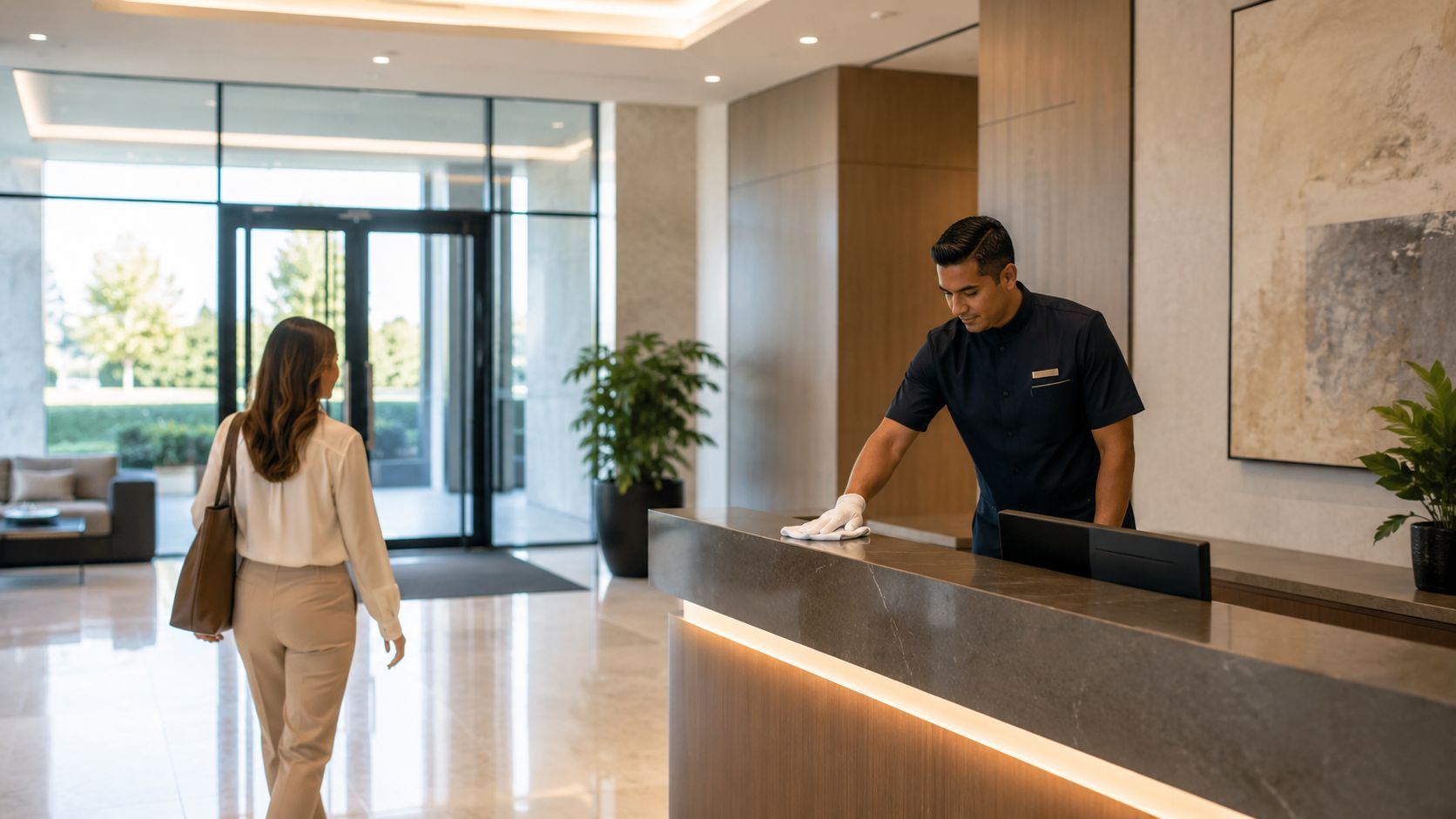
Day porters protect that first impression during business hours. They respond to coffee drips, tracked-in debris, fingerprints on glass, and reception clutter as soon as those issues appear, instead of leaving them until the end of the day. That matters most when the space is part of the sales process, such as a Toronto professional services firm hosting clients, or a dental clinic turning over treatment rooms between appointments.
The operational advantage is simple. A day porter gives facility managers a live control point for visible standards, rather than relying on overnight janitorial work that cannot address daytime issues in real time.
What a strong daytime presentation looks like
A useful service scope defines zones, not just tasks. Front-of-house areas usually need faster response times than back-of-house corridors, and meeting rooms may need a quick reset before each appointment block.
Practical rule: if a visitor can see it, smell it, or touch it during operating hours, it belongs in the day porter schedule.
A provider should also document what was cleaned and when, especially in spaces where reception staff, managers, and cleaners all share responsibility for appearance. For facilities that rely on image, the porter's job is not to deep clean every surface. It is to keep the building ready for the next person who walks in.
- Define priority zones clearly: reception, restrooms, elevators, conference rooms, and main entrances.
- Set visible standards in writing: what “clean enough for clients” means in each area.
- Use pre-meeting resets: especially before tours, interviews, or consultations.
- Ask for photo confirmation where useful: that supports quality assurance without adding guesswork.
For office managers comparing service models, office cleaning in Toronto is most useful when it is framed as a standards issue, not just a labour line item. Buildings that keep public areas consistently presentable usually create fewer awkward moments for staff and fewer reasons for visitors to question how the rest of the property is managed.
2. Enhanced Health and Safety Compliance in High-Traffic Environments
Busy buildings rarely fail in a dramatic way. A spill near the elevator, a wet tile by a washroom, or an overflowing bin beside a shared sink can create a hazard before anyone stops to report it. In occupied workplaces, those moments are safety controls that have slipped. That is why day porter coverage matters most in buildings with constant traffic, including childcare centres, manufacturing sites, office complexes, and clinics.
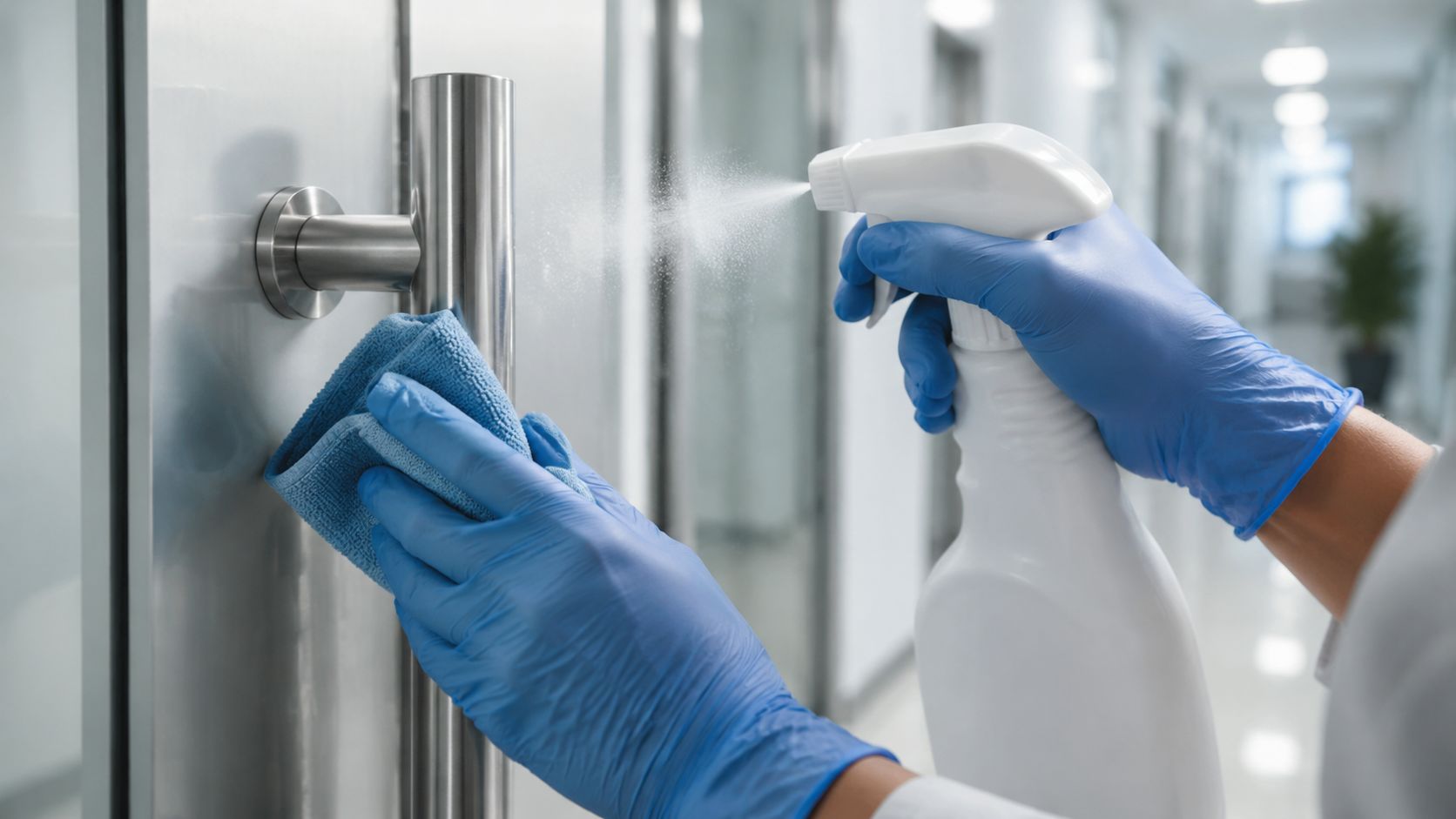
The value is timing, not just cleaning. A porter who notices contamination, residue, or supply shortages during business hours can correct the issue before it spreads into a hazard or turns into a service complaint. In Ontario, continuous upkeep supports workplace hazard control by ensuring spills, contamination, and supply failures are addressed while the building is occupied. That framing fits Canadian facilities better than a one-size-fits-all compliance claim because the risk is operational first, regulatory second.
Safety works as a control system
A day porter program should be built around the failures that happen between opening and shutdown. Restroom shortages, food spills, leaking entrances, and high-touch contamination all need response rules that staff can follow without delay.
A good porter program does not replace evening cleaning, it stops daytime problems from becoming evening emergencies.
For regulated or higher-risk environments, the service should also include documentation, incident reporting, and clear escalation paths. That matters in facilities where sanitation affects licensing, inspection readiness, or public trust.
- Use approved products: if disinfection is part of the scope, the chemicals should match the facility's policies and local requirements.
- Keep logs current: cleaning checks and incident notes should be available for review.
- Build a hazard protocol: blood, broken glass, and chemical spills need different response steps.
- Train by facility type: childcare, medical, industrial, and office settings each have different risk profiles.
Where contamination control is part of daily operations, commercial disinfection and sanitizing services work best when they are paired with live monitoring instead of treated as an occasional add-on. The practical point is straightforward. Safety improves when someone is assigned to notice small failures before tenants, patients, or inspectors do.
3. Improved Employee Productivity and Workplace Morale
Workplace morale often shows up first in small disruptions. A cluttered break room, a neglected washroom, or a lobby that never feels fully reset adds friction to the day, and staff usually absorb that friction without naming it. The result is less about one large complaint and more about steady interruption, distraction, and low-grade dissatisfaction.
Day porter services reduce that burden by keeping shared space usable during the workday. Staff do not need to wipe up a spill before a client meeting, report an overflowing bin twice, or keep checking whether soap has run out in the restroom. When the environment stays cleaner in real time, employees spend less attention on avoidable interruptions and more on their actual tasks.
Why morale and operations overlap
In small and mid-sized offices, the same person often ends up managing both work and facility frustration. That creates an uneven trade-off. A porter who handles day-to-day upkeep lets employees stay on task instead of acting as informal custodians.
The main benefit is operational, not sentimental. Shared spaces become more predictable, which reduces avoidable interruptions and lowers the number of small complaints that interrupt the workday. For engineering teams, law practices, and professional services firms, brief concentration breaks still create avoidable interruptions, especially when they happen repeatedly across the day.
Cleanliness becomes part of the work system when staff trust that shared spaces will be usable all day.
That trust depends on timing, not just appearance. A porter schedule should follow employee movement patterns, because lunch periods, shift changes, and meeting transitions are the best windows for touch-ups. Those intervals reduce disruption while keeping the building ready for the next use cycle. For a broader office standards framework, office cleaning services are most useful when the daytime component is coordinated with how the office runs.
4. Cost Efficiency Through Preventive Maintenance and Reduced Emergency Cleaning
Day porter services are easier to defend when they are treated as an operational control system, not as a standing cleaning expense. The point is to stop small issues from turning into larger ones during the business day. A coffee spill that sits too long can stain flooring. Moisture at an entry can become a slip concern. Overflowing bins, missed touchpoints, and unmanaged restrooms can all lead to callouts that cost more than a routine daytime response.
A site budget should start with the building's own activity pattern. Coverage hours, zones, consumables, response expectations, and the history of emergency cleaning all affect the true cost. A site with repeated lobby issues may need more visible coverage than a quieter office with limited public access. A building with polished finishes may also need stricter prevention around spills and tracked-in debris. A reliability consulting preventive maintenance framework can help managers compare porter coverage with avoided repairs, fewer service interruptions, and lower escalation risk.
Cost control comes from fewer escalations
Preventive day porter work reduces the need for reactive service when common problems appear in the same places each day. That matters most in buildings where cleanup is not just cosmetic. It also matters where a delay creates extra labour, tenant complaints, or a temporary closure of shared space. Offices with higher-end finishes, educational buildings, and industrial sites with heavy traffic all face that trade-off.
The practical comparison is simple. Porter coverage has a planned cost. Emergency cleaning has an uncertain cost plus the cost of disruption.
For facility managers in Canadian commercial buildings, the most useful question is whether a recurring issue is being handled at the point of first failure. If the same restrooms, entries, or common areas keep showing up in incident logs, the problem is likely operational, not random. Day coverage can interrupt that pattern before it becomes a larger repair or a repeated after-hours call.
A few controls make the budget easier to defend:
- Track recurring issues: spills, overflow, and restroom shortages should be counted before any service change.
- Separate routine care from specialized work: not every task belongs in a porter scope.
- Measure avoided escalation: complaint reduction, fewer call-outs, and less downtime are part of the return.
- Link maintenance to asset protection: the value is not lower labour alone, it is less damage over time.
Heavy restorative work becomes easier to time when daily upkeep is steady. For example, strip and wax floor care is simpler to schedule when routine day coverage keeps floors from deteriorating too quickly. In that sense, porter coverage works as a buffer between normal occupancy and expensive corrective cleaning.
5. Operational Flexibility and Minimal Disruption to Business Continuity
A busy building does not stop for cleaning. Tenants still move through lobbies, meetings still start on time, deliveries still arrive, and staff still need access to shared areas.
Day porter services fit that operating pattern because they are scheduled around the building's rhythm rather than against it. A porter can handle light resets during slower windows, support handover periods in a manufacturing facility, clear common areas between appointments in a law office, or manage hygiene tasks during transition periods in a childcare setting. The point is not extra labour. It is controlled coverage that keeps service visible without forcing the site to shut down or work around avoidable disruption.
Flexibility has to be built into the operating plan
A flexible schedule only works if the boundaries are clear before service begins. Access permissions, badge controls, cleaning zones, and communication rules need to be documented so staff know what the porter can do, where work can happen, and how issues are escalated. Without that structure, “flexibility” just creates uncertainty.
The practical benefit is continuity. When daytime coverage is designed well, a minor issue stays minor. A spill gets handled before it affects foot traffic. A stocked restroom does not become a complaint. A common area reset does not force a meeting delay or a tenant relocation.
That matters most in multi-tenant properties, where one interruption can spill into several business units at once.
- Map the daily cycle: opening, peak periods, lunch, shifts, and closing.
- Set access rules: who can enter, where, and when.
- Build buffer time: schedules should account for real delays and traffic.
- Keep the schedule visible: staff should know when support is coming.
For facility managers, the value of day porter coverage is control. It gives the building a live response layer for routine issues, so normal operations do not have to pause for avoidable cleaning problems. In a busy commercial site, that kind of control is what keeps continuity stable.
6. Regulatory Compliance and Risk Management in Specialized Environments
Specialized facilities need more than a clean appearance. They need cleaning procedures that match site rules, documentation standards, and the level of risk present in the space. Childcare centres, medical offices, food-related operations, and regulated manufacturing environments all face different expectations for sanitation, records, and contamination control. Day porter services matter most when those standards must hold during normal business hours, not only after the building closes.
The operational question is simple. Is the right task being done at the right time, and is it being recorded in a way that supports the site's procedures? In healthcare or childcare, that can mean documented disinfection between users, along with site-specific privacy and escalation steps. In a warehouse or plant, it can mean controlling contamination in shared areas while keeping workflow moving. In both cases, trained porter coverage helps reduce the gap between written procedure and day-to-day practice.
Why documentation matters as much as cleaning
A facility can look acceptable and still fall short of its own requirements. Logs, reports, and escalation paths matter because they show that the site is managing risk, not just reacting to what is visible.
Medical office cleaning is a good example of daytime support that has to follow site-specific procedures for privacy, hygiene, and incident response. Similar operating controls can apply in clinics, veterinary settings, and childcare sites where standards must stay visible throughout the day.
In regulated settings, a porter is part of the control system, not a decorative service.
For managers, the decision comes down to task timing and accountability. Which tasks must be handled immediately to support the site's procedures, and which tasks can remain in scheduled evening work or specialist cleaning? That distinction keeps service efficient, defensible, and easier to audit.
7. Strategic Asset Protection and Extended Infrastructure Longevity
A busy building shows wear in the same places first. Entry floors pick up grit, carpets hold moisture, counters get marked, and fixtures collect residue faster when daytime traffic keeps moving through those areas. Day porter coverage functions as a control layer for those visible conditions, because it reduces the time dirt and moisture remain in place while people are still using the space.
That matters for assets that are cleaned, inspected, and replaced on different schedules. If a porter removes wet spots before they spread, or clears abrasive debris before it gets ground into the finish, the building faces less surface wear and fewer corrective cleanups later. Air-handling systems are different. Their condition depends on maintenance planning and coordination with facilities staff, not porter work alone.
Asset protection is a control function, not a cosmetic one
The practical value is in slowing avoidable deterioration. Preventive daytime cleaning can help delay refinishing, reduce stain setting, and keep condition more consistent from one shift to the next. That consistency also helps managers who review site condition, insurance documentation, or repair planning.
A useful way to set this up is to match tasks to the assets most exposed during the day. Entry mats, lobby floors, washroom fixtures, and shared touchpoints usually need the fastest response. Mechanical rooms and HVAC-adjacent areas need a different approach, with cleaning scheduled to support facilities maintenance instead of interfering with it.
- Identify high-value surfaces: floors, glass, counters, and fixtures.
- Record baseline condition: photos and notes make later changes easier to judge.
- Set specific preventive checks: define what should be inspected, wiped, or cleared during the day.
- Coordinate with planned maintenance: daytime cleaning should support lifecycle care, not work against it.
For managers, the key question is simple. Which surfaces lose condition quickly under traffic, and which tasks need same-day attention to protect them? The strongest day porter programs answer that question with clear assignments, visible standards, and routine records. That makes the service part of building preservation, with benefits that show up in slower wear, fewer emergency calls, and steadier asset condition over time.
Day Porter Services, 7-Point Benefits Comparison
| Item | Implementation complexity | Resource requirements | Expected outcomes | Ideal use cases | Key advantages |
|---|
| Maintaining Professional First Impressions and Client Confidence | Medium, scheduling and coordination with business activities | Day porter staff during business hours, cleaning supplies, flexible shifts | Consistently tidy reception/meeting areas; improved client perception | Client-facing offices (law, dental, professional services), lobbies, conference areas | Continuous brand-image maintenance; prevents negative first impressions |
| Enhanced Health and Safety Compliance in High-Traffic Environments | High, regulatory alignment and biohazard training required | Trained porters, Health Canada–approved disinfectants, documentation systems | Reduced infection risk, fewer accidents, documented compliance for inspections | Childcare, healthcare, manufacturing, high-traffic commercial buildings | Proactive infection control; lowers regulatory and liability risk |
| Improved Employee Productivity and Workplace Morale | Low–Medium, careful scheduling to avoid workflow disruption | Discreet porter coverage, routine supplies, communication with staff | Increased focus and productivity, higher morale and retention | Small/medium offices, open-plan workplaces, break rooms | Reduces distractions; improves employee satisfaction and retention |
| Cost Efficiency Through Preventive Maintenance and Reduced Emergency Cleaning | Medium, consistent service delivery and cost tracking | Daily porter coverage, incident tracking, coordination with deep-clean services | Lower long-term maintenance costs; fewer emergency cleanings; extended asset life | High-traffic commercial buildings, manufacturing, educational institutions | Preventive savings; predictable facility maintenance budgets |
| Operational Flexibility and Minimal Disruption to Business Continuity | Medium, custom scheduling and access coordination | Flexible porter shifts, access protocols, possible security clearances | Minimal downtime; uninterrupted operations; rapid issue response | 24/7 operations, event venues, multi-tenant buildings, logistics | Cleaning without facility closure; adaptable to business cycles |
| Regulatory Compliance and Risk Management in Specialized Environments | High, ongoing training, audits, and regulation tracking | Certified porters, approved products, detailed cleaning logs and reports | Compliance with industry rules; reduced risk of fines/licensing actions | Healthcare, childcare, food service, regulated manufacturing | Mitigates regulatory risk; provides documented audit trails |
| Strategic Asset Protection and Extended Infrastructure Longevity | Medium, routine preventive tasks and condition monitoring | Regular porter service, condition documentation, preventive treatments | Extended lifespan of floors/HVAC/furnishings; fewer major repairs | Facilities with high-value flooring/HVAC, warehouses, campuses | Protects capital assets; supports asset-value and lifecycle planning |
Turn Day Porter Coverage Into a Measurable Facility Program
The right day porter model depends on traffic, risk, and how much disruption a building can tolerate. In-house staffing gives more direct control, contracted service provides flexibility and specialist coverage, and hybrid models often work best when a site needs visible daytime support plus deeper after-hours cleaning. The decision should be made on operations, not habit.
Cost drivers are usually straightforward. Coverage hours, the number of zones, consumables, equipment, reporting requirements, training, and specialized compliance tasks all affect price. A lobby-only program is not the same as a full-building daytime control system, especially in a clinic, warehouse, or multi-tenant office.
A useful provider comparison starts with measurable questions:
- How fast are spills and hazards handled?
- How often are restrooms and supplies checked?
- How are incidents logged and closed out?
- What proof exists that the site was serviced as agreed?
- How are training and access control managed?
- What happens when specialised cleaning is needed?
Decision rule: if daytime interruptions hurt safety, image, or tenancy, the porter program should be measured like a core facility function, not a soft service.
Provider evaluation points
- Response time: how quickly the team reacts to spills, shortages, and complaints.
- Completed checks: whether scheduled inspections are finished.
- Restroom and supply availability: soap, paper, and waste handling should stay reliable.
- Incident closure: hazards should be tracked until resolved.
- Tenant complaints: the trend matters more than a single comment.
- Audit scores: site inspections should show whether standards hold.
- Emergency-cleaning frequency: a good daytime program should reduce surprises.
- Lifecycle costs: flooring, fixtures, and restorative cleaning should be reviewed over time.
Phased implementation checklist
- Site assessment: identify traffic, risk points, and public-facing zones.
- Zone mapping: separate lobby, washroom, meeting, production, and back-of-house priorities.
- Service-level expectations: define response times, reporting, and supply checks.
- Access and safety procedures: control badges, keys, incident protocols, and escalation contacts.
- Pilot testing: start with a limited scope before full rollout.
- Review period: assess complaints, logs, and staff feedback.
- Adjustment: refine the schedule, zone coverage, and reporting based on actual use.
For Toronto and the wider GTA, service areas information is a practical first step before asking for quotes, because building access, tenant mix, and operating hours vary widely across sites. Supporting resources worth reviewing include the ISSA professional cleaning guidance, Cal/OSHA's workplace safety framework, day porter operational guidance from RBM Services, and facility cleaning considerations from Atlas Facilities. Arelli Cleaning is one option for office and commercial cleaning in the GTA, and its fit should be judged against the same measurable criteria as any other provider.
FAQ
What does a day porter do?
A day porter handles daytime cleaning, restocking, spill response, and common-area upkeep while the building is occupied.
Who needs day porter services most?
Busy offices, clinics, childcare centres, warehouses, and multi-tenant properties usually benefit most because they have higher daytime traffic.
When does day porter coverage make the most sense?
It fits best when problems appear during business hours and cannot wait for evening cleaning.
Where should a porter focus first?
High-traffic zones, restrooms, reception areas, and shared touchpoints usually deserve first priority.
How should performance be measured?
By response time, incident closure, restroom availability, audit scores, and complaint trends.
Why not rely only on night cleaning?
Night cleaning can't react to daytime spills, shortages, or presentation issues in real time.
What should a buyer ask before signing?
What gets checked, how often, who responds to incidents, and how reporting is documented.
How should a building start?
With a site assessment, zone map, and a short pilot that tests the schedule against real traffic.
For a practical next step, use the checklist, request 2 to 3 quotes, and ask each provider how they handle response times, logs, access, and specialised cleaning. Review Arelli Cleaning's locations page alongside the office cleaning Toronto page, commercial disinfection and sanitizing, office cleaning services, and medical office cleaning, then compare those service details with external references from ISSA and the RBM Services day porter guide.
Arelli Cleaning provides office and commercial cleaning services in the Greater Toronto Area, including daytime support, disinfection, and specialty floor care. For buildings that need day porter coverage or a hybrid cleaning plan, Arelli Cleaning is one place to compare service scope, reporting, and support options against the checklist above.








.webp)