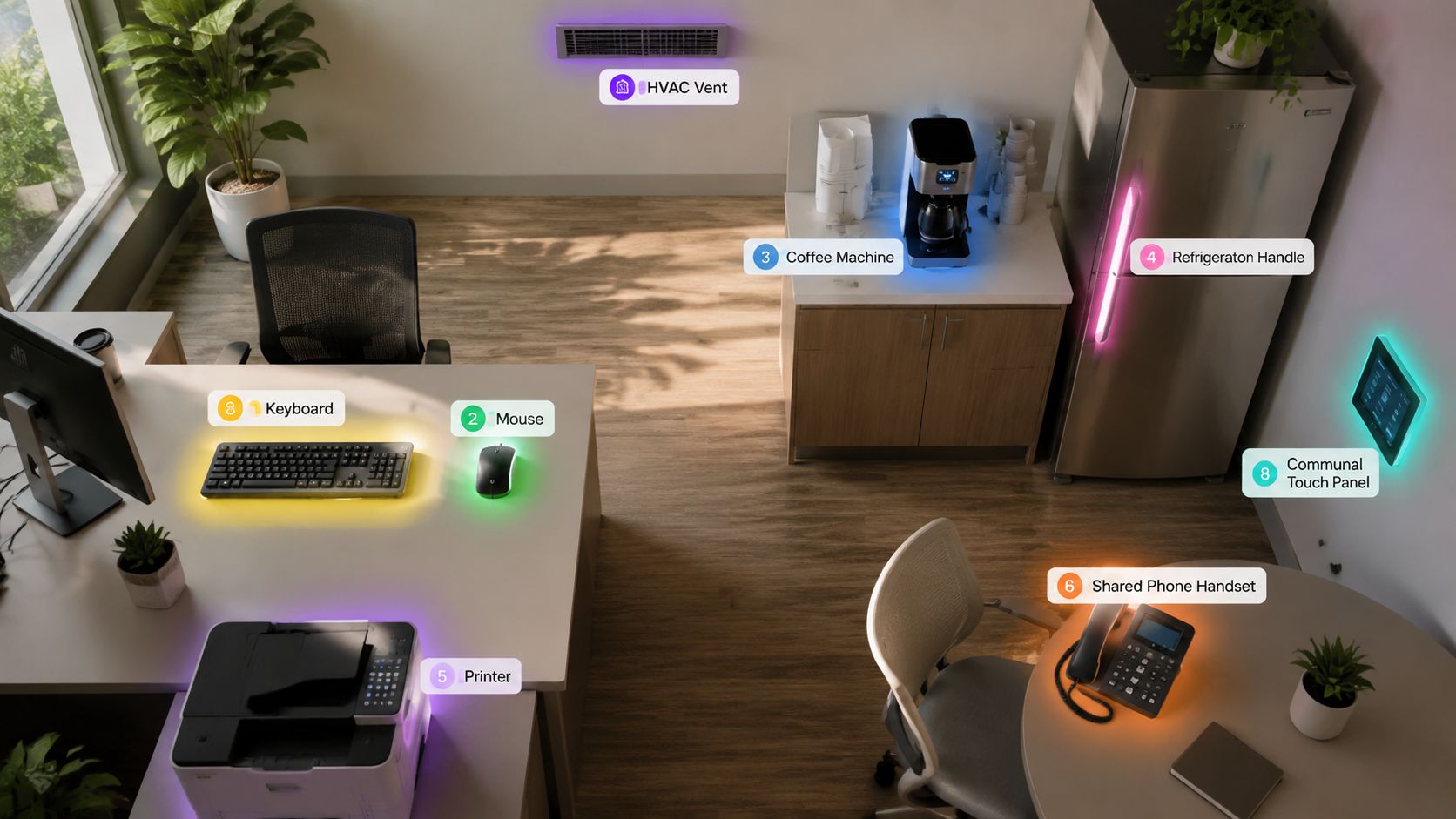
Office phones can carry 25,127 germs per square inch, while desks average about 20,961, keyboards 3,295, and mice 1,676. The most overlooked hotspots are shared, repeatedly touched surfaces such as restroom hardware, door handles, break-room equipment, elevator controls, and shared devices, not just the visibly dirty areas.
A clean-looking office can still contain contamination on surfaces that receive constant hand contact. That doesn't mean every contaminated surface creates the same infection risk, or that indiscriminate spraying is justified. The practical response is more disciplined: target high-touch points, remove visible soil, use a Health Canada-approved disinfectant according to its label and contact time, support hand hygiene, and document the work.
In plain terms, cleaning removes soil and debris. Sanitizing reduces microorganisms to a level considered acceptable for the intended setting. Disinfecting uses a product under defined conditions to destroy or inactivate specified microorganisms. Cleaning often needs to happen first because soil can interfere with disinfection, while a disinfectant must remain visibly wet for the label-required contact time to work.
The eight hotspots below are organized by how contamination occurs. Each one includes a realistic frequency, a suitable method, a staff mitigation step, and a point at which professional commercial cleaning becomes useful. The widely cited office-germ figures are useful for identifying attention areas, but they shouldn't be treated as a universal risk ranking or proof that surface contact caused illness.
Key takeaways
- High-touch surfaces deserve priority, but not every surface needs daily disinfection.
- Moisture and food residue change the cleaning requirement, especially in break rooms and washrooms.
- Electronic equipment needs low-moisture methods and manufacturer-compatible products.
- Ontario employers must maintain washrooms in a clean and sanitary condition, according to Ontario workplace guidance.
- Cleaning frequency should follow traffic, shared use, residue, moisture, and material compatibility, not headlines alone.
A useful decision framework asks six questions: How much traffic does the surface receive? Is it repeatedly shared? Does moisture collect there? Can food residue build up? What material is being cleaned? Can staff clean it without damaging equipment? If the answers point to frequent contact, shared use, moisture, residue, or delicate equipment, the area belongs on a documented targeted-cleaning schedule.
Table of Contents
1. Elevator Buttons and Call Panels
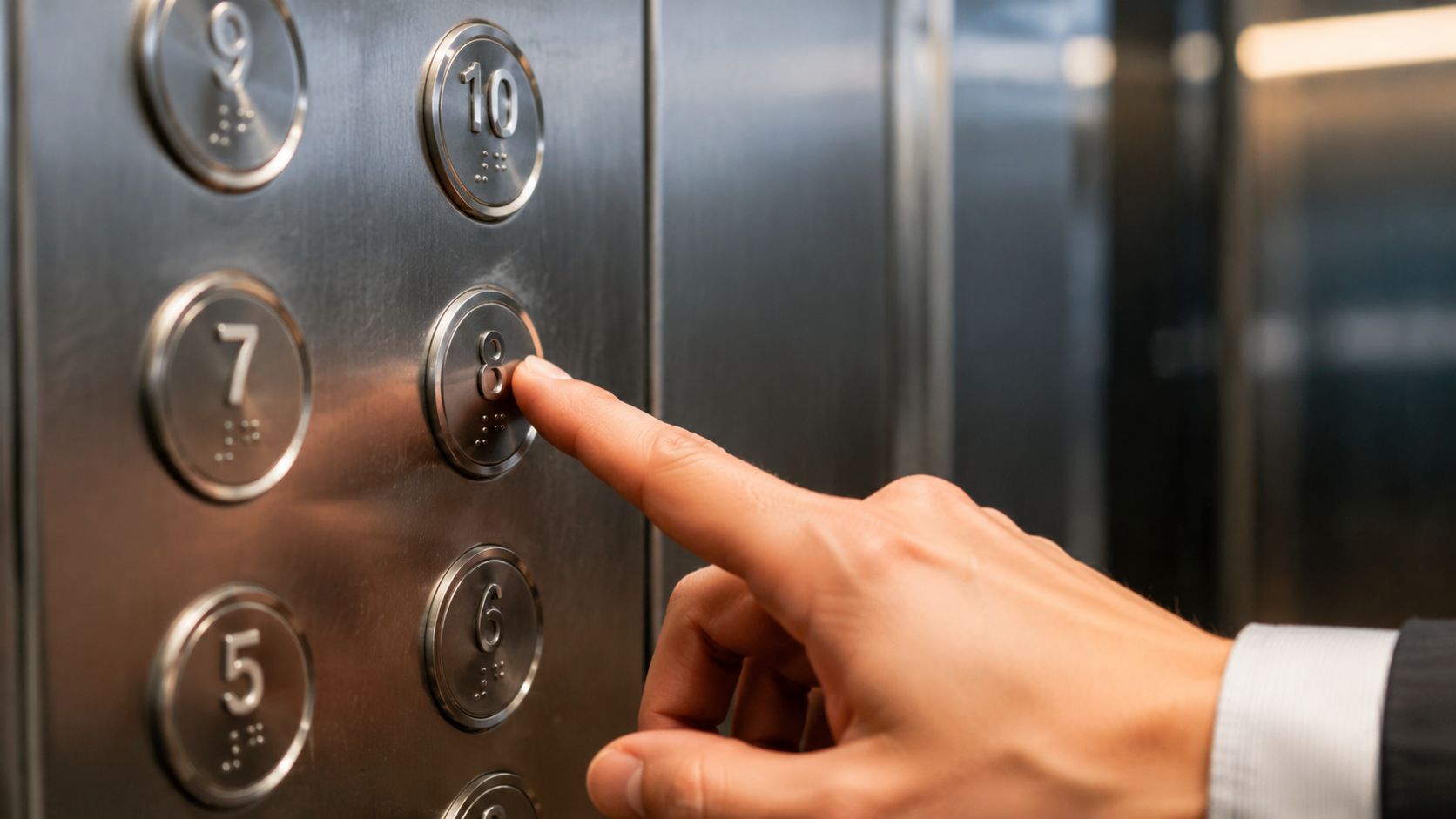
Elevator controls combine repeated contact with a small, concentrated surface area. Employees, visitors, couriers, and contractors may press the same call buttons and floor controls throughout the day, while the surrounding panel edges are easy to miss during a quick wipe. A Toronto-linked office microbiome study found greater microbial variety on floors than ceilings across sampled office surfaces, reinforcing a broader operational point: contamination follows movement and contact patterns, not visible dirt or washroom location. The office microbiome findings reported by The Conversation support targeted attention to high-traffic zones.
A sensible baseline is at least daily cleaning, with additional targeted disinfection when a building has unusually heavy traffic, a health-related response, or a documented increase in shared use. The cleaning team should use a lightly dampened microfiber cloth rather than spraying directly onto buttons or panel seams. Product selection must account for the panel material, and the disinfectant must remain wet for the label-required contact time without allowing liquid to enter controls.
Practical rule: Clean the button face, perimeter, call button, panel edge, and lower ledge as one touchpoint zone.
Building operators can reduce contact through touchless controls where feasible, but technology doesn't replace a schedule. Staff should avoid touching buttons unnecessarily and use hand hygiene after travelling through busy common areas, particularly before eating.
Professional escalation is appropriate when elevators serve multiple tenants, when the cleaning scope doesn't identify control panels separately, or when repeated complaints show that call buttons are being missed. A provider should document the elevator bank, product used, frequency, and any surface restrictions rather than claiming that a single spray eliminates all risk.
2. Shared Kitchen and Break Room Surfaces
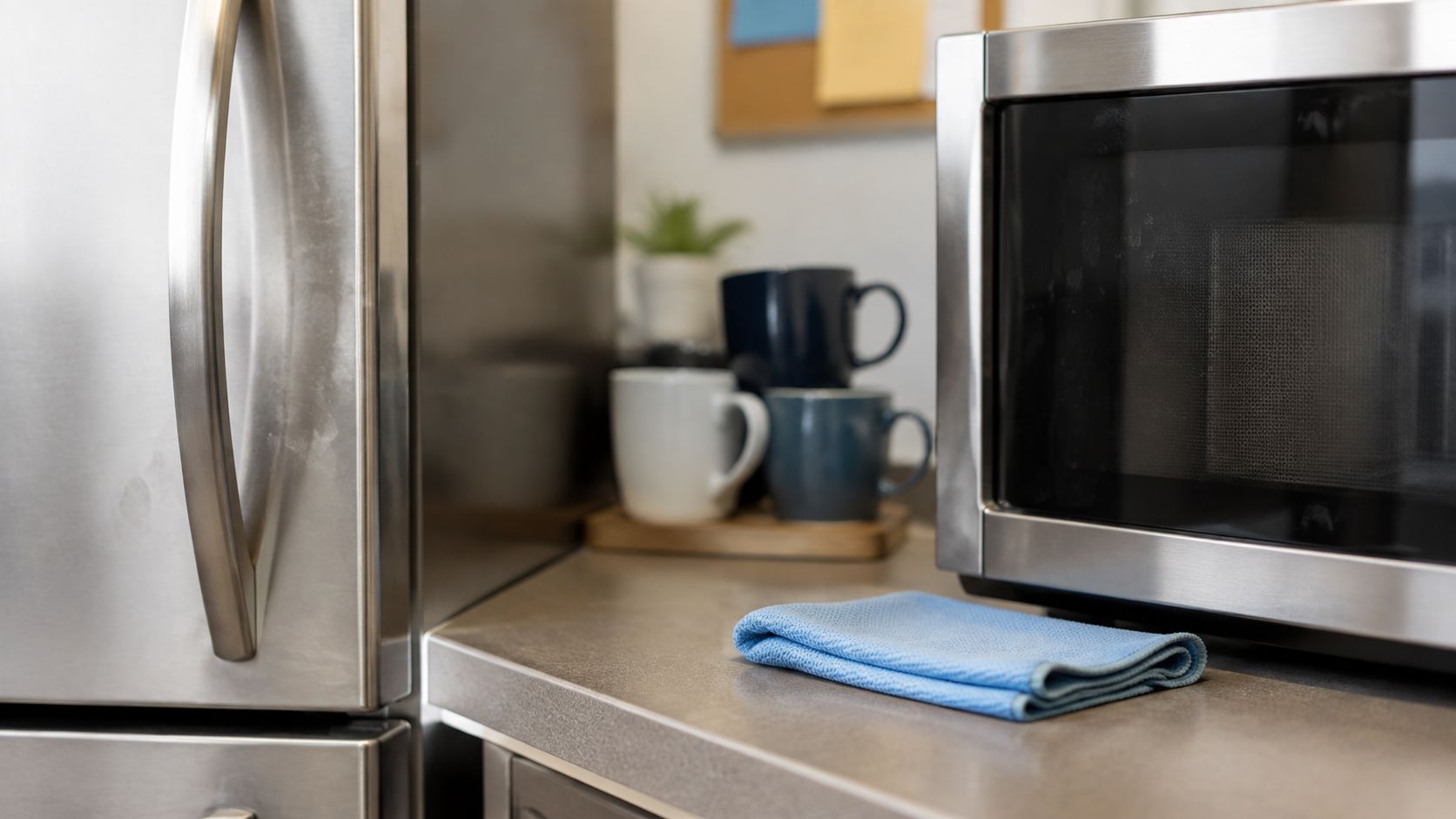
Break rooms concentrate several contamination routes: hands, food residue, water, and shared equipment meet within a small area. Sink faucet handles, microwave and refrigerator pulls, keyboards, and water-fountain buttons can collect residue through repeated contact, while moisture around fixtures may support biofilm formation. The practical risk depends on contact frequency, visible soil, and whether cleaning reaches seams and controls.
Use a schedule based on how contamination occurs. Check shared handles, faucet controls, microwave buttons, and refrigerator pulls daily, then disinfect them according to the product label. A high-use break room may need a daytime touch-up. Clean counters whenever food or liquid appears, rather than waiting for the next planned service. Facility managers can compare these tasks with the office cleaning checklist in Further reading.
Method matters. Remove crumbs, grease, and spills before applying disinfectant, and select a product approved for food-contact surfaces where the label requires it. Use a microfiber cloth for microwave interiors and exterior controls, while keeping moisture away from electrical openings and vents. Around sink fixtures, wipe standing water and residue instead of spreading it across adjacent surfaces.
Staff mitigation should be simple: wash hands before handling shared food, keep personal items away from food-preparation areas, and report or wipe spills promptly. An end-of-day sign-off sheet can clarify responsibility, but it does not replace trained cleaners in a busy or regulated workplace. Teams reviewing COVID-conscious cleaning practices should prioritize targeted control over blanket chemical use.
Escalate to professional commercial cleaning when odour or residue returns after routine service, appliances are overloaded, or employees and janitorial staff disagree about ownership. The written scope should identify appliance exteriors and interiors, sink areas, cabinet pulls, counters, and food-contact surfaces. It should also state the cleaning frequency, approved methods, and who records completion.
3. Door Handles and Push Plates
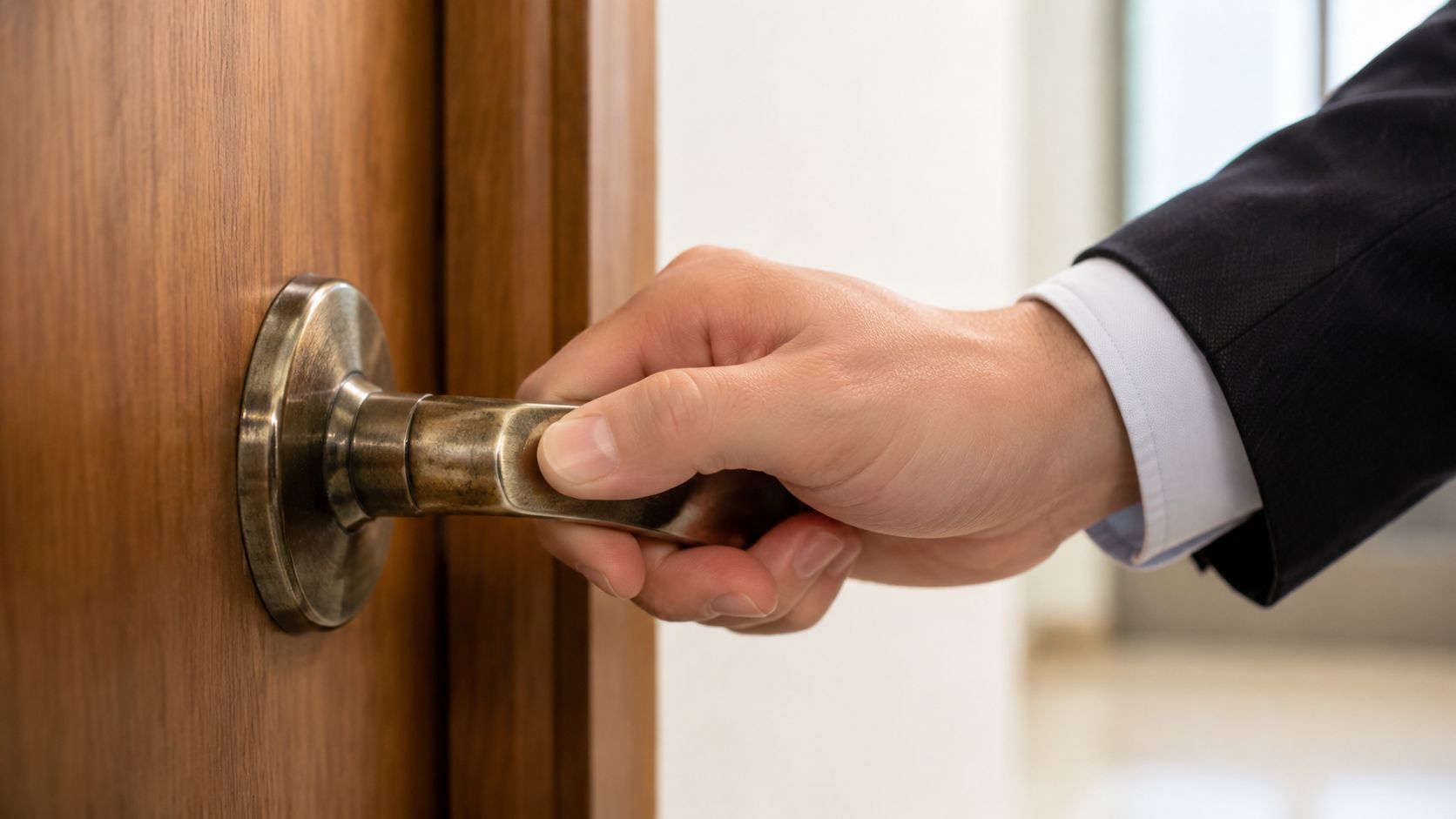
Door hardware can look clean while receiving repeated contact from people entering rooms, carrying supplies, leaving washrooms, and moving between office zones. Contamination risk depends on shared contact, repeated use, and incomplete coverage at hinges, undersides, and junctions, not on visible soil alone.
High-traffic entry doors and washroom doors should receive a documented daily check. Increase attention when traffic, outdoor grime, or operational conditions warrant it. Secondary doors can remain on the regular service schedule if cleaners wipe both sides and cover more than the most obvious hand position. Lever pivots, push-plate edges, handle seams, frame edges, and lower surfaces require deliberate passes.
Use a zoned plan that separates primary access points from storage areas and private-office doors. This avoids assigning identical time to every doorway while keeping busy hardware in the written scope. Commercial disinfection and sanitizing services may be considered when a facility needs manual attention to high-contact surfaces beyond routine appearance cleaning.
Staff mitigation should focus on reducing avoidable contact. Automatic door openers can help where practical, and employees should avoid touching their face immediately after handling shared hardware. Copper alloy components may provide a design-based mitigation, but replacement does not remove the need to clean soil, residues, and other contaminants.
Inspect door hardware by touchpoint, not by doorway. The handle, underside, pivot, push plate, frame edge, and both door faces may have different contact patterns.
Escalate to professional commercial cleaning when multiple tenants share entrances, exterior grime is persistent, or internal teams cannot reliably record completion. The provider's scope should identify door sides and hardware zones, state the service frequency, and explain which methods are compatible with metal, painted finishes, glass, and electronic access hardware.
4. Bathroom Faucets and Sink Faucet Handles
Faucet handles sit at a hygiene transition point. A person may touch the handle before washing, clean their hands, and then touch the same handle again to shut off the water. Sensor-operated fixtures can reduce that contact, but existing manual faucets still need a specific procedure rather than a quick pass over the basin.
Ontario's workplace guidance requires employers to maintain washroom facilities in a clean and sanitary condition. That makes washroom fixtures part of an operational and regulatory responsibility, not merely a presentation issue. External faucet handles, spouts, soap dispensers, and nearby splash zones should be included in the daily washroom checklist, with frequency adjusted for traffic and visible soiling.
The method should begin with soil removal. A surface-compatible cleaner removes scale and residue, while a label-compliant disinfectant addresses the disinfection step when it is appropriate. Staff shouldn't assume that a product works instantly. The surface must remain wet for the required contact time, and cleaning personnel need training in dilution, ventilation, storage, and safe handling.
Moisture changes the decision. A dry, lightly touched surface and a wet, repeatedly handled faucet shouldn't receive the same treatment plan.
Facility managers should escalate when faucets leak, aerators show persistent buildup, odours recur, or water-quality concerns arise. Internal plumbing interventions, temperature management, and microbial testing require qualified building, plumbing, or public-health input. Routine cleaners shouldn't improvise internal treatments or alter water systems. A detailed service such as detailed commercial disinfection should define its work at the fixture and surrounding touchpoint level.
A sensor faucet can be a capital improvement where renovation is already planned. Its value comes from reducing hand contact and simplifying the hygiene sequence, not from eliminating every contamination pathway.
5. Shared Office Equipment
Printers, copiers, scanners, and multifunction devices create a coverage gap between facilities and information technology. Employees often touch control panels, output trays, paper drawers, and supply-access areas, while cleaning staff may hesitate to use liquid near electronics. Technicians, meanwhile, may service the machine without owning the broader hygiene schedule.
The Canada Safety Council office-germ coverage cited by Global News reported office phones at more than 25,000 germs per square inch, desks at almost 21,000, keyboards at 3,295, and mice at 1,676, compared with 49 on toilet seats. Those figures shouldn't be converted into a universal infection ranking, but they do show why shared workstations and communication devices deserve a defined scope.
External touchpoints should be cleaned at least daily in a standard office schedule, with a daytime check for heavily shared devices. The method matters more than product volume. Apply a compatible disinfectant to a cloth, never directly into openings, screens, seams, vents, or buttons. Clean the control panel, tray edges, drawer handles, and paper-loading areas while keeping moisture controlled.
Equipment rule: The safest cleaning plan is jointly approved by facilities, the equipment manufacturer, and the cleaning provider.
Employees can use hand hygiene before and after shared equipment, particularly before eating. A nearby sanitizer station can support that behaviour, but it must not encourage users to wipe equipment with products that may damage coatings or electronics.
Professional escalation is warranted when toner, dust, paper debris, or residue accumulates in areas that routine wiping can't reach. The scope should identify whether the provider cleans only external touchpoints or also performs a scheduled exterior detail, while technical servicing remains with the authorized equipment technician.
For a facility reviewing cleaning supplies and specialty cleaning support, product compatibility should be treated as a qualification requirement, not an afterthought.
6. Restroom Door Handles and Stall Locks
Restroom door hardware follows a distinct contamination path. People may touch exterior handles before washing their hands, then handle interior doors and stall locks during or after use. Exit hardware creates another contact point. A clean toilet or floor does not show whether these touchpoints were serviced.
Guidance from the Canadian Centre for Occupational Health and Safety defines high-touch surfaces as areas contacted by bare hands by multiple people. It recommends cleaning them at least once per day. In busy facilities, cleaning every 2 to 3 hours may be necessary, while shift-work environments require service between shifts or at least once during each shift. The schedule should reflect traffic, occupancy, and observed soiling rather than rely on one timetable.
Inspect restroom hardware during operating hours. Use a dedicated cloth or disposable wipe, move from cleaner areas toward dirtier ones, and cover both sides of doors, stall latches, thumb plates, and reachable frame edges. Follow the product label for contact time. A fast-drying wipe does not provide disinfection if the surface dries before the required time has passed.
A practical checklist should record the restroom, touchpoints covered, service time, and staff initials. Employees can support the process by washing hands thoroughly, limiting unnecessary contact, and reporting empty soap or paper-towel dispensers. Touchless exterior door operators may reduce entry contact, but they do not replace cleaning for stall locks or interior hardware.
Escalate to professional commercial cleaning when traffic varies sharply by shift, splash contamination or odour persists, or records cannot verify service. The cleaning scope should name washroom handles, locks, plates, and frame edges explicitly. In Ontario workplaces, washroom maintenance should be documented as its own task, rather than assumed to occur during floor or toilet cleaning.
7. Conference Room and Meeting Table Surfaces
Conference tables collect contamination through turnover and behaviour. Successive groups bring phones, papers, pens, food, and drinks into the room. Hands often reach the table edge, underside lip, chair arms, controls, and shared accessories, while routine wiping focuses on the visible centre.
Start by clearing materials, removing crumbs and spills, then applying a cleaner or disinfectant compatible with the surface and its intended use. Wood sealers, laminate, glass, and painted finishes have different care requirements. A product suitable for a washroom fixture can dull a finish or damage a protective coating on a meeting table.
High-use rooms need a morning inspection. Check again between heavily scheduled sessions if food, illness, or visible soil is present. Include chairs, armrests, remote controls, presentation interfaces, and shared pens in the room map. The Toronto-linked contamination reporting summarized by Global News found higher bacterial counts on armrests and telephone handsets than on desk tops or computer components. That office contamination report supports broader inspection, not indiscriminate disinfection.
Employees should keep food in designated areas and remove personal materials after meetings. Hand sanitizer near the entrance may support hand hygiene, but it does not remove residue from the table. A short room reset can also help staff avoid conference room setup pitfalls, such as leaving shared materials or controls unassigned.
A conference-room checklist should name the table edge, chair arms, controls, and shared accessories. “Table cleaned” is too vague to verify.
Professional support is appropriate when rooms turn over quickly, external visitors use the facility, or staff cannot restore the room between meetings. Office cleaning services can be evaluated by whether the scope identifies these overlooked touchpoints and records completion. The escalation record should also note the room, service time, surfaces covered, and any spill or illness-related response.
8. Personal Desk Phones and Telephone Handsets
Personal desk phones become overlooked contamination points when shared, placed at reception, or handled during eating, coughing, and call transfers. The handset touches the face directly. The receiver underside, mouthpiece, earpiece, buttons, cord junction, and charging base can remain untouched during a general desk wipe.
As noted in Section 5, phones can carry well over 25,000 germs per square inch, making them a priority for daily low-moisture cleaning rather than periodic wiping. This historical surface-count comparison does not directly measure illness risk. Its practical value is identifying devices that need a named owner, documented frequency, and repeatable method.
Reception and main-line phones should be checked daily, with another cleaning whenever multiple users handle the handset. Individual devices can follow an end-of-day routine, unless a user reports illness or visible contamination. Apply a compatible cleaning solution to a low-moisture cloth, not directly into the device. Wipe the face-contact areas carefully and keep liquid away from openings.
Staff should have access to manufacturer-compatible wipes or a controlled self-cleaning procedure at reception and other shared communication points. Headsets, speakerphones, and cordless devices may reduce direct handset-to-face contact, but their touch surfaces still require cleaning.
A professional provider should confirm whether phones are included in the written scope, whether the receiver underside is covered, and whether the method suits the device model. The procedure should distinguish dusting from manual disinfection and record completion for shared units. Escalate service when frequent turnover, illness-related contamination, or staff capacity prevents consistent daily cleaning. If phones remain outside the scope, they will likely remain outside the completed work.
8 Hidden Office Germ Hotspots Compared
| Surface | Implementation complexity | Resource requirements | Expected outcomes | Ideal use cases | Key advantages |
|---|
| Elevator Buttons and Call Panels | Medium, routine cleaning easy; touchless retrofit higher effort | 2–3+ daily cleanings, microfiber cloths, approved disinfectants; possible touchless hardware | Visible reduction in surface pathogens; rapid re-contamination without touchless upgrade | High-rise offices, multi-tenant buildings, healthcare-adjacent elevators | Highly visible cleaning improves confidence; accessible surfaces for disinfection |
| Shared Kitchen and Break Room Surfaces | Medium, requires pre-clean for organic residues | Daily deep clean, midday touch-ups, microfiber, degreasers and disinfectants; signage and employee cooperation | Effective reduction of foodborne and respiratory pathogens if pre-cleaned; moisture can hinder efficacy | Offices with communal kitchens, staff break rooms, cafeterias | Centralized location allows scheduled professional cleaning; varied surface treatments possible |
| Door Handles and Push Plates | Low–Medium, straightforward but frequent | 1–3+ daily cleanings depending on traffic; disinfectants, microfiber, optional antimicrobial hardware or touchless openers | Significant reduction in transfer risk when cleaned frequently; immediate re-contamination likely | All high-traffic entry/exit points, restroom and exterior doors | Easy to identify and schedule; standard disinfectants work well on common materials |
| Bathroom Faucets and Sink Faucet Handles | High, surface cleaning simple; internal biofilm requires specialized treatment | External cleaning 3+ times/day; aerator maintenance weekly–monthly; antimicrobial flushes quarterly; sensor upgrades | Reduces surface transfer; internal waterborne pathogens persist without targeted treatment | Restrooms in healthcare, large offices, facilities with intermittent occupancy | Sensor faucets eliminate contact; faucet upgrades and aerator maintenance reduce biofilm risk |
| Shared Office Equipment (Printers, Copiers, MFDs) | Medium–High, electronics require cautious methods and coordination | Daily external wipe-downs, weekly deep exterior cleaning, low-moisture techniques, periodic professional internal service | Lowers surface contamination and employee exposure; re-contamination can occur during use | Central printing stations, libraries, high-volume offices, reception areas | Can be integrated into maintenance schedules; visible cleaning boosts confidence |
| Restroom Door Handles and Stall Locks | Medium, requires high-frequency cycles and careful methods | 4–6+ daily cleanings, extended-contact disinfectants, dedicated microfiber or disposable wipes | Substantial reduction in contamination and transmission risk when frequently disinfected; very rapid recontamination without behavior change | Public and staff restrooms, healthcare, high-occupancy facilities | High impact on perceived hygiene; confined spaces allow targeted cleaning |
| Conference Room and Meeting Table Surfaces | Low–Medium, material-dependent products and timing | Daily end-of-day disinfection, optional morning touch-ups, surface-appropriate disinfectants, microfiber | Reduces overnight pathogen accumulation; daytime contamination persists between meetings | Meeting rooms, training centers, shared collaboration spaces where food/beverages are used | Large accessible surfaces allow efficient cleaning; scheduling after-hours minimizes disruption |
| Personal Desk Phones and Telephone Handsets | Low, quick to clean but needs behavior change | Daily cleaning or 2–3x/day for shared phones; low-moisture wipes, microfiber, hand-sanitizer nearby | Reduces direct face-contact transmission if cleaned regularly; rapid re-contamination without user compliance | Reception desks, call centers, shared desk setups, hot-desking environments | Quick, low-cost intervention; directly reduces transmission route to face (mouth/ear) |
Turn Hotspot Awareness Into a Measurable Cleaning Plan
Hotspot awareness only helps when it changes the work order. A facility manager can start with a simple map of entrances, elevators, washrooms, break rooms, printers, meeting rooms, reception points, and shared devices. Each location should identify the surface, contact pattern, material, required method, responsible person, frequency, and escalation trigger.
The plan should distinguish routine cleaning from targeted disinfection. Routine cleaning removes dust, soil, residue, and waste. Targeted disinfection is reserved for high-touch or visibly dirty surfaces when the environment and product directions justify it. Canadian guidance emphasizes this targeted approach, and Ontario workplace guidance also notes that damp cleaning methods capture particles better than dry dusting. Disinfectants need a Canadian DIN and the correct contact time, so product selection and technique should be documented rather than left to individual preference.
A practical facility checklist
- Map high-touch points: Include door hardware, elevator controls, faucets, stall locks, shared devices, phones, tables, chair arms, and appliance handles.
- Record moisture and residue: Mark sinks, splash zones, food-contact areas, microwave interiors, and surfaces where spills recur.
- Assign frequencies by traffic: Use daily service as a baseline for shared touchpoints, then increase checks where use, shift patterns, or an incident warrants it.
- Confirm material compatibility: Review electronics, wood finishes, laminates, metals, glass, painted surfaces, and touchscreens before approving products.
- Verify contact time: The disinfectant must remain wet for the label-required period. A quick wipe isn't automatically disinfection.
- Document completion: Use room maps, checklists, inspection logs, exception notes, and supervisor verification.
- Review missed surfaces: Compare complaints and inspection findings against the written scope, then update the route.
Provider evaluation should focus on the operating system behind the cleaning, not only on the quoted rate. Questions should cover the exact high-touch scope, staff training, WHMIS practices, Health Canada-approved disinfectants, product contact times, equipment compatibility, quality assurance, incident escalation, insurance, scheduling flexibility, and after-hours access. Pricing should be compared by occupancy, square footage, frequency, surface type, washroom load, specialty services, and access conditions, rather than by a headline monthly figure.
A fair comparison requests 2–3 quotes using the same written scope. The following framework keeps the review neutral:
Frequently asked questions
How often should office high-touch surfaces be cleaned?
High-touch surfaces should be cleaned at least daily as a baseline, with additional service based on traffic, shared use, visible soil, shift patterns, or an incident. CCOHS notes that cleaning every 2 to 3 hours can sometimes be necessary, so the schedule should reflect actual use rather than a fixed assumption.
Why aren't desks the only priority?
Desks matter, but shared phones, armrests, door hardware, elevator controls, faucets, break-room handles, and shared equipment may receive more varied contact. The practical priority is determined by contact frequency, shared use, moisture, residue, and the ability to clean the surface safely.
When is disinfection necessary?
Disinfection is appropriate for selected high-touch or visibly dirty surfaces when the environment and product label support it. It isn't automatically necessary for every surface after every use, and cleaning may be the appropriate first step.
Where should a facility begin?
Start at entrances, elevators, washrooms, break rooms, reception, shared equipment stations, and meeting rooms. These areas create clear shared-use and touchpoint patterns that can be mapped and checked.
Who should own the cleaning schedule?
Facilities or operations should own the scope and verification, while trained cleaning personnel perform the work. Employees can support the plan by reporting spills, replenishing hygiene supplies, and following shared-space practices.
What should a provider include in a quote?
The quote should identify surfaces, frequencies, methods, products, contact times, staffing, inspection procedures, response options, access requirements, and exclusions. It should also explain cost drivers so different proposals can be compared fairly.
Further reading
A regional service directory is available through Arelli Cleaning locations. Related internal resources include commercial disinfection and sanitizing, detailed disinfection services, and office cleaning services.
For external reference, facility teams can consult CCOHS cleaning staff guidance, Ontario washroom maintenance requirements, the Government of Canada workplace cleaning guidance, and Kimberly-Clark Professional's office cleaning checklist.
The checklist gives a facility a starting point, but professional commercial cleaning support becomes appropriate when staffing, frequency, equipment, contamination response, or compliance requirements exceed internal capacity. Managers should use the map, ask informed questions, request comparable quotes, and select a service plan that can be measured and corrected.
Arelli Cleaning provides office and commercial cleaning in the Greater Toronto Area, including targeted cleaning and disinfection of high-contact surfaces, shared devices, washrooms, break rooms, and other overlooked office hotspots. Facility managers can review the available service options and request support through Arelli Cleaning.








.webp)