A property manager in the GTA often sees the same pattern. Winter ends, and the building suddenly looks older than it did a month earlier. Entry floors are dulled by tracked-in salt. Window glass carries a film of grime. Dust that stayed hidden all season starts showing up on vents, ledges, and top rails once the sunlight gets stronger.
That moment causes confusion for many newer managers because routine janitorial service may still be happening on schedule. Trash is removed, washrooms are stocked, and common areas are presentable. Yet the facility still doesn’t feel reset. That gap is where seasonal cleaning services matter.
Seasonal cleaning is not just “extra cleaning.” In commercial settings, it is a planned response to predictable changes in weather, occupancy, air quality, and wear. It protects finishes, supports safer floors, improves how the space feels to staff and visitors, and helps managers avoid larger maintenance costs later. It also reflects a growing service category. Market projections for seasonal services show growth from USD 0.88 billion in 2026 to USD 1.98 billion by 2035, and in Canada commercial properties account for 73.3% of the janitorial market, with strong demand in hubs such as the GTA for offices, warehouses, and clinics, according to Business Research Insights on the spring and fall cleaning services market.
A second reason this topic matters is operational timing. Seasonal work is easier to budget, schedule, and supervise when it’s treated as part of a maintenance calendar rather than as an emergency purchase. Teams that want a broader view of how cleaning companies plan and position services can also review these strategies for cleaning businesses, which help explain why seasonal demand is structured around recurring property needs.
Table of Contents
Introduction The Strategic Value of Seasonal Cleaning
Seasonal cleaning services are best understood as planned deep-cleaning interventions tied to the calendar, the weather, and the way a facility is used. They sit between daily janitorial work and major restoration. Daily cleaning keeps a site functioning. Seasonal cleaning restores condition, removes buildup that routine work won’t catch, and prepares the property for the next period of use.
For a commercial property, the value is practical. Floor finishes last longer when grit and salt residue are removed before they keep abrading the surface. Indoor air feels cleaner when vents, diffusers, and high ledges are addressed before dust spreads through occupied space. Reception areas, boardrooms, washrooms, and shared kitchens also shape first impressions for staff, tenants, visitors, and auditors.
Practical rule: If a task exists because of weather, building-cycle timing, or a predictable occupancy shift, it likely belongs in a seasonal cleaning plan rather than in a daily scope.
A useful way to frame seasonal cleaning is to ask three business questions.
- Safety question: Are floors, entries, washrooms, and production areas carrying seasonal contamination that could increase slips or hygiene risk?
- Productivity question: Are dust, allergens, and visual clutter affecting comfort, focus, or employee confidence in the workplace?
- Asset question: Are carpets, hard floors, glazing, and fixtures being maintained early enough to avoid heavier corrective work later?
Many managers first approach this topic from an appearance standpoint. That’s understandable. But appearance is usually the visible symptom of deeper maintenance issues. Seasonal cleaning works best when it is tied to risk control, occupant experience, and lifecycle planning.
Defining Commercial Seasonal Cleaning Services
Commercial seasonal cleaning services are periodic deep-cleaning programs designed around specific seasonal conditions. They are different from standard janitorial services, which usually focus on repeatable daily or weekly tasks such as washroom cleaning, waste removal, vacuuming, damp mopping, and touchpoint disinfection.

A simple definition helps: seasonal cleaning deals with what routine service leaves behind because the task is too detailed, too disruptive, too weather-dependent, or only necessary at certain times of year. That can include high dusting, interior and exterior window cleaning, carpet extraction, machine scrubbing, strip-and-wax, vent cleaning, post-construction cleanup, and entrance recovery after winter.
In the GTA, these services aren’t optional extras for many properties. They respond to specific conditions. According to Janitorial Manager’s discussion of cleaning schedule trends, winter mud and salt can increase floor care needs by up to 25% from December to April in regions like the GTA. That explains why a floor program that works in September may be inadequate by February.
What usually triggers a seasonal clean
Several triggers are common in office and commercial environments:
- Weather transition: Snow, slush, road salt, pollen, and rain change what enters the building.
- Business cycle changes: Holiday traffic, year-end visits, tenant move-ins, school breaks, and renovation periods all alter cleaning needs.
- Inspection or presentation needs: Leasing tours, client meetings, compliance reviews, and reopening after project work often require a reset.
- System performance issues: Dust on vents, dingy glazing, and worn floor finish signal that routine work is preserving function but not restoring condition.
A manager comparing service scopes can look at a provider’s commercial cleaning services page to see where standard janitorial duties end and seasonal or specialty work begins.
A useful distinction is this. Routine janitorial work maintains cleanliness. Seasonal cleaning restores environmental condition.
What seasonal cleaning is trying to achieve
The goal isn't only to make the space look better. Seasonal cleaning usually aims to do four things at once:
- Remove built-up contaminants that accumulate slowly or arrive in a short seasonal surge.
- Protect materials such as VCT, tile, carpet, glass, and painted surfaces.
- Support occupant health and comfort by reducing dust, residue, and allergens.
- Prepare the property for the next operating period without overloading the regular cleaning crew.
That makes seasonal cleaning a management tool, not a cosmetic add-on.
A Breakdown of Common Seasonal Cleaning Packages
A seasonal package should match the building’s actual problem. Some sites need a spring air-quality reset. Others need floor recovery after winter, or a heavy clean after renovation work. The package names vary by provider, but the underlying work tends to follow a few clear patterns.
Spring cleaning package
Spring service usually focuses on dust, air movement, glass clarity, and surfaces that collected residue over winter. It is especially relevant in offices, clinics, schools, and mixed-use buildings where occupants spend long periods indoors.
Effective spring cleaning can affect indoor air quality. With pollen and dust peaking in April and May, a thorough service that includes replacing MERV 13 filters and professional HVAC duct cleaning can improve IAQ, and that improvement has been associated with lowering employee sick days by as much as 15% in commercial and educational settings, according to Mountaintop Clean’s seasonal cleaning guidance.
Typical spring tasks include:
- Vent and high-surface cleaning: Diffusers, returns, ledges, tops of partitions, light housings, and exposed piping.
- Interior glass and partition detailing: Smudge removal, frame wiping, and track cleaning.
- Workstation and touchpoint detailing: Phones, chair arms, keyboard trays, door hardware, and shared equipment.
- Carpet and upholstery cleaning: Extraction or low-moisture methods in meeting rooms, private offices, and waiting areas.
- Window washing and exterior touch-up: Many facilities also schedule power washing for seasonal exterior recovery where entrances, loading areas, and walkways carry visible grime.
Fall and pre-holiday preparation
Fall cleaning often gets underestimated because the building may not look as damaged as it does after winter. But this is the period when managers can reset carpets, washrooms, lunchrooms, and front-of-house areas before visitor traffic and indoor occupancy increase.
This package often includes:
- Deep carpet care in lobbies, corridors, and meeting spaces.
- Washroom detailing around partitions, grout lines, dispensers, and vents.
- Kitchen and breakroom degreasing on fronts, splash areas, appliance exteriors, and cabinet handles.
- Dust control before windows stay closed more often and indoor air recirculates more heavily.
- Lobby presentation work such as polishing glass, spot-cleaning walls, and refreshing entrance mats.
Post-winter recovery
Post-winter recovery is usually the most urgent seasonal package in the GTA. The issue isn’t only dirt. Salt residue and abrasive grit can keep damaging surfaces if they remain in grout lines, corners, entrance systems, and floor finish.
A good post-winter package commonly includes:
- Entry system reset: Mat extraction, mat well cleaning, edging, and threshold detailing.
- Hard-floor machine scrubbing: Focus on vestibules, corridors, lift lobbies, and washroom entries.
- Strip-and-wax or top scrub and recoat: Used where finish has dulled, whitened, or worn unevenly.
- Baseboard and low-wall cleaning: Salt splash often settles below eye level.
- Glass and door cleaning: Especially around entry doors where slush and hand traffic combine.
Untreated seasonal residue doesn’t stay at the front entrance. Staff and visitors move it deeper into corridors, offices, lunchrooms, and lift areas.
Post-construction seasonal reset
Renovation work often overlaps with seasonal turnover. A tenant fit-out in late winter or summer can leave fine dust in places routine crews aren’t equipped to handle.
This package usually targets:
- Fine dust removal from vents, sills, conduits, shelving, and upper ledges.
- Adhesive and film residue removal from glass, frames, fixtures, and floors.
- Detail cleaning of millwork and casegoods before occupancy.
- Floor preparation before a site returns to normal maintenance frequencies.
- Debris-sensitive cleaning methods that avoid redistributing construction dust into occupied zones.
Comparison of Seasonal Cleaning Packages
| Package Type | Primary Focus | Common Included Tasks |
|---|
| Spring cleaning | Air quality and visible reset | Vent cleaning, high dusting, interior glass, carpet care, workstation detailing |
| Fall and pre-holiday preparation | Presentation and indoor readiness | Carpet cleaning, washroom detailing, kitchen cleaning, lobby refresh |
| Post-winter recovery | Floor safety and residue removal | Mat reset, machine scrubbing, strip-and-wax, low-wall cleaning, entrance detailing |
| Post-construction seasonal reset | Occupancy readiness after projects | Fine dust removal, surface detailing, adhesive cleanup, floor preparation |
Sector-Specific Benefits of Seasonal Cleaning
Different facilities don’t need the same seasonal cleaning package. An office tower, a warehouse, a childcare centre, and a retail unit may all book spring cleaning, but the business reason behind the purchase isn’t the same.

Corporate offices
In offices, seasonal cleaning usually improves working conditions and appearance at the same time. Dust on horizontal ledges, return vents, monitor arms, and partition tops can accumulate. Staff may not file a complaint about it, but they notice the overall feel of the environment. That matters in reception areas, boardrooms, shared kitchens, and washrooms where impressions are formed quickly.
The strongest office outcomes usually come from a spring reset, targeted carpet care, and detailed touchpoint cleaning. Law offices, engineering firms, and clinics often benefit from this because clients and staff spend significant time in enclosed rooms and shared meeting areas.
Industrial and manufacturing facilities
Industrial sites are often underserved by generic seasonal cleaning plans. They have loading areas, forklift routes, larger floor fields, heavier soil loads, and stricter safety implications when residue is left untreated.
According to the verified GTA angle on industrial facilities, a significant share of Q1 slip-and-fall incidents is linked to untreated floors, highlighting the need for specialized seasonal services such as power washing and OHSA-compliant deep cleans, as noted in the industry angle citing WSIB-linked concerns for post-winter industrial cleaning. For a warehouse or plant, that means post-winter cleaning should focus less on decorative detail and more on floor condition, edge buildup, washdown zones, and contamination that affects traction.
Practical priorities often include:
- Traffic lane recovery: Scrubbing and degreasing around dock doors, aisles, and transition points.
- Salt and grit removal: Especially where snowmelt and equipment movement combine.
- High dusting above production zones: Rafters, conduit runs, beams, and overhead fixtures.
- Disinfection where required by process or occupancy: Some facilities also add commercial disinfection and sanitizing support when seasonal illness pressure or shared-space use increases.
Retail and hospitality spaces
Retail and hospitality spaces live or die on visual consistency. Smudged entry glass, worn floor edges, dusty displays, and stained carpets are quickly noticed by visitors. Seasonal cleaning gives these sites a chance to correct the “slow decline” that routine service can’t fully reverse.
This is particularly useful before peak traffic periods, lease renewals, and marketing events. Window cleaning, entrance recovery, washroom detailing, and upholstery care usually carry the most visible payoff.
Educational and childcare centres
In schools and childcare settings, seasonal cleaning is tied closely to health, comfort, and verification. These facilities deal with dense occupancy, frequent touchpoints, and a higher need for clear cleaning records. Verified trend data also points to growing demand for flexible, tech-enabled green cleaning in educational and childcare environments, especially when facilities want Health Canada-approved products and real-time quality assurance.
Seasonal cleaning in a school isn’t just a deeper version of nightly cleaning. It is scheduled work that supports reopening, allergy season management, and confidence for staff and families.
Budgeting and Estimating Costs for Seasonal Services
Budgeting for seasonal cleaning services becomes easier once the manager stops asking, “What’s the price?” and starts asking, “What kind of project is this?” Seasonal work is usually quoted based on scope, access, condition, timing, and risk. A small office with light dust and clear access is a different job from a warehouse that needs machine scrubbing, high dusting, and after-hours scheduling.
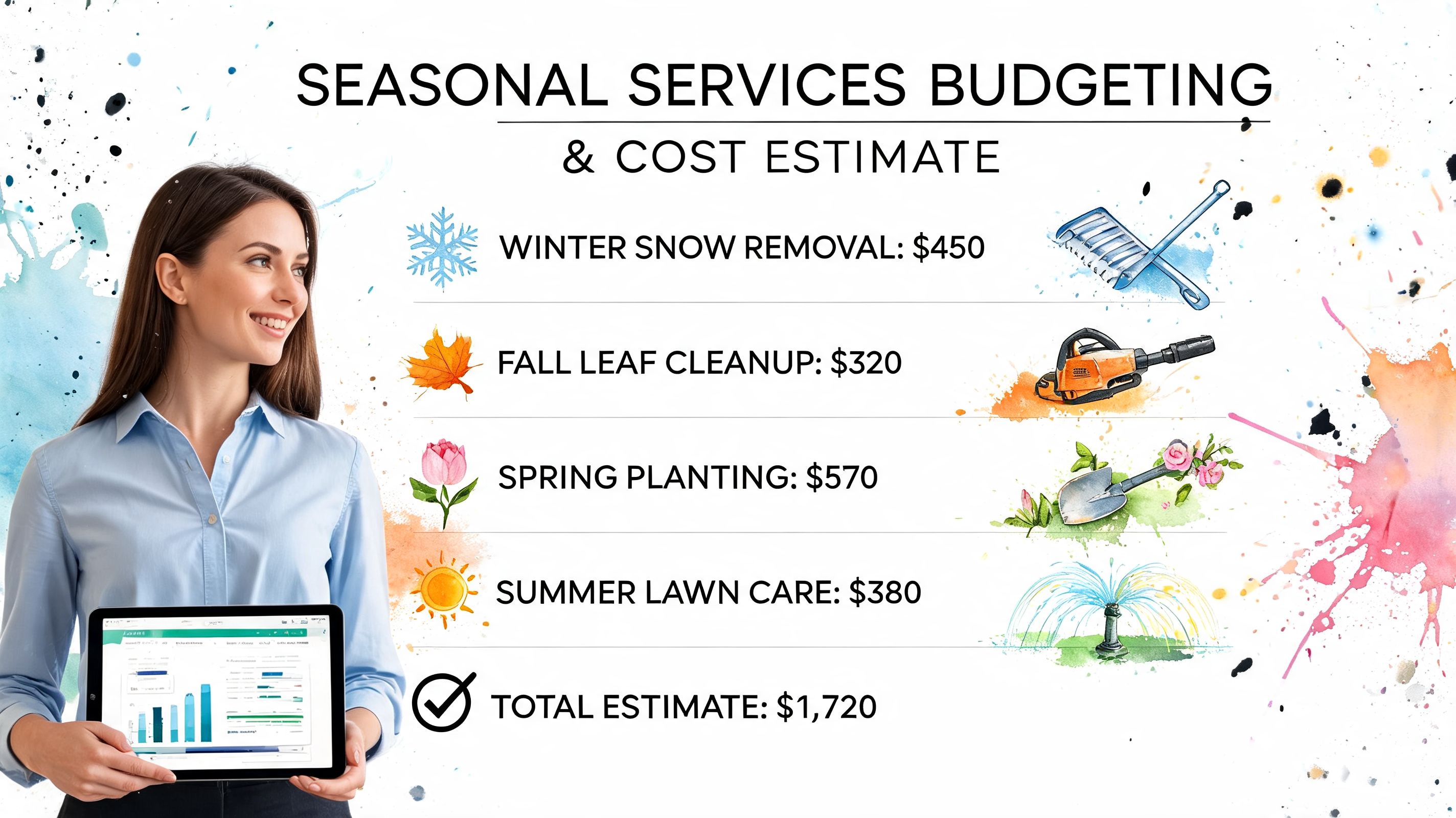
Because no verified GTA pricing figures are provided here, the most responsible approach is to explain the quote structure rather than invent ranges. That still gives managers a practical way to compare proposals and defend the budget internally.
What usually drives the quote
Some cost drivers are obvious. Others are often missed during procurement.
- Square footage and layout: A compact floorplate is usually simpler than a fragmented layout with many enclosed rooms.
- Surface type: Carpet extraction, hard-floor restoration, interior glass, and washroom detailing all require different labour and equipment.
- Level of buildup: Light seasonal dust is one thing. Embedded salt, construction debris, adhesive residue, or neglected grout is another.
- Access constraints: After-hours work, security escort requirements, lift reservations, and restricted production windows affect labour planning.
- Specialised equipment: Auto-scrubbers, extractors, lifts, poles, deionized-water systems, and HEPA-capable equipment can change the quote.
- Documentation needs: Photo reporting, sign-offs, quality audits, and area-specific checklists add value, but they also add administrative work.
A simple budgeting framework
A practical budgeting method is to split seasonal cleaning into three categories.
Core annual resets
Planned tasks such as spring detailing, post-winter floor recovery, and fall carpet care.
Conditional projects
Work triggered by renovation, unusual weather, tenant turnover, or a failed inspection.
Optional upgrades
Services such as exterior washing, upholstery detailing, ceiling-level dusting, or enhanced documentation.
The most expensive quote isn’t always the broadest one. Sometimes it simply includes poor scoping assumptions. A detailed site walk usually matters more than a low initial number.
When comparing quotes, managers should ask each provider to separate must-have tasks from optional recommendations. That makes approvals easier and reduces scope confusion later.
How to Choose the Right Seasonal Cleaning Partner
A strong provider should be able to explain why each task belongs in the scope, not just list activities. Seasonal cleaning is easy to oversell and easy to under-specify. The safest choice is usually the company that gives the clearest operational reasoning, documents assumptions, and adapts the plan to the facility type.

What to ask
The best procurement conversations are specific. General questions lead to vague promises.
- Ask about site-specific scope: Which seasonal risks are being addressed in this building, and which are not?
- Ask about compliance: Can the provider document WHMIS practices, insurance, and relevant worker coverage requirements?
- Ask about methods: What equipment will be used for floors, glass, high dusting, and ventilation-related cleaning?
- Ask about chemicals: Are disinfectants and cleaners appropriate for the facility type, and are any of them Health Canada-approved where relevant?
- Ask about quality verification: How is work checked, reported, and corrected if an area is missed?
- Ask about flexibility: Can the service be scheduled around shutdowns, production windows, school breaks, or tenant occupancy?
Verified trend data also points to a shift toward flexible, tech-enabled green cleaning, especially in educational and childcare settings. Facilities are increasingly looking for vendors that use Health Canada-approved eco-friendly disinfectants and provide real-time quality assurance through mobile apps, rather than locking clients into rigid annual contracts, as described in this discussion of flexible, app-supported green cleaning demand.
One GTA option that reflects that model is Arelli Cleaning, which offers no-term arrangements, app-based quality assurance, and seasonal office and commercial cleaning support. That mention is useful here only as an example of the service features managers may want to compare across vendors.
What to avoid
Some warning signs appear before the work even starts.
- Avoid generic proposals: If the quote looks the same for an office, a clinic, and a warehouse, the scope probably isn’t thought through.
- Avoid vague language: “Deep clean as needed” is not a scope. Areas, methods, and exclusions should be written down.
- Avoid missing exclusions: A proposal should clearly state whether glass, vents, carpets, ceilings, lifts, or exterior areas are included.
- Avoid no-inspection quoting: Seasonal projects are easier to misprice than nightly cleaning. Providers should inspect the site first.
- Avoid one-size-fits-all contracts: Some facilities need stop-and-go seasonal support, not a fixed annual structure that forces work at the wrong time.
A reliable vendor should make the buying process simpler, not more opaque.
Frequently Asked Questions About Seasonal Cleaning
How far in advance should a facility book seasonal cleaning services
Earlier is usually better, especially for spring and post-winter work. Those periods are busy because many buildings face the same conditions at once. Booking early also gives the provider time to inspect the site and confirm access needs.
Is seasonal cleaning a one-time service or part of a recurring contract
It can be either. Some facilities buy one-time deep cleans tied to a problem or event. Others build seasonal cleaning into the annual maintenance plan and schedule it at set points in the year.
What is the difference between a deep clean and a seasonal clean
A deep clean describes intensity. A seasonal clean describes timing and purpose. A seasonal clean is usually a deep clean, but it is shaped by predictable conditions such as salt residue, pollen, holiday traffic, or post-construction dust.
What should staff do before the crew arrives
Preparation depends on the scope. Common steps include clearing desktops, moving small personal items, giving access to storage rooms, confirming alarm and security procedures, and identifying areas that can’t be interrupted.
Who benefits most from seasonal cleaning services
Office-based businesses, warehouses, manufacturing facilities, schools, childcare centres, clinics, and client-facing professional offices all benefit. The exact tasks change by sector, but the logic is the same. Seasonal work addresses buildup that routine service won’t fully remove.
When should a property manager choose specialised seasonal work instead of adding tasks to the nightly cleaner
That choice makes sense when the work needs specialised equipment, extra training, access coordination, or a concentrated block of labour. Floor restoration, high dusting, post-construction cleanup, and detailed window work usually fit that category.
Where do seasonal cleaning projects usually fail
Most failures happen in scoping. The provider and client may both say “deep clean,” but mean different things. A written checklist with inclusions, exclusions, timing, and sign-off points prevents most of those problems.
Conclusion and Further Reading
Seasonal cleaning services help commercial properties stay safe, presentable, and operationally ready through predictable changes in weather and occupancy. For a new property manager, the key idea is simple. Routine cleaning maintains the building. Seasonal cleaning restores it.
The most practical next step is to review the building by zone. Start with entries, floors, washrooms, glass, ventilation-related dust points, and any area that changes visibly with the season. Then use that list to get 2 to 3 quotes from qualified vendors and compare scope, methods, exclusions, and reporting.
Further reading
Internal resources
External resources
Use the checklists above, confirm the actual seasonal risks in the building, and compare quotes based on scope clarity rather than headline price alone.









.webp)