A clinic manager often sees the same pattern by mid-morning. Patients are moving through operatories, the sterilizer logs need review, a staff question comes up about PPE, and an external cleaner is scheduled after hours with little visibility into what they’ll document. That’s where IPAC pressure shows up in real life. It isn’t abstract. It sits inside scheduling, training, storage, purchasing, and audit readiness.
IPAC guidelines for dental offices are the operating rules that keep patient care safe, staff protected, and the practice inspection-ready. In Ontario, they also carry regulatory weight. A clinic can’t treat infection prevention and control as a binder on a shelf. It has to function as a daily system.
Many managers benefit from understanding compliance management as a broader operational discipline, because IPAC succeeds when responsibilities, records, escalation paths, and audits are built into routine work rather than handled only before an inspection.
Table of Contents
Navigating IPAC Compliance in Your Dental Practice
A dental office doesn’t get judged on policy language alone. It gets judged on whether the right action happened at the right moment, with the right documentation behind it. That’s why a practical IPAC program needs more than instructions. It needs repeatable habits, clear accountability, and a clinic manager who can see weak points before an auditor does.
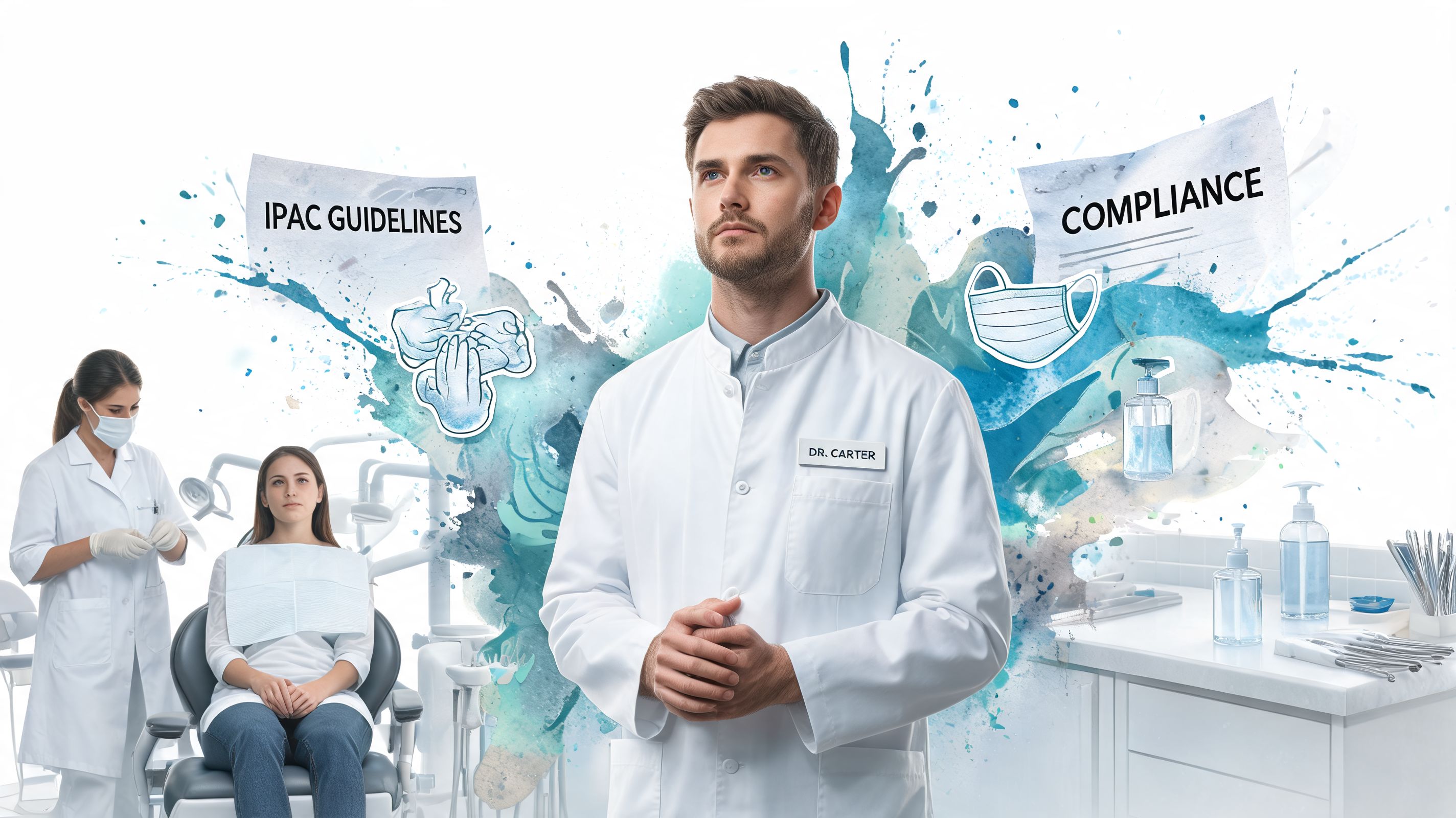
In dental settings, IPAC means infection prevention and control. It covers the systems that reduce the risk of transmission through hands, instruments, surfaces, aerosols, waterlines, waste handling, and staff behaviour. Good IPAC protects the patient in the chair, the team providing care, and the clinic’s licence to operate without interruption.
The practical challenge is that compliance rarely fails in one dramatic moment. It usually slips through small gaps. A missing biological indicator record. A cleaner who disinfects visible surfaces but doesn’t understand clinical touchpoints. A staff member who knows the rule but hasn’t had recent competency review.
Practical rule: If a clinic can’t show who did the task, when it was done, and how exceptions were handled, the task may as well not have happened from an audit perspective.
For managers, the most useful mindset is simple. Treat IPAC as an operating system, not a checklist. That means every recurring activity needs an owner, a documented method, and a way to verify completion. Clinics that work this way usually find compliance less stressful because inspection readiness becomes part of daily operations rather than a scramble.
The Foundation of Dental IPAC in Ontario
A clinic manager usually feels the pressure from IPAC rules when something goes wrong on an ordinary day. A staff member calls in sick. A temp hygienist starts without full orientation. The evening cleaner signs the log, but no one can confirm whether clinical touchpoints were disinfected with the right product and contact time. That is the point where regulation stops feeling abstract.
In Ontario, dental IPAC rests on a layered system of requirements, guidance, and professional accountability. The practical job is to separate what is legally required from what supports good execution, then assign each part to the right person in the clinic.
Who sets the expectations
The Royal College of Dental Surgeons of Ontario sets the core regulatory expectations for dental offices. Its standard requires every practice to maintain an IPAC program, conduct regular oversight, and correct deficiencies when they are found. For clinic managers, that means policies alone are not enough. The program has to show up in training records, audit activity, reprocessing documentation, cleaning verification, and follow-up when a process breaks down.
Public Health Ontario supports the clinic’s day-to-day interpretation of infection prevention principles. Its guidance helps teams apply Routine Practices, assess risk, and align office procedures with broader public health expectations.
The College of Dental Hygienists of Ontario also influences operational expectations, especially around documented policies, staff education, and proof of competency for regulated team members.
Those documents serve different purposes, but they converge in daily practice. The clinic needs clear written procedures. Staff need to follow them the same way on a quiet Tuesday and on a fully booked emergency day. Managers need records that can withstand review.
Third-party cleaning services are often the weak point because they work alongside the IPAC program without always being built into it. If an outside cleaner handles operatories, washrooms, common areas, or waste-related tasks, the clinic still owns the outcome. The safer approach is to treat cleaners as part of the controlled system. Define scope, approved products, touchpoint lists, contact times, escalation steps, and sign-off requirements in writing, then audit that work like any other IPAC task.
What Routine Practices and Additional Precautions mean
Routine Practices are the baseline controls used for every patient, every time. They cover point-of-care risk assessment, hand hygiene, personal protective equipment, instrument handling, reprocessing, environmental cleaning, and waste management. A patient who appears well does not change that baseline.
Additional Precautions apply when the risk assessment shows added concern, such as symptoms, exposure history, or a procedure that changes the level of risk in the operatory. The clinic then adds controls that fit the situation and documents the decision.
This distinction affects workflow, staffing, and purchasing. Clinics run into trouble when teams apply one fixed approach to every patient or create a process so heavy that people start bypassing it under time pressure. The safer model is consistent baseline practice with clearly defined triggers for escalation.
A strong program answers operational questions without delay:
- What is the default standard of care in each area of the clinic? Staff should know the expected process for hygiene, PPE, reprocessing, surface disinfection, and waste handling.
- Who checks that the work was done correctly? Oversight should cover both clinical staff and any contracted cleaning personnel.
- Where is the evidence kept? Training records, sterilization logs, cleaning checklists, product information, and corrective actions should be easy to retrieve.
If those answers are vague, compliance will be inconsistent. If those answers are clear, the clinic has a workable foundation for patient safety, staff protection, and inspection readiness.
Core IPAC Protocols for Daily Dental Operations
A common failure point in dental IPAC is the 10-minute gap between patients. The schedule is tight, one assistant is covering two rooms, a contractor is emptying waste and wiping common-area touchpoints, and a late patient is already at reception. That is where good written policy gets tested. Daily protocols have to work under pressure, with clear ownership for every step inside the operatory and every cleaning task handed to a third party.

Hand hygiene and point-of-care judgement
Hand hygiene is still the control that breaks the chain of transmission fastest, but clinics should treat it as a systems issue, not just a training issue. If alcohol-based hand rub is not within reach, if sinks are blocked by storage, or if staff have to choose between proper hand hygiene and staying on time, compliance will fall.
Point-of-care risk assessment has the same operational reality. It needs to happen before care starts, and it has to affect what the team does next. Screening, symptoms, procedure type, splash or aerosol risk, and the patient’s ability to follow instructions all change the controls at chairside. A clinic manager should be able to ask, "What changed for this patient, and what did we change in response?" If no one can answer, the assessment is not functioning.
The same standard applies to contracted cleaners. If a third-party cleaner enters operatories, washrooms, or shared clinical-adjacent spaces during the day, the clinic has to define hand hygiene expectations, access limits, and what to do after contact with contaminated surfaces or waste. Many offices miss that handoff.
PPE and patient-facing controls
PPE selection should match the task and the exposure risk. Staff need a simple rule set they can apply quickly, without stopping to interpret a long policy binder during turnover. That means the clinic should define what is worn for routine care, what changes for higher-risk procedures, where replacements are stored, and who checks stock before shortages create workarounds.
Common weak points are predictable:
- Glove use replacing hand hygiene: Gloves are task-specific barriers. They do not clean hands.
- Incorrect doffing: Contamination often happens at removal, especially when staff are rushed.
- Remote supply storage: If masks, gowns, or eye protection are not close to care areas, damaged PPE stays in use longer than it should.
- No expectations for non-clinical workers: Reception staff, float staff, and outside cleaners still need clear PPE rules when their work brings them into patient-care areas.
Patient-facing controls also need a set routine. Screening at confirmation helps, but the useful control is the second check at arrival or before treatment when risk has changed. Clinics should also decide in advance who has authority to defer care, who documents that decision, and how the room is managed afterward. That avoids improvised calls at the front desk.
What works in daily operations
Daily IPAC holds up better when the clinic reduces variation. Standard operatory setups, fixed locations for clean supplies, clear dirty-to-clean movement, and short turnover checklists produce better compliance than relying on memory.
Oversight matters just as much as setup. I advise managers to separate three questions: who performed the task, who confirmed it, and where the record sits. That applies to chairside surface disinfection, waste removal, suction line maintenance, and any cleaning assigned to an external vendor. If a contractor cleaned a waiting room touchpoint, changed a washroom bin, or entered a clinical support area, the clinic should have a documented scope, approved products, required contact times, and a method to verify completion.
A room can look clean and still fail IPAC requirements. Product selection, wet contact time, sequence, and surface compatibility determine whether disinfection was done properly.
The clinics that stay inspection-ready usually do a few simple things well. They use room-specific checklists, run supervisor spot checks, correct missed steps the same day, and include third-party cleaning staff in orientation and audit activity where their work affects infection prevention. That is the gap many official documents leave to the clinic to solve. In practice, it is where avoidable risk often sits.
A Guide to Instrument Reprocessing and Sterilization
Instrument reprocessing is where clinics need disciplined flow. The safest setup is one-directional. Contaminated items move from use, to containment, to cleaning, to packaging, to sterilization, to storage without backtracking or mixing with clean inventory.

From chairside to reprocessing area
The first control point is transport. Used instruments should be contained and moved safely so staff don’t handle exposed sharps or contaminated trays casually in shared pathways. Once in the reprocessing area, cleaning has to happen before sterilization. Sterilizers don’t compensate for poor cleaning.
A reliable workflow usually follows this order:
- Contain and transport safely: Use designated containers and keep contaminated items separate from clean supplies.
- Clean thoroughly: Manual or mechanical cleaning must remove visible soil before packaging.
- Inspect before packaging: Damaged hinges, residual debris, or wet instruments need attention before the next step.
- Package for sterilization: Pouches and wraps should support sterilant penetration and storage integrity.
- Store to protect sterility: Sterile items need clean, dry storage and stock rotation discipline.
Problems usually appear when clinics compress steps. Packaging instruments that haven’t been properly inspected is a common example. So is storing sterile packs in overfilled drawers where packaging gets torn.
Monitoring and records that stand up in an audit
Monitoring isn’t one task. It has several layers. Mechanical readings from the sterilizer cycle matter. Chemical indicators matter. Biological monitoring matters. The clinic also needs a process for failures, recalls, and documentation review.
PHO-related expectations referenced in the verified material call for biological indicators weekly and spore tests monthly in the dental context, with environmental cleaning and sterilization records retained as part of the broader compliance record set. The practical lesson is that a monitoring result is only useful if someone reviews it and acts on it.
A manager should check whether the clinic can quickly produce:
- Cycle records: Time, temperature, pressure, and load details
- Indicator records: Internal and external chemical checks where required
- Failure response notes: What happened, what was quarantined, and what corrective action followed
- Competency records: Which staff are trained to reprocess and monitor instruments
Sterilization monitoring is a decision system, not just a filing task. If a result is abnormal, the next step must already be defined before the problem occurs.
Environmental Cleaning and Disinfection in Dental Settings
The operatory turns over fast. A patient leaves, the next one is already seated in reception, and a room that looks clean can still have contaminated touchpoints, waterline risk, or missed surfaces hidden by clutter. That is where dental IPAC often breaks down in practice. The written policy is usually fine. Execution under time pressure is where managers need control.
Environmental cleaning in a dental clinic works only if the team separates surfaces by risk and assigns clear responsibility for each one. That includes any third-party cleaner. If your evening contractor handles floors, washrooms, and reception, but your clinical team handles operatory disinfection between patients, the handoff has to be written, trained, and checked. Inspectors look at outcomes, not assumptions.
Clinical contact surfaces versus housekeeping surfaces
Clinical contact surfaces sit inside the care zone. Light handles, chair controls, delivery units, drawer pulls, keyboards, and similar touchpoints can be contaminated during treatment and need cleaning and disinfection between patients when touched or soiled. Housekeeping surfaces such as floors, walls, and low-touch fixtures follow a different frequency, but they still need defined methods, approved products, and records that match actual clinic activity.
A simple schedule keeps those expectations visible.
| Area / Item | Type of Surface | Minimum Frequency | Notes |
|---|
| Dental chair controls | Clinical contact surface | Between patients and when visibly soiled | Clean high-touch points fully and respect disinfectant contact time |
| Light handles | Clinical contact surface | Between patients | Barriers can help, but torn or damp barriers need immediate replacement |
| Countertops in operatory | Clinical contact surface | Between patients and at end of day | Remove trays, paper, and loose items so the whole surface can be reached |
| Reception desk touchpoints | Shared touch surface | Routine scheduled cleaning and when visibly soiled | Include payment terminals, pens, clipboards, and door hardware |
| Floors in treatment areas | Housekeeping surface | Daily and as needed after contamination | Use a method that prevents soil from moving between operatories and common areas |
| Washroom fixtures | Shared touch surface | Routine scheduled cleaning and when visibly soiled | Product labels, dilution, and contact time must match the task |
| Staff room surfaces | Housekeeping and touch surfaces | Routine scheduled cleaning | Non-clinical spaces still affect overall IPAC performance |
For clinics tightening procedures, especially where outside cleaners support non-clinical areas, this overview of commercial disinfection and sanitizing for shared environments is a useful operational reference for task sequencing, product use, and logging.
The trade-off is straightforward. More frequent cleaning adds labour time and can slow room turnover. Missed high-touch disinfection creates a direct patient safety risk and is much harder to defend during an inspection.
Dental unit waterlines need their own control plan
Waterline management needs separate attention because contamination is not visible during routine care. Clinics can have a room that appears well maintained and still have poor water quality if testing, flushing, and treatment are inconsistent. Managers should treat DUWLs as a monitored system, not a background maintenance task.
Ontario dental IPAC expectations set the treatment water target at ≤500 CFU/mL. In day-to-day operations, that means the clinic needs a written schedule for testing, flushing between patients according to manufacturer instructions and clinic policy, chemical treatment where indicated, and a documented response when results fall outside target.
Three controls make the difference:
- Assign one person to own DUWL oversight: Shared responsibility often leaves testing and follow-up incomplete.
- Use a fixed calendar for sampling and maintenance: If the schedule depends on memory, it will drift.
- Link failed results to action: Retesting, line treatment, equipment review, and documentation should happen through a defined process.
This is also an area where third-party cleaners can create confusion. They may clean the outside of dental units, sinks, and surrounding surfaces, but they do not manage the internal waterline control program unless that role is specifically contracted, trained, and verified. Clinic leadership still owns the result.
A manager should be able to answer four questions without searching through emails or asking three different staff members: which surfaces are disinfected between patients, which are cleaned after hours, which products are used in each area, and who reviews DUWL records when a test is abnormal. If those answers are unclear, the environmental cleaning program is not inspection-ready.
How to Audit Your IPAC Program and Partner with Cleaners
Many clinics think about IPAC audits only when an inspection feels close. That approach creates predictable stress. A stronger model treats audits as routine operational verification. The annual requirement matters, but what protects a clinic week to week is a smaller internal review cycle that catches drift early.
A practical internal audit framework
An internal audit should test whether the written program matches the clinic’s real behaviour. It should also check whether records are complete enough to defend that behaviour.
A useful review framework includes these areas:
- Policies and accessibility: Staff should know where current IPAC policies live and which version is in use.
- Training and competency: Annual education only helps if the clinic can show attendance, updates, and role-specific competency.
- Reprocessing chain: Observe actual flow, not just records.
- Environmental cleaning logs: Look for incomplete initials, missing dates, or tasks that are always signed at the same time regardless of clinic activity.
- Exposure and incident handling: Make sure escalation steps are written and understood.
The difficult part isn’t creating the audit form. It’s following through on deficiencies. A gap found but not corrected is still a gap.
How to manage outsourced cleaning without creating a compliance gap
Many dental offices face exposure. Official guidance often concentrates on in-house clinical staff, but outsourced cleaners still enter the environment, handle chemicals, and affect how well the clinic can prove environmental compliance. Verified data for this topic notes that an estimated 60% of GTA clinics outsource cleaning, that external IPAC-certified cleaners can reduce audit error rates by 30%, and that 20% of clinic audit failures stem from undocumented training for all personnel, including contractors, according to the CDHO IPAC guidance reference.
That doesn’t mean outsourcing is the problem. Poor integration is the problem.
A clinic manager should ask any cleaning provider:
- Who trains the crew on healthcare-specific risks: General office cleaning experience isn’t enough for operatories or reprocessing-adjacent areas.
- How are WHMIS and chemical use documented: The clinic needs confidence that products are used correctly and safely.
- What gets logged after each visit: A verbal “done” isn’t evidence.
- How are missed tasks escalated: There should be a clear corrective path.
- Can the provider work around clinical zoning: Clean, semi-clean, and contaminated workflows matter.
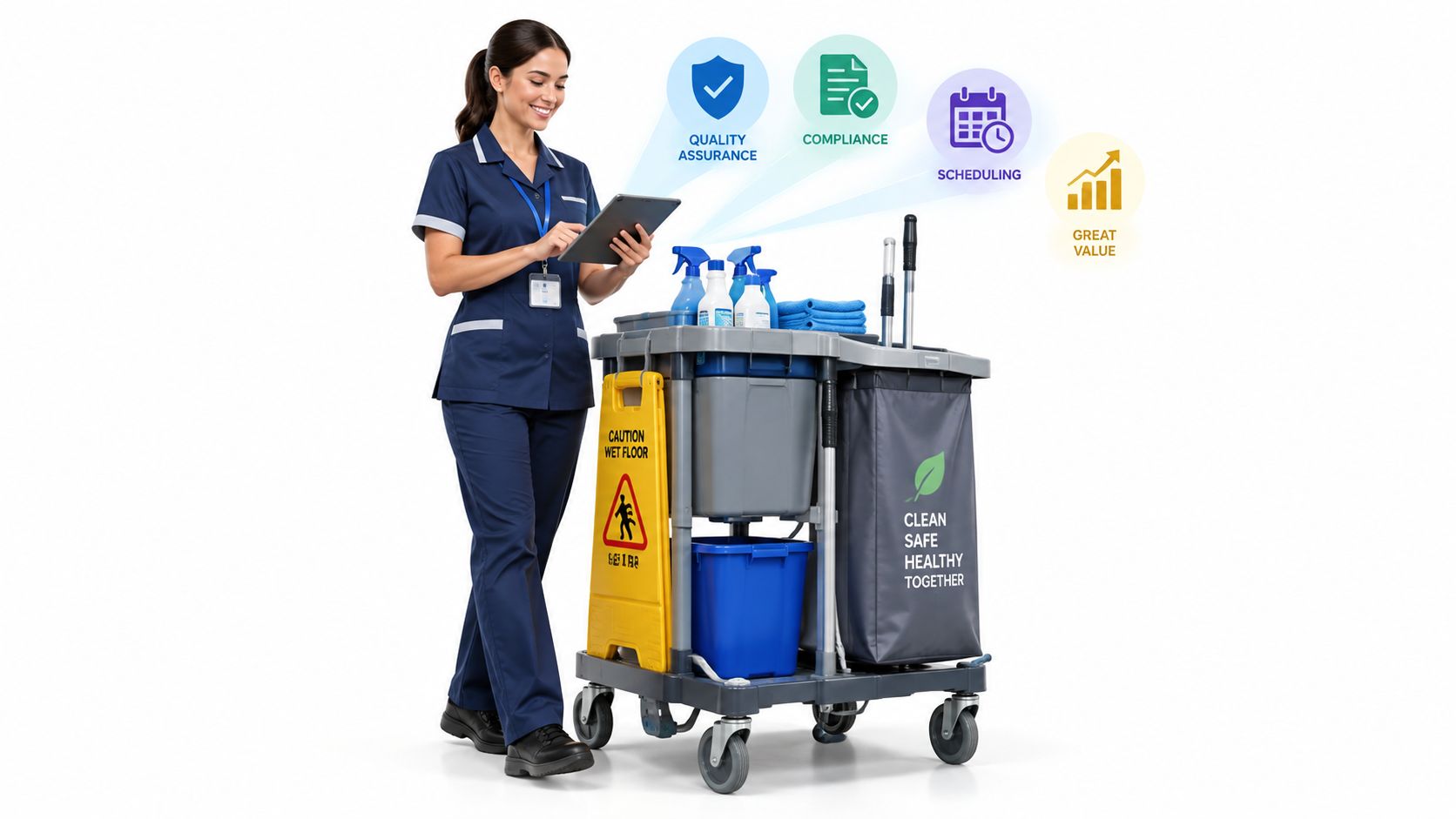
Some clinics use specialised medical cleaning providers to close that gap. One example is medical office cleaning support designed around healthcare environments rather than generic janitorial routing. The key isn’t the brand. It’s whether the provider can fit into the clinic’s IPAC program with documented training, clear scope, and auditable records.
If a contractor touches the environment, the contractor belongs inside the clinic’s compliance system.
Your IPAC Questions Answered and Further Reading
FAQ
What is the single biggest IPAC mistake in dental offices?
Treating compliance as paperwork instead of behaviour. Auditors look for records, but risk starts with actual practice.
How often should a dental office audit its IPAC program?
Ontario’s RCDSO standard requires an annual audit. Many clinics also use smaller internal reviews throughout the year to catch problems earlier.
Who is responsible for outsourced cleaners in a dental clinic?
The clinic remains responsible for the environment and should verify contractor training, scope, supervision, and records.
What should be documented for cleaning staff and contractors?
Training, task completion, chemical handling knowledge, and corrective actions should all be documented.
Why do waterlines need separate attention?
Because biofilm risk isn’t visible, and waterline quality affects aerosol safety during treatment.
What should a manager do after finding an IPAC gap?
Correct the issue, document the response, retrain if needed, and confirm the fix is working.
Further reading
Internal resources:
External resources:
Use the checklist logic in this guide, review records the way an auditor would, and get 2 to 3 quotes if outside cleaning support is needed. An informed comparison usually reveals whether a provider understands dental IPAC or only general commercial cleaning.










.webp)