A Toronto facility manager usually doesn't start the day planning an urgent cleaning call. Then a client visit gets moved up, a washroom issue spreads beyond one stall, a lunchroom spill reaches carpet, or a tenant turnover leaves a suite nowhere near ready. At that point, “same day” matters less as a marketing phrase and more as an operations question: what can be cleaned properly today, by whom, and under what site conditions?
That's where a lot of local content falls short. Many pages promising fast cleaning in Toronto are written around residential convenience, not commercial reality. Offices, clinics, schools, and warehouses have access controls, occupied areas, sensitive equipment, and sometimes compliance requirements that don't fit a simple “book now, cleaner arrives” model.
Navigating Urgent Cleaning Needs in Toronto
At 10:30 a.m., a clinic manager learns an inspector may arrive that afternoon, or an office admin gets notice that a boardroom tour has been moved up to 3:00. The question is no longer whether same-day cleaning sounds convenient. The key question is whether a crew can reach the site, get into the right areas, and complete the highest-priority work properly before the window closes.
For commercial spaces in Toronto, urgent cleaning is a feasibility problem first. A provider has to confirm access, parking or loading instructions, service elevators if needed, site contacts, and the exact areas that matter most. If any of that is unclear, the delay usually shows up on site, not on the booking form.
A lot of public content about same-day cleaning still treats the request like a residential apartment turnover. Commercial buyers deal with different constraints. Offices may need work done around staff and meetings. Clinics may have restricted rooms, infection-control rules, and waste-handling limits. Larger buildings can require security clearance before a cleaner even reaches the floor.
What experienced facility teams should screen for early
- Clear scope: Name the rooms, floor areas, and problems that need attention today.
- Access details: Confirm keys, alarms, elevators, parking, and who will meet the crew.
- Priority order: Decide what must be completed today and what can wait for a follow-up visit.
- Site restrictions: Flag patient areas, server rooms, sensitive equipment, or spaces that cannot be disturbed.
- Crew fit: Some urgent jobs need general janitorial labour. Others need floor care, biohazard handling, or post-construction cleanup.
The first call usually decides whether the job is possible. Good intake speeds up dispatch, which is one reason many service companies look for systems that boost home service business efficiency. In cleaning operations, that means getting accurate site information to the scheduler fast enough to assign the right crew, not just the nearest one.
Commercial readers who want local context can compare urgent requests against normal office cleaning in Toronto service requirements. The same factors show up every time: building access, timing, occupied versus vacant areas, and how much work can realistically be finished in one shift.
One practical rule holds up across almost every urgent call. If a provider cannot tell you what information they need before dispatch, they are guessing on scope, staffing, and timing.
Understanding Same Day Service Availability and Scope
At 10:30 a.m., a clinic manager calls because two exam rooms, the reception washroom, and the front desk area need attention before the afternoon schedule starts. That is a realistic same-day request. A call at the same hour asking for a full top-to-bottom reset of three occupied floors usually is not.

For commercial sites in Toronto, same-day service is mainly a question of scope control. A provider has to match the request to available labour, travel time, building access, and the type of work involved. Offices and clinics are often workable because the tasks are defined and the crew can focus on priority areas. Large restorations, specialty floor work, and heavily restricted spaces usually need staged service.
Analysts tracking the cleaning market have noted continued demand for faster booking and more standard service delivery across the industry. For a facility manager, that matters less as a trend story than as an operating reality. Buyers now expect quick answers, but the job still has to fit the hours, staff, and site conditions available that day.
Work that often fits into a same-day schedule
These requests are commonly feasible if the affected areas are limited and someone can admit the crew without delay:
- Office recovery after a meeting, event, or unexpected traffic spike
- Washroom and breakroom cleanup to bring shared spaces back to usable condition
- Reception and high-touch area cleaning for entrances, counters, handles, and shared touchpoints
- Small-area spill cleanup where the material can be handled under routine commercial cleaning procedures
- Touch-up cleaning for a vacant suite or turnover-ready office
This is also where buyers should separate urgent commercial response from standard recurring janitorial work. A provider with established commercial cleaning services for offices, clinics, and shared facilities is usually better equipped to define what can be done today and what needs a return visit.
Work that often needs scheduling, equipment, or approvals
Some jobs fail the same-day test for practical reasons, not because the provider is unwilling to help.
| Job type | Same day feasibility | Why |
|---|
| Standard office cleaning | Often feasible | Scope is predictable and equipment needs are basic |
| Targeted disinfecting | Sometimes feasible | Product choice, contact time, and room use have to be managed properly |
| Large floor restoration | Usually scheduled ahead | Machines, drying time, and traffic control affect timing |
| Post-construction cleaning | Often limited same day | Dust, debris, and detail work usually exceed one urgent shift |
| Large warehouse cleaning | Case by case | Access, active operations, and square footage slow production |
Occupied clinics add another layer. A crew may be able to clean reception, staff washrooms, and administrative offices the same day, while treatment rooms stay off limits until patients clear out. In office towers, elevator booking, loading access, and security sign-in can cut an evening shift down by an hour before the first mop hits the floor.
Facility managers who already review hygiene strategies for commercial facilities usually recognize the pattern. Same-day success depends less on the word "urgent" and more on whether the work can be isolated, accessed, and completed safely in one shift.
A realistic urgent quote defines the first response clearly. It should state which rooms are included today, what standard applies, and what remains for follow-up if the full scope will not fit.
The Booking Process for Urgent Commercial Cleaning
A Toronto office manager calls at 1:30 p.m. after a client event runs long, coffee has been tracked through the lobby, two washrooms need attention, and executives are back on site the next morning. A clinic coordinator calls with a different problem. Reception and staff areas can be cleaned today, but treatment rooms stay in use until the last patient leaves. Those are both urgent requests, but they do not book the same way.
The first step is qualification. A dispatcher has to decide whether the job fits one shift, whether access is in place, and whether the request is a true same-day clean or a partial response with follow-up later. That decision is operational, not sales-driven. If the scope is unclear, good providers slow the conversation down long enough to define it properly.
Have the site facts ready before you call. The details that change the booking outcome are usually simple:
- Property type. Office, clinic, school, retail unit, warehouse, or mixed-use facility.
- Priority areas. List the rooms that must be handled today.
- Approximate size. Total square footage helps, but the urgent zone matters more.
- Problem type. Routine buildup, spill response, washroom recovery, event cleanup, or a disinfecting request.
- Access details. Elevator booking, loading dock rules, security sign-in, alarm procedures, keys, or escort requirements.
- Time window. Immediate entry, after-hours only, or staged access as rooms clear out.
Phone usually works best for urgent commercial work because the dispatcher can test the scope in real time. A form can work if the request is narrow and access is straightforward. It slows things down when the crew may arrive and find a locked floor, restricted clinic rooms, or a much larger mess than described.
This is also where experienced facility teams save time. Managers who already review hygiene strategies for commercial facilities tend to give clearer instructions because they understand the difference between a full-site clean and a targeted response.
Ask a few direct questions before approving the dispatch:
- What exactly will be completed today?
- What is excluded if time or access runs short?
- What does the crew need from our on-site contact before arrival?
- Who approves added work if the condition is worse than reported?
- How will completion be documented?
A written scope matters on same-day jobs. It prevents the common failure point in urgent cleaning: one side expects a full reset, the other has only priced a focused clean for the highest-priority areas.
For fast requests, use a provider with a clear commercial cleaning contact process so operations staff can confirm scope, access, and timing before the crew is sent.
If the caller cannot describe the issue clearly, the provider should ask sharper questions and narrow the job down before promising arrival.
Demystifying Same Day Cleaning Costs in Toronto
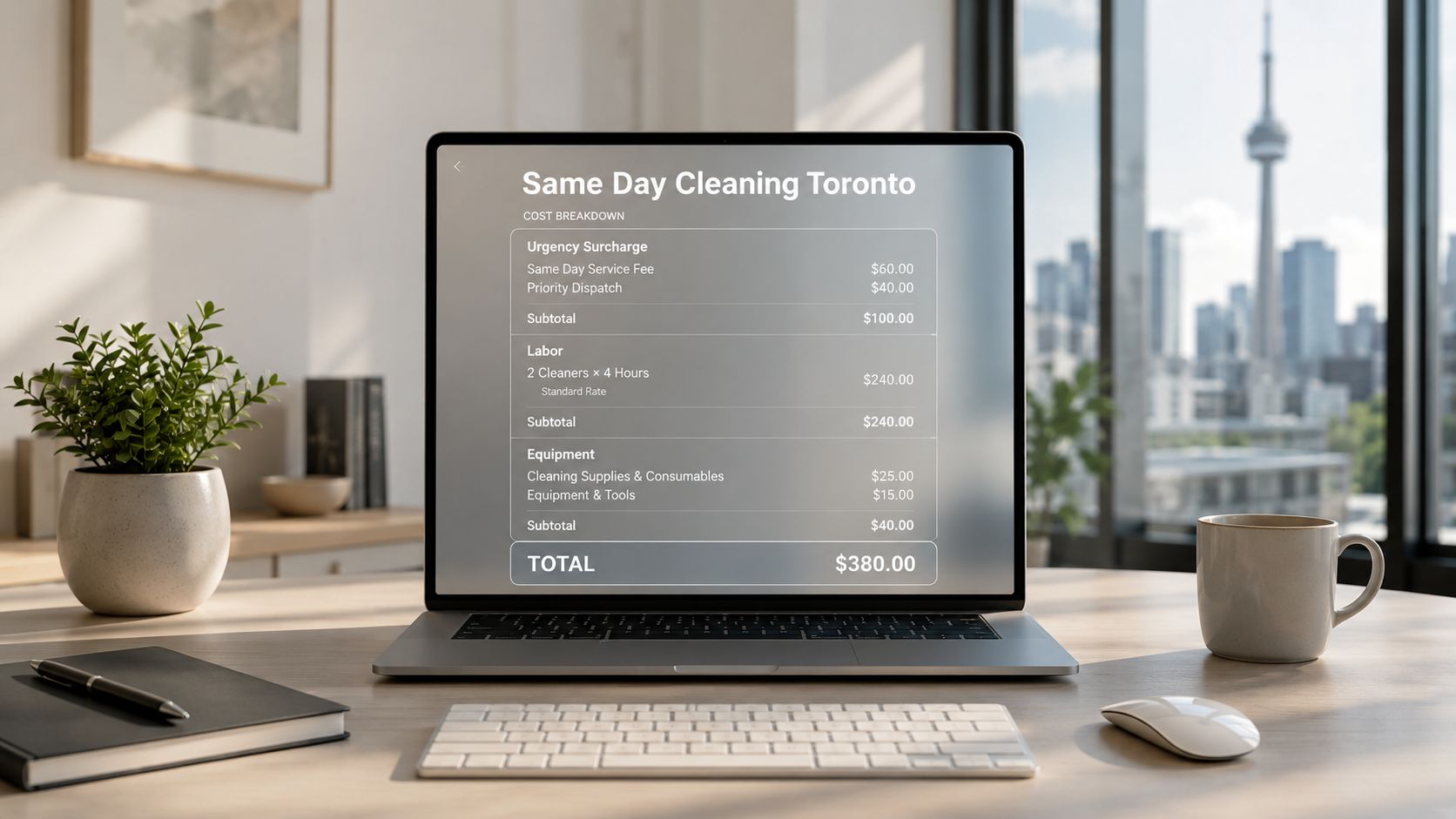
Urgent cleaning prices in Toronto are built on the same labour reality as standard service, but scheduling pressure changes how that labour is sold. The core drivers are crew time, minimum charge, travel and dispatch efficiency, job type, and whether the request is narrow enough to complete in one controlled visit.
A Toronto pricing guide reports professional cleaning rates of $35 to $70 per hour, with an average around $50 per hour. The same source notes one-time apartment cleans of about 900 sq. ft. often range from $103 to $258, and standard condo or small apartment cleaning commonly falls around $165 to $250. It also notes move-out cleaning typically starts around $245 and can rise to $426+. Those figures come from this Toronto house cleaner cost guide. They are residential benchmarks, but they help commercial buyers understand the labour structure behind an urgent quote.
What actually pushes the cost up
Same-day commercial cleaning usually costs more when the request includes one or more of the following:
- Compressed scheduling. Dispatching a crew quickly can displace planned work.
- Fragmented scope. Several small problem areas across different floors often take longer than one concentrated zone.
- Restricted access. Waiting for keys, security, or escorts burns labour time.
- Special handling. Clinics, childcare settings, and sensitive work areas require more control.
- After-hours timing. The site may only be available outside regular operating windows.
How to read a same-day quote
A useful urgent quote should answer these points clearly:
| Quote item | What to look for |
|---|
| Scope | Exact rooms, surfaces, and exclusions |
| Labour basis | Hourly, minimum visit, or fixed urgent task |
| Supplies | Included or charged separately |
| Timing | Estimated arrival and service window |
| Change handling | How added work is approved |
A rushed verbal quote with no written follow-up often causes disputes later. A practical quote confirms what the crew is there to do, what they're not doing, and what happens if site conditions differ from the original call.
For commercial buyers, the smartest approach is to compare scope discipline, not just price. The cheapest urgent quote can become the most expensive if the crew arrives under-equipped or the site has to be revisited.
Preparing Your Facility for the Cleaning Crew
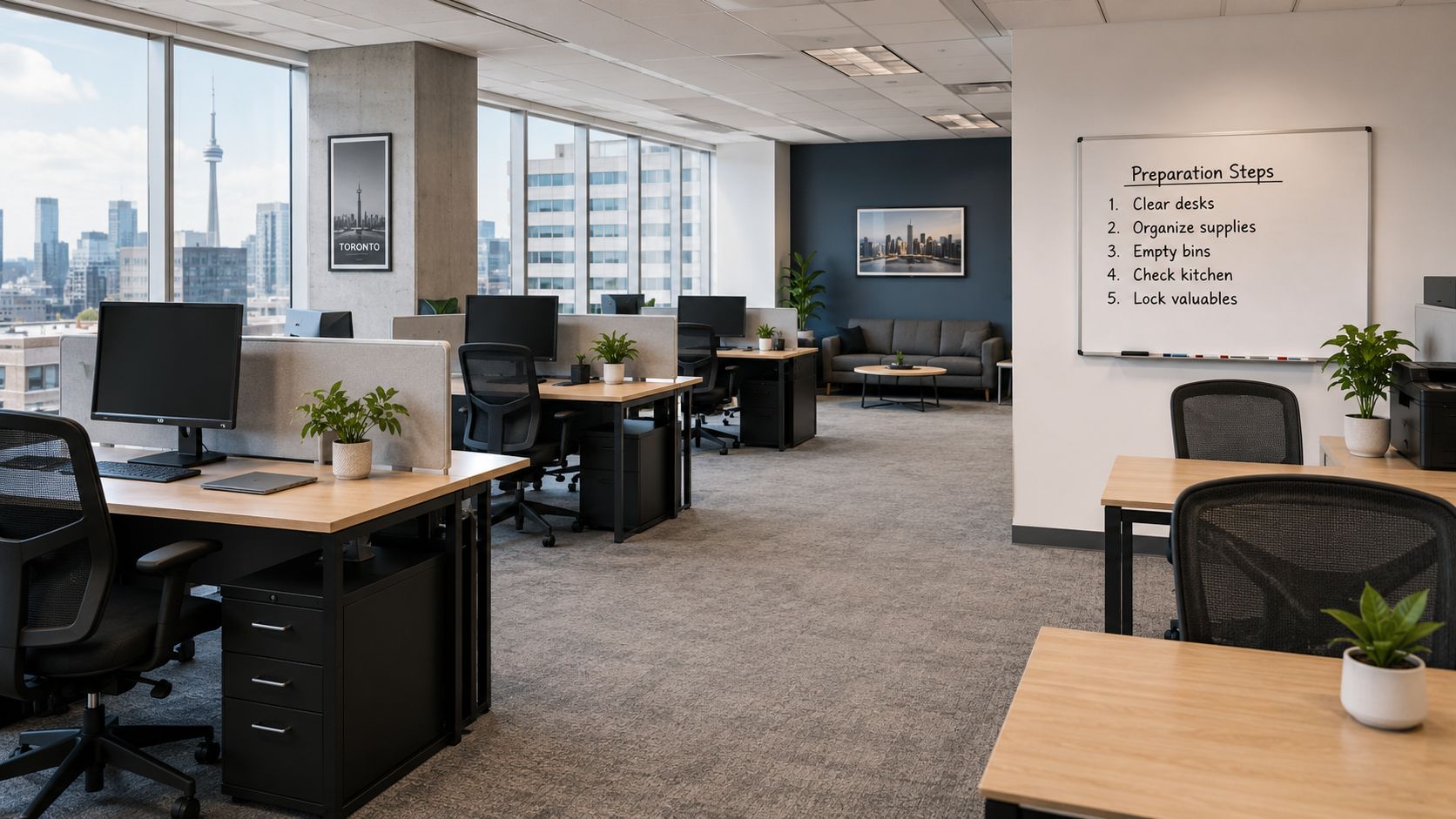
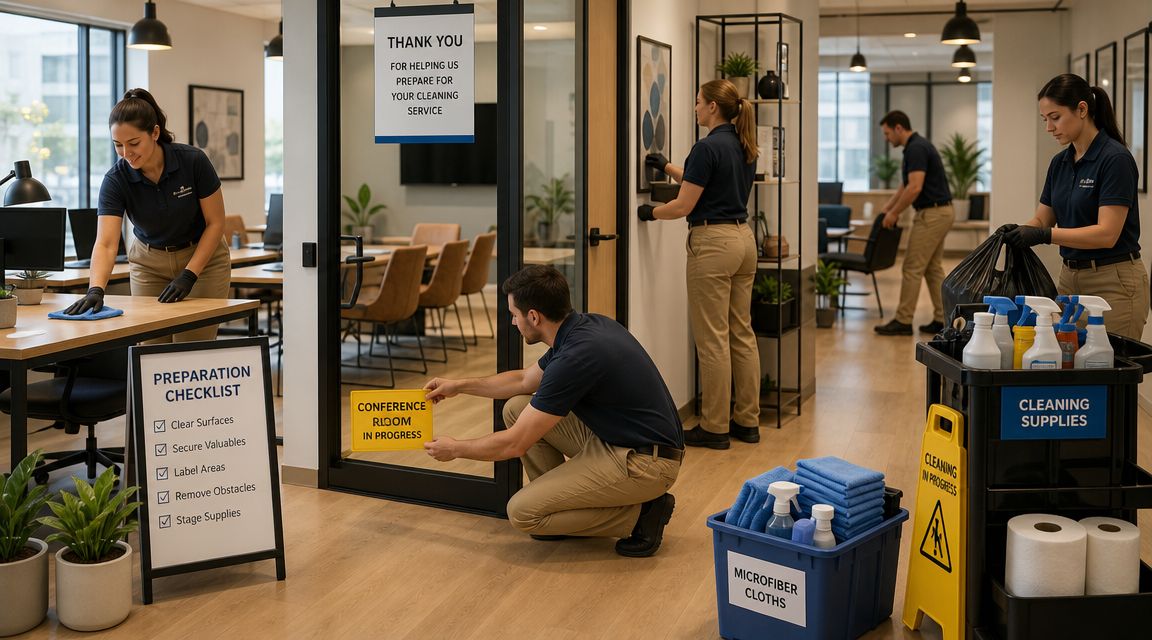
Client preparation has a direct effect on service quality. In urgent work, the crew doesn't have much spare time for avoidable delays. If the building contact is missing, the affected area is blocked, or sensitive materials are left exposed, the clean will slow down before it starts.
For regulated workplaces such as dental clinics and childcare centres, quality depends on compliance, not appearances. Where disinfecting is part of the job, Health Canada-approved products should be used, visible soil should be removed before disinfecting, and the product needs the correct contact time. Skipping those steps can make the result ineffective even if the area looks clean, as noted in this guidance on professional cleaning quality control and compliance.
Pre-arrival checklist for the client
Before the crew reaches site, it helps to handle the basics:
- Assign one point person who can answer calls, approve minor scope decisions, and meet the crew if needed.
- Clear access routes to the affected rooms, including loading instructions or elevator access.
- Protect sensitive items such as legal files, medical records, exposed electronics, cash floats, or prototypes.
- Identify priorities so the crew knows what must be completed first if time becomes tight.
- Notify internal staff if occupied areas will be cleaned during working hours.
Managers dealing with healthcare, education, or food-adjacent spaces may also want to review a provider's facility pre-clean process for commercial disinfection and sanitizing, because disinfecting work is only effective when the sequence is controlled.
What the walkthrough should cover
A quick pre-service walkthrough should confirm the affected areas, any exclusions, and safety issues. A post-service inspection should then verify completion while the crew is still on site. That's the simplest way to catch missed details before they turn into callbacks.
Clean first, disinfect second. In urgent jobs, that sequence can't be skipped to save time.
What to avoid on the day
Some client behaviours make urgent cleaning harder than it needs to be:
- Changing the scope repeatedly after the crew has started
- Adding restricted rooms without prior notice
- Expecting specialist restoration from a standard cleaning response
- Assuming visible cleanliness equals disinfection
- Leaving no one available to approve decisions or sign off completion
This is also where one industry example fits naturally. Arelli Cleaning is one Toronto-area provider that describes 24/7 support and flexible scheduling for commercial requests, which can help when a facility needs a rapid intake process rather than a fixed contract model.
FAQs and Further Resources
A same day request is only workable if the basics are already in place. For a Toronto office, clinic, or multi-tenant commercial site, the main question is usually not whether a crew can come today. It is whether the site can be entered, scoped, approved, and cleaned safely within the hours left in the day.
FAQ
What counts as same-day for a commercial site in Toronto?
For commercial work, same-day usually means the provider can assess the request, confirm scope, dispatch a crew, and complete the agreed areas that day. On larger sites, that often means priority zones first instead of full-site recovery.
Is weekend or after-hours urgent service possible?
Yes, if staffing and site access line up. In practice, after-hours requests are easier to complete when building security, elevator access, alarm procedures, and an authorized contact are sorted before the crew arrives.
Can a clinic or childcare space be cleaned the same day?
Yes, but only with a clear scope and the right process for the setting. Exam rooms, washrooms, reception areas, and touchpoints may be feasible on short notice. Full treatment of every room, every surface, and every piece of equipment usually needs more planning.
What if the crew arrives and finds a bigger issue than reported?
The supervisor should stop and reset the scope with the site contact. That is the point where photos, revised timing, and written approval matter. It prevents disputes about what was authorized and what was completed.
Should a facility manager ask for a fixed price or hourly rate?
Ask for the pricing model that matches the uncertainty of the job. Fixed pricing works better when the scope is tight and visible. Hourly pricing is often more realistic when conditions are unknown, access is delayed, or contamination is heavier than expected.
Is same-day cleaning suitable for large warehouses?
Usually for selected areas, not the whole building. Shipping lanes, washrooms, lunchrooms, entrances, spill zones, and front-office areas can often be handled quickly. A full warehouse detail on the same day is rarely realistic unless the request is very limited.
Further reading
Internal resources
External resources
If you are comparing providers for an urgent commercial cleaning request, ask each one to confirm four things in writing. What will be cleaned today, what is excluded, what access they need, and who can approve changes on site. Arelli Cleaning is one Toronto-area option to include in that comparison.








.webp)