A Woodbridge office manager often has the same problem every week. Staff are busy, clients are coming in, the washrooms need to stay presentable, and nobody wants to discover at 8:30 a.m. that bins weren't emptied or fingerprints are still all over the boardroom glass.
That's why office cleaning in Woodbridge isn't just a housekeeping task. It's part of how a business protects health, supports productivity, and keeps the workplace ready for employees, visitors, inspectors, and tenants. In Ontario, the janitorial services industry is projected to reach $3.2 billion in 2026, with average annual growth of 2.6% from 2021 to 2026, reflecting steady demand tied to hygiene standards and compliance needs, according to IBISWorld's Ontario janitorial services industry outlook.
A practical local starting point is to understand what a complete cleaning program includes, what drives cost, and where compliance risks tend to hide. Businesses comparing providers in Vaughan's Woodbridge area can also review Woodbridge service coverage to see how local office cleaning is typically scoped.
Table of Contents
Your Guide to Professional Office Cleaning in Woodbridge

Professional office cleaning means a planned service program for workspaces such as offices, clinics, administrative suites, and mixed commercial units. It usually covers recurring janitorial work, scheduled deep cleaning, washroom care, high-touch disinfection, and periodic tasks that stop dust and grime from building up.
For a busy Woodbridge workplace, the challenge isn't deciding whether cleaning matters. The challenge is choosing the right level of service. Some offices need quiet after-hours upkeep. Others need stronger protocols because they see steady visitor traffic, share equipment, or operate in regulated environments such as dental, childcare, or professional services.
Why local buyers need more than a service list
A simple checklist of “vacuum, mop, empty bins” doesn't tell an office manager enough. A better question is whether the cleaning plan matches how the space is used. A small law office with private rooms has different needs than a clinic with frequent touchpoints and stricter chemical handling expectations.
Direct answer: Good office cleaning in Woodbridge is a mix of routine maintenance, frequency planning, compliance awareness, and clear quality control.
Key takeaways for Woodbridge office managers
- Cleaning is operational, not cosmetic. It affects washroom condition, client impressions, and daily workplace function.
- Scope matters more than labels. “Janitorial” can mean very different things from one quote to another.
- Compliance should be built in. Chemical handling, product choice, and recordkeeping can't be treated as extras.
- Specialty tasks need separate planning. Carpet care, floor restoration, and post-renovation cleanup usually sit outside a basic nightly contract.
- The best buying process is comparative. Use a checklist and get 2 to 3 quotes before deciding.
Core Services What Every Woodbridge Office Needs
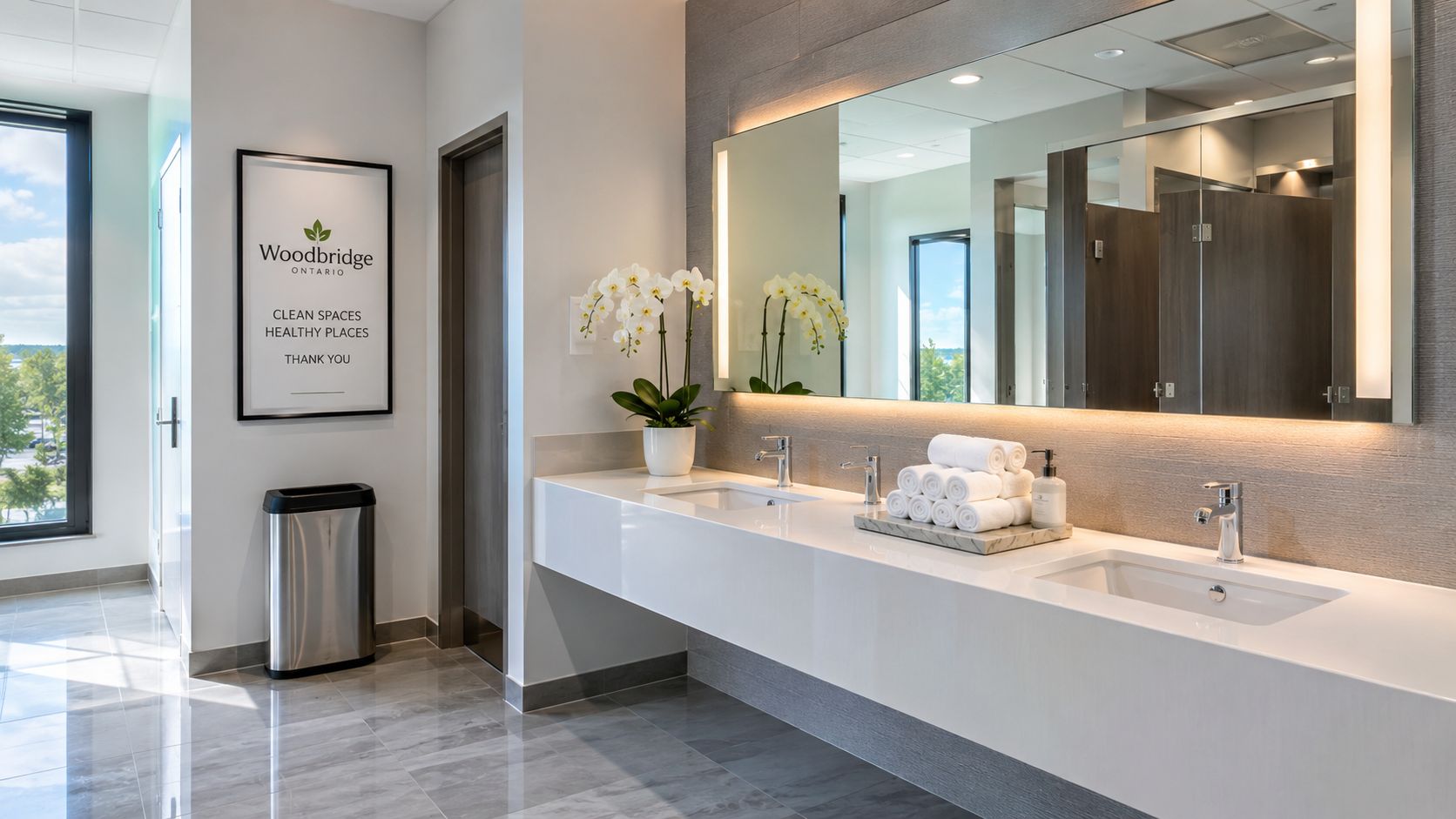
At 8:15 on a Monday morning, the office can look tidy at first glance while still carrying the signs of a weak cleaning program. Reception floors show salt at the entrance. A washroom dispenser is empty. Fingerprints sit on the boardroom glass. The space was visited by cleaners, but it was not managed to a clear standard.
That distinction matters in Woodbridge offices. Routine cleaning should work like a maintenance schedule for a vehicle. Daily tasks keep the operation usable. Weekly and periodic tasks prevent wear, buildup, and avoidable complaints. For managers reviewing office cleaning service options, the key question is not whether service happens every night. It is whether the scope matches how the office is used, what surfaces get touched, and what safety rules apply to the site.
Teams preparing a lease turnover or occupancy handoff can also learn from how professional vacate cleaning services are scoped. Those checklists are often stricter and more detailed than a recurring office plan, which helps clarify what should be included and what belongs in a separate project.
What daily janitorial work usually includes
Daily work covers the areas that lose condition fastest and the touchpoints that create the most visible complaints.
A practical daily scope often includes:
- Waste removal: Empty desk-side bins, kitchen waste, and central garbage points before overflow or odour becomes an issue.
- Washroom servicing: Clean fixtures, refill soap and paper products, wipe counters, and check floors for moisture or residue.
- High-touch surface cleaning and disinfection: Door handles, light switches, shared desks, counters, and equipment controls should be cleaned in a consistent sequence. In regulated settings, product use and staff handling procedures should also align with WHMIS instructions and Health Canada product requirements.
- Floor care in traffic areas: Vacuum entrances, corridors, and reception zones. Spot-clean marks before they become set-in stains.
- Kitchenette reset: Wipe sinks, counters, appliance fronts, and other food-contact-adjacent surfaces that collect hand oils and spills.
A nightly visit usually resets the building for the next day. It does not mean every surface received full detail work.
What weekly and periodic cleaning adds
Weekly cleaning deals with what daily rounds miss because time is limited and priorities are different. As a result, many office managers find the gap between a low quote and a workable quote.
Typical weekly tasks include:
- Full dusting: Shelves, ledges, frames, cabinet tops, and other horizontal surfaces beyond quick visible areas.
- Glass cleaning: Interior entry glass, meeting room panels, and partition glass that quickly shows fingerprints and smudges.
- Spot cleaning on walls and partitions: Marks near switches, corridors, lunch areas, and door frames.
Periodic work protects the office from slow decline. It also gives managers a better way to check quality, because these tasks can be scheduled, logged, and reviewed instead of assumed.
| Frequency | Typical focus | Why it matters |
|---|
| Monthly | HVAC vent dusting, edge detailing, deeper washroom cleaning | Helps control visible dust, odour sources, and neglected-area buildup |
| Quarterly | Carpet review, deeper floor care, detail cleaning of less-used surfaces | Preserves finishes, improves appearance, and catches wear before replacement costs rise |
This layered structure is especially useful in Woodbridge offices with mixed uses. A professional office may need standard touchpoint cleaning and careful washroom upkeep. A dental, childcare, or other regulated workplace may need more documentation, stronger disinfection controls, and clearer proof that staff are using approved products correctly.
That is why a solid cleaning plan should include the work itself and the method for checking it. Simple inspection logs, photo verification, and digital task tracking give an office manager a clearer picture than a verbal promise that everything was done.
Specialty Cleaning Services for Unique Requirements
A Woodbridge office can look clean at 9 a.m. and still have problems that routine service will not catch. The usual example is a renovated suite that opens on Monday. Desks are in place, floors shine from a distance, but fine dust is sitting on supply vents, adhesive residue is on glass, and treatment rooms or child-facing areas need a higher standard of product control and documentation than a basic evening clean provides.
That is the point where specialty cleaning becomes a procurement issue, not just an add-on task. Office managers need to match the service to the risk. A law office may need periodic carpet extraction and interior glass detailing. A dental clinic, medical office, or childcare setting may also need clearer disinfection procedures, product records, and proof that staff are using Health Canada approved products and WHMIS-informed handling methods correctly.
Routine cleaning works like daily maintenance on a vehicle. Specialty cleaning is the scheduled service that prevents wear, safety issues, and complaints from building up out of sight.
Signs your office needs specialty work
The easiest way to spot the gap is to look for conditions that regular nightly tasks are not designed to fix. Vacuuming removes loose soil, but it does not pull out the packed-in grit that wears carpet fibres in corridors and under desk chairs. Damp mopping improves appearance, but it does not restore a dulled floor finish or remove buildup along edges and baseboards.
The same principle applies to disinfection. A surface has to be cleaned before it can be disinfected properly. Dirt, residue, and skin oils can block the product from contacting the surface evenly. In regulated settings, that process also needs documentation. If your office manager cannot confirm what product was used, where it was used, and whether staff followed the label directions, the service may be incomplete even if the room looks tidy.
Common specialty needs include:
- Carpet extraction and spot recovery: useful after winter salt, drink spills, or heavy foot traffic
- Hard floor scrub, refinish, or burnish work: needed when mopping no longer improves appearance
- High dusting: for vents, diffusers, light ledges, tops of partitions, and other overlooked overhead surfaces
- Detailed interior glass cleaning: beyond quick spot removal on entry doors and meeting room glass
- Targeted disinfection: for shared devices, reception counters, exam areas, change tables, and similar higher-contact spaces
- Post-construction or post-renovation cleanup: for dust, residue, labels, paint flecks, and handover preparation
Office managers comparing options can review these specialty cleaning services for commercial facilities to see how the scope usually differs from standard janitorial work.
Why regulated workplaces need a tighter scope
Specialty cleaning matters more in spaces where health, child safety, or inspection readiness are part of daily operations.
A dental practice, for example, may need more than a general disinfection request. It may require area-specific procedures, controlled product selection, and cleaning records that can be checked by management. Childcare environments raise a similar issue. The work is not only about visible cleanliness. It is also about reducing residue concerns, using suitable products, and keeping staff practices consistent from room to room.
Technology helps here. Digital checklists, timestamped service logs, and photo verification give a manager something better than a verbal update. They create a record that can be reviewed after a complaint, a missed task, or an inspection question.
Why post-construction cleanup should be priced separately
Post-construction cleaning often causes confusion because the space looks almost ready. In practice, it behaves more like a reset than a normal clean.
Construction dust travels into places routine service does not target first. It settles on vents, door frames, cable trays, shelf tops, and floor edges. Trades may also leave silicone smears, paint specks, stickers, and packaging debris behind. If this work is folded into a regular office contract without a separate scope, the manager usually gets an unfinished result and a disagreement about what was included.
A simple rule helps. If a suite is new, renovated, or being re-opened after major work, ask for a separate specialty scope with a clear checklist, extra labour allowance, and final inspection process. That protects the opening date and gives the office a clean baseline before routine maintenance begins.
Understanding Office Cleaning Costs in Woodbridge
A Woodbridge office manager often sees this problem during quoting. One proposal looks inexpensive at first glance, then the first extra invoice appears for glass, supplies, or a disinfecting visit that everyone assumed was included.
Cost control starts with scope control.
In Ontario, routine office cleaning is commonly priced by hourly labour, a fixed monthly contract, or square footage. Standard office work often falls in the range of $30 to $60 per hour per cleaner, and many medium-sized offices land somewhere between $500 and $2,000 per month for recurring service, as noted in Ontario commercial cleaning rate guidance. Those figures are only a starting point. A quote becomes useful when it explains what work is being done, how often it is done, what products are being used, and what records the contractor will provide.
That last point gets missed often.
A lower price can still be the more expensive option if the contract leaves out restocking checks, touchpoint disinfection, after-hours incident response, or the documentation a manager may need for internal reviews. Offices in regulated settings feel this more sharply. A dental office, childcare space, or clinic is not buying the same result as a general admin suite. The cleaning program has to match product handling rules, recordkeeping expectations, and the site's risk profile. If disinfection is part of the scope, it helps to review what a provider includes under commercial disinfection and sanitizing services before comparing monthly totals.
How pricing models work
Hourly pricing is straightforward, but it can create uncertainty if task times change from week to week. Fixed monthly pricing is easier for budgeting, provided the task list is specific. Square foot pricing works best in offices with stable layouts and a predictable level of use.
The format matters less than the definition behind it. A cleaning contract works like a maintenance plan for a vehicle. The price only means something once you know whether it covers oil changes alone or also filters, inspections, and seasonal work.
What usually changes the price
Several factors shift pricing up or down:
- Facility size and layout: Larger suites, many enclosed offices, glass partitions, and multiple washrooms take more labour than a simple open plan.
- Service frequency: More visits usually mean higher monthly cost, but they can reduce complaints, supply shortages, and visible wear in busy areas.
- Workplace type: A standard office has a lighter scope than a healthcare-adjacent, childcare, or customer-facing environment.
- Cleaning depth: Carpet extraction, floor refinishing, detailed sanitizing, and one-time reset work are usually priced outside routine service.
- Reporting requirements: Digital checklists, photo logs, and supervisor inspections add administrative time, but they also reduce disputes about missed work.
- Waste handling needs: Offices replacing old devices during cleanouts may need clearer disposal procedures and chain-of-custody expectations. Reworx Recycling's guide to device retirement is a useful reference if electronics disposal overlaps with a move, purge, or renovation cleanup.
A better way to compare quotes
Office managers get better results by comparing service levels, not just totals. Ask each provider to break the work into three buckets: every visit, weekly, and periodic. Then check whether supplies, compliance-related records, and quality checks are included or billed later.
| Question | Lower quote may indicate | Higher quote may indicate |
|---|
| Is the visit frequency identical? | Fewer visits or shorter task time | More stable coverage |
| Are periodic tasks defined? | Extra billing later | Broader planned service |
| Are approved products and records included? | Basic visible cleaning only | Better control for audits, complaints, or regulated settings |
| Is quality assurance documented? | Verbal updates only | Digital logs, inspections, or photo verification |
A sensible quote should read like an operating plan, not a rough estimate. If two proposals are priced far apart, ask what was removed, what is optional, and what evidence of completion you will receive each month. That approach protects budget, service quality, and compliance at the same time.
Meeting Compliance and Safety Standards
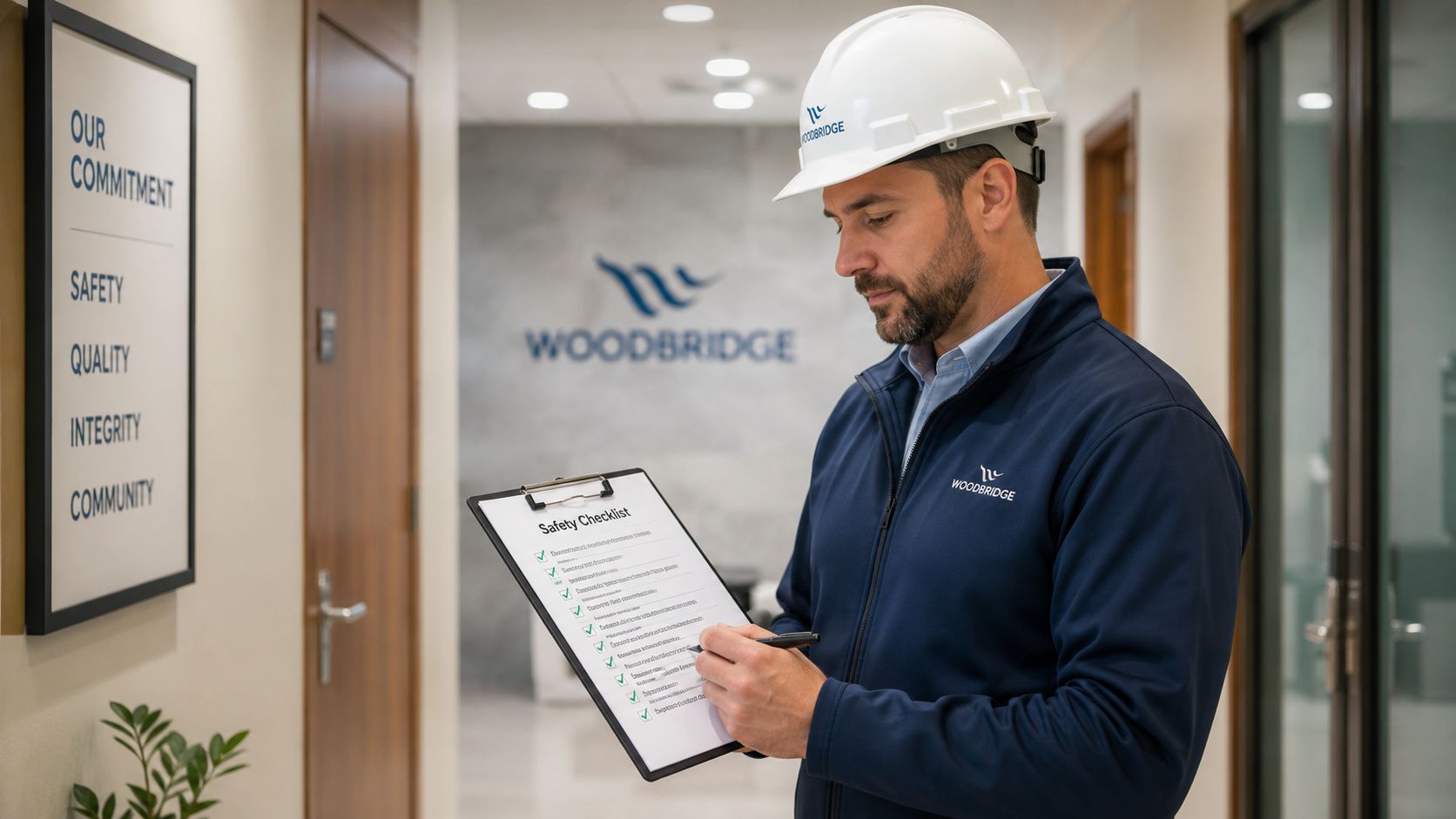
A Woodbridge office manager usually notices cleaning when something looks wrong. A regulator, employee, or parent notices something else. They ask what product was used, whether staff were trained to use it safely, and what records exist to prove the work happened. That is why compliance deserves its own review.
Cleaning affects more than appearance. It affects worker safety, occupant confidence, and whether your office can show a consistent process during a complaint, inspection, or internal review. In practical terms, your cleaning contractor is handling workplace chemicals, washroom sanitation, touchpoint disinfection, and waste streams inside your building.
What compliance means in day-to-day office cleaning
Start with the basics. Products should be labelled, stored, diluted if required, and used according to WHMIS rules and the manufacturer's instructions. If a contractor cannot clearly explain which products are used, where safety information is kept, and how staff are trained, the service is missing a basic control.
Health Canada approval also matters for disinfectants. A surface cleaner and a disinfectant are not interchangeable, just as a mop bucket and a floor scrubber do different jobs. One removes visible soil. The other is selected and applied for a defined sanitation purpose, with the right contact time and surface compatibility.
Washrooms deserve special attention because they create both employee complaints and compliance exposure. Ontario requires employers to keep washroom facilities clean and sanitary. Starting January 1, 2026, employers must keep records of the two most recent washroom cleanings visible near the washroom or available electronically, as set out by Ontario's washroom facility requirements.
Where many cleaning contracts fall short
The common gap is not always poor effort. It is poor system design.
A quote may say "sanitize high-touch areas" without naming the product category, dwell time, inspection method, or documentation process. That leaves the office manager with a promise but no operating standard. In a general office, that can lead to inconsistent results. In a dental clinic, childcare setting, or other regulated workplace, it can create a much larger problem because expectations for product choice, recordkeeping, and cleaning frequency are higher.
Quality assurance is the overlooked control here. A strong provider does not rely on verbal updates alone. The provider uses checklists, time-stamped logs, inspection reports, issue tracking, or photo confirmation so you can verify that work was completed as specified. Technology does not replace supervision. It makes supervision visible.
What to verify before approving the cleaning plan
Use this as a practical review list:
- WHMIS control: Ask where product labels, safety data sheets, and staff training records are kept.
- Health Canada compliance: Confirm that disinfectants are approved for the intended use and applied according to label directions.
- Washroom logging: Check who completes the records, where they are stored, and how you can access them during an audit or complaint.
- Quality verification: Ask what proof of completion you receive. A digital log or inspection record is easier to review than a verbal assurance.
- Regulated environments: If your office includes dental operatories, childcare rooms, staff kitchens with food handling concerns, or client-facing wellness spaces, make sure the scope reflects those higher-risk areas.
- Waste handling: If a cleanup includes retired computers, printers, or phones, add a documented disposal step. Reworx Recycling's guide to device retirement is a useful reference for handling obsolete office tech responsibly.
Offices with stricter sanitation expectations often separate routine janitorial work from commercial disinfection and sanitizing protocols. That distinction helps prevent a common mistake. A basic nightly clean is not automatically a documented disinfection program.
Good cleaning should look clean. Compliant cleaning should also leave a trail of evidence.
How to Choose the Right Cleaning Partner

It is 8:30 on Monday morning. The reception floor looks fine, but a washroom was missed, the kitchen bins are still full, and no one can tell you whether the cleaner was on site or what was completed. That is usually how a weak contract reveals itself. The problem is rarely the mop or the disinfectant. It is the purchasing process.
A good hiring decision starts with a clear idea of what you are buying. Office cleaning works like building maintenance. If the scope is vague, the result will be vague. If the reporting is clear, the service is easier to control, measure, and improve. That matters even more in Woodbridge offices that need audit trails, approved products, or extra care in spaces such as dental rooms, childcare areas, and wellness settings.
What separates a reliable partner from a risky one
Many office managers focus on price first. Price matters, but it only means something after the service model is clear. A lower quote can hide reduced visit times, missing periodic work, weak supervision, or no digital record of what happened on site.
A stronger review process looks at five areas.
Clear scope
The quote should spell out what happens each visit, what happens weekly or monthly, and what is excluded. Floor care, carpet extraction, high dusting, and inside-glass work should never be left to assumption.
Quality control you can verify
Ask how the company checks its own work. A dependable provider should be able to show inspection routines, issue tracking, and proof that missed items are corrected. Technology helps here. A digital checklist or service log is easier to review than a text message saying everything was done.
Fit for your type of office
A general office has one set of needs. A site with treatment rooms, childcare spaces, or stricter sanitation expectations has another. The right partner adjusts the scope, training, and documentation to the risk level of the space.
Staffing and supervision
Ask who is responsible for the account, how absences are covered, and how site instructions are passed to staff. Cleaning quality often drops at handoff points, so this part matters more than many buyers expect.
Change management
Offices change. Headcount grows, meeting rooms become clinics, and renovations create dust. Your contract should explain how extra work is approved, priced, and documented so there are no disputes later.
Questions that reveal how a company actually operates
A walkthrough can sound polished and still tell you very little. Useful questions force specifics.
- What tasks are done each night, each week, and each month?
- Who inspects the work, and how often?
- How do you document completed service and missed items?
- How do you handle sites with stricter sanitation or recordkeeping needs?
- What happens if the assigned cleaner is absent?
- How are complaints logged, resolved, and closed out?
- What extra charges are common, and when do they apply?
Listen for plain answers. If a provider cannot explain its process in simple language, it usually means the process is not well controlled.
Warning signs during quoting
Some problems show up before the contract is signed.
Be careful with broad phrases such as “full clean” or “sanitized throughout” if there is no task list behind them. Watch for one-line pricing with no service frequencies. Be cautious if no one asks about your hours, floor types, occupancy, or higher-risk rooms. A company that does not ask detailed questions is not building a detailed scope.
Another warning sign is weak reporting. If the provider has no practical method for logging issues, confirming completion, and sharing updates with your team, small problems tend to repeat.
Compare the process, not just the promise
Office managers often save money over the life of the contract by thoroughly comparing proposals. Put two or three proposals side by side and compare the actual operating model. Which quote explains inspection steps? Which one shows how service issues are tracked? Which one reflects the needs of your building instead of using generic wording?
A provider's background can also help you judge how it works. Arelli Cleaning's company story and service approach is one example of the kind of information worth reviewing. It gives you a better basis for comparison than a sales summary alone.
A good cleaning partner does more than send staff to your office. The company gives you a usable scope, a repeatable quality process, and records you can rely on if questions come up later. That is what turns cleaning from a recurring frustration into a managed service.
FAQs and Further Resources
Frequently asked questions
What's the difference between janitorial service and deep cleaning?
Janitorial service is the recurring work that keeps the office functional, such as washrooms, bins, vacuuming, and touchpoints. Deep cleaning covers less frequent, more detailed work such as vents, edge work, floor restoration, or intensive carpet care.
How often should a Woodbridge office be cleaned?
That depends on occupancy, traffic, and the type of work done on site. Many offices need daily attention to washrooms, waste, and touchpoints, while dusting, glass, and detailed tasks follow a weekly or periodic schedule.
Who needs stronger compliance-focused cleaning?
Any employer benefits from safe chemical handling, but regulated settings such as dental clinics, childcare centres, and similar workplaces usually need more explicit documentation and stricter protocols.
What should be included in a quote request?
Square footage, number of washrooms, days of service, hours of access, floor types, kitchen areas, and any specialty needs such as carpet care, disinfection, or post-renovation cleanup.
When should post-construction cleaning be requested?
Before staff move in, and separately from routine janitorial service. It needs its own checklist and timeline.
Why do two office cleaning quotes differ so much?
Usually because frequency, labour time, periodic tasks, or compliance-related work aren't matched line by line.
Further Reading and Resources
An office manager comparing office cleaning in Woodbridge will usually make a better decision with a written checklist, a matched-scope quote comparison, and direct questions about compliance, inspections, and periodic work. For businesses that want one local option to include in that process, Arelli Cleaning can be reviewed alongside other quotes.






.webp)