A facility manager opens two bids for the same office. One is a one-page price sheet with a monthly number and a vague promise of “full janitorial service.” The other explains which areas get daily attention, which rooms are cleaned on alternating days, how washrooms are checked, what happens if a crew member is absent, and which tasks sit outside the base scope. The second proposal usually feels safer before anyone discusses price.
That difference is the primary job of an office cleaning proposal. It isn't just a quote. It's a working document that translates a site visit into scope, labour logic, pricing, service standards, and risk controls. A buyer uses it to judge whether a provider understands the building. An owner uses it to protect margin and reduce disputes later.
In Ontario, that matters even more because the category itself is expanding. Grand View Research estimated the global contract cleaning services market at USD 383.99 billion in 2024 and projected USD 406.56 billion in 2025, with a 6.4% CAGR through 2030 in its contract cleaning services market analysis. In a growing market, generic quoting becomes easier to spot. Buyers see more options, so the proposal has to show operational discipline, not just availability.

Direct answer: An office cleaning proposal is a structured document that defines the client's facility needs, cleaning scope, service frequency, pricing method, terms, and delivery standards so both sides understand exactly what will be done and what it will cost.
Key takeaways
- A winning proposal is site-specific. It should reflect room types, traffic patterns, fixtures, and risk areas, not just square footage.
- Frequency design drives value. Daily service belongs in high-touch zones, while lower-use spaces can often be cleaned less often without lowering standards.
- Scope clarity protects margin. If tasks and frequencies aren't written down, clients and contractors often end up with different expectations.
- Pricing should follow labour logic. Costing from production time is more defensible than guessing from a rate card.
- Risk language helps contracts close. Buyers want to know who supervises the account, how quality is checked, and what happens when staffing changes.
Introduction to Crafting a Winning Proposal
A strong office cleaning proposal starts long before the document is written. It starts when the estimator walks the building and notices things a casual bidder misses. Overflowing bins near the copier area. Fingerprints on entry glass. A kitchenette sink used like a lunchroom for an entire floor. Those details tell you where time will go.
New franchise owners often underbid because they treat proposals as a sales form. Experienced operators treat them as an operations plan. That change in mindset affects everything. It changes what questions get asked, how the building is measured, and how the final price is defended.
Why generic proposals lose trust
Most buyers have seen cleaning proposals that sound interchangeable. The wording is polished, but the scope is loose. “Dust and disinfect surfaces” sounds fine until the client asks whether that includes workstation dividers, breakroom chair backs, or interior glass around the reception.
A proposal becomes credible when it answers the client's practical concerns before they ask. If the building manager worries about washroom complaints, the proposal should show washroom frequency and restocking assumptions. If the office has executive boardrooms used only twice a week, the schedule should reflect that.
What a buyer is really evaluating
Clients do compare price, but they also compare risk. They want to know whether the provider understands the building, whether the service will stay consistent, and whether surprises will appear after the first invoice.
That's why the strongest proposals do three things at once:
- Define the work clearly
- Explain the service rhythm
- Remove uncertainty around delivery
The proposal is often the first proof that the cleaning company can run an organised account.
The Foundation of a Winning Proposal
The foundation is discovery. If the walkthrough is weak, the proposal will be weak, no matter how polished the formatting looks.
Industry guidance on commercial cleaning pricing warns against relying on square footage alone. It recommends building a full inventory, estimating cleaning time first, and documenting the scope by room, frequency, and task sequence because fixture counts, room counts, and site-specific trouble spots change production rates. That guidance is outlined in this commercial cleaning pricing discussion.
Move beyond square footage
Square footage still matters, but it doesn't tell the whole story. A compact office with many washrooms, glass partitions, and shared kitchens can take more labour than a larger open-plan floor. The proposal has to reflect how the building behaves in real use.
A proper walkthrough should record:
- Room types: Open office, private offices, meeting rooms, reception, lunchrooms, storage, server rooms
- Washroom complexity: Stall count, urinals, sinks, dispensers, mirrors, floor condition
- Floor surfaces: Carpet tile, broadloom, vinyl, concrete, ceramic, entrance matting
- Traffic intensity: Main entrances, elevator lobbies, client-facing areas, employee-only zones
- Special conditions: Food consumption at desks, high-touch points, showroom finishes, dust-prone areas
Ask diagnostic questions
A new owner can gain a lot of ground by asking better questions. The goal isn't to impress the client with technical language. The goal is to uncover what causes frustration now.
Useful questions include:
- “Which areas generate the most complaints?” That identifies service hotspots.
- “When is the building busiest?” That helps with scheduling and washroom pressure.
- “Are there areas that don't need daily service?” That creates room for budget control.
- “Who signs off on quality?” That tells you whether reporting should go to an office manager, operations lead, or property team.
- “What is currently being missed?” That reveals where a competitor's scope may have been too generic.
Build the inventory before the price
The proposal should be built from a room-by-room inventory and then translated into labour. During this process, many operators either protect margin or give it away.
A defensible process looks like this:
| Discovery item | Why it matters | What goes in the proposal |
|---|
| Area use | Determines frequency | Daily, alternate-day, weekly schedule |
| Fixture count | Adds labour time | Washroom and kitchenette task load |
| Floor type | Affects equipment and pace | Vacuuming, mopping, scrubbing, spot care |
| Occupancy pattern | Changes wear and consumable use | Service timing and restocking assumptions |
| Sensitive zones | Increases compliance expectations | Training, products, handling notes |
Practical rule: Price the time needed to clean the building as it is actually used, not as it looks on a floor plan.
Structuring Your Office Cleaning Proposal
Once the discovery work is solid, the document needs to be easy to review. Busy buyers don't read proposals the way contractors write them. They skim first. They look for fit, scope, price, and signs of risk.
Proposify's analysis of millions of proposals found that the ideal cleaning-services proposal is 10 pages organised into 8 sections, with a format that commonly includes a cover page, introduction, about-us section, getting-started plan, pricing, statement of work, and e-signature. That benchmark appears in Proposify's cleaning services proposal template guidance.
Keep the document short, but not thin
A short proposal can still be complete. The issue isn't page count by itself. The issue is whether the right information appears in the right order.
A good office cleaning proposal usually presents pricing and operational details early. That respects the buyer's time and avoids burying the decision-making material under company history.
Essential Sections of a Professional Cleaning Proposal
| Section Title | Purpose | Key Information to Include |
|---|
| Cover page | Identifies the bid clearly | Client name, site name, date, proposal title |
| Introduction | Shows understanding of the account | Summary of site needs, service intent, notable observations |
| Company overview | Builds basic credibility | Operating approach, supervision model, training summary |
| Getting started plan | Reduces transition anxiety | Start-up steps, onboarding, communication contact |
| Scope of work | Defines exactly what is included | Area-by-area tasks, frequencies, exclusions, optional work |
| Pricing | Shows how the service is packaged | Monthly fee, line items, add-ons, assumptions |
| Terms and conditions | Sets commercial boundaries | Billing terms, change requests, cancellation language |
| Acceptance section | Makes approval easy | Signature block or e-signature instructions |
What each section should accomplish
The introduction should sound like it belongs to that building. If the site has a client-facing reception and a staff-heavy back office, say so. If washroom traffic is the main concern, surface that early.
The scope of work should do the heavy lifting. Otherwise, vague wording causes problems later. A clean proposal doesn't just say “clean breakroom.” It lists counters, sinks, exterior appliance wipe-downs, floors, touchpoints, and restocking if that's included.
The pricing section should be transparent enough that the client understands what they're buying. It doesn't need to reveal every internal costing variable, but it should separate base service from extras.
What to avoid in the document itself
- Long marketing paragraphs: Buyers want relevance, not slogans.
- Undefined terms: If “deep cleaning” appears, define what it means in that account.
- Hidden exclusions: If consumables, floor refinishing, or interior glass are extra, state that plainly.
- Dense legal language up front: Terms matter, but not before the buyer understands the service.
A proposal should read like an operating plan that also happens to be a sales document.
Defining a Custom Scope of Work
The scope of work is where most contracts are won or lost. If it's generic, the client assumes the service will be generic too. If it's overbuilt, the price becomes hard to defend. The right approach is zoning.
A good example is an automobile dealership. The footprint is large, but not every area needs the same attention. In a six-day account, the showroom entrance, customer washrooms, and waiting area usually need daily service because traffic is visible and constant. Boardrooms and private offices may only need alternate-day cleaning. Parts areas or low-use administrative rooms can often sit on a weekly cycle.
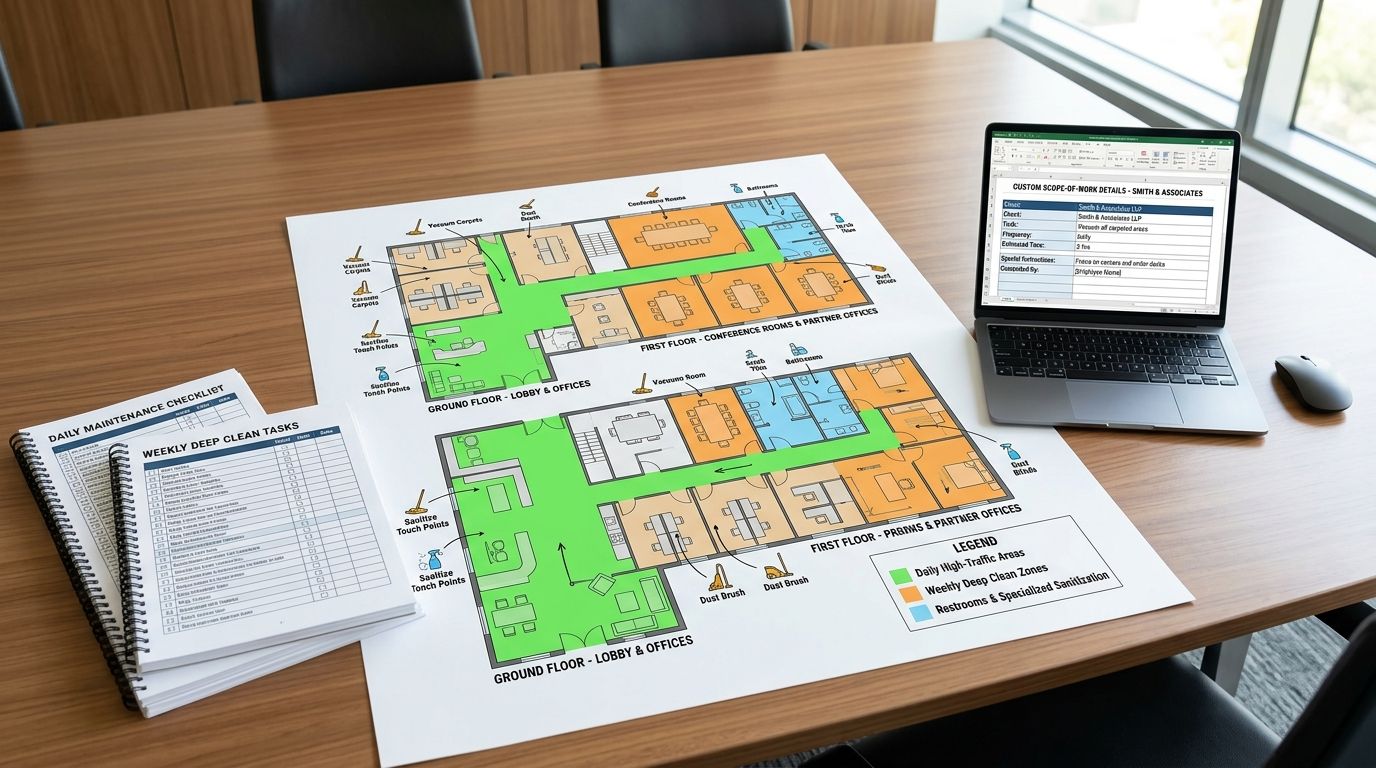
That same logic applies to law offices, engineering firms, schools, and mixed-use office floors. The point isn't to reduce service blindly. It's to match effort to actual use.
Zone the building by traffic and risk
A practical zoning model looks like this:
- High-traffic zones: Reception, entrances, main corridors, washrooms, lunchrooms, shared touchpoints
- Moderate-use zones: Private offices, meeting rooms, boardrooms, secondary corridors
- Low-frequency zones: Storage rooms, records rooms, utility rooms, parts areas, archive spaces
This is the core of value-based proposal writing. Instead of charging one blunt rate for the whole building, the proposal allocates cleaning where it matters most.
For a client comparing bids, that signals thoughtfulness. For the operator, it protects labour hours.
Sample scope by office area
Below is a practical checklist format that works well in proposals and service schedules.
Reception and front entrance
- Daily appearance tasks: Remove debris, vacuum or mop floors, spot-clean glass, wipe touchpoints
- Presentation details: Tidy seating areas, dust ledges, clean reception counter fronts
- Visible risk control: Address fingerprints, entry marks, and weather-related soil promptly
Washrooms
- Core sanitation: Clean and sanitise toilets, urinals, sinks, counters, mirrors, partitions
- Restocking: Refill soap, paper towel, and tissue dispensers if included
- Floor care: Damp mop or scrub attention based on use and soil load
Kitchenettes and break areas
- Surface cleaning: Wipe counters, sinks, tables, appliance exteriors
- Waste handling: Empty bins and manage liner replacement
- Touchpoint attention: Cabinet pulls, microwave handles, fridge handles, faucet controls
Workstations and offices
- General cleaning: Vacuum accessible flooring, dust reachable horizontal surfaces, empty waste
- Expectation setting: Clarify whether desk clearing is required before service
- Frequency control: Alternate-day or scheduled rotation often works well in lower-use spaces
Meeting rooms and boardrooms
- Use-based service: Clean after regular use, with lower frequency if occupancy is light
- Detail work: Table tops, chair touchpoints, AV console dusting where appropriate
How to present optional services
Optional services should never be hidden inside a vague note at the end. They need their own section or line items. Typical examples include carpet extraction, high dusting, interior glass, floor scrubbing, stripping and refinishing, and post-event resets.
A clean way to frame this is to present base scope first, then extras as client-elected items. That helps the buyer compare proposals fairly and makes change requests easier to manage later.
For examples of how providers package recurring office janitorial work, the office cleaning services page is useful as a reference point for service categories and task groupings.
Strategic Pricing and Addressing Objections
Pricing isn't the end of the proposal. It's the part where all the operational choices become visible. If the scope is smart and the pricing is sloppy, the proposal still feels weak.
A lot of new owners make one of two mistakes. They either throw out a low flat number to stay competitive, or they overcomplicate the price and confuse the buyer. Neither works well. The proposal should make the price understandable and defensible.
Commercial-cleaning proposal guidance for the Ontario market recommends explicit pricing, clear service levels, and follow-up within 24 to 48 hours after submission, while also warning that vague scope language creates friction around restrooms, high-touch disinfection, and specialty floor care. That guidance appears in this article on how to win cleaning contracts.
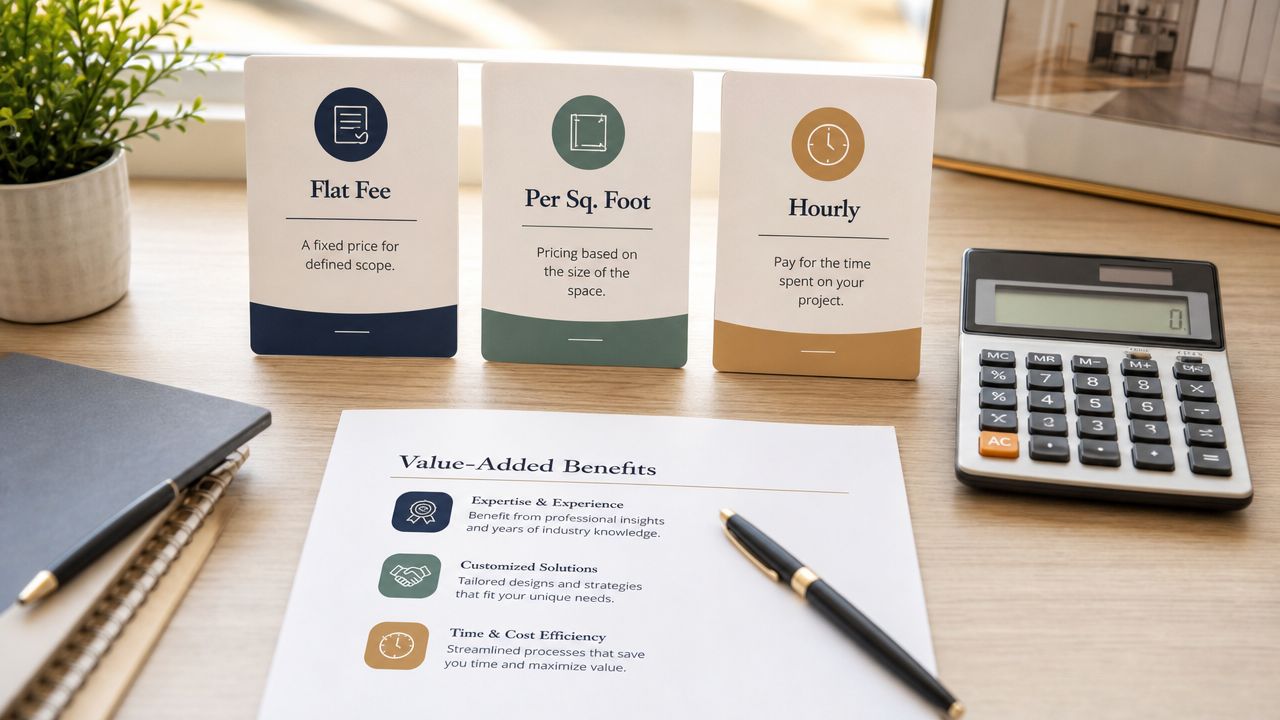
Choose a pricing model that matches the account
Each model has trade-offs.
| Pricing model | Works well when | Main risk |
|---|
| Flat fee | Scope is stable and recurring | Underpricing if the scope is vague |
| Hourly | Project work or irregular service | Client may worry about unpredictability |
| Per square foot | Early budgeting conversations | Can ignore real labour complexity |
| Tiered packages | Client wants options by service level | Can become confusing if tiers aren't distinct |
For recurring office accounts, a flat fee often works best because the client gets budget certainty and the contractor can manage service delivery against a defined scope. Extra care services such as floor work or special projects are usually better priced separately.
How to make the price feel fair
A fair price is easier to accept when the proposal explains the assumptions behind it. That doesn't mean exposing internal margin. It means clarifying what the buyer is paying for.
Include:
- Base service level: Which rooms and tasks are included in normal recurring service
- Frequency assumptions: Daily, alternate-day, weekly, and periodic items
- Special items: Interior glass, floor refinishing, high dusting, or disinfection tasks that sit outside base service
- Minimum service conditions: If applicable, state them clearly
- Follow-up timing: Confirm when the client can expect a check-in after submission
If the client can only compare your headline number to someone else's headline number, the proposal hasn't done enough work.
Address objections inside the proposal
A strong proposal answers concerns before they turn into negotiation points.
Budget pressure
Offer service options through scope design, not by stripping standards everywhere. Reduce frequency in low-use zones before cutting washroom or entrance care.
Contract hesitation
Many buyers dislike feeling trapped. If a provider offers flexible terms or no-term arrangements, that can be stated clearly as a commercial choice, not as a gimmick.
Concerns about extras
List add-ons separately. The client should know whether floor care, carpet cleaning, or consumables are included or billed separately.
Worry about service inconsistency
Name the supervision process, inspection cadence, and communication contact. One example in the market is the Arelli Cleaning FAQ, which outlines practical account questions buyers often raise before approving service.
Compliance, Delivery, and Professional Follow-Up
A proposal can be well-written and still feel incomplete if it doesn't deal with risk. Sensitive offices, schools, industrial sites, and healthcare-adjacent workplaces want more than a task list. They want evidence that the account will stay covered and managed.
Public-sector scope language often lists the expected cleaning tasks, but that alone doesn't explain continuity, quality control, or absentee coverage. In the Greater Toronto context, proposals stand out when they explain communication cadence, QA checks, and what happens when a scheduled crew member is unavailable. That gap is reflected in this public contract scope reference.
What to include with the proposal
The safest practice is to attach or reference the compliance documents a buyer is likely to request:
- Proof of insurance
- WSIB clearance where applicable
- WHMIS training confirmation
- Site-specific supervision notes
- Escalation and replacement coverage process
For sites with hygiene-sensitive operations, buyers may also review broader sanitation practices. A useful external reference is this guide for food service professionals, which helps explain why documentation, training, and procedure matter in regulated environments.
Delivery and follow-up discipline
Send the proposal as a clean PDF with a short personalised email. Use the message body to restate the site name, the service summary, and the next step. If the account is more complex, present it live and walk the client through the scope schedule before discussing price.
After submission, follow up promptly and professionally. The point isn't to chase. The point is to clarify. If the proposal includes disinfection language or higher-risk cleaning measures, a practical reference point for buyers is a COVID-conscious cleaning overview that shows how procedures and product choices can be documented for reassurance.
The follow-up call should ask one useful question: “Is there anything in the scope or assumptions you'd like revised before we finalise it?”
Further Reading and Resources
An office cleaning proposal gets better when the owner studies operations, safety, and buyer expectations together. The strongest bids usually come from people who understand buildings, not just templates.
For local context, review the Arelli service areas page to see how commercial cleaning demand spans different facility types across the Greater Toronto Area. For a practical visual resource, the Ontario office cleanliness infographic is a useful reminder that workplace cleaning expectations are tied to communication as much as execution.
External reading matters too. Buyers who evaluate cleaning vendors for operational risk may benefit from guidance on health and safety systems such as implementing ISO 45001 for businesses. That kind of framework helps owners think more clearly about supervision, training, and accountability.
A few good next steps:
- Get multiple detailed quotes: Compare scope, not just price.
- Ask for the service schedule: Make sure areas and frequencies are written down.
- Review exclusions carefully: Hidden extras often create frustration later.
- Check continuity language: Ask how absence coverage and quality checks are handled.
Use this framework to ask better questions and to build a proposal that can survive both procurement review and real-world delivery.
If a business is comparing office cleaning options in the GTA, Arelli Cleaning is one company to include in that review. The practical approach is simple. Ask for a detailed proposal, compare it with at least two others, and use the checklist above to test whether the scope, pricing, and service controls are clear enough to run without surprises.







.webp)