A new dental office manager in Woodbridge often starts with a familiar assumption. If a cleaning company already handles offices, clinics, and common areas, it should be able to handle a dental practice too. That assumption is where compliance problems begin.
A dental setting isn't just an office with extra sinks and a reception desk. It's a clinical environment shaped by aerosol-generating procedures, contaminated contact surfaces, sterilization workflows, and Infection Prevention and Control expectations. A polished waiting room matters, but it doesn't prove that chair controls stayed wet long enough for the disinfectant to work, or that contaminated wipes were handled correctly after operatory turnover.
For dental office professional cleaning in Woodbridge, the key distinction is this: the work must support patient safety and regulatory discipline, not just appearance. Managers who understand that difference make better purchasing decisions, ask sharper questions, and avoid the false economy of a low quote that leaves critical tasks half-done.
Key takeaways
- Dental cleaning is an IPAC function: It requires clinical protocols, not standard office routines.
- DIN-registered products matter: Clinical surface disinfectants in Ontario dental offices must carry a Health Canada DIN.
- Dwell time is a major risk point: A surface that dries too soon may look clean while failing disinfection requirements.
- Material choices affect compliance: Cloth furnishings and carpeting don't belong in clinical areas.
- Pricing reflects medical-grade work: Dental cleaning in Ontario carries a clear premium over standard office cleaning because the scope and liability are different.
- Vendor evaluation should focus on method: Ask how the provider cleans, documents, trains, and verifies, not just how much they charge.
Introduction A Guide to Clinical-Grade Cleaning
A Woodbridge dental office can look spotless and still fall short of clinical-grade cleaning. That gap matters most when a practice is busy, staff are stretched, and cleaning gets judged by speed and appearance instead of method. A tidy operatory means very little if the product used wasn't appropriate for a clinical surface, or if the contact time was missed.
Ontario dental practices operate in a framework where cleaning supports infection prevention, staff protection, and patient confidence. In practical terms, that means managers need more than a basic scope of work. They need a provider, or an internal process, that understands terminal cleaning, contaminated surface sequencing, product selection, PPE use, and zone-specific risk.
Practical rule: In a dental office, the question isn't “Was it wiped down?” It's “Was it cleaned and disinfected in a way that would stand up to scrutiny?”
Many generic checklists blur clinical cleaning and commercial cleaning into the same task list. They mention dusting, mopping, washrooms, and garbage removal, but skip the details that determine whether a dental environment is being maintained properly. Those omissions are where compliance gaps develop.
A reliable guide has to separate what works from what merely looks reassuring. In this setting, a lower quote may mean fewer labour minutes, less product discipline, weaker documentation, or no meaningful understanding of IPAC expectations at all.
Defining Professional Dental Office Cleaning
Professional dental office cleaning is a healthcare-support cleaning process designed to reduce contamination risk in a clinical dental environment. It differs from general commercial cleaning because its purpose isn't only to maintain appearance. Its purpose is to support infection prevention and control across treatment spaces, shared touchpoints, and clinical workflows.
A standard office cleaner may focus on visible soil, routine washroom service, and general surface care. A dental cleaning provider has to address contaminated high-touch surfaces, operatory turnover expectations, appropriate disinfection steps, and the realities of aerosol exposure. That's a different scope, a different level of accountability, and often a different training requirement.
What makes it clinical instead of conventional
The difference starts with products and process. Every disinfectant used on clinical surfaces in an Ontario dental office must carry a Health Canada Drug Identification Number (DIN), a mandatory registration that verifies the product's efficacy and safety for medical use, as noted in Ontario dental IPAC cleaning requirements.
That requirement changes procurement, storage, staff training, and quality control. A generic all-purpose cleaner may leave a surface looking neat, but in a dental operatory that isn't enough. The product must be appropriate for clinical use, and the staff applying it must use it correctly.
The practical definition managers can use
For managers evaluating providers, a useful working definition is simple:
Professional dental cleaning is the controlled cleaning and disinfection of a dental facility using clinical protocols, regulated disinfectants, and documented methods that protect patients, staff, and the practice.
That definition also explains why the service shouldn't be purchased like ordinary janitorial work. A dental office may contain reception and administrative areas, but its risk profile is still shaped by operatories, sterilization functions, clinical waste handling, and contamination pathways.
A Room-by-Room Cleaning Protocol Breakdown
Different zones in a dental office carry different risk levels. A useful cleaning program doesn't treat the entire premises as one uniform space. It identifies where clinical contact occurs, where contamination can spread, and where cleaning sequence matters most.

The operatory
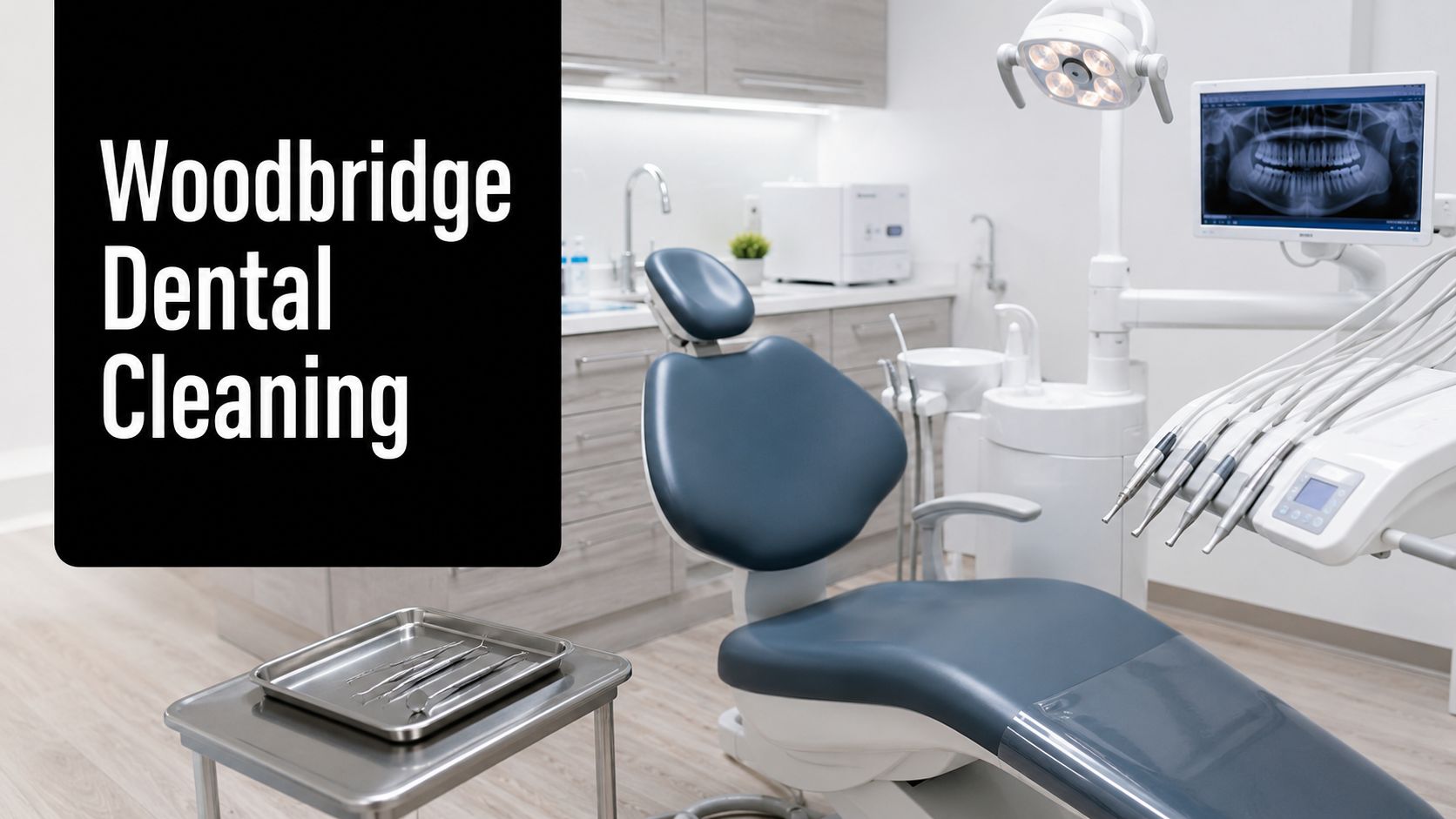
The operatory is the highest-priority cleaning zone because it combines aerosol exposure, repeated contact, and frequent turnover. The work here has to be systematic. Clinical contact surfaces such as chair controls, light handles, bracket trays, and suction handles need disciplined surface cleaning and disinfection, not a fast pass with a dry wipe.
The usual sequence starts with removal of visible debris, then proper application of disinfectant so the surface is fully wetted, then wiping after the required contact period has elapsed. Floors are not the first task in this room. They are the closing task, handled after the higher-risk surfaces have been addressed.
The sterilization area
This area is often underestimated because it can appear organised and mechanically controlled. In reality, it depends on disciplined environmental maintenance. Countertops, equipment exteriors, touched handles, and adjacent surfaces need a routine that respects clean and dirty separation.
The wider maintenance picture matters too. A practical dental office cleaning checklist is useful for understanding how structured task sequencing prevents missed steps in spaces where workflow is dense and touchpoints are easy to overlook.
Sterilization doesn't begin and end with the machine. The surrounding surfaces and handling sequence determine whether the area stays controlled.
Waiting rooms and common areas
Reception areas, staff spaces, restrooms, and waiting rooms don't carry the same direct clinical exposure as an operatory, but they still need stronger discipline than a standard office. Front desks, payment counters, door hardware, shared pens, washroom fixtures, and seating surfaces all shape the patient's experience and the office's overall hygiene load.
These spaces should be cleaned with attention to touch frequency, traffic patterns, and hand-contact points. A waiting room may be non-clinical, but it still sits inside a healthcare environment where expectations are higher than in a general office tower.
Materials that create avoidable problems
Some cleaning failures begin with the finish materials themselves. In clinical areas of Ontario dental offices, cloth furnishings and carpeting must not be used because they cannot be effectively cleaned with hospital-grade detergents and disinfectants, posing a risk for pathogen retention, according to the RCDSO IPAC standard of practice.
That rule has direct implications for renovations, furniture purchasing, and room planning. If a material can't tolerate proper cleaning and disinfection, it doesn't belong in a clinical zone.
Mastering Infection Control and Compliance Standards
A worker finishes an operatory between patients, gives the chair and counters a quick wipe, and the room looks ready. If the disinfectant dried in under a minute when the label required several minutes of visible wetness, the room was not disinfected to spec. That gap is common in dental offices because it is hard to see, easy to rush, and rarely caught by a generic cleaning checklist.

Dwell time is one of the first things I check when a manager says a provider is "doing everything right" but cannot explain the method. A disinfectant only performs as intended if the surface stays visibly wet for the full contact time on the product label. A fast pass with a lightly damp wipe may remove dust or fingerprints, but it does not reliably complete the disinfection step. In a dental setting, that difference matters because clinical contact surfaces are touched repeatedly during care and can transfer contamination from one stage of treatment to the next.
Cheap service plans usually break down at the labour stage. If the schedule allows only a few minutes per room, staff will shorten one of four steps: debris removal, full coverage, wet-contact time, or cloth changes between surfaces. The room may still look clean. Compliance is judged by whether the process matched the product instructions and the office IPAC protocol, not by appearance.
That is why office managers should ask operational questions, not broad marketing questions.
A provider should be able to explain which surfaces require cleaning before disinfection, how staff prevent cross-contamination from dirty to cleaner zones, what they do when a surface dries too soon, and how they document that the correct product was used on the correct material. If the answer is a generic checklist or "we sanitize everything," there is a training gap. In clinical environments, vague language usually hides inconsistent technique.
Ontario dental offices also need alignment between environmental cleaning and exposure-control practices. PPE use, handling of contaminated waste, and treatment of blood and saliva exposure are not optional preferences left to individual cleaners. They are procedural requirements tied to worker safety and patient protection. For training context, OSHA bloodborne pathogen standards outline why contaminated surface handling must follow a defined process rather than a quick wipe-down approach.
Managers reviewing outsourced support should also understand the difference between ordinary janitorial scope and medical office cleaning services for regulated healthcare settings. The difference is not branding. It is whether the team is trained to work from product label instructions, office-specific IPAC protocols, material compatibility, and auditable routines.
Compliance check: If a provider cannot explain dwell time, cloth change frequency, and dirty-to-clean workflow in plain language, that provider should not be cleaning operatories.
A Sample Terminal Cleaning Workflow for an Operatory
A patient leaves after a procedure. There is saliva on the bracket table, debris at the chair base, and the next booking is approaching. This is the point where weak cleaning routines fail. In Woodbridge dental practices, the biggest gap I see is not whether a room gets wiped. It is whether the room is disinfected in a way that fully meets label instructions, protects staff, and stands up to review.

Step-by-step workflow
Don required PPE before touching the room
Utility gloves, mask, eye protection, and any office-required protective clothing need to be on before cleaning starts. This prevents the cleaner from turning a contaminated operatory into a worker exposure event.
Remove waste and visible soil first
Clear disposable barriers, single-use items, and waste. Then remove blood, saliva residue, and other visible debris with disposable towelling or the office-approved method. Disinfectant applied over organic matter does not perform as intended.
Work high-touch clinical surfaces in a controlled sequence
Start with the dental light handles, chair controls, bracket table, delivery unit, counter edges, and other hand-contact points identified by the practice. Use a dirty-to-clean pattern that is consistent every time. Random wiping misses surfaces and makes auditing nearly impossible.
Apply enough disinfectant to keep the surface fully wet
Many cheap service models often fall short on this requirement. A fast pass with a nearly dry wipe may make a surface look clean, but appearance is not the standard. The product has to cover the full surface area and stay wet for the label contact time.
Protect the dwell time
Dwell-time failure is one of the most common compliance gaps in operatories. If the surface dries early, reapply the product. If staff wipe it dry too soon to turn the room over faster, the disinfection step was not completed. Managers who want a practical benchmark for this process can review this detailed disinfection process for clinical surfaces.
Change wipes or cloths before they stop working cleanly
One wipe should not travel across the entire operatory. Once a wipe is visibly soiled or no longer leaves adequate wetness, replace it. Reusing a loaded wipe spreads contamination and weakens contact coverage.
Handle lower surfaces and floors last
Clean and disinfect non-floor surfaces first. Leave the floor for the final step, moving from the cleaner area of the room toward the exit. That reduces the chance of recontaminating footwear paths and base areas after the main touch surfaces are finished.
Dispose, remove PPE correctly, and confirm room status
Used wipes and other contaminated materials need to go into the correct waste stream under the practice protocol. Remove PPE in the right order, perform hand hygiene, and make sure the operatory is fully ready for use, not just visually reset.
What managers should watch for
The easiest way to spot a weak workflow is to watch one full operatory clean from start to finish. Look for rushed drying, skipped reapplication, one cloth used everywhere, and no clear separation between soil removal and disinfection. Those are practical failures, not small technicalities.
A terminal clean should be repeatable under pressure. If the process only works when the schedule is light, it is not a reliable process.
This short demonstration can also help teams visualise sequencing and surface discipline in a treatment setting:
How to Evaluate Woodbridge Dental Cleaning Companies
Vendor evaluation should focus on method, training, and proof. In dental office professional cleaning in Woodbridge, the safest provider isn't the one with the shortest proposal. It's the one that can explain exactly how clinical cleaning is performed, supervised, and documented.
What to ask
- Ask about training: Are cleaners trained specifically for dental or clinical environments, or only for general commercial sites?
- Ask about products: Which DIN-registered disinfectants are used on clinical surfaces?
- Ask about sequencing: How are debris removal, disinfection, and floor cleaning separated in practice?
- Ask about quality assurance: How does the company verify that staff follow the required process consistently?
- Ask about documentation: Is there a clear scope of work, issue reporting system, and service record?
- Ask about escalation: What happens if a room is left out of service, contaminated unexpectedly, or requires re-cleaning?
What to avoid
- Avoid vague language: Terms like “sanitized daily” or “medical-level clean” don't mean much without process details.
- Avoid one-price-fits-all quoting: If no one asks about operatories, frequency, or disinfectant requirements, the quote is probably too generic.
- Avoid providers who rush product answers: A clinical cleaning company should know exactly what it uses and why.
- Avoid scopes that ignore compliance tasks: If the proposal reads like a basic office package, it probably is one.
Comparing Cleaning Service Providers
| Feature | Standard Janitorial Service | Specialized Dental Cleaning Provider |
|---|
| Disinfection protocol | General surface wiping | Clinical cleaning and disinfection sequence |
| Staff training | Office-focused | Dental or medical environment training |
| Product selection | Multi-purpose commercial chemicals | DIN-registered products for clinical surfaces |
| Understanding of dwell time | Often unclear | Treated as a required step |
| Operatory workflow | Limited familiarity | Room-specific, contamination-aware process |
| Documentation | Basic task completion | Clear scope, reporting, and compliance-minded records |
| Risk awareness | Appearance-focused | Patient safety and exposure-focused |
A reputable provider should also offer a transparent quote, practical communication, and clear service terms. Some managers include Arelli Cleaning as one option when comparing vendors because the company provides commercial and medical-office cleaning support in the GTA, but the same evaluation standard should apply to every quote: method first, price second.
Understanding Pricing for Professional Dental Cleaning
A low monthly number can hide a high compliance risk.
In dental settings, pricing reflects time, training, supervision, and whether the scope allows staff to complete disinfection steps correctly instead of rushing through visible cleaning. A quote that looks inexpensive on paper often gets there by cutting operatory time, reducing visit frequency, or treating clinical rooms like standard office space. That is usually where gaps appear, especially on contact time, product use, and room-by-room sequencing.

What drives the price
A proper quote is shaped by the actual workload in the clinic, not just square footage.
- Clinic layout: A practice with multiple enclosed operatories, sterilization space, consultation rooms, and staff areas takes longer to clean than an open office of the same size.
- Operatory count and turnover needs: More treatment rooms usually mean more high-touch clinical surfaces, more detailed disinfection steps, and more inspection points.
- Service frequency: Evening service five times a week is priced differently than limited weekly visits because the labour commitment is different.
- Scope depth: There is a real cost difference between general janitorial tasks and a clinical scope that includes treatment-room disinfection, documentation, and closer supervision.
- Time needed for correct application: Dwell time is not free. If a provider prices the work as if every room can be wiped and closed out in a few minutes, the quote may not support proper disinfection.
That last point matters more than many managers expect. Cheap pricing often assumes impossible production rates. If the crew has too many rooms and too little time, they may wipe surfaces dry before the disinfectant has remained wet for the required contact period. The room looks clean. The disinfection step may still have failed.
How to read a quote properly
Start with labour assumptions. Ask how many staff are assigned, how long they are on site, and what tasks are included in each visit. If those numbers do not match the size and clinical complexity of the office, the price is not your main problem.
Then review the scope for omissions that affect compliance:
- treatment rooms grouped into a generic "wipe-down"
- no distinction between clinical and administrative areas
- no allowance for disinfectant contact time
- no mention of inspections, issue reporting, or quality checks
- floor care priced as if it carries the same risk profile in every room
A useful quote shows what work will be done, where it will be done, and how much labour is budgeted to do it properly. If Arelli Cleaning is included in your vendor review, apply that same standard to its proposal and every other one. Method, staffing, and execution should justify the price.
A defensible cleaning budget pays for enough trained labour to complete the scope without cutting corners on the steps that protect patients and staff.
Frequently Asked Questions
What makes dental office cleaning different from regular office cleaning
Dental cleaning supports a clinical environment. It includes infection-control-based methods, regulated disinfectants for clinical surfaces, and room-specific workflows that a standard office cleaner may not be trained to perform.
Why does dwell time matter so much
Because disinfectant only works as intended when the surface stays visibly wet for the required contact period. If the surface dries too early, the product may have been applied without completing the disinfection step.
What should a manager ask about disinfectants
Ask whether the disinfectant used on clinical surfaces has a Health Canada DIN and whether staff know how to apply it correctly. Product choice matters, but method matters just as much.
Can the same cleaner handle the waiting room and the operatory
Only if the provider follows proper sequencing, contamination control, and task separation. A dental office shouldn't be treated as one undifferentiated cleaning zone.
What surfaces need the most attention in treatment rooms
Any high-touch clinical contact surface deserves focused attention. That includes controls, handles, trays, and other surfaces touched repeatedly during treatment and room turnover.
When should floors be cleaned in an operatory
Floors should be cleaned last, after higher-risk surfaces have been addressed. The direction of cleaning also matters, so contamination isn't tracked back through the room.
What's a warning sign that a quote is too cheap
If the provider doesn't ask about operatories, frequency, product requirements, or clinical protocols, the quote may be based on standard janitorial assumptions rather than dental requirements.
Who should oversee cleaning quality in the office
The office manager often coordinates vendor communication and scope review, but quality improves most when management, clinical leadership, and the cleaning provider all understand the same standard.
Next Steps and Further Reading
A manager usually sees the cleaning problem after something has already gone wrong. A treatment room looks tidy, but the disinfectant was wiped off too early, the sequence was off, or the person cleaning treated a clinical operatory like a standard office. Those are compliance failures, not cosmetic issues.
The next step is to review your current process on paper. Use the checklist from this guide, ask for 2 to 3 quotes, and compare how each provider handles clinical risk. Price matters, but it should not be the first filter. Look for clear answers on dwell times, product selection, task separation between clinical and non-clinical zones, staff training, and how missed steps are identified and corrected.
If you are confirming local availability, review Woodbridge dental and commercial cleaning service coverage and then ask for a scope that matches your operatories, sterilization area, reception spaces, and washrooms. A generic evening cleaning proposal rarely reflects how a dental practice needs to be cleaned.
Further reading
- Revisit the room-by-room protocol in this article and turn it into a site-specific checklist for your office
- Review your current quote or service scope against the workflow example above, especially the disinfection contact-time steps
- Ask your clinical lead and your cleaning provider to sign off on the same written standard, so there is no gap between expectation and execution
Arelli Cleaning is one option for practices that want to compare compliant commercial and clinical cleaning support in the GTA. The safer approach is to use the checklist above, gather informed quotes, and ask direct questions before appointing any provider.








.webp)