A property manager usually notices the floor problem in stages. First, the shine disappears near the entrance. Then the traffic lanes turn grey, chair marks stop coming out, and the lobby starts looking older than the rest of the building. At that point, routine mopping isn’t fixing the issue. The finish itself has worn down.
That’s where a commercial floor waxing service becomes a maintenance decision, not just a cosmetic one. In practical terms, it’s the professional process of removing spent finish, preparing the floor correctly, and applying a new protective coating so the surface looks cleaner, lasts longer, and stays easier to maintain. For offices, schools, clinics, warehouses, and shared commercial buildings, that protective layer affects appearance, cleaning labour, and safety.
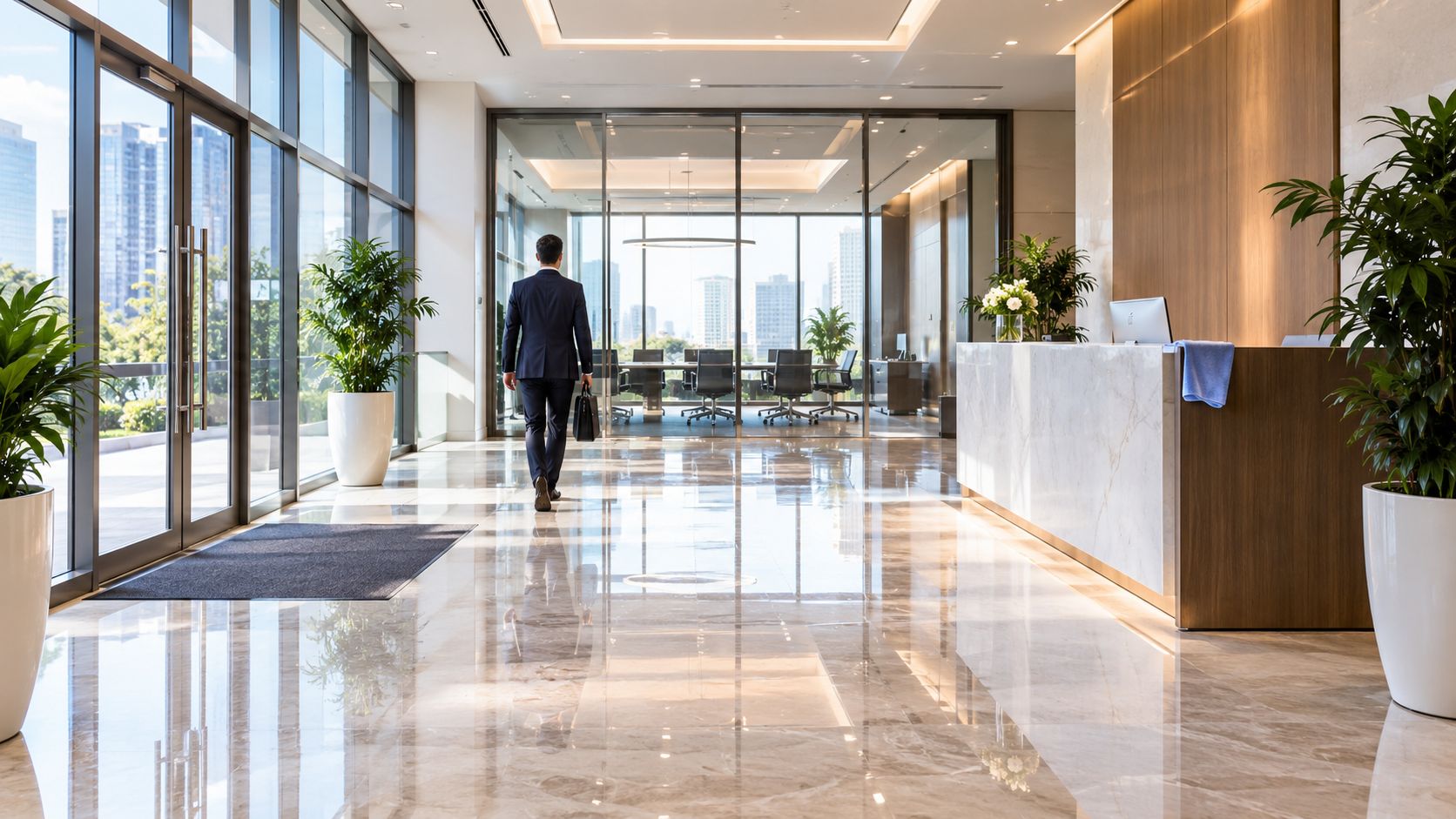
Floor condition also shapes how visitors judge the whole facility. A reception area with scuffed tile can undercut the polished image a business is trying to present in person and online. For organisations that also care about how first impressions travel digitally, this guide on how reviews and presentation boost your brand online gives useful context.
Table of Contents
Further ReadingIntroduction The Foundation of a Professional Image
A clean floor and a protected floor aren’t always the same thing. A floor can be freshly mopped and still look tired because the finish has been scratched, thinned out, or broken down by grit, salt, rolling traffic, and repeated cleaning. In many commercial spaces, especially in the Greater Toronto Area, winter residue accelerates that wear.
For a new property manager, that distinction matters. If the issue is surface soil, regular janitorial work may be enough. If the issue is finish failure, the floor needs restoration. That usually means stripping, controlled surface preparation, and a new finish system applied by trained technicians.
Direct answer: A commercial floor waxing service restores and protects hard floors by removing worn finish and applying new protective coats that improve appearance, support easier daily cleaning, and help reduce avoidable wear.
The service often gets discussed as though shine is the main goal. Shine matters, but it isn’t the technical reason the work has value. Its value comes from creating a sacrificial protective layer. Instead of foot traffic grinding directly into the floor material, traffic wears the finish first.
Key takeaways
- Commercial floor waxing service is protective maintenance. It’s not just polishing. It removes failed finish and replaces it with a new barrier layer.
- Preparation decides quality. If stripping residue isn’t neutralized properly, new finish may not bond well.
- Thin coats perform better than thick ones. Professional applications typically use multiple thin layers, not one heavy coat.
- The right method depends on the floor and the building. A busy clinic, warehouse corridor, and small office won’t all need the same finish strategy.
- Hiring should focus on process control. Training, chemical handling, scheduling, and quality checks matter as much as price.
- Good floor care protects image and operations. It supports a more professional appearance while making daily maintenance more efficient.
What is Commercial Floor Waxing Service
The phrase commercial floor waxing service can be misleading because it sounds like one simple task. In practice, it usually refers to a sequence of floor care steps designed to restore a hard surface and protect it from further wear. The work is common in offices, schools, clinics, retail units, and many light industrial settings where floors need to look presentable and hold up under repeated use.
A helpful way to think about it is this. The visible shine is the result, but the actual product being installed is a protective finish system. That system only performs well when the floor underneath is properly prepared.
The three parts of the service
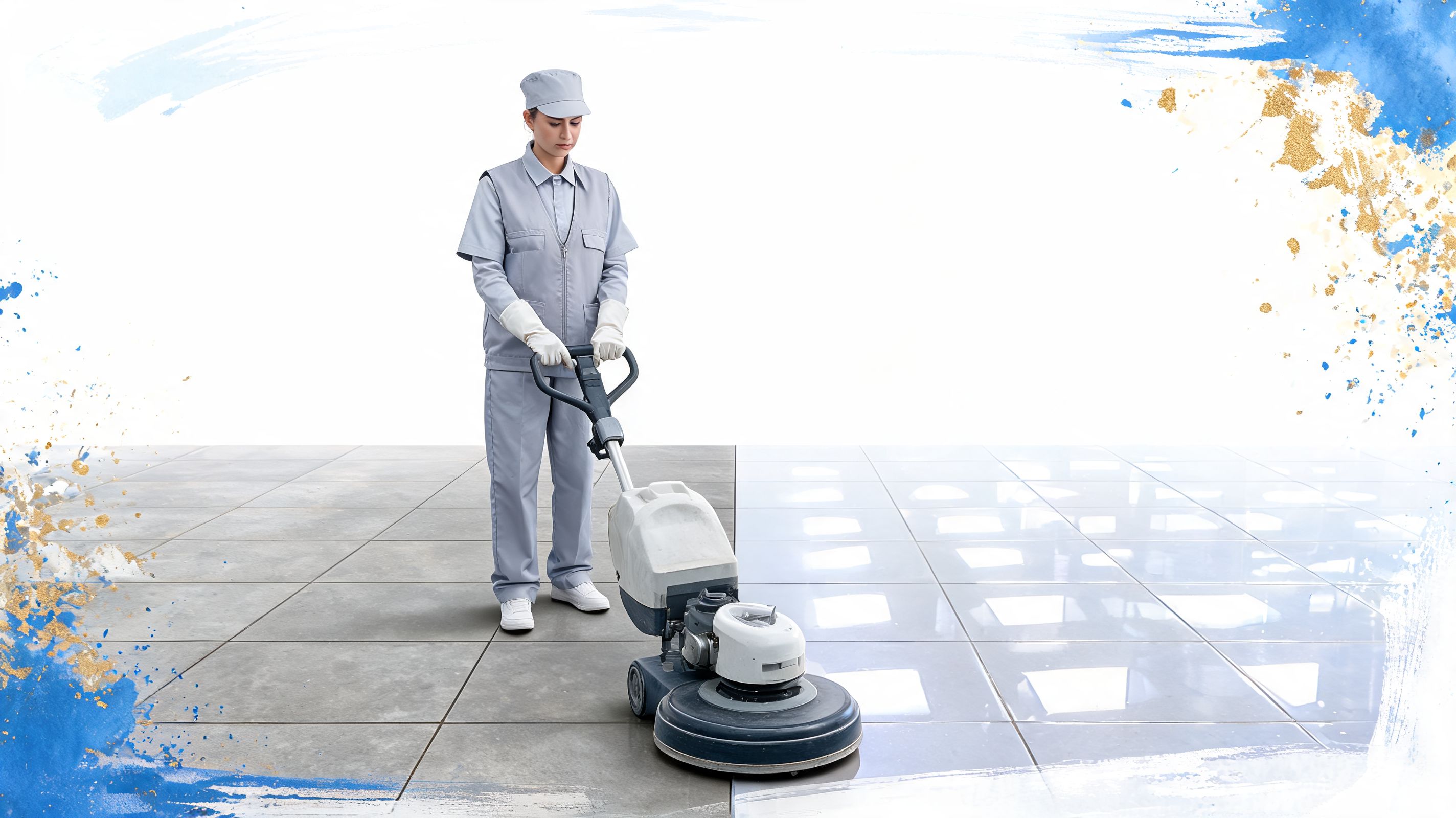
Stripping is the removal phase. Technicians use commercial stripping solutions, floor machines, pads, wet vacuums, and edge tools to remove old finish along with trapped soil and scuffing. This step clears away the damaged surface so new finish isn’t being applied over failure.
Sealing is the foundation step where needed. On floors that benefit from a base layer, a sealer helps create a more uniform surface and can improve how later coats sit and wear. It’s similar to priming before painting. The aim is consistency and protection, not just shine.
Waxing or finishing is the build phase. Technicians apply new finish in controlled layers to create a smooth, protective film. In commercial settings, people often still say “wax,” even when the product is a modern floor finish rather than a traditional wax in the household sense.
A floor finish should be treated as a wear layer. It’s designed to take the damage so the actual floor doesn’t have to.
Which floors are suitable
Many hard floors in commercial buildings can be maintained with this type of service, but not every floor should be waxed. That’s where property managers often get mixed messages.
Common candidates include:
- VCT flooring: Often one of the clearest cases for stripping and finishing because it relies on a maintained protective layer.
- Linoleum: May benefit when the product and method match manufacturer guidance.
- Terrazzo and some resilient floors: Can respond well when properly prepared and maintained.
- Certain sealed hard surfaces: These may be suitable if the finish system is compatible.
Floors that need caution or may be unsuitable include:
- Unsealed wood: Moisture and the wrong chemistry can cause damage.
- Some luxury vinyl products: Some surfaces are designed for different maintenance systems and may not require or tolerate conventional wax finishes.
- Specialty manufacturer-coated floors: These often need product-specific maintenance, not a standard strip-and-wax approach.
A practical rule for compatibility
Before approving the work, a manager should ask one direct question: Is the proposed finish system appropriate for this exact floor material and its current condition? A competent provider should identify the substrate, explain the method, and flag any compatibility concerns before work begins.
The Professional Floor Stripping and Waxing Process
A property manager often sees the problem after the building reopens. The floor looked glossy the night before, but by the end of the week traffic lanes are dull, edges are peeling, and a wet area near an entry starts to look risky. In many cases, the issue is not the final coat. It is a missed step earlier in the process.

Professional stripping and waxing works like repainting a damaged wall. If the old layer is not removed correctly, if residue stays behind, or if the new coat goes on before the surface is ready, the finish fails long before it should. On a commercial floor, early failure means more than appearance. It shortens the maintenance cycle, increases labor costs, and can create slip-resistance concerns if the surface becomes uneven or contaminated.
Facilities that also manage soft surfaces often benefit from understanding the difference between hard-floor restoration and textile care. For a plain-language example from a residential context, Rubber Ducky's homeowner's rug guide helps show why material-specific maintenance matters.
Preparation before any chemical touches the floor
Preparation controls both quality and liability.
The work area is cleared so technicians can cover the full floor without stopping around furniture and fixtures. Entry points are blocked, warning signs are placed, and nearby surfaces such as baseboards or metal thresholds may be protected from chemical splash. That setup reduces the chance of cross-traffic entering a wet zone and helps the crew apply products evenly instead of working around interruptions.
Dry soil removal comes next. Grit on the floor acts like sandpaper under a machine pad, scratching the surface while the old finish is being loosened. Fine dust also mixes with stripping solution and creates slurry that is harder to recover completely. A floor that looks clean at first glance can still hold enough residue to weaken the next coat.
Then the stripping solution is applied in a controlled pattern and given time to work. The point is chemical breakdown, not brute-force scrubbing. If the solution is removed too soon, patches of old finish remain and create weak bonding spots. If it sits too long, moisture and alkalinity can create avoidable stress on sensitive flooring materials. Good crews control dwell time, machine pressure, and recovery as one system, not as separate tasks.
Why neutralization often determines whether the new finish lasts
This step decides adhesion.
Stripping chemistry is designed to cut through built-up finish, soil, and maintenance residues. That same chemistry can interfere with the new finish if any film remains on the floor. A fresh coat needs a clean, chemically balanced surface to bond well. If the floor is still carrying alkaline residue, the new finish can dry unevenly, powder early, or peel under traffic.
That is why professional crews do more than strip and vacuum. They recover the slurry thoroughly, rinse the floor, clean edges and corners by hand where machines cannot reach, and bring the surface back to a neutral condition before applying new finish. From a business standpoint, this is one of the highest-ROI steps in the whole job. Neutralization takes less time than a callback, a premature recoat, or a tenant complaint about a floor that looked good for only a few days.
A provider should be able to explain this clearly. If you ask how the floor is neutralized and the answer is vague, you still do not know how the finish bond is being protected.
Managers comparing scopes can review Arelli Cleaning's commercial strip and wax service details to see how providers describe process steps, timing, and floor care expectations.
Application and curing
Once the floor is stripped, neutralized, and fully dry, the finish is applied in thin, even coats. Thin coats matter for a technical reason. They level better, trap less moisture, and cure more consistently than heavy coats. A thick layer may look faster during application, but it is more likely to streak, haze, or wear unevenly because the film forms inconsistently.
Environmental conditions matter here too. Airflow, room temperature, and humidity affect how each coat dries and hardens. If drying is rushed or traffic returns too early, the finish can mark, wrinkle, or lose gloss in the exact paths where occupants walk first. That early damage usually becomes the traffic pattern you keep seeing until the next restoration cycle.
Final inspection should check more than shine. The crew should confirm uniform coverage, clean edge detail, full residue removal, safe reopening conditions, and curing time appropriate for the building’s use. That is how the process supports both appearance and safety compliance. A floor that cures correctly is easier to maintain, more predictable under foot traffic, and less likely to require expensive corrective work before its expected service life.
Choosing the Right Wax Finish and Application Method
A property manager usually notices finish selection only after something goes wrong. The lobby shows black heel marks by midweek. A corridor loses gloss in traffic lanes long before the next maintenance visit. An entrance area becomes harder to clean because soil is grinding into a worn surface instead of releasing from the finish film. Those problems often start with a mismatch between product, application method, and building use.
Floor finish works like the wear layer on a commercial countertop. Occupants are not walking directly on the tile or resilient floor most of the time. They are wearing down the sacrificial coating above it. Choosing that coating well affects appearance, daily labor, slip resistance management, and how often the facility needs disruptive restorative work.
How finish selection affects performance
Different finishes solve different operational problems.
Acrylic polymer finishes are widely used because they form a clear, repairable film that responds well to routine maintenance. In practical terms, they fit buildings that need a professional appearance without turning floor care into a high-frequency specialty project. Offices, schools, and shared corridors often do well with this type because janitorial teams can clean and restore the surface without fighting an overly hard or unpredictable finish.
Urethane-fortified finishes are built for tougher wear conditions. The added durability helps in spaces where chairs roll constantly, carts turn sharply, or foot traffic is concentrated in narrow paths. That extra resistance can extend the time between visible breakdown and corrective work, which matters when shutdown windows are short or public-facing areas must stay presentable.
Sealer plus finish systems are useful when the substrate needs a more controlled foundation. A sealer can reduce absorption and create a more uniform base before the wear coats are added. That matters on older or more porous floors, where uneven absorption can lead to inconsistent gloss, patchy film build, and premature wear in isolated zones.
Comparison of Commercial Floor Finishes
| Finish Type | Durability | Gloss Level | Best For |
|---|
| Acrylic polymer | Moderate to strong, depending on maintenance | Moderate to high | General office areas, schools, shared commercial corridors |
| Urethane-fortified | Stronger resistance to wear and scuffing | Moderate to high | Higher-traffic areas, facilities with demanding appearance standards |
| Sealer plus finish system | Varies by topcoat and floor type | Varies | Floors that need a more controlled foundation before final coats |
Product chemistry is only half the decision.
Application method determines whether the finish can perform the way the label suggests. Multiple thin coats are standard because each coat needs to level, dry, and bond evenly. A heavy coat often looks efficient during application, but it can trap moisture, cure unevenly, and create soft spots that mark early under traffic. The result is similar to painting over a wall with one overloaded pass instead of several controlled coats. You get coverage faster, but not a stable film.
That technical detail has a direct business effect. Floors with uniform film build usually show more predictable wear, respond better to burnishing or recoating, and reduce surprise touch-up calls. Floors with inconsistent application tend to fail in patches, which creates more labor, more downtime, and more tenant or occupant complaints.
Managers reviewing materials should also ask what tools and consumables support the finish program, because pads, applicators, and cleaning chemistry affect the life of the coating just as much as the finish itself. A reference point for commercial floor care supplies and materials can help clarify what a professional crew is using on site.
Buffing and burnishing are not the same thing
These terms are often blurred together, but they serve different maintenance purposes and produce different results.
- Spray buffing: A corrective maintenance step for light scuffs and dulling. It improves appearance between larger service intervals but does not replace recoating when the wear layer is thin.
- High-speed burnishing: A gloss-restoration method that uses heat and friction to refine the top surface of the finish. It is best for facilities that want a brighter reflective look and have a finish designed to respond well to that process.
- Top-scrub and recoat: A partial restoration method used when the upper layer is worn or contaminated but the full finish system has not failed. It removes embedded soil and damaged surface film, then adds new coats to restore protection.
The right choice depends on what the building is trying to control. A professional office may prefer a satin or moderate-gloss system that hides minor scuffs and keeps maintenance straightforward. A lobby may justify a higher-gloss finish because appearance supports leasing, client perception, or brand standards. A healthcare-adjacent or education setting may care more about cleanability, predictable traction, and easy repair than maximum shine.
That is the decision framework. Choose a finish and application method based on traffic, substrate condition, maintenance capacity, and risk tolerance. When those pieces line up, the floor keeps its appearance longer, cleaning becomes more efficient, and the facility is less likely to face early recoats, avoidable slip concerns, or preventable disruption.
The Business Case for Professional Floor Waxing
A property manager usually notices floor care costs on the invoice first. The larger costs show up later, in early replacement, longer cleaning times, slip complaints, and disruption to occupied space. That is why floor waxing should be reviewed as an operating control, not just an appearance item.

Why finance and operations both care about floor finish
A wax or floor finish layer works like a sacrificial wear surface. Foot traffic, grit, chair movement, and routine cleaning abrade that upper film first instead of cutting directly into the tile below. On materials such as VCT, that distinction matters. Replacing finish is a maintenance event. Replacing damaged flooring is a capital problem.
Analysts at Dataintelo’s floor waxing services market report describe a growing market for commercial floor waxing and note square-foot pricing that varies by floor condition, material, and service scope. For a manager, the useful takeaway is not the market forecast by itself. It is the comparison between a planned maintenance cost and the much higher cost of shortened floor life, tenant disruption, and reactive repairs.
The operational effect is easy to miss if you only look at shine. A well-built finish system closes off much of the surface irregularity where soil and moisture cling. That changes daily cleaning in a practical way. Soil is removed from the top of the finish instead of being ground into a worn, porous surface, so crews spend less time scrubbing and get more predictable results from routine mopping and autoscrubbing.
Safety and compliance belong in the same conversation. Floors that are unevenly worn, contaminated with embedded residue, or patched with inconsistent maintenance methods are harder to keep within a predictable traction range. Professional waxing does not mean making a floor slick. It means preparing the surface correctly, applying the right finish for the use case, and maintaining it before the wear layer fails. That lowers the chance of avoidable slip concerns and gives facility teams a clearer maintenance record if an incident is reviewed.
A practical way to judge return on maintenance
A useful test is to ask four business questions.
- Does it protect the underlying floor? Every coat is taking wear that would otherwise hit the substrate.
- Does it lower routine labour? Protected floors release soil faster and usually need less aggressive cleaning.
- Does it support safer, more consistent walking conditions? Controlled finish condition is easier to inspect and maintain than a floor that has been allowed to wear unevenly.
- Does it protect the building’s image? Tenants, staff, patients, visitors, and auditors often read floor condition as a sign of how the facility is run.
Here is the business logic in plain terms. Deferred waxing often looks like savings for one budget cycle. Then the janitorial team needs more time to clean dull traffic lanes, spot repairs become more frequent, complaints increase, and the floor reaches replacement condition sooner. The service did not become expensive. The delay made the total cost of ownership worse.
Service timing should follow wear, not guesswork. High-traffic entries, corridors, and common areas usually need a tighter maintenance cycle than private offices or low-use rooms. A professional provider helps set that schedule by looking at traffic patterns, soil load, moisture exposure, and the building’s tolerance for downtime. That approach keeps maintenance planned, protects asset life, and reduces the chance that a floor fails at the worst possible time.
How to Select a Commercial Floor Waxing Provider
A property manager usually sees the provider decision become real at 6 a.m. after the job. The corridor either reopens cleanly, with a uniform finish and no slip concerns, or it becomes a stream of complaints about tacky spots, strong odour, scuffed traffic lanes, and furniture marks. Selection matters because floor waxing is controlled surface engineering, not just labour sold by the square foot.

A strong quote explains how the contractor will control four variables: floor identification, chemical compatibility, application conditions, and reopening risk. If any one of those is handled poorly, the finish can fail long before its expected service life. What looks like a cheaper bid can become the expensive one once you add rework, disruption, and premature wear.
What to ask before approving a quote
Start with diagnosis. A qualified provider should identify the flooring material, confirm whether it should be waxed at all, and explain what is already on the floor. That matters because the stripping chemical, pad choice, and finish system all depend on the substrate. Using the wrong chemistry on the wrong floor is like using the wrong primer before painting. The top layer may look acceptable for a short time, then lose adhesion.
Next, ask for the process in order, not a vague promise of "strip and wax." You want to hear a sequence such as site prep, soil removal, stripping, slurry pickup, rinse or neutralization as needed, dry verification, finish application, cure protection, and final inspection. A provider who can explain each step usually has better process discipline. A provider who skips steps in the explanation often skips them in the field.
Safety questions should be specific.
- How will the crew isolate the area? Signage, access control, and route planning reduce slip-and-fall exposure during the job.
- How will they confirm the floor is ready for the next coat? Moisture left on the floor can trap problems under the finish and weaken gloss, hardness, and durability.
- How will they determine safe reopening? Dry to the touch is not the same as ready for full traffic, carts, or furniture.
- What documentation will you receive? Checklists, photos, and completion notes make it easier to verify scope and resolve disputes.
- How will scheduling work in an occupied site? Offices, clinics, schools, and mixed-use properties need a plan for noise, odour, ventilation, and access.
Communication systems also matter because floor work often happens after hours and under tight reopening deadlines. Some property teams prefer vendors whose broader office cleaning services use technology-supported coordination, since status updates, work orders, and photo records can reduce missed handoffs between the cleaning crew and building staff.
Red flags to avoid
Be cautious if a contractor answers technical questions with sales language instead of process detail. "We use a high-quality wax" tells you very little. You need to know how the finish is matched to traffic level, maintenance routine, and the floor's current condition.
Other warning signs are easier to spot once you know what failure looks like.
- One recommendation for every building. Traffic pattern, entrance soil, moisture exposure, and floor material all affect the right program.
- No clear answer on neutralization or residue removal. Leftover stripper can interfere with bond strength between the floor and the new finish.
- No discussion of cure protection. Early foot traffic can leave scratches, heel marks, or dull paths before the finish hardens.
- No written scope. If the quote does not define prep, number of coats, inspection, and reopening conditions, the client carries more risk.
- Price-first selling with no site review. A contractor who prices quickly without inspecting the floor may be estimating labour, not managing the result.
A practical comparison method works well here. Ask two or three vendors to bid the same scope, then compare how clearly each one explains the technical steps, risk controls, and post-job documentation. The best provider is usually the one who makes the process predictable, protects the building from avoidable downtime, and treats floor appearance as an asset preservation issue rather than a cosmetic extra.
Frequently Asked Questions About Floor Waxing
How often should commercial floors be stripped and waxed
That depends on traffic, floor type, daily cleaning quality, and seasonal conditions. High-traffic commercial areas often need more frequent restoration, while quieter rooms may only need periodic recoating and less frequent full stripping.
How long does the floor need before people can walk on it
It varies with the finish system, number of coats, humidity, and airflow. A professional provider should give reopening guidance for light foot traffic, full traffic, and furniture replacement instead of offering one generic answer.
Will there be a strong chemical odour
There can be an odour during stripping and finishing, especially in enclosed areas. Good ventilation planning, off-hours scheduling, and product selection help manage it. Sensitive environments should raise this issue during planning, not after work begins.
Is buffing the same as waxing
No. Buffing improves the appearance of an existing finish. Waxing or finishing adds protective coats. Stripping removes the old finish first when that layer is no longer serviceable.
Can building staff do this with rented equipment
They can attempt it, but the risk is high if the floor type, chemistry, dwell time, neutralization, and coat application aren’t managed properly. DIY work often looks acceptable briefly and then fails unevenly.
Which floors should not be waxed
Some wood floors, certain luxury vinyl products, and specialty factory-finished floors may require other maintenance systems. The floor should be identified before any product is applied.
Why does the floor still look dirty after mopping
Because the problem may be finish wear, not surface soil. Once the protective layer is scratched, stained, or thinned out, routine cleaning can’t restore the same appearance.
What should a manager ask for after the job
A clear record of work completed, areas serviced, any problem spots observed, reopening guidance, and maintenance recommendations for the next cycle.
Further Reading
A useful reading list should help you make better decisions, not repeat the same citations you already saw above. The best follow-up resources answer three practical questions: how floor finishes fail, how maintenance affects slip resistance and appearance, and how to confirm that a product is appropriate for your floor type.
Start with manufacturer guidance and industry reference material. These sources are often more useful than general service pages because they explain product chemistry, coat build, cure time, burnishing response, and maintenance compatibility. That technical detail matters. A finish that looks good on day one can still fail early if the floor was not neutralized properly after stripping or if the maintenance plan wears through the top coats too quickly.
Recommended external resources
Use those resources with a building-specific checklist. Confirm the floor material, traffic pattern, cleaning frequency, entry matting condition, and reopening window before approving any scope. That step works like checking the substrate before painting. If the base is wrong, the finish system will not perform the way the label suggests.
A practical next step is to walk the building, note where finish has failed, and use the hiring checklist before requesting 2 to 3 quotes. A commercial floor waxing service works best when the buyer understands the process, the risks, and the maintenance logic behind each step. Arelli Cleaning can be included as one option in that comparison for GTA facilities looking at office and commercial floor care.










.webp)