A healthy workplace cuts preventable absence, reduces complaints, and protects output. Business owners usually see the warning signs early. More discomfort reports, more minor incidents, more visible dust, and more staff trying to work around the building instead of with it.
The gap in a lot of workplace wellness advice is straightforward. It focuses on stress management and culture, but skips the physical conditions that shape stress in the first place. Air that feels stale by noon, washrooms that slip below standard between service intervals, shared desks cleaned inconsistently, and workstations that force awkward posture all create avoidable strain. In hybrid offices and industrial sites, those problems get harder to control because occupancy changes, equipment use varies, and no single routine fits every shift.
Business owners need a workplace health system that holds up under real operating conditions: tight cleaning windows, limited maintenance capacity, dusty storage areas, rotating staff, and mixed-use spaces. That means setting clear cleaning protocols, checking ventilation performance, fixing ergonomic risks before they become injury claims, and giving managers a reporting process that people will use.
Safety Space's safety guide is useful here because it treats workplace health and safety as hazard control and employer responsibility, not a box-ticking exercise. That is the right standard. Healthy workplaces are built through repeatable controls, documented expectations, and facility decisions that support people every day.
The Three Pillars of a Healthy Workplace Environment
Poor facility conditions raise risk fast. In my work, the earliest warning signs are usually mundane: stale meeting rooms by midday, shared desks wiped inconsistently, operators improvising around awkward setups, and minor maintenance issues left to drift. Those conditions affect concentration, comfort, reporting culture, and absence rates long before they show up as a formal incident.
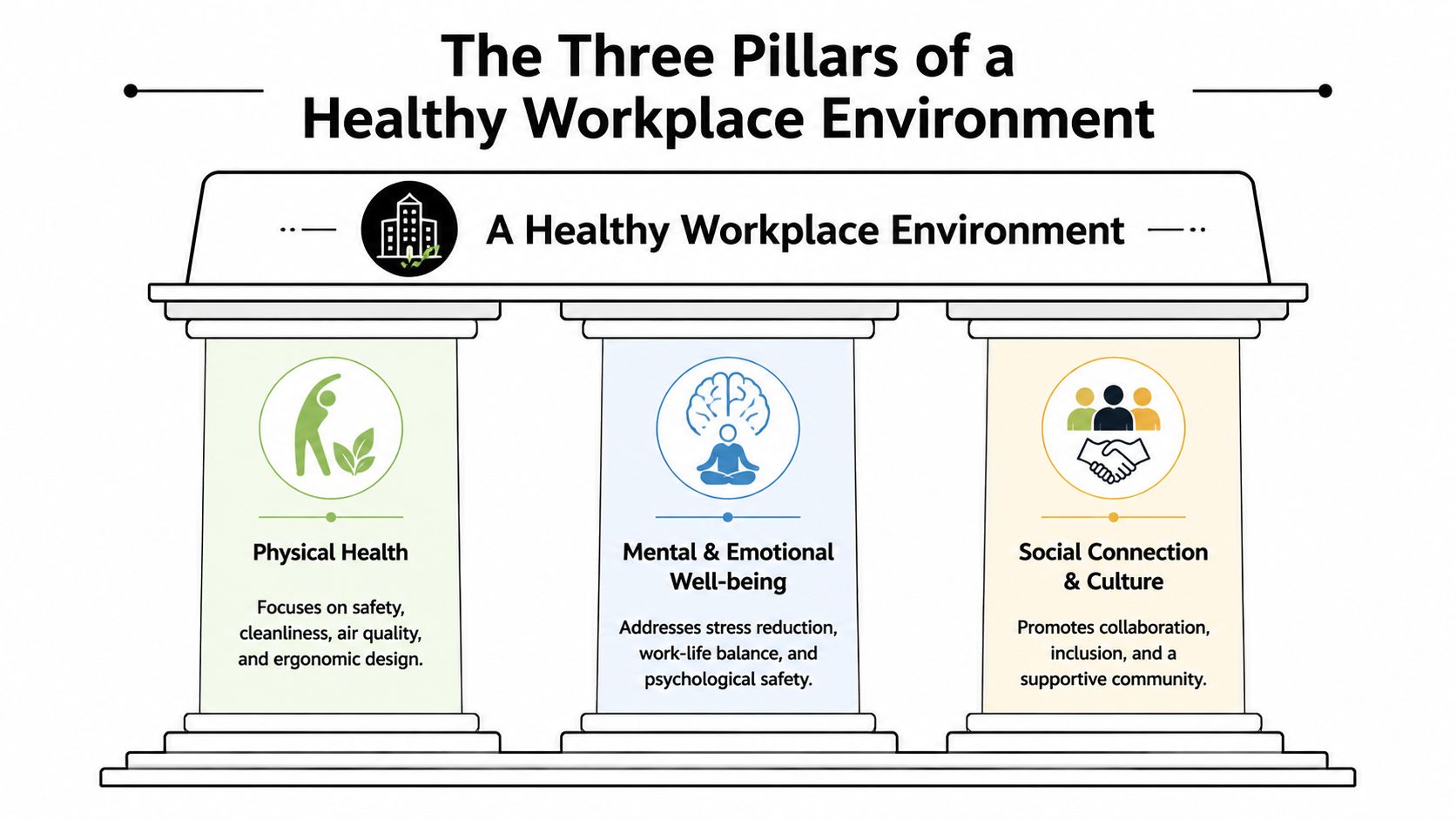
A sound work setting rests on three connected pillars: physical conditions, ergonomic fit, and psychosocial support. Many workplace wellness guides start with culture and stress management. Those matter, but they are weaker when the building itself creates strain. If air quality slips, cleaning standards vary by shift, or workstation layout forces poor posture, policy alone will not fix the problem. Hybrid offices and industrial sites make this more complicated because occupancy, tasks, and exposure points change through the day.
Physical safety
Physical safety starts with the parts of the site people touch, breathe, carry, and walk across every day. That includes cleanliness, washroom standards, indoor air quality, safe storage, slip control, and maintenance response times. A facility can look acceptable during a scheduled walk-through and still perform poorly in real use if touchpoints are missed, bins overflow between services, or dust builds up in vents, ledges, and storage areas.
Safety Space's safety guide is useful because it frames workplace health and safety as hazard control and employer responsibility. That approach holds up in practice. Reliable results come from written protocols, inspection records, clear service frequencies, and escalation rules when conditions fall below standard. For businesses reviewing their hygiene controls, a structured commercial disinfection and sanitizing program is one part of that system, especially in shared spaces, high-traffic washrooms, and mixed-use facilities.
Ergonomic wellbeing
Ergonomics is a layout and workflow issue, not a furniture shopping exercise. Chair quality matters, but so do monitor height, reach distances, lighting, floor conditions, tool placement, sit-stand options, and the amount of static posture built into the job. In warehouses, labs, clinics, and production areas, it also includes cart design, lift frequency, turn radius, anti-fatigue support, and how materials enter and leave the task zone.
The trade-off is straightforward. It is cheaper to adjust a workstation, change a task sequence, or rotate a repetitive duty than to absorb injury claims, rework, and lost pace over time.
Psychosocial support
Psychosocial support depends on supervision, workload, clarity, and trust. It also depends on whether the site signals care and control. Staff notice when a washroom is repeatedly below standard, when break areas feel neglected, or when concerns about ventilation and discomfort disappear into a vague reporting process. Those conditions tell people whether speaking up is useful.
Clean, well-run spaces support psychological safety because they reduce friction and make standards visible. People are more likely to report a hazard early when they can see that management acts on smaller issues before they become bigger ones. That is especially important in hybrid teams, where workers move between home, office, vehicles, and client sites, and in industrial settings, where noise, heat, dust, and pace can increase strain quickly.
These three pillars work together. Cleaning affects air quality. Air quality affects fatigue and concentration. Ergonomic design affects pain, pace, and error rates. Policies matter most when the physical setting supports them.
Implementing Advanced Cleaning and Disinfection Routines
Cleaning quality rises or falls on one decision. Build the routine around exposure risk, not room labels.
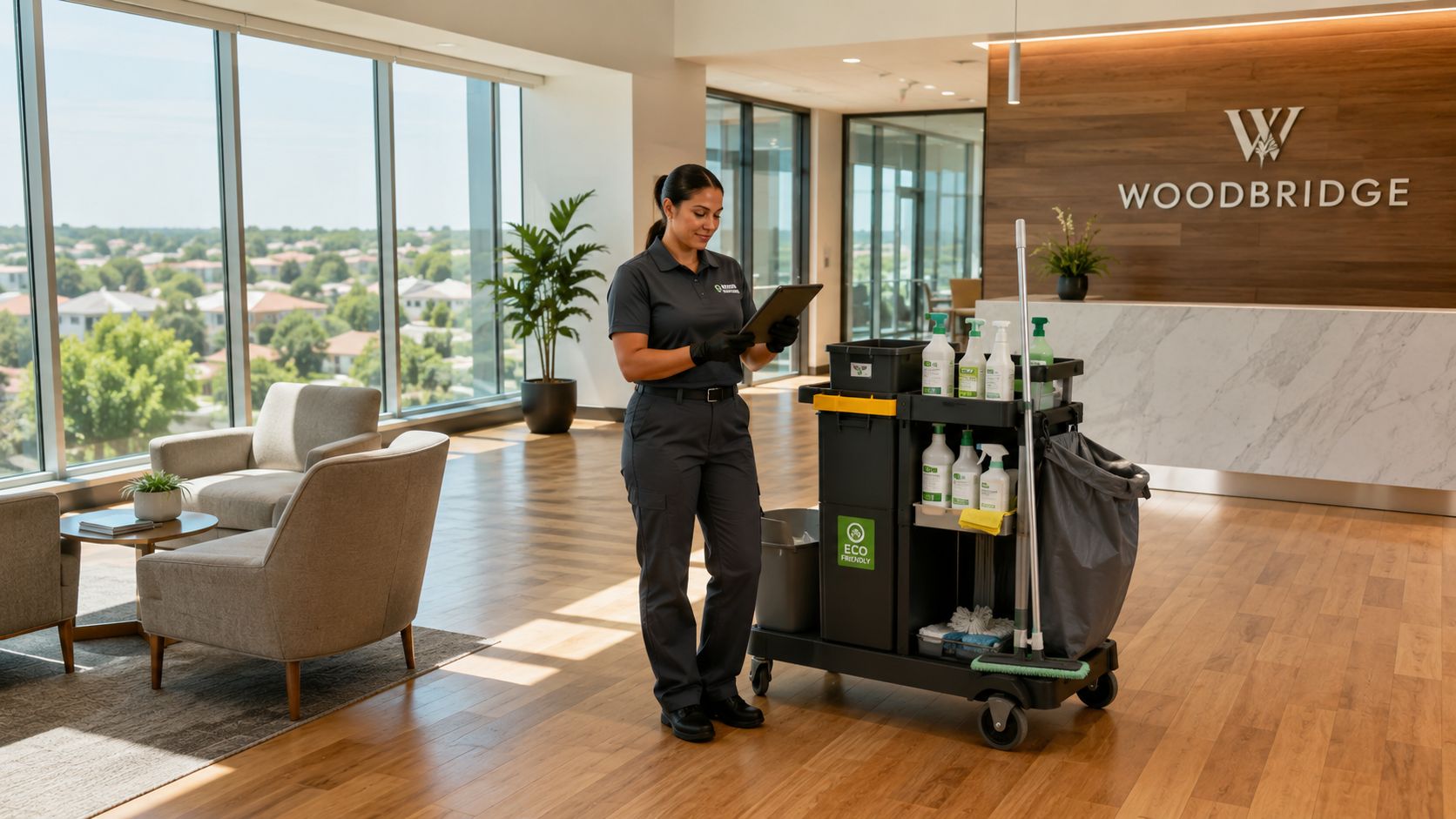
Many employers still approve scopes that say “office cleaned” or “meeting room serviced.” That language is too broad to manage performance. A healthy workplace needs task-level standards tied to touch frequency, soil load, shift patterns, and the type of work taking place. That matters even more in hybrid offices, where shared desks and intermittent occupancy create uneven contamination patterns, and on industrial sites, where oils, dust, packaging debris, and glove-to-surface transfer change what “clean” requires.
A workable routine starts by separating three terms that often get blurred together:
- Cleaning removes soil, debris, and residue from a surface.
- Sanitizing reduces surface contamination to an acceptable level for the setting.
- Disinfecting uses a product intended to inactivate specific harmful microorganisms on hard surfaces, following label directions.
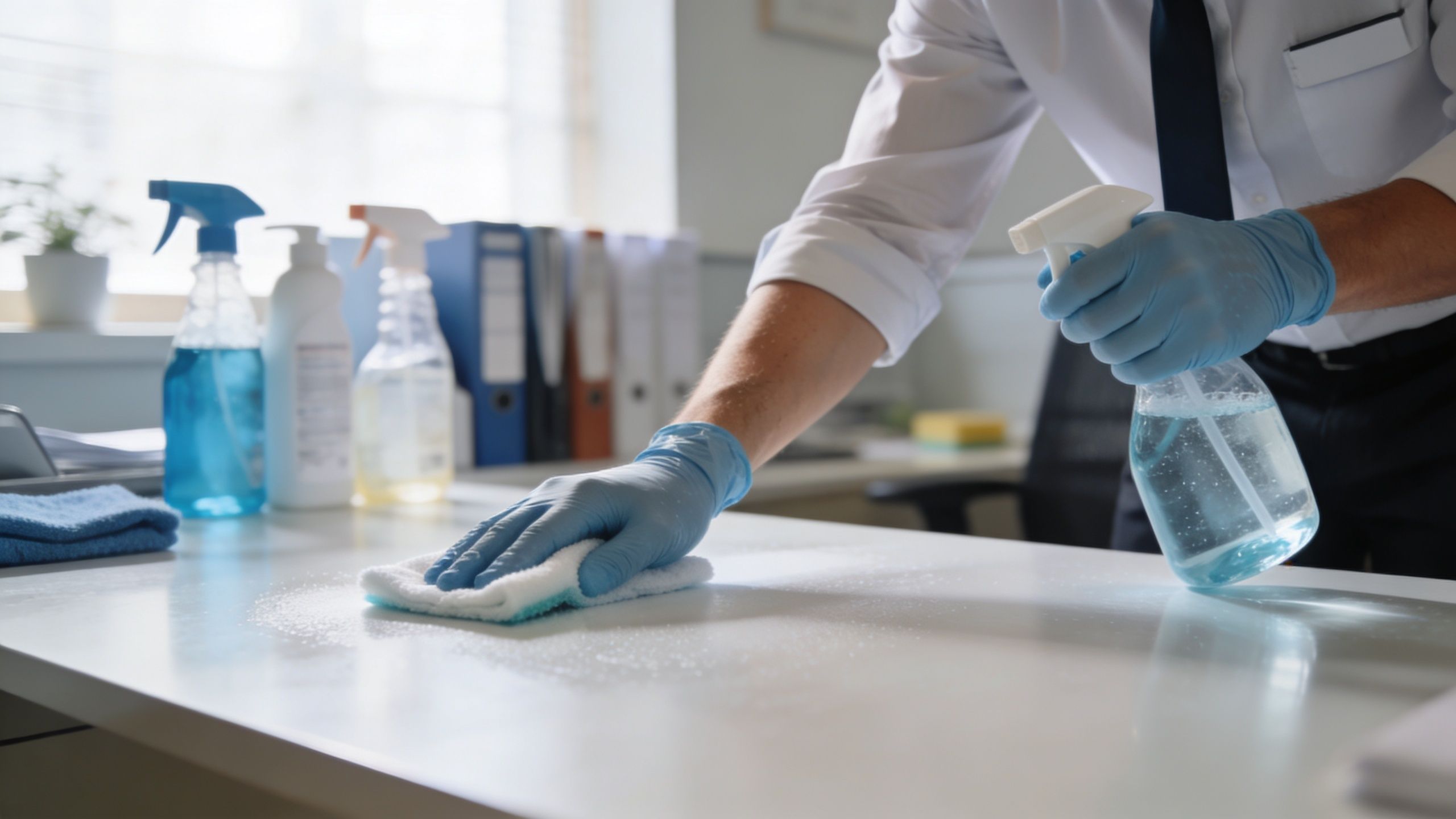
What a serious routine includes
Good programs identify surfaces, not just spaces. “Boardroom cleaned” gives an owner almost nothing to verify. “Table edges, chair arms, remote controls, door hardware, and shared markers cleaned and disinfected” gives supervisors something they can inspect.
Use this checklist to map high-contact surfaces:
- Entry points: Door pulls, push plates, intercom buttons, reception counters, elevator buttons
- Shared equipment: Printers, scanners, kitchen handles, microwaves, coffee machines, fridge doors
- Workstations: Shared desks, armrests, mouse surfaces, keyboard trays, phone handsets
- Washrooms: Stall locks, flush handles, faucet handles, dispensers, grab bars
- Back-of-house spaces: Breakroom tables, locker handles, time clocks, warehouse touchscreens
This mapping step pays for itself. It prevents crews from spending time on low-risk surfaces while missing the touchpoints that drive complaints, illness concerns, and failed inspections.
A practical cleaning schedule
Frequency should match use. Over-cleaning low-contact areas increases labour cost without reducing much risk. Under-cleaning shared touchpoints leaves the same exposure points in circulation all week.
Daily
- Empty waste and liners based on occupancy, food waste, and odour risk
- Disinfect high-touch shared points used repeatedly through the day
- Service washrooms fully including dispensers, fixtures, partitions, and floors
- Spot clean glass and entry zones where visible grime affects user behaviour and confidence
Weekly
- Detail clean breakrooms including appliance handles, seating, and under-counter debris zones
- Disinfect shared meeting spaces beyond the obvious table surface
- Dust horizontal and low-reach ledges that transfer soil back onto hands and equipment
- Check supply use and crew compliance so products, dilution, and tools match the intended task
Monthly or periodic
- High dusting in above-reach areas
- Detailed floor care based on finish type, traffic, and soil load
- Vent and diffuser cleaning coordination with facility maintenance
- Deep cleaning in low-visibility areas such as behind furniture, under shelving, and in storage rooms
Practical rule: If a manager can only judge cleaning by fragrance, the standard is too vague.
Product selection and staff cooperation
For disinfection, use Health Canada-approved products and follow the labelled dwell time exactly. In practice, the result depends less on branding and more on whether the surface was pre-cleaned when needed, the chemical stayed wet for the full contact time, cloths were changed before they spread residue, and colour-coding or other controls prevented cross-use between washrooms, kitchens, and work areas.
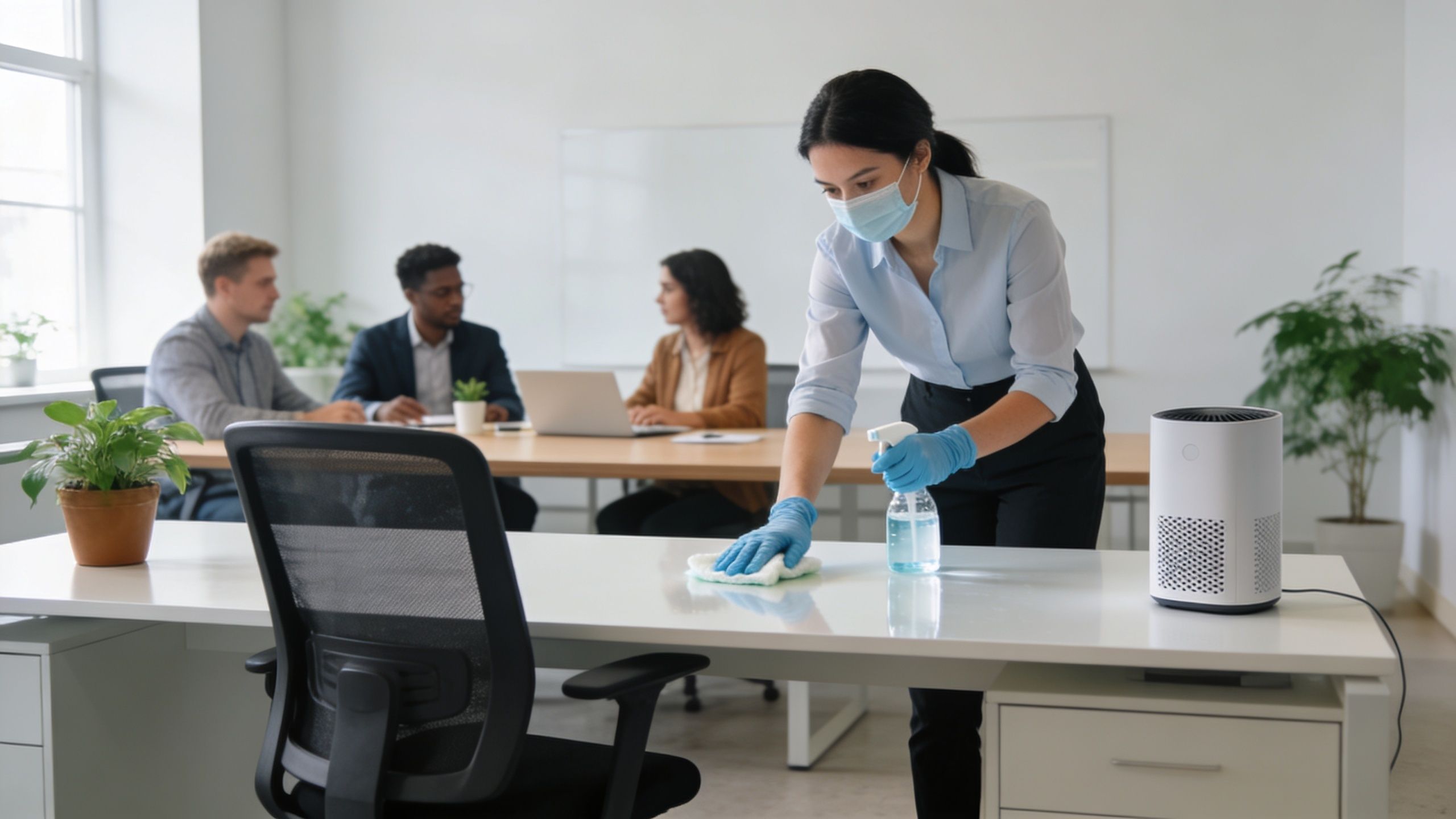
Staff habits affect cleaning results as well. In offices, one of the simplest controls is a clear desk policy before the evening clean. If desks are covered with papers, food containers, charging cables, and personal items, the crew cleans around contamination instead of removing it. In hybrid settings, add a wipe-down protocol at desk changeover and make ownership clear for shared peripherals.
Businesses that need a higher-control scope than routine janitorial service often compare providers against documented commercial disinfection and sanitizing protocols, including chemical handling, contact-time procedures, site logs, and escalation steps after an exposure event.
Industrial sites need tighter controls still. Cleaning schedules should account for production timing, lockout requirements, residue type, forklift traffic, and whether dry removal, wet cleaning, or disinfection is appropriate for the surface. Using the wrong method can spread contamination, damage equipment, or create slip risk.
One final trade-off gets missed. More bins do not always produce cleaner spaces. In many offices, fewer shared bins with scheduled emptying improves waste control and reduces food waste sitting at desks overnight.
Optimizing Workplace Air Quality and Ventilation
Indoor air problems rarely start as a dramatic failure. They show up first as patterns. Staff in one meeting room get headaches by mid-afternoon. A reception area smells stale every morning. A warehouse office collects fine dust again a day after cleaning. Those patterns usually point to a system issue involving ventilation, filtration, housekeeping, occupancy, or all four.
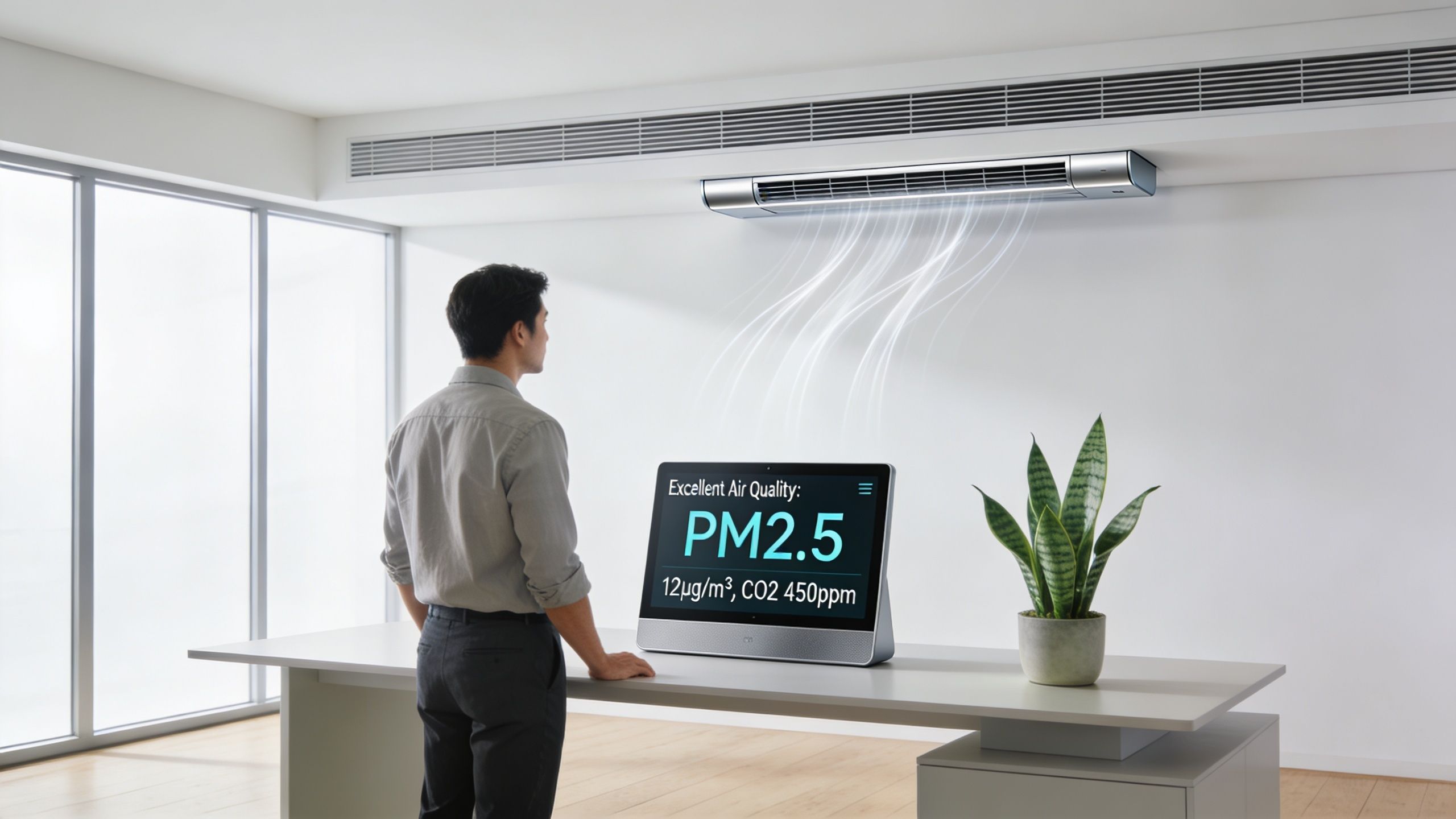
A healthy workplace depends on more than wellness programming and sick-day policy. People breathe the building all day. If air delivery is poor, dust is allowed to accumulate overhead, or ventilation schedules reflect a pre-hybrid occupancy pattern that no longer exists, comfort drops and complaints rise. On industrial sites, the consequences are more significant because process dust, vehicle traffic, heat, fumes, and pressure differentials can affect exposure risk and production quality at the same time.
What good air management looks like
Start with HVAC performance because that is where building-wide control usually sits. Business owners and facility managers should be able to answer a few basic questions without chasing three vendors for the file:
- What filter type and MERV rating are installed
- Whether the equipment can handle that filter without reducing required airflow
- How often filters are inspected and changed
- Whether supply and return vents are blocked by furniture, stock, or temporary storage
- Whether occupancy patterns have changed since the last ventilation review
- Which rooms generate repeat complaints about odours, stuffiness, dust, or condensation
Filter selection needs judgment. A higher MERV rating can improve particle capture, but only if the fan capacity and static pressure limits support it. I see this mistake often in older buildings. Someone installs a denser filter with good intentions, airflow drops, and the site trades one problem for another.
Ventilation schedules also need review in hybrid workplaces. If people now flood into the office Tuesday through Thursday, but the system is still running to an old pattern, conference rooms and shared zones can feel under-ventilated even when the equipment is technically operating as programmed.
Cleaning and air quality are connected
Air quality control is partly mechanical and partly operational. Dust on beams, cable trays, tops of partitions, shelving, and light fixtures does not stay in place. It gets pushed back into occupied air by foot traffic, forklifts, door movement, and supply air.
That matters in offices, schools, clinics, and production spaces for different reasons. In offices, the result is often irritation, visible dust, and comfort complaints. In industrial settings, settled dust can interfere with equipment, contaminate stock, and increase housekeeping risk if the material is combustible or frequently disturbed.
For that reason, air plans should include more than filter changes. They should define high-dusting frequency, identify dust-generating tasks that need cleanup immediately after completion, and assign responsibility for keeping vents, returns, and mechanical access points clear.
When central HVAC control is limited
Many tenants cannot change base-building ventilation equipment. They still have practical options that improve conditions without major capital work:
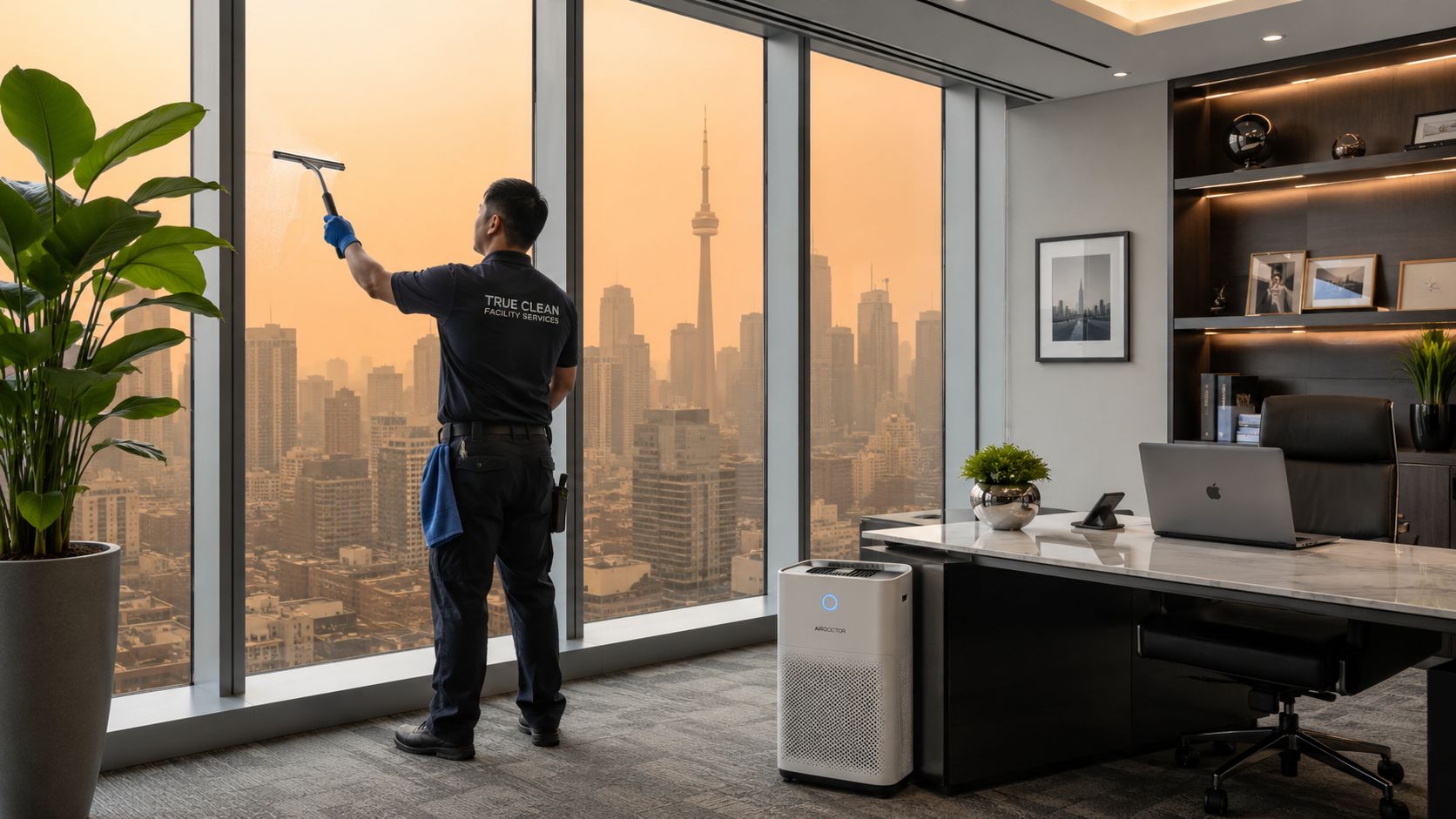
- Use portable HEPA air purifiers in enclosed offices, reception areas, meeting rooms, treatment rooms, and other spaces with limited air exchange
- Place units based on room use and airflow path, not wherever a plug is available
- Schedule high dusting in older offices, warehouses, retail stockrooms, and sites with exposed overhead surfaces
- Keep pallets, files, and boxed inventory away from vents and returns
- Coordinate cleanup after renovations, drilling, cutting, or shelving installation
- Log complaints by location, time, weather conditions, and occupancy level so recurring causes can be isolated
Portable units are useful, but they are not a substitute for weak housekeeping or blocked airflow. They work best as a targeted control for enclosed spaces, temporary problem areas, and rooms with higher occupant density.
This short video is useful for teams that want a visual explanation of indoor air basics and practical controls.
Air complaints should be logged by location and time, not as general comments. Patterns usually point to a room, a schedule conflict, or a maintenance gap.
Designing Ergonomic and Movement-Friendly Spaces
Ergonomics works best when it’s treated as a daily operating standard, not a one-time furniture purchase. A healthy workplace supports neutral posture, reduces repetitive strain, and makes movement easy enough that people will do it.
The workstation basics that matter most
A strong setup usually includes a few plain rules:
- Feet supported on the floor or footrest
- Knees, hips, and elbows near right angles, often described as the 90-90-90 approach
- Monitor positioned at a comfortable height so the neck stays neutral
- Keyboard and mouse close enough to avoid forward reaching
- Frequently used items within easy reach so staff don’t twist repeatedly
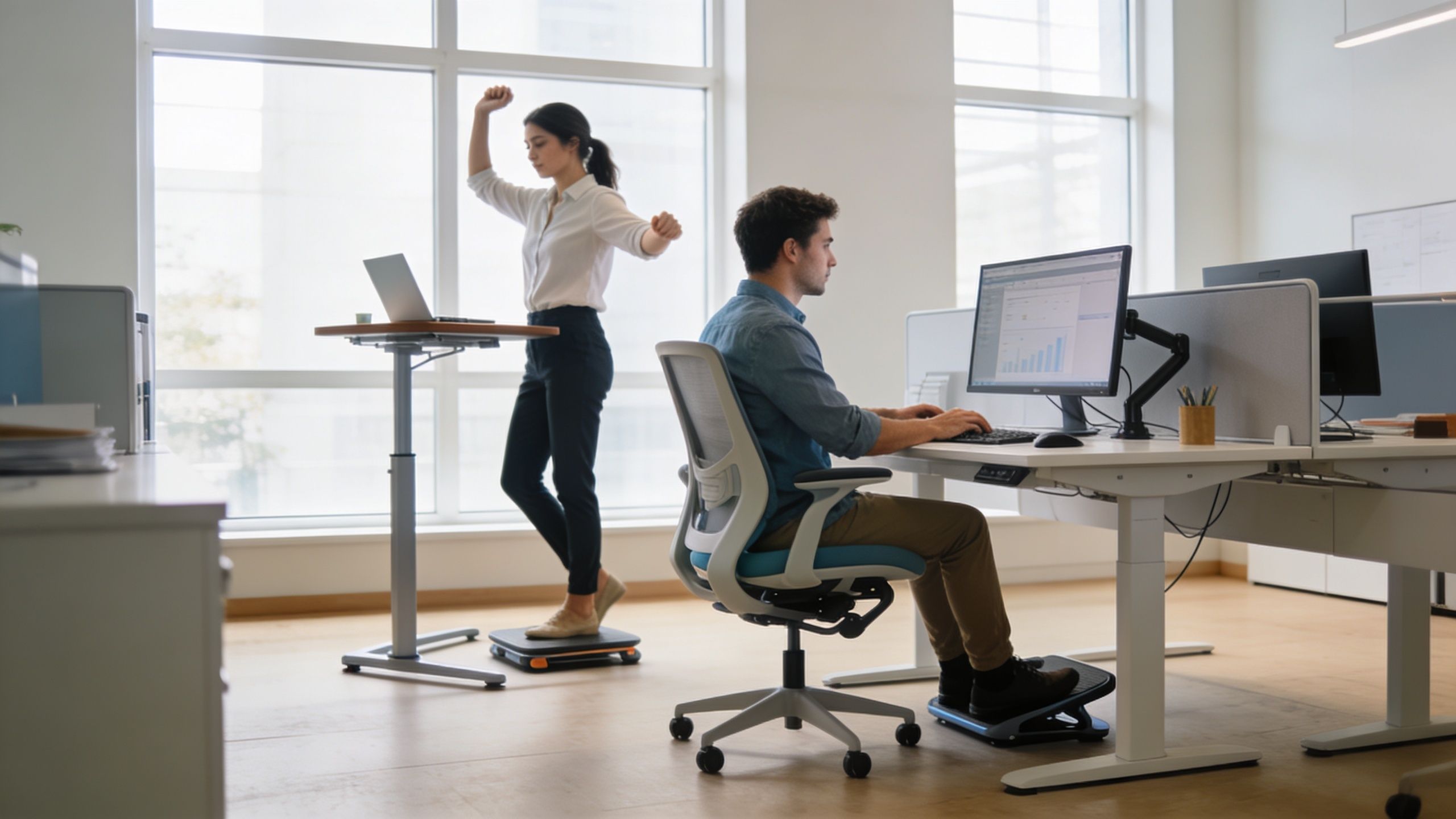
Expensive chairs help some users, but they don’t fix poor monitor height, cramped desk layout, or a laptop-only setup used for full workdays. In many offices, the most effective upgrades are monitor arms, external keyboards, proper mice, task lighting, and basic workstation coaching.
A simple self-audit
Ask staff to check these points at their own desk:
- Screen position: Can the screen be viewed without tilting the head up or down for long periods?
- Arm position: Are shoulders relaxed rather than lifted?
- Seat use: Is the chair supporting the back rather than forcing a perched posture?
- Reach pattern: Are phone, notebook, and daily-use tools easy to access?
- Movement pattern: Is there a reason to stand and walk during the day?
Movement should be designed into the space
Sedentary work isn’t solved by telling staff to stretch more. The environment has to support movement.
Useful low-cost changes include placing printers and recycling stations away from desks, creating comfortable standing touchdown areas, encouraging walking one-on-ones where practical, and building short reset breaks into team routines. In hybrid offices, shared adjustable stations often make more sense than assigning costly ergonomic equipment to rarely used desks.
A movement-friendly workplace tends to feel better organised. That alone reduces friction and makes healthy habits easier to repeat.
Building a Foundation of Psychosocial Support and Policy
A healthy workplace fails fast when people do not know how to report a problem, who owns the response, or whether speaking up will create friction for them later. I see this gap often in businesses that have invested in cleaning, ventilation, and ergonomic upgrades but still run on informal manager habits.
Policy is an operating control. It sets the rules for illness reporting, workload escalation, incident follow-up, accommodations, and site behaviour. It also connects psychosocial health to the physical workplace. If staff report headaches, fatigue, odours, crowding, or stress from poor hybrid coordination, the business needs a documented process that checks workload, air quality, housekeeping, supervision, and workstation setup rather than treating the issue as a personal complaint.
Put psychosocial policy into the same system as physical risk control
The strongest programs do not separate mental wellbeing from facilities management. They treat them as linked risk categories with shared reporting channels, clear response times, and named decision-makers.
That matters in practice.
On an industrial site, tension between shifts may reflect scheduling pressure, heat, noise, poor break conditions, or unclear handover rules. In a hybrid office, disengagement may be tied to hoteling confusion, inconsistent cleaning resets, poor meeting equity between remote and on-site staff, or weak norms around after-hours messaging. If the policy only talks about respect and kindness, managers miss the operating causes.
Business owners should define what gets reported, who reviews it, and how closure is documented. A simple policy stack usually carries most of the load:
- Illness and attendance: Staff need clear instructions on when to stay home, when remote work is allowed, and how coverage is handled without pressure to attend while unwell.
- Hazard and concern reporting: Use one easy channel for psychosocial concerns and physical workplace issues such as odours, temperature complaints, broken fixtures, supply failures, or overcrowded shared areas.
- Manager conduct and boundaries: Set expectations for response times, break protection, respectful supervision, and after-hours communication.
- Accommodation and return-to-work: Document temporary adjustments, review dates, equipment needs, and who approves changes.
- Escalation and closeout: Every report needs an owner, a target response time, and a record of what was checked and fixed.
A policy that nobody can enforce has little value. Owners should test whether a supervisor can apply it on a busy Tuesday, not whether it reads well in a handbook.
Hybrid and site-based teams need different rules
Many companies lose control. They write one generic wellness policy and expect it to fit a front office, a warehouse, and home-based staff.
Hybrid teams usually need rules for shared desks, booking discipline, cleaning accountability between users, camera and meeting norms, and fair access to quiet rooms and ergonomic equipment. Site-based teams need stricter guidance on fatigue, heat stress, break coverage, washroom access, supervisor availability, and conflict reporting during shift work. The goal is consistency in intent, with procedures that match the setting.
The physical environment still shapes psychological safety. A worker is less likely to report stress, pain, or conflict if breakrooms are dirty, bins overflow, lockers are damaged, or maintenance requests disappear into email threads. In fit-outs and refurbishments, even choices around partitions, finishes, and commercial fire ratings and materials affect how safely and reliably a space can be used over time.
Culture follows repeated manager behaviour
Staff judge the system by response quality. They notice who closes the loop, who shrugs off complaints, and who treats recurring headaches or fatigue as signals to investigate.
One manager who logs concerns, checks the area, confirms the fix, and reports back builds trust quickly. Another who dismisses odours, noise, clutter, or workload pressure teaches people to stay quiet until absence, turnover, or a formal complaint forces action.
That is the return on policy. Good psychosocial support reduces avoidable conflict, shortens issue resolution time, supports attendance, and protects the value of the physical controls already in place.
Sector-Specific Health and Safety Strategies
A healthy workplace system has to match the exposure profile of the site. A law office, warehouse, school, and treatment room may all look tidy at 9 a.m., but the controls that keep people well through the day are not the same.
Sector planning matters because failures show up differently. In an office, poor control often appears as recurring complaints about stale meeting rooms, shared-desk hygiene, or uneven attendance after peak in-office days. In an industrial facility, the same weak planning can mean settled dust, contaminated air pathways, and avoidable housekeeping hazards that affect production, maintenance, and worker health.
Corporate offices and hybrid workplaces
Hybrid space changes the cleaning and inspection model. Demand is concentrated, not evenly spread across the week. Tuesday to Thursday may carry most of the occupancy load, while touchdown desks, booking-based rooms, and kitchen areas absorb heavy use in short windows.
That means service schedules should follow real occupancy patterns, not lease assumptions.
Practical controls for hybrid offices include:
- Cleaning shared desks and meeting rooms based on use, with a documented reset standard
- Adding daytime checks for kitchens, washrooms, and waste points on anchor days
- Inspecting quiet rooms, phone booths, and small enclosed spaces for ventilation performance and odour buildup
- Tracking supply consumption by peak attendance day so soap, paper, and sanitizing products do not run short when the office is busiest
I usually advise clients to review card-access data, room bookings, and cleaning logs together. That simple comparison often shows why a site that looks lightly occupied still has recurring hygiene complaints.
Industrial and manufacturing facilities
Industrial sites need tighter coordination between housekeeping, ventilation, maintenance, and production. Dust, fibres, packaging fragments, pallet debris, and residue on overhead surfaces do more than make a facility look neglected. They can affect air quality, product integrity, equipment life, and slip or fire risk.
The practical response is to treat cleanliness as an exposure-control system.
For many facilities, that means:
- Inspecting overhead surfaces such as beams, cable trays, duct exteriors, and rack tops on a set schedule
- Using dust-removal methods that limit re-aerosolization, rather than dry practices that push material back into the breathing zone
- Keeping office, lunchroom, washroom, and production cleaning tools separate
- Coordinating shutdown cleaning with maintenance and ventilation checks, especially after process changes or layout changes
- Reviewing finish and partition choices in fit-outs, particularly where durability and fire performance affect long-term safety. Teams assessing interior upgrades should understand commercial fire ratings and materials before specifying wall systems or partitions
This is also where trade-offs become real. A site can cut cleaning frequency to save money on paper, then lose that saving through more dust migration, more reactive maintenance, and more complaints from operators working near heat, noise, or airborne residue.
Educational institutions
Schools and childcare environments combine high contact frequency with limited time between transitions. A room can move from instruction to lunch to group activity within hours, and the surfaces that matter are often low to the ground or within easy reach of children.
Good programs focus on timing and zoning. Entrances, washrooms, eating areas, shared devices, mats, cubbies, and low shelving need attention at the point of use, not just after the building empties.
Useful controls include:
- Washroom servicing during the day, not only after hours
- Touchpoint cleaning around class changes, lunch periods, and dismissal
- Clear separation of classroom and washroom equipment
- Floor-care methods that control residue, drying time, and slip risk
- Routine checks of soft-seating and reading areas, where crumbs, dust, and poor airflow are easy to miss
Clinical settings
Clinical workplaces require tighter sequencing, clearer documentation, and stricter product discipline than general commercial space. Appearance alone is a poor indicator of control quality.
Room turnover protocols, contact-time compliance, clean-to-dirty workflow, and surface compatibility all need to be defined and checked. Staff areas matter too. Break counters, keyboards, handles, carts, and storage fronts can undermine standards if the protocol only covers treatment rooms and reception.
In practice, the strongest clinical programs make responsibilities visible. Staff know what gets cleaned, with which product, in what order, and how exceptions are recorded. That reduces variation between shifts and protects both patient-facing operations and the people working behind them.
How to Select and Evaluate a Commercial Cleaning Partner
Hiring a cleaning company is often treated like a commodity purchase. That’s usually where problems begin. A low quote can hide weak supervision, vague scopes, poor training, and no meaningful quality control.
A better approach is to evaluate a vendor as a risk-control partner. The right company should help a business maintain health standards, document issues, and adjust routines when occupancy or use changes.
What to ask
Use direct questions. If a vendor can’t answer clearly, the gap will show up later on site.
- Training: How are cleaners trained on WHMIS, cross-contamination prevention, and site-specific procedures?
- Products: Which Health Canada-approved disinfectants are used, and how is dwell time managed?
- Quality assurance: Is there a documented inspection process or digital reporting system?
- Industry fit: Have they worked in offices, warehouses, educational settings, or clinics like yours?
- Escalation: Who responds if standards slip, keys are missing, supplies run out, or a spill happens after hours?
- Flexibility: Can frequencies change when occupancy changes?
What to avoid
Some warning signs show up before the contract is signed.
- Unclear scope language: Phrases like “general cleaning as needed” create dispute later
- No proof of insurance or safety process
- Pricing that ignores site conditions such as dust load, floor type, or washroom volume
- No dedicated contact person
- Long contracts that lock in weak service
- No record of inspections or issue resolution
If a vendor talks mostly about price and barely talks about process, supervision, and documentation, expect inconsistency.
Commercial Cleaning Vendor Evaluation Checklist
| Evaluation Criterion | Vendor A | Vendor B | Arelli Cleaning (Example) |
|---|
| Scope is written in clear task language | | | |
| WHMIS compliance process explained | | | |
| Health Canada-approved disinfectants identified | | | |
| Industry-specific experience relevant to the site | | | |
| Quality inspections documented | | | |
| Real-time communication or app-based reporting available | | | |
| Flexible scheduling for hybrid or variable occupancy | | | |
| Insurance and escalation contacts provided | | | |
| Contract terms are easy to understand | | | |
One example some buyers may compare is Arelli Cleaning, which states that it uses a proprietary app for real-time communication and quality assurance, offers flexible stop-and-go service, and provides office and commercial cleaning across the GTA. That kind of information is useful when comparing operating model, not just price.
Key Metrics for Measuring a Healthy Workplace
If standards aren’t measured, they drift. A healthy workplace should be tracked with a small set of indicators that managers can review every month.
Lagging indicators
Lagging indicators show what has already gone wrong, but they still matter.
- Absenteeism patterns by team, location, or day of week
- Staff turnover where workplace conditions are part of exit feedback
- Reported incidents such as slips, odour complaints, supply failures, or sanitation concerns
- Repeat work orders for the same washroom, room, or ventilation issue
Leading indicators
Leading indicators show whether the system is being maintained before bigger problems appear.
- Cleanliness audit scores using the same checklist each time
- Completion rates for scheduled high-touch and periodic tasks
- Employee feedback trends from short anonymous surveys
- Health and safety committee observations logged and closed out on time
- Air quality and housekeeping observations tied to specific areas
A useful dashboard is simple. Track trends, not isolated bad days. If one floor reports repeated dust concerns, one washroom repeatedly runs out of supplies, or one shared desk zone receives complaints after peak attendance days, the system is showing you where it’s weak.
Good measurement also helps with ROI. It gives owners a defensible basis for changing cleaning frequencies, adjusting vendor scope, or approving ergonomic and ventilation improvements.
Frequently Asked Questions About Workplace Health
What’s the fastest way to improve workplace health without a major renovation
Start with the basics that affect people every day: cleaning frequencies, touchpoint control, waste handling, washroom servicing, air movement, and desk setup. Most workplaces have gains available before any capital project is needed.
How often should an office be disinfected
That depends on occupancy, shared surface use, and the nature of the business. High-touch shared points usually need more frequent attention than low-contact areas. A fixed schedule without regard to occupancy often misses actual risk points.
Is cleaning enough, or does the workplace need disinfection too
Both may be needed, but not for the same purpose. Cleaning removes soil and residue. Disinfection is used where surface risk justifies it and where the right product can be applied correctly.
What’s the most common mistake in hybrid offices
Treating them like fully occupied offices or mostly empty offices. Hybrid sites need flexible service because risk concentrates on specific days, rooms, and shared touchpoints.
How can a business get employees to support cleaning standards
Make the request specific and reasonable. Asking staff to tidy desks before evening service, store food properly, report issues early, and stay home when sick is far more effective than broad reminders to “be clean.”
Who should own workplace health internally
One person should coordinate it, but several roles usually share responsibility. Operations, HR, facilities, and frontline managers all influence whether standards are followed or ignored.
What should a business do if staff complain about air quality
Log the complaint by exact location, time, and symptom pattern. Then review ventilation, filter maintenance, housekeeping above eye level, nearby renovation dust, and any blocked vents or returns. General complaints need location-specific investigation.
When should a business bring in a commercial cleaning partner instead of handling everything in-house
Usually when cleaning has become inconsistent, undocumented, too specialised, or too dependent on staff whose main job is something else. Offices, clinics, schools, and industrial spaces often need formal routines that in-house teams can’t sustain without dedicated systems.
Further Reading and Professional Resources
A workplace health program holds up better when the reference set is small, credible, and tied to operating decisions. Owners and facility leads do not need a long reading list. They need a short list they will use during policy reviews, cleaning scope checks, fit-out planning, and vendor meetings.
Several external sources referenced earlier in this article are best kept in one place for version control. Use this section as the article’s reference hub, then build your internal SOPs, inspection forms, and contractor requirements around it. That matters most in hybrid offices and industrial sites, where the gap between written wellness policy and day-to-day physical conditions tends to be widest.
Internal and External Resource Links
Keep the external references already cited earlier in the article consolidated in this section of your working draft or publishing workflow, rather than repeating the same URLs across multiple sections. That reduces version confusion and makes future updates easier when standards, product guidance, or workplace design requirements change.
Use these materials to review three areas first. Cleaning specifications. Ventilation and indoor environmental controls. Physical layout choices that affect strain, contamination, and day-to-day maintenance. Those are the systems that usually get under-managed while attention stays fixed on culture, perks, and policy language.
Before changing your cleaning or workplace health program, get 2 to 3 quotes and compare the details, not just the monthly price. Ask how each provider documents task completion, handles occupancy spikes, manages site-specific risks, and adjusts scope for shared desks, lunchrooms, washrooms, production areas, and after-hours service windows. If a business needs another option in that comparison, Arelli Cleaning is one GTA provider to review alongside others.








.webp)