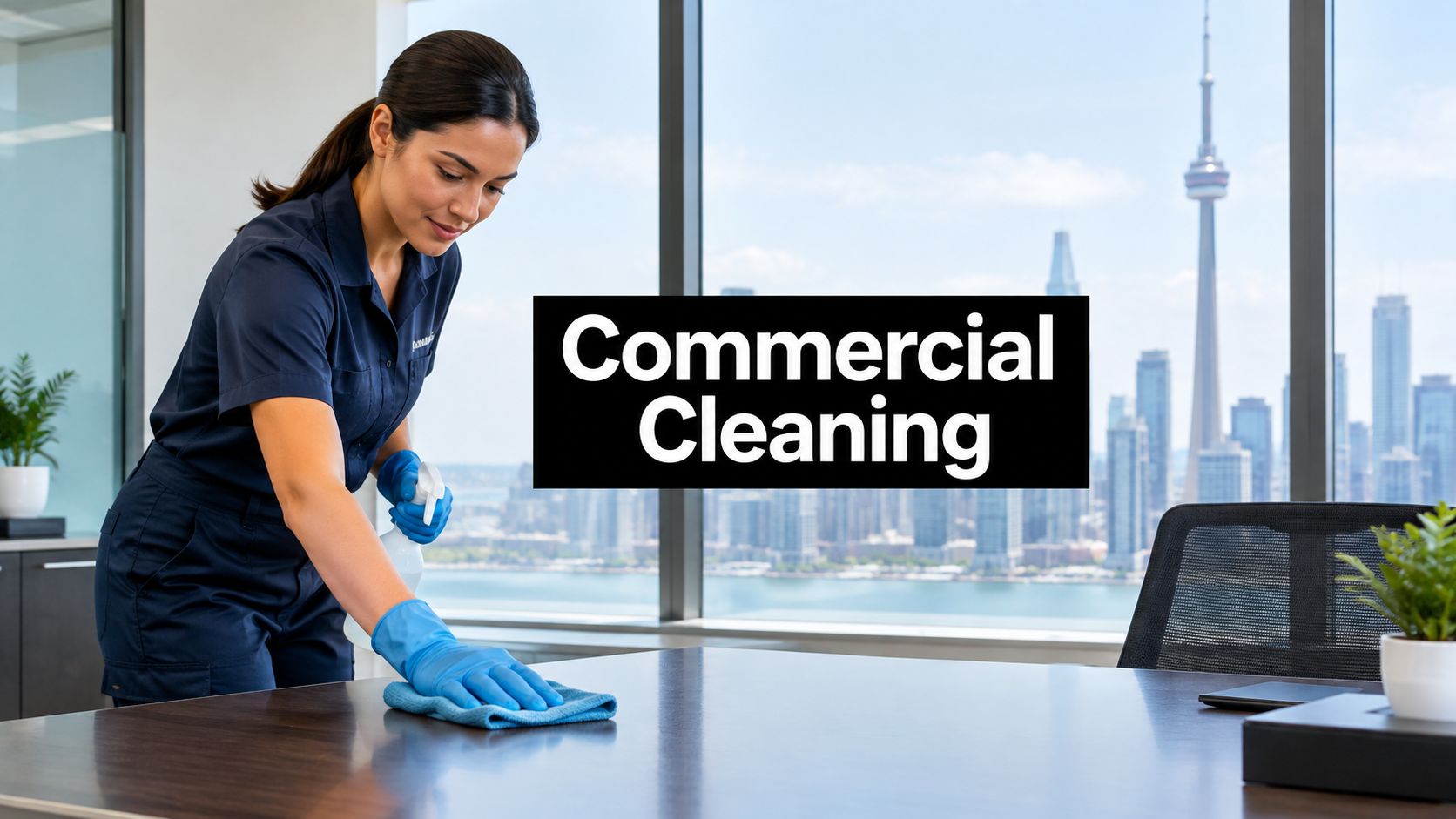

The success of a commercial cleaning company hinges directly on the capabilities, motivation, and working conditions of its cleaning crews. A supported, well-trained, and respected team is the foundation of consistent, high-quality service, which leads to client satisfaction and business longevity. Building this foundation requires a strategic approach to management, training, and crew well-being. For facilities managers and business owners in Toronto, understanding what empowers a cleaning crew provides insight into what makes a commercial cleaning service reliable and effective.
This article outlines the essential strategies for helping commercial cleaning crews succeed, with a focus on the Toronto market. It covers actionable steps from recruitment and skills development to implementing modern management technology and fostering a positive work environment. By focusing on these core areas, cleaning companies can create a culture where their teams thrive, delivering exceptional results for businesses across the GTA.
Key Takeaways
- Crew Success is Business Success: The quality of commercial cleaning is directly tied to how well crews are trained, managed, and respected.
- Tools and Training are Crucial: Providing clear protocols, modern equipment, and ongoing training empowers crews to perform consistently and safely.
- Respectful Work Environment: Crew satisfaction with their working conditions, fair pay, and clear communication directly impacts the quality of their work and reduces staff turnover.
- Technology as a Support System: Management systems should be used to support crews with clear instructions and efficient communication, not just for surveillance.
- Transparency Builds Trust: Clear expectations, transparent quality checks, and open communication channels benefit both clients and cleaning teams.
- Safety is Non-Negotiable: Proper training in WHMIS and adherence to Health Canada standards are essential for protecting both cleaners and building occupants.
What is Commercial Cleaning?
Definition: Commercial cleaning refers to professional cleaning services provided to businesses and non-residential facilities. This includes offices, medical clinics, schools, warehouses, and retail stores. Unlike residential cleaning, it often involves specialized equipment, adherence to regulatory standards (like health and safety), and services performed outside of regular business hours.
1. Clear Communication and Modern Management Systems
An effective cleaning management system is a software platform designed to centralize and streamline the core operations of a commercial cleaning service. It typically uses mobile applications to connect front-line cleaning crews with management and clients, creating a hub for communication, scheduling, and quality control. For cleaning companies in Toronto's fast-paced business environment, this technology is fundamental for improving efficiency and accountability.
How It Supports Crews
These systems replace manual processes like paper checklists and phone calls with real-time digital tools. Crews can log in at a client's site, view a clear, specific task list for that location, and mark items as complete, often with photo verification. This setup is crucial for helping commercial cleaning crews succeed in Toronto by providing unambiguous instructions and a direct communication line, reducing errors and misunderstandings. Exploring apps revolutionizing blue-collar communication can offer insights into effective tools.
Key Insight: Real-time communication systems reduce operational friction. They empower cleaning crews with the information needed to perform their jobs correctly and give managers immediate visibility, allowing for supportive and rapid responses to on-site issues.
Checklist for Implementing a Supportive Management System:
- Focus on Core Functions First: Begin with essential features like digital task lists, time tracking, and direct communication channels.
- Prioritize User-Friendly Design: Select a platform with a simple, intuitive mobile app. Ease of use is critical for adoption and data accuracy.
- Use Photos for Clarity, Not Just Control: Use photo documentation to clarify tasks and confirm completion. This visual record is valuable for training and resolving client questions.
- Integrate Data for Improvement: Use collected data to identify common challenges or areas where crews might need more support or training.
2. Standardized Protocols and Quality Supplies
Implementing standardized disinfection and cleaning procedures involves using appropriate chemical products that meet regulatory requirements for commercial environments, such as those approved by Health Canada. This practice goes beyond basic cleaning to address health and safety in high-traffic commercial spaces. It requires strict adherence to proper dilution ratios, contact times, and safety protocols, along with comprehensive crew training.
How It Supports Crews
Standardized protocols ensure that cleaning teams use products correctly and effectively, particularly those with a Drug Identification Number (DIN) approved for use in Canada. For a dental clinic in Richmond Hill or a daycare in Mississauga, this means using a specific disinfectant with a required contact time to meet infection control standards. This systematic approach removes guesswork and equips crews to protect public health confidently. It transforms their role from "janitor" to a skilled professional responsible for facility health.
Key Insight: Standardized, approved protocols are about risk management and public health. They empower crews with the right tools and knowledge to create demonstrably safer spaces, elevating their professional standing and building client trust.
Checklist for Implementing Standardized Protocols:
- Create Laminated Protocol Cards: Develop simple, visual guides for each type of facility. These cards should detail the product, dilution ratio, and required contact time for easy on-site reference.
- Conduct Supportive Audits: Regularly verify that crews are following protocols correctly, framing audits as a tool for training and support, not punishment.
- Maintain Quality Supply Chains: Establish relationships with reliable suppliers in the Greater Toronto Area to ensure a consistent source of approved products.
- Document All Specialized Services: Use log sheets or a digital system to record the date, time, products used, and areas treated. This provides a professional record of service.
3. The Impact of Crew Satisfaction on Cleaning Quality
A cleaning crew's satisfaction with their working conditions is a critical, yet often overlooked, factor in service quality. Fair wages, respectful management, reasonable workloads, and a sense of safety and appreciation directly impact performance. A demotivated or stressed crew is more likely to cut corners, miss details, and have a higher rate of absenteeism. Conversely, a supported and respected team is more engaged, detail-oriented, and committed to doing a thorough job.
Why It Matters for Clients
High crew turnover is a red flag. It leads to inconsistent service, as new cleaners are constantly learning the specifics of a facility. Companies that invest in their people—offering competitive pay, benefits, and opportunities for growth—tend to have lower turnover. This stability ensures that the team cleaning your facility is experienced, familiar with your specific needs, and motivated to maintain high standards. When crews feel valued, their pride in their work translates directly to a cleaner, healthier environment for your employees and customers.
Key Insight: A flexible and respectful work environment transforms the client-provider relationship. It builds loyalty and retention by demonstrating an understanding of both client needs and the well-being of the cleaning professionals delivering the service.
What to Look For in a Cleaning Provider:
- Low Staff Turnover: Ask about their staff retention rate. A company that retains its employees is likely treating them well.
- Fair Compensation: While you won't know exact wages, a company with unusually low pricing may be underpaying its staff, which can affect work quality.
- Clear Communication Channels: Inquire how they communicate with and support their crews in the field.
- Reasonable Scheduling: A provider that over-schedules its crews may deliver rushed, incomplete work. A flexible model can benefit both clients and staff.
4. Comprehensive Crew Training and Safety Certification
A comprehensive training and safety program establishes a structured framework for educating cleaning crews. It should cover critical areas like WHMIS 2015, correct product and equipment usage, client communication, and quality standards. This ensures all team members possess the verified skills needed to work safely and effectively in diverse environments, from high-rise offices in Downtown Toronto to industrial plants in Vaughan.
How It Elevates the Profession
Structured training moves beyond informal on-the-job shadowing to a documented, consistent educational experience. This approach is key to helping commercial cleaning crews succeed in Toronto because it addresses complex safety and operational demands. Documented training provides clients with proof of competency and protects the cleaning company by ensuring compliance with standards. This professionalism builds trust and elevates the role of a cleaner to that of a skilled technician.
Key Insight: Formal training and certification transform cleaning from a job into a skilled profession. It empowers crews with the confidence and knowledge to handle any situation safely, reduces workplace accidents, and ensures consistent service quality.
Checklist for an Effective Training Program:
- Tiered Certification Levels: A good program may offer a career path with stages like Basic (core cleaning/safety), Advanced (specialized equipment), and Specialist (healthcare protocols), incentivizing skill development.
- Regular Safety Briefings: Short, monthly "toolbox talks" on specific safety topics keep safety top-of-mind.
- Quick-Reference Guides: For different facility types (e.g., medical offices, schools), laminated, one-page guides on key tasks, chemicals, and safety notes are invaluable.
- Tracked Recertification: Systems should be in place to track and manage recertification for critical skills like WHMIS.
5. Transparent Pricing and Client-Centric Policies
A transparent pricing model is a business strategy designed to build trust. It involves a public commitment to clarity and a detailed pricing structure that breaks down all costs. For commercial cleaning companies in Toronto's competitive market, this approach directly addresses the cost-consciousness of businesses in areas like Vaughan and Markham. Policies like a price match guarantee or no-fee cancellations further build confidence.
How It Supports a Quality-First Approach
This model shifts the focus from secretive bidding wars to open, value-based conversations. A potential client, such as a dental clinic in Mississauga or a logistics facility in Woodbridge, gets a detailed quote outlining costs for specific tasks, areas, and frequencies. This transparency helps ensure that contracts are won based on value and service quality, not just the lowest price. This leads to more stable client relationships and allows the company to invest properly in its crews and equipment.
Key Insight: A transparent pricing model de-risks the hiring decision for clients. It encourages a conversation about service quality and scope, ensuring that price comparisons are made fairly and empowering clients to choose value over a deceptively low bid.
Policies That Empower Both Clients and Crews:
- Clear Price-Match Rules: A policy to match a competitor's quote for an identical scope of work from a registered, insured business ensures fair comparisons.
- Free Sample Cleans: Some companies offer a no-obligation sample clean of a specific area, like a washroom. This allows clients to see the quality of work firsthand, justifying the price point.
- No-Term Contracts: Flexible agreements with no cancellation fees demonstrate a company's confidence in its service quality and respect for clients' changing business needs.
Final Thoughts on Elevating the Cleaning Profession
Building a successful commercial cleaning operation in a competitive market like Toronto requires a strategic, human-centred approach. The foundation of success is built on robust training, modern management technology, an unwavering commitment to safety, and a culture that respects cleaners as skilled professionals.
The path to helping commercial cleaning crews succeed in Toronto is a continuous journey of improvement. It involves implementing systems that foster clear communication, recognize hard work, and support professional growth. When crews are well-trained, properly equipped, and feel supported by management, the results are immediately visible in the quality of their work and improved client satisfaction. This creates a positive feedback loop: happy, skilled crews deliver exceptional service, which strengthens the company’s reputation across the Greater Toronto Area, from Mississauga to Markham and beyond.
Ultimately, the success of a cleaning business is a direct reflection of the success of its crews. By prioritizing their well-being and providing them with the tools and training they need, a company builds a sustainable, reputable, and resilient business. These practices lead to a more engaged workforce, stronger client relationships, and a distinct competitive advantage in the market.
Frequently Asked Questions (FAQ)
What is the difference between commercial cleaning and janitorial services?
Generally, "janitorial services" refer to smaller, everyday cleaning tasks (like emptying trash, light dusting, and restroom restocking), while "commercial cleaning" is a broader term that includes janitorial duties plus larger, less frequent tasks like deep carpet cleaning, floor stripping and waxing, and window washing. The terms are often used interchangeably.
How can I ensure a cleaning crew does a thorough job?
Look for a company with a strong quality assurance (QA) program. This should include regular inspections, digital checklists with photo verification, and a clear process for reporting and resolving issues. A trial or sample clean can also demonstrate their standard of quality.
Why is low crew turnover important for me as a client?
Low turnover means a stable, experienced team is servicing your facility. They become familiar with your building's specific needs, security protocols, and sensitive areas, leading to more consistent and reliable service with fewer errors.
What safety certifications should a commercial cleaner in Ontario have?
At a minimum, crews should have WHMIS 2015 (Workplace Hazardous Materials Information System) training. Depending on the facility, additional certifications in areas like Transportation of Dangerous Goods (TDG), bloodborne pathogen safety, or fall protection may be necessary.
How do I find a good commercial cleaner near me?
Start by searching for well-reviewed companies in your area (e.g., "office cleaning companies Toronto"). Ask for 2-3 quotes, compare their scope of work in detail (not just the price), inquire about their training and QA processes, and ask for references from businesses similar to yours.
What should a commercial cleaning contract include?
A good contract clearly defines the scope of work (with a detailed task list), service frequency, cost, term of the agreement, process for handling issues or requests, and liability insurance details. It should protect both you and the service provider.
Further Reading
-
Learn more about service locations in Ontario: Arelli Service Areas
-
Explore a range of specialized services: Specialty Cleaning Services
-
Effective client communication options: Contact Options
-
ISSA (The Worldwide Cleaning Industry Association): A leading source for industry standards and best practices. https://www.issa.com/
-
Janitorial Manager Blog: Offers insights on managing cleaning operations. https://www.janitorialmanager.com/
-
ServiceMaster Clean (London, ON): Provides insights into janitorial best practices in Southwestern Ontario. https://www.servicemasterclean.ca/london/blog/
If your business is located in Ontario, including Toronto, Mississauga, Vaughan, or the York Region, and you want to partner with a company that prioritizes crew success and client satisfaction, consider getting a quote. Companies that offer a free 45-minute sample clean, like Arelli Cleaning, demonstrate a commitment to quality and transparency from the start.
Arelli service for this topic
Commercial Cleaning in Toronto