A new gym owner in Newmarket usually notices the cleaning problem before members say it out loud. The cardio handles feel sticky by late afternoon. Locker room floors never seem fully dry. Free weights look tidy from a distance, but the touch points tell a different story up close. At that point, cleaning stops being a background task and becomes part of operations, risk management, and member confidence.
That shift is happening across the industry. The global gym cleaning services market was valued at USD 5.8 billion in 2023 and is projected to reach USD 12.3 billion by 2032, reflecting a CAGR of 8.4%, with post-pandemic health and safety expectations driving demand for more specialised cleaning in fitness facilities, according to gym cleaning services market analysis.
For Newmarket operators, the practical question isn't whether professional cleaning matters. It's what a proper scope looks like, how often each zone needs attention, how Ontario compliance affects product choices and recordkeeping, and how to compare quotes without buying an incomplete service. The strongest gym cleaning services in Newmarket aren't built around a generic mop-and-wipe routine. They're built around documented protocols, trained staff, and quality assurance that can hold up when a member complaint, inspection issue, or missed task puts the facility under scrutiny.
Key takeaways
- Gym cleaning is operational risk control: in a fitness setting, cleaning affects safety, member perception, and equipment condition.
- A proper scope is zone-specific: workout floors, equipment, locker rooms, and air-related dust control all need different methods.
- Ontario compliance matters: WHMIS, approved disinfectants, and documented logs should be part of the service, not an afterthought.
- Pricing only makes sense in context: size, visit frequency, wet areas, and deep cleaning requirements all change the quote.
- Quality assurance is a key differentiator: a provider should be able to show what was cleaned, when, and how issues get corrected.
Introduction Why Professional Cleaning is a Non-Negotiable for Newmarket Gyms
A gym can survive dated paint or basic furniture for a while. It can't survive the feeling that hygiene is slipping. Members notice fingerprints on treadmill screens, odours in stretching zones, residue on benches, and shower corners that never seem fully reset. Those details shape trust faster than most owners expect.
Professional gym cleaning is different from standard office cleaning because the environment is different. Members share high-touch equipment throughout the day, sweat lands on porous and non-porous surfaces, and change rooms combine moisture, traffic, and privacy concerns in one space. A cleaner who's excellent in a corporate suite may still struggle in a fitness facility if the scope hasn't been designed for gym operations.
A clean gym doesn't just look organised. It shows that management has control of the building.
For a Newmarket facility, that control usually comes down to four decisions:
- Scope definition: what gets cleaned every visit, what gets disinfected, and what sits on a periodic deep-clean schedule.
- Frequency planning: whether the gym needs daytime touch-up support, after-hours service, or both.
- Compliance systems: whether products, training, and logs can support WHMIS and Health Canada expectations.
- Verification: whether the owner can confirm the work happened without walking every room after each visit.
Many cleaning proposals sound similar because they use broad terms like “sanitize all areas” or “clean gym equipment.” That wording isn't enough. A useful proposal names surfaces, tasks, exclusions, escalation procedures, and reporting methods. It should read like an operating document, not a flyer.
Buyers often make better decisions once they stop asking only, “What's the monthly price?” and start asking, “What risk does this contract remove?”
The Anatomy of a Professional Gym Clean

A professional gym clean works like a facility health check. Each zone has different soils, different touch patterns, and different failure points. If the same method gets applied everywhere, results usually look acceptable for a few hours and deteriorate quickly.
A good benchmark is whether the provider offers a defined fitness-specific scope such as gym cleaning programmes for commercial facilities, rather than treating the site like a generic retail unit.
Equipment and high-touch surfaces
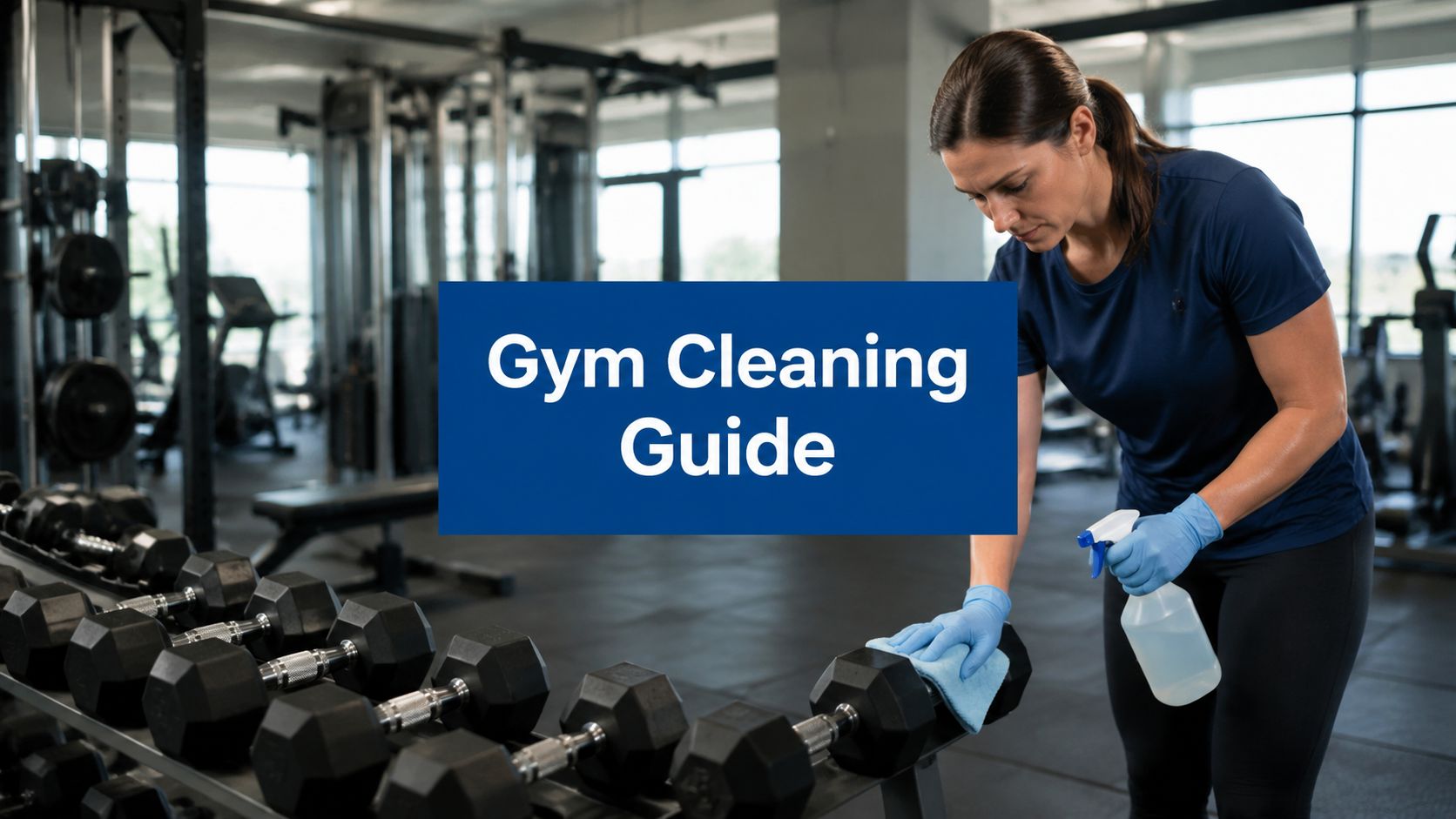
This zone includes treadmill rails, touchscreens, bike handles, selector pins, dumbbells, benches, cable attachments, and entry hardware. These surfaces need more than a quick wipe for appearance. They need consistent disinfection that reaches irregular shapes and repeated contact points.
Advanced electrostatic disinfection technology can coat 99.9% of 3D surfaces, including padded benches and resistance bands, with Health Canada-listed antimicrobial agents. This method results in a 92% reduction in common pathogens like Staphylococcus aureus on gym surfaces compared to traditional spray-and-wipe methods, as outlined in electrostatic disinfection guidance for gyms.
That matters because gym equipment isn't flat office furniture. It has seams, textured grips, undersides, and adjustment knobs that ordinary spray-and-wipe routines often miss.
Locker rooms and wet areas
Locker rooms show whether a provider understands risk. A proper clean here includes fixture disinfection, partition wiping, shower and tile scrubbing, drain-area attention, mirror cleaning, floor care, and restocking checks where applicable. A shiny vanity doesn't offset mildew in corners or residue around floor edges.
What works:
- Targeted disinfection: frequent attention to touch points such as locker handles, faucets, flush points, and door pulls.
- Mechanical scrubbing: showers and grout need friction, not just chemical dwell time.
- Moisture control: crews should leave floors safe and reset, not merely wet and “fresh-smelling.”
What doesn't work:
- Cosmetic mopping: it spreads soils without addressing build-up.
- Over-reliance on fragrance: odour masking isn't odour control.
- Generic checklists: wet areas need their own sequence and inspection standard.
Operators investing in amenities should also think beyond the workout floor. Fitness owners considering recovery spaces may find useful context in this guide on turning your gym sauna into an asset, because heat, moisture, and member expectations raise the maintenance standard around adjacent spaces too.
A short visual example helps show the pace and detail expected in a fitness environment.
Flooring systems and air-related cleaning
Gym floors vary widely. Rubber, vinyl, tile, entry matting, and studio floors all respond differently to soil and moisture. Rubber flooring often holds odour and residue. Studio floors need product compatibility. Entrance zones need frequent debris removal or the entire facility feels dirty by default.
Air quality support is less visible but still part of gym cleaning services in Newmarket. Dust on vents, ledges, fan housings, and high surfaces drops back into active areas. In strength zones, mirror edges, baseboards, and under-equipment spaces often reveal whether the service is detailed or superficial.
Practical rule: if a provider can't explain how they clean under and around anchored equipment, the scope probably isn't complete.
Establishing Cleaning Frequencies and Protocols
Cleaning frequency should follow usage patterns, not habit or guesswork. A gym with steady commuter traffic, active evening classes, and wet amenities needs a different plan than a small appointment-based studio. Professional providers recognise that fitness centres require custom plans suited to surfaces and operating realities, not ad hoc routines, as described in fitness centre cleaning plan guidance.
What should drive the schedule
Three variables usually shape the protocol more than anything else:
- Facility profile: a boutique studio, strength gym, or full-service club doesn't generate the same cleaning load.
- Operating hours: long hours or near-continuous access reduce the available cleaning window.
- Traffic concentration: some gyms are manageable most of the day and then get hit hard before work, after work, and on weekends.
A provider that offers the same visit pattern to every gym is usually pricing for simplicity, not fit.
A workable frequency framework
Most gyms should build their protocol in layers rather than one all-purpose visit.
Daily core work often includes:
- High-touch disinfection: equipment handles, touchscreens, rails, knobs, and entry hardware.
- Washroom and locker room resets: fixtures, floors, mirrors, dispensers, and waste.
- Floor maintenance: debris removal, spot treatment, and surface-appropriate mopping or scrubbing.
Weekly detail work usually covers:
- Deeper wet-area attention: shower walls, partitions, corners, grout lines, and drain surrounds.
- Lower-frequency touch points: lockers, ledges, door frames, and under-bench areas.
- Glass and mirror detailing: especially in training zones where smudging is constant.
Periodic specialty work may include:
- Machine detailing: moving portable items, reaching hidden surfaces, and addressing build-up.
- Floor restoration tasks: depending on material type and wear.
- High dusting: vents, ducts, tops of frames, and hard-to-reach ledges.
A useful protocol tells staff what happens each visit, what happens weekly, and what triggers an extra response.
Seasonality matters too, but the right response isn't always a full contract rewrite. Sometimes it's an added daytime disinfection pass, a temporary increase in locker room service, or more frequent attention to entry mats and floors during slushy periods. The best plans stay structured while leaving room for operational adjustments.
Navigating Compliance Health Canada and WHMIS Standards
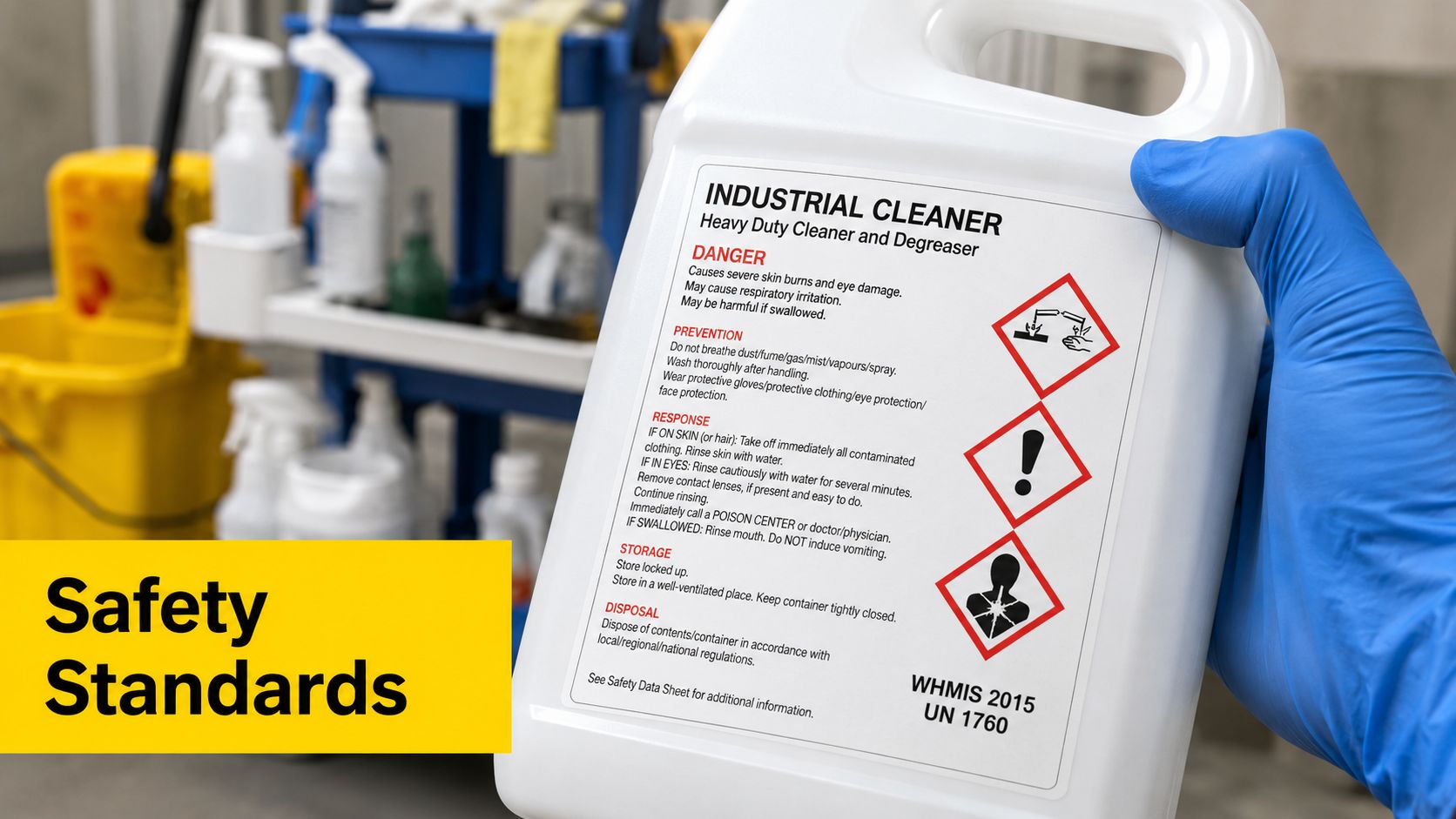
Compliance is where many cleaning discussions become too casual. A gym owner hears that “approved products” are being used and assumes the risk is covered. It isn't, unless the products, labels, training, storage, and documentation all line up with Ontario requirements.
What WHMIS means in practice
WHMIS is the Workplace Hazardous Materials Information System. In plain terms, it governs how hazardous products are labelled, handled, stored, and understood in the workplace. For gym cleaning, that means the crew shouldn't just know which bottle to use. They should know what the product is, what hazards apply, how to use it safely, and what to do if something goes wrong.
In Ontario, gym cleaning services must adhere to WHMIS regulations, including the use of Health Canada-approved disinfectants. Documented daily cleaning logs are often required to verify consistent disinfection, and audited protocols can reduce cross-contamination risk by up to 78%, according to Ontario fitness centre cleaning compliance guidance.
For owners evaluating commercial disinfection and sanitizing support, the practical issue is simple. If the provider can't show a clear product and recordkeeping process, the owner is taking on blind liability.
What to ask for before signing
A compliant cleaning programme should include:
- Product transparency: the provider should identify which disinfectants are used and confirm they're appropriate for fitness settings.
- Staff training records: the owner doesn't need the full training manual, but should confirm WHMIS training exists and is current.
- Daily logs: each visit should leave a documented record, especially for locker rooms, showers, and high-touch equipment.
- Incident handling: there should be a process for spills, product misuse, missed areas, or member complaints.
Compliance isn't paperwork for its own sake. It's the proof that the cleaning system can be defended if a problem surfaces.
The missed opportunity in many local contracts is the lack of real-time verification. A binder in the back office is better than nothing, but mobile logging, task confirmation, and issue tracking give owners a much cleaner audit trail. That's especially important in high-volume gyms where verbal updates disappear quickly and standards drift unless someone measures them.
Decoding Pricing Models and Contract Options
Gym cleaning quotes are easier to compare once the owner knows how the pricing is built. Most providers use one of three structures. Hourly, per-square-foot, or a flat monthly rate tied to a defined scope. None is automatically better. The right model depends on how clearly the work has been specified.
Common pricing models
Hourly pricing is straightforward when the scope is still evolving. It can work for start-ups, post-opening adjustments, or occasional deep work. The downside is that the owner carries more uncertainty if task times haven't been tested.
Per-square-foot pricing can help with benchmarking, but square footage alone doesn't tell the whole story in a gym. Two facilities with the same footprint can have very different equipment density, shower use, and cleaning complexity.
Flat monthly pricing is often the easiest to budget if the proposal clearly lists frequency, tasks, periodic work, and exclusions. If the scope is vague, a flat rate can hide under-servicing.
For budgeting, mid-size gyms in Canada between 5,000 and 15,000 square feet typically range from $1,200 to $3,000 per month for 5 to 7 visits per week. Per-square-foot pricing generally falls between $0.05 and $0.20, while specialised deep cleaning can run from $0.20 to $0.50 per square foot, based on commercial gym cleaning cost benchmarks.
What actually changes the quote
The quote usually rises or falls based on the operational realities below:
- Wet areas: locker rooms, showers, and tile work add labour and chemical complexity.
- Visit frequency: a gym that needs near-daily attention won't price like a low-traffic studio.
- Equipment volume: more contact points mean more manual detail work.
- Deep cleaning requirements: grout, detailing, and restoration tasks often sit outside the nightly scope.
- Access constraints: restricted windows make staffing harder.
Contract flexibility matters more than many owners think
A rigid contract often looks fine in a steady month and becomes frustrating when traffic changes. Gyms don't always need the exact same support level year-round. That's why owners should ask whether service can scale up or down without forcing a complete contract rewrite.
Questions worth asking include:
- Can visit frequency change temporarily?
- Can periodic deep cleans be added without renegotiating the whole agreement?
- Is there a clear process for scope changes and approvals?
- How are missed tasks documented and credited, if needed?
Owners who want a stronger administrative process may also find ideas in this article on how to automate your contract processes, because contract clarity often determines whether a cleaning programme stays manageable after the first few months.
A Practical Checklist for Your Site Assessment
A site visit should do more than confirm square footage. It should test whether the provider sees the same risks the owner sees. The best walkthroughs are specific, practical, and a little uncomfortable. If no one asks hard questions, the proposal will usually be too generic.
What to inspect during the walkthrough
| Category | Item to Inspect / Question to Ask | Notes |
|---|
| Reception and entry | How will entry glass, mats, touch points, and front desk surfaces be handled during peak weather periods? | |
| Cardio area | Which equipment surfaces are included each visit, and how are screens and handles treated? | |
| Strength area | Will benches, dumbbells, selector pins, and cable attachments be cleaned individually? | |
| Studio rooms | Are floor products matched to the specific flooring material used in classes? | |
| Locker rooms | What is the exact process for showers, partitions, drains, and locker exteriors? | |
| Washrooms | How are consumables checked, and what happens if supplies run low between visits? | |
| Floor care | Which floors are mopped, scrubbed, or treated periodically rather than nightly? | |
| Chemical safety | Can the provider explain product labelling, safe handling, and staff training expectations? | |
| Documentation | What cleaning log will be left behind, and who reviews it? | |
| Quality assurance | How are missed tasks reported, corrected, and closed out? | |
| Staffing | Is the crew consistent, and who covers absences or turnover? | |
| Insurance and risk | Can the provider supply proof of insurance and relevant worker coverage documentation? | |
Questions that separate strong providers from weak ones
- Ask for task-level detail: “Clean gym equipment” is too broad. Request a zone-by-zone written scope.
- Ask about escalation: If a member reports a hygiene issue, who gets notified and how quickly is it addressed?
- Ask about verification: Is quality checked by inspection, digital reporting, photos, or all three?
- Ask about exclusions: Hidden exclusions cause most service disputes.
If the walkthrough spends more time discussing price than process, the buyer probably won't get a reliable contract.
A useful assessment also tests communication. Clear providers answer directly, note site-specific concerns, and document changes before the quote goes out. Vague providers rely on reassuring language and leave too much open to interpretation.
How to Evaluate and Choose a Provider in Newmarket

Once two or three quotes are on the table, price should become only one part of the decision. A low quote isn't useful if it buys weak supervision, no proof of completion, or a scope that leaves locker room problems unresolved by week two.
A practical comparison framework
Training and fit come first. The provider should show that fitness cleaning is its own category, with procedures for equipment, wet areas, and member-facing spaces.
Quality assurance comes next, an area where many gym cleaning services in Newmarket still leave a gap. A significant gap in the Newmarket market is the lack of providers who integrate Health Canada-compliant disinfection with real-time digital quality assurance. Many mention approved chemicals, but few offer audited compliance dashboards, even though 68% of commercial cleaning failures in Ontario stem from this area, according to analysis of fitness centre disinfection and quality assurance gaps.
That's why owners should look for systems that answer basic operational questions quickly:
- Was the visit completed in full?
- Were high-risk areas logged properly?
- Can issues be reported and tracked without chasing texts and voicemails?
- Is there a visible record of corrective action?
What modern service standards look like
A provider doesn't need flashy software. It does need a reliable communication system. In practice, that may include mobile checklists, supervisor reviews, timestamped logs, and a clear support channel for urgent requests.
Helpful benchmarks include:
- Sample clean availability: useful when the owner wants to test detail and consistency before committing.
- Responsive support: especially for spills, member complaints, or flu-season concerns.
- Contract flexibility: no owner wants to be trapped in a poor-fit arrangement.
- Clear service-change process: temporary increases or reductions should be easy to document.
For owners thinking about response handling, this overview of an answering service for cleaning businesses is relevant because responsiveness often affects client experience as much as the actual cleaning protocol does.
What to avoid
- Vague scopes: these create disputes later.
- No reporting method: if there's no system, the owner becomes the system.
- Overpromising during the sale: the contract should reflect what was said.
- One-size-fits-all proposals: gyms need customized service.
A local search should also include practical service coverage. Owners comparing providers by area can use the Newmarket commercial cleaning location page as one example of how a company presents local availability.
A neutral benchmark is helpful here. Some operators look for features such as a free sample clean, price-match positioning, 24/7 support, no-term arrangements, and app-based quality tracking because those features reduce operational friction. Arelli Cleaning is one option in the market that presents that kind of system-based model, but the decision should still come down to scope clarity, compliance discipline, and proof that the service will hold up in the actual facility.
Frequently Asked Questions About Gym Cleaning
What's the difference between sanitizing and disinfecting in a gym?
Sanitizing generally reduces surface contamination. Disinfecting is the stronger control step for higher-risk touch points and should align with approved product use and contact-time instructions. In a gym, owners should ask which surfaces are disinfected routinely and how that process is documented.
Should the cleaning company bring its own chemicals and equipment?
Usually, yes. That keeps product handling, dilution control, and equipment maintenance under one accountable party. The owner should still know what products are being used and whether they fit the flooring and equipment finishes on site.
Is in-house cleaning enough for a gym?
It depends on the facility, but many gyms find that in-house teams struggle with consistency, training depth, and documentation. Professional providers usually bring clearer task division, supervision, and compliance controls.
How often should locker rooms be cleaned?
Locker rooms need frequent routine attention because they combine moisture, skin-contact surfaces, and high traffic. Most facilities also need deeper scheduled work to prevent build-up in corners, grout lines, and drain areas.
What should a gym cleaning contract always include?
It should include task scope, visit frequency, periodic tasks, product responsibility, reporting expectations, issue escalation, and any exclusions.
How many quotes should a gym owner get?
Two or three is usually enough if the owner uses a proper checklist and compares scope, compliance, and reporting rather than price alone.
A practical next step is to use the checklist above, gather 2 to 3 quotes, and ask each provider the same questions about scope, compliance, and quality assurance. Owners who want one additional option can review Arelli Cleaning, including its broader service areas, and compare that approach against the same standards used for every quote.









.webp)