A facility manager often notices the same pattern. The epoxy floor still looks structurally sound, but the finish has lost its crisp shine, tire marks are lingering longer, and routine mopping no longer seems to restore a clean, uniform appearance. In a lobby, that affects first impressions. In a warehouse or clinic, it can also affect safety, hygiene, and compliance.
That's where epoxy floor cleaning services differ from ordinary floor care. They're not just a janitorial add-on. They're a surface-specific maintenance process designed to protect a coated floor from avoidable wear, chemical damage, residue build-up, and premature dulling.
Maintaining Your Facility's First Impression
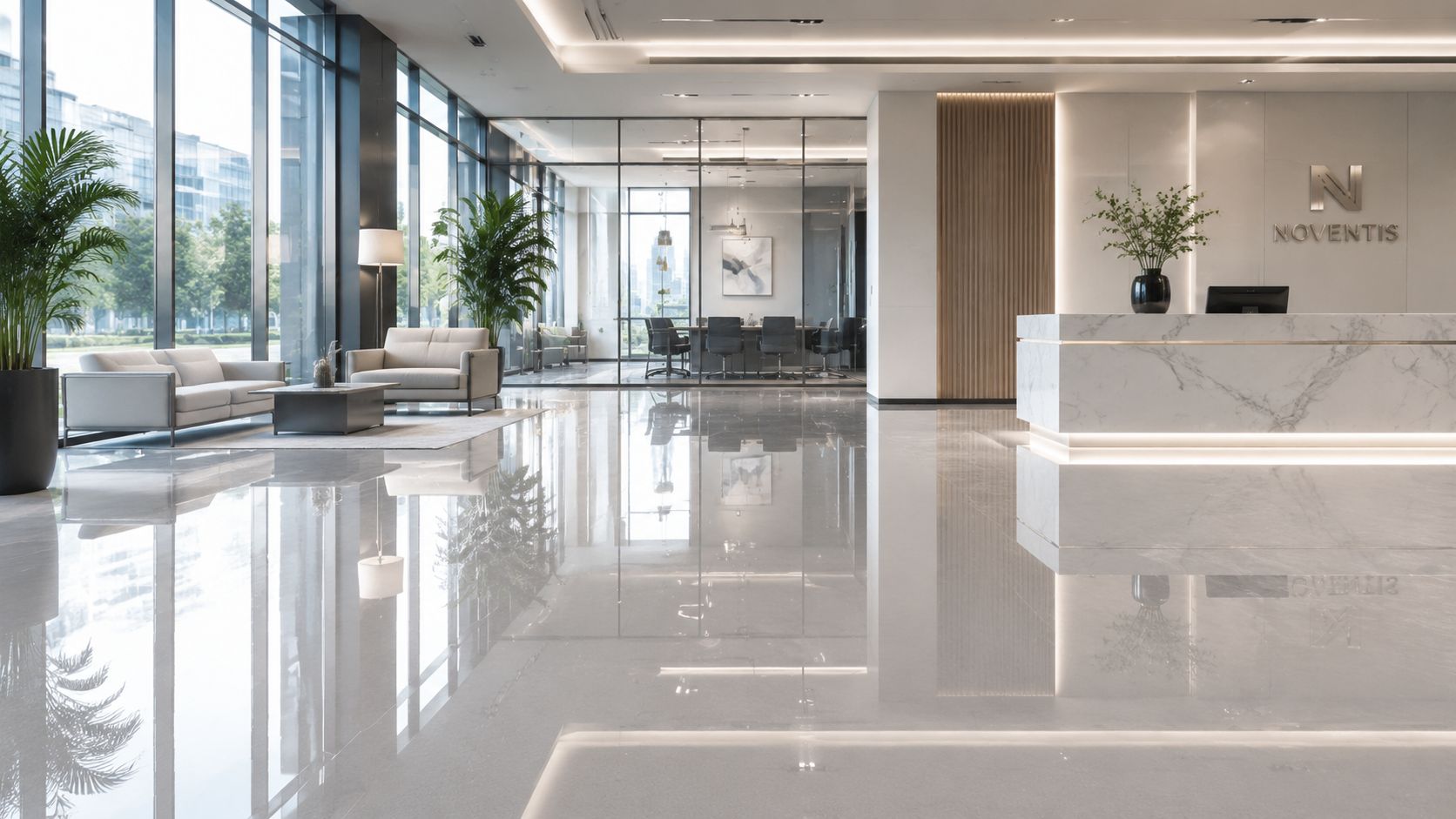
A clean epoxy floor sends a message before anyone reaches reception. It tells visitors the building is organised, cared for, and professionally run. For staff, it sets a daily standard. For operations teams, it reduces the slow drift from “still acceptable” to “visibly neglected”.
In Ontario, specialised cleaning is not a niche need. The province had over 23,000 businesses in cleaning and building support services in Statistics Canada's 2022 Business Register, which points to a large, mature market for building care and the need for consistent professional standards in services such as epoxy floor maintenance, as summarised in this overview of Ontario epoxy floor cleaning demand and maintenance practices.
What professional epoxy floor cleaning services mean
Professional epoxy floor cleaning services involve surface-specific cleaning methods for coated floors, not generic mop-and-bucket work. The service usually includes correct chemical selection, controlled dilution, suitable agitation, safe moisture management, and full recovery of dirty solution so soils aren't spread back across the finish.
That last point matters more than many buyers expect. An epoxy surface can look tough, and it is. But the coating still has a finish that can be dulled or damaged by the wrong cleaner, abrasive tools, or sloppy methods.
Key takeaways
- Epoxy is durable, not maintenance-free. The wrong method can damage the coating even when the floor looks “strong enough” for rough cleaning.
- Professional care is process-driven. Good results depend on sequence, dwell time, agitation, and complete soil removal.
- Different facilities need different workflows. A clinic, warehouse, school, and office shouldn't be cleaned the same way.
- Cleaning frequency is only part of the cost picture. Floor condition, soil type, traffic, and method matter just as much.
- Provider selection should focus on systems, not slogans. Training, documentation, insurance, communication, and quality checks are practical differentiators.
Direct answer: Epoxy floor cleaning services are specialised cleaning and maintenance services for resin-coated floors that protect appearance, safety, and service life through the right chemicals, equipment, and workflow.
Why Epoxy Floors Require Specialised Cleaning
Epoxy floors confuse people because they combine two true statements that seem contradictory. They're highly durable. They're also easy to damage with the wrong cleaning method.
The easiest way to understand this is to think about a vehicle's clear coat. The metal body underneath is strong, but the visible finish still needs the right care. Epoxy works in a similar way. The floor system can handle demanding use, but the coated surface still responds badly to harsh chemistry and abrasive contact.
The surface is durable but still vulnerable
Epoxy isn't the same as bare concrete, and it shouldn't be cleaned like old-school utility flooring. Harsh chemicals can attack the coating. Abrasive brushes and pads can scratch or haze the finish. Excessive residue can make the floor look dull even after cleaning.
Industry guidance consistently points facility teams toward neutral-pH cleaners for routine maintenance and warns against products that can damage coated flooring. That's one reason managers who are planning a new installation often first learn about Wheeler Painting epoxy services so they understand what the coating is designed to do before deciding how it should be maintained.
Common mistakes that create expensive problems
A floor rarely fails because of one dramatic cleaning error. More often, teams make small repeat mistakes:
- Using the wrong chemistry: Bleach, acidic products, strong citrus agents, concentrated ammonia, and other aggressive cleaners can affect the coating.
- Choosing abrasive tools: Stiff brushes and rough pads may remove soil, but they can also dull the finish.
- Over-wetting the surface: Too much water can move soils around instead of lifting them away efficiently.
- Relying on mops for greasy floors: On textured or oily epoxy, a mop often smears contamination rather than removing it.
A similar issue shows up outdoors when teams use aggressive cleaning without considering surface type. That's why facility managers often separate coated floor care from exterior washing tasks such as commercial power washing services, even when both involve machine-based cleaning.
A tough floor still needs precise care. Durability doesn't give a cleaning team permission to improvise.
Why general janitorial logic falls short
General janitorial cleaning aims for broad consistency across many surfaces. Epoxy maintenance requires a narrower, more technical mindset. The cleaner must match the coating. The pad must match the texture. The amount of dwell time must match the soil.
That's the practical difference between “the floor got cleaned” and “the coating stayed in good condition”.
The Professional Epoxy Floor Cleaning Process
Professional epoxy floor cleaning works best when it follows a technical sequence instead of a rushed routine. Sherwin-Williams highlights a five-step process for coated floors: sweeping, applying a diluted neutral cleaner, agitating the surface, allowing dwell time, and fully removing the solution so grease and soil aren't deposited back onto the floor, as outlined in its general flooring maintenance and cleaning recommendations.
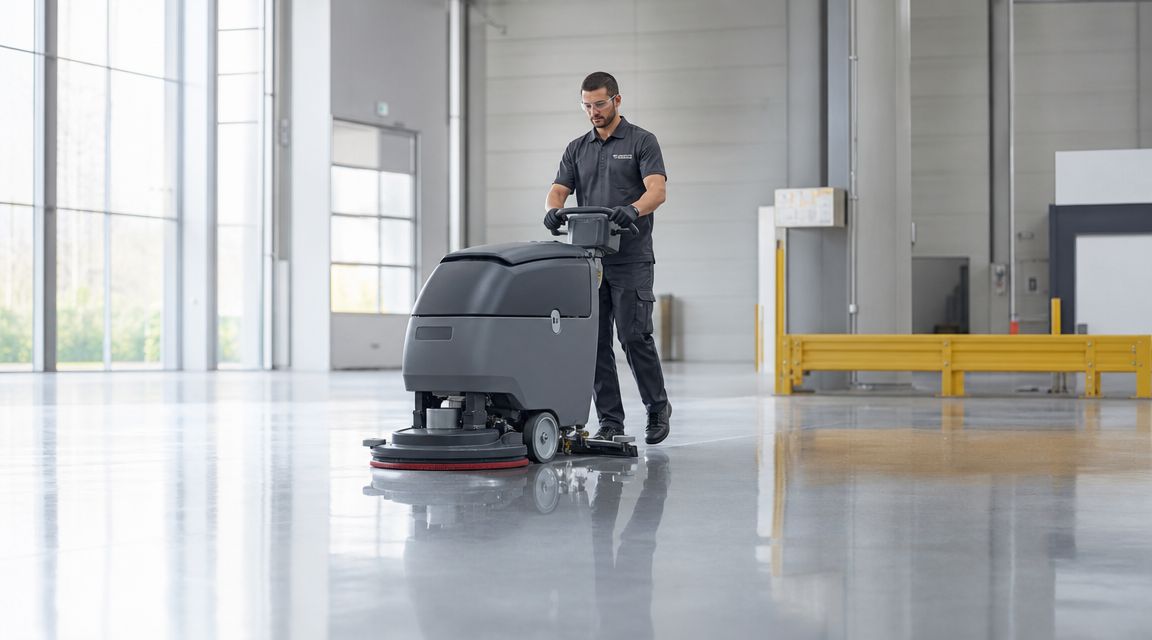
That sounds simple. In practice, each step has a reason behind it.
Step one and two remove what shouldn't be scrubbed in
Dry debris always comes first. Dust, grit, and loose soil need to be swept or dust-mopped before any liquid touches the floor. If they aren't removed first, the cleaning equipment can grind that debris into the coating.
Then the crew applies a properly diluted neutral cleaner. “Properly diluted” matters. Too weak, and the product won't break down soil. Too strong, and it can leave film or stress the finish.
Step three and four do the real cleaning work
Agitation is where the cleaning starts to become mechanical rather than cosmetic. On a smooth office floor, that may mean a suitable floor machine with a non-abrasive pad. On a profiled or slip-resistant floor, power scrubbing is usually more effective because dirt settles into the surface texture.
Dwell time is the step many in-house teams skip. They apply solution and immediately mop it around. That often just pushes oily residue from one area to another. The cleaner needs time to emulsify soil, especially grease, tracked-in grime, and residue from wheels.
Practical rule: If the team doesn't allow dwell time, they're often moving contamination around rather than removing it.
Step five protects the finish and the result
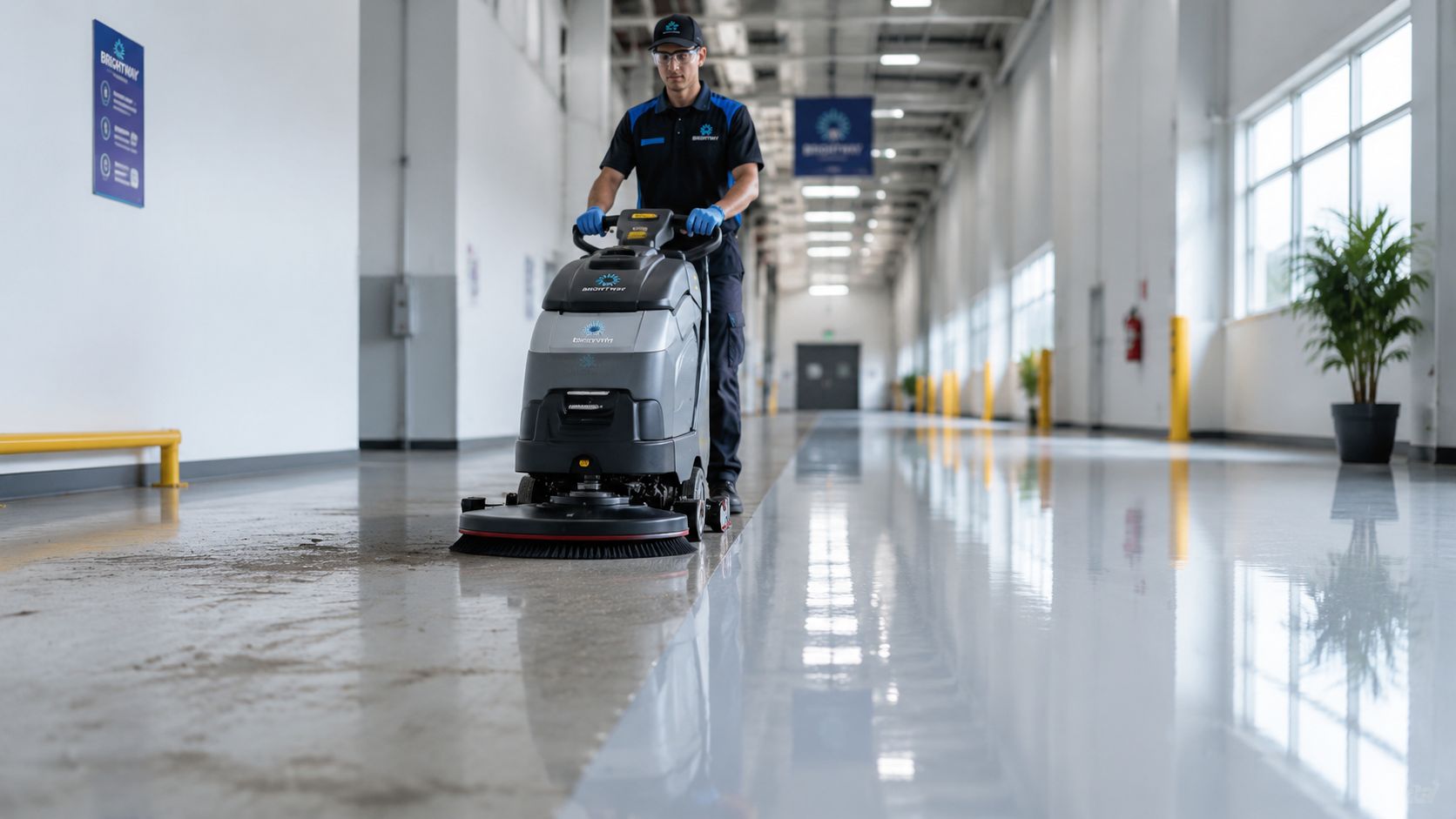
The dirty solution then needs to be fully removed with a squeegee system, wet pickup, or auto-scrubber recovery tank. This is a critical difference between professional epoxy floor cleaning services and ordinary mopping.
When recovery is poor, the floor may dry with haze, streaking, or a thin layer of redistributed soil. That doesn't just affect appearance. It can also affect traction and make the next clean harder.
What a complete service may include
A provider may package the workflow in different ways. Common service elements include:
- Routine maintenance cleaning: For daily or weekly upkeep in active facilities.
- Machine scrubbing: For heavier soil, textured finishes, and larger floor plates.
- Spot treatment: For tyre marks, spills, and concentrated contamination zones.
- Restorative cleaning: For floors that have lost gloss or built up residue over time.
Facility managers comparing these options often review broader specialty cleaning services because epoxy care frequently sits alongside other surface-specific maintenance tasks.
Benefits for Different Commercial Environments
The best epoxy cleaning plan depends on how the space is used. The floor in a forklift aisle doesn't face the same risks as the floor in a clinic treatment area or office reception zone. That's why generic advice often falls short.
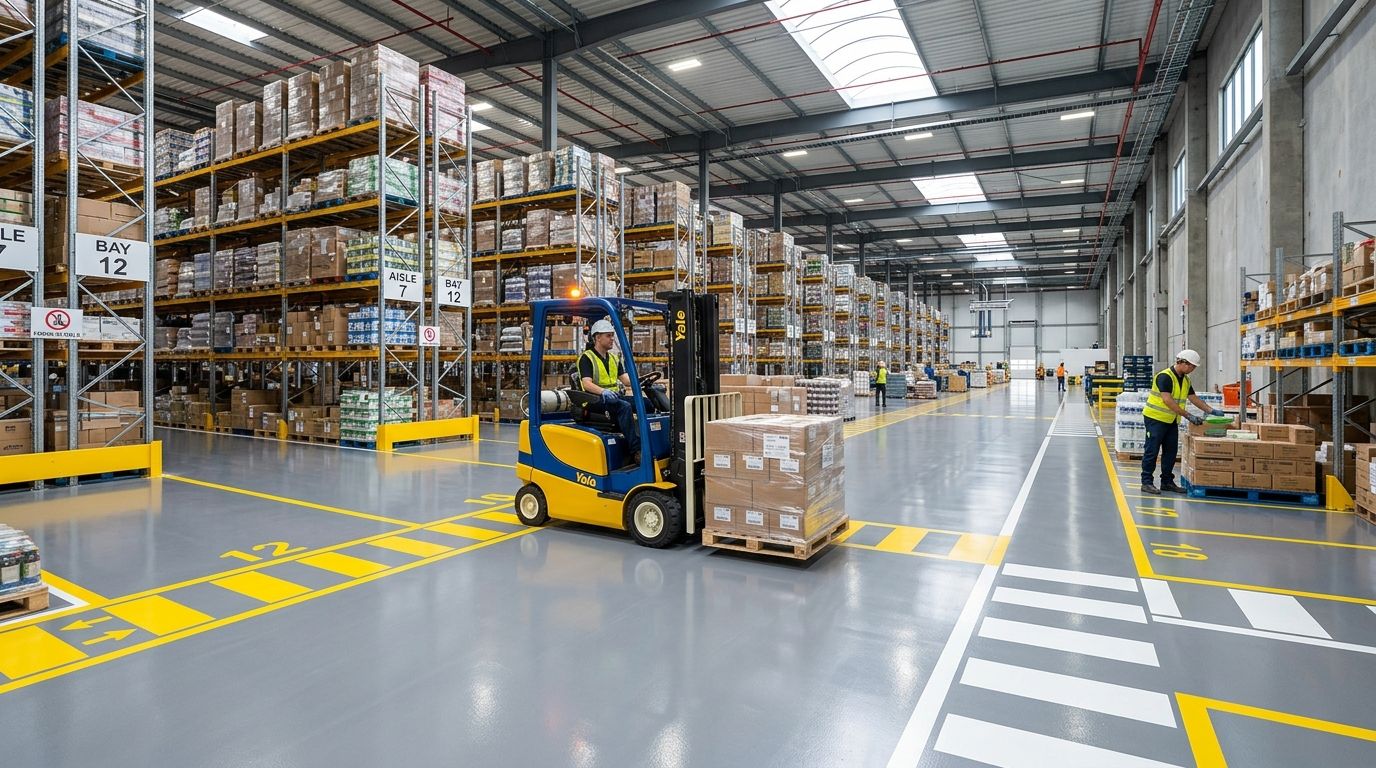
Warehouses and industrial spaces
In warehouses, epoxy floors often deal with wheel traffic, salt, grit, moisture, pallet dust, and occasional spills. The cleaning goal isn't only appearance. It's also traction, predictable performance, and easier daily housekeeping.
For these sites, professional cleaning helps by:
- Managing tracked-in grit: This reduces abrasive wear on the coated surface.
- Addressing oily residues properly: Smearing grease across travel lanes can create safety concerns.
- Supporting operational visibility: Clean aisles and staging areas present fewer visual distractions.
Managers responsible for logistics spaces often pair epoxy maintenance with broader warehouse cleaning programmes because floor care affects the whole environment, not just the floor itself.
Clinics and hygiene-sensitive facilities
In healthcare-adjacent settings, epoxy brings an advantage that many generic cleaning guides ignore. In facilities with strict hygiene needs, integrated cove systems remove the 90-degree floor-to-wall angle, which helps prevent debris and bacteria build-up when the system is properly maintained, as explained in this article on seamless epoxy flooring and easier cleaning.
That design changes the cleaning approach. Teams need to clean the floor and the transition areas as one hygienic surface. Standard mopping guidance rarely accounts for that.
In a clinic, a seamless floor only stays hygienic if the cleaning method reaches the edges, transitions, and textured zones without damaging the coating.
Schools and offices
In schools and offices, the business case often looks different. The floor may not see forklifts or medical protocols, but it still shapes how people feel about the space.
Here, epoxy floor cleaning services support:
| Environment | Main concern | Cleaning value |
|---|
| Office lobby | Appearance and visitor perception | Preserves gloss and a professional first impression |
| Back office or staff area | Daily wear and spill response | Prevents build-up that makes routine cleaning less effective |
| School corridors | Foot traffic and tracked-in dirt | Maintains a cleaner, more orderly environment |
| Multi-use commercial space | Mixed traffic and changing use | Applies a structured method instead of one-size-fits-all cleaning |
A smart provider adjusts tools and workflow to the environment instead of treating every coated floor as interchangeable.
Pricing Drivers and Maintenance Schedules
Most buyers ask one question first. How much will epoxy floor cleaning services cost?
The better question is what drives the cost. With epoxy floors, price is tied less to a simple square-foot number and more to condition, contamination, access, and service scope. A clean office corridor and a greasy service bay are not the same job even if they cover similar floor area.
What changes the scope of work
Several variables affect the level of labour, equipment, and oversight required.
- Current floor condition: A well-maintained floor needs less corrective effort than one with embedded soil and visible residue.
- Type of soil: Salt, grit, grease, food residue, and wheel marks each require different handling.
- Surface profile: Smooth epoxy is generally easier to maintain than textured or slip-resistant finishes.
- Access and disruption constraints: Night work, restricted zones, and active operations can complicate the service.
- Service level needed: Routine cleaning, machine scrubbing, and restorative work each involve a different scope.
This is also why managers shouldn't assume all floor care belongs in the same budget line. Some facilities compare epoxy maintenance with hard-floor restoration services such as strip and wax support, but the methods and materials are different.
A practical schedule by traffic and use
Industry guidance suggests that epoxy floor maintenance frequency should reflect usage. In heavier-use environments, weekly thorough cleaning is common. Some high-traffic sites also benefit from monthly professional scrubbing and deep restorative cleaning every 6 to 12 months, especially in Canada where salt and grit are common, according to this overview from Nilfisk on cleaning epoxy floors in commercial and industrial settings.
A simple planning framework helps:
Schedule decision guide
- Light-use office areas: Focus on routine dust control and prompt spill clean-up.
- Moderate-use commercial zones: Add regular machine cleaning to prevent visible film and dullness.
- Heavy-use industrial areas: Plan more frequent thorough cleaning, plus periodic restorative service.
- Hygiene-sensitive spaces: Set a schedule based on sanitation needs, not appearance alone.
The cheapest plan on paper can become the costly one in practice if the interval is too long and the floor needs corrective cleaning later.
How to Select the Right Cleaning Provider
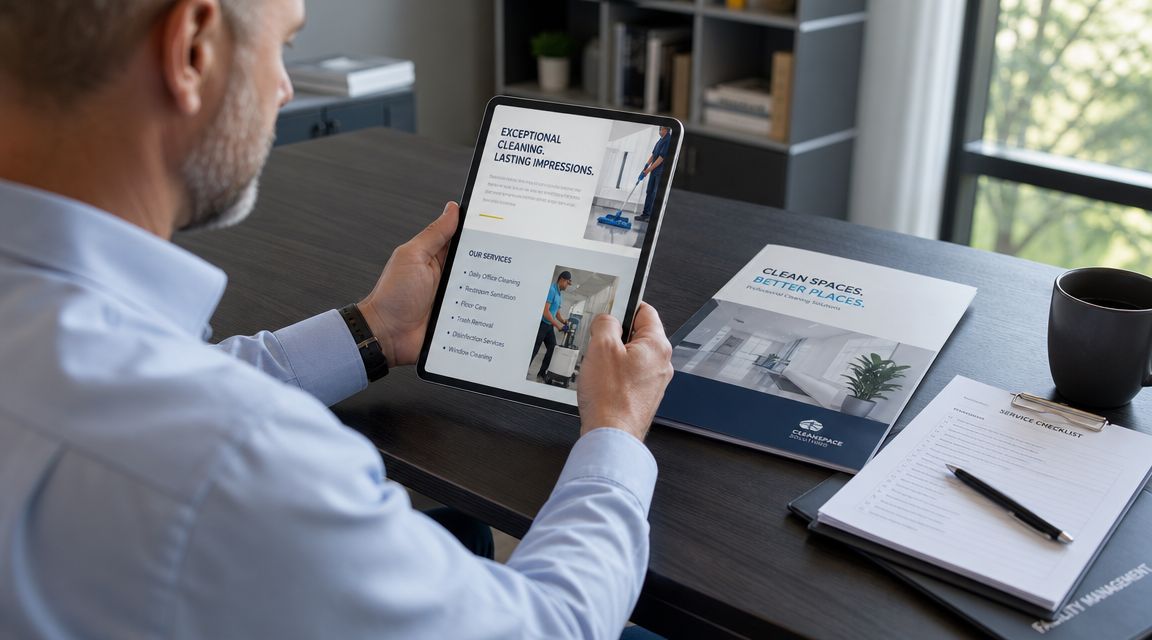
A provider should be able to explain the cleaning method in plain language. If they can't describe the chemistry, equipment, soil-removal steps, and quality checks, they may be treating epoxy like any other floor.
That matters because the hidden cost driver is often the wrong method, not merely how often the floor is cleaned. Recent maintenance guidance also points toward more structured service models with real-time communication and quality assurance, rather than basic janitorial routines, as discussed in this article on modern epoxy floor maintenance workflows.
Questions worth asking before signing
Use a practical checklist, not a marketing checklist.
- What cleaner types do you use on epoxy floors? The provider should speak comfortably about neutral cleaners and surface compatibility.
- What equipment do you use for smooth versus textured epoxy? The answer should change based on floor profile.
- How do you recover dirty solution? This reveals whether they understand redeposition risk.
- How do you document service quality? Look for inspection processes, reporting, and clear escalation paths.
- How do you handle spill response and problem areas? Reactive capability matters in active facilities.
- What insurance and safety compliance do you carry? Buyers can review practical overviews such as this guide to window cleaning business insurance to understand why liability coverage, worker protection, and risk controls matter across service trades.
What to avoid
Some warning signs appear early in the quoting process.
| Warning sign | Why it matters |
|---|
| One cleaning method for every floor | Epoxy needs surface-specific protocols |
| No discussion of chemical dilution | Suggests weak process control |
| No mention of dwell time or solution recovery | Indicates superficial cleaning knowledge |
| Quote based only on area size | Ignores soil load, condition, and risk |
| No reporting or communication system | Makes quality issues harder to track and correct |
What strong providers usually have in common
Good providers don't just send labour. They send a repeatable system.
The best cleaning providers make their work visible. They show what was cleaned, how it was cleaned, and how issues will be corrected if standards slip.
A modern service model may include site notes, digital checklists, issue reporting, supervisor verification, and client communication that doesn't depend on chasing a single account manager. In a warehouse, school, or clinic, that level of structure supports accountability.
For buyers comparing quotes, the safest approach is simple. Get 2 to 3 quotes, ask the same technical questions, and compare the answers for clarity, not just price.
Frequently Asked Questions and Further Reading
FAQ
Can professional cleaning remove tyre marks from epoxy floors
Often, yes. The result depends on whether the mark is surface residue or deeper staining. A provider should assess the cause before choosing the method so the cleaning process doesn't damage the finish.
How long after cleaning can staff walk on the floor
That depends on the method used, how much solution was applied, ventilation, and how thoroughly the dirty water was recovered. A provider should give a site-specific answer instead of a generic promise.
Is epoxy really low maintenance
It's better described as controlled maintenance. Epoxy is easier to keep sanitary and presentable than many porous surfaces, but it still needs the right cleaner, equipment, and schedule.
Should in-house staff handle routine cleaning
Sometimes, yes. That can work well if they have the correct chemicals, dilution control, tools, and clear instructions on what to avoid. Many facilities use a mixed model, with daily upkeep in-house and periodic machine scrubbing by a specialist.
Further reading
For local planning and service coverage, review Arelli Cleaning service areas across the GTA.
Additional internal reading:
Additional external reading:
If a facility is comparing epoxy floor cleaning services in the GTA, Arelli Cleaning is one option to include in the quote process. The practical approach is to use the checklist above, ask detailed process questions, and compare 2 to 3 providers on method, documentation, communication, and fit for the specific environment.







.webp)