A practice manager in Etobicoke usually notices the problem the same way. The clinic looks tidy. Floors are vacuumed, bins are emptied, washrooms are presentable. Then a closer review raises harder questions. Who is documenting clinical surface disinfection properly? Are the products appropriate for a dental setting? Is the cleaning team treating operatories like healthcare spaces or like standard offices?
That gap matters. Dental office professional cleaning in Etobicoke isn't mainly about appearance. It sits at the intersection of patient safety, regulatory compliance, workflow reliability, and financial risk. A missed step in a reception area may create inconvenience. A missed step on a clinical contact surface can create an infection control failure, expose the practice to inspection risk, and damage trust that took years to build.
Busy clinics also face a practical constraint. They need cleaning that fits around appointments, sterilization routines, staff handoffs, and after-hours access. That means the right vendor isn't just the lowest quote. It's the company that understands what must be disinfected, when it must be done, how the work is documented, and where shortcuts usually happen.
For managers reviewing options in West Toronto, this local Etobicoke commercial cleaning service area provides context on regional support coverage and service availability.
Key Takeaways
- Dental cleaning standards are different: A dental clinic requires healthcare-grade protocols, not standard janitorial routines.
- Compliance drives scope: Cleaning must align with Ontario infection prevention requirements and daily clinical disinfection expectations.
- Cheap cleaning can become expensive: Under-scoped service often leads to rework, service gaps, and a higher likelihood of compliance issues.
- Provider evaluation should be structured: Managers should compare vendors on protocol, training, documentation, supervision, and communication.
- Quarterly deep cleaning still matters: Routine service doesn't reach every hidden or difficult surface in a busy dental environment.
- The best next step is practical: Use a checklist, get 2 to 3 quotes, and ask detailed operational questions before signing.
Introduction
Dental clinics rarely fail because they don't care about cleanliness. They struggle when cleaning is treated as a generic building task instead of a clinical risk-control function. In Etobicoke, that distinction affects how a practice protects patients, supports staff, and avoids preventable operational friction.
A standard office cleaner may do good work in boardrooms, private offices, and retail spaces. A dental clinic asks for something more disciplined. Treatment rooms turn over quickly. High-touch points are everywhere. The sterilization area has no margin for casual routines. If the cleaning scope doesn't match the environment, the practice absorbs the risk.
An effective cleaning plan also supports business stability. Patients notice details. Staff notice when supplies are inconsistent or rooms aren't reset properly. Managers notice when they have to inspect, chase, and correct the same issues repeatedly. The hidden cost isn't just the invoice. It's the time spent managing avoidable deficiencies.
Practical rule: In a dental clinic, the cleaning scope should be built around infection control and documentation first, then appearance.
The strongest procurement decisions usually come from a simple shift in mindset. Instead of asking, "Who can clean this office?" the better question is, "Who can maintain this healthcare environment without creating compliance gaps?" That framing changes what belongs in the scope, how quotes are compared, and what red flags become obvious during site walks.
Defining Dental Office Cleaning Standards
A practice manager usually sees the problem after something goes wrong. A treatment room looks clean, but the wrong product was used, dwell time was missed, or the sterilization support area was cleaned like a break room. At that point, the issue is no longer housekeeping quality. It is a compliance exposure with patient safety, staff confidence, and audit readiness tied to it.
Dental office cleaning standards exist to control that risk. In a dental clinic, cleaning is part of the infection prevention process, not a cosmetic service layered on top of daily operations. The standard has to define which areas are clinical, which products and methods are acceptable, who is responsible for each task, and how consistency is checked.
Ontario practices are expected to align their routines with RCDSO and IPAC requirements. For a manager, the practical takeaway is simple. A vendor should be able to explain how its scope supports compliant cleaning in operatories, reprocessing support spaces, washrooms, reception, and staff areas without blurring those zones together.

What counts as the clinical environment
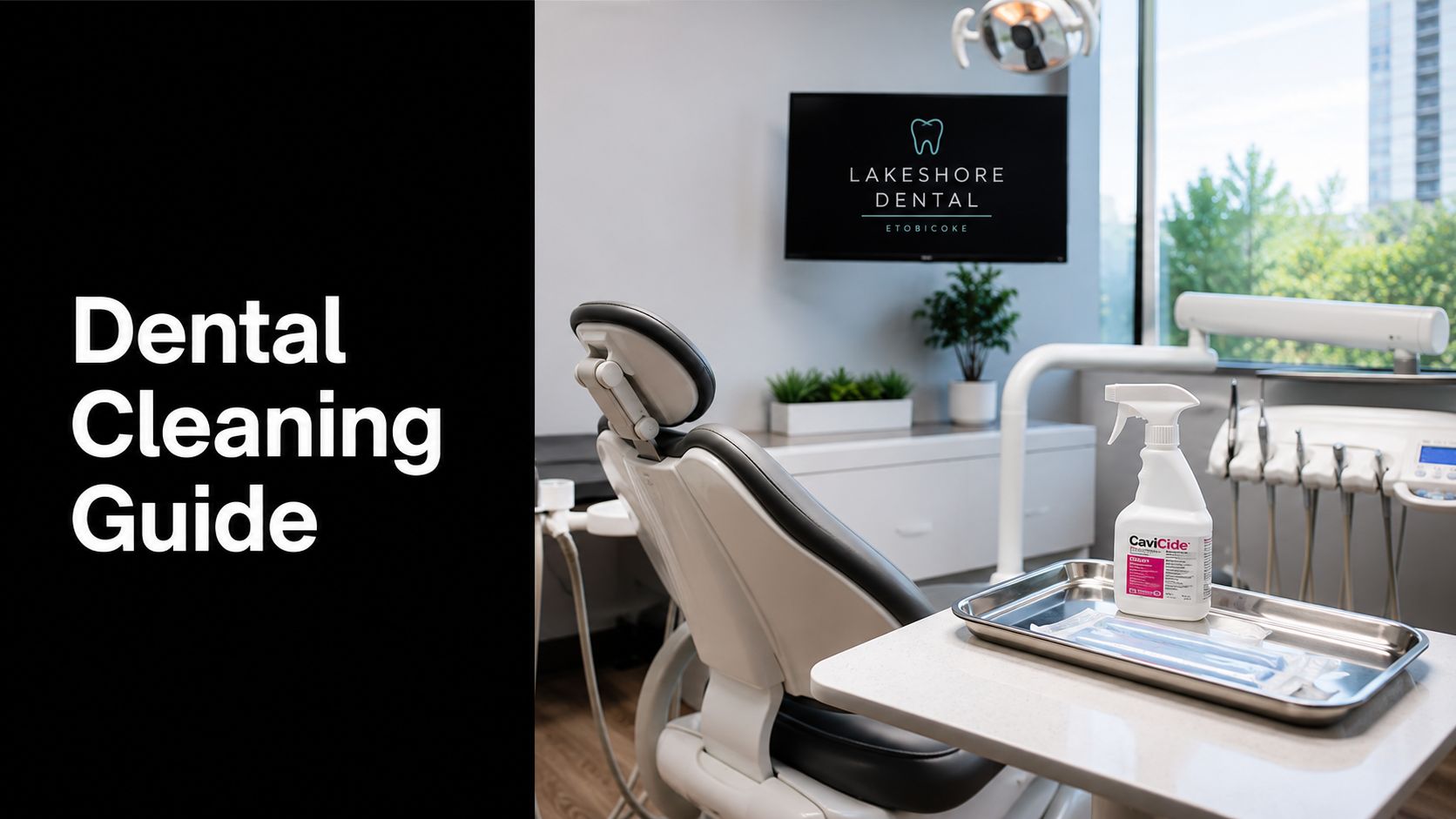
The clinical environment includes any area where care is delivered or where contaminated instruments, materials, or touchpoints can affect care delivery. That usually means operatories, sterilization support areas, sinks tied to clinical workflows, and the surfaces staff handle during treatment turnover.
This distinction matters during procurement. A contractor may price a dental office as if only the lobby, floors, and washrooms need routine janitorial attention, then add light disinfecting language for treatment rooms. That scope often looks acceptable on paper and fails during day-to-day use. Missed touchpoints, unclear room reset expectations, and inconsistent product use create rework for staff and leave the practice carrying the liability.
A useful companion resource on effective infection control methods explains why high-touch frequency, surface classification, and repeatable processes matter in healthcare settings.
Definitions that help during vendor review
Clear definitions make quote reviews faster and reduce scope disputes later.
- Disinfection: Applying an approved product to the correct surfaces with the required contact time and method.
- Clinical contact surfaces: Surfaces touched during patient care or room turnover, such as light handles, chair controls, delivery units, trays, counters, and drawer pulls.
- Sterilization area cleaning: Cleaning and disinfecting the surrounding work environment that supports instrument handling, staging, and storage.
- Routine janitorial service: General cleaning for non-clinical areas, including floors, garbage, washrooms, reception, and administrative spaces.
Managers should also check whether a provider offers a healthcare-focused scope similar to a dedicated medical office cleaning service. That is a better starting point than a standard office package with a few added disinfecting tasks.
| Cleaning model | Typical focus | Fit for a dental clinic |
|---|
| Standard office cleaning | Appearance, garbage, floors, washrooms, common touchpoints | Suitable for non-clinical areas only, unless the scope is expanded and controlled carefully |
| Dental-specific professional cleaning | Clinical disinfection, approved product use, room turnover support, documentation, periodic deep cleaning | Suitable for full-practice risk control and day-to-day operational stability |
A dental practice is buying risk control, documented consistency, and support for IPAC compliance. The visible cleanliness matters, but it is not the standard that protects the practice.
A Checklist of Essential Cleaning Services
A missed cleaning step in a dental clinic rarely stays a cleaning issue. It turns into a turnover delay, an IPAC gap, a failed inspection detail, or a complaint that forces the manager to stop and document what happened. For that reason, the service scope should read like an inspection tool. Each area needs its own tasks, method, frequency, and verification point.

Operatory and clinical room checklist
Operatories carry the highest compliance risk, so vague wording creates real exposure. The scope should name the clinical contact surfaces, require removal of visible soil before disinfectant use, and state that the selected product must stay visibly wet for the full label contact time. Reviews of dental office cleaning standards and dwell-time failures identify premature drying as a recurring failure in non-compliant practices, which is one reason dwell time needs to be written into the agreement instead of assumed.
A clinic manager should expect the scope to include:
- Chair-related surfaces: Chair controls, armrests, chair bases where touched during care, and nearby high-contact points.
- Hand-contact equipment: Light handles, delivery unit touch areas, bracket trays, drawer pulls, and switches used during treatment.
- Counters and work surfaces: Clinical counters, writing surfaces, and adjacent hard surfaces within the treatment zone.
- Pre-cleaning: Removal of visible organic debris before disinfectant application.
- Product and method control: Use of the correct healthcare-grade disinfectant and application steps that match the product label.
- Documented contact time: Surfaces remain visibly wet for the full required exposure period.
- Room reset detail: Waste removal, liner replacement where used, and attention to touchpoints that affect the next patient turnover.
A provider should also be able to explain how detailed disinfection is handled in higher-risk areas and periodic resets, not just nightly wipe-downs. That standard is reflected in detailed disinfection protocols for clinical environments.
Front-of-house and support area checklist
Reception, staff zones, and washrooms are lower risk than operatories, but they still shape patient confidence and staff exposure. They also create avoidable cost when the clinic has to call back the cleaner for missed touchpoints, overflowing bins, or washroom supply failures before the next morning shift.
A practical checklist includes:
- Reception touchpoints: Counter edges, payment terminals, pens, clipboards, door pulls, and check-in surfaces.
- Waiting area surfaces: Chair arms, side tables, shared objects, and other frequent hand-contact points.
- Administrative and staff areas: Phones, desks, keyboard-adjacent surfaces, appliance handles, light switches, and breakroom touchpoints.
- Washrooms: Full fixture cleaning, disinfection of high-touch surfaces, restocking checks, and floor care around toilets and sinks.
- Floors: Vacuuming or hard-floor cleaning with attention to corners, edges, and debris that collects under seating and cabinetry.
- Waste handling: Timely removal, proper bag changes, and clear separation of routine janitorial waste from any clinic-controlled regulated streams.
If a proposal says only “sanitize all areas as needed,” it does not give the practice enough control to audit performance or defend the scope during a compliance review.
Periodic deep-clean items
Daily service keeps the clinic presentable. Periodic detail work protects the standard over time.
A stronger scope separates those tasks clearly so the clinic is not paying premium visit rates for rushed detail work that never gets completed properly. Managers should see scheduled deep-clean items such as behind movable furniture, low ledges, baseboards, cabinet faces and handles, vents, fixture tops, and other detail points that collect dust and residue in a busy practice. Putting those items on a defined rotation improves quote accuracy, reduces disputes about what was "included," and gives the practice a cleaner record of what the vendor was hired to maintain.
Budgeting for Dental Office Cleaning in Etobicoke
Cleaning budgets often break down because the clinic is comparing unlike scopes. A low number may reflect a basic commercial package. A higher number may include clinical disinfection, more frequent service, and stronger supervision. Without a line-by-line scope review, price alone doesn't reveal much.
Ontario pricing data helps frame the range. Professional dental office cleaning services in Ontario cost $0.08 to $0.35 per square foot, with disinfection-grade cleaning reaching $0.30+ per square foot. A small dental office with 2 exam rooms cleaned three times weekly may cost $450 to $700 per month, while a mid-size practice with 7 operatories and 2,800 square feet cleaned five times weekly could run $1,200 to $1,800 monthly, based on this breakdown of Ontario dental office cleaning costs and pricing drivers.
What pushes pricing up or down
The biggest cost drivers are usually operational, not arbitrary.
- Clinic size: More square footage usually means more floor area, more bins, and more touchpoints.
- Number of operatories: Clinical rooms raise complexity faster than open office areas do.
- Visit frequency: Three evenings per week and five evenings per week produce very different staffing plans.
- Scope level: Basic after-hours cleaning costs less than disinfection-grade work that includes treatment rooms and sterilization support areas.
- Labour type: Healthcare-trained cleaners generally cost more than standard janitorial staff because the work asks for tighter process control.
The real financial trade-off
Managers sometimes treat the premium for specialized service as optional. In practice, the financial risk sits on the other side. Under-scoped cleaning can produce callback visits, internal staff overtime, supervisory burden, disrupted room readiness, and greater exposure if an inspection finds maintenance deficiencies.
| Budget option | What it often includes | Main risk |
|---|
| Lowest-cost general cleaning | Basic visible cleaning and limited disinfection | Clinical scope may be incomplete or too vague |
| Mid-range dental-focused scope | Better alignment between common areas and treatment spaces | Requires careful contract review to confirm details |
| Full disinfection-grade scope | Broadest clinical support and stronger compliance fit | Higher monthly operating cost |
The useful budgeting question isn't "What's the cheapest quote?" It's "Which quote actually covers the clinic's risk profile?"
How to Evaluate and Compare Cleaning Companies
At 6:30 a.m., the first patient is booked, the sterilization area is active, and a treatment room is still missing items that should have been cleaned and reset the night before. That problem is rarely just a housekeeping issue. It is a service failure with compliance, scheduling, and revenue consequences.

A dental practice should compare cleaning companies the same way it would assess any clinical support function. Start with risk control. Then review training, supervision, documentation, and contract clarity. Cost still matters, but low pricing has little value if the scope leaves gaps that create inspection exposure or force staff to correct missed work before opening.
The useful test is simple. Can the company show how its service supports RCDSO expectations, day-to-day IPAC discipline, and reliable room readiness?
Comparison table for busy practice managers
| Evaluation area | What a strong provider should show | What to avoid |
|---|
| Compliance knowledge | Clear explanation of how cleaning methods, product selection, and documentation fit a dental setting | Generic claims about medical or hospital-level cleaning without room-level detail |
| Staff preparation | Healthcare-site training, site-specific instructions, controlled access, and backup coverage procedures | Frequent crew changes with little orientation to the clinic |
| Quality assurance | Scheduled inspections, task verification, corrective-action process, and written issue logs | No formal review process after complaints or missed tasks |
| Communication | One accountable contact, after-hours reporting steps, and clear response times | Shared inboxes and no named owner for problems |
| Insurance and liability | Current proof of coverage, incident reporting steps, and clarity on who documents on-site events | Delays, missing documents, or unclear responsibility after an incident |
Aerosol-related cleaning is a good pressure test during evaluation. Vendors should be able to explain how they address high-touch surfaces and shared-contact points after aerosol-generating procedures, not just floors and visible dust. If the answer stays broad, the clinic is being asked to accept risk without proof of control.
What to ask during the site walk
Strong questions force specific answers. That is the point.
- Ask about operatory scope: Which exact surfaces are cleaned and disinfected in each treatment room, and which are excluded?
- Ask about product control: Which disinfectants are used in clinical spaces, where are they approved for use, and how is dwell time verified in practice?
- Ask about aerosol response: How are high-touch surfaces handled after procedures that create spray or splatter, and what changes if a room has heavier procedural volume?
- Ask about staffing continuity: Who covers vacations or absences, and what site briefing does replacement staff receive before they enter clinical areas?
- Ask about documentation: What records are left on-site or shared digitally to confirm completed work, deficiencies, and corrective action?
- Ask about incident handling: If the crew finds a spill, damaged surface, supply shortage, or missed room, who is notified, how quickly, and in what format?
Site walks also reveal whether a vendor understands the difference between cleaning for appearance and cleaning for operational control. In a dental office, that difference affects opening readiness, patient confidence, and the clinic's position if an infection-prevention question is ever raised.
What to avoid in proposals
Weak proposals usually fail in one of three places. The scope is too vague. The supervision model is unclear. The contract bundles clinical and non-clinical work into a single line item that makes performance hard to verify.
Watch for language that sounds polished but avoids commitment. Terms like "full sanitization" or "complete disinfection" mean very little without room lists, surface lists, frequencies, and task ownership. A credible proposal shows what happens in operatories, sterilization support areas, washrooms, reception, staff rooms, and touchpoints that carry the highest contamination risk.
Failure management matters just as much as routine service. A reliable provider can explain how inspections are performed, how deficiencies are corrected, who signs off, and how the practice manager receives confirmation. That process reduces dispute, protects accountability, and limits the quiet cost of morning callbacks and staff interruption.
A proposal earns trust when the vendor can explain the work room by room, surface by surface, and how missed tasks are corrected before they become a pattern.
Onboarding Your New Cleaning Partner
A signed contract doesn't solve much on its own. The first few weeks determine whether the service becomes stable or frustrating. Good onboarding protects both sides by making expectations visible before the first missed task turns into a pattern.

First-week setup checklist
The practice manager should prepare a simple handoff package.
- Access details: Keys, alarm codes, entry restrictions, and areas that remain locked.
- Site map: Operatories, sterilization support areas, staff zones, and supply storage.
- Priority notes: Fragile equipment, surfaces that need product caution, and rooms with special timing rules.
- Communication chain: One clinic contact, one cleaning contact, and a clear method for after-hours reporting.
- Consumables plan: Which products the cleaner supplies, which products the clinic supplies, and where everything is stored.
What the first clean should accomplish
The initial service often takes longer than ongoing maintenance because the crew is learning the space and catching up on accumulated detail work. That isn't a red flag by itself. It becomes a concern only when the vendor can't explain what the first visit is intended to reset.
Professional guidelines recommend scheduling quarterly professional deep cleaning services for dental offices, because even with consistent daily cleaning, specialized healthcare professionals are needed quarterly to address areas that routine cleaning might otherwise miss, as described in this guide to a dental office cleaning checklist and quarterly deep-clean planning.
A practical onboarding plan usually separates three layers of work:
- Routine recurring tasks for daily or scheduled service.
- Startup corrections to bring the clinic to baseline.
- Quarterly deep-clean items that need a different time block and scope.
Early feedback should be concrete. List the room, surface, shift, and issue. That helps the vendor correct the process instead of guessing at the complaint.
When the onboarding is handled well, the clinic spends less time inspecting and chasing. Staff walk into a facility that feels predictable. That consistency is where operational value shows up.
Further Reading and Next Steps
A practice manager usually reaches this point after a missed detail has already created friction. The sterilization area was left inconsistent, a washroom complaint reached the front desk, or a vendor could not show what was cleaned, when, and by whom. At that stage, cleaning is no longer a housekeeping purchase. It is an operating risk tied to patient perception, staff confidence, and inspection readiness.
The next step is to tighten the buying process so the clinic is not relying on assumptions. A strong vendor review converts risk into written expectations, then tests whether each bidder can meet them with clear methods, documentation, and supervision. Price still matters, but a lower quote loses value quickly if the clinic has to spend management time correcting misses or explaining gaps during an audit.
Use the review process to answer one question: will this provider reduce risk or transfer more of it back to the clinic?
Action list for the next vendor review
- Map the office by function: separate operatories, sterilization support, reception, staff areas, washrooms, storage, and administration.
- Tie the scope to compliance duties: confirm the proposal reflects clinical cleaning requirements and the limits between clinic staff duties and contractor duties.
- Get written task detail: require listed surfaces, frequencies, products, reporting steps, and after-hours escalation contacts.
- Identify periodic work separately: pull out quarterly or periodic detail cleaning so it is scheduled, priced, and inspected on its own.
- Assess management load: favor the vendor that is easier to audit, easier to reach, and easier to correct. That often lowers total cost over the year.
- Check proof, not promises: ask what logs, site inspections, and issue-resolution records the vendor will provide.
For practices that want one final screen before signing, use a simple pass-fail test. If a company cannot explain its scope in plain language, define accountability by shift, and show how service problems are documented and corrected, the clinic will likely carry the burden later.
A sound dental office professional cleaning plan in Etobicoke protects more than surfaces. It protects chair time, staff focus, patient trust, and the manager's schedule. For practices that want to compare one more option, Arelli Cleaning is one provider to include in the quote process. Use the checklist above, request a clearly scoped proposal, and compare it against at least two other quotes on compliance fit, documentation, communication, and total operational burden.








.webp)