Oops! Something went wrong while submitting the form
Blog
January 27, 2026
January 27, 2026
Why Dental Office Cleaning Requires the Extra Mile for Safety
For any dental practice, cleanliness isn't just about appearances—it's a foundational pillar of patient safety, staff well-being, and regulatory compliance. The reality is that dental office cleaning requires the extra mile; this means more than extra effort, it demands specialized knowledge, protocols, and training.
This advanced approach is built on a deep understanding of infection control, strict adherence to health standards, and the correct use of hospital-grade products to mitigate the unique risks of a clinical environment.
Key Takeaways
Beyond Aesthetics: Dental office cleaning prioritizes infection prevention over general tidiness, a critical distinction from standard commercial cleaning.
Specialized Protocols: Effective cleaning involves using Health Canada-approved, hospital-grade disinfectants with correct dwell times, especially in clinical zones.
Regulatory Compliance: Professional services must be trained in WHMIS, bloodborne pathogens, and proper handling of regulated medical and hazardous waste.
Zone-Specific Cleaning: Different areas—operatories, waiting rooms, sterilization centres—have unique risks and require tailored cleaning protocols.
Informed Vetting: Choosing a provider requires verifying their healthcare experience, training programs, and quality assurance systems, not just comparing prices.
Going Beyond Standard Commercial Cleaning in a Dental Practice
A standard office cleaning service focuses on aesthetics and general hygiene—dusting surfaces, emptying trash, and vacuuming floors. While suitable for a typical corporate office, this scope is insufficient for a healthcare facility like a dental clinic, where the stakes for health and safety are significantly higher.
In a dental practice, every surface, from the patient chair to the reception desk, is a potential vector for cross-contamination. Bodily fluids, aerosols generated during procedures, and a constant flow of patients create an environment where pathogens can spread if not managed with clinical precision. This is where the difference between a "tidy" space and a clinically "safe" space becomes clear.
Standard Office Cleaning vs. Dental Healthcare Cleaning
This table highlights the fundamental differences between general commercial cleaning and the specialized protocols required for a dental practice.
Cleaning Aspect
Standard Office Cleaning
Dental Office 'Extra Mile' Cleaning
Primary Goal
Aesthetics and general tidiness.
Infection prevention, patient safety, and regulatory compliance.
Disinfectants
General-purpose, commercial-grade cleaners.
Health Canada-approved, hospital-grade disinfectants effective against specific pathogens.
Key Protocols
Dusting, vacuuming, waste removal.
Meticulous surface disinfection with specific dwell times, terminal cleaning of clinical areas.
Staff Training
Basic janitorial skills.
WHMIS, bloodborne pathogens, cross-contamination prevention, and privacy considerations (HIPAA/PIPEDA).
Focus Areas
High-visibility areas like lobbies and desks.
All clinical and non-clinical surfaces, with a focus on high-touch points, operatories, and sterilization areas.
Waste Handling
Standard trash disposal.
Proper segregation, handling, and disposal of regulated medical waste, sharps, and hazardous materials.
The scope and intensity are worlds apart. One maintains appearances; the other actively protects public health.
The Critical Difference in Scope
The "extra mile" in dental office cleaning is defined by its clinical focus. It is less about tidiness and more about systematically breaking the chain of infection. A professional commercial cleaning service specializing in healthcare environments doesn't just see a room; it sees a complex ecosystem requiring meticulous management.
Key responsibilities extend far beyond a typical janitorial service and must include:
Infection Prevention: Utilizing Health Canada-approved, hospital-grade disinfectants with the correct application techniques and dwell times to neutralize bacteria, viruses, and fungi.
Regulatory Knowledge: Adhering to standards set by public health bodies (e.g., Public Health Ontario) and understanding regulations like WHMIS for safe chemical handling.
Specialized Training: Ensuring cleaning personnel are trained in handling regulated medical waste, preventing cross-contamination, and understanding the unique risks of a clinical setting.
Zone-Specific Protocols: Recognizing that an operatory has vastly different cleaning requirements than an administrative office or a public waiting room.
This specialized approach ensures that the environment of care is never compromised. It elevates cleaning from a simple task to an essential public health function that directly protects both patients and staff from healthcare-associated infections (HAIs).
For practices in busy centres like Toronto, Vaughan, or Mississauga, partnering with a cleaning service that understands these nuances is a necessity for maintaining a safe, reputable, and compliant operation. Further details on these protocols can be found in guides on detailed disinfection services for commercial spaces.
Infection Control: A Non-Negotiable Mandate
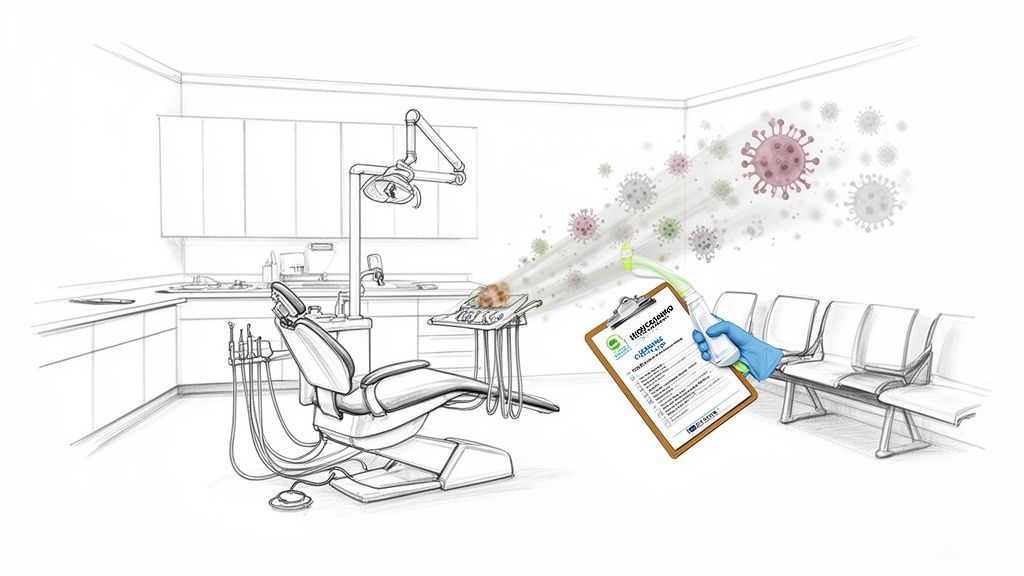
In a dental office, every surface—from the patient chair to countertops—is a potential point for transmitting infections. The science behind why dental office cleaning requires the extra mile is rooted in managing these invisible risks. This is not about perception; it is a critical function of public health.
Terms like cross-contamination, bloodborne pathogens, and aerosol transmissible diseases (ATDs) are real risks present in every operatory. Aerosols generated during routine procedures can carry microorganisms through the air, where they eventually settle on surrounding surfaces. A professional commercial cleaning service acts as the practice's frontline defense, systematically neutralizing these threats with meticulous, evidence-based disinfection protocols.
Breaking the Chain of Infection
The primary goal of specialized dental office cleaning is to break the chain of infection. This requires a multi-faceted strategy that targets every possible point of transmission. A quick wipe-down is insufficient; proper products must be applied with correct methods.
An effective infection control cleaning program includes these key elements:
Hospital-Grade Disinfectants: Using products specifically approved by Health Canada and proven to be effective against viruses, bacteria, and fungi commonly found in healthcare settings.
Proper Dwell Times: The disinfectant must remain wet on the surface for the full time specified by the manufacturer to achieve its claimed efficacy. This critical step is often overlooked in non-specialized cleaning.
High-Touch Point Focus: A systematic approach to identifying and disinfecting all high-touch surfaces, including light switches, door handles, patient chairs, and payment terminals.
Operatory Terminal Cleaning: Performing a thorough "terminal clean" of all clinical areas at the end of each day. This prepares them for the next day of patient care, ensuring a sterile baseline.
This disciplined process is fundamental to preventing healthcare-associated infections (HAIs) and is as important for protecting the dental team as it is for patients. A robust cleaning strategy complements the clinical team's own stringent infection control measures performed between patients.
Adhering to the Regulatory Playbook
Professional cleaning in a dental practice is governed by standards set by public health authorities. In Ontario, guidelines from bodies like Public Health Ontario establish the minimum requirements for environmental cleaning in healthcare facilities. These are not suggestions; they are mandates for safe practice.
A knowledgeable commercial cleaning service understands these regional requirements, from Toronto to North York, and integrates them into their daily scope of work. This ensures the practice remains compliant, which reduces liability and reinforces a commitment to patient safety. The focus on documented protocols and training helps create an environment where patient care can be delivered with confidence. For more on modern safety measures, the principles in COVID-conscious cleaning protocols remain highly relevant.
Navigating Regulatory Compliance and Waste Management
Beyond the patient chair, a dental office is a hub of complex regulations, particularly concerning waste management. This is not just about trash removal; it's a critical area where dental office cleaning requires the extra mile to ensure safety, protect the environment, and maintain legal compliance.
A specialized commercial cleaning team must be expertly trained to identify, handle, and correctly sort different waste streams. A single mistake can lead to significant fines or serious health risks. Understanding these responsibilities is essential when selecting a cleaning partner for a dental practice.
Differentiating Waste Streams in a Dental Clinic
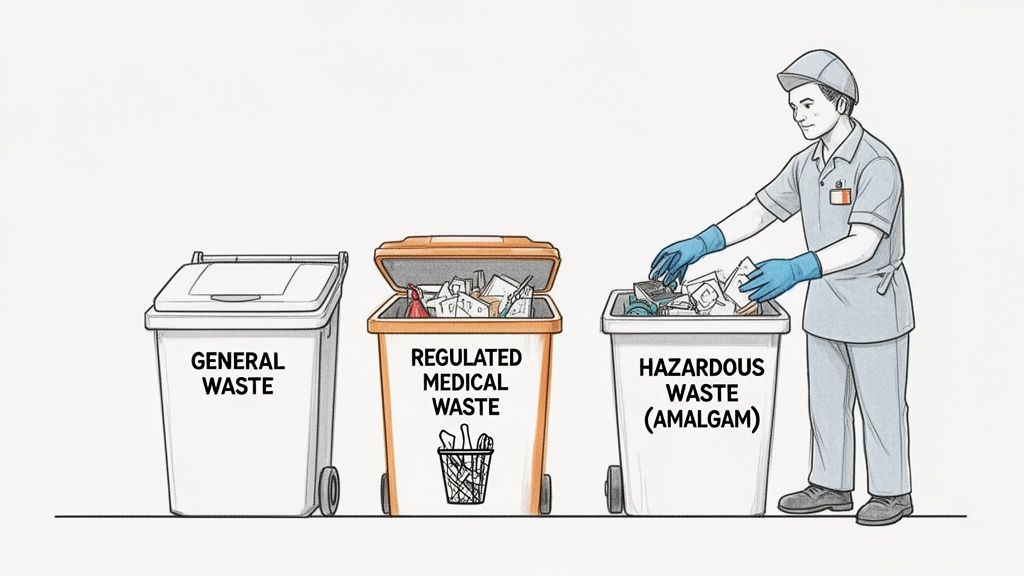
Improper waste disposal is one of the biggest liabilities a dental practice can face. Any cleaning technician entering a clinic must instantly recognize the three primary waste categories, as each has its own strict disposal protocol.
General Waste: This includes non-contaminated items like paper, food wrappers, and packaging from reception and breakrooms. It is the only category suitable for the standard municipal waste stream.
Regulated Medical Waste (Biomedical Waste): This is anything contaminated with blood or other potentially infectious materials, such as used gauze, extracted teeth, and soiled personal protective equipment (PPE). Sharps (needles, scalpels) fall into this category but require separate, puncture-proof containers.
Hazardous Waste: This category includes materials that pose a chemical or environmental threat. Common examples in a dental office are amalgam waste containing mercury, used x-ray fixer solutions, and certain chemical disinfectants.
A professional cleaning service trained for healthcare settings understands these distinctions. They know which bins are for general refuse and which require specialized handling by a licensed biomedical waste disposal company.
Dental Office Waste Segregation Checklist
This reference table can help staff and cleaning professionals ensure proper waste segregation.
Waste Type
Examples
Proper Disposal Protocol
General Waste
Paper towels (from hand washing), office paper, food wrappers, packaging
Lined, designated biomedical waste container for collection by a licensed hauler.
Sharps Waste
Used needles, scalpel blades, orthodontic wires
Designated, puncture-proof sharps container. Never place in a regular trash bag.
Hazardous Chemical Waste
Used x-ray fixer, some disinfectants, lead foils
Segregated in labeled, leak-proof containers according to WHMIS guidelines.
Amalgam Waste
Excess amalgam, used capsules, amalgam separator filters
Collected in a dedicated, sealed container for amalgam recycling. Never dispose of down the drain.
Consistent adherence to these guidelines is fundamental to maintaining a safe and compliant practice.
Adhering to Safety and Environmental Mandates
Compliance extends beyond correct bin sorting. It involves a web of regulations designed to protect staff, the public, and the environment. In Canada, the Workplace Hazardous Materials Information System (WHMIS) is a cornerstone. Cleaning staff must be trained to read and understand Safety Data Sheets (SDS) for every chemical used, ensuring safe handling, storage, and disposal.
Environmental regulations are equally stringent. For example, managing mercury from amalgam is a major focus. Government mandates require dental offices to use amalgam separators to prevent mercury from entering public sewer systems, reflecting its serious environmental impact.
Proper waste segregation is not a janitorial task—it is a critical risk management function. A single error, such as placing a sharp in a general waste bin, can lead to serious injury and significant legal repercussions for the practice.
Similar to physical waste protocols, a strategic approach is vital for protecting patient data with confidence. Both physical and digital safety are pillars of a trustworthy healthcare practice.
When vetting a commercial cleaning service, their expertise in waste management should be a top priority. A competent provider will demonstrate a clear understanding of all provincial and federal regulations and provide documented training programs covering WHMIS, biomedical waste handling, and infection control. This ensures the team cleaning the facility is a proactive partner in safety and compliance, not a liability.
Essential Cleaning Protocols for Critical Dental Zones
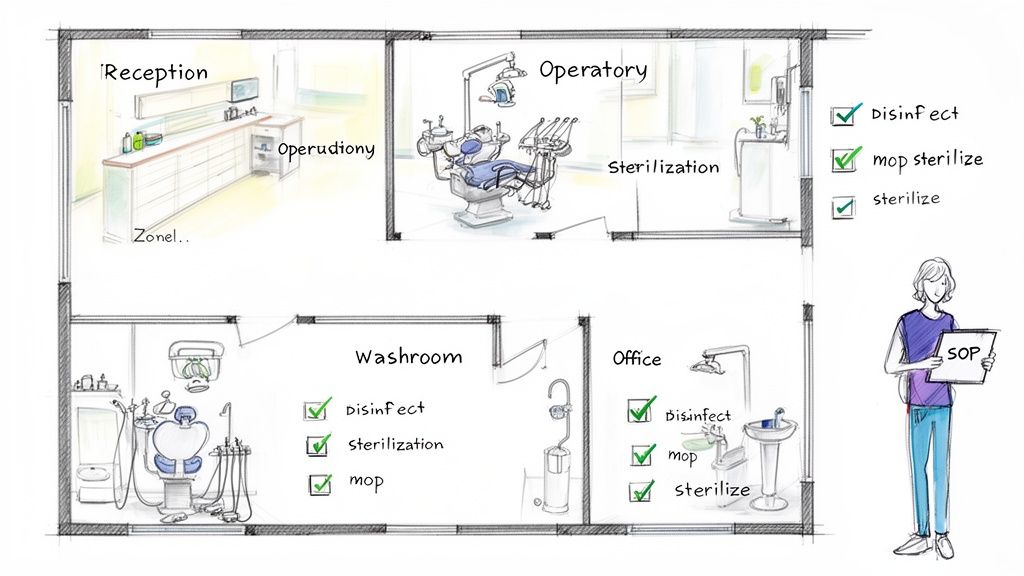
An effective cleaning strategy does not view a dental clinic as a single space. It recognizes a network of interconnected zones, each with its own risks and protocols. A one-size-fits-all approach is inadequate; dental office cleaning requires the extra mile, beginning with zone-specific planning.
This breakdown provides practice managers in cities like Mississauga or Richmond Hill a clear framework for setting expectations and evaluating quotes from commercial office cleaning services, ensuring every area receives the precise attention needed for safety and compliance.
The Reception and Waiting Area
This zone creates the first impression and is the primary entry point for pathogens. As the highest traffic area, the waiting room requires meticulous daily cleaning to remain safe and welcoming.
Key Cleaning Tasks:
High-Touch Points: Systematically disinfect all surfaces people frequently touch—doorknobs, reception counters, payment terminals, pens, clipboards, and chair armrests—using a hospital-grade disinfectant.
Flooring: Vacuum carpets and mop hard floors daily to remove dirt and contaminants tracked in from outside.
Glass and Surfaces: Clean all entry glass and wipe down tables and other horizontal surfaces to remove smudges and dust.
Waste Removal: Empty all waste bins daily.
Clinical Operatories
The operatory presents the highest risk for cross-contamination. While clinical staff manage disinfection between patients, the professional cleaning service is responsible for the nightly terminal clean. This is not a quick wipe-down but an exhaustive, top-to-bottom disinfection of the entire room to neutralize any pathogens that have settled on surfaces throughout the day, ensuring the environment is sterile for the next morning.
A terminal clean is a meticulous, deep-disinfection process performed at the end of each day. It covers every surface in the clinical area—from the patient chair and delivery systems to countertops, lights, and floors—to break the chain of infection and prepare the space for the next round of patient care.
Sterilization Centre
The sterilization centre is the command hub for infection control. It must be impeccably clean to prevent contamination of sterile instruments. Cleaning protocols here demand absolute precision.
Key Cleaning Tasks:
Surface Disinfection: Disinfect all countertops, sinks, and exterior surfaces of sterilization equipment nightly.
Floor Care: Mop floors thoroughly with a hospital-grade disinfectant to control dust and microbial load.
Waste Management: Handle and dispose of any waste from the sterilization process according to strict biomedical waste protocols.
Patient and Staff Washrooms
Washrooms are universal hotspots for germs and require diligent, daily attention to prevent the spread of illness and project an image of high hygiene standards.
Key Washroom Tasks:
Fixture Disinfection: Clean and disinfect all toilets, urinals, sinks, and countertops.
High-Touch Points: Disinfect all flush handles, taps, dispensers, and door handles.
Restocking: Ensure consumables like soap, paper towels, and toilet paper are fully stocked. For more on this, see guidance on sourcing and managing cleaning supplies.
Floor and Mirror Care: Mop floors with disinfectant and ensure all mirrors are spotless.
Administrative Offices and Breakrooms
While these areas are lower-risk than clinical zones, they still require consistent cleaning to maintain a healthy environment for staff. Here, standard office cleaning protocols focusing on general hygiene and dust control are appropriate. This includes dusting surfaces, vacuuming carpets, emptying waste bins, and disinfecting high-touch points like keyboards, phones, and appliance handles.
How to Choose a Commercial Cleaning Service for Your Dental Practice
Selecting the right commercial cleaning partner is a critical decision that directly impacts patient safety, staff well-being, and regulatory standing. Moving beyond a simple price comparison to vet providers based on verified healthcare expertise is essential.
Using a structured evaluation framework helps practice managers from Toronto to Kitchener make an informed choice that protects their clinic's reputation and its people.
Core Criteria for Vetting Providers
When evaluating a commercial cleaning company near you, certain qualifications are non-negotiable. These criteria distinguish a standard janitorial service from a specialist capable of handling the demands of a dental clinic.
Verified Healthcare Experience: Ask for specific examples and references from other dental or medical facilities. A provider with a strong portfolio in healthcare cleaning understands the unique challenges and standards required.
Documented Staff Training: Request a review of their training programs. The cleaning team must have documented training in infection control, cross-contamination prevention, and WHMIS (Workplace Hazardous Materials Information System).
Use of Hospital-Grade Products: Confirm they use Health Canada-approved, hospital-grade disinfectants. They should be able to provide Safety Data Sheets (SDS) for all chemicals used in the facility.
Robust Quality Assurance Systems: A professional service will have a clear system for inspecting work, tracking performance, and resolving issues promptly. Inquire about their accountability measures to ensure consistent quality.
What to Ask and What to Avoid
A structured list of questions helps compare companies fairly and identify potential red flags before signing a contract.
What to Ask a Potential Cleaning Partner:
"Can you provide proof of insurance, including liability and WSIB coverage?" This is a fundamental requirement to protect your practice from liability.
"What is your process for background checking your cleaning staff?" Security and trust are paramount in a healthcare setting.
"How do you document and track cleaning tasks to ensure completion?" Look for transparent systems like digital checklists or app-based reporting.
"What communication channels are available for urgent issues or feedback?" A reliable partner offers multiple contact options, such as a dedicated app, phone support, or an account manager.
"Do you offer a sample clean to demonstrate your quality of work?" Buyer-friendly policies, such as a no-obligation sample clean, show a company's confidence in its service and are a positive indicator.
A provider's willingness to offer a free, 45-minute sample clean is a powerful indicator of their confidence. It allows you to see their work firsthand and assess their team's professionalism before making a commitment. This transparency is a key differentiator in the commercial cleaning industry.
Red Flags to Watch For:
Vague Answers on Training: If a provider cannot provide specifics on their infection control training, they are not equipped for a healthcare facility.
Lack of References: A reputable company will readily share references from similar clients.
Inflexible, Long-Term Contracts: Be cautious of providers who insist on rigid, long-term contracts with punitive cancellation fees. A partnership should be earned continuously.
An Unusually Low Price: A price that seems too good to be true often indicates compromises on training, insurance, or product quality.
The goal is to find a cleaning provider who understands that dental office cleaning requires the extra mile. This is not just about cleaning; it’s about finding a partner who actively contributes to a safe, compliant, and trustworthy environment. For an impartial look at industry standards, resources from ISSA, the worldwide cleaning industry association, are valuable.
Investing in specialized cleaning is about building patient trust, protecting staff, and securing the long-term health of the practice. A meticulously disinfected environment sends a clear signal to patients that their health and safety are the top priority.
If you’re located in Ontario and want a quote that includes a free 45-minute sample clean, Arelli is one option to consider. To learn more, see the full list of service areas near you.
Frequently Asked Questions (FAQ) About Dental Office Cleaning
Practice managers often have specific questions about the specialized cleaning required for a dental office. Here are clear, direct answers to common inquiries.
How often should a dental office be professionally cleaned?
The ideal frequency depends on patient volume and practice size. While clinical staff are responsible for disinfecting operatories between patients, a professional commercial cleaning service is essential for comprehensive environmental hygiene. High-traffic areas like reception, common areas, and washrooms require professional cleaning daily. A deep, terminal clean of the entire facility—including floors, operatories, and administrative spaces—should be performed nightly or, at a minimum, several times per week to uphold the non-negotiable standards of a healthcare setting.
What is the difference between cleaning, sanitizing, and disinfecting?
These terms describe distinct processes in microbial control and should not be used interchangeably in a clinical context.
Cleaning: The physical removal of visible dirt, dust, and debris from a surface. It is always the first step.
Sanitizing: Reducing the number of bacteria on a surface to a level considered safe by public health standards. It lowers risk but does not eliminate all microorganisms.
Disinfecting: Using specific, hospital-grade chemicals to kill viruses, fungi, and bacteria. In a dental clinic, disinfection is a mandatory process for preventing the spread of infection on non-critical surfaces.
A qualified cleaning service must be proficient in all three processes, with a primary focus on executing disinfection protocols correctly.
Who is responsible for training cleaning staff on dental office protocols?
The commercial cleaning company is responsible for providing comprehensive, documented training to its staff. This training must cover infection control, cross-contamination prevention, WHMIS, bloodborne pathogen safety, and the specific cleaning protocols for a healthcare environment. The dental practice should verify the existence and quality of this training program before hiring a service.
Can our own staff handle all the necessary cleaning?
While clinical team members are experts in the rapid, precise turnover of operatories between patients, their primary focus should remain on patient care. Assigning them the responsibility for the entire facility's end-of-day cleaning is often inefficient and can lead to inconsistent standards. A professional commercial office cleaning service brings dedicated, trained teams who specialize in broad-spectrum infection control and terminal cleaning. This ensures regulatory compliance and a consistently higher level of environmental safety while allowing clinical staff to focus on their core duties.
How do I find a qualified commercial cleaner near me?
When searching for a commercial cleaner, focus on providers with proven, documented experience in healthcare or dental facilities. Start by asking for references from other clinics in your area, whether in Markham, Woodbridge, or elsewhere in the York Region. Investigate their staff training programs on infection control and demand proof that they use Health Canada-approved, hospital-grade disinfectants. Remember that patient trust is also built on a perception of total cleanliness, which includes being pest-free, sometimes requiring coordination with a service specializing in commercial pest control for maintaining facility trust. Look for companies confident enough to offer a free sample clean, as this indicates quality and transparency.
What should a dental office cleaning contract include?
A comprehensive contract should clearly define the scope of work for each zone (e.g., operatories, reception, washrooms), cleaning frequency, and specific tasks. It should also detail the types of products to be used (specifying hospital-grade disinfectants), waste handling protocols, quality assurance procedures, communication channels, and proof of insurance (liability and WSIB). Avoid contracts that are vague or lock you into long terms without a performance clause.









.webp)