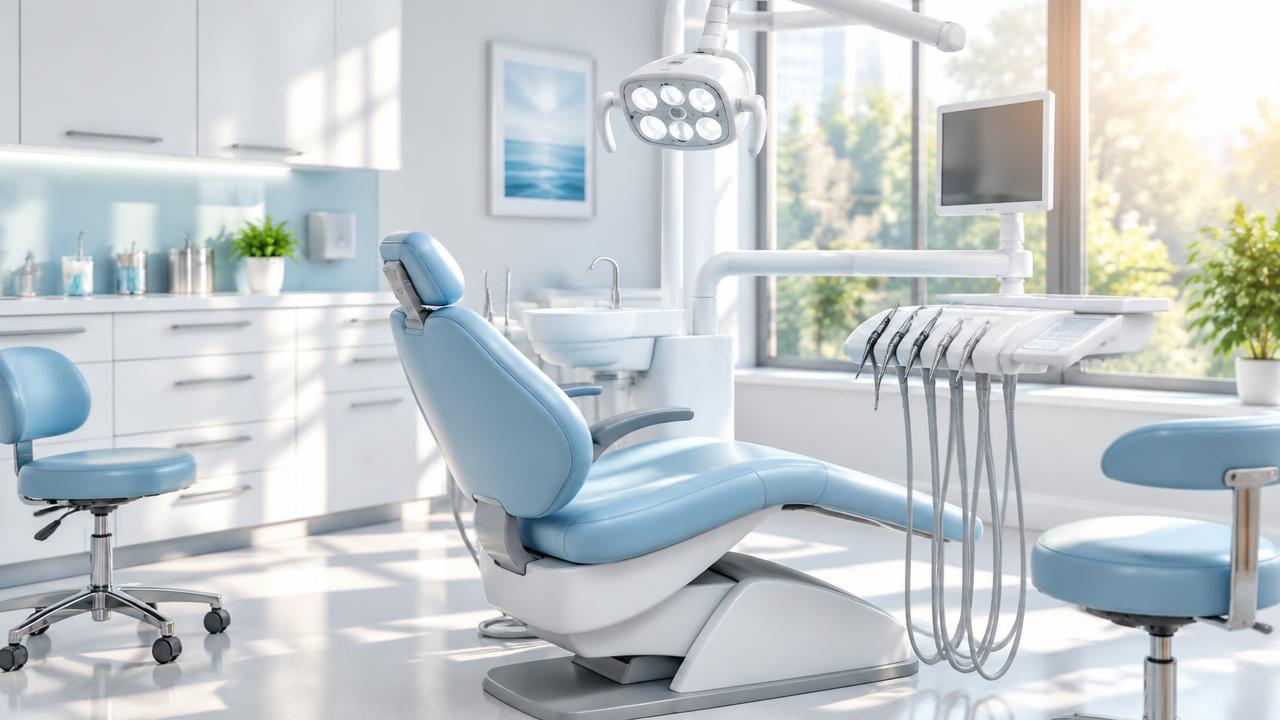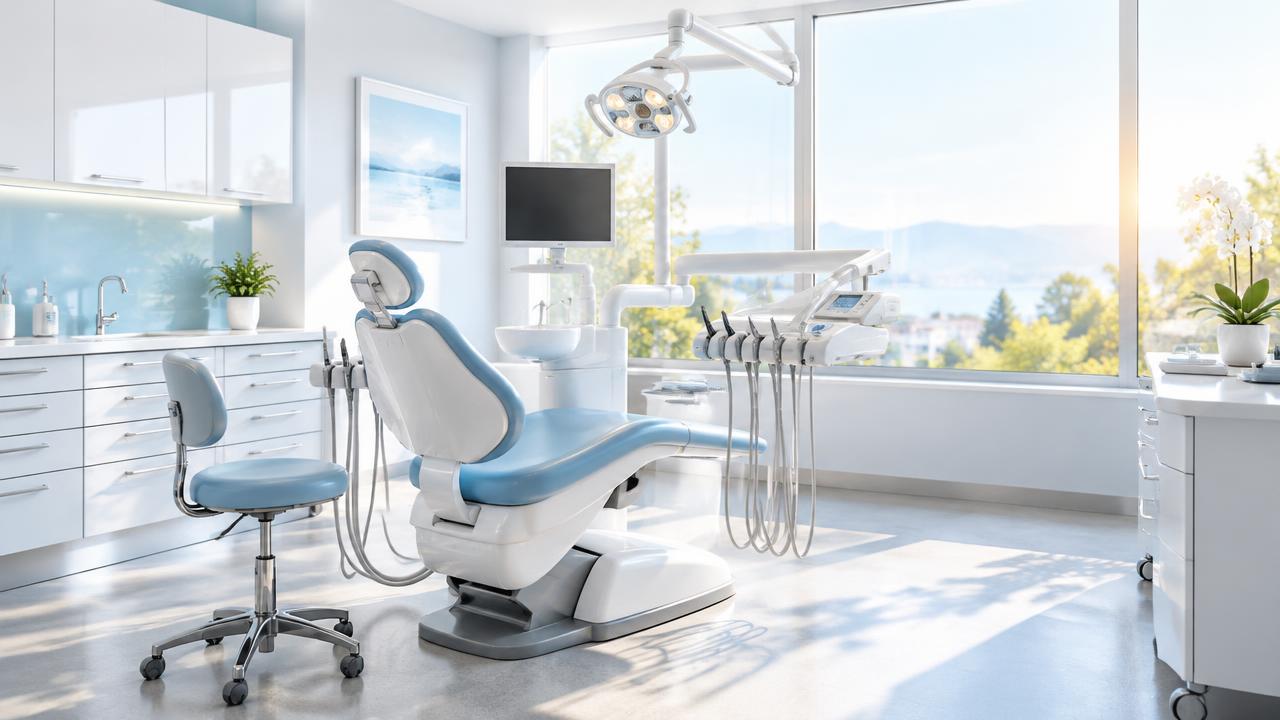
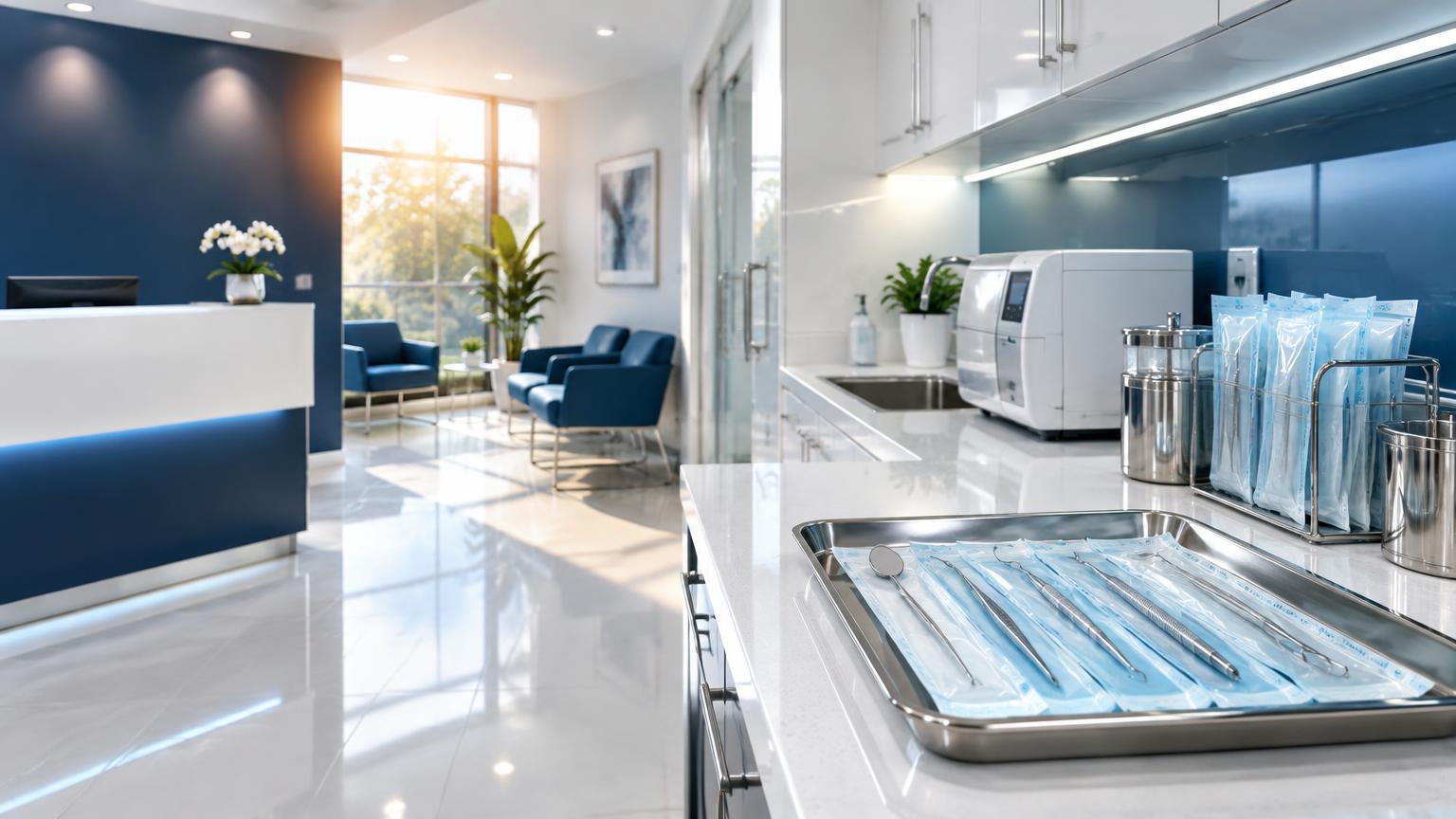
Cleaning a dental clinic is a specialized service that must meet rigorous health, safety, and regulatory standards. It extends far beyond the scope of standard commercial cleaning, focusing intensely on infection prevention and control, the use of specific disinfectants, and strict protocols for handling potentially hazardous materials to prevent cross-contamination.
Key Takeaways
- Specialization is Non-Negotiable: Dental office cleaning requires specific training in Infection Prevention and Control (IPAC) that standard janitorial services do not possess.
- Compliance is Critical: Cleaning protocols must align with guidelines from regulatory bodies like Public Health Ontario (PHO) and the Royal College of Dental Surgeons of Ontario (RCDSO).
- A Checklist Ensures Consistency: A systematic cleaning checklist, broken down by zone (operatory, reception) and frequency (daily, weekly), is essential for maintaining safety standards.
- Choose Partners Based on Expertise: When selecting a commercial cleaning company, prioritize their experience in healthcare settings, staff training (WHMIS, IPAC), and robust quality assurance systems over price alone.
- Pricing Reflects Complexity: The cost of dental clinic cleaning is influenced by the number of operatories, service frequency, and the need for hospital-grade disinfectants and specialized protocols.
Why Specialized Dental Clinic Cleaning Is Essential
Consider a typical office in Toronto or Mississauga. The cleaning crew focuses on dust, trash, and general tidiness to maintain a professional appearance. Now, shift your focus to a dental operatory. Here, cleanliness is not about aesthetics—it is a core component of patient care and public health.
Dental office cleaning presents unique challenges not found in other commercial settings. The primary objective is to create and maintain a medically sterile environment where the risk of infection transmission is minimized.
The Critical Difference from General Office Cleaning
Standard office cleaning services are not typically trained or equipped to handle the demands of a dental practice. The key differences lie in the knowledge, procedures, and products required.
- Handling Biohazardous Materials: Dental procedures generate materials like saliva and blood, which can carry pathogens. Disposing of these materials and disinfecting contaminated surfaces requires specialized training and adherence to strict protocols.
- Preventing Cross-Contamination: The transfer of microbes from one person, surface, or object to another is a constant risk. A professional cleaning team specializing in dental clinics understands how to clean in a specific sequence to prevent this spread.
- Advanced Disinfection Protocols: Simply wiping a surface is insufficient. Dental clinics require the use of hospital-grade, Health Canada-approved disinfectants proven to kill a broad spectrum of viruses and bacteria.
A meticulously clean dental clinic reflects high standards and sends a powerful message to patients about the safety and quality of their care. It is a direct measure of a practice’s commitment to patient well-being.
Key Concepts in Dental Clinic Hygiene
Understanding the terminology is crucial for appreciating the scope of a professional cleaning service. These terms represent distinct, critical steps in maintaining a safe environment.
- Cleaning: The initial step of physically removing visible dirt, grime, and organic matter from a surface, usually with detergents and water. A surface must be cleaned before it can be effectively disinfected or sterilized.
- Disinfection: This process eliminates most pathogenic microorganisms on inanimate objects, although it may not kill durable bacterial spores. This is the standard for surfaces like patient chairs, light handles, and countertops.
- Sterilization: The highest level of decontamination, sterilization kills or eliminates all forms of microbial life. This process is reserved for reusable dental instruments that come into direct contact with patients.
Partnering with a professional commercial cleaning service with proven expertise in dental settings is a foundational requirement for any reputable practice in Ontario.
Navigating Infection Control and Regulatory Standards
For a small clinic in Woodbridge or a large practice in downtown Toronto, compliance is the bedrock of patient trust. Adhering to strict infection control standards is a legal and ethical requirement designed to protect patients and staff.
In Ontario, organizations like Public Health Ontario (PHO) and the Royal College of Dental Surgeons of Ontario (RCDSO) establish the standards. They provide detailed Infection Prevention and Control (IPAC) guidelines that serve as the definitive source for cleaning, disinfection, and sterilization in dental settings.
Core Principles of IPAC Guidelines
The central goal of IPAC is to break the chain of infection. For a professional dental office cleaning service, this means recognizing that different areas of a clinic carry different levels of risk. A zone-based cleaning strategy is therefore essential.
The protocols for a waiting room are not the same as those for a surgical operatory. A professional cleaning provider understands this and customizes its approach to match the risk level of each area.
- Cleaning (Low-Risk Zones): The essential first step of physically removing dirt and dust from surfaces in areas like reception desks, waiting room chairs, and administrative offices. No surface can be properly disinfected until it is first cleaned.
- Disinfection (Clinical Contact Zones): This process eliminates the vast majority of harmful microorganisms. It is mandatory for all clinical contact surfaces, from patient chairs and dental unit trays to countertops. For more on specific protocols, see this guide on detailed disinfection.
- Sterilization (Critical Instrument Zones): This is the highest level of decontamination, designed to kill 100% of microbial life, including resilient bacterial spores. Sterilization is reserved for reusable instruments that contact soft tissue or bone, such as scalpels and forceps.
The Impact of Local Health Standards
Dental clinics in the Greater Toronto Area operate under stringent infection control standards set by Public Health Ontario. These regulations demand rigorous, documented protocols to prevent pathogen transmission.
Improper reprocessing of medical equipment can lead to serious infections, a risk that is amplified in high-volume urban clinics. Verifiable quality checks are non-negotiable, and surfaces must be properly disinfected between every patient without exception.
Failure to meet these standards can lead to serious consequences, including practice audits, public health interventions, and irreparable damage to a clinic's reputation. Compliance is an ongoing commitment.
While daily cleaning manages routine risks, a comprehensive safety strategy should also include a plan for unexpected events. A professional biohazard remediation company handles significant incidents, but a healthcare-focused cleaning service is trained to manage risks proactively, ensuring a practice is always prepared.
The Essential Dental Office Cleaning Checklist
A systematic approach is critical in dental clinic cleaning. Without a clear and comprehensive checklist, it is easy to overlook a crucial task, creating a gap in an infection control strategy.
A well-structured checklist serves as both a daily guide for cleaning staff and a quality assurance tool for practice managers to ensure standards are consistently met. This framework outlines essential tasks by clinic zone and frequency, providing a roadmap for maintaining a safe, compliant, and welcoming environment.
Tasks After Every Patient
This is the frontline defense against cross-contamination. As soon as a patient leaves the operatory, every surface they touched or that was exposed to aerosols must be disinfected.
- Operatory Chairs and Delivery Units: The patient chair, headrest, armrests, and the entire dental delivery system—hoses, handles, and controls—require thorough disinfection.
- Light Fixtures: Disinfect the handles and switches of the overhead operating light.
- Countertops and Surfaces: All clinical contact surfaces, from trays to countertops, must be cleared and disinfected with a hospital-grade, Health Canada-approved disinfectant.
- X-ray Equipment: Wipe down the X-ray tube head, cone, and control panel.
- Reusable Instruments: All used instruments should be safely transported to the sterilization area for immediate reprocessing.
Daily Cleaning Tasks in a Dental Office
These end-of-day tasks reset the entire clinic to prepare for the next day's patients by ensuring both clinical and non-clinical areas are thoroughly cleaned.
Clinical and Sterilization Areas
- Floors: Mop all hard-surface floors in operatories, hallways, and sterilization centers with a fresh disinfectant solution.
- Sinks and Faucets: Clean and disinfect all clinical sinks, faucets, and surrounding countertops.
- Waste Disposal: Empty all trash receptacles, including designated biohazard containers, following proper disposal protocols.
- Instrument Processing Area: Disinfect all surfaces in the sterilization area, including counters and equipment exteriors.
Waiting Room and Reception
- High-Touch Surfaces: Disinfect all common touchpoints, including door handles, light switches, reception desks, payment terminals, and waiting room chairs.
- Floors: Vacuum all carpets and mop all hard-surface flooring.
- Glass Surfaces: Clean entrance door glass and interior windows to remove fingerprints and smudges.
Weekly Deep Cleaning Tasks at Dental Clinics
Weekly tasks go beyond the daily routine to address accumulated dust and grime, which is crucial for maintaining hygiene and the professional appearance of the practice.
- Baseboards and Ledges: Dust and wipe down all baseboards, window sills, and other ledges throughout the clinic.
- Cabinetry and Shelving: Wipe down the exteriors of all cabinets and shelves in operatories, offices, and storage rooms.
- Vent Covers: Dust and clean air return and supply vent covers to help maintain good indoor air quality.
- Staff Areas: Perform a detailed cleaning of the staff room or break area, including disinfecting tables, chairs, and the exteriors of appliances like microwaves and refrigerators.
- Detailed Dusting: Address high and hard-to-reach surfaces, including picture frames and other wall hangings.
Dental Clinic Cleaning Checklist by Zone and Frequency - Best Practices in the Greater Toronto Area
This table organizes essential cleaning tasks for different areas within a dental clinic, categorized by frequency to ensure safety and compliance.
| Clinic Zone | After Each Patient | Daily Cleaning Tasks (End of Day) | Weekly Cleaning Tasks |
|---|---|---|---|
| Operatories | Disinfect chair, delivery unit, lights, countertops, and X-ray equipment. Remove instruments for sterilization. | Mop floors with disinfectant. Clean and disinfect sinks and faucets. Empty all waste receptacles. | Wipe down exterior of all cabinetry and shelving. Dust and clean air vent covers. Dust high surfaces and light fixtures. |
| Sterilization Area | N/A (Instruments are brought here for processing) | Clean and disinfect all countertops and equipment exteriors. Mop floor with disinfectant. Empty waste, including biohazard containers. | Deep clean equipment exteriors. Wipe down shelving and storage units. |
| Reception & Waiting Room | N/A | Disinfect all high-touch surfaces (door handles, desk, chairs, payment terminals). Vacuum carpets and mop hard floors. Clean glass on doors/windows. | Dust all baseboards, window sills, and ledges. Dust picture frames and wall hangings. |
| Staff Areas & Offices | N/A | Empty trash bins. Wipe down common surfaces like tables and doorknobs. | Perform a detailed clean of break areas: tables, chairs, appliance exteriors (microwave, fridge). Dust all surfaces. |
This systematic approach ensures that nothing is missed, from high-traffic patient areas to behind-the-scenes staff spaces.
A detailed dental office cleaning checklist is more than a list of duties; it is a tangible commitment to patient and staff safety. It ensures consistency, accountability, and peace of mind.
Having the right products is as important as the checklist itself. For guidance, learn more about the essential commercial cleaning supplies required for healthcare environments.
How to Choose the Right Dental Office Cleaning Company for Your Clinic
Selecting a commercial cleaning service for a dental practice is a healthcare decision, not just a facilities one. The right partner understands their work is directly linked to patient safety and acts as a critical extension of the clinic's commitment to care.
Looking beyond the price tag is essential to find a provider truly equipped for this specialized environment. This framework helps you ask the right questions to objectively compare options and choose a partner that protects patients, staff, and your reputation.
Vetting Experience and Specialization
Not all commercial cleaning services are equal. A company adept at cleaning corporate offices may lack the knowledge for a dental clinic's unique demands. Experience in a healthcare setting—specifically a dental office—is non-negotiable.
A qualified provider should be familiar with the workflow of an operatory and understand how to manage biohazardous waste. When interviewing potential companies, be specific.
- Request References: Ask for a list of other dental or medical clinics in Toronto or other cities in Ontario such as Mississauga, Vaughan, Markham, or York they service. Speaking directly with practice managers provides invaluable, real-world insight.
- Infection Control Knowledge: Inquire about their team’s understanding of Infection Prevention and Control (IPAC) principles. They should be able to discuss preventing cross-contamination and the importance of terminal cleaning.
- Familiarity with Regulations: A qualified partner should have a working knowledge of standards set by bodies like Public Health Ontario.
Training and Product Knowledge
The cleaners entering a clinic after hours are on the front lines of infection control. Their training must extend beyond basic janitorial duties, which is a key differentiator between a general office cleaner and a healthcare cleaning professional.
A cleaning team’s expertise is directly tied to their training. In a dental clinic, this means proficiency in using hospital-grade disinfectants, understanding dwell times, and adhering to strict safety protocols.
Ask any potential vendor to describe their training programs.
- WHMIS Certification: Is their entire staff trained and certified in the Workplace Hazardous Materials Information System (WHMIS)? This is a fundamental safety requirement.
- Disinfectant Use: Do they train teams on the proper application of Health Canada-approved, hospital-grade disinfectants? This includes correct dilution, application methods, and respecting the necessary contact time (dwell time).
- PPE Protocols: Verify that staff are trained in the proper use of Personal Protective Equipment (PPE), like gloves and masks, to protect both them and the clinical environment.
Quality Assurance and Accountability Systems for Dental Offices
A promise of quality work is different from a system that proves it. A professional commercial cleaning service will have robust quality assurance (QA) processes to ensure high standards are met consistently.
Look for providers that use technology and clear communication channels to maintain accountability. This could include regular inspections, digital checklists, and a straightforward process for reporting and resolving issues.
What to Ask a Potential Cleaning Partner
- What specific training does your team receive for cleaning dental or medical facilities?
- Can you provide a list of the Health Canada-approved disinfectants you use?
- How do you document and verify that all cleaning tasks have been completed correctly?
- What is your protocol for handling and disposing of biohazardous waste?
- Are your employees background-checked and properly insured?
- What communication system do you use for client feedback and issue resolution?
- Can you provide a detailed, customized cleaning plan for our clinic?
This structured approach helps you move beyond a simple price comparison to make an informed decision based on competence, reliability, and a shared commitment to patient safety. You can explore the full range of commercial cleaning services that specialized companies offer.
Understanding Pricing for Dental Office Cleaning Services
Determining the cost of professional dental office cleaning is more complex than pricing for a typical commercial space. The investment reflects the specialized skills, precise protocols, and specific products required to maintain a safe and compliant healthcare environment. For practice managers in Toronto, Mississauga, or Vaughan, understanding these factors is key to accurately benchmarking quotes and finding a reliable partner.
A quote for cleaning a dental clinic is more than a price-per-square-foot calculation. It is a detailed assessment of a facility's unique risks and requirements, factoring in the intensive labor and specific supplies essential for proper infection control.
Key Drivers of Cleaning Costs in a Dental Office In Ontario
Several core variables drive the final price of a commercial cleaning service for a dental clinic. A transparent provider should explain how each one contributes to their proposal.
- Total Square Footage: The overall size of the clinic is the starting point, as it dictates the time needed for foundational tasks.
- Number of Operatories: This is a major factor. Each operatory is a high-risk zone requiring meticulous disinfection, a process far more labor-intensive than cleaning an office cubicle.
- Service Frequency: The cleaning schedule—daily, several times a week, or weekly—directly impacts labor costs. Daily service is the standard for most dental practices to meet IPAC guidelines.
- Scope of Work: The proposal should clearly outline the required level of detail, from disinfecting high-touch surfaces to cleaning non-clinical areas.
- Specialized Protocols: The use of Health Canada-approved, hospital-grade disinfectants and strict adherence to biohazard waste disposal procedures are non-negotiable and factored into the cost.
This level of detail is critical due to the public health role of dental clinics. In Toronto, for example, a significant portion of the population lacks dental insurance, which can lead to delayed care and more acute health issues. This reality raises the stakes for flawless disinfection protocols. You can learn more about the local impact of dental care gaps in this report.
Structuring a Fair Service Contract
A comprehensive contract is the best tool for clarity and accountability, protecting both the practice and the cleaning provider by setting clear expectations.
A well-drafted service agreement is not just a legal document; it is a roadmap for a successful partnership. It should clearly define the scope, quality standards, and communication channels.
When reviewing a proposal, ensure it includes these essential elements:
- Detailed Scope of Work (SOW): The contract must itemize every task, its frequency, and the specific areas to be cleaned.
- Quality Assurance (QA) Program: The agreement should detail how the company verifies its work, such as regular inspections and client feedback systems.
- Insurance and Compliance: The contract must provide proof of adequate liability insurance and WSIB coverage, and confirm that staff are WHMIS-trained and background-checked.
- Supply Management: It should specify who provides cleaning chemicals, equipment, and consumables like paper towels and soap.
- Termination Clause: Look for fair and straightforward terms for ending the contract. Some companies offer flexible, no-term agreements without cancellation fees as a sign of confidence.
Understanding these pricing drivers and contract essentials will better position you to compare quotes from different commercial cleaning companies and choose a partner that delivers value and peace of mind.
Frequently Asked Questions About Dental Clinic Cleaning in Toronto
Managing a dental practice involves navigating specialized requirements, especially concerning cleanliness and compliance. Here are answers to common questions about professional dental clinic cleaning.
What is the difference between dental clinic cleaning and standard office cleaning?
The primary difference is health and safety. Standard office cleaning focuses on aesthetics and general tidiness. Dental office cleaning is a healthcare support service centered on infection prevention and control.
- Objective: Office cleaning aims to make a space look professional. Dental cleaning aims to eliminate pathogens and prevent cross-contamination.
- Protocols: Dental cleaners must follow strict IPAC guidelines, use Health Canada-approved, hospital-grade disinfectants, and manage biohazardous materials safely.
- Training: Professionals from a commercial cleaning service specializing in dental clinics receive training in WHMIS, bloodborne pathogens, and specific disinfection protocols for clinical environments.
In short, a standard cleaner tidies a workspace, while a specialized dental cleaner protects the health of everyone in the facility.
Why shouldn’t internal staff handle the cleaning?
While dental assistants and hygienists are experts at sterilizing instruments and turning over operatories between patients, this role is distinct from that of a professional commercial cleaning team.
Assigning end-of-day deep cleaning to clinical staff can lead to burnout and detract from their primary focus on patient care. Furthermore, a dedicated commercial cleaning company brings specialized equipment, industrial-strength products, and a systematic process for cleaning the entire clinic—including waiting rooms, restrooms, and staff areas—with consistent clinical rigor.
What kind of cleaning products should be used in a dental clinic?
The products used must be proven effective against pathogens common in healthcare settings. This means using Health Canada-approved, hospital-grade disinfectants that have a Drug Identification Number (DIN), which confirms the product has been scientifically tested and approved to kill specific viruses and bacteria.
Choosing a cleaning agent is a critical part of an infection control strategy. Using the right product with the correct contact time—or "dwell time"—is essential to ensure a surface is truly disinfected.
A professional cleaning partner will not only use the right products but will also have a team trained on their safe and effective application, including proper dilution, usage, and necessary personal protective equipment (PPE).
How often does a dental clinic need professional cleaning?
For nearly every dental practice in Ontario, daily professional cleaning is the industry standard. Given the high patient turnover, aerosol-generating procedures, and contact with bodily fluids, a daily terminal clean is essential.
This comprehensive, end-of-day service resets the facility by disinfecting all high-touch surfaces, ensuring a safe environment for the next morning. A robust cleaning plan will also schedule less frequent deep-cleaning tasks, such as weekly high dusting and monthly detailing of non-clinical spaces.
How much should I expect to pay for dental clinic cleaning near me?
When searching for a commercial cleaning company near you, expect pricing for a dental clinic to be higher than for a typical office. The cost reflects the specialized labor, products, and liability involved.
Key factors influencing a quote include:
- The total size of the practice.
- The number of operatories.
- The service frequency (daily is standard).
- The detailed scope of work required to meet IPAC standards.
- Management of consumable supplies (e.g., paper towels, soap).
When comparing quotes in areas like Toronto or York Region, be cautious of unusually low bids, as they may indicate compromises in training, insurance, or the use of non-compliant products. For more context, our frequently asked questions page provides additional information on commercial cleaning services.
What should I look for in a dental cleaning company’s contract?
A good contract is a sign of a professional partner—it should be clear, detailed, and fair. Before signing, ensure it includes:
- A detailed Scope of Work (SOW) listing all tasks.
- Proof of adequate liability insurance and WSIB coverage.
- Confirmation that staff are background-checked and WHMIS trained.
- A clear explanation of their Quality Assurance (QA) program.
- Flexible terms, such as no-term agreements or no cancellation fees, which demonstrate a company's confidence in its service quality.
Asking these questions and carefully reviewing the contract will help you select a partner who understands the high stakes of dental clinic cleaning.