Choosing the right commercial floor cleaning supplies is a critical decision that directly affects a facility's appearance, safety, and budget. The core task involves matching the correct cleaners, tools, and machinery to specific floor types—from Vinyl Composition Tile (VCT) to sealed concrete—while ensuring compliance with Canadian safety standards like the Workplace Hazardous Materials Information System (WHMIS).
Key Takeaways
- Four Core Categories: Effective floor care relies on four types of supplies: chemical cleaners, protective finishes, maintenance tools, and cleaning machinery.
- Match Supplies to Floor Type: Using the wrong product can cause irreversible damage. A neutral cleaner for Luxury Vinyl Tile (LVT) is fundamentally different from a high-alkaline stripper for VCT.
- Safety is Non-Negotiable: Proper WHMIS compliance, including access to Safety Data Sheets (SDS) and worker training, is a legal and ethical requirement for handling professional-grade chemicals.
- Cost-Effectiveness over Price: True cost savings come from a total cost of ownership perspective, factoring in labour efficiency, product durability, and waste reduction, not just the initial purchase price.
- Machinery for Efficiency: For large or high-traffic areas, heavy-duty machinery like automatic scrubbers and floor burnishers are essential for achieving high standards of cleanliness efficiently.
- Professional Services: Partnering with a professional cleaning provider often streamlines procurement, ensures compliance, and provides access to industrial-grade equipment and expertise.
Understanding the Building Blocks of Floor Care
A professional floor care program requires a systematic approach, using a combination of supplies that work together. Understanding these foundational components is the first step toward a strategic maintenance plan that protects flooring assets and maintains a professional appearance. Each category serves a specific function, from daily upkeep to long-term protection and periodic restoration.
The Four Core Supply Categories
The world of commercial cleaning supplies can be broken down into four fundamental groups:
- Chemical Cleaners: These are liquid formulations designed to break down and lift soil, grease, and grime. They range from gentle, daily-use neutral cleaners to powerful, heavy-duty solutions for deep cleaning and restoration.
- Protective Finishes: Often called floor wax or sealer, these coatings act as a shield for the floor. They protect the surface from scratches, scuffs, and stains, add a professional shine, and make daily cleaning faster and more effective.
- Maintenance Tools: This category includes all the manual equipment used for daily tasks, such as applying chemicals and removing debris. It includes mops, buckets, wringers, dusters, scrapers, and safety signage.
- Cleaning Machinery: For larger spaces and more intensive tasks, powered machines provide the efficiency and effectiveness that manual methods cannot. This includes scrubbers, buffers, and extractors.
Industry sources such as ISSA highlight that a maintenance-driven program focuses on extending the life of the floor finish, reducing the frequency of aggressive deep cleaning and stripping. This is a more cost-effective approach than reactive stripping and recoating.
Choices within these categories must be based on the specific floor type, the level of foot traffic, and budgetary considerations.
Overview of Commercial Floor Cleaning Supply Categories
| Supply Category | Primary Purpose | Common Examples |
|---|
| Chemical Cleaners | Removing soil, grease, and contaminants | Neutral cleaners, degreasers, floor strippers, glass cleaners, disinfectant sprays |
| Protective Finishes | Shielding the floor surface from damage and wear | Floor finish (wax), sealants for stone/concrete, floor restorer |
| Maintenance Tools | Manual application of chemicals and daily cleaning | Mops, buckets, wringers, microfiber cloths, dust mops, scrapers, wet floor signs |
| Cleaning Machinery | Automating and improving cleaning efficiency | Floor scrubbers, buffers/burnishers, carpet extractors, commercial vacuums |
This table provides a snapshot of the essential floor care toolkit. Now, let's explore what these components do in more detail.
A Deeper Look at Each Component
1. Chemical Cleaners
Chemicals are the workhorses of any cleaning program. Their properties are often defined by their pH level, which indicates their strength and appropriate application.
- Neutral Cleaners (pH 7): This is the standard for daily cleaning on most finished floors. They are gentle enough to clean effectively without stripping the protective finish or dulling the shine.
- Alkaline Cleaners (pH > 7): Used for more demanding tasks, alkaline cleaners excel at cutting through heavy grease, caked-on dirt, and oils. They are ideal for deep scrubbing or preparing a floor for a new coat of finish.
- Acidic Cleaners (pH < 7): These are specialized problem-solvers. They are used for specific tasks like removing hard water deposits, mineral stains, or rust spots.
2. Protective Finishes & Sealants
These products are critical for extending the life of commercial floors. A quality floor finish—often referred to as wax—creates a renewable barrier that absorbs the impact of daily foot traffic, protecting the flooring material underneath. For porous surfaces like concrete, tile grout, or natural stone, a sealant is used to fill the pores, preventing stains and moisture from penetrating and causing damage.
The demand for high-quality products continues to grow. The North American commercial cleaning market, a strong indicator for trends in major Canadian hubs, was valued at USD 33.23 billion in 2024 and is forecast to reach USD 51.34 billion by 2030. In Ontario, essential tools and disinfectants constitute a significant 47% of that market, underscoring their importance. You can explore this research on Grandview Research.
Matching Cleaning Supplies to Your Floor Type
Using an incorrect cleaning product on commercial flooring is one of the fastest ways to cause expensive and sometimes irreversible damage. Matching the right product to the right surface is the most critical step in protecting a facility's flooring investment.
Every common commercial flooring material, from VCT to LVT, has a unique chemical composition. A cleaner that enhances ceramic tile may permanently discolour LVT. A finish designed for one surface could peel or fail on another. Understanding these distinctions is essential for maintaining a safe, professional-looking facility.

The right chemicals, finishes, tools, and machinery must work together as a complete system. Let’s break down how to choose the right combination for specific floor types.
A Decision Framework for Common Floor Types
To avoid guesswork and costly errors, this framework matches common commercial flooring materials with the appropriate supplies. This table serves as a quick-reference guide for making informed choices.
Matching Cleaning Supplies to Commercial Floor Types
| Floor Type | Recommended Cleaner Type | Recommended Tools/Machines | What to Avoid |
|---|
| Vinyl Composition Tile (VCT) | Neutral pH Cleaner (daily), Alkaline Stripper (restorative) | Microfibre Mop, Low-Speed Buffer, High-Speed Burnisher | High-pH cleaners for daily use, abrasive pads on new finish, excessive water. |
| Luxury Vinyl Tile (LVT) | pH-Neutral Cleaner, specialized LVT restorers | Microfibre Mop, Auto Scrubber with soft brushes | Harsh strippers, traditional floor wax, steam cleaners, high-speed buffers. |
| Sealed Concrete | pH-Neutral Cleaner, mild degreasers for oily spots | Auto Scrubber, Swing Machine, Wet/Dry Vacuum | Acidic cleaners (can etch the sealer), abrasive brushes, solvent-based chemicals. |
| Ceramic/Porcelain Tile | Neutral Cleaner (daily), Mild Alkaline Cleaner for grout | Grout Brushes, Auto Scrubber, Steam Cleaner (for deep cleans) | Abrasive powders (can scratch glaze), steel wool, harsh acids on unsealed grout. |
| Commercial Carpet | Low-Moisture Encapsulation Cleaner, Spot Removers | Commercial Vacuum, Carpet Extractor, Spotting Brush | Over-wetting the carpet, using high-pH detergents (leaves residue), ignoring spots. |
Using this table as a starting point helps ensure that selected products will enhance and protect floors, not harm them.
"What to Avoid" Checklist
In floor care, knowing what not to do is as important as knowing what to do. Here are common and costly mistakes to avoid for specific floor types.
For VCT Floors:
- Avoid High-pH Cleaners for Daily Use: Alkaline chemicals are effective for stripping old finish but will degrade a fresh coat if used daily. Stick to neutral cleaners to preserve the protective layer.
- Don't Use Abrasive Pads on a New Finish: An aggressive pad on a freshly finished floor will scratch and dull the surface.
- Never Flood the Floor: VCT is installed in tiles. Excessive water can seep into seams, weaken the adhesive, and cause tiles to lift. Always use a well-wrung damp mop.
For LVT Floors:
- Steer Clear of Traditional Strippers: The harsh chemicals in traditional floor strippers can attack the adhesive bonding the wear layer to the LVT plank, causing delamination and permanent damage. Some floors are designed for this; a professional strip and wax service can identify the correct process for compatible surfaces.
- Avoid High-Heat Cleaning: LVT is a vinyl product. High-speed burnishers and steam cleaners generate intense heat that can warp planks or compromise the adhesive.
For Sealed Concrete:
- Stay Away from Acids: Acidic cleaners can etch and break down concrete sealers, leaving the porous concrete underneath exposed to stains and moisture.
- Be Mindful of Abrasives: While concrete is durable, its sealer is not. Overly aggressive brushes or abrasive pads will wear down the protective layer, necessitating a costly resealing.
Following these guidelines ensures cleaning supplies work to protect and enhance the flooring, saving money on repairs and labour while maintaining a high standard of appearance.
When to Use Heavy-Duty Floor Cleaning Machinery
For large commercial spaces, warehouses, or high-traffic facilities, manual cleaning methods are insufficient. When efficiency and a truly deep clean are priorities, it is time to use heavy-duty floor cleaning machinery. These machines are essential investments for maintaining large floor areas, performing major restorative work, and delivering a standard of cleanliness that manual labour cannot achieve.
The market reflects this need. The global market for commercial floor cleaning equipment, valued at USD 2.50 billion in 2024, is projected to grow significantly by 2032, with North American demand being a key driver. In Ontario, for example, some industrial facilities have increased their floor cleaning budgets by as much as 19% between 2023 and 2025 to accommodate tasks requiring this machinery. You can explore market trends at Data Bridge Market Research.
Identifying the Need for Machinery
The transition from manual tools to mechanized cleaning is typically driven by several key factors:
- Large Square Footage: For areas exceeding a few thousand square feet, an automatic floor scrubber can clean the space in a fraction of the time required by a manual team.
- High-Traffic Zones: Lobbies, hallways, and production floors experience constant foot traffic that grinds in soil and creates scuff marks, requiring more power to remove than manual effort can provide.
- Restorative Cleaning Needs: Tasks like stripping old floor finish or deep-cleaning heavily soiled carpets are impractical to perform effectively without specialized equipment.
- Consistent Appearance Standards: To achieve a uniform, high-gloss shine on VCT or a revitalized look for commercial carpets, machines like burnishers and extractors are non-negotiable.

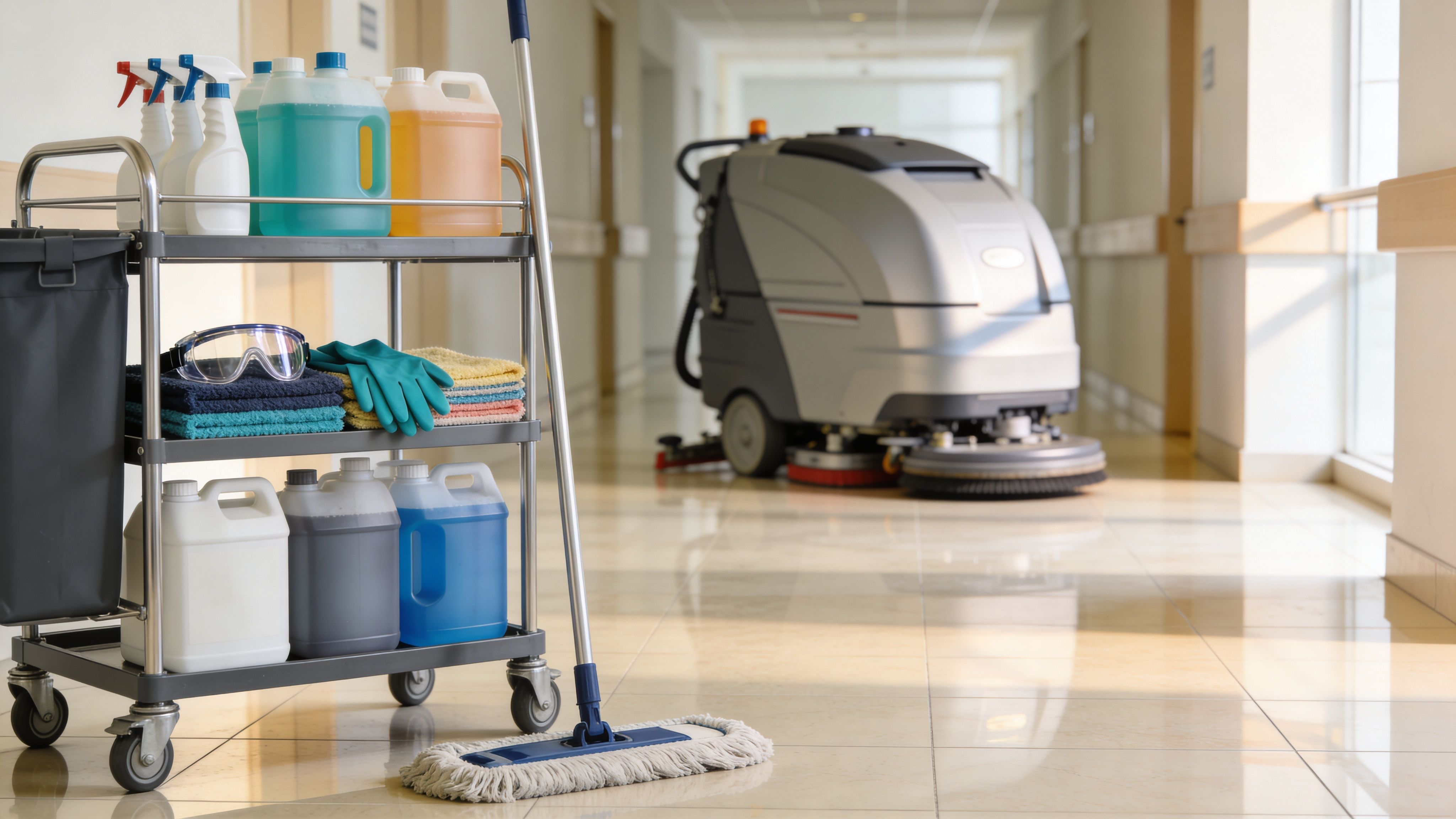
The automatic floor scrubber shown above illustrates the power of floor care machinery. In a single pass, it applies cleaning solution, scrubs the surface, and vacuums up the dirty water, dramatically improving both efficiency and results.
Core Types of Floor Cleaning Machinery
Four main types of machines form the backbone of nearly every effective commercial floor care program.
- Automatic Floor Scrubbers (Auto Scrubbers): The workhorse for large, hard-surface floors. They dispense cleaning solution, scrub with rotating brushes or pads, and then vacuum the dirty water into a recovery tank, leaving the floor nearly dry.
- Floor Buffers and Burnishers: These machines have distinct roles. A low-speed buffer is used for deep scrubbing or stripping old layers of finish. A high-speed burnisher polishes a clean, finished floor to achieve a high-gloss "wet look."
- Carpet Extractors: This is the essential tool for deep cleaning carpets. It injects hot water and cleaning solution into the carpet fibers and then uses powerful suction to extract dirt and liquid.
- Industrial Wet/Dry Vacuums: Far more powerful than consumer-grade vacuums, these machines are critical for collecting large volumes of liquid, such as the slurry from a floor stripping job or a major spill.
Staying Safe and Compliant with WHMIS
Using professional-grade floor cleaning supplies involves handling powerful chemicals, which carries a significant legal and ethical responsibility for worker safety. In Canada, this is managed through the Workplace Hazardous Materials Information System (WHMIS). WHMIS provides a standardized framework for communicating information about hazardous products in the workplace.
Compliance is not merely about avoiding fines; it is about protecting the cleaning team, employees, and all building occupants. WHMIS is built on three core components that work together to ensure everyone has the information needed to work safely.
The Three Pillars of WHMIS
For any business using commercial cleaning chemicals, full compliance requires mastering these three interconnected elements.
- Product Labels: Every hazardous product must arrive with a proper WHMIS label. These labels use pictograms (e.g., a flame for flammability) to provide immediate hazard warnings, identify the supplier, and offer precautionary advice.
- Safety Data Sheets (SDS): An SDS is a detailed technical document that provides comprehensive information about a product’s hazards, safe handling instructions, first aid measures, and emergency procedures. Employers are legally required to have an accessible SDS for every hazardous chemical on site.
- Worker Training and Education: This is the most critical pillar. As the Canadian Centre for Occupational Health and Safety (CCOHS) emphasizes, proper training ensures that staff can recognize hazards, understand labels and SDSs, use personal protective equipment (PPE) correctly, and respond appropriately in an emergency.
Definition: The Workplace Hazardous Materials Information System (WHMIS) is Canada's national standard for communicating information about hazardous products in the workplace. It is an active communication system designed to prevent injuries and illness from chemical exposure.
To ensure compliance, businesses should implement a clear and consistent process.
WHMIS Compliance Checklist
- Assign a responsible person to manage the WHMIS program.
- Maintain a complete inventory of all chemicals.
- Ensure an up-to-date Safety Data Sheet (SDS) is available for every product.
- Verify that all hazardous product containers are correctly labelled.
- Train all employees who may handle or be exposed to these chemicals.
- Document all training, including attendees and dates.
- Schedule annual refresher training.
- Establish written procedures for safe chemical storage, handling, and disposal.
- Regularly review and update the WHMIS program.
Smart Strategies for Managing Supply Costs
Effective cost control for commercial floor cleaning supplies is about more than finding the lowest price. It involves strategic purchasing, reducing waste, and understanding the total cost of ownership. A sound strategy balances the upfront cost of a product against its long-term performance and the labour savings it can provide.
One of the first decisions is whether to purchase supplies in bulk or to have a cleaning service provider manage procurement. Bulk purchasing can lower per-unit costs but requires storage space and significant upfront capital. Partnering with a professional cleaning company often provides access to their supplier relationships and volume discounts, representing a more efficient path for many businesses.
Calculating the True Cost of Ownership
The price of a chemical is only one part of its true cost. The total cost includes the product, the labour required to use it, any associated waste, and its impact on the lifespan of the flooring.
- Chemical Dilution Control: Concentrated chemicals are typically more cost-effective than ready-to-use formulas, but only if they are diluted correctly. Over-diluting wastes product, while under-diluting leads to poor results and wasted labour. A proper dilution control system ensures a perfect mix, cutting chemical waste and guaranteeing consistent performance.
- Durable Tools vs. Cheap Alternatives: Investing in durable, high-quality tools like premium microfibre mops may have a higher initial cost but reduces replacement frequency and improves cleaning effectiveness, leading to direct labour savings over time.
Strategic Procurement and Vendor Management
The commercial landscape in the Greater Toronto Area is strong, as is the demand for cleaning supplies. Data indicates that in 2026, floor cleaning supplies accounted for 28% of total janitorial spending, with 62% of facility managers prioritizing eco-friendly options. You can read more about these janitorial market statistics on grandviewresearch.com.
This trend highlights the importance of a smart procurement strategy. Effective vendor management best practices can lower costs and improve quality. This involves negotiating solid contracts, evaluating supplier performance, and building partnerships that deliver long-term value.
FAQ: Your Top Floor Care Questions Answered
What is the difference between stripping and waxing a floor?
Stripping and waxing (more accurately called "finishing") are two distinct stages of a floor restoration project, typically performed on floors like VCT. Stripping is the process of using a powerful chemical solution to completely dissolve and remove all old layers of finish, taking the floor back to its bare surface. Finishing is the subsequent process of applying several new, thin coats of floor finish to build a glossy, durable shield that protects the floor from wear.
How often should professional floor care be scheduled?
The frequency of professional floor care depends entirely on foot traffic. A high-traffic retail entryway may need buffing weekly and a "scrub and recoat" every few months. A full strip and finish is a major project, typically required only every 12 to 24 months with a proper maintenance program in place. As experts like Buckeye International note, a smart maintenance plan aims to extend the time between these disruptive, labour-intensive tasks.
What are the benefits of eco-friendly cleaning supplies?
Eco-friendly or "green" cleaning supplies offer significant benefits beyond environmental considerations. They typically contain lower levels of Volatile Organic Compounds (VOCs), which improves indoor air quality and creates a healthier environment for building occupants. They are also formulated to be less aggressive, reducing the risk of chemical accidents and damage to sensitive flooring materials while still providing effective cleaning.
Do I need to buy supplies if I hire a cleaning service?
Generally, no. A professional commercial cleaning company should provide all necessary commercial floor cleaning supplies and equipment as part of their service. This is a key advantage, as it relieves the facility manager of procurement, storage, and WHMIS compliance responsibilities. The cleaning provider has access to commercial-grade products and machinery and the expertise to use them correctly. It is important to confirm this is included when obtaining service quotes.
Further Reading and Resources
Mastering commercial floor care is an ongoing process of learning and adaptation. This section provides a curated library of internal and external resources to deepen your understanding and connect you with professional support.
Internal Resources
- Service Areas: To see the communities we serve in the Greater Toronto Area and beyond, visit our locations page.
- Strip and Wax Services: For a comprehensive overview of the VCT restoration process, our guide to deep floor restoration details each step.
External Resources
- ISSA - The Worldwide Cleaning Industry Association: The definitive source for industry standards, training, and certifications. Explore their resources on Cleaning Industry Management Standards.
- Buckeye International: An excellent resource for facility managers, offering practical guides on creating a sustainable maintenance-driven hard floor care program.
- Canadian Centre for Occupational Health and Safety (CCOHS): The official source for Canada's guidelines and training on WHMIS compliance.








.webp)