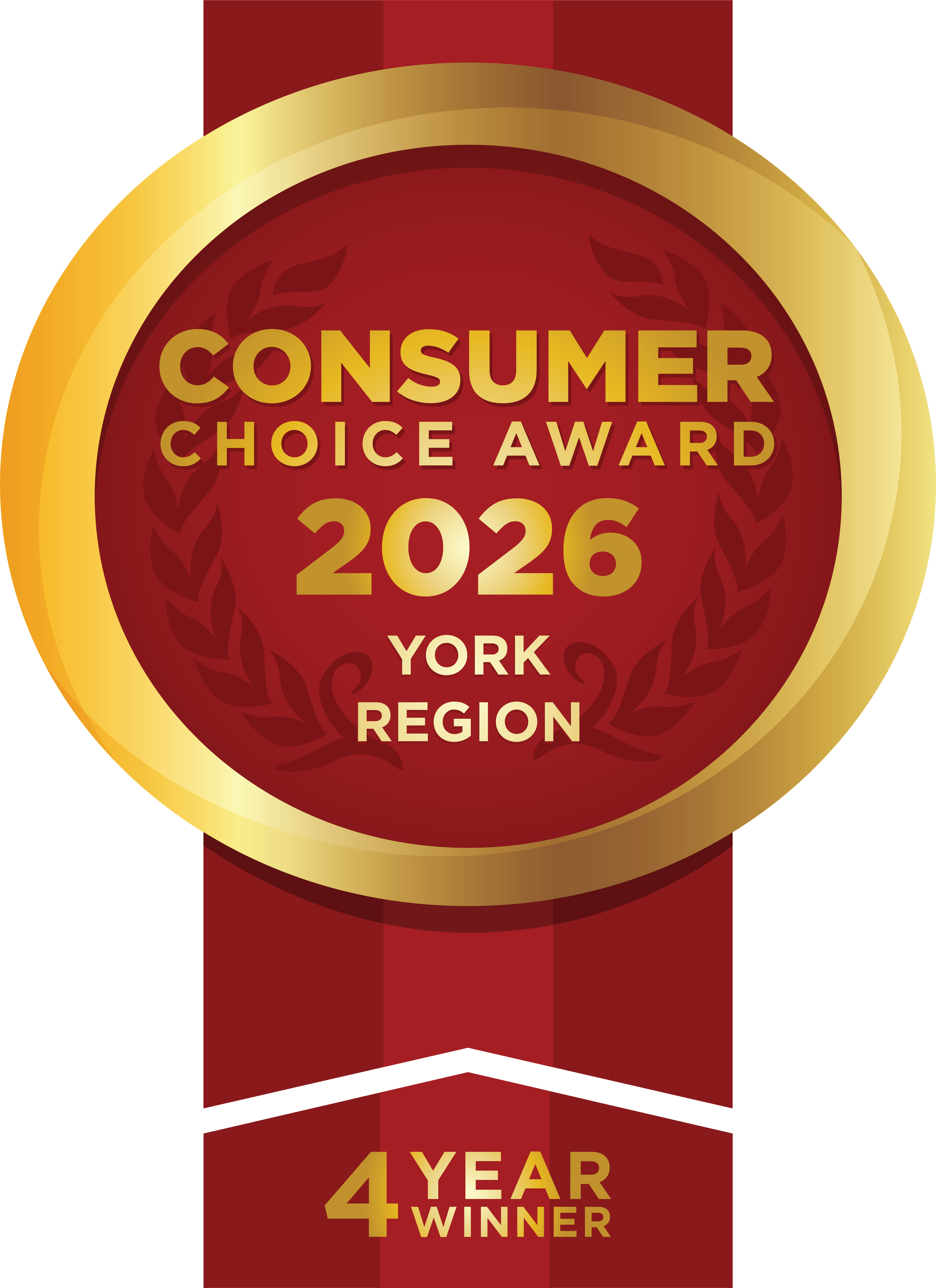
Arelli Cleaning's fourth straight Consumer Choice Award recognition now sits across a documented trail in York Region materials, the company's own archive, and recent local award coverage. For GTA buyers, that matters because a repeated local win is easier to read as a pattern of sustained service than as a one-off publicity moment.
The clearest version of the story is simple. Arelli wins the Consumer Choice Award for the 4th year is not just a headline claim, it is a local-market record that links 2023, 2024, 2025, and the 2026 York Region winners announcement together through the same janitorial-services category and the same regional lens. For office, industrial, educational, and clinical buyers in Toronto, York Region, and nearby suburbs, that kind of continuity invites a practical question, what does the award measure, and what should a buyer verify before treating it as a meaningful signal?
Table of Contents
Operating Markers Behind the Award PatternPractical Next Steps for GTA Office Cleaning Buyers
A Fourth Consecutive Win for a York Region Cleaning Company
The 2026 York Region Consumer Choice Award announcement publicly lists Arelli Cleaning among the region's winners, and Arelli's own materials describe the result as part of a multi-year streak in the Janitorial Services category. Taken together with the company's earlier 2023, 2024, and 2025 materials, the record supports a fourth consecutive year of recognition in the same local market. The 2026 York Region Consumer Choice Award winners announcement is the most recent public anchor in that trail.
That matters more in the GTA than a single trophy ever could. York Region is one of the core GTA subregions, so repeat recognition there reads as a local credibility signal, not a national branding exercise. For office-cleaning buyers, recurring recognition in the same regional category usually points to stable delivery, steady client relationships, and an ongoing presence in the market rather than a short-lived campaign.
What readers can take from the four-year pattern
- Methodology: the award is based on independent market research, not an internal judging panel.
- Operational signal: repeated wins can suggest sustained client satisfaction and local visibility.
- Service signal: buyers should still verify insurance, training, scope of work, and response process.
- Decision use: the award works best as one input in a broader vendor screen, not a guarantee of fit.
Arelli's own award pages also frame the recognition as part of a local sequence, beginning with its first Consumer Choice Award in 2023. That first win matters because it anchors the later repeat results as a progression, not as a random later appearance. The regional aspect is important too, because the category is geographically bounded and tied to York Region's market conditions rather than a broad national field.
Practical rule: a local award becomes more meaningful when the same company appears across multiple cycles in the same region and the same category.
For GTA buyers, the useful takeaway is straightforward. A four-year pattern doesn't prove every future job will go perfectly, but it does give a stronger basis for asking informed questions about consistency, staffing, communication, and accountability.
How the Consumer Choice Award Is Actually Decided
The Consumer Choice Award doesn't rely on a small internal panel picking favourites. Its public explanation describes a multi-step selection process that uses standardized category definitions, regional market specifics, nominations, third-party business lists from Dunn & Bradstreet and ASI, and a ranking stage before winners are selected. The organisation also says that independent market research is the basis for determining recipients. Consumer Choice Award's public explanation of its process is the cleanest source for that methodology.
That structure matters because it helps separate a regional consumer award from editorial praise or paid publicity. A company that appears in the local nomination and ranking process over several years is being measured within the same geographic competitive set, which makes repeat recognition more useful than a single isolated mention. In practical terms, a repeated win says the business has remained visible in the same local market, not surfaced once.
A simple way to read the award
- What it measures: local market awareness, consumer response, and category performance.
- What it does not measure: a full operational audit, compliance review, or facility-by-facility inspection.
- Why repeat wins matter: they suggest the business kept showing up in the same regional research process.
- What buyers still need: proof of insurance, scope, scheduling, supervision, and escalation practices.
That last point is where many award stories get overread. A consumer award can indicate trust and continuity, but it doesn't tell a facility manager whether the provider has the right cleaning schedule for a dental office, the right safety procedures for a warehouse, or the right escalation process for a law firm. The award signal is strongest when it's used to narrow the field, then followed by operational verification.
For local buyers, the value of the methodology is that it makes the award more than a logo. It's a research-based regional signal that can help screen vendors, especially when the same company keeps appearing in the same category over multiple years.
What Leadership Says Drove the Four-Year Streak
Arelli's leadership points to three operational themes behind the run of recognition, measurement, feedback loops, and expectation-setting. Those themes show up in the company's own answers and are useful because they translate a public award into something buyers can evaluate.
The metrics the company says it watches
The company says it monitors Number of Cases per Customer and Number of Cases per Crew to decide whether retraining or reassigning crews is needed. That's a useful signal because it suggests a frontline review model, not a purely reactive one. When a provider tracks performance at both customer and crew level, management can spot service drift earlier and respond before a complaint becomes a pattern.
How feedback changed the workflow
Arelli also says client feedback helped move a standard Quality Log Book into the app its teams use. In its description, crew members and the office can be updated live when customer concerns arise. That kind of change matters because office cleaning often fails at the handoff point, not because the work itself is impossible. If a note stays on paper, the response slows down. If it reaches the office and the crew in real time, the correction can happen within the same service cycle.
Operational insight: in cleaning, fast feedback is only useful if it reaches the people who can act on it before the next visit.
What the first step looks like in practice
On its own guidance for other cleaning businesses, leadership says the first actionable principle is that customers are always right, followed by an honest test of whether the company can meet those expectations. That isn't a slogan for a brochure. In service businesses, it's a filter for scope control, staffing, and communication. If a provider can't meet a request reliably, the better answer is to say so early, then define what can be delivered consistently.
Arelli's company story page is the right place to see how the brand frames those habits in its own words. For buyers, the broader lesson is that award continuity often sits on top of mundane systems, clear metrics, quick feedback, and management discipline.
Operating Markers Behind the Award Pattern
Arelli's earliest award narrative included a scale signal that still helps explain the later streak. The company said it served more than 300 recurring customers and employed more than 100 cleaning crews when it won its first Consumer Choice Award. That reporting is useful because a 300-plus recurring-client base usually demands standardised workflows, crew coordination, and consistent oversight if service quality is going to hold.

That operational scale lines up with the company's described service model. Its location page says it offers a free sample clean, a price match guarantee, no-term contracts, and zero cancellation fees, alongside work for offices, industrial and manufacturing facilities, and educational or clinical settings. The locations page is also where readers can check service coverage for their own area.
The award pattern makes more sense when those markers are viewed together. A company that manages recurring accounts, uses a real-time communication system, and serves multiple facility types has more moving parts than a small one-off cleaning outfit. That can be a strength if the systems are disciplined, but buyers still need to ask how those systems are supervised day to day.
One useful comparison point is the long-term service mindset described in this note on long-term landscaping partnerships. Different service trades, similar principle, consistent delivery tends to matter more than a single promise. Cleaning buyers can apply that same logic by asking how the provider handles recurring feedback, changing site conditions, and continuity of crew knowledge.
Arelli's office cleaning services page fits that same operational frame, since office buyers usually care about regularity, access, and response more than marketing language. For local buyers, the point is not whether the company sounds polished. It's whether the operating structure can support the award pattern shown across several years.
How to Read the Award Signal When Choosing a Cleaner
A Consumer Choice Award can help narrow a shortlist, but it should never be the final filter. The better question is whether the award sits alongside documents and procedures that show the provider can manage a facility. A buyer in Toronto or York Region can use a simple screen to separate a strong local signal from a weak one.
What to ask before signing anything
- Insurance proof: Ask for current coverage and confirm the policy aligns with your site's risk profile.
- WHMIS training records: Verify that staff handling chemicals are trained for the products and surfaces in your building.
- Scope of work: Request a written checklist that names rooms, frequencies, and exclusions.
- Relevant references: Ask for examples from your facility type, such as office, industrial, clinical, or educational space.
- Escalation path: Find out exactly who receives complaints, how fast they're logged, and how corrections are assigned.
What to avoid
- Vague pricing language that doesn't explain what's included.
- Long lock-in terms with cancellation penalties that make it hard to change providers.
- Missing QA records if the company can't show inspection or follow-up documentation.
- Generic service promises that never explain who manages daily issues.
| Signal Type | What It Indicates | How to Verify |
|---|
| Repeat local award recognition | The business has stayed visible in the same regional research cycle | Check the local winners list and the company's own award history |
| Written service scope | The provider knows what it is actually responsible for | Review the checklist room by room |
| Training records | Staff may be prepared for safety-sensitive tasks | Ask for WHMIS evidence and onboarding procedures |
| Feedback system | Concerns are more likely to be corrected quickly | Ask how issues are logged and closed |
A clean proposal is not the same thing as a managed service. Buyers should look for the process behind the promise.
The Toronto office cleaning locations page is a practical place to confirm geographic fit, but the better screen is still operational. If the provider can't explain how a complaint moves from client note to crew correction, the award means less than it appears to on the surface.
Practical Next Steps for GTA Office Cleaning Buyers
The next step is simple, get two or three quotes and ask each provider to walk through the same checklist. If one company offers a sample clean or trial period, use it to see how the crew handles your actual surfaces, access points, and shared spaces. A short trial often reveals more than a polished proposal because it shows how the team behaves when it's in the building.
Buyers should also look at current facility-management habits before choosing a recurring cleaner. This guide to facility management best practices for 2025 is a useful reminder that communication, documentation, and maintenance discipline matter across the whole building, not only in the cleaning scope. A good cleaner should fit into that rhythm, not work against it.
For readers comparing options in the GTA, a company like Arelli is one option to review because it offers a free sample clean, no-term contracts, and service for several facility types. The practical check is still the same, confirm coverage, ask the right questions, and compare what each vendor will do week after week. Readers can start that process by visiting Arelli Cleaning's contact page and using the checklist already laid out here.
Frequently Asked Questions About the Award and the Company
What does the Consumer Choice Award actually measure?
It measures local consumer research, nominations, and ranking within a regional category. It is not the same as an editorial award or an internal judging decision.
Why is the award regional instead of national?
The process uses regional market specifics and category definitions, so the comparison set is local. That makes the result more relevant for buyers choosing a service provider in York Region or the GTA.
Does a four-year streak guarantee a good fit?
No. It suggests durable local recognition, but it doesn't replace checks on insurance, scope, supervision, training, and response time.
Where can readers verify the 2026 York Region winners list?
The 2026 list is publicly available in the York Region winners announcement carried by The Globe and Mail's markets coverage, which includes Arelli Cleaning in Janitorial Services.
What made the 2023 recognition stand out?
Arelli's own award page says it was named York Region's Best Commercial Cleaning and Janitorial Services Company in 2023, and it says the company was the only winner in that category in York Region. That makes the award geographically specific rather than generic.
How does the award process differ from a marketing claim?
The Consumer Choice Award says winners are selected through independent market research, with third-party inputs and ranking, rather than an internal promotional decision.
What should office buyers ask after seeing the award?
They should ask for a written scope of work, WHMIS records, references from similar facilities, and the escalation path for complaints. That turns a recognition story into a service check.
Does the company serve only office sites?
No. The company says its services are tailored to offices, industrial and manufacturing facilities, and educational or clinical settings.
Is a free sample clean normal in the market?
It's a common trial method, especially for buyers who want to compare service quality before committing to a recurring contract.
Where can local buyers check service area coverage?
They can review the company's locations page and confirm whether their subregion is covered before requesting quotes.
Arelli Cleaning offers commercial and office cleaning services across several GTA facility types, along with a free sample clean, no-term contracts, and a price-match guarantee. For readers comparing vendors after a local award story, the sensible next step is to review the checklist, gather a few quotes, and see whether the service model fits the building. To explore coverage and ask direct questions, visit Arelli Cleaning.








.webp)