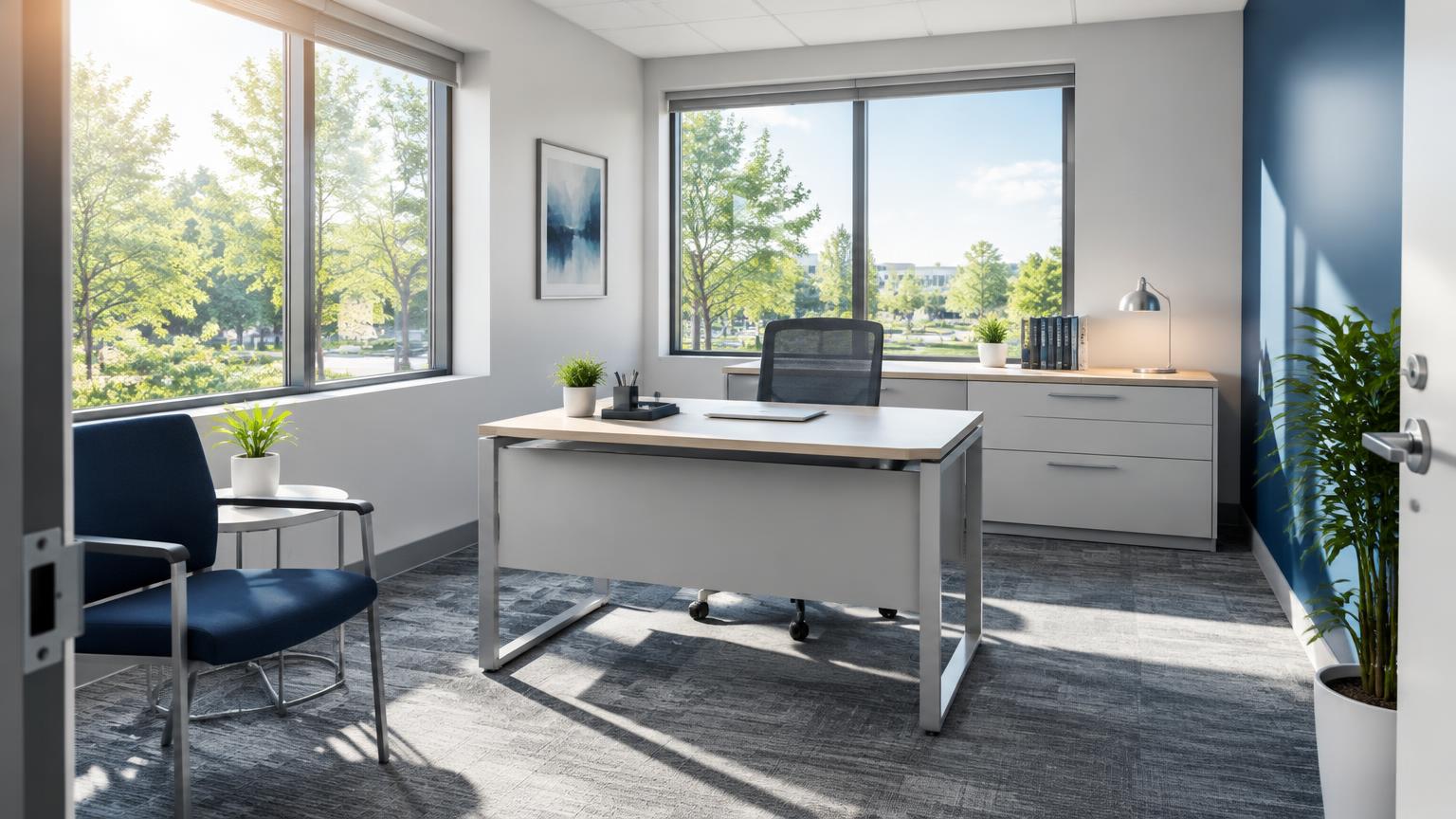

A clean, organized office is more than an aesthetic choice; it is a direct contributor to employee well-being, productivity, and a company's brand image. Yet, even in well-managed facilities, cleaning-related issues are a frequent source of friction. From dusty shelves missed for a second week to restrooms that do not meet health standards, these problems can disrupt operations and signal a breakdown in service quality. Facility managers and business owners often find themselves caught between employee feedback and their cleaning provider's performance, spending valuable time addressing recurring issues.
This article provides a structured guide to resolving the top 7 complaints in office cleaning (and how to fix them). It moves beyond simply listing problems to offer a practical framework for each one. You will find clear explanations of root causes, step-by-step solutions, and preventative strategies to stop issues before they start. Each section includes actionable tools like checklists and communication frameworks to help you build a more accountable and effective cleaning program.
By understanding the "why" behind common service gaps, facility managers can implement precise fixes, set clear expectations with their cleaning team, and create a consistently clean and healthy workplace. This guide is designed to empower you with the knowledge to diagnose problems accurately and work collaboratively toward a higher standard of facility maintenance, ensuring your office environment always reflects the quality of your business.
Key Takeaways
- Inconsistency is a Systems Problem: Inconsistent cleaning quality is rarely due to a lack of effort but rather a failure in systems. Documented Standard Operating Procedures (SOPs) and regular inspections are essential.
- Communication Requires Structure: Poor communication is solved by establishing a dedicated point of contact, defining Service Level Agreements (SLAs) for response times, and using a formal logging system for requests.
- Completeness Needs a Plan: To prevent missed areas, create detailed, room-by-room checklists and facility maps. A rotational schedule for deep cleaning tasks ensures nothing is forgotten.
- Disinfection is a Science: Effective disinfection requires using Health Canada-approved products, training staff on correct contact times, and maintaining logs to ensure compliance and safety.
- Flexibility is Non-Negotiable: Modern businesses need agile cleaning partners. Prioritize providers that offer no-term contracts and have clear protocols for emergency or last-minute service requests.
- Cost Certainty Builds Trust: Avoid surprise charges by demanding itemized quotes, clarifying all service inclusions in writing, and establishing a formal change order process for any work outside the agreed scope.
1. Inconsistent Cleaning Quality and Standards
One of the most frequent and frustrating issues in commercial cleaning is inconsistent service quality. You might notice sparkling restrooms one week, only to find them neglected the next. This variability often stems from a lack of standardized procedures, insufficient cleaner training, or weak quality control systems. For businesses, especially in competitive markets like Toronto, this inconsistency can undermine a professional image, affect employee morale, and even pose health risks.
The root of the problem is not usually a cleaner's lack of effort but rather a systemic failure. Without clear, documented expectations, each team member is left to their own interpretation of "clean." This is why a systematic approach is essential. Industry authorities like the International Sanitary Supply Association (ISSA) promote frameworks such as the Cleaning Industry Management Standard (CIMS), which prioritizes process over personality to ensure every task is performed to a specific standard, every time.
How to Fix Inconsistent Cleaning
Solving this common complaint requires shifting from a reactive "fix-it-when-it's-broken" model to a proactive quality assurance framework. The goal is to build a system that prevents inconsistencies before they occur.
Step-by-Step Fixes:
- Develop Standard Operating Procedures (SOPs): Create detailed, written checklists for every area of your facility (e.g., washrooms, kitchen, individual offices, common areas). Specify tasks, frequency, and the expected outcome.
- Implement Regular Inspections: Schedule both announced and unannounced inspections. Use a scoring system to objectively measure performance against the SOPs. This holds cleaning teams accountable and identifies training gaps.
- Establish a Communication Loop: Create a simple channel for your staff to report cleaning issues. A shared digital log or a dedicated email address can work. The cleaning provider must have a corresponding system to acknowledge, assign, and confirm resolution of these issues.
- Use Technology for Tracking: Modern cleaning management systems allow for real-time task tracking and reporting. Cleaners can check off tasks on a mobile app, providing managers and clients with immediate visibility into what has been completed.
Key Insight: Consistency is not an accident; it is the result of a deliberate, well-managed system. Industry standards like CIMS demonstrate that documented processes, regular training, and robust quality checks are the building blocks of reliable commercial cleaning.
By implementing these structured solutions, you replace ambiguity with clarity. Your cleaning provider knows exactly what is expected, and you have a clear framework for measuring their performance. This systematic approach is a core element of professional office cleaning services in Toronto, where high standards are a business necessity.
2. Inadequate Communication and Responsiveness
A common point of failure in commercial cleaning contracts is a breakdown in communication. You send an email about a missed spot or a special request and hear nothing back for days. Or, the cleaning team’s schedule changes without notice, disrupting your operations. This lack of responsiveness is not just annoying; it erodes trust and leaves your facility vulnerable. For businesses with strict sanitation needs or 24/7 operations, silent treatment from a cleaning provider is simply not an option.
The problem is often a lack of established communication protocols. If a cleaning company doesn't have a structured system for receiving, tracking, and responding to client needs, messages get lost. This reactive approach creates frustration and leads to recurring issues. A dedicated account manager, 24/7 support lines, and modern management platforms are signs of a professional service that prioritizes client partnership over simple task execution. Facility management blogs often highlight that a lack of a clear communication channel is a leading cause of client churn.
How to Fix Inadequate Communication
Solving poor communication requires building clear, reliable channels and setting firm expectations for response times. The focus must be on creating a proactive and transparent relationship between you and your cleaning provider.
Step-by-Step Fixes:
- Establish a Primary Point of Contact: Insist on having a dedicated account manager. This individual should be your go-to person for all queries, feedback, and special requests, ensuring you're not lost in a generic customer service queue.
- Define Communication Channels and SLAs: Agree on the official channels for communication (e.g., email, phone, client portal) and a Service Level Agreement (SLA) for response times. For example, all non-urgent inquiries should be acknowledged within two business hours.
- Implement a Ticketing or Logging System: Use a system to formally log all requests and issues. This creates a documented record, preventing tasks from being forgotten and allowing for easy follow-up. A shared digital document or a provider’s client portal works well.
- Schedule Regular Check-ins: Set up brief, recurring meetings (e.g., monthly or bi-weekly) with your account manager to review performance, discuss upcoming needs, and provide feedback. Proactive conversations prevent small issues from becoming major complaints. To effectively manage and respond to client feedback, especially regarding communication, specialized tools like review responders for house cleaning services can also be highly beneficial.
Key Insight: Excellent communication is not a bonus feature; it is a core component of a professional cleaning service. A provider that invests in 24/7 support, dedicated managers, and transparent tracking systems demonstrates a commitment to accountability and client success.
By formalizing how you communicate, you eliminate guesswork and frustration. You create a partnership where your voice is heard, and your needs are addressed promptly and professionally. This structured approach is fundamental to resolving many of the top 7 complaints in office cleaning.
3. Missed Areas and Incomplete Cleaning Tasks
One of the most common entries in the list of top 7 complaints in office cleaning is discovering missed areas and incomplete tasks. You may find dust still settled on baseboards, grime in hard-to-reach corners, or fingerprints remaining on glass partitions. This issue often stems from a lack of detailed instructions, time pressure on cleaning staff, or insufficient training on what defines a "complete" clean. For specialized facilities like dental clinics or warehouses, incomplete cleaning doesn't just look unprofessional; it can compromise health, safety, and regulatory compliance.
The problem is rarely intentional neglect. More often, it's a breakdown in the cleaning plan. Without a precise map of all areas and a comprehensive list of tasks, cleaners may focus only on the most visible surfaces. This is especially true for tasks that are not performed daily, like wiping down light fixtures or disinfecting HVAC vents. Standards from Public Health Ontario emphasize that completeness is a critical component of hygiene, making a systematic approach essential for any workplace.
How to Fix Missed Areas and Incomplete Tasks
Addressing this complaint requires moving beyond a general scope of work to a highly detailed and documented cleaning plan. The solution lies in making sure every corner of your facility is accounted for and that cleaning staff have the clear guidance and time needed to do the job right.
Step-by-Step Fixes:
- Develop Detailed Task Checklists: Create specific, room-by-room checklists that go beyond "clean office." Itemize tasks like "wipe down all baseboards," "disinfect light switches and door handles," and "dust top of all picture frames." Laminated guides are effective tools.
- Create Facility Maps with Zones: For larger spaces like warehouses or multi-floor offices, divide the facility into numbered zones. Assign specific zones and corresponding checklists to individual cleaners to ensure clear accountability and complete coverage.
- Implement a Rotational Deep Cleaning Schedule: Schedule less frequent tasks (e.g., cleaning HVAC vents, high dusting) on a rotating weekly or monthly basis. This ensures these "forgotten" areas receive regular attention without overburdening the daily cleaning routine.
- Use Technology for Verification: Modern cleaning management software allows cleaners to upload photos as proof of completion for specific tasks. This documentation provides peace of mind and creates a visual record of the work performed, holding the team accountable.
Key Insight: A truly clean facility is the product of a detailed plan, not just hard work. By mapping out every area and defining every task, you eliminate ambiguity and ensure that "clean" means the same thing to you and your cleaning provider.
By adopting these methodical fixes, you create a system that proactively prevents missed spots. Your cleaning team receives the clarity it needs, and you gain the assurance that every part of your workspace meets your standards. This detailed approach is a hallmark of professional office cleaning services and is fundamental to maintaining a safe and professional environment.
4. Inadequate Disinfection and Health Compliance
In the wake of heightened global health awareness, complaints about insufficient disinfection and non-compliance with health standards have become a major concern for businesses. This issue goes beyond surface-level cleaning; it involves the correct use of approved products, adherence to required contact times for disinfectants, and thorough coverage of high-touch surfaces. For facilities like dental clinics, medical offices, and childcare centres in Ontario, which are subject to strict Health Canada and WHMIS regulations, this is not just a preference but a critical operational requirement.
The problem often arises from untrained staff, the use of unapproved or ineffective cleaning agents, or a simple lack of documented procedures. Without a clear system, cleaners may unknowingly cut corners by wiping disinfectants away too quickly, failing to achieve the necessary contact time to kill pathogens. This creates a false sense of security and can lead to health inspection failures, reputational damage, and an unsafe environment for employees and clients. True health compliance requires a disciplined, evidence-based approach.
How to Fix Inadequate Disinfection
Addressing disinfection and compliance failures demands a move from assumption to verification. It requires a system built on approved products, proper training, and diligent documentation to ensure every disinfection task is performed effectively and can be proven during an audit. This is a core component of professional commercial disinfection and sanitizing services.
Step-by-Step Fixes:
- Use Only Health Canada-Approved Products: Mandate the exclusive use of disinfectants with a Drug Identification Number (DIN) from Health Canada's approved list. Maintain an up-to-date inventory and ensure all Safety Data Sheets (SDS) are accessible both digitally and in physical binders at cleaning stations.
- Train and Certify Staff on Protocols: All cleaning staff must be trained on WHMIS regulations, proper dilution ratios, application techniques (e.g., spray-and-wipe vs. fogging), and most importantly, contact time. This is the dwell time a disinfectant must remain wet on a surface to be effective. Post visible charts detailing contact times for each product used.
- Implement a Documented Disinfection Log: Create a formal log for high-risk areas. Cleaners should initial the log after disinfecting, recording the date, time, and product used. This creates accountability and provides a verifiable record for health inspectors.
- Prevent Cross-Contamination: Institute a colour-coded system for microfibre cloths and mop heads. For instance, red for washrooms, blue for general office areas, and green for kitchens. This simple practice is highly effective in preventing the spread of germs from one area to another.
Key Insight: Effective disinfection is a science, not a guess. It relies on the trifecta of using the right product, for the right amount of time, with the right application method. Documenting this process transforms cleaning from a perceived cost into a verifiable health and safety investment.
5. Long Response Times and Service Scheduling Inflexibility
Modern business operations are rarely static. This makes rigid cleaning schedules and slow responses from service providers a significant point of frustration. Businesses often face long wait times for emergency requests, an inability to adjust schedules for special events, and strict contracts with penalties for changes. This inflexibility clashes with the dynamic needs of today's workplaces, from tech startups with fluctuating office populations to professional services firms needing last-minute cleanups before important client meetings.
This problem is often rooted in outdated, contract-centric business models. Some cleaning companies lock clients into fixed schedules that benefit their operational efficiency but disregard the client's changing requirements. The solution is a shift toward a more customer-focused, flexible service model, influenced by on-demand service trends and a greater emphasis on partnership rather than just vendor-client transactions. This approach allows businesses to adapt their cleaning services to their real-world operational rhythm.
How to Fix Inflexibility and Slow Responses
Overcoming scheduling rigidity involves finding a cleaning partner whose operational model is built for agility. The focus should be on creating a service framework that can easily expand, contract, or shift based on your business's immediate and future needs.
Step-by-Step Fixes:
- Prioritize No-Term Contracts: Look for providers who offer no-term contracts with zero cancellation fees. This model gives you the freedom to adjust, pause, or stop services as your business needs evolve, without financial penalties.
- Establish an Emergency Response Protocol: Discuss and formalize an emergency cleaning plan with your provider. This should define what constitutes an emergency, the expected response time (e.g., same-day service), and any associated costs.
- Use Technology for Scheduling: A cleaning company with a client portal or mobile app for scheduling provides immense value. This allows you to request schedule changes, book one-time cleanings, and communicate needs quickly without playing phone tag.
- Confirm Customization Options: Your provider should be able to create custom schedules that align with your unique operations, rather than forcing a standard 9-to-5 approach.
Key Insight: True service flexibility is not just about changing a cleaning time; it is about the provider's willingness and ability to function as an agile partner. A company that offers no-term contracts and has clear emergency response protocols demonstrates a commitment to your business's success, not just their own operational convenience.
By choosing a provider with a flexible service model, you align your cleaning services with the realities of your business. This ensures you only pay for what you need and can get support exactly when you need it, a crucial advantage for any modern office cleaning service in Toronto.
6. Cost Transparency and Unexpected Additional Charges
Few things disrupt a business relationship faster than unexpected bills and hidden fees. A common complaint in commercial cleaning revolves around unclear pricing, where the final invoice does not match the initial quote. Businesses, especially small to medium-sized enterprises with tight budgets, often find themselves facing surprise charges for services they assumed were included, creating frustration and budget uncertainty.
This lack of transparency usually originates from vague contracts and complex pricing tiers. Some cleaning agreements intentionally obscure what is considered a "standard" service versus a "specialty" add-on. This erodes trust and makes it difficult to compare providers on an equal footing.
How to Fix Cost Transparency Issues
Addressing billing and cost issues requires a commitment to upfront, clear, and detailed communication. The solution is to move away from confusing contracts and toward transparent pricing models where every service and its associated cost is clearly documented before any work begins.
Step-by-Step Fixes:
- Demand an Itemized Quote: Before signing any agreement, request a detailed, written quote that breaks down all services. This should clearly separate routine tasks (e.g., vacuuming, dusting, trash removal) from specialty services (e.g., deep carpet cleaning, window washing, high-level disinfection).
- Clarify Service Inclusions: Review the contract's scope of work line by line. Ask direct questions: "Is floor stripping and waxing included in this price, or is it an additional charge?" "What is the cost if we require an emergency cleanup?" Get all answers in writing.
- Establish a Change Order Process: Agree on a formal process for any services requested outside the standard contract. No additional work should be performed or billed without a pre-approved written change order that specifies the task and the cost.
- Request Detailed Invoices: Ensure your monthly invoices are itemized to reflect the services performed. This allows you to cross-reference the work against your contract and budget, preventing invoice creep and making it easier for accounting departments to process.
Key Insight: True cost-effectiveness is not about the lowest price but about cost certainty. A professional cleaning partner invests in transparent pricing and clear communication, ensuring you pay for exactly what you need with no surprises. This builds a foundation of trust and long-term partnership.
By insisting on these practices, you protect your budget from unexpected shocks and foster a more honest relationship with your cleaning provider. For businesses evaluating commercial cleaning services, a provider's willingness to offer transparent, itemized pricing and guarantees is a strong indicator of their professionalism and client-focused approach.
7. Inadequate Specialty Services and Limited Scope of Offerings
A frequent complaint arises when a business’s needs extend beyond the standard daily cleaning contract. Many cleaning providers focus solely on basic janitorial tasks, leaving clients to find, vet, and manage separate vendors for services like carpet cleaning, window washing, or floor stripping and waxing. This multi-vendor approach adds administrative complexity, increases costs, and often results in a disjointed approach to facility maintenance.
The problem is not that basic cleaning is done poorly; it is that the service scope is too narrow. A manufacturing facility, for instance, requires not only daily office and washroom upkeep but also periodic high dusting to manage industrial debris and power washing for exterior areas. When a single provider cannot address these diverse needs, it creates service gaps and forces facility managers into a time-consuming coordination role.
How to Fix a Limited Service Scope
The solution is to partner with a cleaning provider that offers a full suite of services, allowing you to consolidate vendors and simplify facility management. This integrated approach ensures all aspects of your property's cleanliness are handled under one umbrella, with consistent standards and a single point of contact.
Step-by-Step Fixes:
- Conduct a Full Facility Audit: Before signing any contract, perform a comprehensive audit of your entire facility to identify all cleaning needs, both daily and periodic. This includes floor care, high-reach areas, windows, and exterior surfaces.
- Seek a "One-Stop-Shop" Provider: Prioritize cleaning companies that offer a wide menu of services. A provider offering a broad range of specialty cleaning services alongside daily maintenance can serve diverse client needs under one contract.
- Develop an Integrated Cleaning Schedule: Work with your provider to create a master schedule that coordinates routine cleaning with specialty tasks. This ensures, for example, that floor stripping and waxing are done at times that cause minimal disruption to your operations.
- Request Service Bundles: Ask potential providers if they offer discounted packages for bundling standard and specialty services. This not only simplifies vendor management but can also lead to significant cost savings.
Key Insight: Consolidating your cleaning services with a single, capable provider does more than just simplify billing. It creates a strategic partnership where the provider has a complete understanding of your facility's needs, leading to more efficient, effective, and proactive maintenance.
What to Ask a Potential Cleaning Provider
When vetting a new commercial cleaning company, use this checklist to ensure they are equipped to prevent these common complaints.
- For Consistency: "Can you provide a sample of your Standard Operating Procedures (SOPs) and quality inspection reports?"
- For Communication: "What is your guaranteed response time for non-urgent issues? Who will be my dedicated account manager?"
- For Completeness: "How do you document and ensure completion of all tasks in the scope of work, including rotational deep cleaning?"
- For Health Compliance: "Are your staff WHMIS certified? Can you provide a list of the Health Canada-approved disinfectants you use and their contact times?"
- For Flexibility: "Do you offer no-term contracts? What is your process for handling same-day or emergency cleaning requests?"
- For Cost Transparency: "Is your quote fully itemized? What is your formal process for approving and billing for work that is outside the contract scope?"
- For Specialty Services: "What specialty services (e.g., carpet cleaning, high dusting) do you offer in-house versus subcontracting?"
Frequently Asked Questions (FAQ)
What is the most common complaint about office cleaning?
Inconsistent service quality is the most frequently cited complaint. One area may be perfectly clean one day and missed the next. This is typically a symptom of poor systems, not poor effort, and is best solved with detailed checklists, regular inspections, and clear communication.
How do I give feedback to my cleaning company without sounding confrontational?
Use a structured, non-emotional approach. Refer to the specific item on the cleaning checklist that was missed (e.g., "The glass on the main door was not wiped down as per the daily checklist"). Frame it as a process issue rather than a personal failure. A formal communication log or ticketing system also helps depersonalize feedback.
Why is my cleaning bill higher than the quote?
This often happens due to "scope creep," where services performed fall outside the original agreement. The best way to prevent this is by demanding an itemized quote upfront, clarifying all inclusions, and establishing a written change-order process for any additional work.
How often should an office be deep cleaned?
This depends on foot traffic and the type of business. As a general rule, a comprehensive deep clean that includes tasks like high dusting, carpet extraction, and detailed fixture cleaning should be performed quarterly or semi-annually. High-traffic areas may need more frequent attention.
What is the difference between cleaning, sanitizing, and disinfecting?
- Cleaning removes visible dirt and grime from surfaces.
- Sanitizing reduces bacteria on a surface to a safe level as judged by public health standards.
- Disinfecting kills nearly 100% of viruses and bacteria on a surface, which requires using a specific product for a set contact time.
Is it better to hire a large national cleaning company or a local one?
Both have pros and cons. A large company may have more resources and standardized systems, but a local provider might offer more personalized service and flexibility. The best choice is a provider—regardless of size—that demonstrates strong systems, transparent communication, and a focus on client partnership.
Further Reading
Internal Resources:
- Service Areas: Discover our cleaning coverage across the GTA and Ontario at Arelli Cleaning Locations.
- Commercial Disinfection and Sanitizing Services
- Specialty Cleaning Services
External Resources:
- Industry Standards (ISSA): The Cleaning Industry Management Standard (CIMS) provides a framework for quality, efficiency, and customer satisfaction in cleaning organizations.
- Health & Safety (Health Canada): Access the official list of Hard-surface disinfectants and hand sanitizers approved for use in Canada.
- Workplace Health (Public Health Ontario): The Checklist for Environmental Cleaning and Disinfection in Clinical Office Settings offers detailed best practices applicable to many professional environments.
A successful cleaning program relies on a provider who has already built systems to address these common issues. With a focus on detailed checklists, transparent communication, and a satisfaction guarantee, Arelli Cleaning offers a structured approach designed to prevent problems before they start. To see how a process-driven partner can make a difference in your facility, learn more at Arelli Cleaning.