Office cleaning in Toronto and office cleaning in Miami address the same goal—a clean, healthy workplace—but the methods, challenges, and costs are shaped by distinctly different local environments. A facility manager in Toronto prioritizes combating winter salt stains and navigating strict provincial regulations, often leading to higher service costs. In contrast, a Miami manager's focus is on preventing mould growth due to high humidity and managing services in a more price-competitive labour market. Understanding these regional nuances is key to selecting the right commercial cleaning service.
Key Takeaways
- Climate is a Major Driver: Toronto's harsh winters necessitate specialized floor care for salt and slush, while Miami's humidity demands a strong focus on mould prevention and air quality management.
- Regulatory Environments Differ: Toronto cleaning services must adhere to Ontario's strict WHMIS (Workplace Hazardous Materials Information System) and labour laws, impacting training and operational costs. Miami providers follow U.S. OSHA guidelines in a less regulated local market.
- Labour Costs Vary Significantly: Higher minimum wage standards and cost of living in Toronto contribute to higher cleaning service prices. Miami's market often features more competitive pricing due to different labour dynamics.
- Service Expectations Are Localized: The competitive Toronto market often drives the adoption of technology for communication and quality assurance, while in Miami, thorough vetting of a provider's internal processes is crucial.
Key Differences in Urban Commercial Cleaning Markets
For any facility manager or business owner, understanding the nuances between major city cleaning markets is crucial. The strategy for maintaining a clean, healthy, and professional workspace is not universal; it is rewritten by local climate, economic conditions, and legal standards. A side-by-side comparison of Toronto and Miami highlights these operational differences.
A significant divide is the economic scale and industry structure in each city. The Canadian commercial cleaning sector is a substantial part of the economy, with the Greater Toronto Area at its core. In contrast, Miami's market operates under different economic pressures and labour laws, which can lead to different wage structures and pricing models for janitorial services.
Here is a brief breakdown of how the two cities compare:
These core differences directly impact the scope of work and pricing. The typical scope for an office cleaning service can be adapted based on these local factors.
How Climate Shapes Cleaning Protocols
The local climate is a primary factor defining daily cleaning tasks in Toronto and Miami. While the objective is always a spotless, hygienic office, the specific challenges cleaning professionals face are fundamentally different. A cleaning company in Toronto prepares for a different set of environmental issues than one in Miami, affecting everything from cleaning frequency to the chemical agents used.
Toronto: The Winter Gauntlet
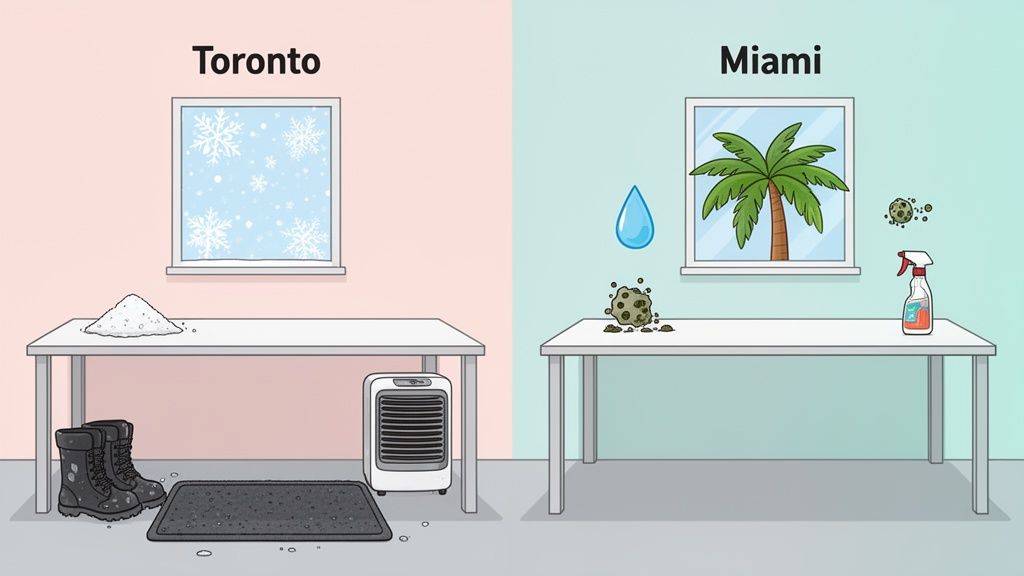
For facility managers in Toronto—and surrounding areas like Vaughan, Mississauga, and Markham—winter dictates cleaning priorities. From November through March, the main objective is managing the salt, slush, and moisture tracked in from outdoors.
- Floor Care is Paramount: Rock salt and de-icing brine are corrosive to office floors. If not removed promptly, they can cause permanent stains, strip wax, and degrade materials like tile and hardwood. Daily mopping with a neutral pH cleaner is non-negotiable to prevent costly damage.
- Matting Systems are Essential: A high-quality entryway matting system is the first line of defense. A proper system traps debris and moisture at the door, but the mats require daily vacuuming and cleaning to remain effective.
- HVAC Maintenance: With windows sealed for months, indoor air quality can decline. HVAC systems work harder, causing filters to clog with dust and particulates more quickly. More frequent filter changes are necessary to maintain healthy indoor air.
Miami: The Humidity Challenge
In Miami, a commercial cleaning company’s primary adversary is persistent high humidity, which creates an ideal environment for mould, mildew, and bacteria. The focus shifts from managing external grime to controlling the indoor atmosphere. Mould and moisture control is not just a cleaning task; it is a health and safety imperative.
- Mould and Mildew Prevention: Cleaning schedules must prioritize specialized disinfection of high-moisture areas like washrooms, kitchens, and around windows. Professionals use fungicidal agents to inhibit microbial growth.
- Dehumidification Strategies: While janitorial staff do not manage a building's climate control, they are trained to identify early signs of excess moisture, such as condensation on windows or walls, and report them to facility managers.
- Surface Selection & Exterior Care: Cleaning chemicals in Miami must be effective against microbes while being safe for surfaces exposed to constant dampness. This concern extends to building exteriors, where algae and mould thrive. Many local companies offer specialized services like power washing to address this buildup.
Navigating Regulatory and Compliance Differences
The regulatory frameworks for commercial cleaning in Toronto and Miami differ significantly, shaping staff training, chemical use, and operational protocols. For any professional cleaning service, navigating these local regulations is essential for ensuring safety and legal compliance.
In Canada, and specifically in Ontario, the Workplace Hazardous Materials Information System (WHMIS) sets a high standard for chemical safety. This national system requires that every cleaning professional receive thorough training on the safe handling, storage, and disposal of cleaning products. This is a legal requirement designed to protect both cleaning crews and building occupants.

Labour Laws and Professional Standards
Labour laws also create a clear distinction between the two cities. Ontario has stringent regulations regarding minimum wage, employee benefits, and workplace safety, which influences the cost structure of any commercial cleaning company in Toronto. These standards often contribute to a more professional, stable, and well-trained workforce.
In Miami, providers must follow the U.S. federal Occupational Safety and Health Administration (OSHA) guidelines, but the local labour market can be more varied. While this may result in more competitive pricing, it places a greater responsibility on the business owner to verify a provider’s training programs and insurance coverage.
A provider's commitment to quality is often reflected in its certifications. Standards like the Cleaning Industry Management Standard (CIMS) are globally recognized benchmarks indicating a well-managed, customer-focused cleaning organization.
Market Growth and Compliance Impact
Canada's regulated environment does more than establish rules; it can also influence market growth and service quality. The higher standards in Toronto often translate to a safer, more reliable service for local businesses. This demand for high-quality, compliant services, especially those using approved disinfection methods, is a key driver of the industry's economic health. A deeper understanding of these methods can be found in guides on professional commercial disinfection and sanitizing, which highlight how adherence to regulations builds trust and delivers quality.
Understanding the Labour Market and Cost Structures
A city's local economy directly impacts the cost of commercial cleaning services. When comparing office cleaning quotes from Toronto and Miami, the differences in their labour markets, wage standards, and overall cost of living create two distinct pricing environments for businesses.
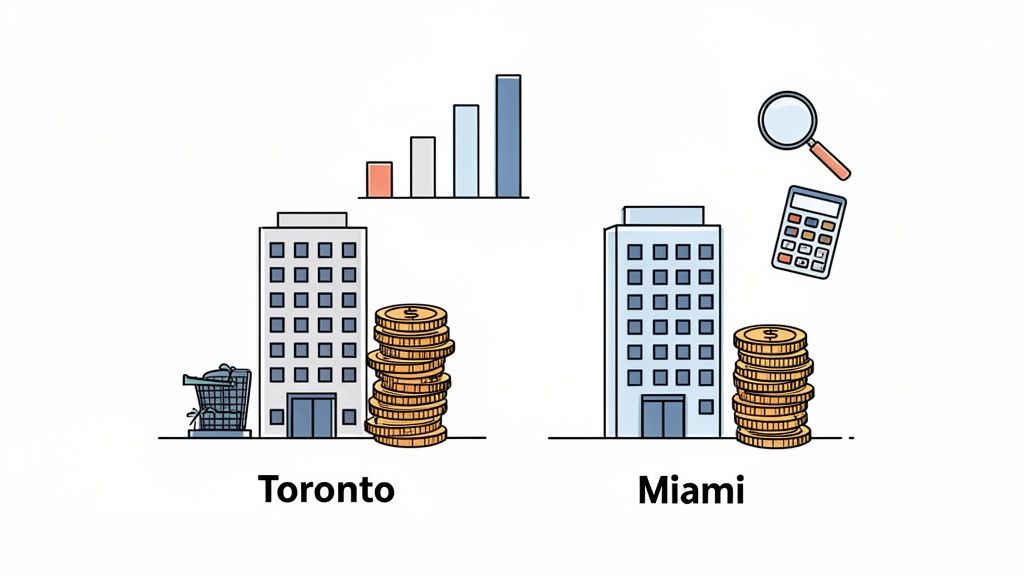
A key point of contrast is found in labour standards. Canada's regulated environment often means stronger protections and higher wage floors for workers. In Toronto, the commercial cleaning industry is a significant employer with defined career paths. Miami’s market sometimes relies more heavily on a subcontracted workforce, where wages may be lower. This factor is a primary driver of the cost difference between the two cities.
Key Factors Influencing Cleaning Quotes
Beyond labour, several universal variables shape the final price a business pays for cleaning services. While these factors are consistent, their financial weight differs in each city due to local economic pressures.
Every quote is typically built on these core drivers:
- Square Footage: The total area to be cleaned is the starting point for any quote.
- Service Frequency: Daily, weekly, or bi-weekly service schedules directly affect labour and supply costs.
- Facility Type: A medical lab or a daycare in North York has more stringent cleaning protocols than a standard office in Woodbridge, affecting the time and specialized materials required.
- Consumables: The cost of providing items like paper towels, soap, and toilet paper can be included in the service contract and reflected in the monthly fee.
Understanding these variables helps businesses compare quotes on an equivalent basis.
Cost Driver Comparison: Toronto vs. Miami
This table breaks down how common factors influence pricing differently in each city. This comparison can help businesses in places like Mississauga, Oakville, or Kitchener understand the value behind the quotes they receive from a Toronto-based provider.
Ultimately, while Miami may offer lower upfront costs, prices in the Toronto market often reflect a greater investment in professional development, compliance, and fair wages. Those interested in the professional standards and opportunities in the industry can learn more about careers in commercial cleaning to see what leading companies look for.
Evaluating Service Expectations and Professionalism
Client expectations for a commercial cleaning service often mirror the local business culture. A comparison of office cleaning in Toronto to office cleaning in Miami reveals that standards for professionalism, communication, and quality control can differ, shaped by market competition and regional regulations.
In a dense, competitive market like the Greater Toronto Area, cleaning companies are often pushed to innovate. Many have adopted technology to differentiate themselves, leading to stronger client support systems. These can include dedicated smartphone apps for communication, automated quality assurance checks, and real-time issue tracking.

This level of organization is functional. Tools like those offered by Janitorial Manager help professional services document tasks, providing clients with transparent and reliable verification of completed work. It is a system built on accountability.
Key Questions to Ask Any Cleaning Provider
Regardless of location, selecting a dependable cleaning partner begins with asking the right questions. The responses will reveal a company's commitment to quality and accountability. Any reputable commercial cleaning service near me should provide clear answers to the following:
- Technology and Communication: How is client communication managed? Is there an app or a dedicated software platform for service requests and updates?
- Quality Assurance: What does the quality control process involve? How often are inspections conducted, and how are the results shared with clients?
- Staff Training and Support: What type of initial and ongoing training do cleaning teams receive? This should cover safety protocols like WHMIS in Canada or OSHA in the U.S.
- Issue Resolution: What is the guaranteed response time for addressing a reported problem?
- Sustainability Practices: What are the company's green cleaning practices? Are certified eco-friendly products used to help improve indoor air quality?
The sophistication of a cleaning company’s operational systems is a strong indicator of its professionalism. Providers that invest in technology for quality control and client communication are generally better equipped to deliver consistent, high-quality service.
While the core task of cleaning is universal, the professional framework supporting that service can vary dramatically. Toronto’s market often demands more technology-forward, system-driven solutions to meet higher client expectations and regulatory requirements. In Miami, excellent providers are available, but the responsibility often falls more on the business owner to thoroughly vet a company’s internal systems for training, support, and quality assurance.
How to Choose the Right Cleaning Service for Your City
Selecting the right commercial cleaning partner requires a tailored approach. Whether a business is in Toronto or Miami, the key is to evaluate potential providers against the unique challenges and standards of that specific city. A structured decision-making framework helps compare quotes fairly and hire a reliable company that understands the local environment.
For businesses in the Greater Toronto Area—from Mississauga and Vaughan to Markham—the vetting process should focus on compliance and accountability. The high regulatory standards require confirmation of a provider's adherence to local laws and operational best practices. It is also useful to be aware of specialized offerings, such as professional office cleanout services, which can be valuable during relocations or renovations.
Vetting Framework for Toronto Businesses
For facilities in Toronto, Richmond Hill, or Oakville, questions should focus on professionalism and compliance. This ensures partnership with a team that operates according to established standards.
Key areas to investigate:
- WHMIS Compliance: Is every member of the cleaning staff fully certified with current WHMIS training? Request documentation.
- Transparent Contracts: Look for providers who offer clear terms. Avoid long-term contracts with restrictive cancellation clauses.
- Technology-Driven QA: How is quality guaranteed? Ask about modern systems, such as a mobile app, for communication, inspections, and accountability.
- Insurance and Bonding: This is non-negotiable. Request proof of comprehensive liability insurance and employee bonding before signing a contract.
Vetting Framework for Miami Businesses
In Miami’s more price-driven market, due diligence should shift toward verifying reliability and ethical practices to avoid the potential issues associated with low-cost bids.
Questions should target these areas:
- Fair Labour Practices: Inquire about their employment model. Are the cleaners direct employees or subcontractors? Ensure they are paid a fair wage to promote a motivated and consistent workforce.
- Insurance Coverage: Verify they carry sufficient general liability and workers' compensation insurance. A low price is not a bargain if it exposes your business to risk.
- Client References: Request and check references from businesses with facilities similar to your own.
- Mould Prevention Expertise: Given Miami's climate, this is critical. Inquire about their experience and specific methods for managing moisture and preventing mildew growth.
The goal is to obtain multiple quotes and use these city-specific criteria to make an informed choice. This approach helps find a commercial cleaner that fits your location's needs. If you are looking for a commercial cleaner near you in the GTA, this framework is a valuable tool.
Frequently Asked Questions
Why Does Office Cleaning Generally Cost More In Toronto Than In Miami?
The cost difference is primarily due to economic and regulatory factors. In Toronto, office cleaning costs are influenced by a higher provincially mandated minimum wage, stricter labour laws, and higher operational costs for insurance and mandatory compliance with standards like WHMIS. These factors establish a higher baseline for labour and operational expenses. Miami's market often has lower labour costs, which can result in more competitive quotes, but it also necessitates closer examination of service quality, staff training, and employment practices.
What Is The Biggest Climate-Related Cleaning Challenge In Each City?
For Toronto, the primary challenge is winter. The constant battle against salt, sand, and slush tracked into buildings requires diligent and specialized floor care to prevent long-term damage to carpets and hard surfaces. Miami’s main challenge is its high humidity, which creates an ideal environment for mould and mildew. Cleaning programs there must include specialized disinfection and support HVAC maintenance to ensure healthy indoor air quality.
How Can I Find A Reliable Commercial Cleaner In Either City?
Finding a reliable commercial cleaner begins with universal best practices: look for providers with strong local reviews and professional certifications, such as the Cleaning Industry Management Standard (CIMS). Obtain detailed quotes from at least three different companies. Then, ask specific questions about their staff training, insurance coverage, and quality assurance processes. For a Toronto company, confirm their WHMIS compliance. For a Miami provider, inquire about their experience and methods for preventing mould.
Are Green Cleaning Practices Different Between Toronto And Miami?
The principles of green cleaning—using eco-friendly products and reducing waste—are the same, but their application is adapted to the local climate. In Toronto, a green cleaning program might focus on using biodegradable de-icing agents at entrances and HEPA-filter vacuums to improve indoor air quality when buildings are sealed during winter. In Miami, the focus would shift to non-toxic, mould-resistant cleaning agents and water conservation practices.
What Is WHMIS and Why Is It Important for Toronto Cleaning Companies?
WHMIS stands for the Workplace Hazardous Materials Information System. It is a Canada-wide system for communicating information on hazardous products used, stored, handled, or disposed of in the workplace. For Toronto cleaning companies, WHMIS compliance is a legal requirement. It ensures that all cleaning professionals are trained to recognize hazardous materials, understand their risks, and use them safely, which protects both the cleaners and the occupants of the buildings they service.
How Do I Compare Office Cleaning Quotes Fairly Between Providers?
To compare quotes fairly, ensure each provider is bidding on the exact same scope of work. Create a detailed cleaning checklist for your facility. Ask for a breakdown of costs, including labour, supplies, and any management fees. Evaluate not just the price but also the company's insurance coverage, training programs (like WHMIS or OSHA), quality control systems, and client references. A lower price may not be the best value if it comes with higher risks or inconsistent service.
Further Reading






.webp)