82% of Canadians in one national survey said health and safety measures are the most important factor in deciding whether to return to a retailer, and 64% said they would stop or temporarily stop shopping at a location that did not take health and safety seriously, according to the Canadian Grocer summary of Ipsos findings. That is not a housekeeping detail, it is a customer-experience signal that affects whether a store feels safe, respected, and worth revisiting. In retail, cleanliness is visible, measurable, and immediate.
A store can have strong assortment and fair pricing, but if the entrance glass is smudged, the floor has tracked-in debris, the washroom smells stale, or the checkout counter looks untouched, shoppers read the environment as unmanaged. Cleanliness sits in the same conversation as service because customers use it to judge attention, control, and care. For Ontario retailers, that makes cleaning part of the buying journey, not a backstage chore.
Table of Contents
Why Cleanliness Is a Customer Experience Lever in Retail
Retail cleanliness is the sum of what shoppers see, smell, and touch in the first few seconds inside the store. That includes the sheen of the floor, the freshness of fitting rooms, the condition of the restroom, the state of the checkout counter, and whether high-touch surfaces feel recently attended to. The strongest Canadian evidence points in the same direction, 3 in 5 Canadians rated health and safety as equally important as good customer service, which means shoppers are not separating cleanliness from service quality anymore. The Canadian Grocer summary of Ipsos findings also shows that 82% of Canadians consider health and safety measures the most important factor when deciding whether to return to a retailer, and 64% say they would stop or temporarily stop shopping at a location that does not take health and safety seriously, which makes visible cleanliness a retention issue as much as an appearance issue. Canadian Grocer's summary of Ipsos findings

What customers actually register first
The first judgement is rarely about the deep clean that happened overnight. It is about visible cues, a fresh liner in a bin, a swept threshold, a wiped checkout ledge, and fitting rooms that do not look abandoned. Those cues tell shoppers whether the store is actively managed or merely being opened and closed on schedule.
Practical rule: if a customer can spot the mess before seeing the merchandise, the store has already lost part of the experience.
Neglect creates friction in places that are easy to overlook. Shoppers linger less when aisles feel cluttered, they abandon baskets when decision points feel grimy, and they remember dirty conditions faster than they remember a small pricing advantage. Cleanliness does not replace assortment or service, but it lowers the resistance that keeps people from browsing, asking questions, and returning.
What retail cleanliness covers
From a customer's point of view, retail cleanliness is broader than floors and trash removal. It covers high-touch surfaces, traffic zones, odour control, lighting clarity, and the consistency of the environment from entrance to exit. A store can be technically clean and still feel off if the air is stale, the glass is fingerprinted, or the checkout area has visible residue.
That is why cleaning should be treated as a system. The useful question is not whether a store was cleaned, but whether the store feels clean at the moments that shape perception, entry, fitting, payment, and departure.
Daily, Weekly, and Monthly Cleaning Protocols That Run on a Retail Floor
A retail cleaning cadence works when it follows customer traffic and assigns ownership by zone. Putting every task on one long list leaves staff guessing during a rush. Separate work by frequency, time of day, and accountable role, then check completion where the task happens. The 2026 facility management tips guidance supports the same operating principle: build repeatable routines and audit them consistently.
Daily work should follow the customer flow
Before opening, reset visible conditions, clear entry points, check floors, restock the checkout area, and confirm that restrooms and fitting rooms are ready. During trading hours, use quieter windows for spot cleaning, spill response, and quick wipes of frequently touched surfaces. Those tasks compete with service and selling time, so assign them to specific windows rather than asking staff to clean whenever they notice something.
At close, reset fitting rooms, remove waste, and address any zone that must look fresh when the next trading day begins. A missed closing task often becomes a customer-facing problem before the team has time to correct it.
Weekly work addresses buildup that becomes more noticeable when left unattended. Schedule high dusting, fixture wipe-downs, machine cleaning on lower-traffic days, and more detailed restroom work. Monthly tasks cover areas that influence the store's longer-term condition, including back-of-house storage, vents, window interiors, and display glass that is difficult to reach during trade.
The checklist must stay visible. A laminated sheet beside each zone is more useful than a binder in an office because the assigned person can mark the task while standing in front of it.
Cleaning cadence by zone and frequency
| Zone | Daily Tasks | Weekly Tasks | Monthly Tasks |
|---|
| Entrance | Sweep debris, wipe glass, check mats | Rotate mats, detail threshold corners | Clean hard-to-reach glass and trim |
| Sales floor | Spot clean spills, tidy displays | Dust fixtures, machine clean as needed | Deep clean under movable fixtures |
| Checkout | Disinfect touchpoints, clear clutter | Detail counters and queue barriers | Review wear on belts and payment stations |
| Restrooms | Refill supplies, inspect odour, wipe fixtures | Full reset and high-contact sanitising | Deep clean grout, vents, and hidden areas |
| Fitting rooms | Clear items, wipe hooks and benches | Check mirrors, walls, and lighting | Refresh hard-to-reach corners and storage |
Ownership should be tied to zones
A cleaner floor does not result from making everyone responsible for everything. Each role needs a defined zone, time window, and visible standard. Front-of-house staff can handle quick appearance fixes during trade, while back-of-house staff or contracted crews can complete heavier resets that require more time and equipment.
For Ontario retailers, store cleaning support can fit this structure when a store needs a scheduled reset while retaining control of daily presentation. The operating decision is about task fit. Assign routine touch-ups to people already on the floor, and reserve specialised or time-intensive work for staff with the capacity and equipment to complete it properly.
Customer-Facing Zones That Decide How Clean a Store Feels
The entrance, restroom, fitting room, and checkout area carry more weight than most other zones because customers use them to judge whether the store is managed properly. A dusty stockroom might never be noticed, but a dull entrance, a bad-smelling washroom, or a sticky payment counter gets remembered. These four areas need their own standards, not a single generic floor sweep.
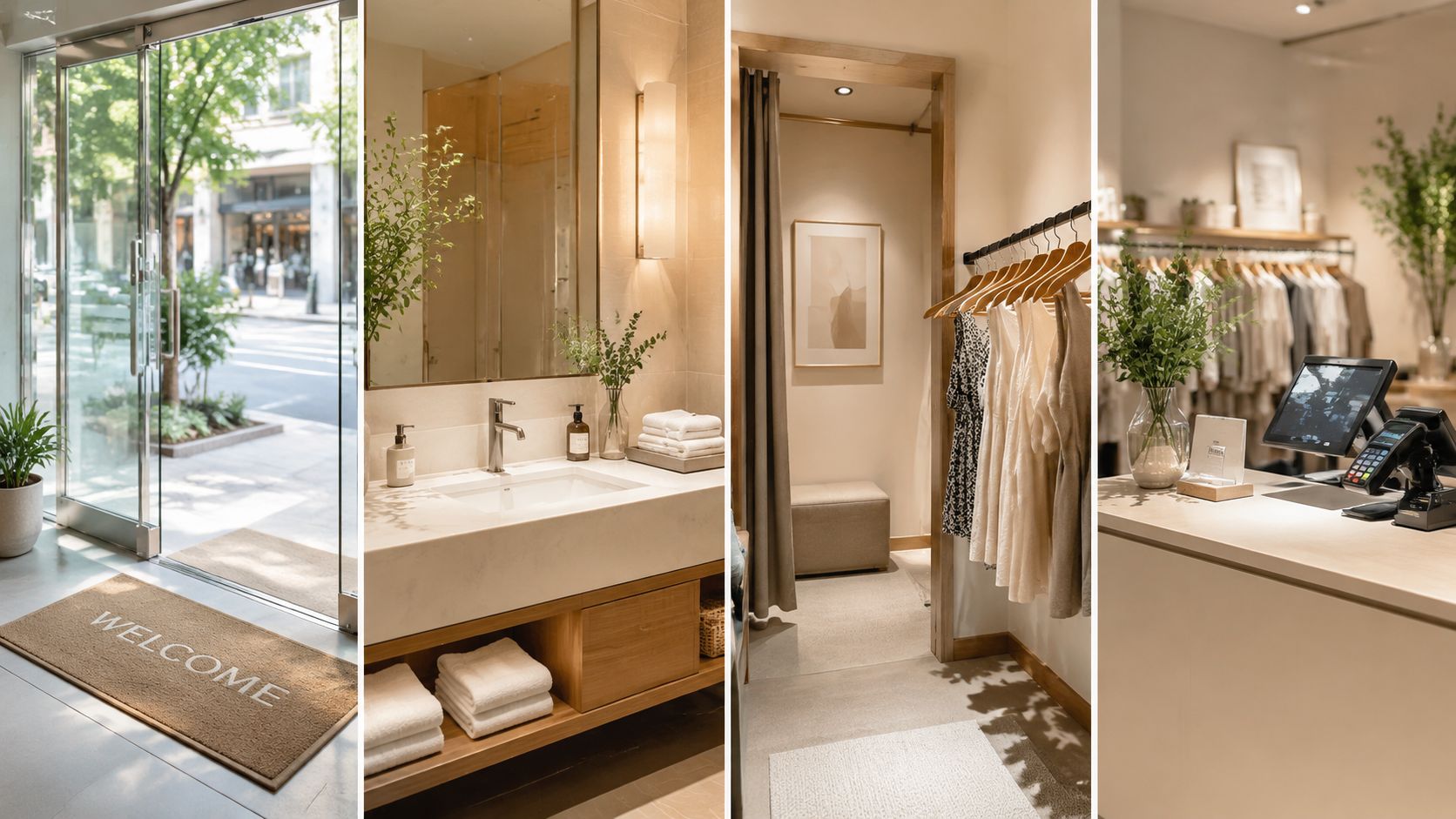
Entrances and thresholds
The entrance sets the tone before a shopper touches a cart or basket. Walk-off mats need rotation, glass doors need print checks, and vestibules need debris removed before it spreads into the main floor. If weather tracks in grit, the store should treat the threshold as a live cleaning zone, not a once-a-shift task.
Restrooms and fitting rooms
Restrooms need frequent inspection during peak periods because supply gaps and odours create an outsized impression. Cleaning should cover stall parity, paper levels, sink condition, and odour control that goes beyond masking spray. Fitting rooms need a one-customer-at-a-time reset, including hooks, benches, mirrors, and lost-item sweeps, because those are the surfaces shoppers notice when they are deciding whether the store feels cared for.
A clean fitting room feels smaller than a dirty one, but it performs better because the customer can focus on the product, not the room.
Checkout and queue areas
Checkout is the final tactile moment, so the belt, pin pad, counter edge, and queue carts need routine disinfection and debris removal. Queue floors matter too, because dirt and wrappers build up where people wait, and that waiting area shapes the memory of the visit. A store that keeps the line clean usually looks more controlled overall.
For detailed window care in customer-facing zones, window cleaning guidance belongs in the same operational bucket as entrance and threshold maintenance. Glass is part of the storefront experience, not a separate aesthetic detail.
Training Staff So Standards Hold Between Formal Cleans
Cleaning standards fail when staff treat them as closing work only. The better model is floor discipline, small corrective actions taken during trade, by the people already moving through the space. That means staff need simple habits they can repeat under pressure, not a dense policy manual that sits unread in a back room.
Four habits that hold during trading hours
Spot-cleaning as you go should be normalised for spills, dust, and debris that appear between formal passes. Single-use microfibre discipline matters because a cloth used too long just moves dirt from one surface to another. Fitting-room and display resets need a one-touch habit, if a customer leaves a hanger, tag, or folded item out of place, the next team member restores the zone immediately. Closing-round walk-throughs should end with photo evidence so the next shift sees what standard was left behind.
Printed pocket cards work well because they fit the pace of retail work. A shared WhatsApp or Teams channel for cleaning pings can help front-line staff flag issues without hunting for a supervisor. Weekly photo audits of the same zone at the same time show drift early, and a short coaching loop stops small misses from becoming routine failures.
The training challenge is real. Language differences on shift, peak-hour pressure, and the temptation to push every cleaning task to the overnight crew can all weaken standards. Managers need to keep the message narrow and practical, do the visible work first, then add depth later.
Reinforcement cadence that sticks
Daily huddles are for the day's problem areas, not long speeches. Weekly score reviews should compare the same zones so staff can see whether habits are holding. Monthly retraining should be short, specific, and tied to the tasks that slipped, not a full restart of the whole cleaning program.
For supplies, cleaning supply planning should be treated as part of training because staff can only maintain standards if the right cloths, disinfectants, and refill items are close at hand. A good process collapses when people have to hunt for tools.
Measuring Cleanliness With KPIs and Customer Feedback
Cleanliness should be measured as an experience cost, not only a hygiene task. Zone audits show where standards slip, while response times reveal how long customers encounter spills, odours, or clutter. Customer comments add the perception layer. A store manager needs a consistent scorecard and review rhythm, not complex software.
The KPIs that matter
Track the average score from zone inspections, restroom check completion against the planned schedule, and the time between a reported issue and its resolution. Photo-audit pass rates show whether teams restore the same standard across shifts. Environment-related complaints and waste from contamination events identify breakdowns that affect trust, labour, or operating cost.
Customer wording often exposes friction that an internal check misses. Terms such as dirty, sticky, or smell point to a perception gap, even when the last formal clean passed. Mystery-shopper notes and review sentiment can confirm whether the problem is isolated or recurring. A single-sheet dashboard is enough for one store if managers review it consistently. Retail cleaning and operations guidance can help managers shape a practical review routine.
Start with a recorded baseline rather than an ideal target. For a new programme, a 70% zone-audit pass rate gives the team a usable starting point, with 90% as the target within 30 days. The same approach applies to response time, check compliance, and complaint volume: record the current position first, then set a deadline for improvement.
Decision rule: when a zone falls below the internal standard, correct it on the next shift, not at month-end.
Cleanliness KPI table
| KPI | How to Measure | Baseline and Target | Review Cadence |
|---|
| Zone audit score | Walkthrough score by area | Record current score, then target 90% within 30 days | Weekly |
| Restroom check compliance | Completed checks versus planned checks | Record current completion, then close missed checks | Daily |
| Ticket resolution time | Minutes from issue to fix | Record current average, then shorten delays that affect trade | Daily |
| Photo-audit pass rate | Same-zone photos checked against standard | Record initial pass rate, then improve consistency | Weekly |
| Complaint volume | Environment-related complaints | Record current count, then reduce repeated issues | Weekly |
| Comment sentiment | Cleanliness terms in customer feedback | Record negative mentions, then track a downward trend | Weekly |
Review the dashboard alongside conversion, queue flow, and labour. A slow response can make a clean store feel neglected if customers wait beside an unresolved spill or staff leave the sales floor to handle it. Feedback therefore helps explain the friction behind the score. Guidance on how to boost loyalty with satisfaction data reinforces the link between measured experience and repeat visits. boost loyalty with satisfaction data
In-House Cleaning vs Outsourcing to a Commercial Cleaning Company
The right model depends on store size, footfall, opening hours, labour cost, and how complex the zones are. A small store with simple traffic patterns may keep control in-house, while a larger site with restrooms, food-adjacent areas, or long trading hours often needs outside support for heavier work. The decision should be made on operating reality, not habit.
The trade-offs that matter
In-house cleaning gives the manager tighter day-of control and makes it easier to respond instantly to spills or customer complaints. It also adds supervisor overhead, training burden, and equipment management, especially when staff are already splitting time between selling and tidying.
Outsourcing improves predictability and reduces the need to maintain equipment internally, but the store still needs someone to supervise standards and escalate issues. The upside is stronger coverage for deep resets, the downside is that the contract only works if expectations are clear and checks are real. A hybrid model often makes the most sense, in-house staff handle touch-point cleaning during trade, while a contracted crew handles the heavier overnight reset.
For managers vetting contractor options, retail store cleaning service guidance is useful because it keeps the focus on scope, supervision, and accountability rather than sales language. That same discipline applies whether the store chooses a single provider or a blended model. Arelli Cleaning is one option in that broader commercial cleaning mix, especially where a retailer wants scheduled store cleaning tied to office and commercial cleaning systems.
In-house, outsourced, and hybrid comparison
| Criterion | In-House Team | Outsourced Contract | Hybrid Approach |
|---|
| Cost predictability | Variable with staffing | More predictable | Balanced |
| Supervisor overhead | Higher | Lower for the store, but still needed | Moderate |
| Training burden | Higher | Shared with provider | Shared |
| Equipment capital | Store-owned | Provider-owned | Split |
| Peak-day flexibility | Strong if staff are available | Depends on contract terms | Strong |
| Accountability | Direct, immediate | Contract-based | Clear if roles are defined |
The best decision matrix is simple. If the store needs continuous touch-point cleaning, strong responsiveness, and direct control, in-house or hybrid may fit. If the store needs dependable overnight resets, specialist equipment, or relief from equipment ownership, outsourcing deserves a closer look. If both are true, the hybrid model usually wins because it protects the customer-facing standard while keeping the back-of-house work controlled.
Your 30-Day Rollout Plan, Checklist, and Common Questions
The first month should be used to baseline, build, train, and stabilise. Week 1 documents the current condition, including zone scores, restroom checks, and customer complaints tied to cleanliness. Week 2 turns the daily, weekly, and monthly tasks into written checklists by zone. Week 3 focuses on staff training and photo audits. Week 4 reviews the results, adjusts the standard, and locks the routine into the store's operating rhythm.
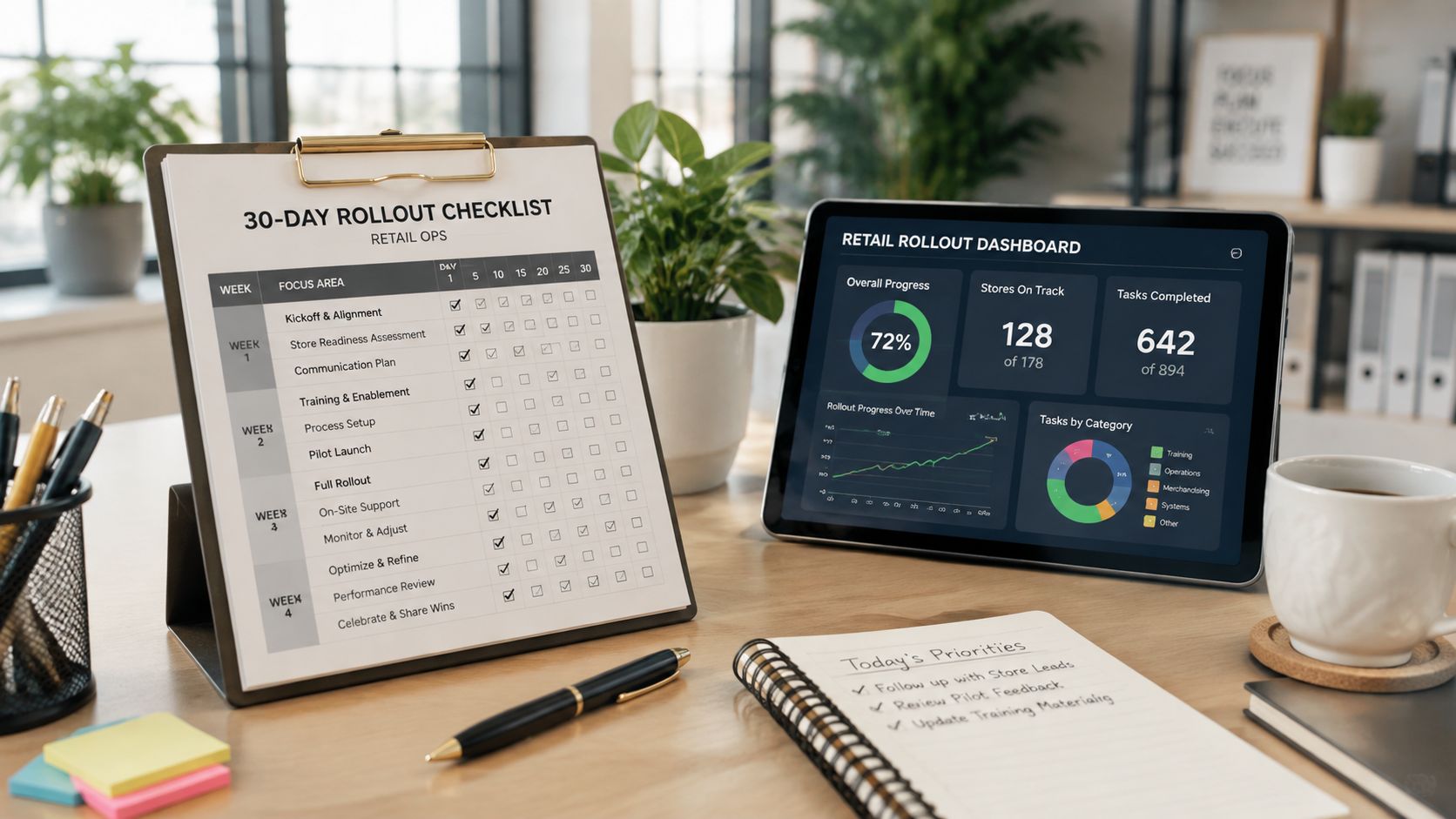
Printable checklist
- Opening, before trade starts: clear entrances, wipe high-touch surfaces, confirm restroom readiness, check fitting rooms, and inspect checkout counters.
- Mid-day, during slow periods: spot-clean spills, empty bins, refresh queue areas, and correct any visible issue before it spreads.
- Closing, after customers leave: reset fitting rooms, pull waste, restock supplies, and leave each zone photo-ready for the next shift.
- Weekly: detail high dust, clean fixtures and glass, review restroom condition, and audit the same zones against the same standard.
- Monthly: deep clean back-of-house, vents, and hard-to-reach display areas, then update the checklist if new issues have appeared.
Common questions retail managers ask
How long does cleaning add to opening routines?
It depends on store size and traffic, but the practical answer is to build a fixed opening window and protect it from other tasks.
What if one staff member keeps skipping cleaning tasks?
Coaching should be immediate, specific, and tied to the missed zone. Repeated misses need supervision, not a generic reminder.
What should happen when a customer complains about a dirty area?
The area should be cleaned at once, then logged so the team can see whether the issue is recurring or isolated.
How can outsourcing be phased in without disrupting service?
Start with the heaviest reset window, keep daily touch-point cleaning in-house, and expand the contract only after standards hold.
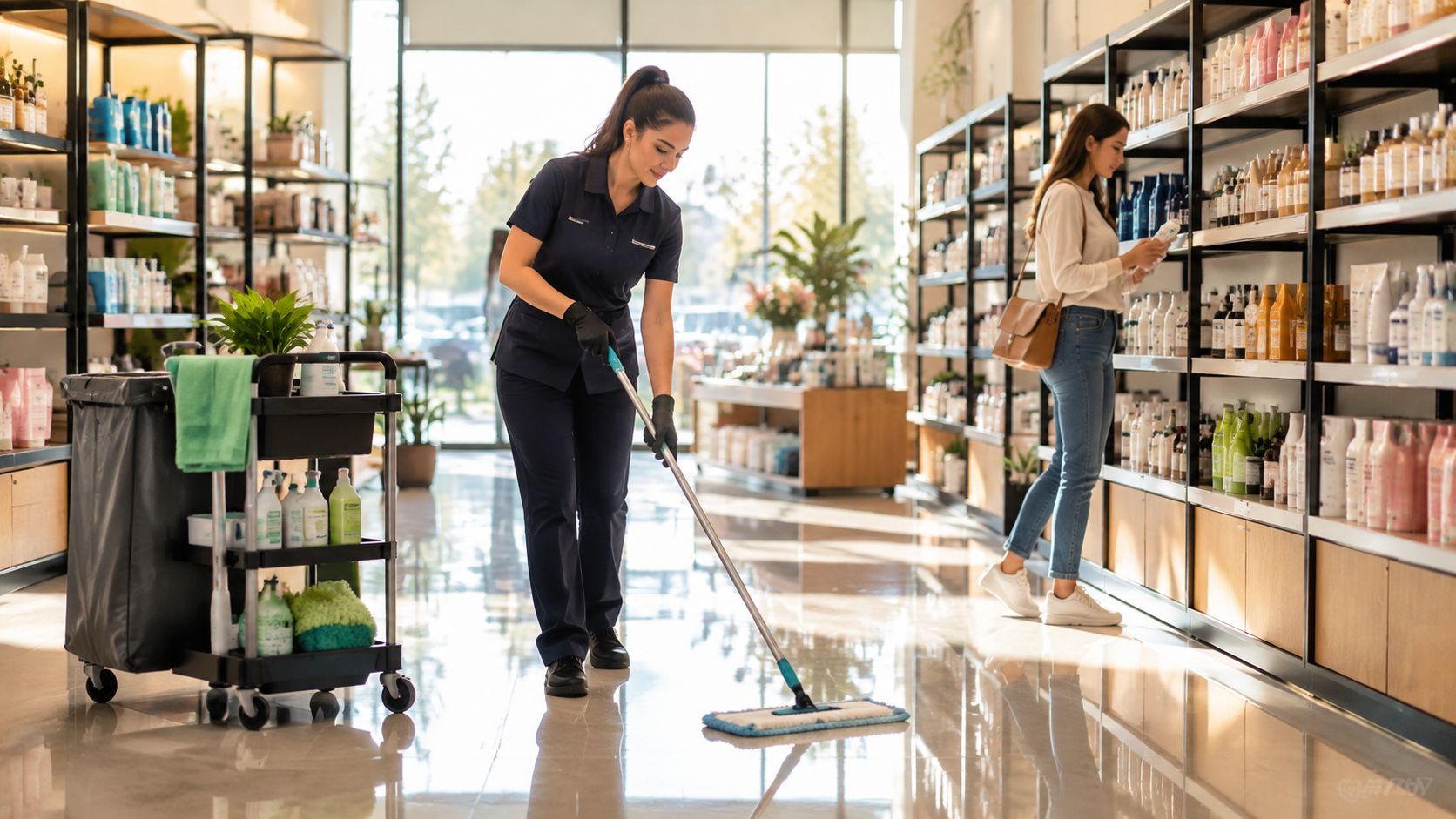
Arelli Cleaning supports retail environments that need consistent floor care, visible touch-point cleaning, and scheduled store resets that fit trading hours. For a cleaner retail store that feels organised to customers and manageable to staff, visit Arelli Cleaning and use the checklist above to compare options, ask better questions, and request 2 or 3 quotes before deciding.









.webp)