A professional janitor service is defined by the regular, scheduled cleaning tasks that maintain a commercial property's health, safety, and appearance. It is the consistent, day-to-day upkeep of a facility, forming the foundation of a building's overall hygiene program, rather than a one-time deep clean.
Key Takeaways
- Definition: Janitor service involves recurring, scheduled cleaning tasks like trash removal, restroom sanitation, and floor care, essential for daily facility maintenance.
- Scope of Work: The service is typically structured with daily, weekly, and monthly tasks to address high-traffic areas and prevent long-term grime buildup.
- Pricing Factors: Costs are driven by facility size (square footage), service frequency, number of washrooms/kitchens, and the specific hygiene requirements of the business.
- Choosing a Provider: Decision-makers should evaluate providers based on their training programs, insurance coverage (WSIB), quality assurance systems, and contract flexibility.
- Business Impact: Professional janitorial services contribute to reduced employee absenteeism, improved productivity, and a stronger brand reputation by creating a consistently healthy and professional environment.
What Janitor Service Means for Modern Businesses
In today's business landscape, a janitor service is a systematic approach to maintaining a commercial environment. This service extends beyond basic tidying, involving a structured plan designed to support the health and productivity of every person who enters the facility. It is essential for facilities of all kinds, from corporate headquarters in Toronto and law firms in Mississauga to medical labs and private schools across Ontario.
The core value of a professional janitor service is consistency. By addressing key cleaning tasks on a recurring basis—typically daily or several times a week—these services prevent the accumulation of dirt, dust, and germs. This proactive method creates a consistently clean and professional atmosphere that builds client confidence and supports employee wellbeing.
A clean environment is directly linked to improved occupant health, better employee morale, and a stronger brand reputation. Viewing janitorial work as a professional maintenance program, rather than simply a cleanup crew, is key to unlocking these benefits.
Differentiating Janitorial and Commercial Cleaning
It is common for the terms "janitor service" and "commercial cleaning" to be used interchangeably, but they have distinct meanings within the industry.
- Janitor Service: This refers to the ongoing, daily or weekly maintenance tasks that keep a facility operational. It covers essentials like restroom sanitization, vacuuming, mopping high-traffic floors, and disinfecting common touchpoints.
- Commercial Cleaning: This is a broader category that encompasses janitorial work but also includes larger, less frequent projects. This may include deep carpet cleaning, stripping and waxing floors, or comprehensive window washing.
A useful analogy is that janitorial work is the daily fitness routine maintaining a baseline of cleanliness, while other commercial cleaning services are the intensive workouts that restore surfaces. A comprehensive building maintenance strategy incorporates both.
A quality janitor service provider functions as a partner in facility management. They collaborate with clients to define a clear scope of work, which details every required task and its frequency. This plan is always tailored to a facility's unique demands, considering factors like foot traffic, business type, and specific health standards, such as those for a dental office in Vaughan or a daycare in North York.
The Core Scope of a Standard Janitor Service
To effectively partner with a professional cleaning provider, it is important to understand what a standard janitor service covers. The scope of work is a foundational document, typically broken down by frequency—daily, weekly, and monthly—to ensure every area receives the appropriate level of attention.
While every building has unique requirements, this tiered schedule provides a reliable framework for maintaining a consistently clean and professional space.
Daily Janitorial Tasks
Daily tasks focus on managing the primary sources of dirt and germs. These are the high-traffic, high-use areas that demand constant attention to keep a workplace feeling fresh and hygienic for employees and visitors.
For example, a busy downtown Toronto law firm requires its lobby and client-facing restrooms to be immaculate daily. In contrast, a manufacturing facility in Vaughan might place a higher daily priority on its breakrooms and administrative offices.
These are the core tasks performed on every service day:
- Waste Removal: Emptying all trash and recycling bins and fitting them with fresh liners.
- Restroom Sanitization: A full cleaning and disinfection of all toilets, urinals, sinks, and countertops. Restocking essentials like soap, paper towels, and toilet paper is equally crucial.
- Kitchen and Breakroom Cleaning: Wiping down all countertops, tables, sinks, and the exterior of appliances like microwaves and refrigerators.
- Floor Care: Vacuuming carpets in high-traffic zones and mopping hard floors, with special attention to entrances, hallways, and restrooms. A critical part of any janitor service includes professional floor cleaning to manage daily wear and tear.
- Touchpoint Disinfection: Wiping down high-contact surfaces—light switches, doorknobs, elevator buttons, and push plates—to reduce germ transmission.
Weekly and Monthly Deepening Tasks
While daily service maintains a baseline of cleanliness, weekly and monthly tasks address deeper grime. These scheduled cleanings prevent long-term buildup and are essential for maintaining a truly professional appearance throughout a facility.
A well-designed scope of work will always draw a clear line between daily duties and less frequent, periodic tasks. This distinction ensures no area is overlooked and optimizes the cleaning budget for better value.
These deeper cleans are key to the long-term health and appearance of a building. For more detail on what is included, our guide on what to expect from commercial office cleaning services is a helpful resource.
Typical Weekly Tasks:
- Detailed Dusting: Dusting all horizontal surfaces, including desks, shelves, picture frames, and window sills.
- Glass Cleaning: Removing smudges and fingerprints from interior glass walls, partitions, and entry doors.
- Thorough Floor Care: Detailed vacuuming that reaches into corners and along baseboards, plus a more extensive mopping of all hard floors.
Typical Monthly Tasks:
- High Dusting: Cleaning out-of-reach spots where dust and cobwebs accumulate, such as air vents, light fixtures, and high ledges.
- Upholstery Spot-Cleaning: Addressing minor stains on chairs and other fabric furniture, particularly in reception areas and common spaces.
- Wall and Baseboard Wiping: Spot-cleaning scuffs on walls and wiping down baseboards to remove accumulated dust.
Understanding Janitor Service Pricing and Contracts
Evaluating the costs and agreements for a professional janitor service is a critical step in making a sound financial decision for your facility. Pricing is not arbitrary; it is a calculated figure based on a facility's unique characteristics. Understanding what drives these costs and what constitutes a solid contract allows you to compare quotes from any commercial cleaning company with confidence.
The financial aspect of hiring a commercial office cleaning service can seem complex, but it is based on a few key variables. Any quote reflects the labor, supplies, and time required to maintain your space professionally.
Key Drivers of Janitor Service Pricing
Several factors directly influence the final cost. Any reputable commercial cleaning service will assess these elements before providing a price to ensure the quote is both accurate and sustainable.
- Square Footage: The most fundamental factor is the size of the area being cleaned. A large office tower in downtown Toronto will cost more to service than a small dental clinic in Oakville.
- Service Frequency: How often cleaners visit directly impacts the price. Daily service (5-7 days a week) involves more labor hours and will cost more than a schedule of 2-3 visits per week.
- Facility Type and Complexity: The nature of the business matters. A medical facility in Richmond Hill or a daycare in Markham has stricter hygiene requirements and more complex areas to clean than a standard administrative office, which is reflected in the cost.
- Number of Washrooms and Kitchens: These high-touch areas are hubs for germs and dirt. They require more intensive labor for cleaning and disinfection compared to open office areas. The more of them you have, the higher the cost.
- Foot Traffic: A busy retail store or a shared workspace sees more daily grime than a quiet professional services firm. High-traffic environments accumulate dirt faster and require more intensive cleaning.
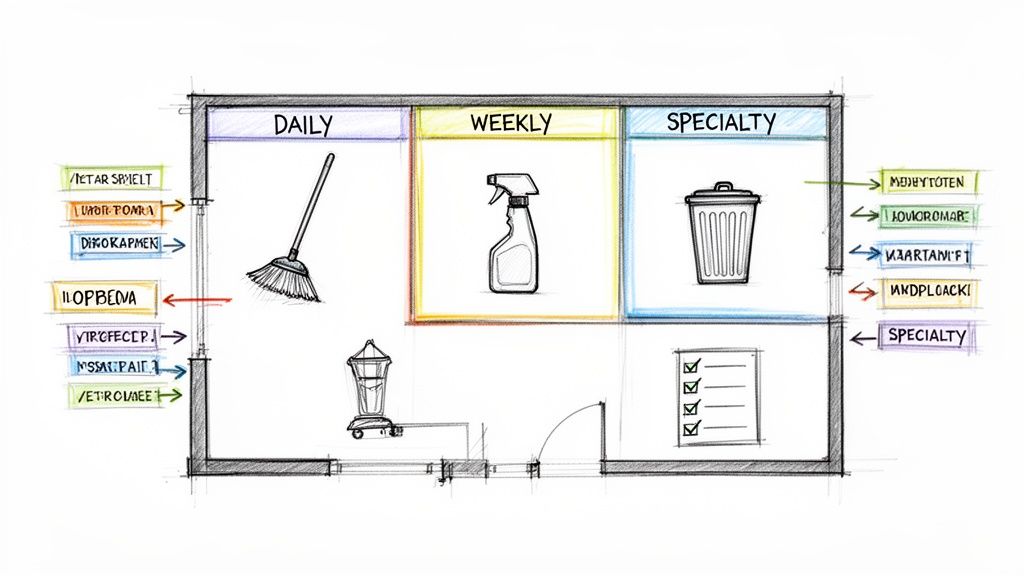
This chart provides a visual breakdown of how cleaning tasks are typically scheduled.
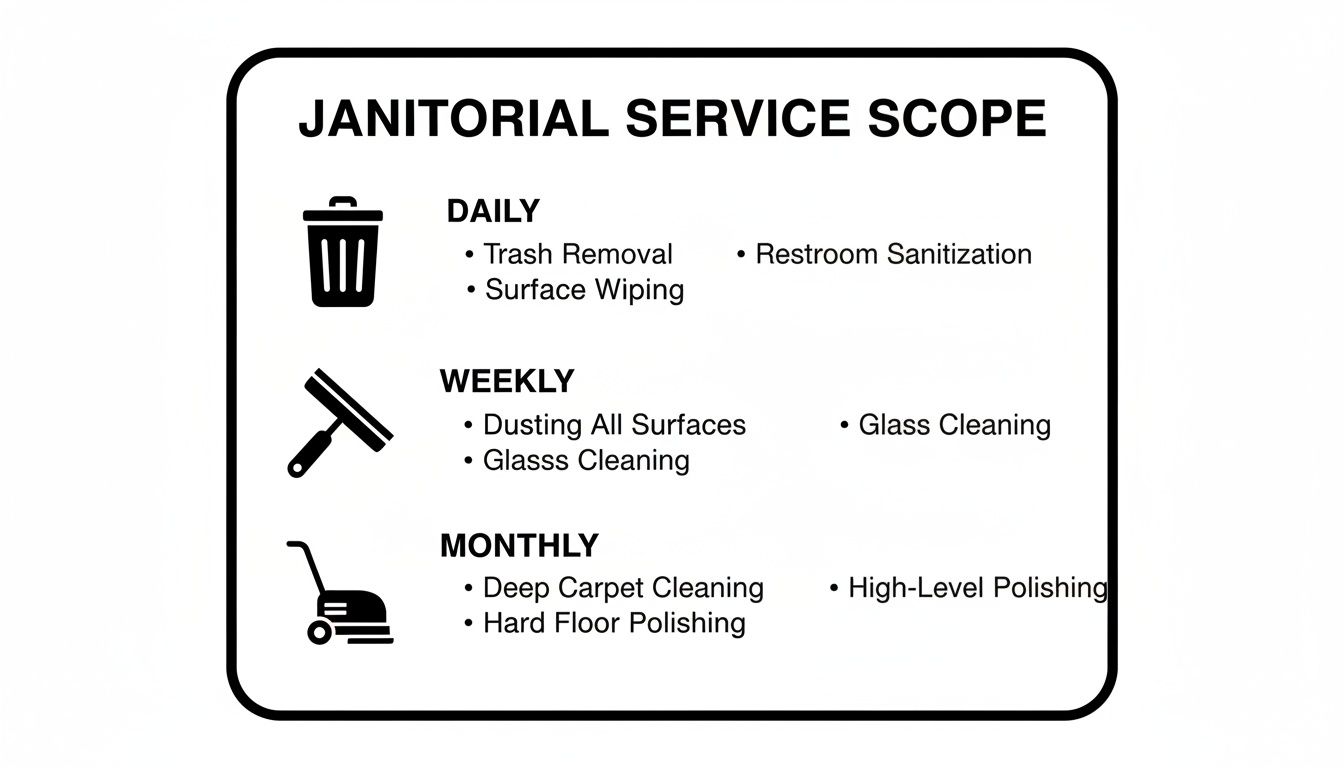
Separating tasks into daily, weekly, and monthly duties clarifies how a cleaning schedule is built, which in turn directly shapes the pricing structure.
The industry's growth is significant. In the Greater Toronto Area, the janitorial services sector has expanded alongside the North American market, which represented about 36.4% of the global $415.93 billion cleaning industry revenue in 2024. As Toronto's commercial real estate market strengthens and office occupancy increases, the demand for cleaning contracts has risen as businesses ensure their workplaces are healthy and compliant. You can explore these cleaning industry trends to see how they affect local businesses.
What to Look for in a Janitor Service Contract
A professional contract serves as a safety net, protecting both the client and the cleaning provider by clearly outlining all expectations and preventing misunderstandings.
A well-structured contract is a sign of a professional and organized company. It should be a clear, straightforward document, not a confusing agreement with hidden clauses.
Here are the non-negotiable elements that a strong contract should contain:
- Detailed Scope of Work (SOW): This is the core of the agreement. It must list all daily, weekly, and monthly tasks and specify the exact areas to be cleaned. Vague terms are a red flag.
- Supply Management: The contract needs to state clearly who provides which supplies. Typically, the janitorial company brings its own cleaning equipment and chemicals, but the contract should specify who is responsible for restocking consumable supplies like toilet paper and hand soap.
- Quality Assurance (QA): Look for clauses that explain how the company monitors service quality. This could include regular on-site inspections, communication protocols, or a system for promptly addressing reported issues.
- Term and Cancellation: This is a crucial detail. Some companies offer flexible, no-term contracts and zero cancellation fees. These buyer-friendly policies are a strong indicator of a company confident in its service quality, giving you the freedom to make changes as your business needs evolve.
How to Choose the Right Janitor Service Provider
Selecting the right janitor service is a significant decision that directly impacts your facility’s health, the safety of your occupants, and your professional image. A structured evaluation helps you look past price alone and find a reliable partner committed to quality.
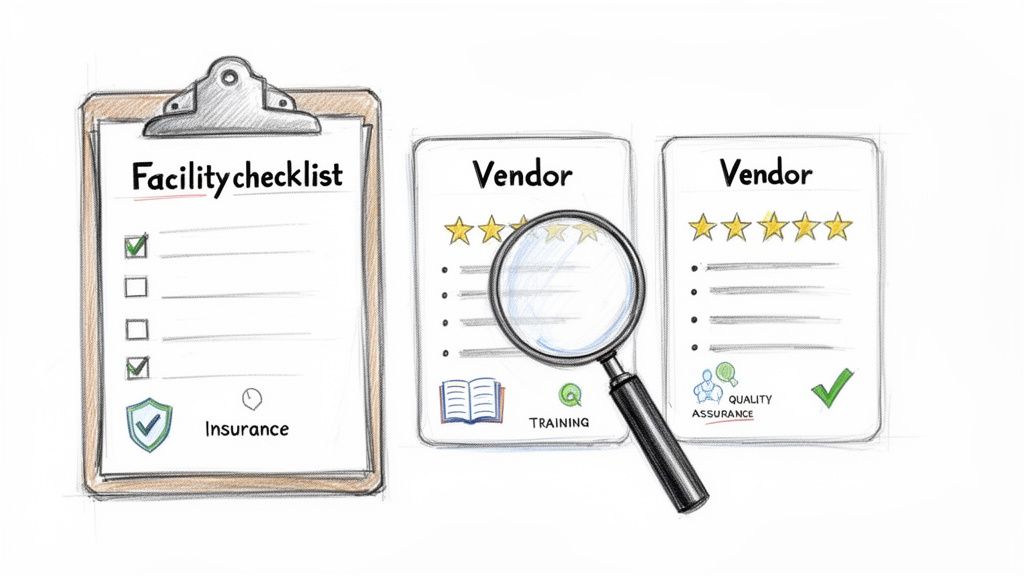
This framework is designed to guide you through the process, from defining your needs to vetting potential vendors, ensuring you make a confident choice.
Step 1: Define Your Specific Cleaning Needs
Before researching providers, you must know exactly what you need. The best way to do this is by creating a detailed, facility-specific checklist. Walk through your entire premises and document every area that requires attention and at what frequency.
Consider the unique demands of your business. A busy car dealership has different cleaning priorities than a quiet accounting firm. Documenting these specifics ensures every quote you receive is based on the same scope of work, which is the only way to make a true apples-to-apples comparison.
Step 2: Research and Shortlist Local Providers
With your checklist prepared, begin researching local commercial cleaning companies. Searches like "janitorial services in Vaughan" or "office cleaning in Kitchener" are a good starting point. Look for companies with a professional website, clear service descriptions, and positive reviews from other local businesses.
The goal is to build a shortlist of approximately three to five reputable companies to invite for a detailed discussion and a formal quote.
Step 3: Request Detailed Quotes and Ask Critical Questions
Reach out to your shortlisted companies and request a comprehensive quote based on your checklist. A professional provider will always insist on a site visit to properly assess your space before giving a proposal. This is a green flag indicating they are a thorough and experienced commercial cleaning service.
During the walkthrough and in follow-up conversations, ask direct questions to assess their professionalism and operational standards.
Key Questions to Ask Potential Providers:
- Training: How do you train your cleaning staff? Is there specialized training for different facility types, like medical clinics or schools?
- Insurance and Compliance: Can you provide proof of liability insurance and WSIB coverage? Are your teams trained on safety protocols like WHMIS?
- Quality Assurance: What systems are in place to ensure consistent quality? How are inspections conducted, and how are results communicated to me?
- Communication: What is the process for addressing an issue or requesting a change? Who will be my main point of contact?
- References: Can you provide references from current clients with a facility similar to mine?
Step 4: Evaluate Providers and Make Your Decision
Once you have 2-3 detailed quotes, compare them side-by-side using a comparison table. This removes emotion from the decision and helps you see the value each company offers beyond the price.
Some companies also offer buyer-friendly policies, such as a free sample clean, which allows you to assess their work quality firsthand without any commitment. This is an excellent way to gauge performance risk-free.
The right choice will come from a balanced evaluation of cost, quality systems, and overall professionalism. A transparent and well-organized company will make this evaluation process straightforward. For businesses in the GTA, understanding the local market is a significant advantage; you can dive deeper into finding the right partner in our guide to office cleaning in Toronto.
Janitor Service Provider Evaluation Checklist
Use this table to compare potential janitor service companies based on key operational and service criteria.
The Professionals Behind the Service: Training and Safety
The quality of any janitor service depends entirely on the skill, training, and professionalism of the individuals performing the work. These individuals are skilled professionals who manage complex tasks to ensure a facility is not just clean, but genuinely healthy and safe. Partnering with a company that invests in its people generally leads to better, more reliable results for your own facility.
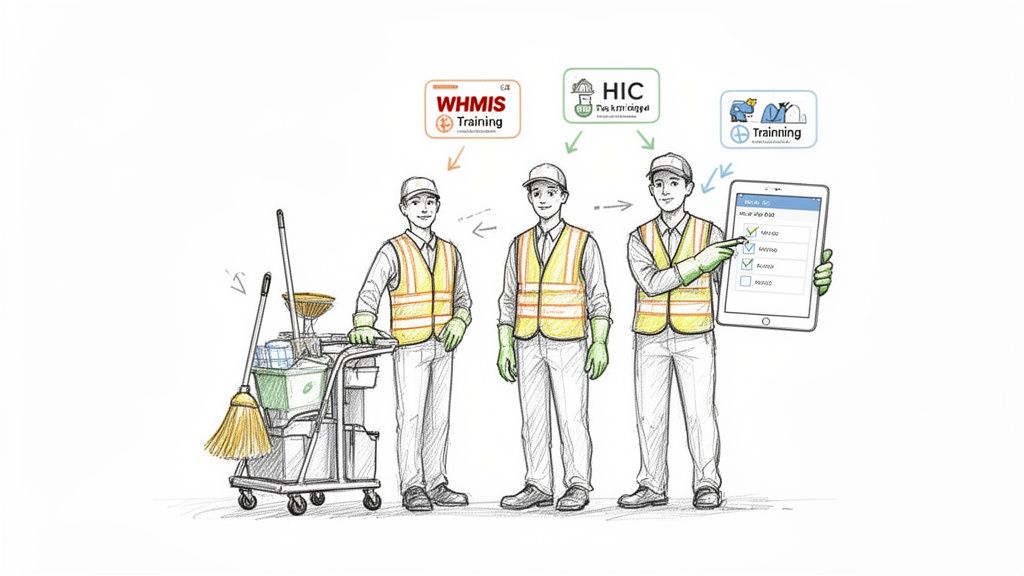
A professional cleaner's expertise goes beyond knowing how to use a mop. It involves a deep understanding of safety protocols, proper chemical handling, and the unique hygiene needs of different environments, from a medical lab in Mississauga to a private school in Barrie.
The Importance of Training and Safety Compliance
Proper training is the bedrock of a professional commercial cleaning service. It ensures every cleaner understands not just how to clean, but why specific procedures are critical for health and safety.
Key training areas include:
- WHMIS Compliance: In Canada, the Workplace Hazardous Materials Information System (WHMIS) is mandatory. It ensures cleaning staff can safely handle, store, and dispose of cleaning chemicals, protecting both them and your employees.
- Procedure Training: Cleaners must be trained on correct procedures for crucial tasks like touchpoint disinfection, preventing cross-contamination (e.g., using color-coded cloths), and operating specialized equipment safely.
- Facility-Specific Protocols: Training must cover the unique demands of your building. This could mean following strict protocols for a secure financial institution or understanding the specialized cleaning required in a heritage building.
To confirm a provider meets high standards, it is helpful to understand what is involved in an effective Occupational Health and Safety Certification. This provides insight into a company's commitment to safety.
Tackling Industry Challenges with Technology and Support
The janitorial sector in Ontario, like elsewhere, faces significant labor challenges. Staff turnover in commercial cleaning can be as high as 150%, often due to the physically demanding nature of the work and typical industry wages. This dynamic is important to clients, as the industry across Toronto, York Region, and beyond relies on a dedicated workforce.
Leading companies actively work to counter this reality. They understand that a supported, empowered team is a stable and effective one.
A supportive company culture and modern tools are not just perks; they are essential for reducing turnover and ensuring the consistent, high-quality service clients expect. A cleaner who feels valued is more likely to take pride in their work.
Modern technology plays a crucial role in empowering cleaning teams. Mobile apps, for example, give cleaners real-time access to daily checklists, allow them to report issues instantly, and enable them to log their work for quality assurance. This improves efficiency and strengthens communication between the cleaning crew, management, and the client.
By fostering a supportive environment and providing the right tools, a company can build a team of dedicated professionals. For those interested in the field, exploring careers in commercial cleaning can offer a path to a stable and essential profession.
The ROI of Professional Janitorial Services
Viewing a professional janitor service as merely an expense is a common oversight. In reality, it is a strategic investment with a return that extends far beyond a tidy office. When cleaning is seen as a core part of operations, its direct impact on employee health, productivity, and company reputation becomes clear.
This holds true for any business, whether it's a financial firm in downtown Toronto or a medical lab in Mississauga. A professionally cleaned facility is a healthy and productive one.
Reducing Absenteeism and Boosting Productivity
One of the most immediate and measurable returns from a consistent janitor service is a reduction in employee sick days. This involves more than just wiping desks; professional cleaners are trained to meticulously disinfect high-touch surfaces where germs spread, such as doorknobs, elevator buttons, light switches, and shared equipment.
By focusing on these germ hotspots, a disciplined cleaning program actively disrupts the transmission of viruses and bacteria.
- Improved Health: A rigorous, consistent cleaning schedule drastically lowers the pathogen load in your environment. Fewer germs mean fewer illnesses circulating among your team.
- Enhanced Focus: When staff feel safe and comfortable in a clean space, their morale and concentration improve, which can translate to better quality work and higher output.
- Better Air Quality: A thorough janitorial plan also addresses air quality. Proper dusting and HEPA-filter vacuuming manage dust and allergens, which improves indoor air quality and can reduce respiratory issues.
A study from ISSA, the worldwide cleaning industry association, highlights this point. It found that effective cleaning programs can reduce the probability of catching the common cold or influenza by 80% and cut absenteeism by as much as 46%.
Strengthening Brand Reputation and Client Trust
The condition of your commercial space sends a powerful message. For a client walking into a law office in Vaughan or a patient entering a dental clinic in North York, a pristine, hygienic environment immediately communicates professionalism, high standards, and a commitment to safety.
This first impression is a significant factor in building trust. In a healthcare setting, visible cleanliness is directly linked to a patient's confidence in the care they will receive. In a corporate office, it reflects a well-managed, successful operation. Neglecting cleanliness can erode that trust and damage a brand's reputation.
A reliable janitor service acts as a silent brand ambassador, consistently reinforcing the positive, professional image you want to project.
For facilities that require the highest standards of hygiene, specialized commercial disinfection and sanitizing adds a greater layer of protection and assurance. This proactive step demonstrates an undeniable commitment to the health and safety of everyone who enters your doors.
Your Top Questions About Janitor Services Answered
When researching a professional cleaning service, many questions arise. This FAQ section provides clear, direct answers to common questions from facility managers and business owners to help inform your decision-making process.
What Is the Difference Between Janitorial Services and Commercial Cleaning?
This is a frequent point of confusion, but the distinction is straightforward and key to defining your facility’s needs.
- Janitorial Services are the day-to-day cleaning tasks that keep a workspace functional and presentable. This includes scheduled routines like emptying trash, wiping surfaces, cleaning and restocking restrooms, and vacuuming high-traffic areas. It is consistent maintenance, usually performed daily or several times a week.
- Commercial Cleaning is a broader term that includes janitorial work as well as larger, less frequent projects. These are deeper cleans, such as full carpet extraction, stripping and waxing floors, or major window washing.
In short, janitorial work is the daily maintenance, while other commercial cleaning services are the periodic, more intensive projects needed to maintain a facility's assets.
How Often Do I Need Janitor Service for My Office?
There is no one-size-fits-all answer. The optimal cleaning frequency depends on your specific facility, industry, daily foot traffic, and team size.
Here are some common scenarios:
- High-Traffic Facilities (Daily Service): Medical clinics, busy dental offices, daycares, or bustling retail stores in places like Toronto or Mississauga require daily service (5-7 days a week) to manage hygiene standards and maintain a professional appearance.
- Standard Offices (2-3 Times Per Week): A typical corporate office, such as a law firm or accounting agency, often finds that service a few times a week is effective for maintaining a clean and healthy environment.
- Low-Traffic Spaces (Weekly Service): For smaller offices with less foot traffic or some back-office industrial areas, a single thorough cleaning each week can be sufficient.
A reputable cleaning company for offices will conduct a site visit to assess your space and help determine a schedule that is both effective and budget-friendly.
Who Is Responsible for Providing Cleaning Supplies?
This is a critical detail that must be clarified in your service agreement to prevent misunderstandings or unexpected costs. Responsibility is often split.
Your janitor service will typically provide its own professional-grade cleaning chemicals and specialized equipment, such as vacuums, mops, and carts. This ensures they use effective products that meet safety standards like WHMIS and deliver consistent results.
Consumable goods, however, are often handled differently. These are items used by your staff and visitors:
- Toilet paper
- Paper towels
- Hand soap
- Trash can liners
Your contract should explicitly state whether the cleaning company will manage inventory and bill you for these items or if your facility is responsible for purchasing and stocking them.
Where Can I Find a Reliable Janitor Service Near Me?
Finding a trustworthy janitor service near you requires a structured approach.
Start with a localized online search using specific phrases like "janitorial service in Mississauga" or "office cleaning companies Toronto" to generate a list of local providers.
Then, begin the vetting process:
- Check Online Reviews: Read reviews and look for consistent, positive feedback from businesses similar to yours.
- Request Local References: A confident company will provide contact information for current clients in your area (e.g., in Vaughan, Markham, or York Region) with similar facilities. It is a good practice to contact them.
- Verify Credentials: Ensure they have proper liability insurance and that their employees are covered by WSIB. This is non-negotiable.
- Evaluate Their Process: Use checklists and questions to investigate their training programs, quality control systems, and communication methods. This is how you distinguish the professionals.
Further Reading and Professional Resources
Building on the fundamentals is a good practice for making an informed decision. This collection of internal guides and external resources provides a broader perspective on industry best practices and what separates an adequate janitor service from an excellent one.
From the Arelli Knowledge Base
- Service Areas We Cover: See our complete list of locations, from Toronto to York Region and beyond, on our Service Areas page.
- Commercial Disinfection and Sanitizing: For an added layer of protection, learn about advanced sanitizing protocols that keep facilities safe.
- Cleaning Industry Trends: Our blog offers a stream of guides and articles covering everything from detailed service scopes to emerging industry trends.
Trusted Industry Authorities
For impartial, expert information, these leading organizations set the standards for the professional cleaning industry.
- ISSA (The Worldwide Cleaning Industry Association): ISSA is the global authority on cleaning, providing certifications, standards, and educational resources that professionals rely on.
- Janitorial Manager: A valuable resource for operational insights. The Janitorial Manager blog is filled with practical advice for facility and cleaning managers.
We recommend getting 2-3 quotes to ensure you find the best partner for your needs. If your facility is located in Ontario and you would like a quote that includes a complimentary 45-minute sample clean, Arelli Cleaning is one option to consider.








.webp)