Oops! Something went wrong while submitting the form
Blog
January 24, 2026
January 24, 2026
How to Control Costs in Auto Dealership Cleaning Services: A Practical Guide
An auto dealership is a complex facility where first impressions directly impact sales, and back-of-house safety is non-negotiable. To control cleaning costs effectively, facility managers must first understand what drives the final price. The cost is a blend of your dealership's unique demands, from the high-gloss showroom to the industrial-grade service bays. Breaking down these drivers is the first step toward making smarter decisions that protect both your brand and your bottom line.
Key Takeaways
Cost Drivers: The primary cost driver in any cleaning contract is labour, which is influenced by the unique needs of different zones like showrooms, service bays, and customer lounges.
Strategic Audit: Performing a zone-by-zone audit of your facility helps identify mismatches between your current cleaning scope and actual needs, revealing opportunities for cost savings.
Tiered Scheduling: Implementing a tiered cleaning schedule—daily, weekly, and monthly tasks—optimizes labour hours by focusing intensive cleaning where and when it's needed most.
Technology's Role: Professional cleaning companies use management software for scheduling, task verification, and communication, which increases efficiency and provides better value.
Smart Partnering: Choosing a cleaning partner based on value, not just the lowest price, is crucial. Evaluate providers on their quality assurance processes, staff training, and contract flexibility.
Contract Terms: Look for buyer-friendly policies like no-term contracts, price-match guarantees, and sample cleans, which indicate a provider's confidence and reduce your risk.
Understanding the Key Drivers of Dealership Cleaning Costs
Figuring out how to control cleaning costs begins with understanding how a professional cleaning quote is constructed. It is rarely a simple price-per-square-foot calculation. An auto dealership is a multi-faceted environment with distinctly different cleaning requirements from one area to the next, each contributing uniquely to the overall cost.
A dealership can be viewed as several specialized zones. The showroom is the centerpiece, showcasing a high-value inventory that demands pristine conditions. Its polished floors, expansive glass windows, and high foot traffic require specialized care and significant labour hours to maintain perfection. The cost here is driven by the need for a flawless customer experience, as even minor smudges can detract from the perceived value of the vehicles.
High-Traffic and Specialized Zones
The service bays and repair shops present a different set of challenges. Here, the priority shifts from aesthetics to safety and operational function. Cleaning protocols must address oil, grease, and other automotive fluids that pose serious slip-and-fall hazards. This work requires industrial-grade degreasers and more intensive labour, which directly increases the cost. A professional commercial cleaning service must factor in the specialized training, equipment, and time needed to manage this environment safely.
Other key areas also influence the final price based on their use and required level of sanitation:
Customer Lounges & Waiting Areas: These spaces require constant attention to high-touch surfaces, upholstery, and floors to ensure clients have a comfortable and hygienic environment.
Sales Offices & Administrative Areas: While less demanding than public-facing zones, these areas still need consistent office cleaning to maintain a professional and productive atmosphere for staff.
Restrooms: The number of restrooms and the standards for their cleanliness are major cost drivers. High hygiene standards are non-negotiable, and the labour required for thorough cleaning and regular restocking of consumables adds to the budget.
The Role of Labour and Logistics
Ultimately, the single largest component of any cleaning contract is labour. The time required for a trained crew to properly service each of these unique zones determines the majority of the cost. Several factors can influence labour hours:
The specific layout of the dealership, the various flooring types (e.g., polished concrete vs. carpet), and the detailed tasks outlined in the scope of work all play a significant role. A reputable provider must accurately estimate the hours needed to meet standards without compromising quality.
By deconstructing the facility in this way, it becomes clear how each area contributes to the total expense. This detailed perspective is the essential first step to identifying where strategic adjustments can be made to control costs without sacrificing the cleanliness vital to the dealership’s success.
Performing a Strategic Cleaning Audit of Your Facility
Before modifying a cleaning contract, it is essential to conduct a detailed audit of your dealership. This involves a strategic walk-through to map the entire facility, zone by zone, and gain an objective understanding of its real-world cleaning needs.
The goal of an audit is to identify discrepancies between the services being paid for and what is actually required. For example, low-traffic back offices might be receiving a daily deep clean when a less frequent service would suffice, representing a waste of resources. Conversely, a customer lounge might be under-serviced, creating a negative impression that has an intangible cost. This process enables data-driven decisions.
Mapping Your Dealership by Priority and Traffic
Begin by using a floor plan to break the facility into distinct zones. Classify each area based on two key factors: its primary users (customers vs. staff) and its level of soil (high, medium, or low traffic).
High-Priority Zones: These are brand-defining, revenue-generating areas. They include showrooms, sales desks, customer waiting lounges, and public washrooms. Cleanliness here is paramount and justifies a higher standard and more frequent service.
Medium-Priority Zones: These are spaces where staff spend most of their time, such as break rooms, administrative offices, and parts counters. A clean environment is important for morale and health, but the cleaning intensity may be lower than in public-facing areas.
Specialized Zones: Service bays fall into a unique category. Primarily used by employees, they contend with extreme levels of soil, grease, and grime. The cleaning focus here is on safety and function, requiring specific, rigorous protocols.
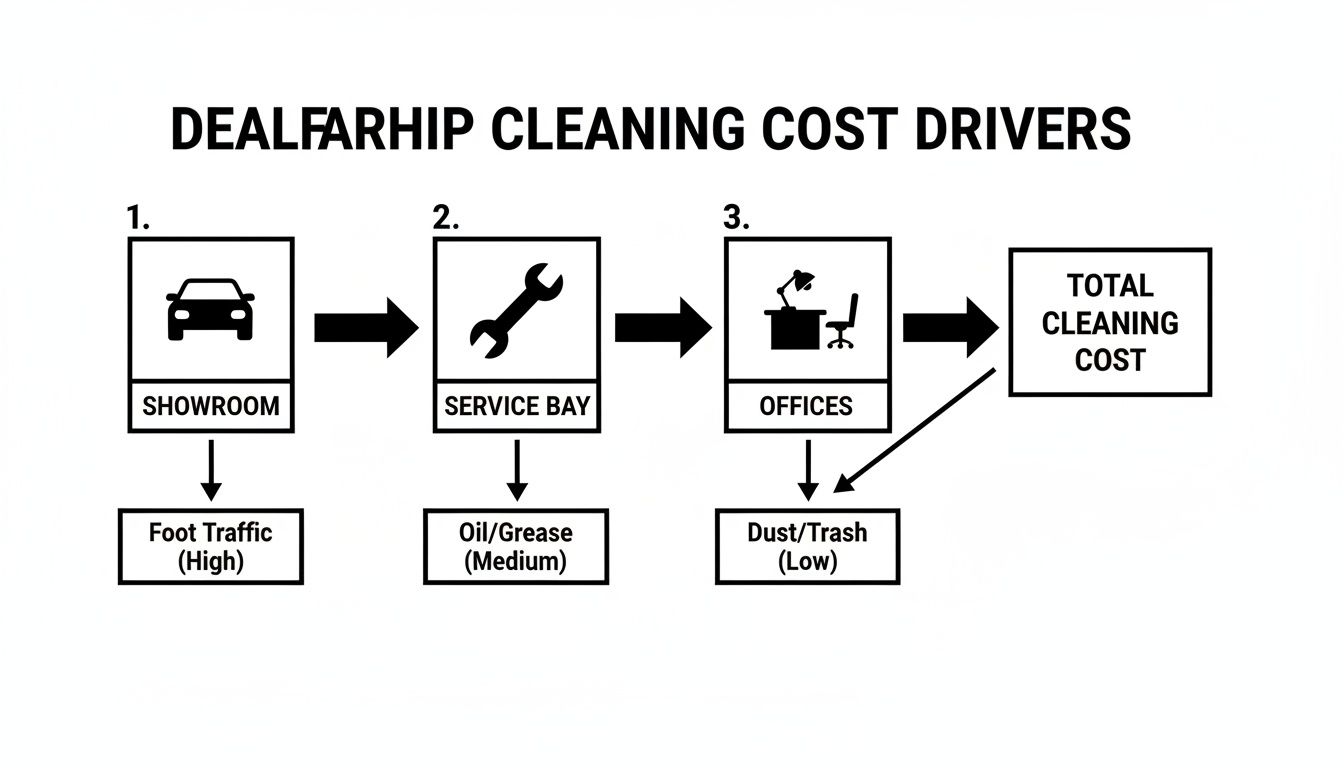
This flowchart illustrates how the unique demands of each zone—from the polished showroom floors to the greasy service bays—drive overall cleaning costs.
This visual serves as a reminder that a one-size-fits-all cleaning plan is inefficient. A tailored approach is key to controlling costs effectively.
Building Your Audit Checklist
Once the zones are mapped, create a simple checklist to guide the physical inspection. This tool helps transform subjective impressions of cleanliness into objective data that can be used in discussions with a cleaning provider.
A well-structured audit checklist is a powerful tool. It converts subjective opinions into objective facts, providing a clear, systematic way to assess whether the cleaning investment aligns with the actual needs of each area in the dealership.
Use this table as a starting point. Walk through each zone and complete it with honest assessments.
Dealership Cleaning Audit Checklist
Area or Zone
Current Frequency
Required Cleanliness Standard (1-5)
Key Tasks
Cost Optimization Notes
Showroom Floor
Customer Lounge
Public Washrooms
Sales Desks
Admin Offices
Employee Break Room
Service Bays
Parts Counter
For each zone, document the current cleaning schedule, the essential tasks (e.g., floor polishing, disinfecting touchpoints, waste removal), and assign a cleanliness score. Be specific in your notes. Is an area being over-serviced? Or is it consistently failing to meet expectations?
This completed audit becomes a strategic playbook, providing the evidence needed to right-size the scope of work and ensure every dollar spent contributes directly to a safe, welcoming, and brand-protective environment.
How to Optimize Your Cleaning Scope and Frequency
With audit data in hand, the next step is to translate analysis into action. This is the core of controlling costs without sacrificing quality. The objective is to strategically align the cleaning scope and frequency with the demonstrated needs of each zone in the dealership. This approach is about resource optimization, not corner-cutting.
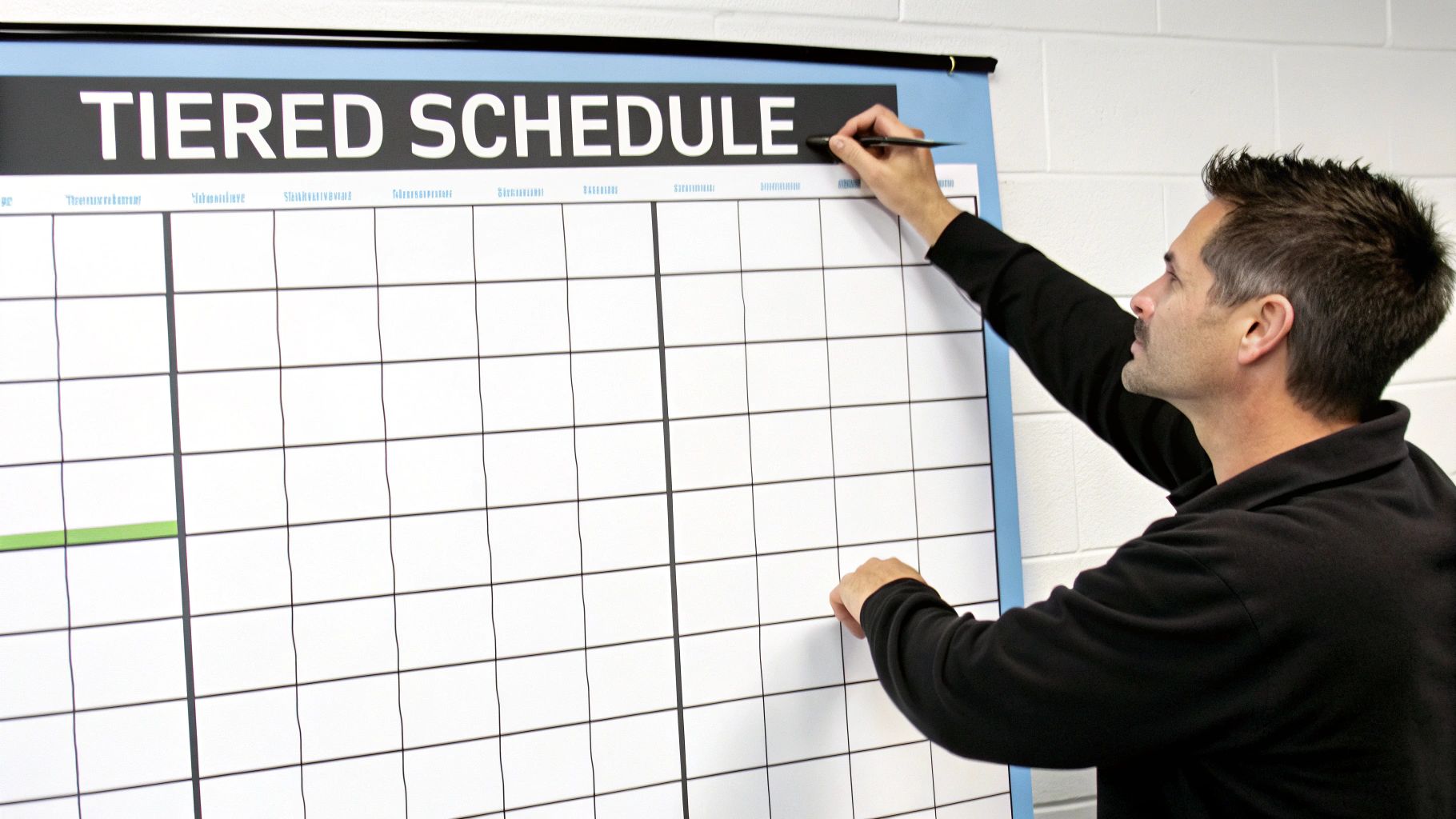
A uniform cleaning plan is inherently inefficient, guaranteeing that you are either overspending on areas that do not require daily attention or underserving the zones that matter most. A more effective method is to collaborate with your commercial cleaning provider to develop a tiered schedule that prioritizes tasks based on their impact on customer perception, health, and safety. This ensures the budget is allocated most effectively.
Creating a Tiered Cleaning Schedule
A tiered schedule categorizes tasks by how often they genuinely need to be performed. By separating daily essentials from less frequent, project-based work, labour hours can be optimized, and unnecessary services can be eliminated.
A typical tiered breakdown includes:
Daily High-Impact Tasks: These are the non-negotiables for customer-facing areas. This includes sanitizing restrooms, cleaning showroom glass and doors, disinfecting high-touch surfaces like coffee stations and sales desks, and spot-mopping entrances to manage tracked-in dirt.
Weekly or Bi-Weekly Tasks: This tier covers deeper cleaning in both public and staff-only zones. This is where tasks like detailed dusting of sales offices, vacuuming less-trafficked administrative areas, and scrubbing breakroom floors would be scheduled.
Monthly or Quarterly Project Work: These are larger-scale tasks that maintain the dealership's overall appearance over the long term. This could include high dusting of rafters in the service bay, deep window washing, or specialized floor care. For tough exterior grime, scheduling professional power washing services can keep the building's facade sharp.
By establishing this hierarchy, essential daily cleaning is never compromised, while less critical, more labour-intensive tasks are performed at a cost-effective frequency. This tailored approach is fundamental to controlling cost in auto dealership cleaning services.
Adjusting Service Levels Seasonally
A dealership's traffic is not static, and neither should its cleaning plan be. An effective cost-control strategy involves adjusting service frequency to match business cycles. It is logical to increase cleaning services before a major sales event or during peak seasons when foot traffic is highest. Conversely, certain tasks can be scaled back during slower months without a noticeable decline in the facility's appearance.
This dynamic approach also applies to resource management. For example, optimizing water usage can lead to significant savings. In regions with strict regulations, dealerships can reclaim 50-80% of their water from car washes, drastically cutting utility bills.
The same principles of efficiency can be applied across all cleaning operations, from floor care to vehicle prep, freeing up the budget for core business activities. This flexibility ensures you are only paying for the level of service you need, precisely when you need it.
Using Technology for More Efficient Cleaning Services
Modern, high-quality commercial cleaning involves more than skilled staff and effective products. Technology plays a crucial role in driving efficiency, consistency, and cost savings. For an auto dealership, where brand image and budget management are top priorities, technology can differentiate a basic service from a professional partnership.
The single largest cost in any cleaning contract is labour. Smart systems for scheduling, task management, and quality assurance directly impact how that labour is utilized.
Understanding this allows you to ask prospective cleaning companies the right questions, shifting the conversation from price alone to operational excellence. It helps identify a partner who invests in efficiency—an investment that yields better value and more predictable costs for your dealership.
How Management Software Streamlines Operations
Often, the most impactful technologies are those operating behind the scenes. Professional cleaning companies rely on specialized software to manage nearly every aspect of their service.
Smarter Scheduling: Modern systems assign cleaning crews based on the dealership's size, scope of work, and location. This reduces travel time and ensures staff arrive as scheduled, preventing costly delays.
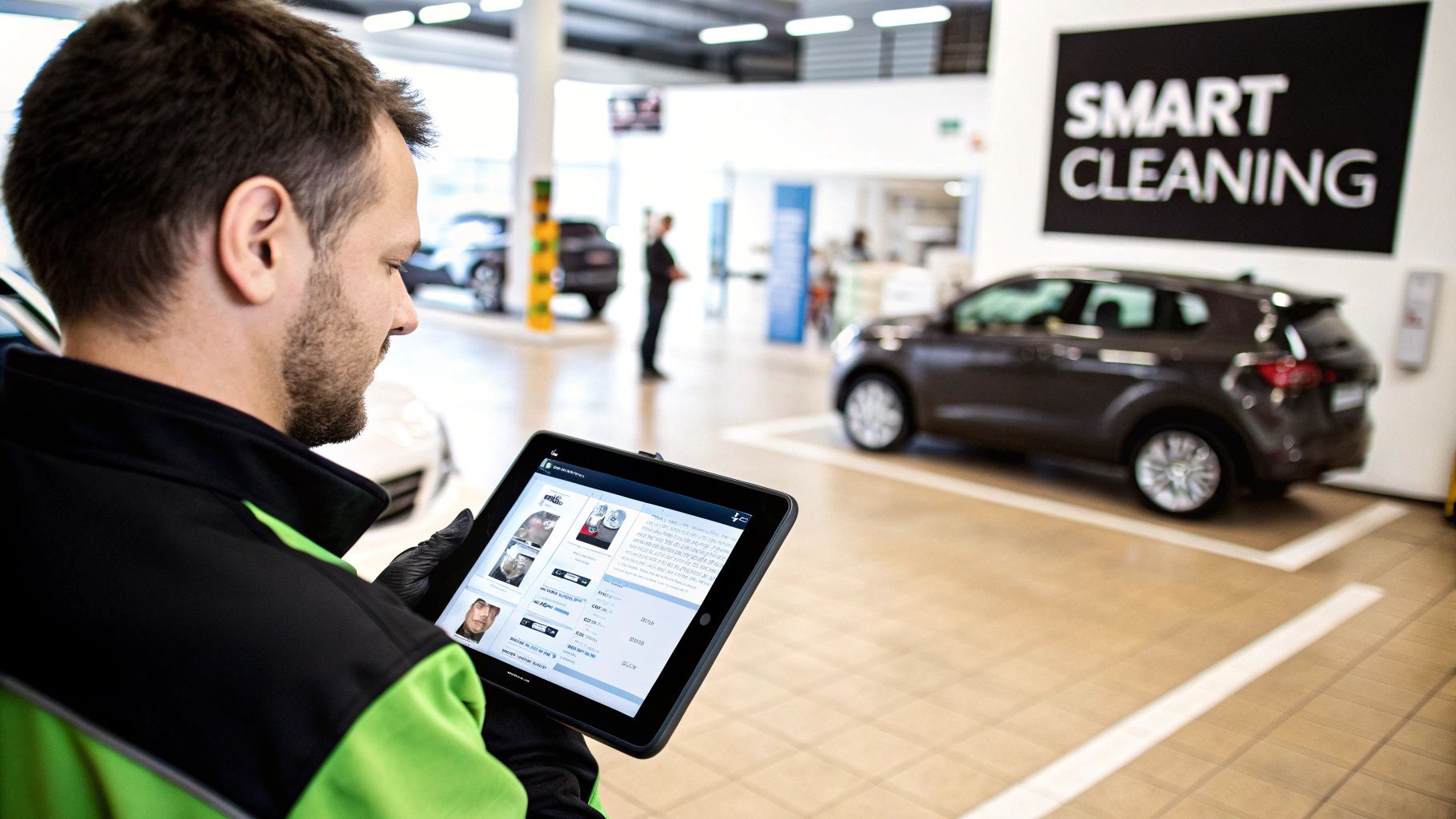
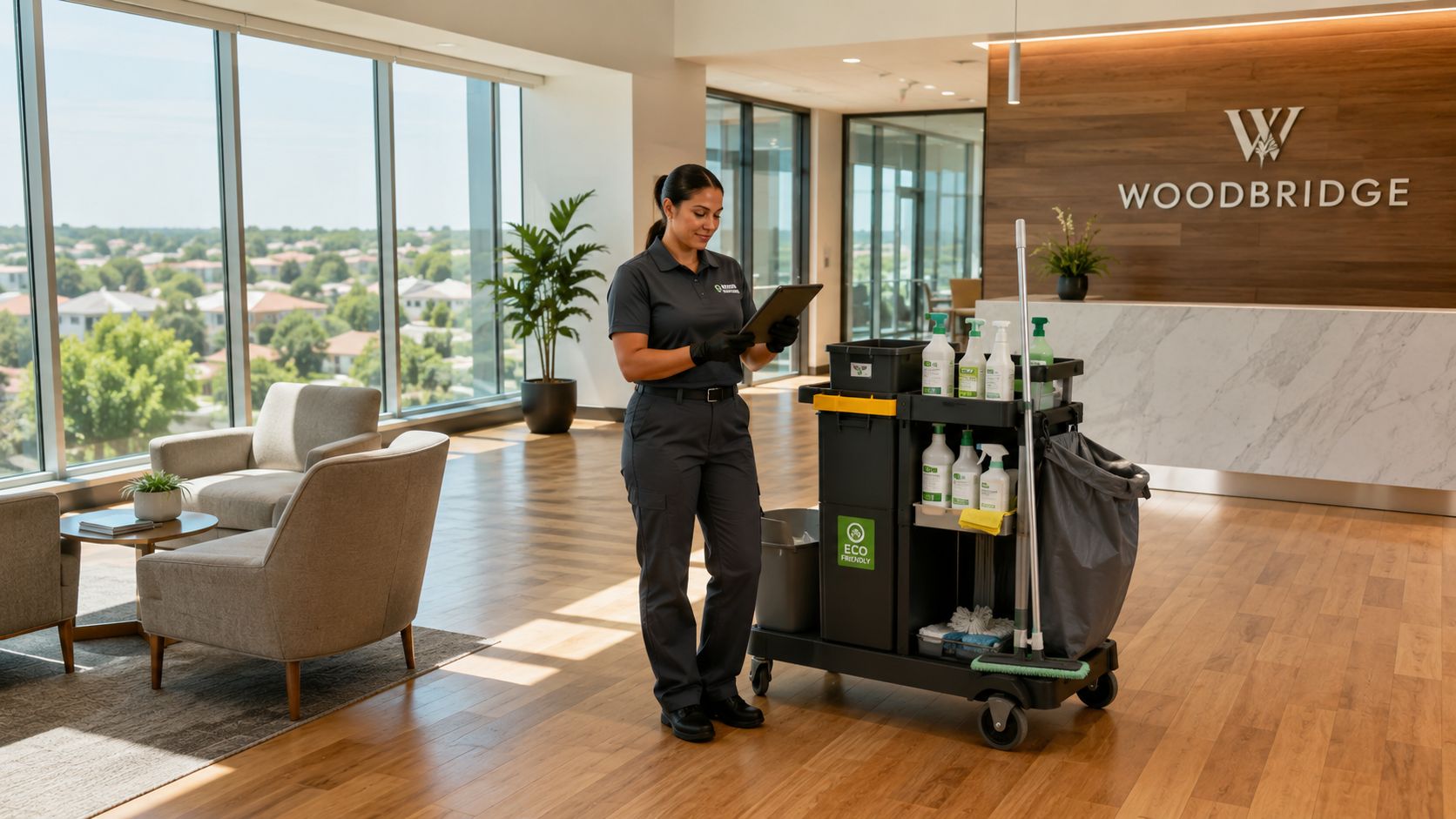
Digital Task Lists: Cleaning staff often use mobile apps with real-time, area-specific checklists. This helps guarantee that every agreed-upon task—from disinfecting high-touch surfaces in the showroom to degreasing service bay floors—is completed correctly and consistently.
Photo & GPS Verification: Many platforms allow staff to upload photos to verify completed work and use GPS to confirm they were on-site for the appropriate duration. This creates a transparent record of service and promotes accountability.
Using advanced tools like AI data analysis, a cleaning provider can transform operational data into actionable insights, identifying inefficiencies and discovering new opportunities for cost reduction.
Enhancing Communication and Quality Control
Technology also serves as a central hub connecting the dealership, the cleaning crew, and their management team. Instead of relying on phone calls or emails, modern systems provide a single, organized platform for all communication.
A dedicated mobile app allows a service manager to instantly report an issue, request extra attention for the lounge area before an event, or provide feedback. This creates a transparent, time-stamped record of communication and ensures problems are resolved quickly, preventing minor issues from escalating.
This technology-driven approach is a hallmark of a well-organized, professional janitorial service. It demonstrates a commitment to quality and proactive management. For a dealership, partnering with a company that utilizes these tools means fewer administrative burdens, more consistent results, and a precisely managed cleaning budget.
Choosing the Right Cleaning Partner and Contract
Selecting a commercial cleaning provider is about more than finding the lowest bid. It is a long-term partnership that directly affects brand image, operational budget, and the health of staff and customers. To truly control costs, the focus must shift from the cheapest price to the best overall value.
A thorough evaluation process helps identify a reliable partner capable of delivering consistent quality with minimal oversight. This means looking beyond the initial quote to examine their business operations, including quality assurance systems, staff training, communication protocols, and insurance coverage. These elements distinguish a professional service from a low-cost offer that may lead to higher costs in the long run.
Key Evaluation Criteria for Cleaning Providers
When comparing cleaning companies, use a consistent checklist for each one. This facilitates an objective comparison that looks past a tempting price tag that might conceal operational deficiencies.
Critical areas to investigate include:
Quality Assurance (QA) Processes: How do they monitor and maintain service quality? Inquire about their use of digital inspection reports, regular site visits, and formal systems for tracking and resolving issues. A robust QA process means you will not have to manage their cleaners.
Staff Training and Safety: Examine their training programs. Properly trained staff are more efficient and safer. Look for certifications like WHMIS (Workplace Hazardous Materials Information System), which is essential for the safe handling of cleaning chemicals.
Communication Channels: How accessible is the provider? A professional company should offer multiple contact methods, such as a dedicated account manager, phone support, and a client portal or mobile app for instant communication.
Insurance and Compliance: Always verify that they carry adequate liability insurance and WSIB coverage. This is non-negotiable, as it protects your dealership from liability in case of an accident or damage.
Comparing Commercial Cleaning Service Providers
This comparison table can help organize your evaluation of potential partners, enabling a decision based on objective criteria.
Evaluation Criterion
What to Look For
Red Flags to Avoid
Quality Assurance
Digital inspection tools, regular site visits, formal issue resolution process.
Vague answers, no documented process, expecting the client to report all problems.
Staff Training
Documented training programs, safety certifications (e.g., WHMIS), background checks.
No formal training, inability to provide proof of certification, high staff turnover.
A single, hard-to-reach point of contact; no after-hours support.
Insurance & Compliance
Readily available proof of liability insurance and WSIB coverage.
Hesitation to provide documents, underinsured or expired policies.
Contract Terms
Flexible agreements, no-term contracts, zero cancellation fees.
Long-term, rigid contracts with significant penalties for cancellation or changes.
A company that is transparent and confident in these areas is more likely to be a reliable partner that provides genuine value.
Understanding Contract Terms and Buyer-Friendly Policies
The contract is a powerful tool for controlling costs. Avoid long, rigid agreements that do not allow for adjustments as the dealership’s needs change. Seek flexible terms that place the client in control.
The most cost-effective partnerships are built on transparency and flexibility. Buyer-friendly policies like a price-match guarantee or a free sample clean are not gimmicks; they are strong indicators of a company's confidence in their service and their commitment to client satisfaction.
Some forward-thinking commercial cleaning services offer policies designed to build trust and deliver value from the outset. For instance, a provider offering a free 45-minute sample clean allows you to see their work quality firsthand before committing. Similarly, a price-match guarantee ensures competitive pricing, while a no-cancellation-fee policy provides the freedom to make changes without penalty.
By prioritizing these operational strengths and flexible contract terms, you can select a cleaning partner that delivers consistent results, protects your brand, and ultimately provides the most sustainable value for your dealership. Exploring a detailed breakdown of various commercial cleaning services can offer deeper insight into what to expect.
Frequently Asked Questions About Dealership Cleaning Costs
Balancing a pristine facility with a responsible budget can raise many questions about commercial cleaning contracts. Here are answers to some of the most common inquiries from dealership managers.
How much should a dealership expect to pay for cleaning services?
There is no single "magic number," as cleaning costs are highly localized and specific to the facility. For a small-to-medium dealership in a major hub like Toronto or busy York Region cities like Vaughan and Markham, monthly costs could range from $1,500 to over $4,000. Larger facilities in areas like Mississauga or Oakville with extensive service bays and large showrooms can expect costs to be higher.
Key factors that influence price include:
Total Square Footage: The overall size of the showroom, offices, and service bays is the primary basis for any quote.
Service Frequency: A daily cleaning schedule costs more than a schedule of three times per week.
Scope of Work: The price increases with the inclusion of specialized tasks like high-gloss floor polishing or detailed degreasing in service bays.
Facility Complexity: A higher number of washrooms, customer lounges, and windows requires more labour hours.
What is the single biggest factor driving cleaning costs?
Labour is the undisputed primary cost driver, typically accounting for 70-80% of any commercial cleaning contract. The price is almost entirely determined by the number of hours required for a crew to clean the space to the agreed-upon standard. This is why strategically optimizing the cleaning scope and frequency is the most effective way to manage the cleaning budget.
Is it cheaper to hire an in-house cleaning staff?
While hiring an in-house team may seem cost-effective on the surface, it often involves hidden expenses and significant administrative responsibility. Beyond wages, costs include benefits, WSIB premiums, vacation pay, and the ongoing expense of purchasing and maintaining cleaning equipment and supplies. The management burden also falls on your team, including training, scheduling, quality control, and managing staff absences. Outsourcing to a professional commercial cleaning company transfers these responsibilities, providing access to trained staff, industry-grade equipment, and established quality assurance systems. This often delivers better overall value and allows your management team to focus on their core business.
How can we lower cleaning costs without sacrificing quality?
The key is strategic optimization, not arbitrary cuts. A great starting point is to conduct a facility audit with your cleaning provider. Identify low-traffic zones—such as back offices or storage rooms—that may not require a deep clean daily. Implementing a tiered schedule is an excellent way to reduce labour hours without a noticeable impact. High-impact areas like the showroom and customer restrooms receive daily attention, while other areas are serviced less frequently. This method is proven to lower costs without compromising critical first impressions. Searching for "janitorial services near you" that utilize technology for scheduling and quality control can also lead to a more efficient partnership.
How do I know if I'm getting a fair price from a cleaning company?
The most reliable way to assess fair pricing is to obtain 2-3 detailed quotes from reputable commercial cleaning companies in your area. When comparing them, it is crucial to look beyond the final price. A professional quote will provide a detailed breakdown of the scope of work for each area of your dealership, specify the cleaning frequency, and clearly state inclusions and exclusions (e.g., consumable restocking). Be cautious of bids that are significantly lower than others, as this can be a red flag for inadequate insurance, poor staff training, or an unrealistic labour estimate that will likely result in subpar work.
Take the time to use the checklists and frameworks in this guide to audit your dealership's needs. Obtain multiple quotes and ask detailed questions about quality assurance, staff training, and contract flexibility.
If your dealership is located in Ontario cities like Toronto, Barrie, or Kitchener and you would like a transparent quote that includes a free 45-minute sample clean, Arelli Cleaning is one option to consider. Find your nearest location by visiting our Service Areas page.








.webp)