Key Takeaways
A clean educational facility is directly linked to student and staff well-being, attendance, and overall academic success. Investing in a professional cleaning program is not just about aesthetics; it is a foundational investment in a healthy learning environment.
Here are the key points for facility managers and school administrators:
- Health and Attendance: Professional cleaning removes pathogens like viruses and bacteria from high-touch surfaces, and reduces allergens like dust and dander. This directly lowers the rates of illness-related absenteeism among students and staff.
- Improved Focus and Morale: A clean, orderly classroom minimizes distractions and reduces environmental stress. This fosters a positive atmosphere where students feel more comfortable, focused, and motivated to attend.
- Strategic Cleaning is Essential: An effective cleaning program relies on a detailed, structured checklist. It targets high-risk areas (restrooms, high-touch surfaces) with appropriate frequency and is executed by trained professionals.
- Selecting a Cleaning Partner: When choosing a commercial cleaning service, evaluate providers on their experience in educational settings, staff screening processes (e.g., vulnerable sector checks), and quality assurance systems, not just on price.
How Classroom Cleanliness Directly Impacts Student Attendance

The connection between clean classrooms and higher student attendance is not coincidental; it is a cause-and-effect relationship based on health and environmental psychology. A systematically maintained school actively supports student health, reducing the primary cause of absenteeism: illness. Understanding this link allows school administrators to leverage professional office cleaning and janitorial services as a strategic tool for improving educational outcomes.
Core Factors Connecting Cleanliness to School Attendance
This table outlines the primary ways a hygienic school environment supports better student attendance.
These factors demonstrate that a clean school is fundamentally a healthier and more inviting school, which is the foundation for consistent attendance.
Reducing Absenteeism Through Targeted Hygiene
A professional commercial cleaning service understands that a healthy school requires more than a superficial tidy-up. The objective is to disrupt the cycle of infection. This requires a targeted hygiene strategy with a measurable impact on health.
Key areas of focus include:
- High-Touch Surfaces: Desks, chairs, doorknobs, light switches, and shared technology are hotspots for germs. Daily disinfection is essential for lowering the microbial load.
- Restroom Sanitation: Properly cleaned and fully stocked restrooms are crucial for preventing the spread of communicable diseases that can sweep through a school population.
- Improved Air Quality: Consistent dusting and vacuuming remove allergens like dust mites and dander. This can significantly reduce asthma and allergy flare-ups that lead to missed school days.
When a trained janitorial service executes this disciplined approach, it creates a physically healthier space where students are less likely to get sick. As noted by U.S.-based ROC Cleaning, a clean environment "prevents the spread of germs, which could lead to fewer illnesses and absences." This principle is universal, demonstrating how clean classrooms can improve student attendance in schools across Ontario, from daycare centers in Richmond Hill to private schools in Toronto.
The Science of a Healthy School Environment
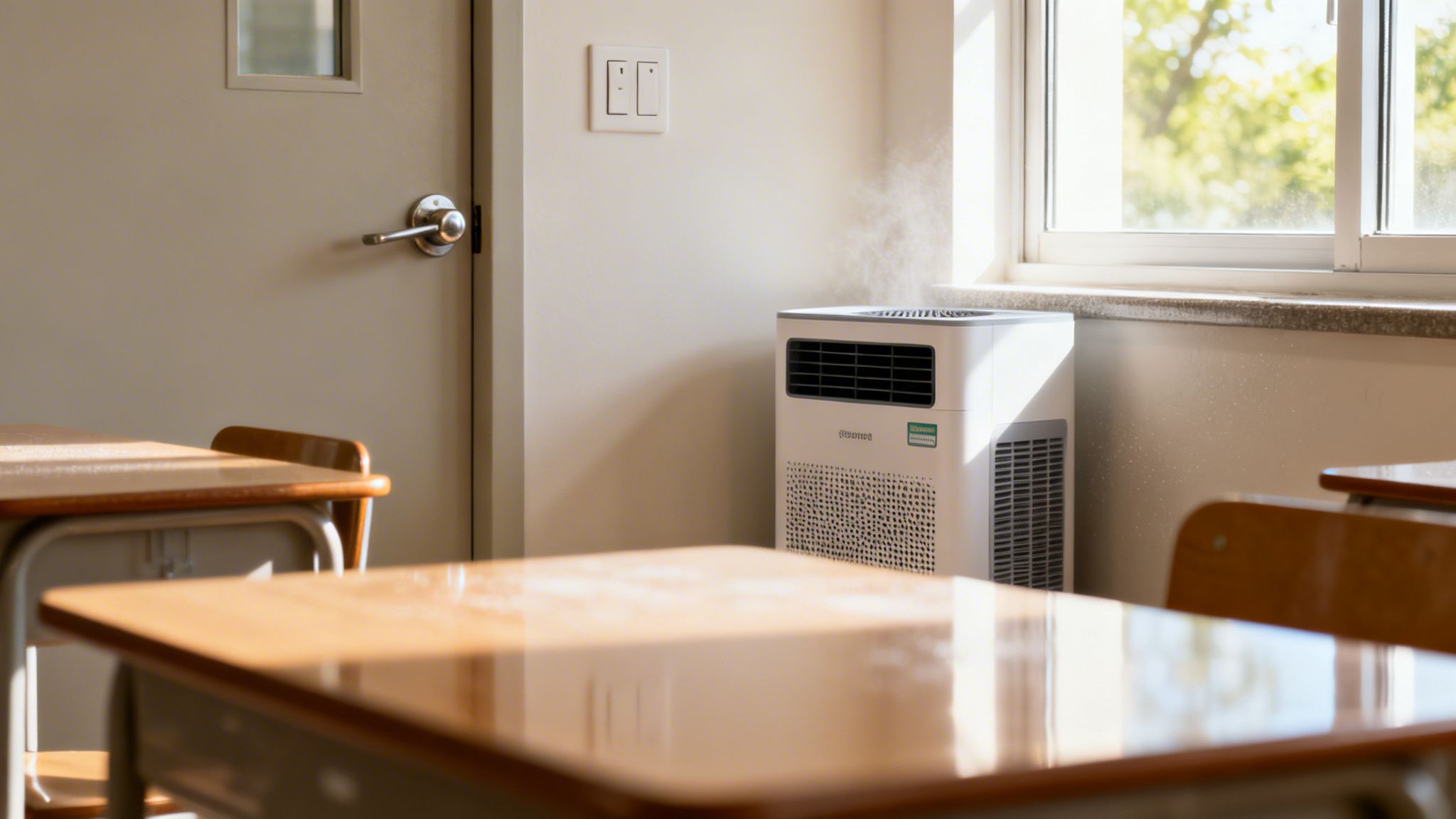
To understand how clean classrooms improve student attendance, it is necessary to examine the science of environmental health. Professional commercial cleaning is a public health strategy focused on managing the microscopic threats that directly affect the health of students and staff.
The core principle is pathogen control. High-touch surfaces in a classroom—desks, doorknobs, shared tablets—are primary vectors for transmission. Studies show that influenza viruses can survive on hard surfaces for up to 48 hours, providing an extended opportunity for infection. A professional janitorial service uses Health Canada-approved disinfectants and documented protocols to eliminate microbes on these critical surfaces, breaking the chain of infection.
From Surface Germs to Airborne Threats
While surface disinfection is critical, the quality of the air students breathe is equally important. Indoor air quality (IAQ) in a busy school can be compromised by a variety of airborne irritants.
Key airborne threats in a school environment include:
- Dust and Dander: These common allergens settle on surfaces and circulate through HVAC systems, triggering reactions in sensitive individuals.
- Mould Spores: Unaddressed moisture from leaks or poor ventilation can foster mould growth, releasing spores that contribute to respiratory issues.
- Volatile Organic Compounds (VOCs): These chemical irritants can be released from building materials, new furniture, and certain cleaning products.
For any student with asthma or other respiratory conditions, poor IAQ can be a direct cause of absenteeism. Consistent, detailed cleaning removes these threats. For a comprehensive assessment, conducting regular workplace air quality testing can identify unseen threats before they become significant problems.
The Role of Professional Cleaning Services
A professional commercial cleaning provider applies a scientific approach to hygiene, distinguishing between cleaning (removing dirt) and disinfecting (killing pathogens). By addressing both surface contaminants and air quality, they create a holistically healthier environment. This methodical approach directly reduces the circulation of germs and allergens that cause sick days. For schools in communities like Guelph, Kitchener, or Waterloo, partnering with a qualified cleaning company for offices and schools ensures these principles are applied correctly. You can learn more about effective disinfection in our guide on commercial disinfection and sanitizing.
How a Clean School Boosts Student and Staff Morale

The benefits of a professionally cleaned school extend beyond physical health to the psychological well-being of everyone in the building. This is a significant factor in how clean classrooms can improve student attendance in schools.
Clutter, dust, and grime are low-level visual distractions that compete for a student's attention. A messy environment forces the brain to expend energy filtering out this "noise," leaving fewer cognitive resources for learning. Conversely, a clean, organized space communicates safety, care, and respect, creating an optimal state for focus.
Fostering School Pride and a Sense of Community
A visibly well-maintained school sends a clear message to students, staff, and parents: the administration values its community and is committed to providing a dignified and safe environment.
This fosters positive outcomes:
- Students develop a stronger sense of school pride and belonging, which correlates with their motivation to attend daily.
- Staff feel more valued and effective in a professional setting, contributing to job satisfaction and teacher retention.
- Parents in communities from Mississauga to Vaughan feel more confident that the school prioritizes their children's well-being.
The Psychological Impact on Daily School Life
These psychological benefits contribute to a positive school culture. A clean environment reduces subconscious stress, leading to calmer interactions and a shared sense of responsibility. Students who feel safe, respected, and proud of their learning environment are more likely to want to be there.
Therefore, professional commercial cleaning is not merely a maintenance expense but a core service that supports the educational mission. For schools in areas from North York to Markham, investing in a high-quality janitorial service is an investment in building a culture of excellence.
Your Essential School Cleaning Checklist
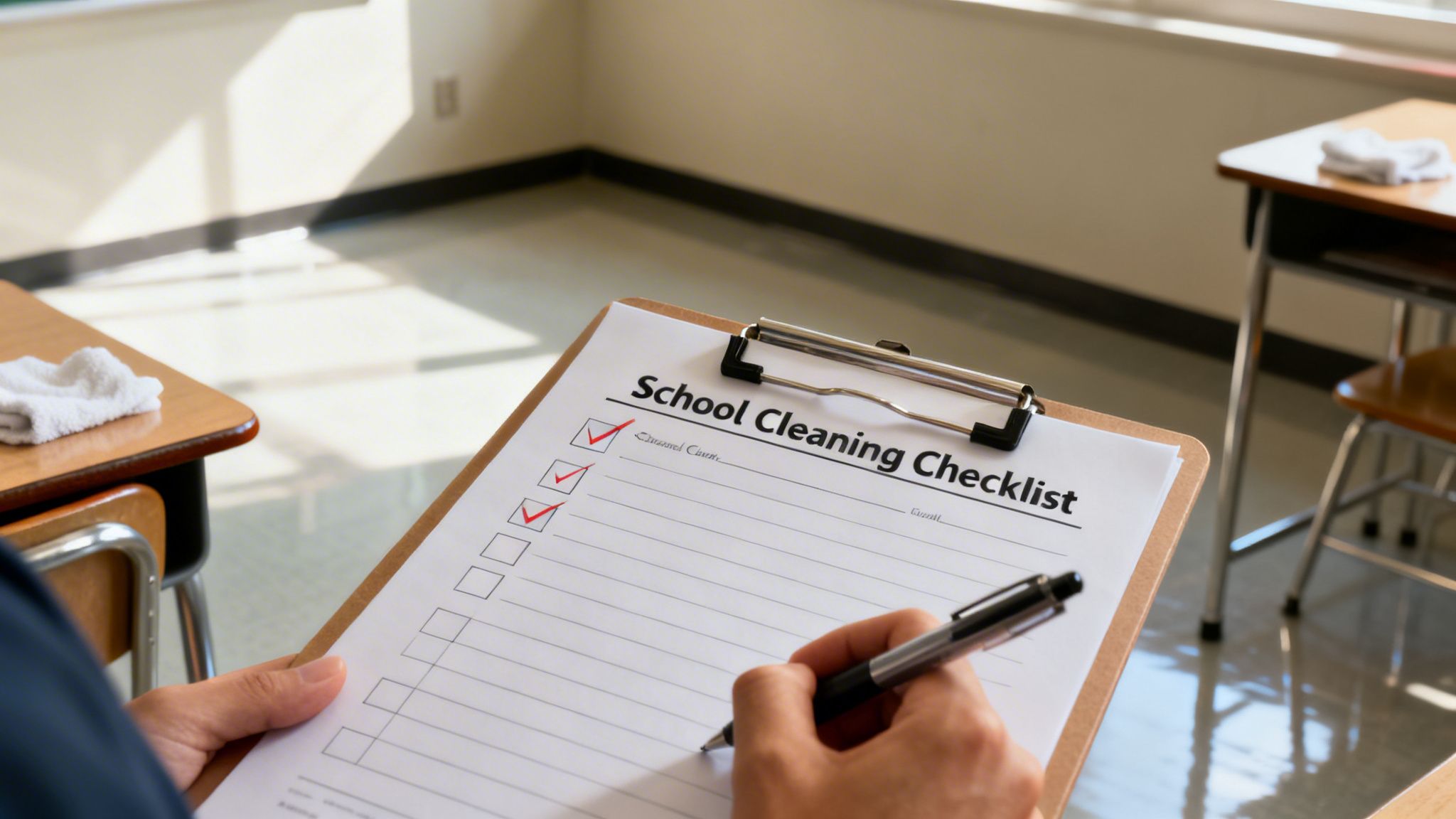
The foundation of any successful school hygiene program is a systematic checklist. This document translates the goal of a healthy school into consistent, measurable actions, ensuring that cleaning efforts are focused on areas that most impact student and staff health. It provides a clear framework for setting expectations with an in-house team or a hired commercial cleaning partner.
Daily Cleaning Priorities (High-Traffic and High-Touch Zones)
These tasks must be completed daily to break the chain of infection and maintain a clean appearance. The focus is on germ transmission hotspots.
- Classrooms: Disinfect all desks, chairs, doorknobs, and light switches. Wipe down shared technology (e.g., smartboards, computer mice). Empty all waste bins.
- Restrooms: Thoroughly clean and disinfect toilets, sinks, faucets, and stall handles. Restock all dispensers (soap, paper towels, toilet paper). Spot-clean mirrors and floors.
- Common Areas (Hallways, Cafeteria, Library): Disinfect water fountains, door handles, and railings. Spot-clean spills and high-traffic floor areas. Wipe down all cafeteria tables and chairs.
- Entrances & Reception: Clean glass on entry doors to remove fingerprints. Tidy the reception area and disinfect the main counter.
Weekly and Periodic Deep Cleaning Tasks
These tasks address the accumulation of dust and grime, which is critical for maintaining indoor air quality and overall building hygiene.
Weekly Tasks:
- Perform detailed dusting of all surfaces, including high-level areas like shelves, windowsills, and light fixtures.
- Thoroughly vacuum all carpets and mop all hard-surface floors from edge to edge.
- Wipe down student lockers, cubbies, and all baseboards.
- Clean and check gym equipment and other shared athletic facilities.
Monthly/Term-Break Tasks:
- Deep clean carpets and upholstered furniture.
- Wash interior windows and clean blinds.
- Scrub and polish floors, paying special attention to grout lines in restrooms.
- A programmatic approach, such as a dedicated Spring Clean Up, is ideal for tackling larger jobs that go beyond daily routines.
A professional janitorial service will use a structured checklist to develop a custom cleaning plan. They also manage the inventory of necessary supplies. For more on this, see our article on cleaning supplies. This systematic approach ensures every part of your school contributes to a healthier environment and, consequently, better student attendance.
How to Choose the Right Commercial Cleaning Partner
Selecting a commercial cleaning company for your school is a critical decision affecting student health, safety, and attendance. The right partner provides more than surface cleaning; they act as a key component of your health and safety strategy. An informed choice requires a structured evaluation that prioritizes experience, safety protocols, and quality control.
Decision-makers should look for proof of insurance, WSIB coverage, and transparent policies on staff background checks and safety training (e.g., WHMIS).
Key Questions for Potential Vendors
Asking targeted questions during the vetting process is essential to determine if a provider is equipped for a school environment.
Essential Questions to Ask:
- What is your experience with educational facilities? Ask for references from other schools, especially those in your region, such as Toronto, Mississauga, or York Region.
- How do you screen and train your staff? Inquire about their process for police background checks (specifically vulnerable sector screening), confidentiality training, and ongoing safety education.
- Can you detail your disinfection protocols? A professional provider should clearly explain which Health Canada-approved products they use and their methods for high-touch surfaces.
- What does your quality assurance process involve? Ask how they inspect their team's work to ensure consistent standards.
- What communication channels do you offer? Look for companies that provide a dedicated point of contact and modern systems for issue reporting, such as a smartphone app or 24/7 support.
Finding the right fit involves partnering with professionals who understand the unique demands of an educational setting. For more detail, review our guide on daycare and school cleaning services.
Comparing Commercial Cleaning Companies for Your School
Use a consistent framework to compare providers fairly, ensuring you evaluate each company on the same criteria.
A trustworthy partner will be transparent about their processes, confident in their team, and focused on building a long-term relationship based on reliable results.
Implementing and Measuring Your Cleaning Program
A professional cleaning program is a strategic investment whose value is realized through proper implementation and measurement. Simply hiring a janitorial service is not enough; a structured rollout and consistent data tracking are required to translate cleaning efforts into higher student attendance.
Effective implementation begins with clear communication. Explaining the "why" behind new cleaning protocols to teachers, staff, parents, and students—linking cleanliness to fewer sick days and a better learning environment—builds the support needed for success.
Setting Key Performance Indicators (KPIs)
To demonstrate the value of your investment in commercial cleaning services, you must track relevant data. This justifies the program's budget and allows for continuous improvement.
Core metrics to monitor include:
- Student Attendance Rates: Track overall attendance and, more specifically, absenteeism due to illness. Look for a downward trend in sickness-related absences after the program's implementation.
- Staff Sick Days: Reductions in staff absences offer an immediate financial benefit by lowering the cost of substitute teachers.
- Nurse's Office Visits: A decrease in visits for common illnesses (colds, flu) is a strong indicator that hygiene protocols are effective.
- Cleaning Service Requests: A decline in ad-hoc cleaning requests or complaints suggests that scheduled janitorial commercial cleaning services are meeting the school’s daily needs.
By tracking these KPIs, school administrators in areas like Barrie or Milton can clearly demonstrate how a professional cleaning program directly contributes to improved academic outcomes and operational efficiency.
Consistent quality control is the final component. Regular inspections, ideally conducted with your cleaning partner, ensure standards are maintained. A strong communication loop, often facilitated by a dedicated app, allows for instant issue resolution. This partnership approach transforms the question of how clean classrooms can improve student attendance in schools from a theory into a measurable reality.
Frequently Asked Questions About School Cleaning
Here are clear answers to common questions from school administrators and facility managers about maintaining a clean and healthy learning environment.
What are the most critical areas to clean in a school?
The most critical areas are high-touch surfaces, where pathogens are most likely to transfer between individuals. A professional janitorial service focuses on disinfecting these specific points daily. Key zones include:
- Classroom Surfaces: Desks, chairs, doorknobs, and light switches.
- Shared Technology: Keyboards, mice, tablets, and smartboards.
- Common Area Fixtures: Water fountains, hallway railings, and locker handles.
- Restroom Touchpoints: All fixtures, including faucets, flushers, and stall locks.
How often should a school be professionally cleaned?
For a significant impact on health and attendance, daily professional cleaning is the industry standard. The high-flow nature of schools means germs and dirt accumulate rapidly. A daily schedule for sanitation and disinfection of high-traffic areas is essential, while deeper cleaning tasks can be scheduled weekly or during breaks.
Can teachers and students handle classroom cleaning?
While encouraging students to keep their personal spaces tidy teaches responsibility, it is not a substitute for professional commercial cleaning services. Professional cleaners are trained in health and safety protocols like WHMIS (Workplace Hazardous Materials Information System). They use Health Canada-approved disinfectants and follow specific procedures to eliminate pathogens, a task that requires a level of training, equipment, and liability that is inappropriate for teachers and students. As noted by Anago of Manitoba, a professional service ensures a "higher standard of cleanliness."
How do I find a reputable commercial cleaner near you?
Finding a reliable commercial cleaner near you requires a thorough vetting process. Look for companies with demonstrated experience in the education sector.
- Request and Check References: Ask for contacts from other schools they service and follow up with them.
- Verify Credentials: Ensure they have adequate insurance, are bonded, and that all staff have passed vulnerable sector background checks.
- Review Their Process: Ask for a detailed cleaning plan that outlines their methods and quality assurance system.
Why is a professional cleaning service often better than in-house staff?
A professional commercial cleaning company offers specialized equipment, industrial-grade products, and staff who are experts in high-standard sanitation. Furthermore, they handle all administrative burdens associated with cleaning staff, including hiring, training, background checks, scheduling, and managing absences. This allows school administrators to focus on their primary mission: education.
Further Reading and Resources
Maintaining a healthy school is an ongoing commitment. Staying informed about industry best practices and public health guidelines is essential for supporting student well-being and attendance.
Industry Standards and Best Practices
For authoritative information on professional cleaning standards, consult ISSA—The Worldwide Cleaning Industry Association. For operational advice, resources like Janitorial Manager offer practical strategies. Educational content from established cleaning companies, such as Vancouver-based Master Care, can also provide valuable regional insights into janitorial best practices for schools.
Local Public Health Guidance
Always consult your local public health authority for the most current and relevant guidelines for schools in your region. These recommendations are tailored to your community’s specific health context.
Finding the Right Cleaning Partner in Ontario
Choosing the right partner is a critical step. We encourage you to get 2–3 quotes, use the frameworks provided in this guide to ask detailed questions, and ensure you find a team that can help maintain a safe, healthy, and welcoming school environment.
If you’re located in Ontario and want a quote that includes a free 45-minute sample clean of a dedicated area, Arelli is one option to consider. To see if we operate in your community, please explore our service areas.








.webp)