For businesses in the Greater Toronto Area, a customized cleaning schedule is a strategic tool for managing costs, improving productivity, and protecting the health of employees and clients. Moving beyond a generic, one-size-fits-all checklist allows cleaning resources to be directed where they matter most. This targeted approach focuses on high-traffic areas and critical touchpoints, helping to reduce illness and ensuring a facility consistently reflects a professional, safe standard.
Key Takeaways
- Strategic Resource Allocation: A customized plan focuses budget and effort on high-priority areas like lobbies and restrooms, avoiding wasteful spending on low-traffic zones.
- Improved Health and Safety: By targeting high-touch surfaces for disinfection, a tailored schedule can significantly reduce the spread of germs, leading to fewer sick days and a healthier workforce.
- Enhanced Professional Image: A consistently clean environment, especially in client-facing areas, reinforces a brand's commitment to quality and professionalism.
- Cost-Efficiency: Custom schedules prevent both over-servicing of non-critical areas and under-servicing of vital ones, ensuring budgets are used effectively and avoiding expensive deep-cleaning emergencies.
- Industry-Specific Compliance: A tailored plan addresses the unique hygiene and regulatory requirements of different sectors, from healthcare clinics in Vaughan to logistics warehouses in Mississauga.
Why a One-Size-Fits-All Cleaning Plan Fails in the GTA

The diversity of businesses across the Greater Toronto Area—from Mississauga and Brampton to Markham and Scarborough—presents unique cleaning challenges that a standard checklist cannot adequately address. A bustling logistics warehouse has entirely different hygiene needs than a high-end law firm in downtown Toronto or a busy dental clinic in Vaughan. Applying the same cleaning tasks and frequency to each is inefficient and ineffective.
Definition: Customized Cleaning Schedule
A customized cleaning schedule is a detailed plan developed for a specific facility, taking into account its unique foot traffic, operating hours, industry regulations, and hygiene priorities. It is a strategic asset, not a luxury.
This tailored approach recognizes that not all areas of a building require the same level of attention. A client-facing boardroom must be pristine at all times, while a back-office storage room might only need service weekly. A generic plan often leads to one of two problems: overpaying to clean low-priority areas or under-servicing critical zones, which can compromise health and professional image.
The Inefficiencies of a Standardized Approach
A standardized office cleaning plan often falls short because it ignores the key operational variables that differentiate one business from another. These factors are the foundation of any cleaning program that is both effective and cost-efficient.
Key factors that make generic plans obsolete include:
- Varying Foot Traffic: An engineering firm in Markham experiences different traffic patterns than a 24/7 call centre in North York, directly impacting floor wear and the amount of dirt tracked indoors.
- Diverse Facility Types: The clinical-level sanitation required for a healthcare facility in Richmond Hill is vastly different from the needs of a typical administrative office.
- Specific Operational Hours: A private school in Barrie requires deep cleaning to be performed after hours to avoid disrupting students, whereas a co-working space may need continuous disinfection of touchpoints throughout the workday.
- Industry Compliance: Many industries, from food service and childcare to healthcare and manufacturing, operate under strict health and safety regulations that generic checklists rarely address.
Ultimately, a strategy designed for a specific space is the only way to navigate the complex cleaning demands of commercial properties in the GTA. It represents a shift from "cleaning" to strategically maintaining an environment that actively supports business goals. Understanding how customized cleaning schedules help businesses allows for an investment in a service that delivers a measurable return.
The Financial Case for a Tailored Cleaning Strategy

When evaluating a commercial cleaning service, it is tempting to focus solely on the monthly quote. However, astute facility managers look beyond the initial price to consider the return on investment (ROI). A customized cleaning schedule is not about spending less—it is about spending smarter.
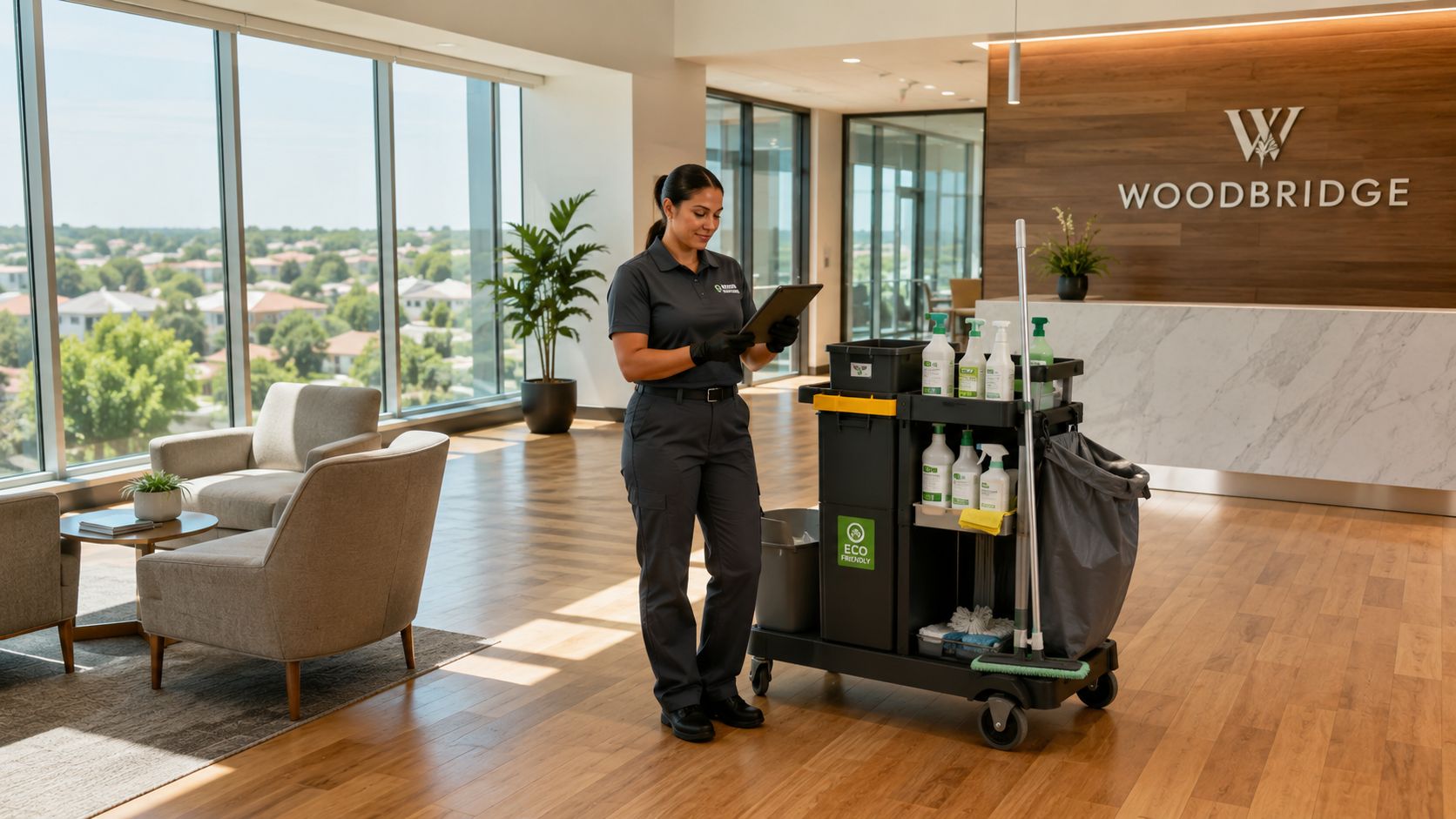
This is particularly true for businesses in competitive GTA hubs like Richmond Hill, Woodbridge, or Pickering. Instead of paying a flat rate to clean every square foot with the same frequency, a tailored plan directs the budget where it makes a tangible impact. For example, reception areas, client-facing meeting rooms, and washrooms demand pristine conditions, while a storage closet or a rarely used office does not.
A strategic plan avoids over-servicing low-traffic zones, which translates directly into cost savings without compromising the cleanliness that clients and staff notice. It is a simple shift that allocates funds where they matter most. Furthermore, this proactive approach helps prevent the buildup of dirt and grime that necessitates expensive, disruptive deep cleans, thereby extending the life of flooring, furniture, and other valuable assets.
From Operational Savings to Financial Gains
The financial benefits become more apparent when connecting a clean workspace to team performance. A professionally maintained, healthy environment has a proven impact on reducing employee absenteeism. By regularly disinfecting high-touch surfaces and improving indoor air quality, a professional office cleaning program actively minimizes the spread of viruses and bacteria.
Fewer sick days translate to more productive hours, creating a direct link from a healthier office to better operational continuity and a stronger bottom line. For any business in the GTA, from a law firm in downtown Toronto to a logistics centre in Mississauga, this is a core component of operational resilience.
A clean, organized environment also enhances productivity. When employees feel comfortable and safe in their surroundings, morale and focus improve, leading to better work quality and efficiency.
These operational savings can then be reinvested into business growth initiatives, such as marketing, technology upgrades, or staff development.
Understanding the Drivers of Your Commercial Cleaning Quote
To fully appreciate the financial benefits of customization, it is essential to understand the components of a commercial cleaning service quote. The price is a calculation based on specific, tangible factors. By understanding these drivers, you can collaborate with your provider to craft a scope of work that aligns with your needs and budget.
This table breaks down the main cost drivers in a typical commercial office cleaning service quote and shows where customization creates opportunities for savings.
By dissecting a quote in this manner, facility managers can transition from being passive buyers to active partners in creating a cleaning plan that delivers measurable value for their GTA business.
How Cleanliness Drives Health and Productivity

Beyond financial considerations, a thoughtful cleaning schedule has a significant impact on the people who use your facility daily. A professionally cleaned space is not just about appearances; it is about actively creating an environment that promotes health, safety, and focus.
For any business in the GTA, whether it's a corporate office in North York, a car dealership in Oshawa, or a private school in Barrie, this creates a tangible advantage. A strategic cleaning plan goes beyond mopping floors—it's about reducing sick days, preventing workplace accidents, and demonstrating a genuine commitment to employee well-being.
The Importance of High-Touchpoint Disinfection
One of the most critical concepts in modern commercial cleaning is high-touchpoint disinfection. These are the surfaces that multiple people touch constantly throughout the day—superhighways for germs.
Definition: High-Touchpoint Disinfection
A proactive health strategy focused on regularly cleaning and disinfecting surfaces with frequent human contact, such as doorknobs, light switches, and elevator buttons, to reduce the transmission of pathogens.
A generic cleaning service may overlook many of these crucial areas. A customized schedule, however, is built around a facility's unique layout and how people use the space. For example, a dental office in Woodbridge requires clinical-grade sanitization of patient chairs and equipment multiple times a day. In contrast, a corporate headquarters in downtown Toronto must prioritize elevator buttons, boardroom door handles, and shared kitchen appliances. A professional approach to this is detailed in guides on commercial disinfection and sanitizing.
Checklist: Identifying Your Facility’s Critical Cleaning Zones
To have a productive discussion with a commercial cleaning company, it helps to identify your facility's critical zones. Use this checklist to pinpoint high-priority areas:
Building a Healthier, More Focused Team
A visibly clean and hygienic workspace has a profound psychological impact. It can lower background stress and sends a clear message that an employer is invested in employee health—a significant factor in job satisfaction and retention, especially in dense business hubs like Markham and Newmarket.
By systematically addressing dust, allergens, and germs, a custom cleaning plan directly improves indoor air quality. This not only reduces the risk of colds and flu but also helps employees feel more focused and energized. When a team isn't battling allergies or subconsciously worrying about germs, they can perform at their best. This is fundamentally how customized cleaning schedules help businesses in the Greater Toronto Area succeed. Creating a healthier, safer environment is a direct investment in your most valuable asset: your people.
How to Assess Your Facility’s Unique Cleaning Needs

Before requesting a quote from a commercial cleaning company, it is crucial to understand what your facility requires. A customized cleaning schedule starts with a detailed assessment of your own space. This self-assessment ensures you only pay for what you truly need, a practice that helps businesses across the Greater Toronto Area save money and improve hygiene.
A proper assessment involves analyzing the variables that define your daily operations, from the flow of people to the specific demands of your industry. Whether you manage a logistics centre in Mississauga, a private school in King City, or a law firm in downtown Toronto, this process helps establish a preliminary scope of work and sets clear expectations for any potential cleaning partner.
A Step-by-Step Framework for Your Cleaning Assessment
A methodical approach ensures no corner is overlooked and encourages critical thinking about the function and priority of each space.
Map Your Foot Traffic Patterns: Observe the daily rhythm of your space. Main entrances, reception areas, primary hallways, and washrooms typically see constant traffic and demand daily attention. Conversely, individual offices, storage rooms, or a rarely-used boardroom might only need service weekly.
Inventory Your High-Use Zones: Create a specific list of the most critical functional areas. Pay close attention to washrooms and kitchens, noting the number of fixtures (toilets, sinks) and shared appliances (microwaves, coffee makers). These are hotspots for germs and always require more intensive cleaning.
Identify Client-Facing vs. Back-of-House Areas: Distinguish between spaces your clients see and those used only by staff. Client-facing zones, like the reception area in a Vaughan professional services firm, must be immaculate to uphold your professional image. This distinction is crucial for prioritizing tasks.
This self-assessment process empowers you to have a far more productive conversation with a commercial cleaning provider. When you know your needs, you can ensure the quotes you get are accurate, relevant, and fit your operational budget.
Key Questions to Guide Your Assessment
As you walk through your facility, these questions will help form the backbone of a solid scope of work:
- Who uses this space and when? (e.g., Is the boardroom used daily by staff or just for monthly client meetings?)
- What are our peak business hours? (This is key for deciding if after-hours janitorial services are needed to avoid disruption.)
- Are there any industry-specific compliance standards we must meet? (A healthcare clinic in Brampton has non-negotiable sanitation rules that a standard office does not.)
- Which surfaces are touched most frequently? (Look beyond the obvious to include light switches, alarm keypads, and chair arms.)
- What is the main type of soil or debris? (e.g., Dust in an admin office, salt and mud in a warehouse entrance during winter, or food crumbs in a breakroom.)
While mapping out your needs, using an effective cleaning schedule template can provide a structured starting point. Remember that a template is only a guide; adapt it based on your assessment. For challenges outside standard cleaning—like high dusting in a warehouse—you may need providers offering a wider range of janitorial commercial cleaning services. Some companies classify these as specialty cleaning services.
By completing this assessment, you become an informed partner, ready to collaborate with a commercial cleaning service to build a plan that delivers exactly what your business needs.
Choosing the Right Cleaning Partner for Your Custom Plan
Selecting a commercial cleaning company in a competitive market like the Greater Toronto Area involves more than comparing prices. The goal is to find a partner who can design, implement, and adhere to a cleaning schedule that supports your business objectives for health, safety, and professional image.
A reputable provider will have a clear, structured process for defining the scope of work. They will typically insist on an on-site visit to your facility—whether in Oakville, Burlington, Innisfil, or Barrie—before providing a quote. This initial walk-through is essential for them to understand your layout, high-traffic zones, and operational flow.
What to Look for in a Cleaning Provider: A Comparison Framework
When evaluating vendors, look beyond the price. A low bid is meaningless if the service is inconsistent or communication is poor. Focus on criteria that demonstrate reliability and professionalism.
According to Grandview Research, the Canadian cleaning services market is evolving, with businesses increasingly seeking partners who use technology for quality control and compliance tracking. You can learn more about trends in the Canadian cleaning services market.
What to Ask Potential Vendors
Use these questions to probe beyond the sales pitch and understand how a company truly operates:
- What is your process for resolving a cleaning issue or complaint? (Look for a structured, time-bound process.)
- Can you provide a sample clean of a critical area, like our main washroom or reception? (A confident provider will agree.)
- Are your cleaning teams consistently assigned to the same facilities? (Consistency is key for quality.)
- What technology do you use for quality control and client communication?
- Can you provide references from businesses in our industry or local area?
By focusing on these deeper questions, you can identify a commercial cleaning company that will act as a genuine partner in maintaining your facility.
Frequently Asked Questions (FAQ)
What is the difference between commercial cleaning and janitorial services?
Commercial cleaning often refers to bigger, periodic jobs (like deep carpet cleaning or floor waxing), while janitorial services cover regular, ongoing maintenance tasks like daily trash removal, restroom cleaning, and vacuuming. However, the terms are often used interchangeably. A good provider will clarify the exact scope of work in their proposal.
How often should my Toronto office be cleaned?
The ideal frequency depends on factors like foot traffic, facility type, and the number of employees. A small, quiet office in King City might need weekly service, while a large corporate headquarters in downtown Toronto with heavy foot traffic, multiple kitchens, and busy washrooms will likely need daily office cleaning for high-use zones to maintain a professional standard.
Why is a custom cleaning schedule important for my business?
A custom schedule ensures you are not overpaying for services you don’t need or under-servicing critical areas. It directs resources to high-priority zones like lobbies and restrooms, which improves health, enhances your professional image, and provides better value for your cleaning budget.
What should I look for in a commercial cleaning service near me?
When searching for a commercial cleaning service near you in the GTA, look for a company that insists on an on-site consultation before quoting. Key indicators of a quality provider include transparent pricing, a clear quality assurance process, evidence of staff training and insurance, and positive local references.
How is a custom cleaning plan implemented and managed?
Implementation begins with an initial site visit and consultation to create a detailed scope of work. The cleaning company for offices then develops a specific checklist and schedule for their team. Reputable providers use technology, such as mobile apps, for real-time communication, photo-based quality inspections, and fast issue resolution, ensuring the plan is executed correctly and can be adjusted as needs change.
Who is responsible for providing cleaning supplies?
This should be clearly defined in your service agreement. Most janitorial commercial cleaning services include standard cleaning chemicals and equipment in their price. Consumable supplies like paper towels, toilet paper, and hand soap can often be managed and restocked by the cleaning company for an additional fee, simplifying your facility management.
Further Reading
- ISSA (The Worldwide Cleaning Industry Association): A leading source for cleaning standards and best practices. Visit ISSA.
- Janitorial Manager: An excellent blog with insights on managing cleaning operations. Visit Janitorial Manager.
By asking the right questions and obtaining 2–3 detailed quotes, you can find a partner who understands how a customized cleaning schedule helps businesses in the Greater Toronto Area succeed.
If your business is in Ontario and you would like a transparent quote that includes a free 45-minute sample clean, Arelli Cleaning is one option to consider. You can find your local team by visiting their service areas page.








.webp)