A facility manager usually notices the problem long before anyone files a complaint. The front corridor starts to look grey even after mopping. Wheel marks stay behind. The finish near entrances wears thin. In a clinic, school, office, or warehouse, that change raises practical questions, not just cosmetic ones.
Is the floor dirty, or has the protective layer broken down? Will a scrub fix it, or is a full strip and refinish the safer budget decision? How much downtime will the work create, and what does the team need to do to stay compliant with chemical handling and slip-risk controls?
Those are the primary reasons buyers start researching hard floor cleaning services. A hard floor is a building asset. It affects appearance, traction, cleaning effort, and replacement timing. If the maintenance plan is too light, the floor wears early. If the treatment is too aggressive, money gets spent before it needs to be.
This guide is written for people who have to make that call. It explains what professional hard floor cleaning services include, when each treatment makes sense, how the service process works, what drives cost, and how to compare providers in a way that protects safety, operations, and budget.
Introduction The Guide to Restoring and Protecting Your Commercial Floors
Commercial hard floors absorb daily abuse. Shoes carry in grit. Carts grind debris into the surface. Spills leave residue. In winter, entry areas can become especially punishing. Over time, even durable materials such as VCT, tile, and concrete stop looking clean because the issue is no longer surface dust alone. The protective layer has worn, the finish has become uneven, or the wrong chemistry has left residue behind.
That's where many buyers get stuck. Routine janitorial work may still be happening every day, yet the floor keeps looking tired. It's easy to assume the answer is “more mopping,” but that often treats the symptom rather than the cause.
Professional floor care is different because it focuses on asset protection. The work is designed to remove embedded soil, restore the surface or finish, and reduce the rate at which the floor deteriorates.
Floors usually fail from preventable wear first, and visible damage second.
For a business, that matters in three ways:
- Safety: Worn finishes, residue, and damp recovery problems can increase slip concerns.
- Longevity: A scheduled recoat is usually easier on the budget than waiting until full restoration becomes necessary.
- Operations: The right plan reduces disruption by matching the treatment to traffic, layout, and curing time.
A useful way to think about floor care is this: daily cleaning removes today's dirt, while periodic hard floor cleaning services protect the floor from next month's damage.
What Are Professional Hard Floor Cleaning Services
Professional hard floor cleaning services are specialised maintenance and restoration services for commercial hard-surface flooring. They go beyond routine sweeping and damp mopping. The goal isn't only to make the floor look cleaner for a day. It's to preserve the material, rebuild protection where needed, and keep the floor serviceable for longer.
What separates them from routine janitorial work
Routine janitorial work removes loose dust, small spills, and everyday marks. Professional floor care deals with problems that regular mopping can't correct, such as:
- Embedded soil: Dirt that sits in the texture of the floor or in worn finish layers
- Finish breakdown: Dull traffic lanes, heel marks, scratches, and yellowed coatings
- Restoration needs: Situations where old finish must be removed and replaced
- Traffic management: Matching methods to lobbies, corridors, classrooms, treatment rooms, or warehouse aisles rather than cleaning every space the same way
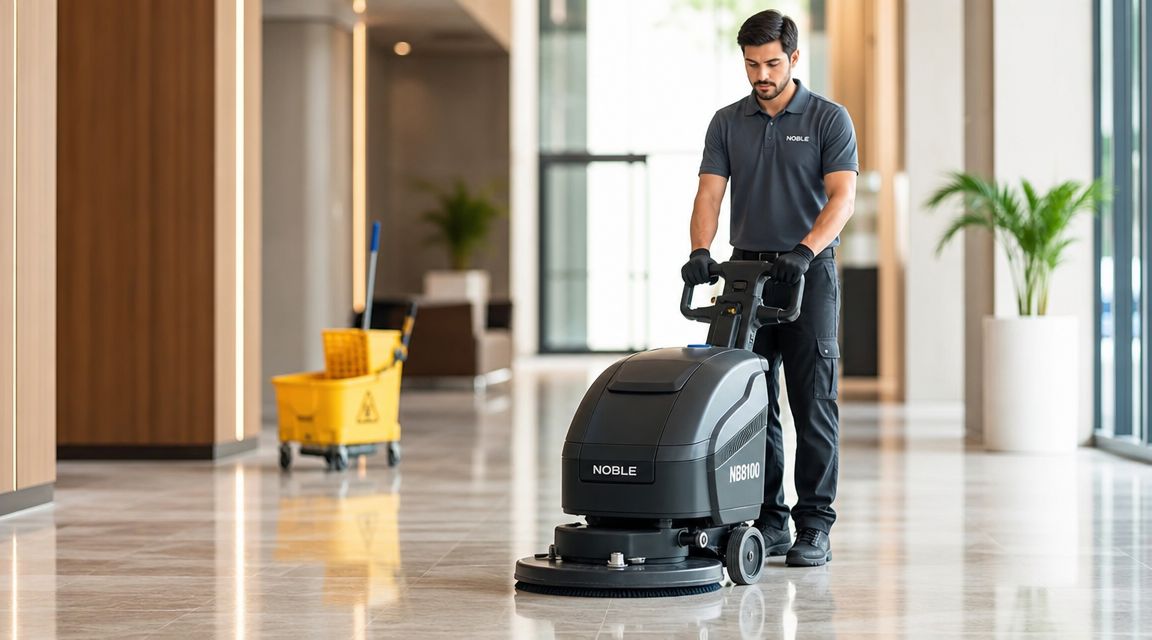
Technicians usually use commercial equipment such as rotary machines, burnishers, orbital machines, and auto-scrubbers. They also choose chemistry based on floor type and soil type, which is where many in-house programs struggle.
Why this service matters so much
In North America, the floor care segment led the broader cleaning services market with a 30.68% revenue share in 2025, according to Grand View Research's cleaning services market report. That matters because it shows floor care is a major category in commercial cleaning, not a niche add-on.
The operational side matters too. A provider needs to schedule labour, equipment, chemical dwell times, drying windows, and re-entry rules carefully. Teams that want a better handle on job routing and site coordination often look at tools like FixyFlow for cleaning teams, because floor work tends to involve more staging and timing than general nightly cleaning.
Direct answer
Professional hard floor cleaning services are commercial services that clean, restore, and protect hard flooring using trained operators, machine-based methods, and floor-specific chemistry. They are used when routine mopping no longer delivers safe, acceptable, or cost-effective results.
Common Hard Floor Treatments and Their Applications
A facility manager walks a lobby at 6:30 a.m. after the night crew has finished. The floor looks dull in the traffic lanes, brighter along the edges, and slightly slippery near the entrance on rainy days. The question is not “Should we wax it?” The correct question is which treatment fixes the actual problem without creating unnecessary shutdown time or cost.
Hard floor care works like vehicle maintenance. A polish helps when the finish is still healthy. A recoat adds protection before wear reaches the floor itself. A full strip and wax is the reset option when old layers have failed. Choosing correctly protects the floor, reduces slip risk, and keeps you from paying for major restoration sooner than necessary.
Comparison of Hard Floor Cleaning Treatments
| Treatment | Primary Purpose | When It's Needed |
|---|
| Buffing or burnishing | Restores gloss and smooths minor wear in the existing finish | When the floor looks dull from light traffic, but the finish is still intact |
| Scrubbing and recoating | Removes embedded soil and worn top layers, then adds new finish for protection | When finish remains on the floor, but traffic lanes and entry areas are wearing unevenly |
| Stripping and waxing | Removes failed finish completely and rebuilds the protective system from the floor up | When the finish is yellowed, scratched, patchy, contaminated, or no longer bonding well |
Buffing or burnishing
Buffing or burnishing is the least disruptive corrective option. It uses machine action to restore clarity and gloss to finish that is still present and still bonded well.
This treatment suits corridors, reception areas, and classroom or office routes with cosmetic wear rather than structural finish failure. It improves appearance fast, but it does not replace missing protection. If traffic has already worn through the finish, burnishing can make the contrast between damaged and protected areas easier to see.
For facility managers, the value is operational. Burnishing usually involves shorter access restrictions than heavier treatments, so it can fit buildings that cannot spare long closures. It is also a poor choice if your main problem is safety from worn finish near entrances or wash stations. Shine and protection are not the same thing.
Scrubbing and recoating
Scrubbing and recoating is often the best balance of cost, downtime, and floor preservation. The provider scrubs away embedded soil and degraded top finish, then applies fresh coats to restore the wear layer.
This treatment makes sense when the floor still has a stable foundation of finish, but the top surface is no longer doing its job. You often see that in school hallways, patient corridors, retail aisles, and office entrances where the center path wears faster than the perimeter. The floor may still clean up, but it no longer looks even, and moisture or grit can reach the surface more easily.
A useful way to judge it is simple. If the floor still has finish across most of the area, a scrub and recoat is usually worth pricing before you approve a full restoration.
It also helps with budget control. Recoating at the right time is like replacing the tread before you need a whole tire. You spend less now to avoid a larger service later, and you reduce the chance of taking a bigger area out of service for a full reset.
Stripping and waxing
Stripping and waxing is the most intensive option because it removes the old finish system completely and rebuilds it. That includes stripping, neutralizing, rinsing, drying, and applying new finish coats in sequence. If you need a clearer view of what contractors typically include, this commercial strip and wax service overview is useful for comparing scope across quotes.
This treatment fits floors with broad finish failure, not just cosmetic dullness. Common signs include persistent discoloration, yellowed finish, uneven gloss, heavy scratching, trapped soil, or coating adhesion problems. In plain terms, the floor has too much damaged material on it to repair only the top layer.
It also requires the most planning. Stripping creates longer dry times, stronger chemical handling requirements, and tighter re-entry controls. For facilities with WHMIS obligations, that means verifying labeling, Safety Data Sheets, staff communication, ventilation needs, and barricading during the work window. A strip and wax may be the right technical answer, but it also has the highest disruption cost, so the decision should account for occupancy, access routes, and reopening deadlines.
The best results come from matching the treatment to the condition of the finish, not to the age of the floor or how dull it looks under overhead lights. A floor that looks tired may only need a recoat. A floor that looks shiny in spots may still need a full reset if the finish is failing unevenly.
The Service Process and Recommended Frequency
A floor service plan succeeds or fails before the machines start. Picture a school corridor at 6 p.m. Custodians need the space open by morning, the floor has worn traffic lanes near the entrances, and any slippery residue creates a safety issue the next day. The right process is the one that restores protection, controls re-entry, and fits the building's operating window.

What a typical service process looks like
A good contractor treats floor care like a staged maintenance project, not a single cleaning task. The sequence matters because each step affects adhesion, drying time, and how quickly occupants can return safely.
Site assessment
The provider confirms the floor type, current wear pattern, traffic intensity, and any constraints such as patient areas, classrooms, retail hours, or shipping routes. This step prevents the common mistake of using the same treatment everywhere, even though an entry corridor and a private office age very differently.
Scope and staging plan
The work plan should show which zones will be completed first, what can stay open, and when each area is safe to walk on again. For facility managers, here service quality connects to operations. A technically correct floor treatment still creates problems if it blocks a fire route, delays morning setup, or leaves no alternate path for staff.
Preparation
Furniture is moved as needed, dust and dry soil are removed, warning signs are placed, and the work area is isolated. In facilities managing WHMIS responsibilities, preparation also includes confirming product labeling, access to Safety Data Sheets, and staff awareness of the work zone.
Treatment execution
The contractor performs the selected service, such as scrubbing, recoat preparation, or restorative cleaning. In some environments, managers also compare adjacent methods such as commercial steam cleaning options where sanitation concerns, grout soil, or low-residue cleaning requirements affect the decision.
Drying, curing, and inspection
The final check should cover more than appearance. It should confirm residue removal, even coverage, edge detail, and safe re-entry timing. A floor that looks fine under overhead lights can still wear out early if moisture was trapped or the surface was reopened too soon.
Guidance from Weber State University's hard floor maintenance procedures notes the importance of neutral rinsing, controlled finish application, and cure time before later maintenance steps. That matters for budget planning. If residue is left behind or coats are rushed, the finish wears faster, and the next corrective service arrives sooner than expected.
How frequency should be decided
Recommended frequency should follow floor condition and facility use, not the calendar alone.
A hard floor program works like tire rotation on a fleet vehicle. You do not service every unit the same way at the same interval. You look at mileage, load, route conditions, and wear. Floors follow the same logic. Entry points collect grit, main corridors carry repeated abrasion, and back offices may hold up well with basic routine care for much longer.
Questions that help set the right cycle include:
- Where does abrasive soil enter most often?
- Which lanes carry carts, stretchers, pallets, or concentrated foot traffic?
- Which areas require overnight work because of occupancy or safety rules?
- Which spaces need finish protection to reduce replacement costs, even if appearance is a lower priority?
- Which areas create the highest slip-risk or complaint risk if service is delayed?
These answers shape the schedule. High-traffic zones may need periodic restorative scrubbing or recoating during the year. Lower-use rooms may only need routine maintenance and occasional corrective work. The goal is to spend where wear is happening, instead of paying to treat low-impact spaces too often.
Scheduling also affects cost control. If a provider can phase work by zone, keep critical paths open, and return areas to service on time, the floor program causes less disruption to staff, tenants, students, or patients. Managers reviewing how vendors coordinate crews and after-hours windows sometimes find the best cleaning business scheduling software to understand how service timing is planned in practice.
The best frequency plan is specific. It ties each treatment to traffic level, business interruption tolerance, safety controls, and the total cost of ownership for that floor.
Pricing Factors Safety and Compliance
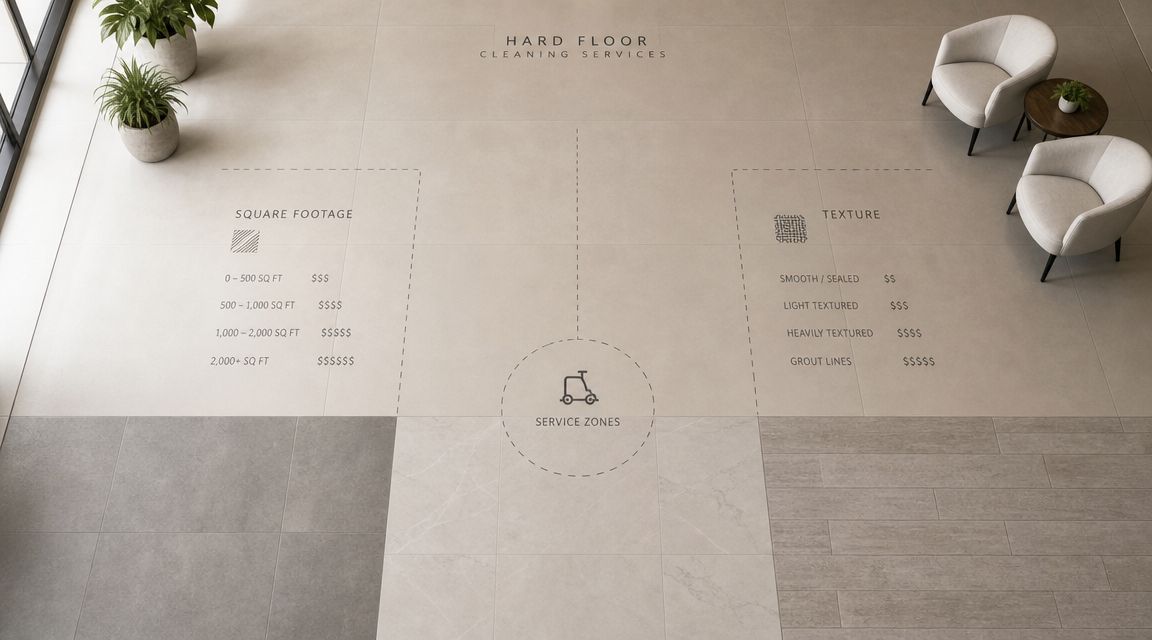
Floor care pricing isn't just about square footage. Buyers often receive very different quotes because the vendors are not pricing the same scope, the same chemistry, or the same downtime assumptions.
What actually drives cost
A quote usually moves up or down based on factors such as:
- Condition of the floor: Heavy buildup, black heel marks, or neglected finish require more labour
- Type of treatment: Burnishing is lighter work than a strip and refinish
- Layout complexity: Tight rooms, furniture, partitions, and staged access take longer than open areas
- Timing of service: Overnight or weekend work may change labour planning
- Drying and protection requirements: Sensitive spaces may need extra controls, signage, or staged reopening
That's why it's better to ask for a scope breakdown than to compare totals alone. A lower quote may exclude furniture moving, extra rinse steps, or detailed edge work.
Why chemistry and machine choice matter
In Canadian facilities, effective hard-floor programs pair the right chemistry with mechanical action. Guidance from Mannington Commercial on maintaining hard surface flooring specifies neutral cleaners for routine mopping, alkaline cleaners with pH 8–10 for greasy or oily soil, and mild acidic cleaners with pH 4.5–6.5 for mineral-scale or hard-water deposits.
The wrong pH can create two separate problems. First, it may fail to remove the soil properly. Second, it may leave residue or damage the finish, which then attracts more dirt and increases slip concerns.
A competent provider should be able to explain:
- why a neutral cleaner is being used in one area,
- why an alkaline or mild acidic product is necessary in another,
- and what machine action will be used to recover the soil fully.
Safety and compliance questions buyers should ask
In Ontario, compliance matters most in regulated or higher-risk spaces such as childcare, dental, industrial, and institutional environments. WHMIS obligations affect how hazardous products are labelled, handled, and communicated in the workplace.
Ask about:
- WHMIS training: Are staff trained to handle and communicate chemical hazards properly?
- Slip-risk controls: How will wet areas be isolated and reopened safely?
- Residue management: What rinse and recovery steps prevent sticky or slippery surfaces?
- Product fit: Are the chemicals appropriate for the actual floor material?
If the provider also supplies consumables or maintenance products, pages like commercial cleaning supplies information can help a buyer understand whether the firm thinks in terms of systems or just one-off tasks.
How to Choose a Commercial Floor Cleaning Provider
A floor care vendor can look fine on paper and still create expensive problems in practice. The crew arrives with the right machines, but the hallway stays closed into business hours. The finish looks better for a week, then traffic lanes dull fast because the treatment did not match the floor's actual condition. For a facility manager, that is the primary buying risk. You are not purchasing “clean floors” in the abstract. You are choosing how much disruption, slip exposure, and future repair cost your site will carry.
A good provider evaluates floor care the way a maintenance manager evaluates equipment service. The question is not only whether the contractor can do the job. The question is whether the contractor can match the treatment to the building, control the work area safely, and leave you with a floor that is cheaper to maintain over time.
What separates a usable quote from a risky one
Start with the site assessment.
If a provider can quote stripping, scrubbing, burnishing, or recoating without seeing the floor, you are probably looking at a standard package instead of a diagnosis. Hard floors age in layers. Soil sits on top, residue can sit in the finish, and wear can cut through the finish into the material below. Those are different problems, and each one calls for a different response.
Ask these questions before approving any quote:
What did you observe during the assessment?
Look for a clear explanation of floor type, traffic patterns, finish wear, staining, and any areas with higher slip risk.
Why is this treatment the right one now?
A recoat, for example, costs less and causes less downtime than a full strip, but it only makes sense if the existing finish can still support it.
How will the work be staged around operations?
Good answers mention zones, after-hours scheduling, entry and exit routes, and realistic reopening times.
What safety controls will be used during and after the work?
The provider should explain signage, barricades, wet-area isolation, and how staff handle products under WHMIS requirements.
What is included, and what is extra?
Clarify furniture moving, baseboard detailing, spot stain removal, additional coats, and return visits.
What maintenance plan do you recommend after restoration?
This is where cost of ownership shows up. The wrong follow-up schedule can shorten the life of the work you just paid for.
One sentence can tell you a lot about a vendor. If they can explain the “why” behind the method in plain language, they usually have a process. If they hide behind vague wording like “full floor treatment as needed,” you may end up paying for decisions made on the fly.
Choose for operational fit, not just appearance
Shine is easy to notice. Downtime, safety exposure, and premature wear are what affect the budget.
A useful way to compare providers is to picture the floor as a high-traffic asset, more like a loading door or HVAC unit than a decorative surface. You want work that protects service life and keeps the building functioning. That means the best proposal is often the one that balances appearance with reopening time, occupant safety, and future maintenance effort.
A company page such as Arelli's commercial cleaning services for businesses can be helpful as a comparison point if you want to see how a provider presents scope, scheduling, and support across a wider facility cleaning program. What matters is not the branding. What matters is whether the provider explains how floor care fits into day-to-day building operations.
Warning signs that deserve a closer look
Some weak proposals sound reasonable until you test them.
Every problem gets the same recommendation.
If every floor needs stripping, the provider may be selling the most billable service, not the most appropriate one.
No one asks about your occupancy schedule.
Floor care affects entrances, corridors, classrooms, patient areas, retail traffic, and warehouse movement. A provider who does not ask about building use is missing part of the job.
The chemical plan is unclear.
You should hear which product types will be used, why they fit the material, and how residue will be recovered so the floor does not reopen sticky or slick.
Safety is discussed only in general terms.
“We follow safety rules” is not enough. You need specifics on WHMIS training, area control, and reopening criteria.
The proposal skips post-service expectations.
If no one explains cure time, traffic restrictions, or maintenance after the service, the results are harder to protect.
A practical decision framework
Use three filters.
First, does the provider correctly identify what the floor needs now? Second, can they complete the work with manageable disruption to your site? Third, does their plan help you delay the next major restoration instead of pulling it closer?
The right provider should make those answers easy to understand. If you have to guess how the work will affect operations, safety, or future maintenance cost, the quote is not ready yet.
Frequently Asked Questions About Hard Floor Cleaning
How often should hard floor cleaning services be booked?
It depends on floor type, traffic level, and soil load. High-traffic entries and corridors usually need more frequent corrective care than low-use rooms. The best schedule is based on wear patterns, not a fixed calendar alone.
What's the difference between mopping and professional floor care?
Mopping removes loose dirt and light residue. Professional floor care restores or protects the floor surface itself through machine scrubbing, recoating, burnishing, or stripping when needed.
How does a facility know whether it needs a recoat or a full strip?
A recoat may make sense when the finish is still present but worn unevenly. A full strip is more likely when the finish is heavily scratched, yellowed, contaminated, or failing across large areas. A site assessment should determine that before quoting.
Will the area need to be closed?
Usually, yes, at least temporarily. The key question is how the provider stages the work. Good vendors break work into zones, schedule around occupancy, and explain when each area can reopen safely.
Are hard floor cleaning services only about making floors shiny?
No. Appearance is only one outcome. The more important benefits are maintaining traction, reducing residue problems, protecting the floor material, and delaying costly replacement.
Do different floor types need different chemicals?
Yes. Floor type and soil type both matter. A product that works on oily buildup may be unsuitable for routine daily maintenance. Using the wrong chemistry can leave residue, reduce cleaning effectiveness, or affect the finish.
What should regulated facilities ask about?
Childcare centres, dental clinics, and industrial sites should ask about WHMIS training, product selection, residue control, ventilation, signage, and reopening procedures. Those details matter as much as appearance.
Is the cheapest quote usually the best value?
Not always. Lower prices can reflect a smaller scope, fewer finish coats, limited prep, or unrealistic assumptions about downtime. Value comes from the right treatment delivered with the right operational plan.
Further Reading
A useful next step is to widen the lens beyond floor appearance and review floor care as an operating decision. The right treatment affects cleaning budgets, slip risk, scheduling, chemical handling, and how long the floor lasts before replacement becomes the cheaper option.
If you need more background, review local service availability and provider coverage through Arelli's service areas across the GTA. Then compare that information with the inspection checklist and quoting questions covered earlier in this guide.
For a facility manager, the goal is simple. Match the floor condition, occupancy pattern, and compliance requirements to a service plan that solves the actual problem.
If your site is comparing hard floor cleaning services, ask for 2 to 3 detailed quotes and read them the way you would read a maintenance scope for any other asset. Look for clear treatment logic, staging by area, expected reopening times, WHMIS-related safety controls, and what ongoing maintenance is assumed after the visit. Arelli Cleaning is one option to include in that comparison for Toronto-area office and commercial cleaning needs.






.webp)