Many Toronto facility teams now face tenant, staff, and procurement pressure to reduce chemical exposure and water use in routine cleaning. Carpet care sits in the middle of that decision because it affects indoor air quality, room turnaround time, custodial labour, and lifecycle cost.
Green carpet cleaning is not a single method. It is a purchasing and maintenance decision with trade-offs between drying time, stain removal, odour control, fibre wear, WHMIS documentation, and Health Canada alignment for chemical handling and storage. In commercial and institutional settings, the right choice depends on the building type, traffic pattern, budget cycle, and how much downtime a site can absorb.
This guide examines seven green carpet cleaning methods through a facility management lens for Toronto offices, schools, clinics, and mixed-use properties. It focuses on what buyers usually need to compare in practice: cleaning performance, scheduling impact, compliance obligations, and when lower-moisture options make more sense than professional carpet shampoo services.
1. Dry Carbonated Extraction
Low-moisture carpet cleaning is often the only practical option in spaces that need same-day use. Dry carbonated extraction is built for that constraint. It uses a limited amount of solution, mechanical agitation, and rapid recovery to remove surface and near-surface soil without leaving carpet wet for hours.
For a Toronto facility manager, the advantage is operational more than cosmetic. Boardrooms, classrooms, tenant suites, and medical admin areas can usually return to service faster than they would after a full hot-water extraction. That helps with scheduling, reduces slip-risk controls after cleaning, and cuts the chance of musty odour caused by slow drying.
Where it works best
Dry carbonated extraction performs well in buildings with steady foot traffic and a defined maintenance program. It is a good fit for interim cleaning between deeper restorative visits, especially where broadloom appearance matters and shutdown windows are short.
It also supports carpet preservation. Lower moisture means less risk of overwetting the backing, adhesive disruption, or repeated long dry cycles that can create avoidable wear over time. In practice, that matters most in office corridors, training rooms, private schools, and mixed-use common areas.
The trade-off is straightforward. This method handles moderate soil well, but it is not the first choice for heavy grease, deep contamination, flood-related issues, or severe stain carry-down into the pad.
Practical rule: Use dry carbonated extraction as a maintenance method with low downtime, not as a substitute for periodic restorative cleaning.
Procurement and compliance questions still matter. Ask what products are being applied, whether WHMIS documentation is available for site files, whether residue is low enough to avoid rapid resoiling, and how the contractor handles pre-vacuuming and spot treatment. For many commercial sites, the best plan is a rotation: low-moisture cleaning for occupied periods, then scheduled commercial carpet shampoo services or another deeper method during planned access windows.
2. Baking Soda and Vinegar DIY Solution
Small businesses often try this first because the materials are familiar and easy to store. Baking soda helps with odour control. Diluted white vinegar can help loosen some light organic spotting.
That said, this is a maintenance tactic, not a full commercial carpet program. In reception areas, private offices, and small waiting rooms, it can help staff address minor spills between professional visits. In broadloom corridors or heavily used common areas, it usually isn't enough on its own.
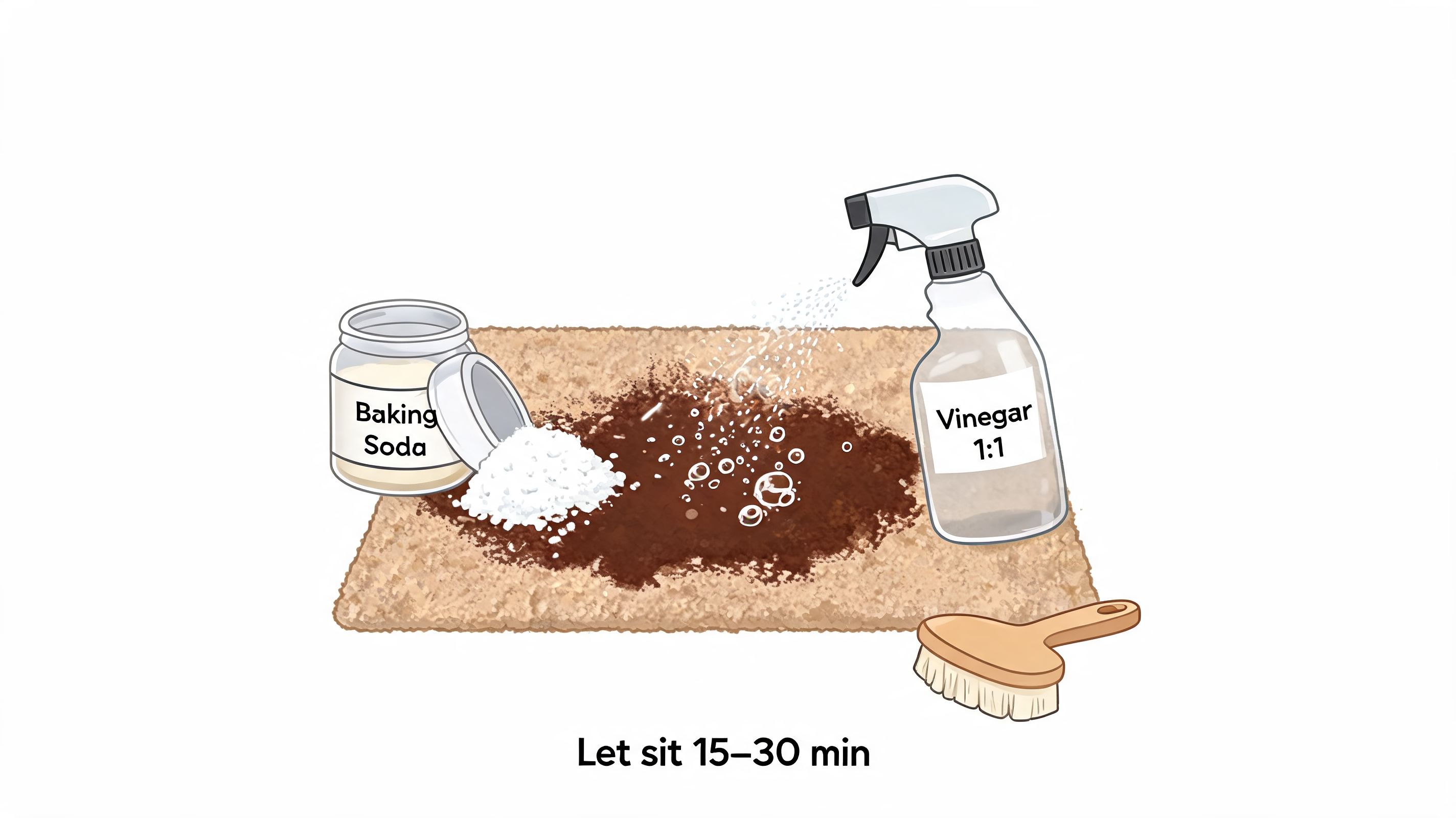
What this method can and can't do
The main advantage is control. A clinic or small office can respond quickly to a fresh spill without introducing heavily fragranced chemicals into occupied areas.
The main downside is inconsistency. Over-application can leave carpet too wet, create lingering odour, or cause wick-back if the spill reaches the backing. Vinegar also isn't appropriate for every carpet type or stain category.
A sensible commercial use case looks like this:
- Use it for fresh spots: Coffee drips, minor food spills, and light odour control are better candidates than set-in staining.
- Test first: Coloured, delicate, or older carpet can react unpredictably.
- Keep it localised: Broad-area use slows drying and can create uneven results.
- Ventilate the area: HVAC support helps dry the carpet faster and reduces lingering smell.
For institutions with children, staff sensitivities, or low-chemical policies, this method can be part of a broader green cleaning carpet plan. It just shouldn't be mistaken for professional extraction.
3. Enzyme-Based Biological Cleaners
Biological residues are a common trigger for repeat carpet complaints in occupied facilities. In practice, the issue is often not visible soil. It is odour, residue in the backing, or a spot that keeps returning after routine cleaning.
Enzyme-based cleaners are designed for that specific problem set. They perform best on food proteins, bodily fluids, milk, and other organic contamination that standard spotters often smear, mask, or only partially remove. For Toronto facility managers, that makes them a practical option in daycares, medical offices, long-term care support areas, school wellness rooms, lunchrooms, and tenant spaces where occupant sensitivity and cleanup speed both matter.
Best fit for organic contamination
Dwell time determines whether this method works. Staff who spray, blot, and move on too quickly usually leave part of the contamination behind. That leads to odour return, wick-back, and repeat labour costs that erase any savings from using a lower-cost product.
Process control matters just as much. Enzymes lose effectiveness when they are mixed with incompatible disinfectants or strong spotters, and that can create confusion for frontline teams working from a crowded janitorial closet. In larger sites, I recommend treating enzyme products as a separate category with clear labelling, WHMIS training, and SDS access at point of use, not just in a binder no one checks.
Procurement is part of the decision. Buyers should confirm that the product documentation aligns with site policies, staff training, and Health Canada expectations for safer chemical handling in occupied spaces. Certification can help, but the operational question is simpler. Does the product have clear use instructions, current safety documentation, and a realistic fit with how your team cleans?
This method also has limits. Enzyme cleaners are not a broad-area maintenance solution, and they are not a substitute for extraction when contamination has spread below the face fibres. If the spot load is frequent or the affected area is large, a scheduled commercial steam cleaning approach for deeper carpet recovery is usually the better operational choice.
Facilities that manage multiple approved chemistries should also review their cleaning supplies for commercial use so carpet spot treatments stay aligned with site-specific hazard controls, custodial training, and purchasing standards.
Enzyme products reward correct dwell time, clear procedures, and disciplined use.
4. Steam Cleaning with Botanical Extracts
Carpet replacement is expensive. For many Toronto facilities, extending carpet life by even one budget cycle can justify a scheduled restorative clean, provided the method fits occupancy, drying windows, and chemical-handling rules.
Hot water extraction remains one of the few green cleaning options that can remove embedded soil from below the surface pile. In lower-risk areas, botanical detergents can be part of that process, but the label is not the decision point. Facility teams still need to review fibre compatibility, residue risk, scent sensitivity, SDS documentation, and WHMIS training requirements before approving a product for routine use.

Deep cleaning with operational trade-offs
This method earns its place in periodic recovery work. It suits traffic lanes, winter salt carry-in, and carpets that have gone too long between deeper cleans. In occupied commercial buildings, the main constraint is not cleaning power. It is downtime.
Drying time affects room turnover, slip-risk controls, after-hours staffing, and HVAC coordination. In schools, clinics, and office environments, I usually advise managers to treat extraction as a planned project, not a daytime touch-up task. Pre-vacuuming, strong moisture recovery, air movement, and clear re-entry rules matter as much as the detergent choice.
Cost also needs a realistic read. Steam extraction usually costs more per visit than low-moisture maintenance methods, but it can reduce premature carpet replacement if scheduled before soils become permanent. That is the ROI question facility managers should test. Does the deeper clean restore enough appearance and hygiene value to delay capital spend, or would a lower-moisture program handle the site more efficiently?
For outsourced work, a documented commercial steam cleaning process for deeper carpet recovery is more useful than broad green claims. The right scope should spell out extraction method, moisture control, approved chemistry, drying expectations, and how the contractor will work within site access, Health Canada-aligned product handling, and internal compliance procedures.
5. Eco-Friendly Encapsulation Technology
Low-moisture carpet cleaning methods are often the only realistic option for spaces that need same-day use. Encapsulation fits that requirement well in commercial settings because it controls appearance decline without the drying delays that come with full restorative cleaning.
Encapsulation applies a polymer-based cleaning solution that surrounds suspended soil as it dries. The residue is then removed through routine vacuuming. For a Toronto facility manager, the operational value is clear. Less moisture usually means shorter room closures, fewer slip-risk controls, and less pressure on evening staffing schedules.

Why facility managers use it
This method performs best in open offices, corridors, classrooms, training areas, and other carpeted zones with frequent traffic but limited time for shutdowns. It is a maintenance tool for managing recurring soil load between deeper restorative cleans. In my experience, that distinction matters. Sites that expect encapsulation to correct heavy grease, post-construction debris, or neglected staining usually end up disappointed.
The performance driver is follow-up vacuuming. If the site has weak vacuum standards, poor equipment maintenance, or inconsistent frequencies, encapsulation results fall off quickly. That is why procurement should look past the chemical alone and review the whole program, including CRI-appropriate equipment, staff training, and whether product handling aligns with WHMIS documentation and internal custodial procedures.
There is also a straightforward cost argument. Encapsulation often lowers labour hours per visit and reduces disruption to daytime operations. However, it may need to be scheduled more frequently than extraction to maintain the same appearance standard. The better ROI question is not which method sounds greener. It is which cleaning mix keeps carpet acceptable longer without creating unnecessary downtime or pushing premature replacement.
A short demonstration helps explain the mechanism:
Field note: Encapsulation is best used as part of an interim maintenance plan with approved chemistry, documented vacuuming frequency, and periodic review against broader eco-friendly cleaning solutions used across the facility.
6. Hydrogen Peroxide and Oxygen-Based Stain Removal
Oxygen-based spot treatment is useful when the facility needs a cleaner stain-response option without chlorine bleach. It is commonly considered for food staining, biological spotting, and some mould-related cleanup support, depending on the site protocol.
The appeal is straightforward. These products tend to break down into simpler byproducts and can fit lower-residue cleaning strategies. The risk is also straightforward. Misuse can lighten fibres, affect dyes, or create visible patches if the surrounding area isn't blended properly.
Good for stains, not for every carpet issue
This approach makes the most sense as a targeted treatment. Healthcare-adjacent settings, childcare spaces, and staff kitchens often benefit from keeping an oxygen-based spotter in the approved product list for trained staff or vendors.
Commercial buyers should still ask whether the peroxide product is compatible with the fibre type, whether neutralisation is required, and whether the stain is oxidisable. Some soils need agitation, extraction, or enzyme dwell time instead.
For teams reviewing product classes, broader guidance on eco-friendly cleaning solutions can help frame where oxygen-based chemistry fits within a greener maintenance program. The most reliable operational use is selective application with documented procedures, not casual spraying by untrained occupants.
7. Professional Green-Certified Carpet Cleaning Services
A missed carpet cleaning window can disrupt an entire floor. In commercial settings, the value of a green-certified service is not just lower-toxicity chemistry. It is the ability to clean to standard, control drying time, document product handling, and fit the work into the building schedule.
For Toronto facility managers, that usually matters more than the label on one bottle.
Professional service makes sense when the site has mixed carpet types, strict occupancy hours, or formal reporting requirements. Offices, schools, clinics, and multi-tenant properties often need more than stain removal. They need a contractor that can match the method to the area, isolate higher-risk work, provide SDS documentation, and align with WHMIS procedures already in place on site.
What to verify before signing
Certification still matters. The stronger test is whether the contractor can explain the full cleaning plan in operational terms. Ask which low-residue products are used, how much moisture each method leaves behind, what ventilation or dry-time controls are required, and how they adjust the process for open offices, healthcare-adjacent spaces, and public corridors.
Procurement teams should also check how the vendor handles Health Canada expectations around safer chemical use, worker training, and labelled product storage. A green claim without documentation creates risk for the client as well as the cleaner. In practice, the better vendors arrive with SDS sheets, site-specific work procedures, insurance certificates, and a clear scope that separates routine carpet maintenance from restoration or bio-related response.
Cost is part of the decision, but downtime usually drives the ROI. A lower bid loses value if an area stays offline longer, wicks back, or needs repeat visits because the wrong method was selected. Vendors that offer broader specialty cleaning services for commercial facilities are often better positioned to choose by fibre type, soil load, and traffic pattern instead of pushing one standard process across every building.
That is the practical advantage. Better method selection, cleaner documentation, and fewer surprises for operations.
7-Method Green Carpet Cleaning Comparison
For a Toronto facility manager, the right carpet method is usually decided by access windows, drying time, labour capacity, and documentation requirements, not by marketing claims. The comparison below is useful as a screening tool before you price work, schedule shutdowns, or review WHMIS and product handling expectations with a contractor.
| Method | Implementation complexity | Resource requirements | Expected outcomes | Ideal use cases | Key advantages |
|---|
| Dry Carbonated Extraction | Medium, specialized equipment and trained operators | Low water use, carbonation equipment, trained crew | Quick drying, often about 1 to 2 hours, good for light to moderate soil, helps preserve pile appearance | Busy offices, classrooms, legal offices, tenant areas with limited shutdown windows | Low downtime, low water use, suitable for routine commercial maintenance |
| Baking Soda and Vinegar DIY Solution | Low, simple manual process | Basic supplies, staff time, vacuuming, added dwell and drying time | Helps with odour control and some light spotting, inconsistent on embedded soil | Small isolated spots, staff-managed maintenance closets, non-critical areas | Low direct cost, simple to apply, no specialized equipment |
| Enzyme-Based Biological Cleaners | Medium, product-specific handling and dwell time | Enzyme cleaners, temperature control, labelled storage, trained handling | Strong performance on organic and protein-based contamination, slower action than standard spotters | Childcare, healthcare-adjacent spaces, food service areas, washroom-adjacent carpet | Good on bio-soil, lower residue risk when used correctly, useful for targeted remediation |
| Steam Cleaning with Botanical Extracts | High, operator skill and extraction setup matter | Hot water extraction equipment, more water, recovery capacity, ventilation planning | Deep cleaning, strong soil removal, longer dry times, often several hours depending on airflow and fibre | Restorative cleaning, heavy traffic lanes, periodic deep cleaning in institutional spaces | Strong reset for neglected carpet, supports indoor air quality goals when residue is controlled |
| Eco-Friendly Encapsulation Technology | Medium, process control matters | Low-moisture encapsulant, applicators, vacuuming after drying | Fast drying, effective for interim maintenance, helps reduce rapid re-soiling | Open offices, call centres, retail floors, common areas needing same-day reopening | Fast turnaround, low moisture, supports scheduled maintenance programs |
| Hydrogen Peroxide and Oxygen-Based Stain Removal | Low to medium, targeted application with precautions | Oxygen-based spotters, PPE, ventilation, stain-specific technique | Effective on many organic, tannin, and dye-related spots, can lighten some fibres if misused | Healthcare, dental, childcare, isolated stain events, post-incident response | Useful bleach alternative for many applications, low residue, targeted stain removal |
| Professional Green-Certified Carpet Cleaning Services | High, requires procurement review and site coordination | Documented products, trained technicians, reporting, supervision, insurance and compliance records | Method matched to carpet condition and occupancy needs, with stronger documentation and quality control | Multi-site portfolios, public buildings, schools, healthcare-adjacent properties, compliance-driven clients | Better process selection, documented procedures, clearer accountability, easier audit support |
A few trade-offs stand out. DIY options can make sense for isolated spots, but they rarely scale well across a large office or institutional site because labour becomes inconsistent and drying control is weak. Low-moisture methods usually deliver the best operational value for routine maintenance, while hot water extraction remains the better choice for restorative cleaning when you can tolerate a longer offline period.
Cost should be read against reopening time. A method that costs less per visit can still create a worse annual result if it extends downtime, leaves residue, or requires repeat work in high-traffic corridors.
For procurement and operations teams, the practical filter is simple. Match the method to soil load, occupancy sensitivity, and the amount of downtime the building can absorb. Then confirm that the products and handling procedures fit your WHMIS program and any Health Canada-related requirements that apply to your site.
Choosing the Right Green Method for Your Facility
A carpet program that looks efficient on paper can still create avoidable cost if it keeps rooms offline too long, fails an audit trail, or leaves recurring soil in traffic lanes. For Toronto facility managers, method selection is an operations decision as much as a cleaning decision.
The practical starting point is to sort the job by three variables. What is in the carpet, how quickly the space must reopen, and what documentation the site requires. A downtown office with evening access, a school with daytime occupancy limits, and a healthcare-adjacent facility with stricter product review standards should not be put on the same cleaning plan.
For many GTA properties, the strongest approach is layered. Daily soil control sits with vacuuming and fast spot treatment. Interim appearance management usually fits low-moisture methods such as encapsulation or dry extraction. Restorative work belongs in a planned window, with enough drying time, ventilation control, and access management to avoid disrupting occupants the next day.
That structure also improves ROI.
Instead of judging price per visit alone, review annual labour demand, frequency of repeat cleans, reopening time, and the administrative burden tied to SDS review, WHMIS handling, and contractor supervision. A cheaper method can become the more expensive option if it causes longer closures or inconsistent results across high-traffic areas.
What to ask providers
- Ask how they match method to soil condition: Traffic lane greying, food spills, salt residue, and odour events often need different treatment paths.
- Ask for product documentation before scheduling: SDS sheets, dilution guidance, and any use restrictions should be available for review.
- Ask about reopening time: Get a realistic range for drying, ventilation, and foot traffic access, not a generic promise.
- Ask who carries compliance responsibility on site: Contractor training, WHMIS awareness, incident reporting, and product handling should be clear.
- Ask how they recommend sequencing the work: Phased cleaning by zone often works better than taking a full floor offline at once.
- Ask what is included in the quote: Pre-vacuuming, spot treatment, stain follow-up, and post-cleaning inspection are often handled differently from one proposal to another.
What to avoid
- Avoid single-method proposals for every area: They often miss the difference between routine maintenance and restorative cleaning.
- Avoid broad green claims without paperwork: If the provider cannot supply product details, procurement review gets harder.
- Avoid pricing that ignores access conditions: After-hours work, security coordination, elevators, and phased occupancy affect the true cost.
- Avoid high-moisture routines for ordinary maintenance: Repeated over-wetting can increase downtime and add wear risk.
- Avoid vague stain-removal promises: Some stains improve, some can be reduced, and some are permanent. A credible provider should say which is which.
FAQ
What is green cleaning carpet
Green cleaning carpet refers to carpet maintenance that reduces unnecessary chemical exposure, controls water use, and supports indoor air quality goals while still meeting the cleaning standard required for the building.
Which green carpet cleaning method is best for offices
Low-moisture methods are usually the best fit for offices that need short reopening times. Dry extraction and encapsulation often handle routine maintenance well. Periodic restorative cleaning may still require hot water extraction if soil load has built up.
Does green carpet cleaning work on heavy soil
Yes, but not every green method performs the same way on heavy soil. Neglected buildup, grease, winter salt, and contamination events often need stronger mechanical action, longer dwell time, or a restorative process scheduled during low-occupancy hours.
Is DIY green carpet cleaning enough for commercial buildings
DIY treatment can help with isolated spots. It is rarely enough for a full commercial program. Large sites need consistency, drying control, documentation, and a repeatable scope across multiple areas.
How often should commercial carpet be cleaned
Cleaning frequency depends on traffic volume, entry conditions, seasonality, and building use. Reception areas, corridors, and elevator approaches usually need more frequent attention than enclosed offices or lightly used meeting rooms.
Why do certifications matter
Certifications and product records help procurement teams review what is being used on site. They also make it easier to confirm handling requirements, support internal approval processes, and maintain a cleaner compliance file.
Who should manage green carpet cleaning in a facility
Small offices may handle minor spotting with trained in-house staff. Larger facilities usually get better control from a contractor or integrated facility team that can document products, schedule work around occupancy, and report on results.
Where can Toronto businesses compare service options
Toronto businesses should compare service options by reviewing scope, method selection, product records, drying expectations, and experience with occupied commercial sites. Local coverage can matter for response time and scheduling, but the proposal details matter more than a directory listing.
The best next step is to build a short tender checklist and score each quote against the same operating criteria. Focus on carpet condition, access windows, expected downtime, compliance requirements, and whether the provider can support a maintenance plan instead of a one-time clean.
For GTA facilities that need a quote-ready review, Arelli Cleaning can be assessed alongside other providers using that same checklist. The useful comparison points are straightforward. Method fit, documentation quality, scheduling discipline, and the ability to keep disruption low while meeting site standards.








.webp)