Professional carpet care is more than a cosmetic service for removing a coffee stain or freshening up a space. For facility managers and business owners, it is a critical component of facility maintenance, health protocols, and asset protection. Professional cleaning removes the deep-seated dirt, allergens, and pathogens that standard vacuums cannot, directly impacting occupant health and the lifespan of commercial flooring.
This guide provides a neutral, evidence-informed overview of the commercial carpet cleaning industry, designed to help decision-makers evaluate and select the right services for their facilities.
Table of Contents
Key Takeaways
- Definition: Commercial carpet cleaning is a specialized service that uses industrial-grade equipment and methods to deep clean carpets in high-traffic business environments. It focuses on health, asset preservation, and appearance maintenance, distinct from routine janitorial vacuuming.
- Industry Drivers: The commercial sector fuels the carpet cleaning industry, driven by heightened workplace hygiene standards, demands in commercial real estate to attract tenants, and a focus on employee wellness and productivity.
- Core Methods: The primary professional methods are Hot Water Extraction (HWE) for deep restoration, and low-moisture Encapsulation for interim maintenance in high-traffic areas.
- Vendor Selection Criteria: Choosing a provider requires vetting for proper insurance (liability and WSIB), industry certifications (like IICRC), documented safety protocols (WHMIS), and transparent pricing.
- Cost Structure: Pricing is typically calculated per square foot, ranging from $0.15 to $0.40 in major Canadian markets, influenced by the cleaning method, carpet condition, and facility complexity.
- Technology's Role: Modern carpet care relies on operational software for quality control, communication, and safety compliance, ensuring accountability and consistent service delivery.
Understanding the Commercial Carpet Cleaning Industry
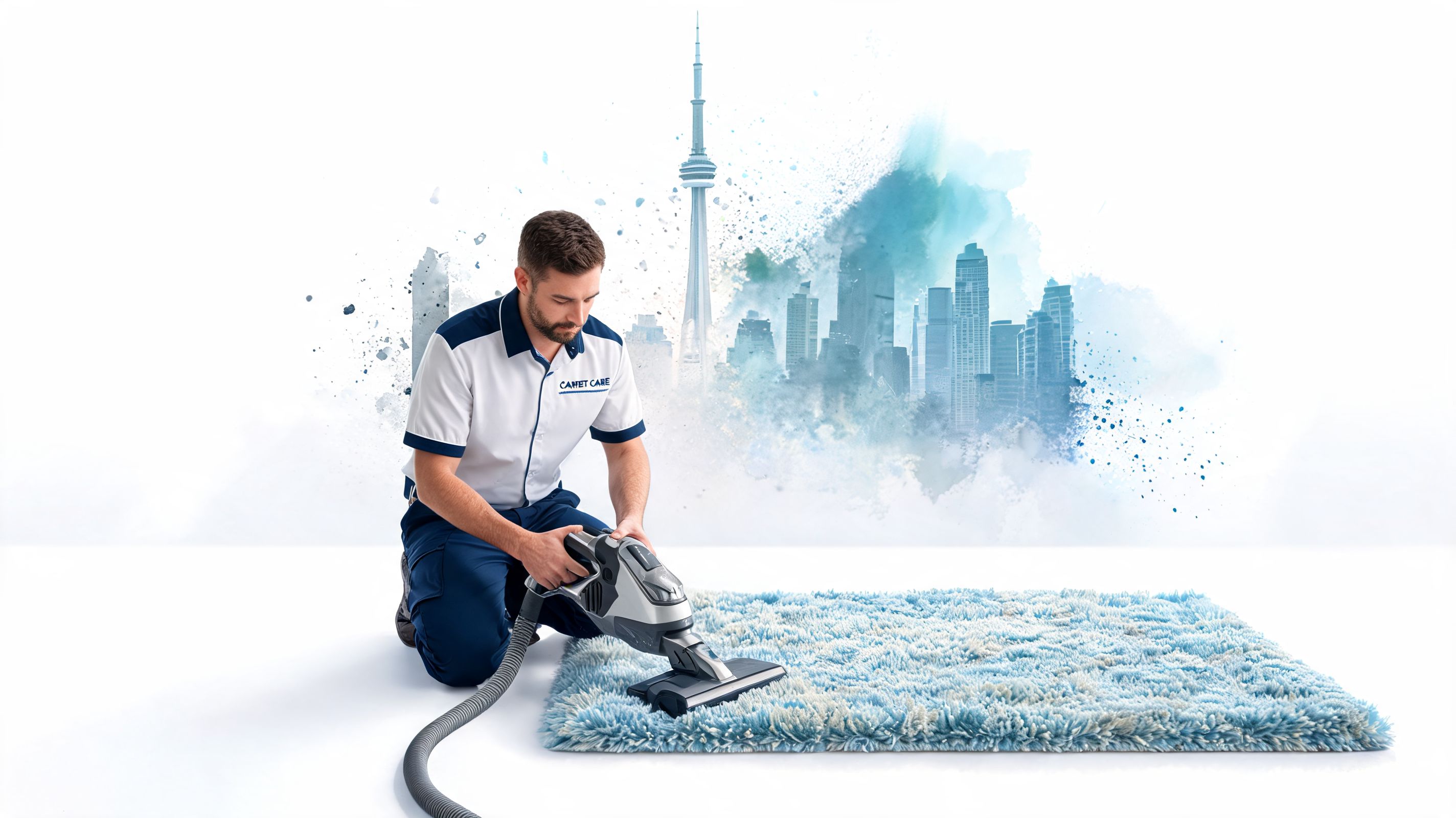
The carpet cleaning industry provides services for both residential and commercial properties, but the commercial sector has unique demands that have shaped a specialized field of practice. Commercial carpet cleaning addresses the challenges of heavy foot traffic, diverse soil types, and the need to maintain a healthy and professional environment without disrupting business operations.
Market Dynamics and Growth Drivers
The commercial sector is the primary engine of the carpet cleaning industry. Industry authorities like ISSA, the worldwide cleaning industry association, consistently highlight the link between clean facilities and public health, a factor that has accelerated demand. This is reflected in market data; industry reports about the carpet cleaning sector show sustained growth driven by commercial real estate and heightened hygiene expectations.
Key factors driving growth in the commercial sector include:
- Elevated Hygiene Standards: Post-pandemic, employees and customers have a greater awareness of workplace cleanliness and its connection to health. Deep cleaning is essential for removing allergens, bacteria, and contaminants that daily janitorial services miss.
- Commercial Real Estate Demands: Property managers must maintain impeccable standards to attract and retain tenants. Well-maintained carpets are a visible indicator of a properly managed building, protecting the flooring asset and enhancing its appeal.
- Focus on Employee Wellness: A clean office environment impacts employee morale and can contribute to reduced absenteeism. By improving indoor air quality, professional carpet care helps create a healthier and more productive workplace.
Direct Answer: Commercial carpet cleaning is a specialized field focused on maintaining carpets in business settings. It uses heavy-duty equipment and specific methodologies to manage high foot traffic, protect the flooring asset, and ensure a healthy indoor environment, distinguishing it from residential services.
Commercial vs. Residential Carpet Cleaning: A Decision Framework
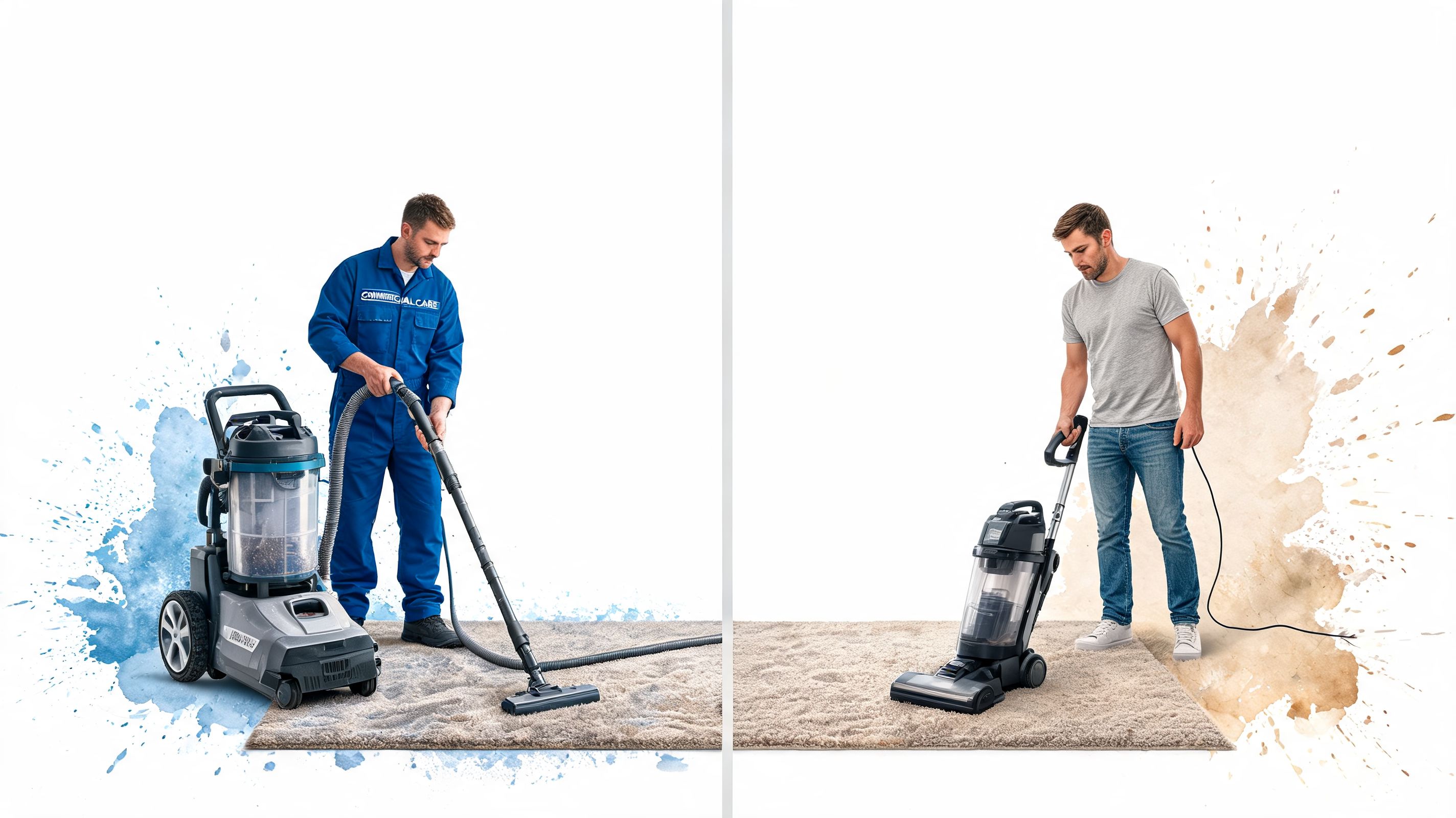
Understanding the distinction between commercial and residential carpet cleaning is crucial for facility managers. Using residential-grade services in a commercial space often leads to suboptimal results, premature wear on carpets, and potential operational disruptions. The equipment, chemicals, scheduling, and objectives are tailored for entirely different environments.
Core Distinctions
Commercial carpets are engineered for durability, but their dense, low-pile construction is adept at trapping dirt and pollutants deep within the fibers. This requires a fundamentally different approach. The global market for carpet care reflects this; of the USD 67.4 billion market size in 2026, the commercial segment accounts for the majority of revenue in North America. For more detail, see these global market trends in carpet care.
This table outlines the key differences to inform your decision-making.
| Feature | Commercial Carpet Cleaning | Residential Carpet Cleaning |
|---|
| Primary Goal | Asset preservation, health and hygiene, and appearance under heavy use. | Aesthetic improvement, spot removal, and allergen reduction in a low-traffic setting. |
| Equipment | High-powered, truck-mounted or industrial-grade portable hot water extractors; low-moisture encapsulation machines. | Smaller, portable cleaners or rental units with less extraction power and smaller tank capacity. |
| Cleaning Solutions | Industrial-strength, fast-acting formulas for heavy soil; specialized treatments for commercial stains (e.g., grease, ink). | General-purpose solutions for common household stains like food or pet spots. |
| Scheduling | After-hours or weekend service is standard to avoid disrupting business operations. | Daytime appointments are scheduled at the homeowner's convenience. |
| Technician Expertise | Technicians are trained on various commercial carpet types, IICRC standards, and workplace safety protocols (WHMIS). | General knowledge of common residential carpet fibers and basic stain removal. |
In a commercial context, carpet cleaning is an asset management program. It is a proactive strategy designed to extend the life of the flooring, ensure a healthy environment for occupants, and maintain a professional brand image.
An Overview of Commercial Carpet Cleaning Methods
To develop an effective maintenance plan, it is important to understand the primary methods used in the carpet cleaning industry. A professional provider will recommend a program that combines different methods based on traffic levels, soil conditions, and operational needs.
Core Cleaning Methodologies Explained
- Hot Water Extraction (HWE): Commonly known as "steam cleaning," this is the industry standard for deep, restorative cleaning. It involves injecting a high-pressure solution of hot water and cleaning agents into the carpet, followed by immediate extraction with a powerful vacuum. The Institute of Inspection, Cleaning and Restoration Certification (IICRC) often cites HWE as the most effective method for removing deep-seated soil. It is ideal for periodic deep cleaning.
- Encapsulation Cleaning: This is a modern, low-moisture method ideal for interim maintenance. A crystallizing polymer is agitated into the carpet, where it encapsulates dirt particles. Once dry, the crystals are vacuumed away. Its primary benefit is a rapid drying time (often under an hour), minimizing disruption in 24/7 facilities.
- Bonnet Cleaning: This is a surface cleaning method. A machine with a rotating pad (bonnet) buffs the top layer of the carpet with a cleaning solution. While effective for a quick appearance enhancement, it does not provide a deep clean and can sometimes push dirt deeper into the carpet pile.
Specialized Treatment Solutions
A comprehensive service provider will also offer specialized treatments. These are often included in a complete carpet shampooing service plan.
- Targeted Stain Removal: Addresses difficult stains from coffee, ink, grease, or toner.
- Odour Neutralization: Uses professional-grade deodorizers to eliminate smells at their source.
- Fabric Protection: Application of a protective coating (like Scotchgard) to resist future stains.
- Disinfection Services: Use of Health Canada-approved disinfectants, crucial for healthcare, childcare, and athletic facilities.
How Technology Is Advancing the Carpet Cleaning Industry
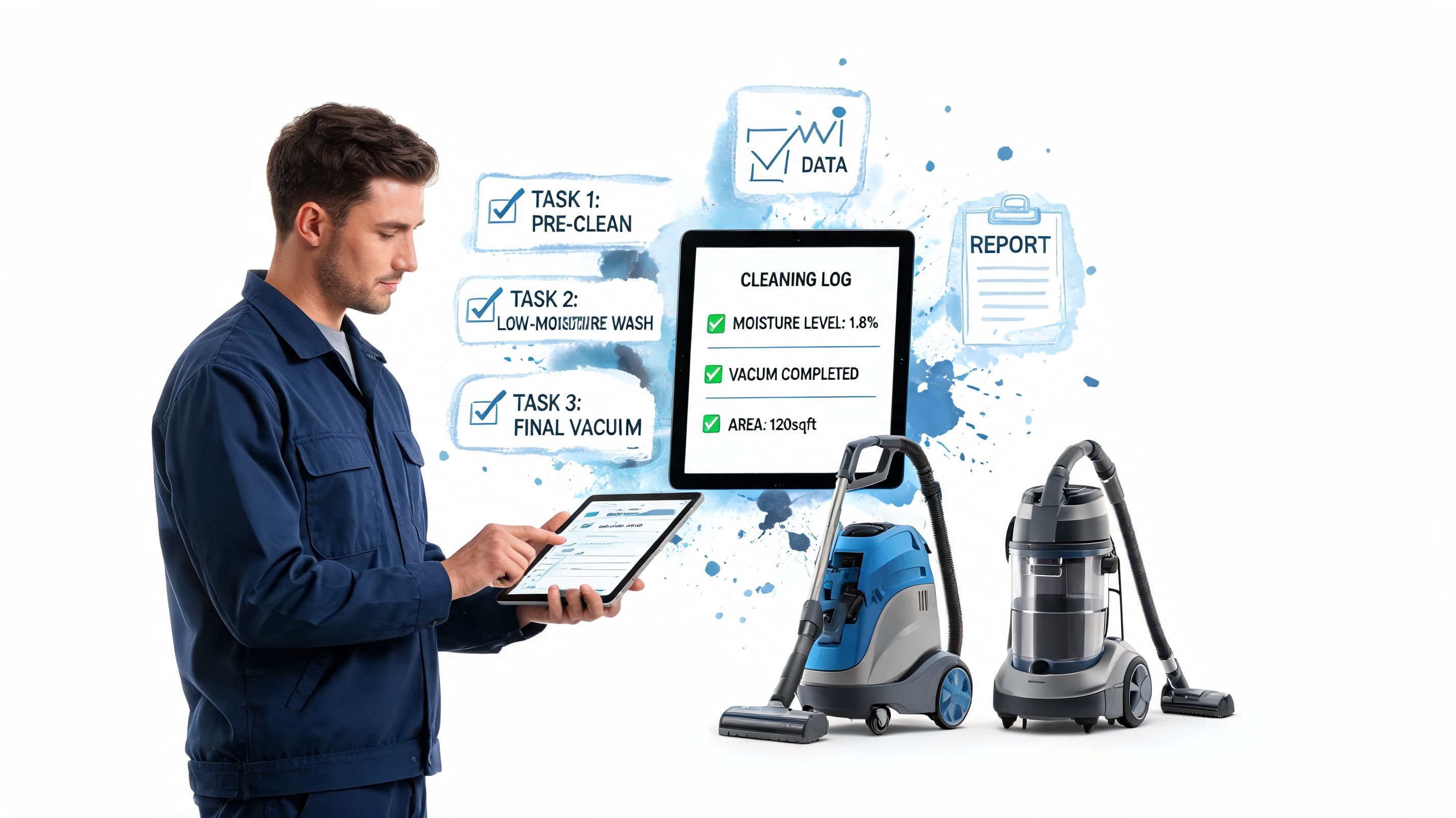
Technology is transforming the carpet cleaning industry from a manual trade to a data-driven service. This evolution is occurring in both the cleaning equipment itself and the operational software used to manage service delivery. These advancements provide greater efficiency, quality assurance, and transparency for clients.
Innovations in equipment, such as low-moisture machines and quieter vacuums, allow cleaning to occur with minimal disruption. Even traditional methods like professional steam cleaning are now faster and more effective due to improved machine engineering.
The Rise of Operational Technology
The most significant shift is the adoption of integrated software platforms. Leading commercial cleaning companies now use these systems to manage every aspect of their operations, directly addressing common client pain points like lack of communication and inconsistent quality.
For clients, this technology delivers tangible benefits:
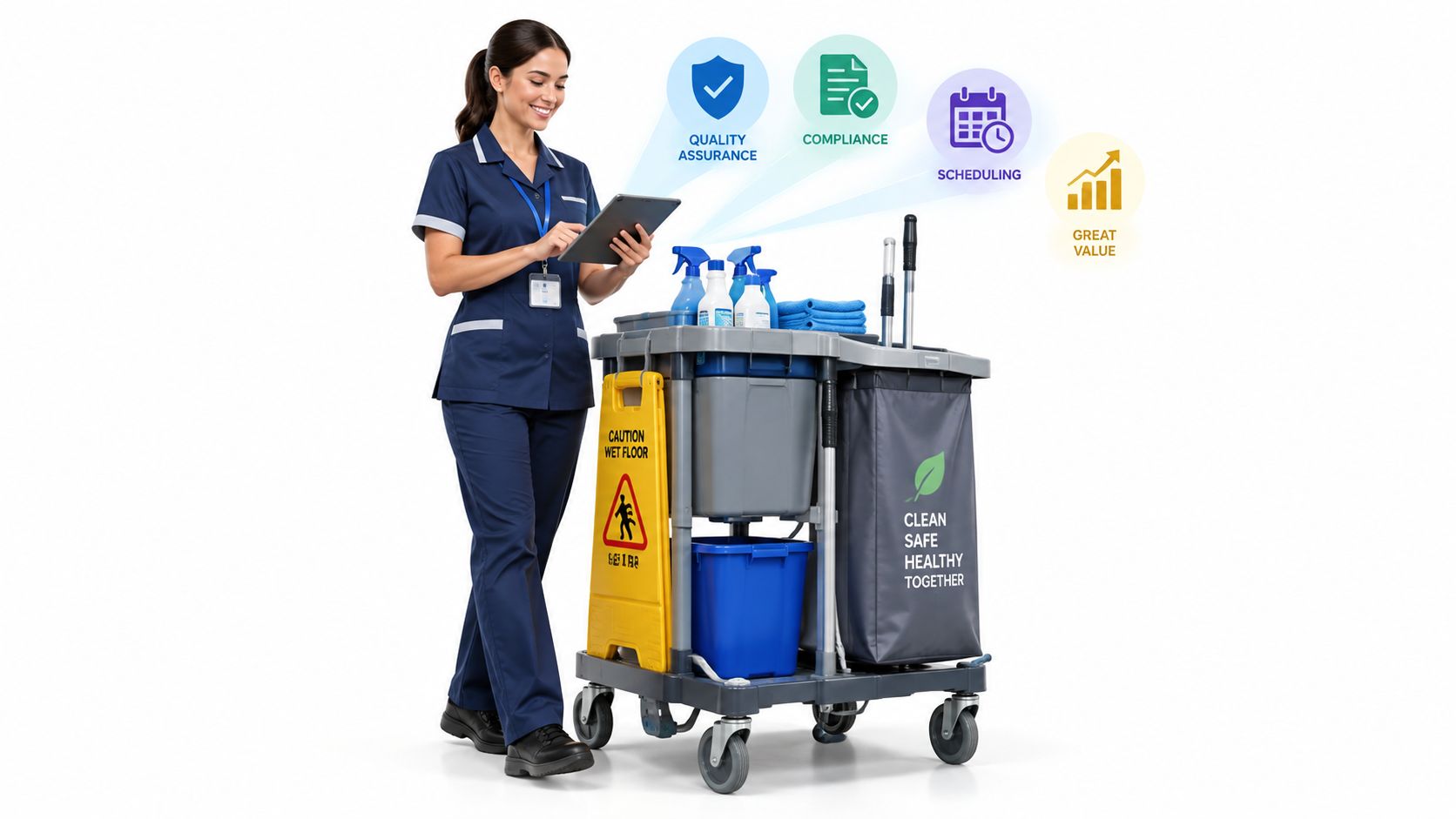
- Digital Quality Control: Technicians use mobile apps with digital checklists and photo verification to ensure all tasks are completed to the specified scope.
- Transparent Communication: A centralized portal for messaging, scheduling, and service reports creates an accountable and responsive partnership.
- Enhanced Safety and Compliance: Technicians have instant access to Safety Data Sheets (SDS) and WHMIS information on their mobile devices, ensuring compliance.
- Data-Driven Accountability: Detailed service reports and analytics provide verifiable proof of service, turning cleaning into a measurable outcome.
This trend is a direct response to client demand for reliability. As noted in some facility management publications, inconsistent service is a primary reason for provider turnover. Technology helps solve this by creating auditable service records, as explored in discussions on how technology is reshaping client expectations.
Checklist: How to Select a Commercial Carpet Cleaning Provider
Choosing a commercial carpet cleaning partner is a critical decision that impacts facility health, brand image, and budget. A structured evaluation process helps you move beyond price and assess a vendor's professionalism, reliability, and commitment to safety. A reputable provider will welcome detailed questions as an opportunity to demonstrate their expertise.
What to Ask Potential Vendors
Use this checklist to vet potential cleaning partners. Their ability to provide clear, documented answers is a strong indicator of their professionalism.
1. Credentials and Insurance
- Question: “Can you provide a certificate of insurance showing at least $5 million in commercial general liability and a current WSIB clearance certificate?”
- Why it matters: This is non-negotiable. Without adequate insurance, your organization could be liable for accidents or property damage.
- Question: “Are your technicians who will be on-site certified by the IICRC?”
- Why it matters: The Institute of Inspection, Cleaning and Restoration Certification (IICRC) is the globally recognized standards body for the industry. Certification from the IICRC confirms technicians have been formally trained in industry best practices.
2. Training and Safety Protocols
- Question: “Can you describe your employee training program, including initial onboarding and ongoing safety training?”
- Why it matters: A documented training process indicates a commitment to quality and safety, rather than on-the-job guesswork.
- Question: “How do you ensure and document WHMIS compliance for all chemicals brought into our facility?”
- Why it matters: A professional provider must have a robust system for managing the Workplace Hazardous Materials Information System, including readily available Safety Data Sheets (SDS).
3. Products and Processes
- Question: “Are your primary cleaning and disinfecting products approved by Health Canada and registered with a Drug Identification Number (DIN)?”
- Why it matters: This verifies that the products meet federal health and safety standards.
- Question: “Will you provide a detailed, written scope of work outlining the specific methods, areas to be serviced, and frequency?”
- Why it matters: A vague, one-line quote is a major red flag. A professional proposal, like one for a comprehensive office cleaning plan in Toronto, ensures clarity and accountability.
What to Avoid: Red Flags in Vendor Selection
- Vague or "Too-Good-to-Be-True" Pricing: Unusually low quotes often indicate a lack of insurance, use of untrained labor, or ineffective cleaning products.
- No Formal Contract: A verbal agreement offers no protection. Insist on a written contract detailing all services, terms, and conditions.
- Inability to Provide Documentation: Hesitation to provide proof of insurance, WSIB clearance, or safety protocols is an immediate disqualifier.
- High-Pressure Sales Tactics: A trustworthy partner provides a transparent quote and allows you the time to make an informed decision.
Frequently Asked Questions (FAQ)
What is commercial carpet cleaning?
Commercial carpet cleaning is a professional service that uses industrial-grade equipment and specialized techniques to deep clean carpets in business environments. Unlike residential cleaning, it is designed to handle heavy foot traffic, comply with workplace safety standards, and minimize operational disruption.
Why is commercial carpet cleaning important?
It is important for three main reasons:
- Health: It removes embedded allergens, bacteria, and pollutants, improving indoor air quality.
- Asset Protection: It extends the lifespan of expensive commercial flooring by removing abrasive dirt.
- Appearance: It maintains a clean, professional image for employees and clients.
How often should office carpets be professionally cleaned?
Frequency depends on foot traffic. As a general guideline recommended by industry bodies like the IICRC:
- High-Traffic Areas (lobbies, main corridors): Quarterly deep cleaning (HWE) with monthly interim cleaning (Encapsulation).
- Medium-Traffic Areas (open offices, conference rooms): Deep cleaning every 6-12 months.
- Low-Traffic Areas (private offices): Annual deep cleaning.
What does commercial carpet cleaning cost?
In major Canadian markets like the Greater Toronto Area, expect rates between $0.15 and $0.40 per square foot. The final cost is influenced by the cleaning method used, the level of soil, the complexity of the layout (e.g., open space vs. furnished cubicles), and the frequency of service.
Is carpet cleaning included in a standard janitorial contract?
No. Standard janitorial services typically include daily or nightly vacuuming, which removes surface-level debris. Specialized carpet cleaning is a separate, periodic service that performs a deep, restorative clean to remove embedded soil and contaminants.
How does technology improve carpet cleaning services?
Technology, particularly operational software, improves service by enabling digital checklists for quality control, providing a centralized platform for client communication, ensuring instant access to safety documentation (WHMIS/SDS), and generating data reports for accountability.
Further Reading and Industry Resources
This section provides a curated list of internal and external resources to expand your knowledge of commercial cleaning standards and practices.
Internal Links
- Service Areas: Discover the communities we serve across Ontario on our locations page.
- Carpet Cleaning Services: Learn more about the specific techniques used in a professional carpet shampooing service.
- Steam Cleaning Services: Explore the benefits and process of our professional steam cleaning method.
- Our Blog: Find more articles and guides on maintaining a clean and healthy workplace.
External Links
- Industry Certification Body: The Institute of Inspection, Cleaning and Restoration Certification (IICRC) is the primary source for global standards and technician certification in the cleaning and restoration industry.
- Market Research: For data-driven insights, Grand View Research offers detailed reports on the carpet cleaning market.
- Cleaning Best Practices: This expert deep carpet cleaning guide from a flooring specialist provides excellent tips on maintenance.
- Business Operations: For those interested in the service provider side, this playbook on boosting house cleaning business visibility offers transferable insights on marketing and operations.








.webp)