Oops! Something went wrong while submitting the form
Blog
January 22, 2026
January 22, 2026
Why Gym Cleaning Services Are Special: A Guide to Health and Hygiene in Fitness Centers
Office cleaning often involves managing dust, coffee rings, and lunch crumbs. A fitness center, however, presents a far more complex environment. The unique combination of sweat, high humidity, and hundreds of people sharing equipment daily creates a high-risk setting where bacteria, fungi, and viruses can thrive.
This distinction is critical. Gym cleaning is not merely a more intensive form of janitorial work; it is a specialized discipline. It demands a health-first approach to cleaning that standard commercial services may not be equipped to provide, focusing on infection control as much as on appearance.
Key Takeaways
Specialized Risks: Gyms harbor unique biological risks from sweat, bodily fluids, and high humidity, making them ideal breeding grounds for pathogens.
Health Over Appearance: The primary goal of gym cleaning is public health and infection control, not just general tidiness.
Science-Based Protocols: Professional gym cleaning relies on specific protocols like the two-step clean-then-disinfect process and adherence to disinfectant dwell times.
Cross-Contamination Prevention: Systems like color-coded microfiber cloths are essential to prevent transferring germs from high-risk areas (like restrooms) to fitness equipment.
Business Impact: A professionally cleaned gym protects member health, extends the life of expensive equipment, and enhances the facility's brand reputation and member loyalty.
Why Standard Cleaning Protocols Are Insufficient for Fitness Environments
Assigning a standard office cleaning crew to a fitness center overlooks the fundamental differences in skill sets and tools required. An office cleaning checklist is designed to maintain appearances by dusting surfaces, emptying trash, and keeping common areas tidy. In a gym, the focus shifts dramatically from aesthetics to public health and safety.
The warm, moist conditions from showers and sweat-soaked equipment create an ideal incubator for microorganisms. A standard cleaning service might make a gym look clean but often lacks the specific products and protocols needed to neutralize invisible threats. This highlights the critical distinction between cleaning and disinfecting. For a deeper dive, it helps in understanding the fundamental difference between cleaning and sanitizing. Cleaning physically removes germs and grime, while disinfecting is the essential subsequent step that kills them. A professional gym cleaning service builds its entire process around this two-step system.
To illustrate the differences, consider this comparison.
Standard Office Cleaning vs. Specialized Gym Cleaning
This table clarifies why a fitness facility demands a specialized approach.
Daily, often with multiple touch-ups throughout the day
The demands are clearly different, and a standard approach is inadequate for the challenges of a fitness center.
The Unique Risks in a Fitness Center
A generic cleaning plan fails in a gym because it overlooks the specific, high-stakes challenges inherent to its daily operations. These risk factors demand a rigorous, scientific cleaning methodology.
High-Touch Equipment: Treadmill consoles, free weights, yoga mats, and machine handles are touched by hundreds of different hands daily, creating a direct path for germ transmission.
Bodily Fluids: Sweat contains organic compounds that serve as a food source for bacteria, leading to persistent odors and health risks if not properly managed.
Humid and Damp Areas: Locker rooms, showers, saunas, and pool decks are constantly wet, making them prime environments for mold, mildew, and fungi that cause conditions like athlete's foot.
Airborne Particles: Intense workouts involve heavy breathing, which expels respiratory droplets into the air and increases the risk of airborne virus transmission.
Ultimately, professional gym cleaning is less about janitorial tasks and more about applied microbiology. It is a specialized field dedicated to protecting members, preserving expensive equipment, and safeguarding a gym's reputation.
The Science of a Hygienic Gym Environment
Beyond gleaming mirrors and organized weight racks lies a microscopic world thriving in every gym. A professional cleaning service views a fitness center not just as a space to be tidied, but as a complex biological landscape requiring careful management to protect public health. This scientific perspective is what elevates a basic wipe-down to an effective sanitization protocol.
The combination of warmth, humidity from exertion and showers, and a constant supply of organic material (sweat) makes a gym a perfect incubator for various pathogens. These microorganisms are not only the source of odors but also pose genuine health risks. Professional cleaners are trained to identify and neutralize these invisible threats where they are most likely to grow.
High-Risk Contamination Zones
Certain areas in a gym are microbial hotspots that require more than a simple spray and wipe. A strategic cleaning plan prioritizes these zones.
Free Weights and Equipment Handles: Dumbbells, kettlebells, and machine grips are passed from hand to hand, facilitating rapid germ transmission.
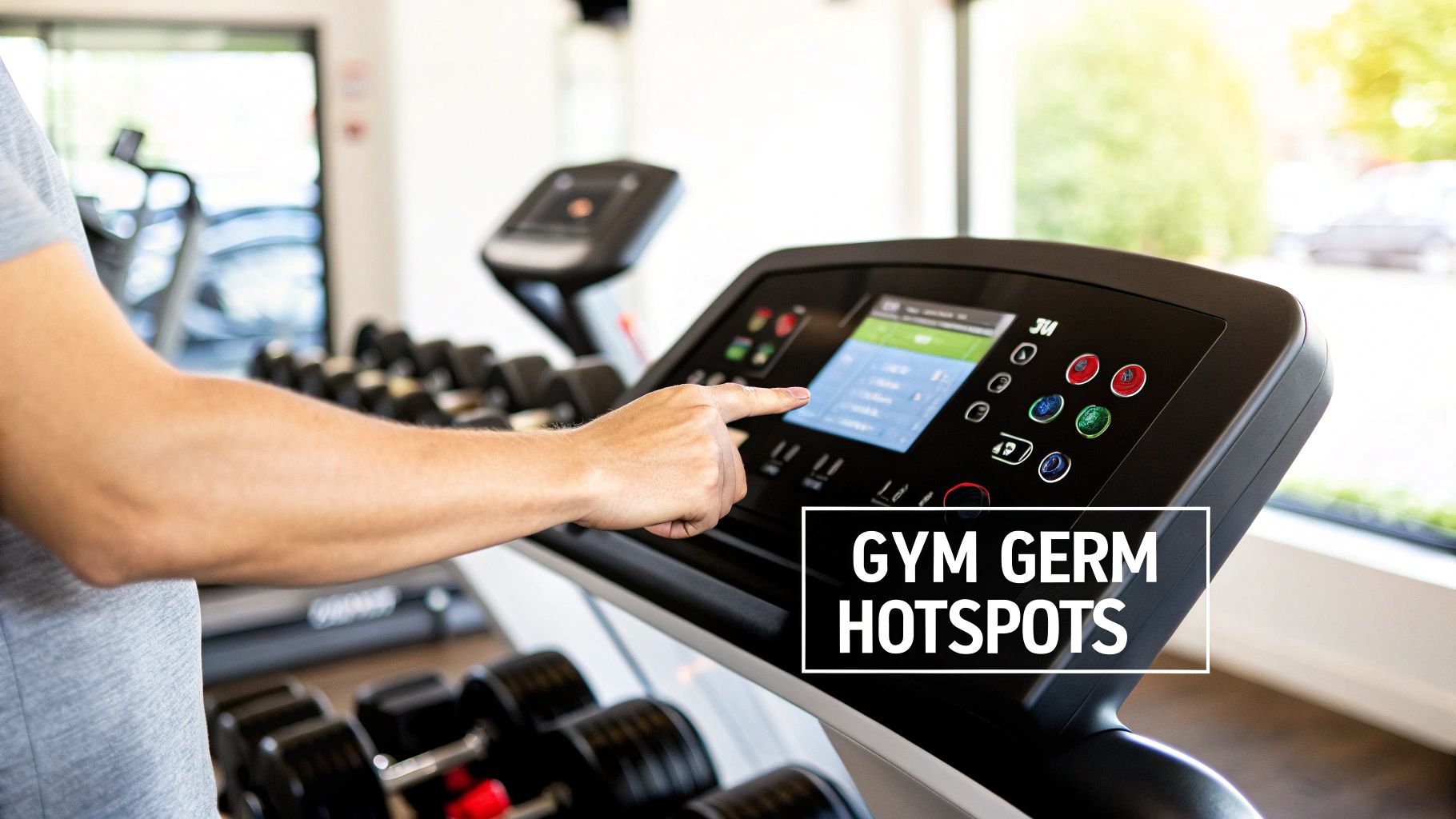
Cardio Machine Consoles: Touchscreens and buttons on treadmills and ellipticals collect sweat and respiratory droplets from every user.
Yoga Mats and Flooring: Porous surfaces like rubber gym floors and shared yoga mats absorb sweat and moisture, creating a damp environment where bacteria and fungi can flourish.
Locker Rooms and Showers: These constantly damp areas are notorious breeding grounds for mold, mildew, and fungi like Trichophyton, the cause of athlete's foot and ringworm.
The primary challenge is not just cleaning visible dirt but managing the vast, invisible world of microbiology. Professional cleaners operate like public health technicians, systematically eliminating pathogens like MRSA, influenza, and various fungi before they can spread.
This is especially critical for gyms in busy urban centers. Across the Greater Toronto Area (GTA), facilities from downtown Toronto to Mississauga experience a high volume of members. The resulting warm, moist conditions accelerate germ multiplication compared to a standard office. More information on this topic is available at cleantegra.ca's page on recreational facility cleaning.
A key component of this scientific strategy is using the correct tools. A cleaning protocol's effectiveness depends on the products used. Understanding the difference between various cleaning supplies and their specific uses is fundamental to creating a hygienic space. Professional services use Health Canada–approved, hospital-grade disinfectants and train staff on their proper application, including respecting critical "dwell times"—the period a disinfectant must remain on a surface to effectively kill pathogens.
Core Protocols of Professional Gym Cleaning
Hiring a professional gym cleaning service means investing in a strict, science-based system designed to dismantle the invisible threats within a fitness environment. This methodical approach differentiates specialists from general cleaners, treating the facility as the health-sensitive space it is.
The foundation of this system is a non-negotiable, two-step process: clean first, then disinfect. A surface cannot be effectively sanitized if it is dirty. Crews must first meticulously remove all sweat, body oils, and grime from equipment and floors. This organic matter can act as a shield, preventing disinfectants from reaching the germs underneath. Only once a surface is physically clean can the second step, disinfection, be effective.
This infographic illustrates how quickly a gym can become a breeding ground for germs.
The cycle is simple yet powerful: sweat and skin cells land on equipment, providing a food source for bacteria to multiply at an alarming rate.
Adherence to Dwell Time
A critical concept in professional cleaning is dwell time, also known as contact time. It is the minimum time a disinfectant must remain wet on a surface to kill the pathogens listed on its label. Simply spraying and immediately wiping a surface dry is ineffective.
Trained crews understand this. They apply Health Canada–approved, hospital-grade disinfectants and allow them to sit for the prescribed duration, typically between 30 seconds and 10 minutes. This ensures that viruses and bacteria are eliminated, not just moved around. The discipline to respect dwell time is a key differentiator of a professional service. You can learn more about these procedures through commercial disinfection and sanitizing services.
Preventing Cross-Contamination
Another cornerstone of professional gym cleaning is preventing cross-contamination—the accidental transfer of germs from one surface to another. A common mistake made by untrained staff is using the same cloth to wipe a restroom sink and then a dumbbell rack, which transfers bacteria from a high-risk zone to high-touch fitness equipment.
To prevent this, professional cleaning services use a strict, color-coded system for cleaning tools. This simple but effective method includes:
Red cloths: Exclusively for high-risk areas like toilets and urinals.
Yellow cloths: Used for other restroom surfaces, such as sinks and mirrors.
Blue cloths: Designated for general, low-risk cleaning like office desks and windowsills.
Green cloths: Reserved for food service areas, such as a gym’s kitchenette or smoothie bar.
This system creates a clear barrier, ensuring that germs from the washroom are not transferred to the weight room. Such disciplined, systematic thinking protects member health and defines the professional standard for facilities from Toronto to Oakville.
How a Clean Gym Protects Your Business Reputation
A visibly clean fitness center is a powerful, unspoken marketing tool. It reflects a brand's commitment to member safety and health. This impression extends beyond aesthetics, building trust that influences member renewals and word-of-mouth referrals.
When individuals enter a gym that smells fresh and looks spotless, they feel more comfortable and valued. This positive experience can lead to improved member retention and referrals. In a competitive market, a reputation for cleanliness can be a key differentiator.
Protecting Valuable Assets and Your Bottom Line
Professional gym cleaning is an investment in asset protection. High-end treadmills, weight machines, and specialized rubber flooring represent a significant capital investment. Sweat, with its corrosive salt and acidity, can degrade metal, upholstery, and sensitive electronic components over time.
A regular, professional cleaning schedule using pH-neutral and equipment-safe products prevents this slow decay. It extends the lifespan of valuable assets, reducing the need for costly repairs and replacements. This meticulous care helps equipment remain hygienic and retain its value longer.
A clean gym is a statement. It communicates to every person who enters: "We care about your health, we respect your business, and we invest in providing a high-quality, safe environment." This message is often more impactful than any marketing campaign.
Data supports this, especially in Ontario's robust commercial cleaning sector. The province accounts for 38% of Canada's contract cleaning revenue, with the Greater Toronto Area as a major contributor. Studies indicate that gyms investing in professional commercial cleaning can see member satisfaction increase by as much as 25%. This is a significant factor in reducing churn, particularly when hygiene is a primary concern for members. You can explore more insights on Ontario's facilities cleaning market to see these trends.
The Connection Between Cleanliness and Member Loyalty
People remain loyal to businesses where they feel safe, comfortable, and respected. A visible commitment to cleanliness is a tangible way to demonstrate this respect. It addresses unspoken concerns about germs and helps create a positive atmosphere where members can focus on their fitness goals.
This loyalty fuels organic growth. Satisfied members become brand advocates, leaving positive online reviews and recommending the gym to others in communities from Mississauga to Markham. Partnering with a specialized commercial cleaner "near you" is more than a maintenance task—it is a core business strategy that builds the brand, protects investments, and nurtures a loyal community.
How to Choose the Right Cleaning Partner for Your Fitness Center
Selecting a commercial cleaning company for your gym is about finding a partner in health and safety who understands the unique biological risks of a high-traffic fitness environment. The decision impacts member well-being, equipment longevity, and your facility’s reputation in communities from Toronto to Guelph. The process begins with knowing how to approach finding trustworthy cleaning services designed for commercial needs.
A reliable provider will be transparent, knowledgeable, and ready to demonstrate their expertise. They should act as a resource, guiding you toward a cleaning plan that protects both your members and your business.
Key Questions to Ask Potential Providers
To properly evaluate potential partners, ask targeted questions that go beyond basic pricing. These questions will help differentiate a general commercial cleaner from a specialist who understands why gym cleaning is unique.
Here is a checklist of questions to ask every company you consider:
Experience: Can you provide references from other fitness centers or high-traffic facilities you currently service in York Region or nearby areas like Vaughan or Richmond Hill?
Training: How are your staff trained on pathogen control, preventing cross-contamination, and the correct use of disinfectants on fitness equipment?
Products: What specific Health Canada–approved disinfectants do you use? Can you provide the Safety Data Sheets (SDS) for them? Do your protocols require staff to adhere to disinfectant dwell times?
Insurance and Compliance: Can you provide a current certificate of insurance showing adequate liability coverage and WSIB clearance?
Quality Assurance: What is your process for quality inspections? How do you handle and document client feedback or service issues? Is there a dedicated channel for prompt issue resolution?
The answers will provide a clear picture of a company’s professionalism and its suitability for a gym environment.
What to Look for in a Proposal
A detailed, professional proposal is a strong indicator of competence, while vague quotes are a red flag. A solid proposal should clearly outline the scope of work and demonstrate that the provider has understood your facility’s specific needs.
A comprehensive proposal should include:
A Detailed Cleaning Checklist: A room-by-room breakdown of all tasks and their frequencies (e.g., daily, weekly, monthly).
Transparent Pricing: A clear cost structure that explains what is included, such as labor, equipment, and cleaning supplies.
Proof of Credentials: Copies of their insurance, WSIB clearance, and any relevant industry certifications.
A Defined Communication Plan: Information on your point of contact and the process for reporting issues or requesting service changes.
Some companies also offer client-friendly policies that signal confidence in their service. For example, some providers may offer a free 45-minute sample clean, allowing you to evaluate their work firsthand before making a commitment. Such an offer demonstrates transparency and a focus on building trust. Using this framework, you can confidently choose a cleaning partner for your business cleaning company near you that will help elevate your facility's standards.
Summary: More Than a Clean Floor
Specialized gym cleaning is a core part of your business strategy. It goes beyond surface appearances to actively protect member health, preserve expensive equipment, and build a reputation for a facility that prioritizes well-being.
A professional cleaning service understands that a gym is a unique environment with specific microbiological risks that require a science-backed approach. Committing to this level of hygiene sends a powerful message that member well-being is a top priority, fostering the trust and loyalty that drives member retention. A meticulously maintained gym is not an expense—it is an investment in your brand's integrity.
For gym owners in Ontario, from Toronto to Vaughan, the path forward is clear. Use this guide to obtain two or three quotes from qualified commercial cleaning companies. Due diligence will help you find a partner who can deliver the high standards of cleanliness and safety your members deserve.
If you are located in Ontario and want a quote that includes a free 45-minute sample clean, Arelli Cleaning is one option to consider. You can learn more about our service areas to see if we are a fit for your facility.
Frequently Asked Questions (FAQ)
Here are answers to some of the most common questions gym owners and managers have about professional cleaning services.
How often does a gym need professional cleaning?
For a high-traffic gym, especially in areas like Toronto or Mississauga, daily professional cleaning should be the baseline. This covers essential tasks for floors, restrooms, and all high-touch equipment. More intensive tasks, such as deep cleaning locker rooms or specialized floor care, can be scheduled weekly or monthly. The ideal frequency depends on your facility’s size, member volume, and hours of operation.
Why can't my gym staff handle the cleaning?
While in-house staff are essential for day-to-day tidiness, their duties are different from professional disinfection. Professional cleaners receive specialized training in pathogen control, cross-contamination prevention, and the correct use of Health Canada–approved disinfectants. They understand critical protocols like adhering to disinfectant dwell times—the time a product must sit on a surface to kill germs effectively. These procedures are crucial for reducing health risks in a gym.
What should a commercial cleaning quote for a gym include?
A professional quote is a transparent blueprint of the services provided. It should clearly outline the scope of work with a detailed checklist of all areas and cleaning frequencies. Look for specifics on the products to be used, proof of insurance and staff training, details on the quality inspection process, and an itemized breakdown of the pricing. A vague or unusually low quote may indicate that critical services have been omitted.
How do I find a reliable gym cleaning service near me?
Begin your search by focusing on commercial cleaners with verifiable experience in fitness centers. Ask for references from other local gyms in areas like Barrie or Kitchener-Waterloo. Verify their industry certifications and inquire about their quality control systems. In a dense market like the GTA, professional gym cleaning is a critical defense against health risks. For additional context, you can review resources on gym cleaning protocols in the Mississauga area. Obtaining multiple quotes is an effective way to compare professionalism and value.
What is the difference between sanitizing and disinfecting in a gym?
Sanitizing reduces the number of bacteria on a surface to a safe level, as judged by public health standards. Disinfecting, on the other hand, kills nearly 100% of viruses and bacteria on hard, non-porous surfaces. In a high-risk environment like a gym, disinfecting high-touch surfaces is essential for infection control.
Who is responsible for providing cleaning supplies?
In most professional commercial cleaning contracts, the cleaning company provides all necessary equipment and Health Canada-approved cleaning agents and disinfectants. This ensures that the correct, industry-standard products are used consistently. The agreement should clearly state whether the facility or the contractor is responsible for consumable supplies like paper towels and soap.
Further Reading
To continue learning, explore these resources to ensure your facility remains safe, hygienic, and welcoming for your members.








.webp)