Oops! Something went wrong while submitting the form
Blog
January 21, 2026
January 21, 2026
True or False? Engineering Companies Have Special Office Cleaning Requirements!
The definitive answer is true. Engineering firms have specialized office cleaning requirements that extend far beyond the scope of standard janitorial work.
While a typical office requires general hygiene and a professional appearance, an engineering facility presents a complex mix of environments. Here, cleaning is not just about aesthetics; it is a critical component of protecting sensitive equipment, ensuring personnel safety around specialized materials, and preserving the integrity of research and development (R&D) spaces. This is an operational necessity, not a preference.
Key Takeaways
True: Engineering firms have distinct cleaning needs due to a mix of office, lab, and workshop environments.
Safety First: Specialized cleaning protocols mitigate risks like electrostatic discharge (ESD), chemical exposure, and slip-and-fall hazards.
Asset Protection: Proper cleaning techniques prevent damage to sensitive electronics and expensive machinery.
Compliance is Key: Professional cleaners must be trained in WHMIS to handle hazardous materials and adhere to occupational health and safety standards.
Zone-Specific Checklists: A customized cleaning plan that addresses the unique needs of R&D labs, workshops, and administrative areas is essential for effective service.
Informed Hiring: Evaluating cleaning companies on their industry experience, staff training, and quality assurance systems is crucial for finding a capable partner.
Why Specialized Cleaning Is a Necessity for Engineering Firms
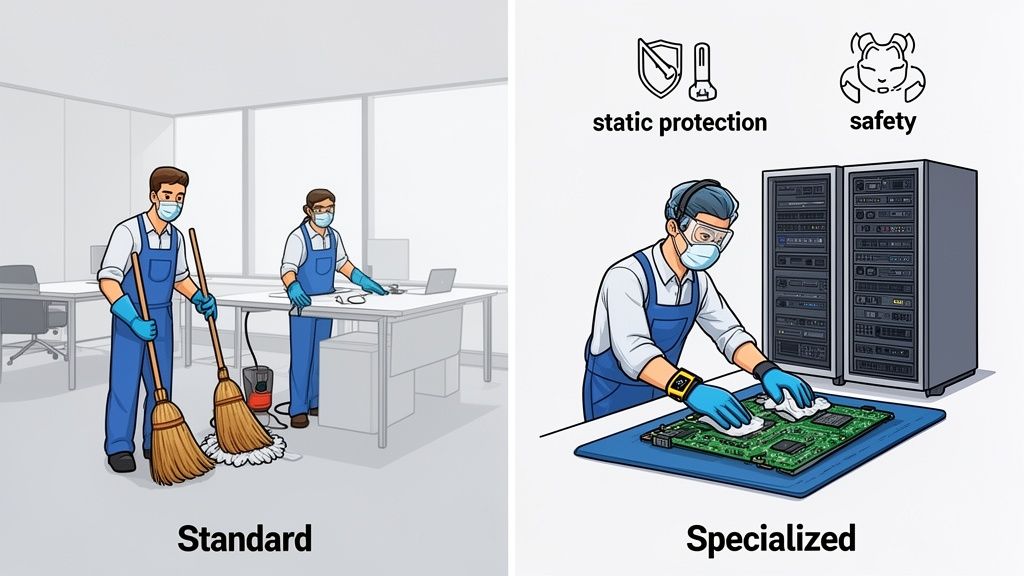
Standard commercial cleaning services are designed for environments like law firms, marketing agencies, or administrative hubs. These services excel at tasks such as vacuuming carpets, dusting desks, and sanitizing washrooms. However, an engineering company often integrates these office spaces with workshops, server rooms, or R&D labs. This creates a hybrid environment with challenges that a generalist cleaning service is not equipped to handle.
The primary difference lies in the unique risks and high-stakes requirements inherent in engineering work. A one-size-fits-all cleaning plan is inadequate for addressing the realities of such a facility.
Let's break down how standard office cleaning compares to the specialized needs of an engineering facility.
Standard Office Cleaning vs. Engineering Facility Cleaning
Cleaning Aspect
Standard Office
Engineering Facility
Primary Goal
General hygiene and appearance.
Safety, equipment protection, and compliance.
Key Risks
Spread of germs, general untidiness.
Electrostatic discharge (ESD), chemical exposure, fine particulate dust, slip hazards.
Adherence to provincial and federal workplace safety regulations, specific material handling guidelines.
As the comparison shows, the gap is significant. It is not about cleaning harder; it is about cleaning with greater intelligence and safety, using the correct training and tools for a technical environment.
The Scope Beyond a Standard Office
A prototyping lab cannot be treated like a boardroom. The fundamental differences are clear:
Sensitive Electronics: Expensive, specialized equipment is highly vulnerable to dust and electrostatic discharge (ESD). It requires specific anti-static cleaning protocols to prevent costly damage.
Hazardous Materials: Workshops or labs may use chemicals or solvents that require cleaners trained in WHMIS (Workplace Hazardous Materials Information System) to handle and dispose of them safely.
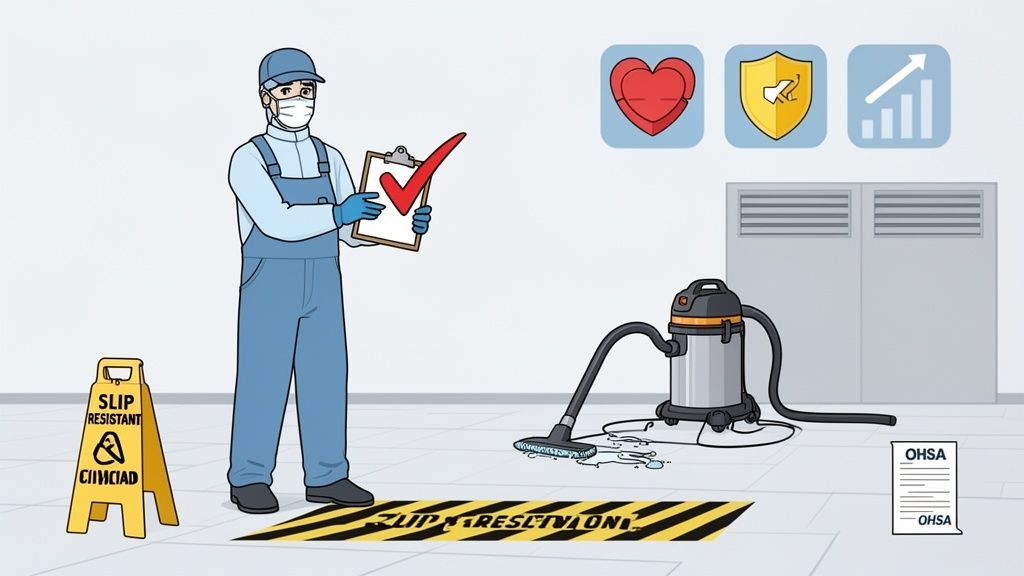
Industrial By-products: Prototyping and fabrication areas can produce fine dust, metal shavings, or lubricants. These materials are not just messy—they create serious respiratory and slip-and-fall hazards that must be managed properly.
This growing need for specialized care is why many firms now seek providers offering dedicated commercial cleaning services designed for technical facilities. Choosing the right partner is not just about hiring cleaners; it is about engaging a team that actively contributes to the safety, compliance, and operational efficiency of the entire facility. Their purpose extends beyond appearance to purposeful, safety-oriented cleaning.
The Unique Cleaning Challenges in a Technical Space
What truly distinguishes an engineering environment is the unique blend of precision office work occurring adjacent to industrial-style processes. This combination creates cleaning challenges that a standard commercial cleaning service is not equipped to handle, reinforcing the fact that engineering companies require specialized office cleaning.
These challenges are not merely about tidiness. They are directly linked to operational integrity, employee safety, and the longevity of high-value equipment. A generic cleaning plan is likely to fail because it overlooks the specific risks inherent in technical workspaces.
From Fine Dust to Chemical Safety
The sources of these unique cleaning needs are diverse and demand specific protocols. Unlike a typical administrative office, an engineering firm must contend with microscopic threats and physical hazards simultaneously.
Key challenges include:
Fine Particulate Dust: Activities like prototyping, 3D printing, and light fabrication generate a significant amount of fine dust. This dust can settle on sensitive electronic components, leading to overheating or short circuits, and it negatively impacts indoor air quality for staff.
Grease and Lubricants: Workshop and machinery areas are prone to oil, grease, and lubricant spills. These create serious slip-and-fall hazards, a primary concern for workplace safety. A standard mop often spreads these substances; industrial-grade degreasers are necessary for effective removal.
Electrostatic Discharge (ESD): Static electricity is a silent threat to expensive electronic components. Standard cleaning methods, such as dry dusting with conventional cloths, can generate static. ESD-safe cleaning is a distinct discipline that involves anti-static solutions and specialized materials to protect sensitive equipment.
This screenshot from ISSA, the leading trade association for the cleaning industry, illustrates the sector's focus on standardized procedures and best practices—a level of detail that is critical in technical environments.
The emphasis on standards and certification makes it clear why specialized training is not a "nice-to-have" but a non-negotiable requirement for anyone cleaning in a high-stakes engineering firm.
The Importance of WHMIS and Compliance
Perhaps the most critical challenge is managing chemical safety. Engineering processes can involve various solvents, adhesives, and other chemicals, and the cleaning process introduces another set of substances.
Definition: The Workplace Hazardous Materials Information System (WHMIS) is Canada's national standard for communicating information about hazardous products in the workplace. Adherence is non-negotiable for cleaning professionals. They must be trained to recognize WHMIS symbols, understand Safety Data Sheets (SDS), and use cleaning chemicals in a manner that avoids dangerous reactions with materials present in the workspace.
This is a cornerstone of any professional janitorial service. For firms with labs or material testing areas, the challenges can become even more complex. A thorough understanding of potential hazards is vital, and resources like this guide to understanding biohazards in the workplace can offer deeper insight.
While not all engineering firms handle biohazards, awareness of these extreme cleaning scenarios highlights the broad spectrum of specialty cleaning services available. Ultimately, proper cleaning is a fundamental part of keeping a technical facility in Ontario—and beyond—safe, compliant, and productive.
Creating Your Engineering Firm's Cleaning Checklist
Let's begin with a foundational question: True or false? Engineering companies have special office cleaning requirements.
The answer is unequivocally true. A generic checklist for a standard commercial office will fail to address the critical details that keep an engineering facility safe, compliant, and operating efficiently. A customized cleaning checklist, segmented by zone, is the most important tool for defining your needs and evaluating any potential cleaning partner.
Developing a detailed scope of work does more than list tasks; it prevents misunderstandings and ensures every critical area receives the precise attention it requires. It transforms a vague request for "office cleaning" into a clear set of instructions that a professional cleaning company can use to build an accurate quote and a reliable service plan. This process empowers you to compare providers fairly and invest in a service that genuinely understands your facility's unique demands.
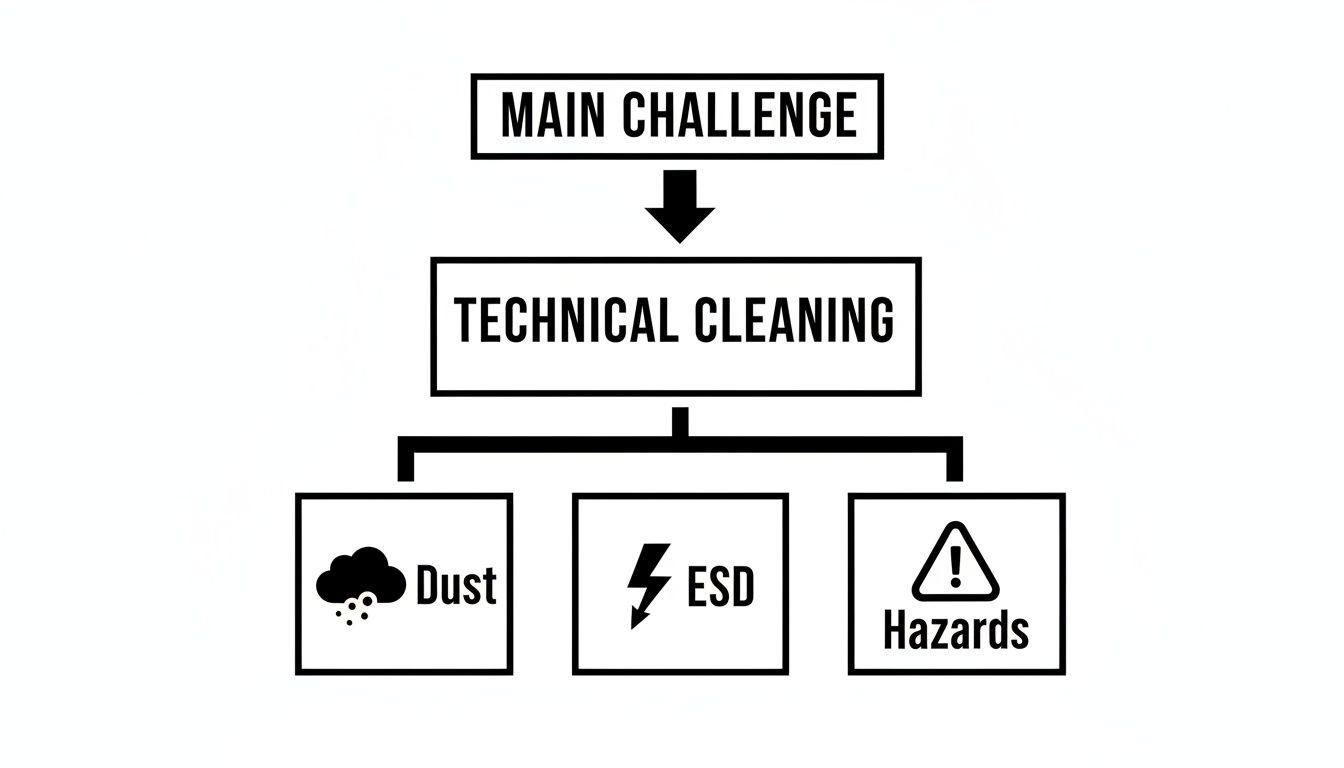
This flowchart outlines the main technical cleaning challenges your checklist must address.
As illustrated, the primary challenges are not just about tidiness. They involve controlling dust, mitigating electrostatic discharge (ESD), and managing potential hazards—each requiring specific, non-negotiable protocols.
Zone 1: Research and Development (R&D) Labs
R&D labs are high-stakes environments where precision is paramount. The cleaning focus here is on protecting sensitive work and expensive equipment.
Daily Tasks: Wipe down all work surfaces and benches with approved, non-corrosive disinfectants. Spot clean floors to immediately remove any spills or debris.
Weekly Tasks: Conduct a thorough damp-mop of the floors with a neutral pH cleaner. Carefully dust equipment casings using anti-static cloths.
Special Considerations: Cleaners must be trained on exactly which surfaces and equipment they can and cannot touch. Protocols for handling lab-specific waste must be clearly defined and strictly followed.
Zone 2: Workshops and Prototyping Areas
These areas are typically the most challenging to clean and carry the highest risk for slip-and-fall incidents. Safety is the top priority.
Daily Tasks: Sweep or vacuum floors to remove all debris, paying close attention to metal shavings and fine particulate dust. Degrease any spots on the floor where lubricants or oils have spilled.
Weekly Tasks: Perform a full mechanical scrub of hard floors to lift embedded grime. Wipe down machinery casings and tool storage units.
Special Considerations: The correct industrial-grade degreasers must be used, and proper ventilation during cleaning is essential. All cleaning staff must wear appropriate Personal Protective Equipment (PPE) at all times in this zone.
Zone 3: Server Rooms and IT Closets
Dust is the primary adversary in a server room. The goal is to control particulates without introducing new risks like static electricity or moisture.
Direct Answer: Server rooms require specialized cleaning methods that actively prevent electrostatic discharge. Using standard vacuums or feather dusters can generate static electricity, posing a significant risk to sensitive electronic components.
Monthly/Quarterly Tasks: Vacuum all surfaces—including floors, server racks, and cable trays—using a HEPA-filter vacuum with non-static attachments. Wipe surfaces down with lint-free, anti-static cloths.
Special Considerations: No liquids should ever be used near equipment. Cleaning should be scheduled during low-traffic periods to minimize disruption. The types of cleaning supplies for specialized areas are critical for preventing damage.
Zone 4: Administrative Offices and Common Areas
While these areas appear more standard, they still require meticulous attention to high-touch points to maintain a healthy environment for all employees.
Daily Tasks: Sanitize all high-touch surfaces (doorknobs, light switches, keyboards). Clean and restock washrooms and kitchens. Vacuum carpets and mop hard floors in entryways and high-traffic zones.
Weekly Tasks: Detail-clean kitchens, including microwaves and countertops. Dust all horizontal surfaces, including desks, shelves, and window sills.
Special Considerations: A consistent, high-quality office cleaning service in these areas has a direct impact on staff morale and productivity, forming the foundation of a healthy workplace.
How to Choose the Right Commercial Cleaning Partner
Selecting a company to manage your facility’s commercial office cleaning services is different from hiring for a typical office space. For an engineering firm, the stakes are higher. You are not just looking for a team that can make the floors shine; you need a partner who understands the complexities of a technical environment.
A qualified partner will have proven experience, comprehensive training programs for their staff, and robust quality control systems. Anything less introduces an unacceptable level of risk to your operations, sensitive equipment, and personnel. This decision is not about comparing prices—it is a methodical evaluation of capability.
Decision Framework: Key Evaluation Criteria
When comparing cleaning companies, it is essential to move beyond the sales pitch and ask targeted questions. Focus on their experience with facilities similar to yours, particularly those in industrial, manufacturing, or R&D sectors across Ontario, from Mississauga to Markham.
A provider’s ability to protect your valuable assets and maintain compliance is paramount. This means their teams must have documented, verifiable training in the safety protocols relevant to your work.
What to Ask: Do not accept verbal assurances. Verifiable training in WHMIS (Workplace Hazardous Materials Information System) and ESD (Electrostatic Discharge) safety protocols is non-negotiable. Ask potential vendors to provide proof of their training programs and explain how they ensure ongoing staff compliance.
To help you compare providers fairly, use a structured evaluation checklist. The table below outlines essential criteria and questions to guide your selection process, ensuring you find a commercial cleaner near you that meets your specialized needs.
Criteria for Evaluating Commercial Cleaning Companies
Here is a practical checklist to help you vet and compare quotes from different commercial cleaning services for your engineering facility.
Evaluation Criteria
Questions to Ask
Importance Level
Example of a Strong Provider Feature
Industry Experience
Can you provide references from other engineering or technical facilities? What is your experience cleaning workshops or labs?
High
A portfolio showcasing successful contracts with industrial or manufacturing clients.
Staff Training
How do you train your staff on WHMIS and ESD-safe cleaning procedures? Is this training documented and regularly updated?
High
Formal certification programs and records of ongoing safety training for all cleaning professionals.
Quality Assurance
What systems are in place to monitor cleaning quality and address issues? How is feedback communicated?
High
A modern QA system, such as a mobile app for real-time inspections, photo verification, and instant client communication.
Safety Compliance
How do you ensure your team adheres to our facility’s specific safety protocols and wears appropriate PPE?
High
Documented safety procedures and a dedicated compliance officer who conducts regular on-site audits.
Customized Scope
Can you develop a cleaning plan tailored to our different zones (labs, workshops, offices)?
Medium
A collaborative process to build a detailed scope of work, as referenced in our guide to office cleaning services.
Using a framework like this transforms your selection from a simple cost comparison into a strategic decision, ensuring the partner you choose is equipped to handle the unique demands of your engineering environment.
How Professional Cleaning Upholds Safety and Compliance
In an engineering firm, cleaning extends beyond aesthetics to become a core part of risk management. When viewed through the lens of safety and legal compliance, the answer to "true or false? engineering companies have special office cleaning requirements!" becomes unequivocally true.
Meticulous cleaning practices are directly linked to protecting personnel and operations. A specialized commercial cleaning service acts as a first line of defence against workplace accidents and regulatory fines. It is a proactive measure that reinforces a company culture where precision and safety are valued in every part of the facility.
Mitigating Risks Through Specialized Protocols
Proper floor care in a workshop is a prime example of safety-focused cleaning. The use of industrial degreasers and scheduled scrubbing is not just for appearance; it removes slick residues from lubricants that cause dangerous slips and falls—one of the most common workplace injuries.
Similarly, advanced dust control is a critical health and safety measure. It protects respiratory health by capturing fine particulates generated during prototyping and fabrication. This level of detail helps ensure compliance with regulations like Ontario's Occupational Health and Safety Act (OHSA), which mandates that employers take every reasonable precaution to protect workers.
For engineering firms dealing with sensitive or dangerous materials, professional cleaning is paramount in upholding safety and compliance, particularly concerning the safe handling of hazardous drugs and other chemicals.
Upholding Modern Compliance Standards
Modern hygiene standards have evolved, and so have the regulations governing workplace health. This is especially true for engineering firms, where occupational health and safety standards for technical environments are stringent.
This shift has led more companies to engage professional cleaners rather than manage these complex tasks in-house. A well-maintained facility also directly impacts the bottom line. By minimizing the spread of germs and ensuring high indoor air quality, a professional office cleaning service can help reduce employee sick days.
This investment in a clean, compliant, and safe environment yields returns in operational uptime and team morale, making a specialized cleaning partner an essential part of a business strategy.
Frequently Asked Questions (FAQ)
What is the difference between commercial cleaning and janitorial services?
Definition:Janitorial services typically refer to smaller, everyday cleaning tasks performed on a regular (often daily) basis, such as emptying trash, cleaning restrooms, and vacuuming. Commercial cleaning is a broader term that encompasses janitorial duties as well as larger, more specialized, and less frequent deep-cleaning projects. For an engineering firm, a comprehensive commercial cleaning service is necessary to address the technical requirements of labs and workshops in addition to daily office upkeep.
How often should an engineering office be cleaned?
The ideal cleaning frequency depends on the specific zone. High-traffic administrative areas, kitchens, and restrooms usually require daily service to maintain hygiene. Workshops may need daily floor cleaning to manage debris and slip hazards. R&D labs and server rooms, however, often require less frequent but highly specialized cleaning on a weekly or monthly schedule to avoid disrupting sensitive work. A professional provider will conduct a site walk-through to develop a customized frequency plan for your facility in Toronto, Vaughan, or elsewhere in the GTA.
Why is WHMIS training so important for cleaners?
WHMIS (Workplace Hazardous Materials Information System) training is non-negotiable for any cleaning professional in an engineering environment. Cleaners work with their own set of chemicals and may be exposed to materials used in engineering processes. WHMIS training ensures they can read Safety Data Sheets (SDS), identify risks, handle cleaning agents safely, and prevent dangerous chemical interactions that could damage equipment or harm personnel. It is a fundamental component of workplace safety.
How do I find a reliable commercial cleaner near me?
To find a qualified provider, start with an online search for "commercial office cleaning services" but include specific terms like "technical facility cleaning" or "industrial cleaning" along with your location (e.g., Richmond Hill, North York, or Mississauga). Review company websites for demonstrated experience in similar environments. When requesting quotes, ask direct questions about their staff training on ESD safety and WHMIS compliance. The best practice is to request references from similar businesses and inquire about a free sample clean to evaluate their work firsthand before signing a contract.
What should be included in a cleaning contract for an engineering firm?
A comprehensive contract should detail the scope of work for each specific zone (office, lab, workshop), cleaning frequencies, and a list of all included and excluded tasks. It should also outline quality assurance procedures, communication protocols for issue resolution, requirements for staff training (e.g., WHMIS), and specifics on who provides cleaning supplies and equipment.
How does specialized cleaning protect expensive equipment?
Specialized cleaning protects equipment in two key ways:
Dust and Particulate Control: Using HEPA-filter vacuums and microfiber cloths prevents the buildup of fine dust that can cause electronics to overheat or short-circuit.
ESD Prevention: Using anti-static cleaning solutions, cloths, and grounded equipment prevents electrostatic discharge that can permanently damage sensitive electronic components.
Choosing the right cleaning partner is a critical decision for an engineering firm. Use the checklists and frameworks in this guide to ask informed questions and obtain at least two to three detailed quotes from qualified providers.
If your facility is located in Ontario and you would like a quote that includes a free 45-minute sample clean, Arelli Cleaning is one option to consider. You can view all the communities they serve on their Service Areas page.








.webp)