The term "janitor" often brings a single image to mind, but the reality of modern janitorial services is far more diverse and specialized. A professional janitor is a skilled front-line worker responsible for maintaining the cleanliness, safety, and hygiene of a facility, directly impacting the well-being and productivity of everyone inside. From bustling offices in Toronto to industrial warehouses in Vaughan, the scope of a janitor’s work is tailored to the unique demands of each environment.
This guide defines the different types of janitorial roles and what they entail. It explores the specific duties for various commercial settings, clarifies the differences between various specializations, and provides a framework for hiring the right commercial cleaning service for your business. Understanding these roles helps facility managers set clear expectations and secure a partner who truly keeps their facility in top condition.
Key Takeaways
- Definition: A janitor is a skilled professional responsible for the cleaning, maintenance, and hygiene of a commercial or institutional building.
- Specialization is Key: Different facilities require specialized janitorial skills, from healthcare infection control to industrial safety protocols.
- Beyond Cleaning: Modern janitors contribute to public health, employee productivity, and the preservation of facility assets like flooring and fixtures.
- Hiring Criteria: Evaluating a janitorial service should include their training programs, quality assurance systems, and safety compliance, not just price.
- Impact on Business: Professional janitorial services enhance a company's brand image, reduce employee sick days, and ensure a safe environment for staff and visitors.
- Ontario Focus: Businesses in cities like Toronto, Mississauga, and the York Region require janitorial services that can adapt to diverse commercial needs, from high-rise offices to manufacturing plants.
What is a Janitor?
A janitor is a professional responsible for the cleaning and maintenance of buildings such as offices, hospitals, and schools. The term is often used interchangeably with "custodian" or "cleaner." While core duties involve cleaning, the role can extend to minor maintenance tasks, security, and ensuring the overall safety and hygiene of a facility. In the context of commercial cleaning, a janitor performs a scheduled set of tasks outlined in a cleaning scope of work.
The 10 Primary Roles of a Modern Janitor
1. Commercial Office Cleaner
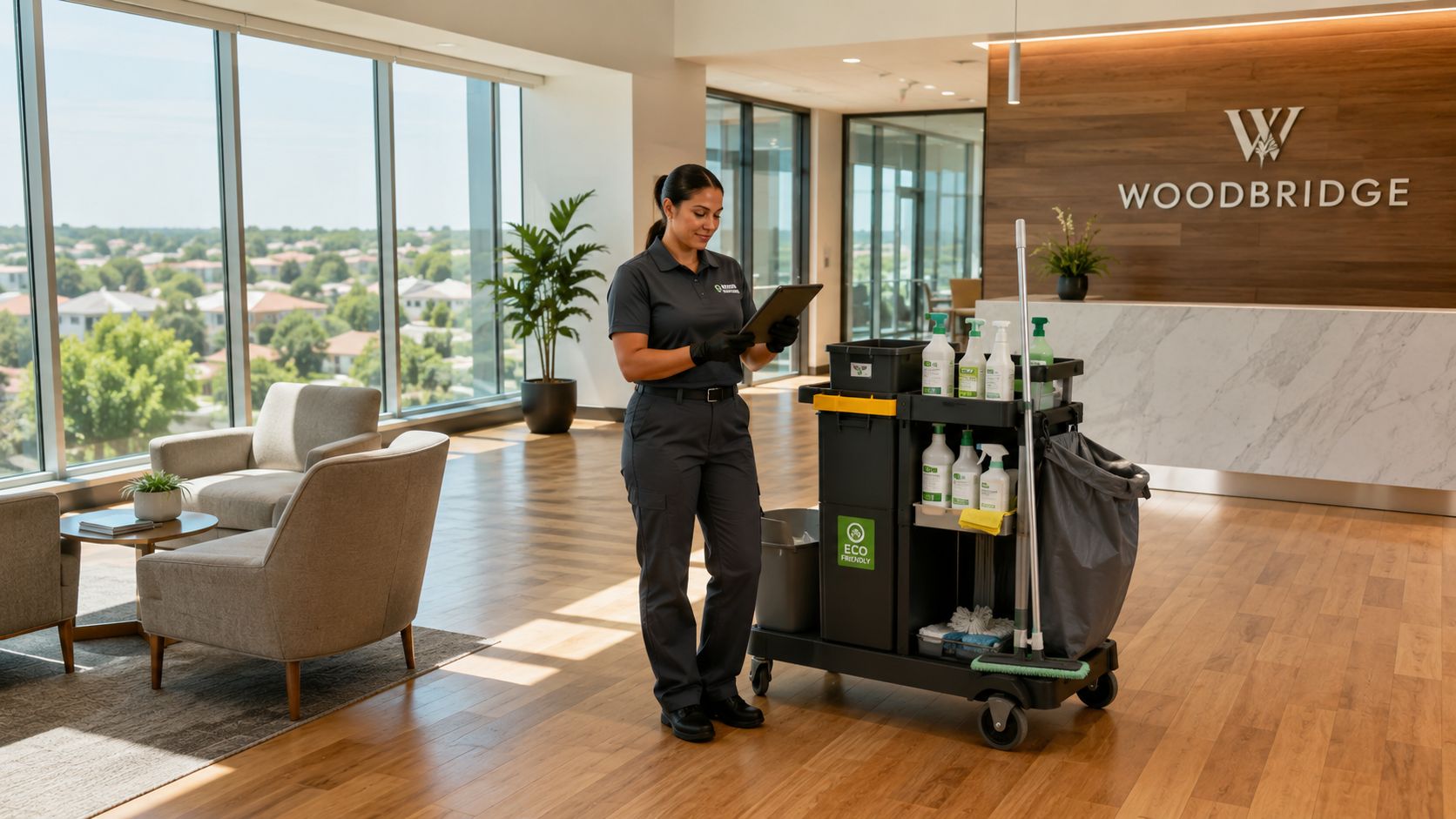
A commercial office cleaner is a janitor who specializes in the upkeep of business environments. Their duties go beyond surface-level tidiness; they are responsible for creating a healthy, safe, and professional atmosphere that supports employee productivity. Core tasks include vacuuming, mopping, dusting, sanitizing high-touch points, cleaning and restocking restrooms, and managing waste and recycling. This role is fundamental to daily operations in professional settings like law firms, accounting offices, and marketing agencies where a pristine environment is part of the client experience.
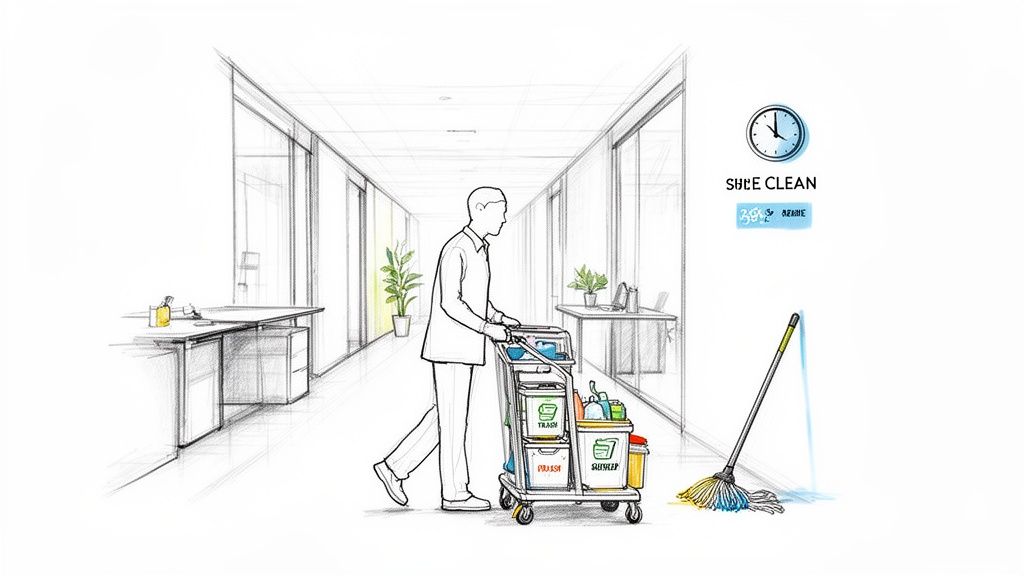
This type of janitor is crucial for maintaining consistent standards of cleanliness. For businesses seeking reliable upkeep, exploring professional office cleaning services is a practical first step. Effective office cleaners use detailed checklists to ensure quality, focusing on high-traffic areas like reception, kitchens, and boardrooms.
2. Healthcare Facility Cleaner
A janitor specializing in healthcare facilities is a highly trained professional responsible for cleaning and disinfecting clinical environments like dental offices, medical centres, and therapy clinics. Their role is critical in preventing the spread of infections by adhering to strict infection control protocols. This janitor’s duties involve using Health Canada-approved, hospital-grade disinfectants, meticulous attention to high-touch surfaces, and careful handling of waste. In environments where patient safety is paramount, this specialist ensures the space meets rigorous public health and regulatory standards.
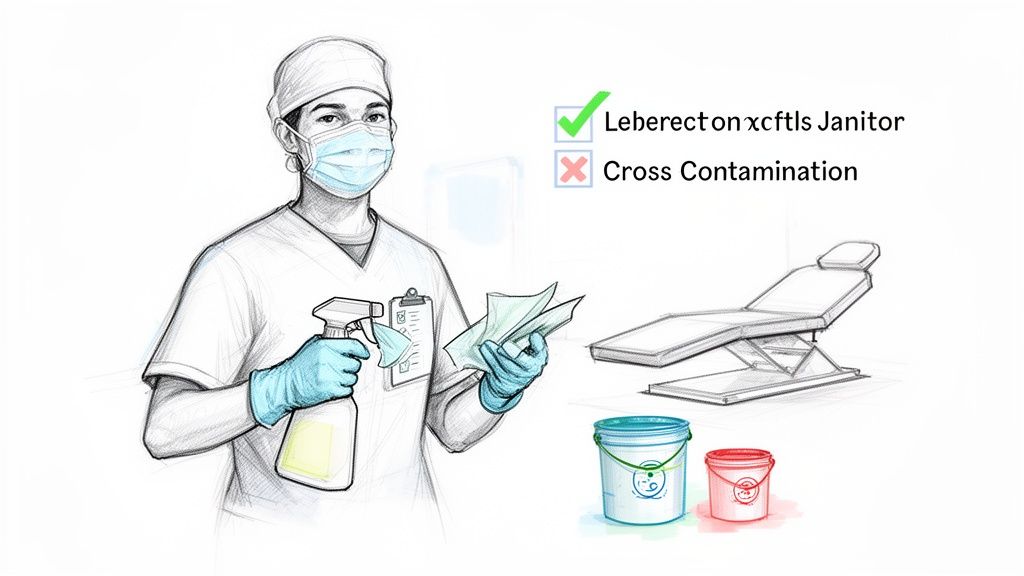
This specialized cleaning is essential for any facility where medical or dental procedures are performed. For practices that must demonstrate compliance, exploring professional medical office cleaning is a necessary step. These professionals use colour-coded systems to prevent cross-contamination and maintain detailed cleaning logs for compliance audits.
3. Educational & Childcare Facility Cleaner
An educational and childcare facility cleaner is a janitor focused on maintaining the health and safety of learning environments. Their work in schools, universities, and daycare centres requires an emphasis on child safety, allergen management, and adherence to public health standards. Key duties include disinfecting desks and doorknobs, sanitizing toys, cleaning restrooms, and ensuring floors are free of hazards. This janitor role is essential for preventing the spread of illness and creating a secure, welcoming atmosphere.
This type of janitor is critical for meeting requirements set by bodies like the Ontario Ministry of Education. The choice of cleaning agents is crucial; options like effective natural citrus cleaners can ensure safety while maintaining hygiene. Operators seeking to meet these standards can review professional daycare and school cleaning services to understand industry best practices.
4. Industrial & Warehouse Facility Cleaner
An industrial facility cleaner is a specialized janitor who maintains cleanliness and safety in environments like manufacturing plants, distribution centres, and logistics hubs. Their work includes heavy-duty equipment cleaning, managing potential hazardous material spills, and adhering to safety standards like WHMIS. This janitor plays a direct role in operational uptime and workplace safety by cleaning around active production schedules and heavy machinery.
This role requires a janitor to possess advanced safety training. For businesses in complex environments from Kitchener to Barrie, engaging a team proficient in these specific demands is critical. Exploring the scope of professional industrial facility cleaning helps clarify requirements. Success depends on detailed coordination with facility managers to clean without disrupting production cycles.
5. Post-Construction Cleanup Specialist
A post-construction cleanup specialist is a janitor trained to manage the intensive cleaning required after building or remodeling projects. Their work transforms a hazardous worksite into a safe, clean, and move-in-ready space. Responsibilities include removing construction debris, fine dust, and leftover materials, followed by a detailed cleaning of all surfaces, fixtures, and windows. This role is essential for new office buildings, retail spaces, and professional firms that have undergone renovations.
This janitorial work is a critical final step in any construction project. Sourcing specialized post-construction cleaning services is crucial for a smooth handover. Effective specialists use a phased approach (rough, semi-final, and final clean) to manage dust and debris systematically.
6. Floor Care & Maintenance Specialist
A floor care specialist is a janitor with advanced training in the restoration and preservation of hard surface flooring. This role goes beyond routine mopping to include stripping old finishes, applying new wax or sealant, and polishing floors to a high gloss. Their expertise is essential for maintaining the appearance, safety, and longevity of floor types like VCT, marble, and sealed concrete in high-traffic commercial spaces.
These professionals are crucial for protecting a facility's flooring investment. A key part of their job is identifying floor materials to apply the correct chemicals and procedures, preventing damage. A well-maintained floor not only looks professional but also reduces slip-and-fall hazards, a key concern for any business cleaning company.
7. Window & Exterior Cleaning Specialist
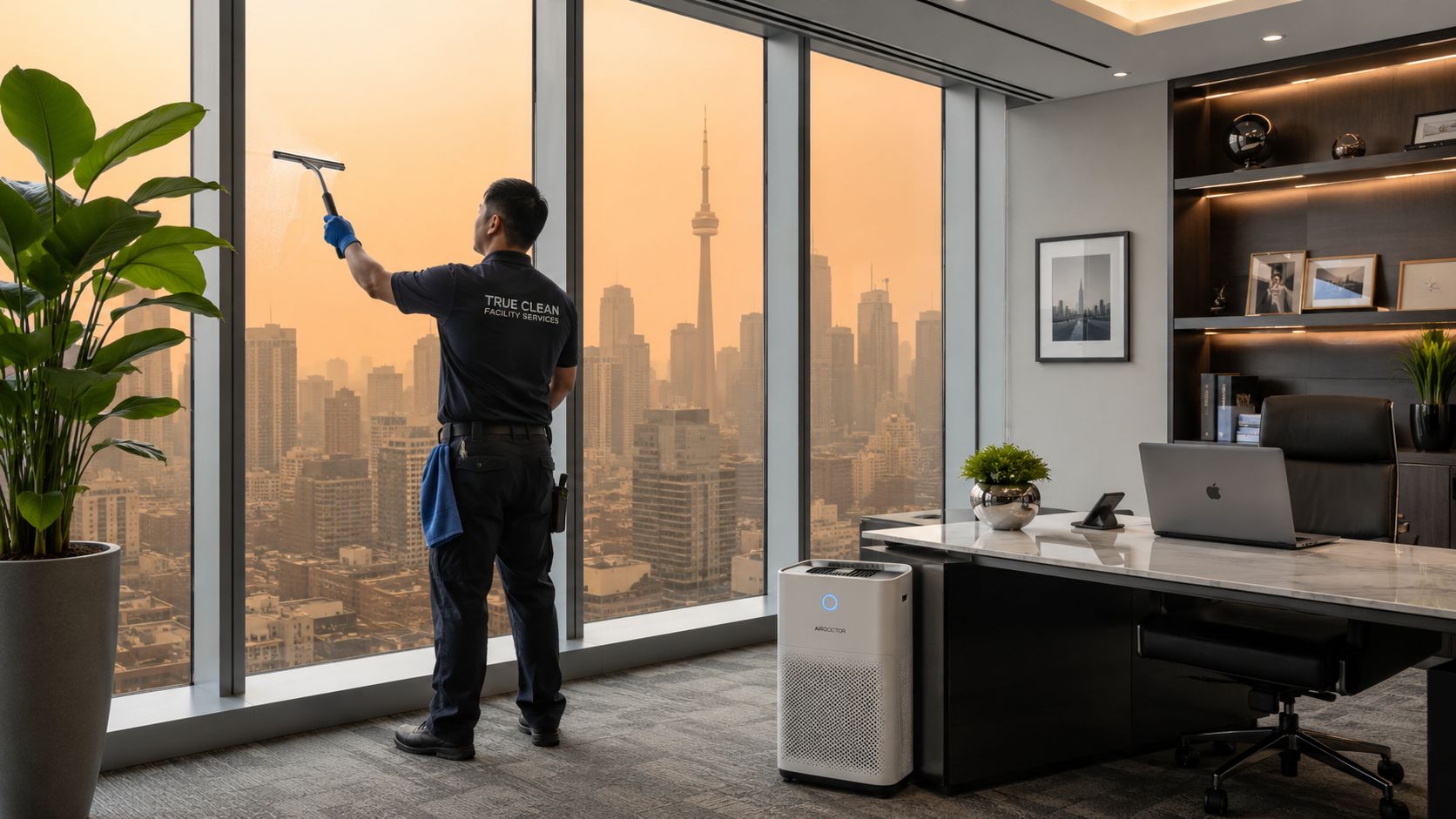
A window and exterior cleaning specialist is a janitor focused on maintaining the building envelope, including facades and glass. This role is highly technical, often requiring work at heights using specialized equipment like suspended platforms and fall-arrest systems. Their responsibilities include cleaning commercial windows and removing grime from building facades. This service is essential for high-rise offices, corporate headquarters, and commercial storefronts.
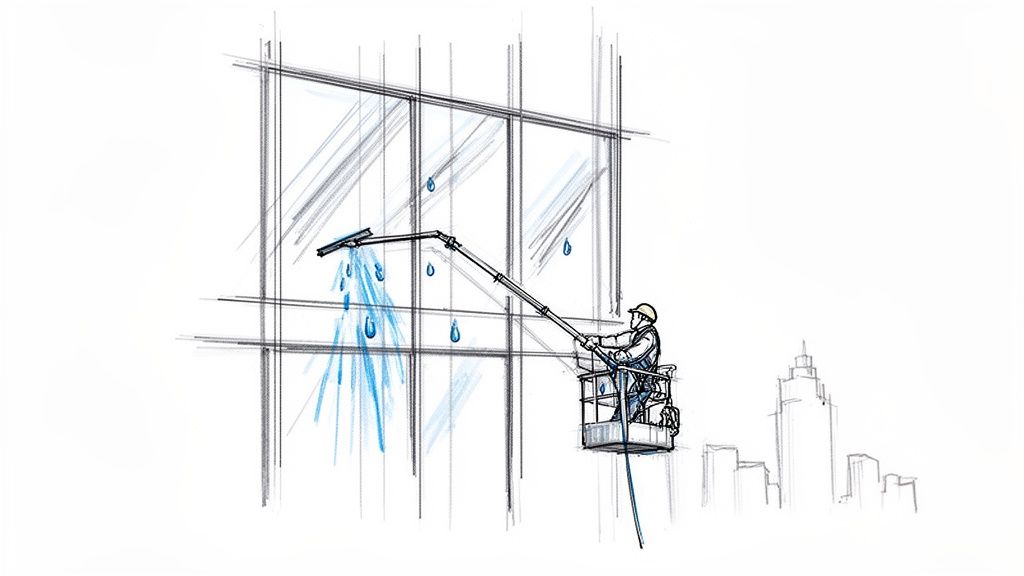
These specialists must adhere to strict safety protocols, such as those mandated by Ontario's working-at-heights legislation. Proficiency in both traditional squeegee techniques and modern water-fed pole systems allows them to adapt to different building designs. This specialized janitor ensures a building’s first impression is a spotless one.
8. Carpet Cleaning Technician
A carpet cleaning technician is a specialized janitor focused on the deep cleaning and stain removal of commercial carpeting. Their work involves advanced techniques like hot-water extraction and encapsulation to remove embedded dirt, allergens, and tough stains. These professionals are essential for maintaining hygiene in high-traffic corporate offices, hotels, and educational institutions. Their efforts improve indoor air quality and extend the lifespan of carpeting.
This type of janitorial work is critical for scheduled maintenance and restorative projects. For businesses aiming to protect their flooring investment, a professional service that understands different carpet fibers and appropriate cleaning agents is invaluable. Technicians often follow pre-inspection protocols and document results to ensure quality assurance.
9. Disinfection & Biohazard Specialist
A disinfection and biohazard specialist is a highly trained janitor focused on eliminating pathogens and decontaminating environments. This role requires expert knowledge of infectious diseases, Health Canada-approved disinfectants, and strict safety protocols. Their work is critical in healthcare settings, public health emergencies, and for post-pandemic office disinfection programs. These specialists use personal protective equipment (PPE) and follow detailed procedures for containment, cleaning, disinfection, and waste disposal.
This janitor is essential for facilities facing high-risk contamination events. Businesses needing to ensure their space is free from harmful pathogens can explore professional commercial disinfection and sanitizing services to access trained personnel. Effective specialists use validation methods like ATP testing to verify cleanliness and maintain meticulous documentation for compliance.
10. Quality Assurance Supervisor
A quality assurance supervisor is a senior janitorial professional who oversees cleaning operations across one or more sites. This leadership role moves beyond daily cleaning to focus on management, quality control, and client relations. Responsibilities include training cleaning teams, conducting inspections, ensuring compliance with health and safety standards, and acting as the main point of contact for clients. This position is vital for maintaining consistent service quality across multiple locations or large facilities.
This role is essential for ensuring accountability and high performance. For businesses with complex needs, a dedicated supervisor ensures that issues are resolved quickly. Supervisors often use management software and standardized checklists to perform inspections and provide real-time feedback to their teams.
How to Choose the Right Janitorial Service for Your Business
Choosing the right janitor service requires looking beyond the price. A reliable partner contributes to a healthier, safer, and more productive workplace. Use this framework to evaluate potential providers.
Decision Framework:
- Define Your Scope: Document your specific needs. What areas need cleaning (offices, washrooms, kitchen)? What is the square footage? What frequency is required (daily, weekly)? What specific outcomes do you expect?
- Request Detailed Quotes: Ask at least three commercial cleaning companies for a quote based on your defined scope. A credible quote will break down costs and clearly state what is included and excluded.
- Verify Credentials: Check for proper insurance (WSIB, liability), WHMIS training for staff, and any industry certifications (e.g., from ISSA, the worldwide cleaning industry association).
- Evaluate Quality Assurance Systems: How do they ensure quality? Ask about their inspection process, communication channels for resolving issues, and what technology they use (e.g., mobile apps for reporting).
- Assess Their Professionalism: Do they treat their staff as skilled professionals? Reputable companies invest in training and safety. Resources like Janitorial Manager offer insights into professional standards.
- Inquire About Buyer-Friendly Policies: Some companies offer policies that reduce risk for clients. For example, some providers in Ontario offer a free sample clean, price match guarantees, or have no-fee cancellation policies. Asking about these can reveal a company's focus on client satisfaction.
Frequently Asked Questions (FAQ) About Janitorial Services
What is the difference between a janitor and a commercial cleaner?
The terms are often used interchangeably. Both refer to professionals who clean commercial spaces. "Janitor" or "custodian" can sometimes imply a role that includes light maintenance and is directly employed by the facility, while "commercial cleaner" often refers to a professional employed by a specialized cleaning company.
How often should an office be cleaned?
Frequency depends on foot traffic, the number of employees, and the type of business. A general office with 20-30 employees typically requires daily cleaning of high-traffic areas like restrooms and kitchens, with full cleaning 3-5 times per week. Medical facilities require daily, intensive disinfection.
What should be included in a commercial cleaning checklist?
A good checklist is specific to the area. For an office, it should include: emptying all trash and recycling bins, vacuuming all carpets and mopping hard floors, dusting all accessible surfaces, wiping and disinfecting high-touch points (doorknobs, light switches), and a detailed cleaning and restocking of all restrooms and kitchenettes.
Why is professional janitorial service important for employee health?
Professional janitors use proper disinfectants and techniques to reduce the presence of germs, bacteria, and viruses on surfaces. This systematic approach to cleaning high-touch points and sanitizing common areas helps decrease the spread of illness, leading to fewer sick days and a healthier workforce.
How do I find a good janitor service near me?
To find a reliable local service, start by searching online for "commercial cleaning services near me" or "office cleaning company" in your city (e.g., "office cleaning companies Toronto"). Then, use the decision framework above to vet the top 3-5 candidates by checking reviews, asking for references, and evaluating their quotes and quality assurance processes.
What factors influence the cost of janitorial services?
The primary cost drivers are the total square footage to be cleaned, the frequency of service, the complexity of the scope (e.g., number of washrooms and kitchens), and the level of foot traffic. Geographic location (e.g., downtown Toronto vs. a suburb like Markham) can also affect pricing.
Conclusion
The term "janitor" represents a diverse array of skilled professionals essential to the function, safety, and appearance of modern commercial spaces. From the healthcare cleaner ensuring a sterile environment to the quality assurance supervisor managing large-scale operations, each role requires specific expertise. Understanding these specializations is the first step for any facility manager aiming to hire an effective and reliable commercial cleaning service.
A professional janitor contributes directly to operational success by enhancing employee morale, reducing health risks, and upholding a company’s professional image. To make an informed hiring decision, businesses should move beyond price-centric comparisons and evaluate a provider’s commitment to training, safety, and quality assurance. This strategic approach ensures your facility is not just superficially tidy but is a genuinely healthier and more productive place to work.
If your business is located in Ontario, from the Greater Toronto Area to cities like Guelph and Kitchener-Waterloo, and you want a quote that includes a free 45-minute sample clean, Arelli Cleaning is one option to consider. Their managed commercial cleaning & janitorial services provide the structure and accountability needed to ensure your specific cleaning requirements are met consistently. You can see the full list of locations on their Service Areas page.









.webp)