Toronto office managers often judge cleaning by what they can see. The larger risk usually sits on what no one checks. Up to 78% of workplace transmissions can originate from overlooked high-touch surfaces like light switches and door handles, and GTA audits indicate 65% of cleaning services fail to verify disinfection of those points according to Toronto high-touch surface guidance.
Introduction The Landscape of Commercial Cleaning in Toronto
Toronto buyers are choosing from one of the largest commercial cleaning markets in the country. Analysts in the Ontario facilities cleaning market analysis estimate Ontario will account for a large share of national demand, which helps explain why office managers see so many proposals that sound similar but operate very differently.
The practical challenge is not finding a company that offers a cleaning checklist. It is finding one that can prove the work happened to the standard your facility requires.
That distinction matters in Toronto. A downtown office, medical clinic, school, retail site, and warehouse may all hire commercial cleaners, but each site carries different traffic patterns, touchpoint risks, scheduling limits, and documentation needs. The same line item on a quote, such as washroom cleaning or disinfection, can mean very different methods, frequencies, and quality controls depending on the building.
A useful way to evaluate the market is to separate promises from verification. A scope of work lists tasks. A quality system shows whether those tasks were completed correctly, on time, with the right products, and with records a manager can review later. In practice, that means asking about WHMIS training, Health Canada approved disinfectants where applicable, supervisor inspections, issue logging, and objective testing methods such as ATP checks or timestamped mobile reporting.
For a new office manager, the difference is similar to the difference between a fire drill plan and a fire alarm test log. One shows intent. The other shows the system was checked and worked.
This is why price alone can mislead. Two vendors may quote the same square footage, yet one includes trained staff, documented chemical handling, periodic audits, and a clear correction process, while the other mainly supplies labour and a basic task sheet. The lower number can become the higher operating cost if complaints increase, supplies are used incorrectly, or your team has to spend time chasing missed work.
A sound buying approach starts with a few practical questions:
- What outcome does the site need: appearance, hygiene control, tenant satisfaction, regulatory documentation, or all four?
- Which compliance requirements apply to the building and its occupants?
- What site conditions will change cost, such as access windows, floor surfaces, occupancy density, and specialty areas?
- How will the vendor verify results after startup, not just describe tasks before signing?
- What happens when service slips. Who inspects, who documents, and how quickly are issues corrected?
Office managers who ask those questions early usually get clearer proposals and fewer surprises after contract start. In Toronto's crowded cleaning market, the vendors worth serious consideration are often the ones that can connect routine tasks to verified outcomes.
Defining Commercial Cleaning and Janitorial Services
The terms commercial cleaning and janitorial services overlap, but they are not interchangeable. For a Toronto office manager, the difference affects scope, compliance duties, staffing, and how a quote should be read.
Janitorial services usually refer to scheduled, recurring upkeep. This is the work that keeps a building functional during the normal week: emptying waste, vacuuming, cleaning washrooms, wiping breakroom surfaces, and restocking paper products or soap. The goal is consistency. If the service is done well, staff notice the space less because it continues to work as expected.
Commercial cleaning is a wider category. It includes janitorial work in some contracts, but it also covers heavier, less frequent, or more technical tasks such as carpet extraction, floor finish removal and refinishing, high dusting, post-construction cleanup, and project-based disinfection work. A practical example of that broader scope appears in these commercial cleaning services for Toronto-area facilities.
A simple comparison helps. Janitorial service works like routine vehicle maintenance. Commercial cleaning is closer to scheduled repairs, detailing, or a major service interval. Both matter, but they solve different problems and require different planning.
That difference often causes confusion during procurement. An office manager may ask for a janitorial quote because the building needs nightly cleaning, then expect periodic machine scrubbing, stain removal, interior glass polishing, or documented disinfection checks to be included. If those items were never defined, the proposal can look complete on paper while leaving important outcomes unverified after startup.
Toronto buyers also need to separate tasks from results. A checklist might say "sanitize touchpoints" or "clean washrooms daily," but those phrases do not confirm whether staff used the right product, followed label directions, or stored chemicals correctly under WHMIS requirements. They also do not show whether the result met the hygiene standard the site required. In higher-risk settings, vendors may use inspection photos, mobile reporting, or ATP testing to confirm that cleaning produced the expected condition rather than solely recording that a task was attempted.
Why the definition changes the quote
A janitorial programme is usually priced around regular labour hours, building access, traffic levels, and consumable use. A broader commercial cleaning scope can add different cost drivers and different risk controls.
Common differences include:
- Specialised equipment: Floor machines, extraction units, HEPA-filtered vacuums, lift access tools, or other equipment not needed for routine upkeep.
- Chemical selection and handling: Daily cleaning may use standard neutral products, while restorative work or disinfection may require products with specific dwell times, application methods, and Health Canada registration where applicable.
- Training requirements: Some tasks need staff who understand surface compatibility, finish protection, dilution control, and safe storage under WHMIS.
- Project scheduling: Quarterly floor care, after-hours deep cleaning, and post-renovation cleanup often need separate supervision, site protection, and quality checks.
- Verification steps: The more technical the work, the more important it is to confirm the result through inspections, photo logs, deficiency tracking, or other documented QA methods.
Clear definitions reduce expensive misunderstandings. If a vendor and client both know which work is routine, which work is periodic, and which results must be verified, the contract is easier to price, audit, and manage.
Common Commercial Cleaning Service Types Explained
A Toronto cleaning contract usually combines two layers of work. One layer keeps the building presentable and usable each day. The other deals with surfaces, risks, and building systems that need periodic attention and stronger verification.
That distinction matters because a checklist can look complete while the actual condition of the space still falls short. A washroom may be marked as cleaned, for example, yet still show residue around fixtures, low paper stock, or poor odour control by mid-morning. The practical question for an office manager is not only which services are included, but also how each service will be inspected, documented, and corrected if results slip.
Daily office cleaning
Daily office cleaning is the base service for many professional workplaces. It supports occupancy, appearance, and routine hygiene in offices, reception areas, meeting rooms, washrooms, and staff kitchens.
Typical scope includes:
- Front-of-house presentation: Entrance glass touch-ups, reception tidying, dust removal on visible surfaces, and floor care in high-traffic areas
- Desk and meeting room upkeep: Waste removal, spot cleaning, reset of shared spaces, and attention to fingerprints or obvious marks on common-touch surfaces
- Washroom cleaning: Fixture sanitation, mirror and partition cleaning, floor mopping, consumable restocking, and odour checks
- Breakroom cleaning: Countertops, sinks, appliance exteriors, tables, waste handling, and floor cleaning
A good way to read this service type is to treat it like preventive maintenance for cleanliness. The goal is stable day-to-day conditions, not periodic restoration. If a vendor quotes daily service, ask what inspection method confirms that washrooms stayed stocked, touchpoints were cleaned, and deficiencies were logged before your staff noticed them. For a clearer example of how routine scope is commonly framed, this Toronto office cleaning support page is useful as a reference point.
Advanced floor care
Floors often create the biggest gap between appearance cleaning and asset protection. A nightly vacuum or mop removes loose soil. It does not preserve floor finish, correct embedded dirt, or restore a worn traffic lane.
This service type is usually scheduled monthly, quarterly, or seasonally, depending on traffic and material.
Hard floor restoration
Resilient floors such as VCT and similar surfaces need periodic machine scrubbing, burnishing, or full strip-and-refinish cycles. The purpose is to protect the floor finish, maintain a uniform appearance, and reduce premature wear.
Quality is easier to judge here than many buyers expect. Look for even finish coverage, clean edges, no powdering or tackiness, and no debris trapped under the new finish. In a well-run programme, the vendor also records floor condition before and after service with photos and notes in a mobile inspection app, so the result is visible and traceable.
Carpet cleaning
Carpet care is another service that is often under-scoped in office budgets. Daily vacuuming handles surface debris. It does not remove deeper soil, spills that wick back later, or residue left by poor extraction.
A reliable carpet programme should specify method, drying expectations, access planning, and post-service inspection. For a facility manager, the practical test is straightforward. Carpets should dry within the promised timeframe, spots should not reappear quickly, and there should be no sticky feel underfoot. If the vendor offers ATP spot testing or documented inspection photos in high-use areas, that helps connect the service list to an observed result.
Specialised disinfection
Disinfection is a controlled process, not a general promise to spray everything. It depends on the right product, the right surface, the required contact time, and staff who know how to apply the product safely.
In Toronto offices, this service is usually reserved for washrooms, food-adjacent areas, shared touchpoints, wellness rooms, and outbreak-response situations. The difference between cleaning and disinfecting causes confusion for many new office managers. Cleaning removes soil that can block a disinfectant from working well. Disinfection then reduces microbial contamination on selected surfaces. Both steps may be needed, but they are not the same task.
Verification matters even more here. If a vendor claims higher-level disinfection, ask how staff are trained under WHMIS, whether the product use instructions match the surface, and how supervisors confirm contact time and application quality. Some providers use mobile task confirmations, timestamped photos, or ATP testing on selected surfaces to show whether the process achieved a measurable standard rather than only a completed checklist. For a practical overview of where targeted pathogen control fits into a facility plan, many managers find this expert disinfecting guide useful because it separates routine wiping from higher-risk disinfection work.
A surface can look clean and still fail the intended hygiene outcome if soil remains, the product is unsuitable, or the required dwell time is missed.
Post-construction cleanup
Post-construction cleanup is a handover service, not an extension of regular janitorial work. The job is to remove fine dust, labels, adhesives, paint specks, protective films, and residue without damaging new finishes.
This service often requires different tools, different sequencing, and tighter supervision. Dust control is the main reason. Fine particulate settles on ledges, diffusers, frames, tops of doors, inside millwork, and other areas that routine crews may not inspect during standard evening service. If those surfaces are missed, dust keeps reappearing after occupancy, and the tenant may assume the daily cleaner is underperforming when the actual problem is an incomplete construction clean.
A capable post-construction scope usually includes:
- Fine dust removal: High and low horizontal surfaces, vents, frames, sills, baseboards, and concealed ledges
- Residue removal: Adhesives, caulking traces, paint specks, tape marks, and manufacturer labels
- Surface protection: Careful treatment of new flooring, glass, metal, stone, millwork, and fixtures
- Readiness checks: Detailed inspection before handover so occupants, movers, and building representatives enter a clean space
For office managers taking over a newly fitted space, this is one of the easiest categories to underestimate. The room may look finished from the doorway while still failing a close inspection. A proper final clean should stand up to daylight, touch, and occupancy, not just a quick visual pass.
Understanding Compliance for Toronto Businesses
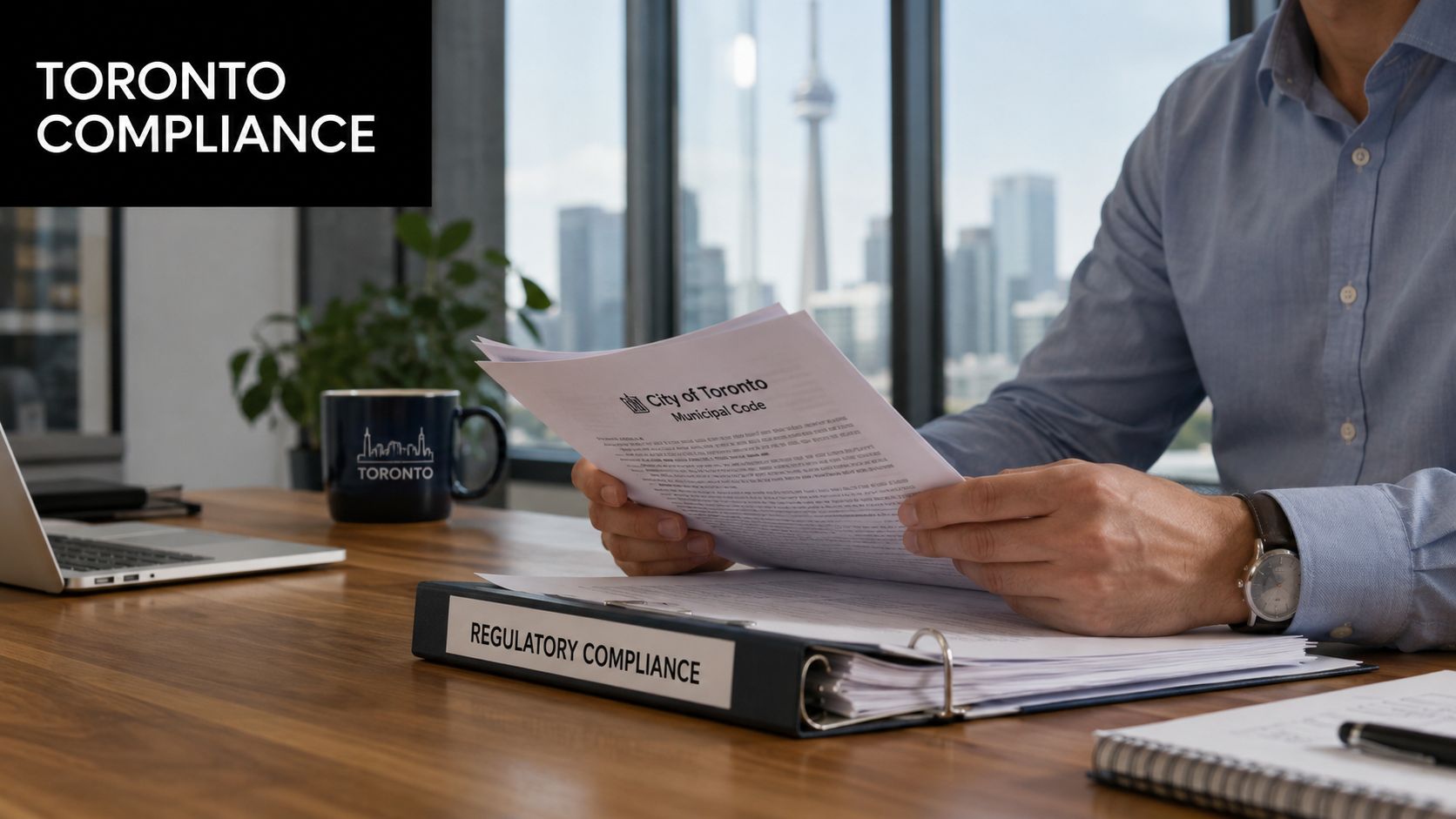
A cleaning scope can look complete on paper and still fail in practice if the vendor cannot show how work is controlled, documented, and checked. For a Toronto office manager, compliance is the part that turns a checklist into something you can verify.
WHMIS in day-to-day cleaning operations
WHMIS matters because cleaning crews handle chemical products in offices, washrooms, kitchens, and shared spaces where your staff may still be present. A capable vendor should be able to show how products are labelled, where safety data sheets are kept, how chemicals are diluted, and what training staff receive before they work alone on site.
That sounds administrative, but it affects daily operations in very practical ways. If a spray bottle is left in a janitorial room, your team should be able to identify it. If there is a spill, the cleaner should know the response steps without calling a supervisor for basic instructions. If a product is transferred into a secondary container, the label should still tell the next worker what is inside and what precautions apply.
A simple way to evaluate this is to ask the vendor four direct questions:
- Which products on this site require WHMIS controls?
- Where will safety data sheets be stored or accessed?
- How do you train new hires before they handle chemicals independently?
- How do supervisors confirm that storage, labelling, and dilution rules are being followed on site?
Clear answers usually point to an organised operating system. Vague answers often signal a gap between the company's proposal and the way the site will be run.
Health Canada approval and disinfection claims
Disinfection claims need more than a task list. They need the right product, the correct contact time, and a method that matches the label. Health Canada approval matters because it sets the baseline for what a disinfectant can legally claim to do and how it must be used.
This is a common point of confusion for new office managers. Cleaning removes soil and improves appearance. Disinfecting is a separate risk-control step. If a surface is wiped too quickly, or if the wrong product is used, the result may look clean while falling short of the intended infection-control outcome.
That distinction matters more in high-touch areas, shared kitchens, washrooms, childcare settings, clinics, and any workplace responding to an illness concern. If you are reviewing this type of scope, commercial disinfection and sanitizing support gives a useful overview of how the service category is typically defined.
Ask vendors to explain their process in sequence. Which surfaces are cleaned first. Which products are used where. How is dwell time managed. What documentation is created after a response clean. A provider that can only promise “sanitized and disinfected” without explaining the method is asking you to trust the checklist instead of the outcome.
Quality systems, inspections, and proof of performance
Compliance is broader than chemical safety. It also includes whether the vendor can prove that site instructions are followed consistently across shifts, supervisors, and relief staff. In practice, that means documented work plans, inspection routines, incident reporting, and records you can review when service quality drops.
For many Toronto buyers, the best question is not “Do you have a quality program?” It is “How do you verify that last night's work met the standard?” Strong vendors usually answer with evidence, not slogans.
That evidence may include:
- Site-specific task schedules
- Supervisor inspection reports
- Mobile app check-ins with time stamps
- Photo-based issue tracking and closeout notes
- ATP testing for selected high-touch or sensitive areas
- Corrective-action logs that show what was fixed, by whom, and when
ATP testing is useful because it checks for residual organic matter on a surface after cleaning. It does not replace visual inspection, but it adds an objective layer. Mobile QA apps serve a different purpose. They create a record of when inspections happened, what failed, and whether the issue was corrected before it became a recurring complaint.
A helpful comparison is this. A checklist tells you what the crew was supposed to do. A QA record shows what was inspected and whether the result met the standard. Buyers often focus on the first document and forget to ask for the second.
Some organisations also use formal management standards to show that their processes are documented and audited. That can be a positive signal, but the underlying system matters more than the badge itself. Ask to see sample inspection forms, training records, escalation steps, and site communication logs. Those materials show whether quality depends on a repeatable process or on individual effort from a few strong staff members.
Buyers do not need every possible credential. They need enough evidence to confirm that safety rules, disinfection claims, and cleaning results can be checked, documented, and corrected when performance slips.
Budgeting for Commercial Cleaning Services and Key Cost Factors
Cleaning budgets usually go off track for a simple reason. Two quotes can have the same monthly price and still buy very different results.
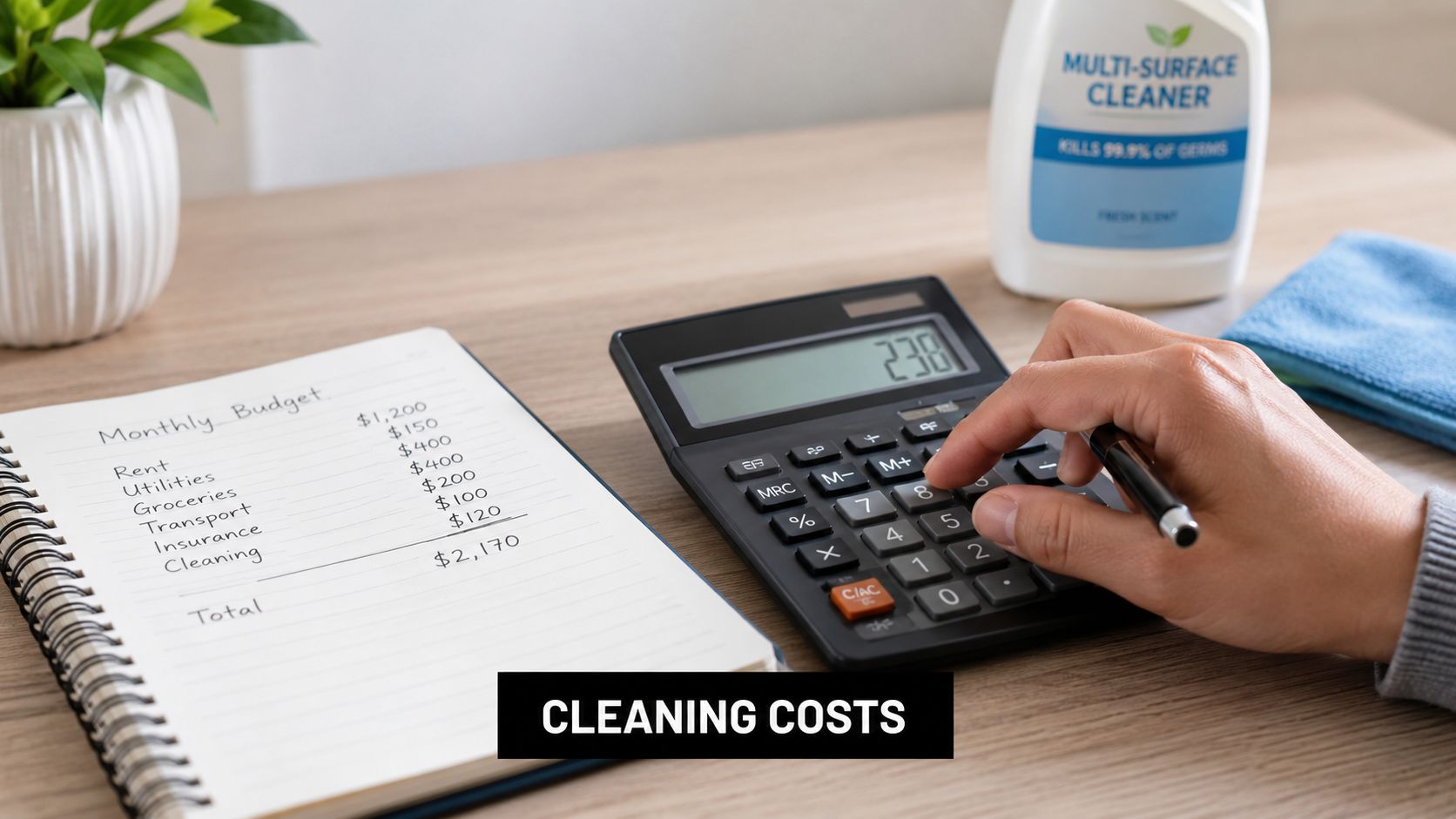
One proposal may include consumables, periodic floor work, supervisor inspections, and documented follow-up on deficiencies. Another may cover only basic labour for visible cleaning. On paper, both sit under the same heading. In practice, one is a maintenance program and the other is a task list.
That distinction matters in Toronto because cost is tied to more than time on site. It is also tied to whether the vendor has to support WHMIS training, use Health Canada compliant disinfectants where required, document chemical handling, and prove that cleaning standards were checked instead of assigned. A checklist describes intent. Verified outcomes require supervision, QA records, and sometimes testing.
The main cost drivers
A realistic budget usually reflects a mix of building conditions, service expectations, and documentation requirements.
- Facility size and layout: Total square footage matters, but so do details such as multiple washrooms, enclosed offices, stairwells, kitchens, and awkward circulation paths. A 20,000 square foot open office is usually faster to service than a smaller suite chopped into many rooms.
- Service frequency and coverage window: Five evenings per week costs more than three. Day porter support adds labour during business hours, which can be useful for lobbies, washrooms, and spills but changes the staffing model.
- Surface types and wear patterns: Carpet extraction, hard floor scrubbing, interior glass, and stainless steel detailing all use different labour times, tools, and products.
- Occupancy and traffic: A law office, medical clinic, school, and light industrial site can share similar square footage but require very different cleaning effort because people use the space differently.
- Compliance and recordkeeping: Sites that ask for WHMIS documentation, SDS access, incident logs, or proof that approved disinfectants were used often pay for the extra supervision and administration behind that system.
- Quality assurance method: A lower quote may assume little or no formal inspection. A higher quote may include supervisor audits, app-based check-ins, deficiency tracking, and ATP verification for selected touchpoints or sensitive areas.
- Site access conditions: Security sign-in, elevator waits, restricted loading, after-hours access, and paid parking all affect labour efficiency.
A useful way to read these factors is to separate visible work from support work. Visible work is the mopping, vacuuming, and washroom cleaning your occupants notice. Support work is the training, supply control, inspection, and documentation that keep standards consistent over time.
Common pricing models
Toronto buyers usually see three pricing approaches.
Monthly flat fee
This is the standard model for recurring janitorial service. It helps with forecasting, but only if the scope is precise. The quote should state task frequency, exclusions, supply responsibility, periodic work, and how quality will be checked.
Hourly project pricing
This model is common for post-construction cleanup, flood response, high dusting, move-in or move-out work, and other one-time projects. It works best when site conditions are uncertain and the client has a clear approval process for extra hours.
Area-based pricing
Some vendors price by square footage and frequency bands. That can help with early budgeting, but area alone can hide important cost differences. Two floors with the same size can require very different staffing if one has heavy washroom usage, food service areas, or frequent touchpoint disinfection.
Why the lowest quote often creates extra cost
An unusually low price often means one of four things. Labour hours are too thin for the scope. Periodic work has been left out. Supervision is limited. The proposal assumes the client will not ask for proof of outcomes.
That last point is easy to miss. If a vendor promises disinfection but cannot show product records, staff training, inspection results, and corrective actions, the client may end up paying later through complaints, rework, emergency deep cleaning, or internal time spent chasing problems. Cheap cleaning can shift cost from the invoice to your operations team.
Industry turnover pressure also affects budgeting. Reported turnover in Canadian commercial cleaning is high, as noted in industry turnover and economics in Canadian commercial cleaning. For a buyer, the practical takeaway is simple. Vendors need enough margin to hire, train, supervise, and replace staff without service quality falling every time a cleaner leaves the account.
A budget framework that works
A useful cleaning budget has three separate buckets:
- Routine recurring cleaning
- Periodic specialty work
- Contingency or event-driven work
This structure works like a building maintenance reserve. The first bucket covers predictable daily or weekly work. The second covers items that matter but do not happen every visit, such as carpet extraction, hard floor restoration, upholstery cleaning, or high dusting. The third covers surprises such as spills, outbreaks, tenant events, weather-related mess, or emergency response.
That format makes vendor quotes easier to compare because it separates base service from work that should not be buried in a flat monthly number. It also gives office managers better control over trade-offs. For example, you may reduce service frequency in low-use meeting rooms while protecting washrooms, entrances, and kitchen areas, then add ATP spot checks or mobile inspection reporting in higher-risk spaces where verification matters more than appearance alone.
Your Vendor Selection Checklist How to Choose the Right Partner
A vendor shortlist should answer one practical question. Which company can produce a repeatable result in your building, under your operating conditions, with proof that the work happened as specified?
That standard is higher than a basic checklist. A proposal can list dusting, vacuuming, washroom cleaning, and disinfection, yet still leave an office manager guessing about training, chemical control, follow-up, and whether the service level will hold during staff absences or turnover. In Toronto, a stronger evaluation process connects the written scope to verified outcomes, especially in facilities that need WHMIS-aware staff, controlled product use, and clear records.
Start with evidence, not presentation
A polished walkthrough can create confidence, but contract performance depends on systems. The first screening step is simple. Ask each bidder to show how they manage risk, quality, and communication on a live account.
Use this first-pass checklist:
- Insurance and bonding: Request current certificates and confirm the coverage matches your building access, after-hours work, and any higher-risk areas.
- Relevant site experience: Ask for examples from facilities with similar traffic patterns, occupant expectations, and service hours.
- WHMIS training and safety procedures: Confirm how workers are trained on labels, Safety Data Sheets, dilution, storage, spill response, and incident reporting.
- Product controls: Ask which disinfectants or sanitizing products are used where relevant, and whether they follow Health Canada requirements for approved claims and directions for use.
- Site-specific scope: The quote should list tasks, frequencies, exclusions, periodic work, and who verifies completion.
- Escalation process: Ask how issues are reported, who responds, how corrective action is documented, and when the client sees closure.
- Supervision method: Confirm how often a supervisor inspects the site and what happens when standards slip.
- Reporting tools: Ask whether inspections, photos, task logs, or mobile app reports are available to the client.
The goal is to separate a cleaning promise from an operating system.
Ask how the vendor handles staffing variation
Cleaning quality often fails at the handoff point. One trained cleaner leaves, a replacement arrives with little site knowledge, and small misses begin to accumulate. Soap dispensers go empty. Touchpoints are skipped. Waste rooms get done late. The office still looks acceptable at first, but the service becomes less controlled.
Ask direct questions:
- Who is assigned to the site, and who covers planned or unplanned absences?
- How is replacement staff trained before they work alone in the building?
- What building-specific instructions are documented?
- Who checks the work after a staffing change?
- How are keys, alarms, and access credentials controlled?
A good answer sounds operational, not general. You want to hear about documented site binders, mobile instructions, supervisor sign-offs, and scheduled inspections after a staffing change.
Look for verification, not just task lists
This is the point many buyers miss. A cleaning checklist tells you what should happen. A quality assurance method tells you what can be confirmed.
For example, “disinfect high-touch points nightly” is only a statement of intent until the vendor explains how completion is logged and reviewed. Some contractors use paper checklists that stay on site. Others use mobile apps with time stamps, photos, missed-task flags, and supervisor follow-up. In higher-risk settings, some also use ATP spot testing to check whether cleaning removed organic residue from selected surfaces. The tool matters less than the discipline behind it. The question is whether the vendor can show evidence, trend it over time, and correct repeat failures.
That distinction is similar to the difference between a fire safety plan and a fire drill log. One describes the procedure. The other shows whether the procedure is carried out.
Vendor Evaluation Scorecard
| Evaluation Criteria | Vendor A | Vendor B | Vendor C |
|---|
| Scope matches facility needs | | | |
| Insurance and bonding verified | | | |
| WHMIS and safety practices explained clearly | | | |
| Uses Health Canada approved disinfectants where relevant | | | |
| Inspection and reporting method is documented | | | |
| Staffing continuity plan is credible | | | |
| Quote identifies exclusions and periodic tasks | | | |
| Complaint response process is clear | | | |
| References from similar facilities available | | | |
| Contract terms are workable | | | |
Questions that reveal how the account will actually run
Use the interview stage to test how the vendor thinks. Short, specific questions usually produce more useful answers than broad ones.
What to ask
- How do you verify quality after each visit or inspection cycle?
- What reports will the client receive, and how often?
- Which tasks are periodic instead of included in every visit?
- How do you document corrective action after a complaint or failed inspection?
- Who is the day-to-day contact for urgent issues?
- How are chemicals selected, labeled, stored, and brought on site?
- What changes if our occupancy pattern or infection-control needs change?
What to avoid
- All-inclusive language without a written scope: Broad promises often hide exclusions.
- Unclear inspection methods: If the vendor cannot explain how work is checked, service quality depends too heavily on appearances.
- Generic proposals: A proposal written for any office usually misses your building's traffic peaks, touchpoint risks, or access rules.
- Weak documentation: If complaints, inspections, and corrective actions are not logged, trend problems are harder to spot.
- Vague chemical answers: Toronto clients should be wary of providers who cannot explain WHMIS practices or product approvals clearly.
One final check helps. Ask each finalist to walk through a sample month of service, including one complaint, one staff absence, one periodic task, and one inspection failure. Their answer will show whether they are selling cleaning hours or managing a controlled service program.
Measuring Success KPIs and Modern Quality Assurance
A cleaning scope tells you what should happen. Quality assurance shows what happened, where it happened, and whether the result met a defined standard. For a Toronto office manager, that difference matters because appearance alone does not confirm hygiene, compliance, or consistency.
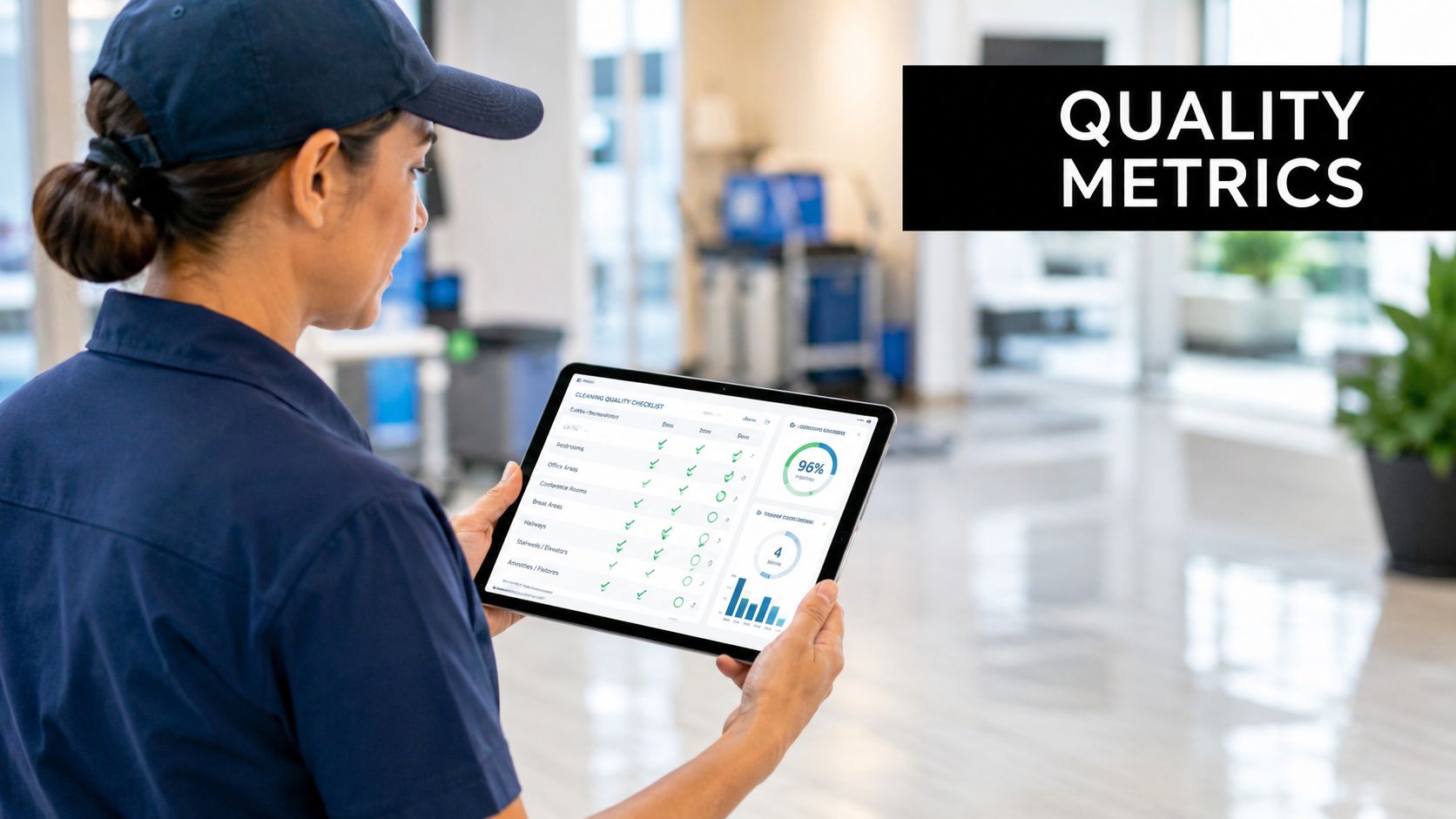
A useful QA program works like a building inspection log, not a memory test. If a vendor says high-touch points were cleaned, there should be a record. If a complaint comes in, there should be a timestamp, a corrective action, and a follow-up check. If disinfectants or other controlled products are part of the service, the client should be able to confirm that site practices still line up with WHMIS labelling, storage, and handling expectations, and that any product claims remain appropriate for the intended use under Health Canada rules.
Useful KPIs for commercial cleaning
Good KPIs are specific, easy to review, and tied to an action. In most Toronto facilities, five measures do more work than a long dashboard full of vague scores:
- Inspection pass rate: The percentage of inspected areas that meet the agreed standard
- Issue response time: How quickly the vendor acknowledges and corrects a problem
- Repeat issue frequency: Whether the same deficiency returns in the same zone or task category
- High-touch completion verification: Whether priority touchpoints were cleaned and checked as scheduled
- Supply uptime: Whether washrooms, kitchens, and other shared areas remain stocked without emergency requests
These metrics turn a subjective complaint into something a manager can trace. “The office felt dirty” becomes “the third-floor kitchenette failed two inspections this month” or “door hardware in shared meeting rooms was missed during the evening shift.” That makes correction faster and budget discussions more grounded.
Objective checks matter more than visual checks alone
Visual inspections still matter. They catch obvious misses such as streaks, dust, debris, and poor presentation. But visual review has a limit. A shiny surface can still be poorly cleaned, especially on high-touch points that carry the highest hygiene risk.
ATP testing helps fill that gap. It works like a spot audit for surface cleanliness by measuring organic residue on selected touchpoints after cleaning. Lower readings generally indicate a cleaner surface. Used properly, ATP does not replace routine supervision. It adds an objective check for onboarding, problem areas, periodic audits, and spaces where infection-control expectations are higher.
That is the bridge between a checklist and a verified outcome. A checklist says a surface was wiped. An ATP audit or documented inspection gives the client evidence that the cleaning result met a measurable standard.
Mobile QA tools improve traceability
Paper checklists often fail for the same reason handwritten maintenance notes fail. They are easy to lose, hard to audit, and difficult to compare over time. Mobile inspection systems improve that process by attaching the task, location, time, photo, and follow-up record in one place.
For a Toronto office manager, this helps in three practical ways:
- Trend tracking: You can see whether problems cluster by floor, shift, washroom bank, or touchpoint category
- Corrective action logging: Supervisors can document what failed, who corrected it, and when it was rechecked
- Client reporting: Monthly reviews become clearer because they are based on logged inspections rather than general impressions
This level of traceability also supports accountability in larger facilities with multiple attendants, porters, or day staff. Clear staff identification can help on-site reporting and access control. In operations where presentation standards matter, some managers also standardise uniforms and IDs, including items such as embroidered work shirts.
Do not ignore forgotten surfaces
Many service failures happen in places that are easy to overlook because they do not define first impressions. Door pulls behind stairwell doors, microwave buttons, faucet handles, chair arms in shared rooms, and copier touchscreens often sit outside the “looks clean” test. They should still appear in the scope and in the inspection routine if they matter to your occupancy pattern.
A simple way to assess a vendor's QA maturity is to ask whether their reports distinguish between presentation areas and hygiene-critical touchpoints. If everything is scored the same way, the report may look tidy while still hiding risk.
The strongest cleaning program is one the client can audit without guessing.
One example of this approach is Arelli Cleaning, which uses a mobile app and management system to log communication, quality checks, and service verification. Technology does not replace supervision or training. It does make it easier to confirm what was done, what failed, and how quickly the issue was corrected.
Frequently Asked Questions About Toronto Commercial Cleaning
What does onboarding with a new cleaning vendor usually look like
A proper onboarding process usually starts with a site walk-through, a written scope, access planning, and a list of priority zones. Many buyers also ask for a sample clean in a limited area so they can evaluate detail level, communication, and fit before finalising the routine schedule. The best onboarding plans also identify who inspects the first visits and how deficiencies are reported.
Are long-term contracts standard in Toronto
They exist, but they aren't the only model. Some buyers prefer term agreements for budget stability, while others want flexibility during the first phase of the relationship. The important issue isn't contract length by itself. It's whether the scope, service levels, and exit terms are clear enough to protect both sides.
How are issues or special requests usually handled
The cleanest process is a simple one. The client reports the issue to a named contact, the vendor confirms receipt, the correction is scheduled, and the result is documented. Problems become expensive when no one owns the follow-up or when requests are passed informally between site staff.
When should a business ask for a deep clean instead of routine service
A deep clean is usually appropriate after fit-outs, seasonal buildup, occupancy changes, neglected periods, or recurring complaints that daily service doesn't solve. Signs include odour persistence, dingy floors, residue around touchpoints, stained washrooms, or dust in ledges and vents. Routine service maintains a standard. A deep clean resets it.
Who should manage the cleaning relationship internally
Most small and medium facilities do best when one person owns the vendor relationship. That person doesn't need to inspect every room, but they should control scope changes, approve extra work, gather staff feedback, and review service reports. Without that single point of contact, mixed messages can weaken accountability.
Where should a Toronto business start if it needs quotes quickly
Start with a concise facility brief. Include building type, hours, occupancy pattern, priority areas, washroom count, floor types, and any compliance-sensitive zones. Then ask 2 to 3 quotes, using the same scope for each vendor so the comparison stays fair.
Further Reading
Internal resources
External resources
A Toronto business that's reviewing cleaning options can use the checklist above, gather 2 to 3 quotes, and compare vendors on scope clarity, compliance habits, staffing stability, and quality verification instead of price alone. Arelli Cleaning is one local option for companies that want office and commercial cleaning support in the GTA.








.webp)