A Toronto office manager notices the same pattern again. The desks look fine after the weekly visit, but dust gathers at vents, restroom odours linger, and a walkthrough turns up residue on high-touch points that routine work didn't touch. That's usually the moment the real question appears, not “How often should cleaning happen?” but “What condition is the space in, and what does it need next?”
For a business, the choice between deep cleaning and routine cleaning is usually an operational decision, not a cosmetic one. Routine cleaning keeps a space usable and safe on a recurring basis, while deep cleaning is the reset when buildup, complaints, or compliance signals say the baseline is no longer enough. The sections below give a practical way to tell the difference, using observable conditions, facility KPIs, and Ontario workplace expectations.
Table of Contents
Cost Drivers and Timing Tradeoffs in the GTAKey Takeaways and Next Steps
What Your Business Actually Needs
A workplace can look orderly and still fall short of standard. Dust on supply vents, a sticky handrail, or a restroom that never quite feels fresh usually means the cleaning plan is handling appearance, not the buildup that keeps returning. The first question for an office manager is simple, does the space still match the condition the business expects, or are you only seeing a short-lived surface result?
For a practical frame, start with the deep cleaning guide for facility managers and compare it with the service scope on the commercial cleaning services page. Used together, they help separate routine upkeep from a deeper reset. That comparison is useful in a meeting because it keeps the discussion on work scope, not assumptions.
Practical rule: if the space only needs day-to-day upkeep, routine cleaning is usually enough. If grime, odours, or inspection pressure keep returning, the facility likely needs a deeper reset.
Ontario workplace expectations make that distinction practical, not theoretical. Under the Ontario Occupational Health and Safety Act and related guidance, employers must keep workplaces clean and safe, and public-setting guidance treats regular cleaning and disinfection of frequently touched surfaces as a baseline control. That does not mean every problem calls for deep cleaning. It does mean persistent residue, failed checks, or repeat complaints should be read as signs that the maintenance plan is no longer holding condition on its own.
A good way to judge the need is to look at the building the way a facilities auditor would. If the answer to a walkthrough keeps coming back to the same items, such as dust collecting in corners, odours returning after service, or restrooms needing attention before the next scheduled visit, routine cleaning is no longer doing all of the work. In that case, the issue is operational, not cosmetic, and the next action should be to reset the standard rather than repeat the same pass.
Key takeaways
- Routine cleaning maintains the standard.
- Deep cleaning resets the standard when maintenance stops working.
- Operational triggers matter more than habit alone.
- Visible cleanliness can hide embedded soil.
Defining Routine Cleaning and Deep Cleaning
A Toronto office manager usually sees the difference first in the building itself. A walkway that stays tidy between service visits points to routine cleaning doing its job. A breakroom that keeps showing the same residue, or a clinic corridor that still looks worn after normal service, points to a deeper problem that routine work is no longer correcting.
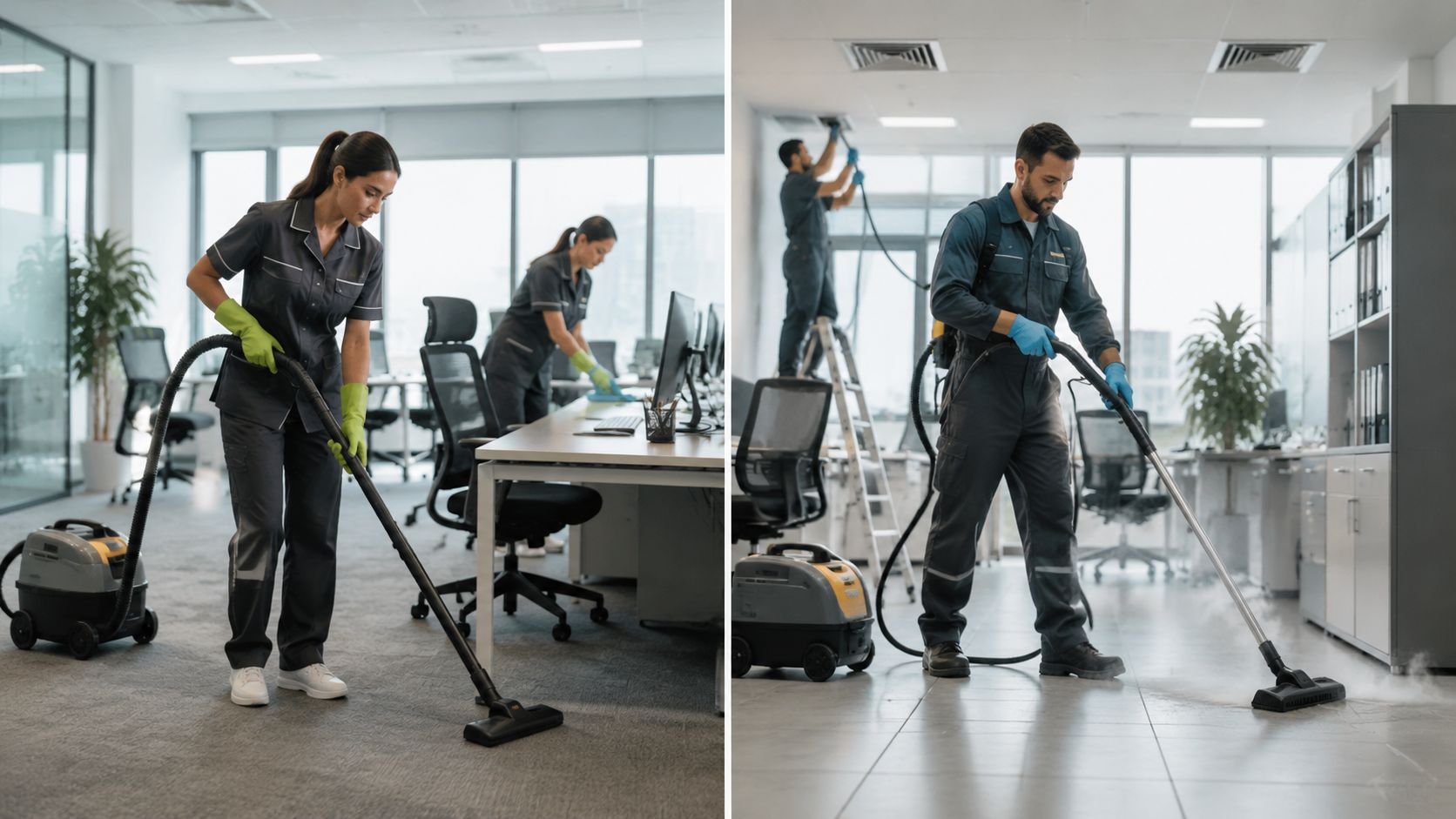
Routine cleaning is recurring maintenance that keeps a workplace presentable and safe on a day-to-day basis. It covers dusting, vacuuming, trash removal, restroom restocking, and wipe-downs of frequently touched surfaces on a daily, weekly, or biweekly cadence, depending on how the space is used. The goal is continuity, not reset. It keeps the baseline in place so the next shift starts with a clean surface, not a visible problem.
Deep cleaning is a more intensive intervention that reaches embedded soil, biofilm, hard-to-reach areas, and accumulated residue that routine work leaves behind. It goes beyond the normal maintenance pass and is usually tied to less frequent intervals or operational triggers such as buildup, odours, post-incident sanitation, or inspection failure. In commercial settings, it works as a reset point, not a repeat of the usual service.
The tools and labour also change. Routine cleaning relies on lighter, recurring methods that keep surfaces sanitary and visible. Deep cleaning takes more time, more dwell time, and more detail around edges, joints, fixtures, and other zones where grime hides. That is also where methods like steam cleaning service page fit, because they are used for corrective work where heat and reach matter more than a quick surface pass.
A useful shorthand for office managers is simple. Routine cleaning preserves condition, deep cleaning corrects condition.
Ontario's workplace expectations make the difference practical, not academic, because buildings and equipment must be kept clean and safe under the province's health and safety framework. A workplace that passes a normal maintenance check can still fail on buildup, odour, or touchpoint condition, which is why routine service does not replace corrective work. In floor care, the same logic appears in the phrase sanding vs deep cleaning tips in the Buff & Coat hardwood floor refinishing guide, since a surface issue is sometimes a sign that a deeper correction is needed.
The Core Differences at a Glance
A Toronto office manager can usually tell the difference between routine cleaning and deep cleaning by asking one question, does the space still meet target condition after the normal service cycle ends? If the answer is yes, routine cleaning is doing its job. If the answer is no because soil, odour, or residue keeps returning, the site has moved into deep-clean territory.
| Dimension | Routine Cleaning | Deep Cleaning |
|---|
| Scope | Surface upkeep, visible areas, and frequent touchpoints | Embedded soil, hard-to-reach areas, and accumulated residue |
| Frequency | Daily, weekly, or biweekly | Less frequent, often tied to a trigger or reset cycle |
| Labour intensity | Lower-intensity maintenance | More intensive, more detailed, and more time-consuming |
| Cost range | Lower-intensity maintenance pricing | Often priced higher because of scope, access, and the corrective nature of the work |
| KPI relevance | Inspection score, task completion rate, response time, cost per square foot | ATP results, reset quality, and whether the space returns to target standard |
| Compliance role | Supports daily sanitation and safe conditions | Addresses buildup, audit pressure, and hard-to-reach contamination |
The first difference is scope. Routine cleaning keeps visible surfaces, floors, and high-touch points in acceptable condition, so the space stays ready for use. Deep cleaning reaches into the places routine work is not meant to finish, including edges, joints, fixtures, vents, and other collection points where buildup stays behind after normal maintenance. That difference matters in offices, clinics, and warehouses because the problem is often not what is seen first, but what keeps being missed.
The second difference is timing. Routine cleaning runs on a service schedule, so it protects the baseline before conditions drift. Deep cleaning is tied to a trigger or reset cycle, which is why it is used after buildup, odour, inspection failure, or a sanitation concern that routine visits have not corrected. An office manager does not usually need a deep clean because the calendar says so, but because measurable conditions show the normal cycle is no longer holding.
The third difference is how each one is judged. Routine cleaning is usually measured by consistency, for example whether assigned tasks were completed on time and whether inspection scores stayed within target. Deep cleaning is measured by whether the space returns to standard after corrective work, which is why facilities should compare the result against a baseline and a benchmark set instead of relying on appearance alone, as explained in ISSA performance guidance. In practice, that means the question is not only whether the space looks better, but whether it stays at the expected level after the next operating cycle.
Cost follows the same logic. Routine service is the lower-cost maintenance layer because it is built around repeat visits and shorter task lists. Deep cleaning costs more per visit because it requires more labour, more access, and more time spent on areas that routine work does not usually reach. A manager should treat that as a reset cost, not just a rate comparison. The better benchmark is whether the work restores the building to target condition the first time, which is the point where a corrective visit stops being optional and starts serving the operating plan.
For sanitation decisions, the distinction also affects what type of work is being purchased. Routine cleaning supports ongoing hygiene, while targeted disinfection and sanitizing can be part of a corrective response when a space needs a stronger reset, as outlined in commercial disinfection and sanitizing services. That matters in settings where audits, tenant expectations, or workplace health concerns require more than visible neatness.
Signs Your Business Needs a Deep Clean
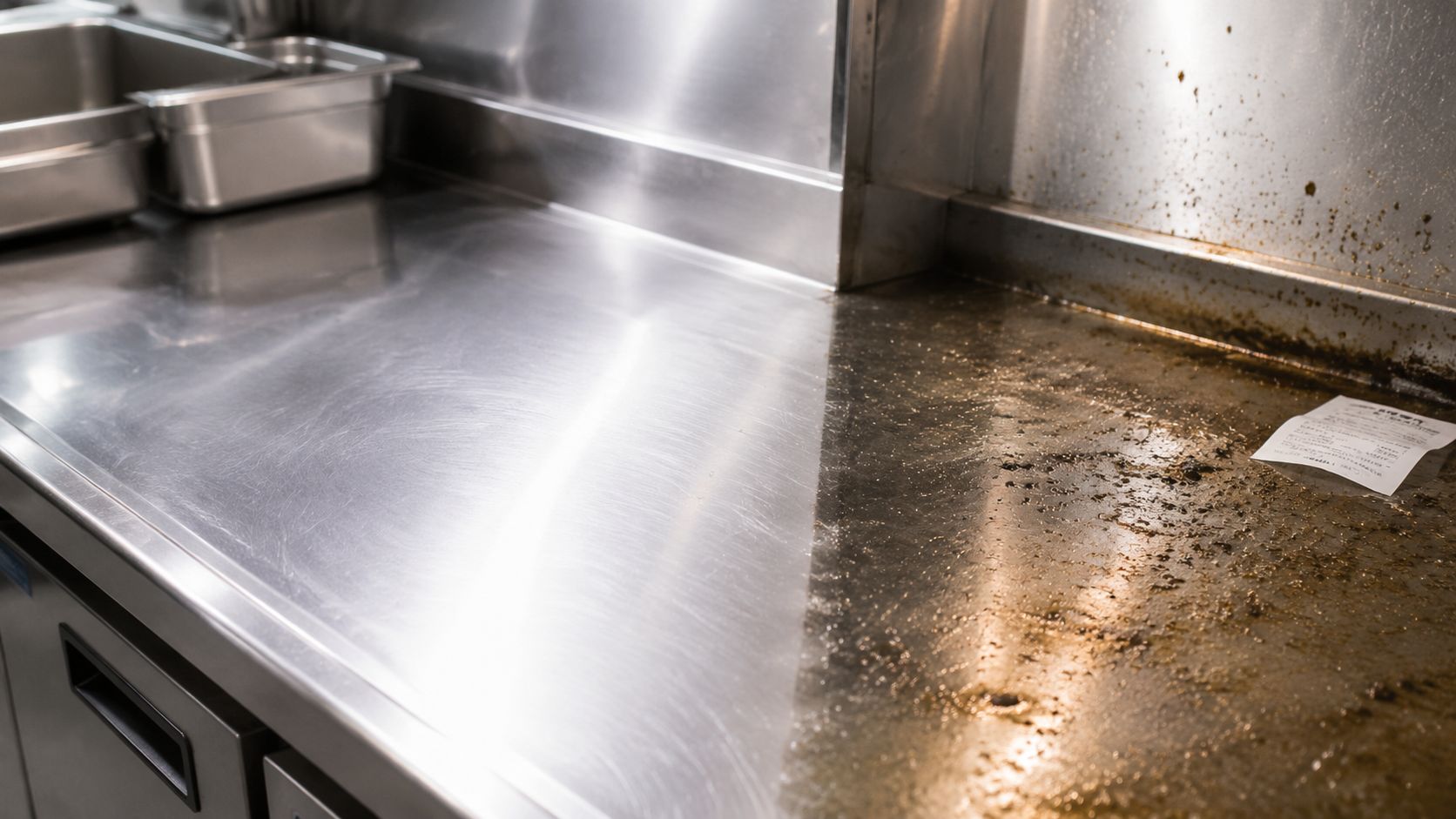
A Toronto office, clinic, or warehouse usually does not need a deep clean because the calendar says so. It needs one when routine cleaning stops restoring the space to the condition the building is supposed to hold. That is the operational trigger to watch for.
Visible buildup that routine work keeps missing
If dust comes back fast, edges stay grimy, or touchpoints never quite look clean, the problem is usually scope rather than effort. Routine service can keep a space acceptable, but it does not always remove embedded residue from vents, fixtures, grout lines, baseboards, or other hard-to-reach areas. When those spots keep showing buildup after normal service, the building is asking for a deeper reset.
A good rule for managers is simple, if the same surfaces fail inspection twice in the same pattern, the routine plan is no longer matching the condition of the space.
Air-quality complaints or odour persistence
Persistent odours and repeated dust complaints are stronger signals than a quick visual check. Ontario's indoor air quality rules under O. Reg. 833 and workplace air quality make workplace conditions more than a cosmetic issue, so recurring complaints should be treated as an operations problem, not a housekeeping preference. If the same complaint keeps returning after routine cleaning, the space may need deeper attention to dust reservoirs, ventilation-adjacent buildup, or sanitation gaps.
That is especially true in offices with closed meeting rooms, clinics with frequent foot traffic, and warehouses where dust settles above eye level before it becomes obvious on the floor.
Failed inspections, audits, or post-incident resets
A failed inspection is a direct sign that the current process is missing the expected standard. The same applies after construction, spills, illness events, or other disruptions that leave residue behind in places routine cleaning does not normally reach. Deep cleaning belongs here because it is meant to restore a space after the ordinary cadence has been overwhelmed.
For post-incident sanitation, the commercial disinfection and sanitizing page outlines the protocols used for higher-risk environments.
If a manager can point to a trigger, a complaint log, or an inspection note, the decision stops being subjective.
Seasonal or occupancy resets
Some workplaces need a reset when a season changes, a lease event approaches, or a heavy-use period ends. That does not mean every season requires deep cleaning. It means the calendar matters only when it lines up with actual conditions, such as higher traffic, tenant turnover, or a known buildup cycle.
A warehouse after a busy receiving period, for example, may need more than the usual floor care. A clinic after a flu-heavy period may need a stronger pass at contact points and shared surfaces. The trigger is the condition of the space, not the date on the calendar.
Measuring the trigger, not just the feeling
Facilities that track performance can use ATP testing on high-touch surfaces to check whether a reset brought contamination down below the routine-cleaning baseline. The ATP and square-foot KPI framework supports that kind of benchmark thinking, because it lets a manager compare the result against a set target instead of relying on appearance alone. A complaint is useful, but a measured result is stronger.
That is the point of a deep-clean trigger. It should be visible in the log, the inspection, or the KPI review, not only in someone's impression that the building feels off.
Sample Cleaning Plans by Industry
A mid-size Toronto office can usually think in four layers of scope. Weekly routine work handles desks, floors, restrooms, and touchpoints. Monthly checks cover low-access areas and higher-touch details. Quarterly deep cleaning addresses the places routine work misses. Annual review looks at the service scope, inspection trend, and whether the building has changed enough to need a different plan.
For clinics, the cadence becomes stricter around disinfection and high-touch contact points. For schools and childcare centres, public-health guidance means frequent sanitation matters more than appearance alone. For warehouses, the emphasis shifts toward floor care, dust control, and high-dusting. For law firms and engineering offices, the visible client areas matter, but so do quiet zones, meeting rooms, and restrooms that shape the overall impression.
A simple starting template
- Weekly routine tasks: vacuuming, trash removal, restroom sanitation, surface wipe-downs, and touchpoint cleaning.
- Monthly review tasks: vents, edges, doors, baseboards, and other places that show buildup early.
- Quarterly deep-clean tasks: detailed restroom work, high-touch reset, overlooked fixtures, and a more intensive pass in heavy-use areas.
- Annual review tasks: scope check, inspection trend review, and a decision on whether the existing cadence still fits the building.
The medical office cleaning service page is a useful way to compare how a more controlled environment can require a tighter scope than a standard office. A school or clinic may need the same basic logic, but with different contact points and different tolerance for delay. The right plan is the one that matches use, risk, and foot traffic, not the one that sounds most thorough on paper.
Cost Drivers and Timing Tradeoffs in the GTA
The cheapest quote is not always the cheapest cleaning plan. A low hourly rate can hide overtime premiums, short labour windows, after-hours coordination, or re-cleaning when the first pass does not restore the space to standard. In practice, total cost is shaped by scope, access, labour timing, and whether the provider verifies results after the job.
Ontario businesses also have to account for timing constraints. The brief notes that labour markets in the Toronto region remain tight in service and trade occupations, which affects after-hours availability and scheduling pressure. That matters because deep cleaning is harder to place into short windows, especially for smaller firms that cannot close for long stretches. The question is not just what service costs, but when it can happen without disrupting the business.
Cost driver checklist: scope, labour window, products, access, and verification method.
A deeper clean also makes more sense when a facility can bundle it into a quieter period. Toronto office occupancy patterns have not fully returned to pre-2020 norms in many downtown submarkets, which changes when a reset is feasible and how disruptive it feels. For some sites, a deep clean is easier to schedule in an underused window than to force into peak operations.
For a local frame of reference, the office cleaning Toronto page can be used as a service-area anchor when comparing quotes from providers that work across the GTA. One option in that mix is Arelli Cleaning, which offers commercial cleaning services and specialty cleaning services as separate service types. That distinction is useful because it mirrors the difference between maintenance work and corrective work without blending them into one vague category.
A manager reviewing proposals should compare these points line by line:
- What is included in routine scope and what is reserved for deep scope.
- What labour window the provider needs.
- What verification is used after the job.
- What causes extra charges, such as access limits or rework.
Choosing a Cleaning Provider and What to Ask
A good quote separates routine work from deep work. If a provider treats both as the same thing, the scope usually gets vague fast. The better approach is to ask how the team defines baseline cleaning, what triggers a deep clean, and how outcomes are checked after the work is done.
Questions that clarify the proposal
- What is included in routine scope, and what is excluded? This keeps daily maintenance separate from corrective work.
- What products and approvals are used for the job? Health Canada-approved products matter in environments that need documented sanitation choices.
- How are workers trained on WHMIS and compliance expectations? Training signals whether the provider understands workplace safety, not just appearance.
- How is the result verified? Inspection scores and ATP checks are stronger than “it looks clean.”
- Can the scope be adjusted without forcing a long contract? Flexibility matters when the facility's needs change.
Red flags that usually cause problems
- Vague scope language that does not list tasks.
- No written checklist for routine or deep work.
- One-size-fits-all pricing that ignores building type and traffic.
- No clear verification method after the job.
- A proposal that never distinguishes maintenance from reset work.
| Ask the Provider | Avoid If... |
|---|
| What does routine cleaning include? | The scope is described only as “general cleaning.” |
| What makes a deep clean different? | The answer sounds identical to routine work. |
| How is quality measured? | There is no checklist, score, or test method. |
| What products are used? | The products and approval status are left unclear. |
| How flexible is the schedule? | The provider pushes one fixed package without discussing building needs. |
Gathering two or three quotes and checking references is still the cleanest way to compare service quality. The lowest bid only matters if the scope, timing, and verification method are the same.
Key Takeaways and Next Steps
Routine cleaning keeps a workplace operating. Deep cleaning resets it when buildup, odours, inspections, or contamination signals show the baseline is slipping. The right choice depends on what the building is doing, not just how often the crew comes through.
A practical next step is to run a trigger checklist, compare it against the current cleaning scope, and ask for two or three quotes that clearly separate maintenance work from reset work. The cleaner the scope, the easier it is to compare cost, labour timing, and verification without guessing.
Quick FAQ
- When is routine cleaning enough? When the space still meets its standard and there are no recurring complaints or inspection problems.
- When does deep cleaning make more sense? When buildup, odour, audit pressure, or post-incident conditions show that maintenance has stopped working.
- Who should review the scope? The office manager, facilities lead, or operations lead who knows the building's actual use.
- What should be measured? Inspection scores, task completion, and, where possible, ATP or similar verification.
- Where should the next step start? With the current scope document and a fresh quote comparison.
For readers ready to explore service options, the locations page is the simplest place to start comparing local coverage and next steps.
Arelli Cleaning provides office and commercial cleaning services in the Greater Toronto Area, including routine maintenance and specialty work that can support deeper resets when a facility needs more than a standard visit. Businesses that want a cleaner comparison between routine and deep scope can review the available service areas and ask for quotes that separate baseline upkeep from corrective cleaning. Visit Arelli Cleaning to review service options and request a quote that matches the building's actual cleaning needs.









.webp)