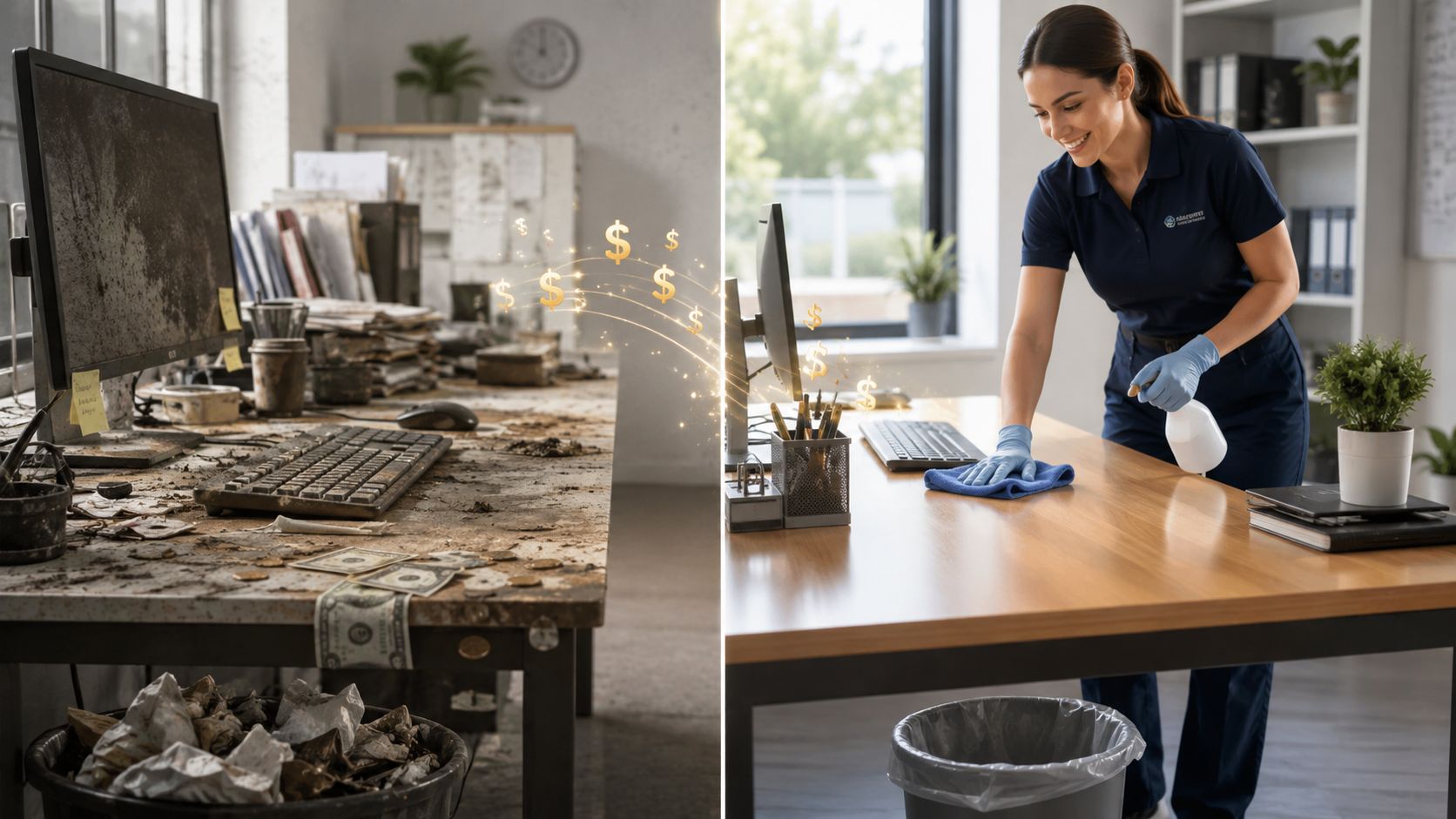
A clean office can look fine on a walkthrough and still drain money through the back door. In the Greater Toronto Area, the actual cost of weak cleaning shows up in absenteeism, premature wear, rework, complaint handling, and the time managers lose chasing avoidable problems. The Conference Board of Canada has estimated absenteeism costs the Canadian economy about $16.6 billion per year, and that the average employer loses about $1,400 per employee annually from absenteeism-related productivity loss, which is why cleaning decisions are never just cosmetic Conference Board of Canada estimate summarized in Beeline Support's office cleaning cost discussion. In offices where people share desks, touchpoints, and meeting rooms all day, small lapses turn into visible downtime fast.
The biggest pattern is simple. Businesses pay twice when cleaning is treated as a low-skill, low-accountability task, once in the service itself, and again in the hidden costs that show up later. Industry discussions in Canada also tie poor surface care, the wrong products, and inconsistent routines to faster asset wear and more expensive maintenance cycles hidden costs of dirty workspace tool and scheduling inefficiency in cleaning operations. The smartest office managers look for the mistakes that raise annual spend, then build simple controls that stop repeat losses before they start.
Table of Contents
Cost Impact Comparison: 7 Office Cleaning MistakesFrom Costly Mistakes to Smart Investments
1. Inconsistent Cleaning Schedules and Missed Service Areas
When cleaning happens “most of the time,” the office usually pays for it “all of the time.” Missed restocking, skipped touchpoints, and uneven floor care create the kind of drift that staff stop trusting and visitors notice immediately. Toronto-area offices feel that drift quickly because commuter-heavy buildings and shared rooms give germs and dirt more chances to travel through hands and everyday surfaces Beeline Support on absenteeism and high-touch cleaning lapses.
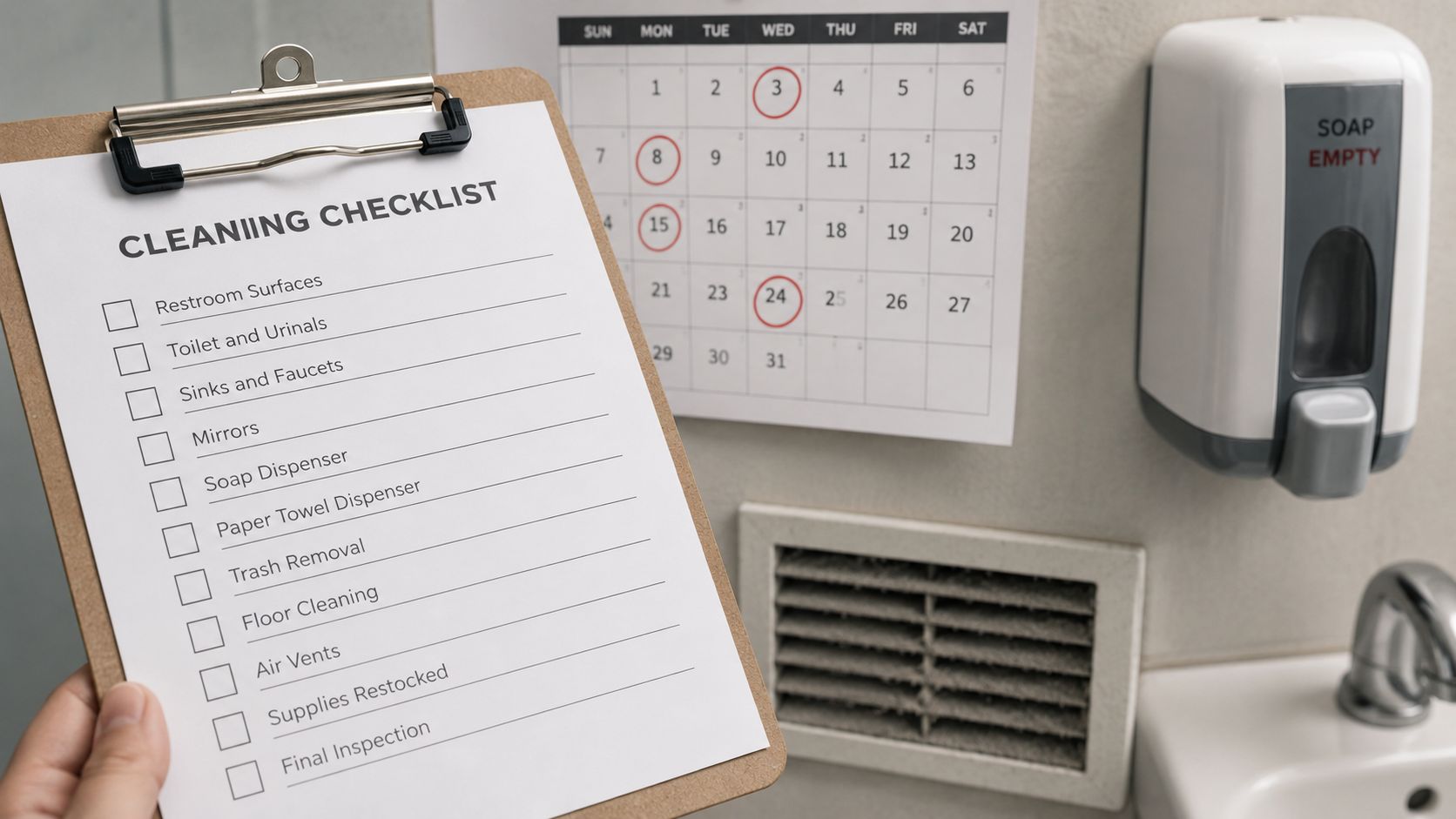
A room-by-room schedule works better than a vague weekly promise. The practical failure isn't just missing a floor or trash bin, it's missing the specific spaces that keep occupancy running, such as washrooms, reception, conference rooms, and shared desks.
Practical rule: if a task affects occupancy, comfort, or sickness risk, it needs a written frequency and a named owner.
What to watch for
- Supply gaps at predictable times: Restrooms that run out of soap or paper show that cleaning is tied to convenience, not occupancy.
- Patterned misses: Dust on vents, fingerprints on glass, and debris under desks often mean the same zones are being skipped.
- No backup plan: If the crew is delayed, the office still needs a documented escalation path.
A 50-person office losing just two extra workdays per employee would lose 100 workdays, which is why frequency and disinfection routines are cost-control measures, not aesthetics Beeline Support estimate. That kind of loss is avoidable when service windows match real occupancy, not a generic calendar. For office managers comparing providers, office cleaning services in the GTA should be evaluated against room-level coverage, not just the promise of “daily cleaning.”
2. Overreliance on General-Purpose Cleaners for Specialized Surfaces
One cleaner for everything sounds efficient until the repair bill arrives. The real issue is that different materials react differently to chemicals, water, friction, and dwell time, so the same bottle that works on a laminate desk can damage stone, metal, or finished wood. Canadian cleaning discussions warn that incorrect products and neglected maintenance accelerate wear on floors, carpets, and equipment, which is why surface-specific care protects assets instead of slowly destroying them hidden workspace cost analysis.
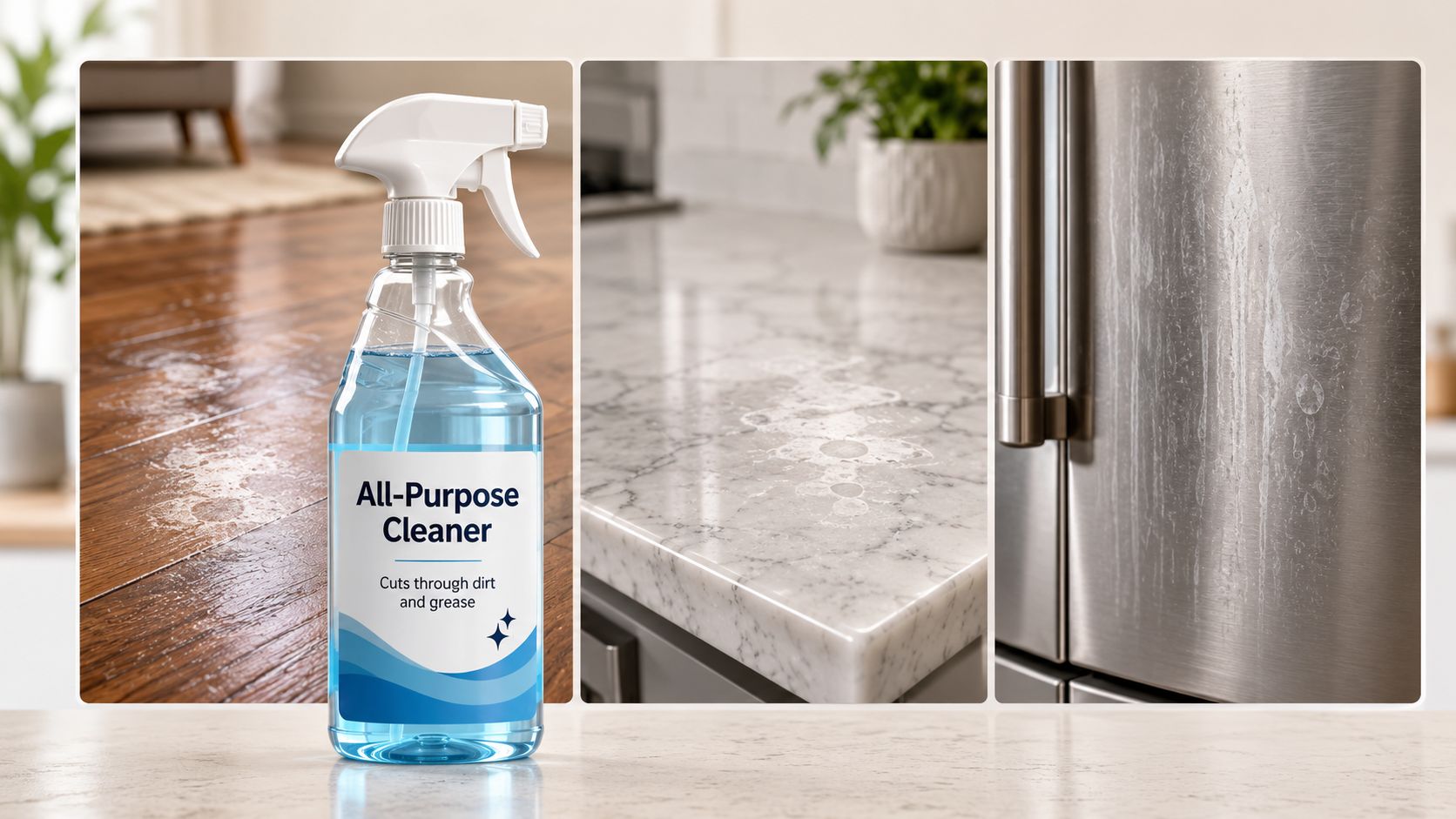
The smartest workaround is a surface matrix. It tells staff what belongs on hardwood, marble, stainless steel, glass, and upholstery, and it removes guesswork from daily work.
Surface-specific care matters because
- Wood finishes can cloud: Repeated misuse can dull appearance and shorten refinishing cycles.
- Stone can react badly: Acidic products can leave visible etching that becomes expensive to restore.
- Metal can streak or corrode: The wrong product can make fixtures look old long before their time.
- Textiles can trap residue: Upholstery that holds cleaning film usually needs more corrective work later.
A GTA engineering office used a chlorine-based all-purpose cleaner on stainless steel kitchen fixtures for months, and the resulting corrosion and pitting required replacement. That's the kind of cost that starts with a small supply decision and ends as a capital expense. For mixed-use spaces, the better approach is a cleaner compatibility checklist at the station, plus a quick “test first” rule on hidden spots. If a site handles stone, hardwood, or specialty fixtures, cleaning supplies guidance for specialty surfaces is a more useful procurement lens than choosing the cheapest jug on the shelf.
3. Inadequate Training on Health and Safety Compliance WHMIS, Disinfection Standards
Cleaning mistakes become expensive very fast when they cross into compliance and safety. The biggest risk is not just poor results, it's staff exposure, toxic chemical reactions, and disinfecting that looks thorough but doesn't meet the required contact time. In Ontario settings such as childcare, dental, and education, the margin for error is tighter because cleaning choices affect worker safety, occupant trust, and the credibility of the whole facility program.
A Toronto childcare centre that failed to enforce WHMIS training faced the worst-case scenario when bleach and ammonia were mixed in a bathroom, releasing toxic chloramine gas. The incident sent three workers to the hospital, triggered a closure, and led to liability costs that exceeded $75,000. That's not a cleaning problem anymore, it's an operational disruption WHMIS and workplace compliance example.
Cleaning protocols only save money when staff understand both the product and the process.
What a basic compliance system needs
- WHMIS certification before first shift: No one should handle chemicals without verified training.
- Accessible SDS binder: Every work area should have current Safety Data Sheets.
- A clear disinfection protocol: The product, surface, and dwell time need to be written down.
- A do-not-mix chart: Bleach plus ammonia and bleach plus acid should never be guesswork.
- Multilingual safety support: Training has to be understandable, not just documented.
A dental clinic that used a quaternary ammonium disinfectant too quickly, without the required dwell time, ended up with a contamination issue that forced re-cleaning and more documentation. That's a good example of why speed is often the wrong metric in regulated environments. For Ontario offices and clinics, commercial disinfection and sanitizing procedures should be judged by process control, not by how fast a hallway gets wiped.
4. Ignoring Seasonal and Environmental Factors in Cleaning Schedules
A static cleaning schedule misses the way real buildings behave across the year. Winter brings salt, slush, and wet entryways. Spring brings pollen and outdoor dust. Summer raises humidity concerns. Fall adds debris and the reset period before colder weather starts again. Buildings near highways, construction zones, or heavy commuter routes also face extra dirt loads that a generic schedule won't catch.
A Toronto manufacturing facility near the Gardiner Expressway changed its winter routine by adding weekly high-dusting and monthly HVAC filter changes. It reduced emergency HVAC servicing from four times a year to once, which cut servicing costs by more than $2,000 annually. That's a clean example of a small seasonal adjustment producing a real financial return seasonal cleaning discussion.
The right approach is a seasonal matrix, not a one-size-fits-all checklist. Entry mats, lobby frequency, dusting, ventilation checks, and restroom humidity controls should all change with the season and the building's exposure.
A practical seasonal reset
- Winter: Increase entry cleaning, manage salt residue, and protect floors.
- Spring: Prioritize high-dusting and filter changes because pollen loads rise.
- Summer: Watch humidity in washrooms and other damp zones.
- Fall: Clear debris early and prepare surfaces for winter traction.
Seasonal cleaning is also about complaints that never make it into a maintenance log. A Mississauga educational facility added daily high-dusting and more frequent vacuuming during allergy season, and staff and student complaints dropped while absences improved over the following weeks. The direct lesson is simple. Buildings don't need the same cleaning intensity every month, they need the right one for the conditions they're facing.
5. Poor Communication Between Cleaning Staff and Building Management
Cleaning quality often fails at the handoff, not the mop bucket. A cleaner sees a leak, a missing supply, or a room booking change, but the message never reaches the person who can fix it. Then a small issue becomes a maintenance claim, a missed presentation standard, or a repeat complaint that nobody owns.
A Downtown Toronto law firm had exactly that kind of failure. A cleaner discovered a ceiling leak on Monday evening, but management didn't hear about it until Friday, by which point ceiling and wall damage had climbed to more than $8,000. That loss wasn't caused by water alone, it was caused by silence communication and escalation example.
A communication system should be boring, fast, and documented. That means a shared channel, a photo report, and a clear escalation route for urgent issues.
Practical rule: if a cleaning issue could become a repair issue, it needs same-day reporting.
What the office should ask for
- Photo documentation: Before, after, and incident photos help prove what happened.
- Shared priority lists: Special meetings, client visits, and events should be visible to the cleaning crew.
- Escalation timing: Urgent safety or maintenance issues need immediate notification, not end-of-week summaries.
- Monthly review time: Short check-ins keep small problems from becoming routines.
In multi-site portfolios, the risk rises because managers can't rely on informal memory to pass along changes. For that reason, offices benefit from a cleaning provider that uses a live system for issue tracking and service confirmation. commercial cleaning management and communication tools are most useful when they connect service delivery to visible accountability, not when they just store a schedule.
6. Underestimating High-Traffic and High-Touch Surface Cleaning Frequency
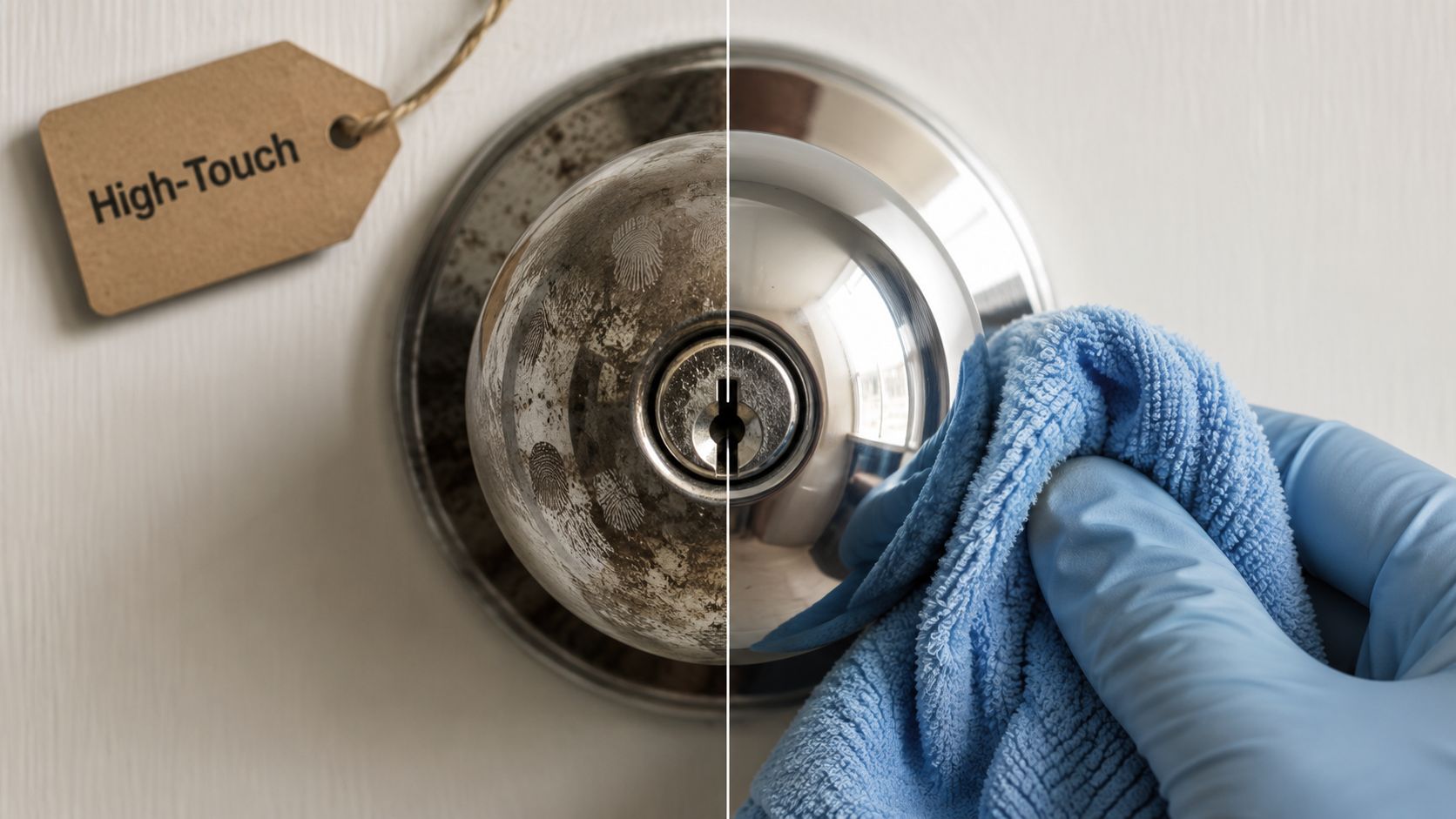
Uniform cleaning sounds fair, but fairness isn't the same as risk control. Entry doors, elevator buttons, shared phones, conference tables, desk edges, and restroom fixtures need more attention than low-use walls or storage corners. In practice, the most touched items are also the ones most likely to carry visible grime and drive complaint volume.
Canadian office guidance often centers on absenteeism and illness spread, and the Conference Board of Canada numbers make that financial link hard to ignore: $16.6 billion per year in absenteeism costs across the economy, and about $1,400 per employee annually in productivity loss Conference Board of Canada estimate summarized in Beeline Support's office cleaning cost discussion. The office lesson is clear, high-touch neglect isn't a small hygiene miss, it's a productivity leak.
A Toronto dental clinic that cleaned high-touch areas only weekly had patient complaints and infection concerns until it moved to twice-daily disinfection. A shared workspace in Mississauga with 40 tenants saw visible grime on elevator buttons and common handles within two days, then improved after moving to more frequent touch-point disinfection. Those examples show how much faster shared contact zones age compared with the rest of the building.
High-touch areas usually need their own protocol
- Doorknobs and handles: Clean on a tighter cycle than the rest of the room.
- Conference tables and edges: Treat before and after heavy use.
- Keyboards, mice, and phones: Separate them from general wipe-down routines.
- Restroom fixtures: Keep them on a distinct, documented schedule.
For offices that want a practical benchmark, detailed disinfection for shared zones is most effective when it separates daily maintenance from high-contact disinfection. The difference matters because a room can look clean and still be poorly controlled where people touch it.
7. Failure to Implement Post-Cleaning Quality Verification and Accountability Systems
A service that isn't checked tends to drift. That's true whether the problem is missed dusting, empty dispensers, or cleaning that happened but didn't meet the standard the building needs. Without verification, management ends up learning about issues from occupants, not from the service partner.
Industry research on cleaning operations also notes that scheduling and routing inefficiency can erase 15%–20% of potential revenue through wasted drive time, rushed jobs, and cancellations, which is a strong reminder that process control matters on the provider side too commercial scheduling inefficiency. On the buyer side, the same principle applies. If a facility has no proof of completion, it has no real control over quality.
A useful verification system doesn't need to be complicated. It just needs to make completion visible and exceptions impossible to hide.
Ask for proof of quality, not just a promise
- Checklists with sign-off: Tasks should be recorded by zone and by shift.
- Photo verification: A quick before-and-after image catches missed spots.
- Issue logs: Repeated problems should be tracked, not re-explained every week.
- Review meetings: Short monthly reviews should cover misses, fixes, and patterns.
A documented accountability loop is especially useful in office settings with frequent visitors or sensitive work. It tells management whether the crew cleaned the building or just moved through it. For leaders comparing providers, Ontario reopening office cleanliness guidance is a useful reminder that visible standards and repeatable checks matter long after the initial re-entry period.
Cost Impact Comparison: 7 Office Cleaning Mistakes
| Issue / Title | Implementation Complexity | Resource Requirements | Expected Outcomes | Ideal Use Cases | Key Advantages |
|---|
| Inconsistent Cleaning Schedules and Missed Service Areas | Moderate, requires process changes and monitoring | Scheduling software or apps; staff reallocation; checklists; inspections | Predictable daily maintenance; fewer complaints; improved morale and appearance | Offices, multi-tenant buildings, high-traffic workplaces | Restores reliability; measurable KPIs; reduces emergency calls |
| Overreliance on General-Purpose Cleaners for Specialized Surfaces | Low–Moderate, policy, training, and inventory changes | Surface-specific chemicals; color-coded tools; staff training; SDS management | Preserved finishes; fewer surface replacements; reduced long-term costs | Facilities with hardwood, stone, stainless, or specialty upholstery (clinics, premium offices) | Extends asset lifespan; prevents irreversible damage; maintains warranties |
| Inadequate Training on Health and Safety Compliance (WHMIS, Disinfection Standards) | Moderate–High, formal certification and documentation required | WHMIS/OSHA training; certified trainers; PPE; SDS binders; verification tools (ATP) | Lower liability; compliant disinfection; safer chemical handling; audit readiness | Healthcare, dental, childcare, regulated facilities, post‑COVID protocols | Reduces compliance risk; improves staff safety and credibility; facilitates audits |
| Ignoring Seasonal and Environmental Factors in Cleaning Schedules | Moderate, needs audits and seasonal planning | Seasonal staffing adjustments; HVAC filter changes; hygrometers; deep‑clean contingencies | Fewer emergency cleans; extended asset life; improved indoor air quality; fewer seasonal absences | Facilities in variable climates, near highways/construction, schools, manufacturing | Prevents seasonal damage; optimizes annual costs; improves occupant health |
| Poor Communication Between Cleaning Staff and Building Management | Low–Moderate, process and tool implementation | Communication platforms/apps; incident reporting; shared calendars; regular check‑ins | Faster issue resolution; fewer duplicate tasks; early maintenance detection | Multi‑building portfolios, event venues, high turnover sites | Low‑cost impact; improves collaboration; prevents costly repairs |
| Underestimating High‑Traffic and High‑Touch Surface Cleaning Frequency | Moderate, requires risk assessment and protocol changes | Increased labor frequency; hospital‑grade disinfectants; ATP testing; touch‑point checklists | Reduced pathogen transmission; fewer sick days; improved visible cleanliness | Dental/healthcare, shared workspaces, high‑visitor offices | Targeted risk reduction; cost‑effective infection control; demonstrable compliance |
| Failure to Implement Post‑Cleaning Quality Verification and Accountability Systems | Moderate–High, SLA development and monitoring systems | Inspection checklists; photo verification/mobile apps; KPI tracking; third‑party audits | Documented quality; consistent performance; timely corrective actions | Contracted cleaning programs, large facilities, compliance‑sensitive sites | Measurable accountability; higher service levels; evidence for audits/disputes |
From Costly Mistakes to Smart Investments
Avoiding common office cleaning mistakes shifts maintenance from a reactive expense to a controlled operating system. The pattern across every section is the same. When businesses skip structure, they pay later in absenteeism, repair work, complaint handling, and damaged credibility. When they build simple controls, they protect assets, keep people healthier, and reduce the number of surprise costs that hit a quarterly budget.
The practical test for any Toronto-area office cleaning program is not whether the space looks acceptable on one visit. It's whether the service can keep high-touch areas covered, choose the right products, adapt to season and occupancy, report problems fast, and prove that work was completed. Those are the details that separate a cosmetic routine from a financial control.
A smart procurement process should also compare more than price. It should ask how schedules are documented, how staff are trained on WHMIS and disinfection, how specialty surfaces are handled, and how the provider responds when a leak, complaint, or missed task appears. The right cleaning partner should make the office easier to run, not harder.
For office managers in Toronto, the next step is straightforward. Walk the building with a checklist, ask for two or three quotes, and compare them on accountability, product control, and communication, not just on the monthly number. If a provider can't explain how it prevents the mistakes above, that's a warning sign. If it can, the office is more likely to stay clean, compliant, and easier to manage over time.
Wisely's monday.com guide for operational planning is a useful reminder that systems matter, but the cleaning side still has to be grounded in real building conditions. Arelli Cleaning is one option for teams that want structured office and commercial cleaning with documented communication and service consistency in the GTA.
Arelli Cleaning offers office and commercial cleaning services that are built around accountability, training, and responsive communication. For businesses trying to reduce the hidden costs described above, a practical next step is to review service scope, ask about quality checks, and see how the provider handles high-touch cleaning, compliance, and issue reporting. To compare options and request a conversation, visit Arelli Cleaning.








.webp)