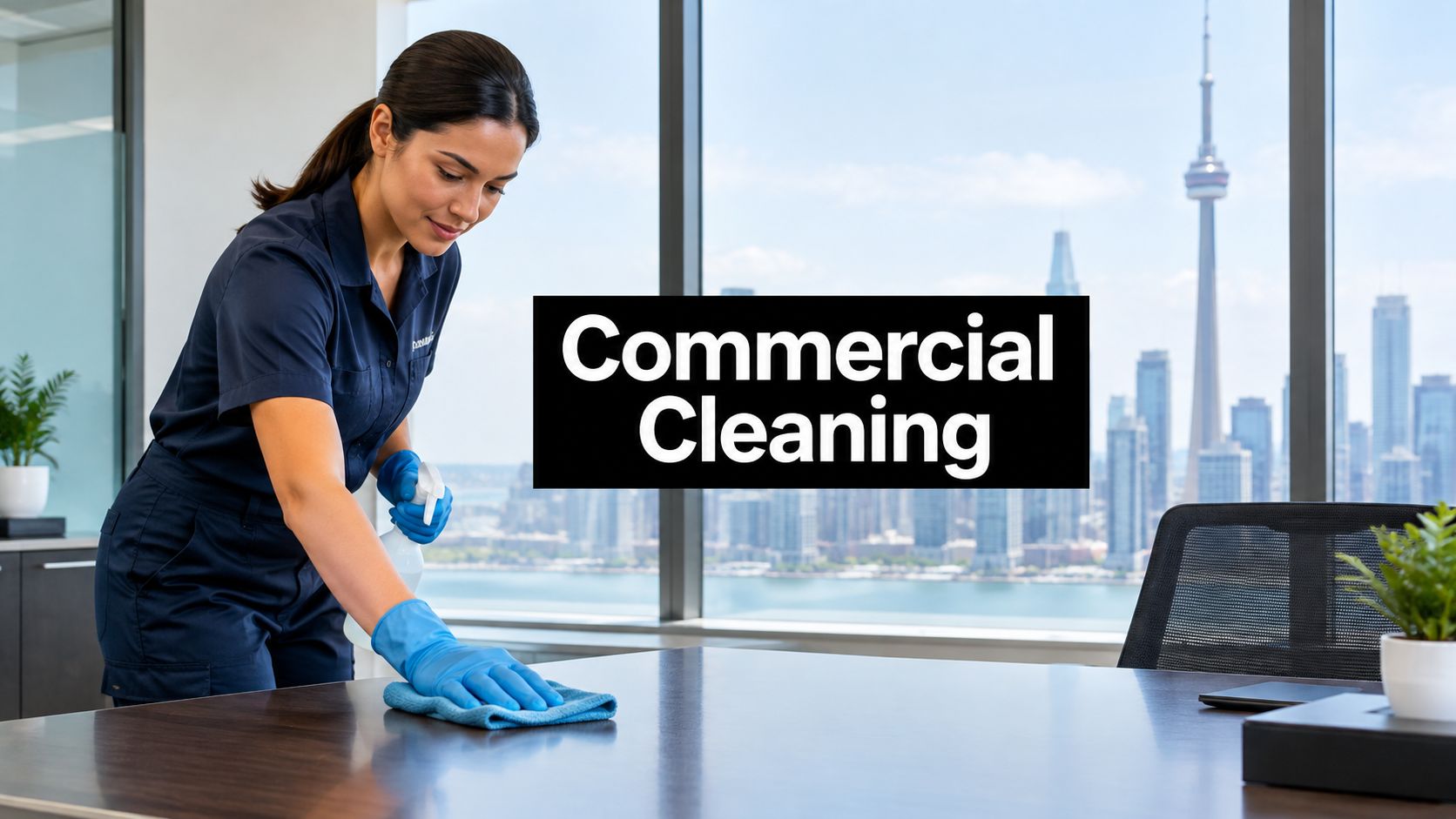

Coworking and shared office cleaning works best when scheduled cleaning is supported by daytime checks of hot desks, kitchens, washrooms and meeting rooms. Ontario operators should set cleaning frequency around actual occupancy and booking turnover, assign responsibility for between-user resets, and compare quotes against the same written scope—not floor area alone.
Key takeaways
- Clean occupied shared areas each operating day, with extra attention where members and meeting bookings turn over.
- Separate member etiquette, staff resets and professional cleaning so important tasks do not fall between roles.
- Use targeted disinfection where appropriate, following product labels and surface-care instructions.
- Compare costs by scope, frequency, traffic, washrooms, flooring and daytime service needs.
- Track recurring complaints and missed tasks alongside appearance to understand the member experience.
What makes coworking cleaning different from ordinary office cleaning?
Coworking cleaning must account for changing users, uneven occupancy and shared amenities that may stay busy throughout the day.
In a conventional office, a desk may belong to the same employee all week. In a coworking space, that surface can move from a morning drop-in member to an afternoon visitor. Phone booths, meeting tables and kitchen counters have similar turnover, often without anyone clearly responsible for the reset.
Hybrid work adds another complication: a quiet day does not predict tomorrow’s workload. Team collaboration days, training sessions and evening events can concentrate traffic in a few areas while private offices remain nearly empty.
A practical shared office cleaning plan should therefore distinguish between:
- Scheduled cleaning: the routine reset of floors, washrooms, kitchens and accessible surfaces.
- Between-user resets: clearing crumbs, removing waste and addressing contact surfaces before another booking.
- Daytime response: dealing with spills, depleted supplies and conditions that cannot wait until evening.
Members notice these gaps quickly. A spotless entrance does little to offset a sticky meeting table before a client presentation.
How often should a coworking space be cleaned?
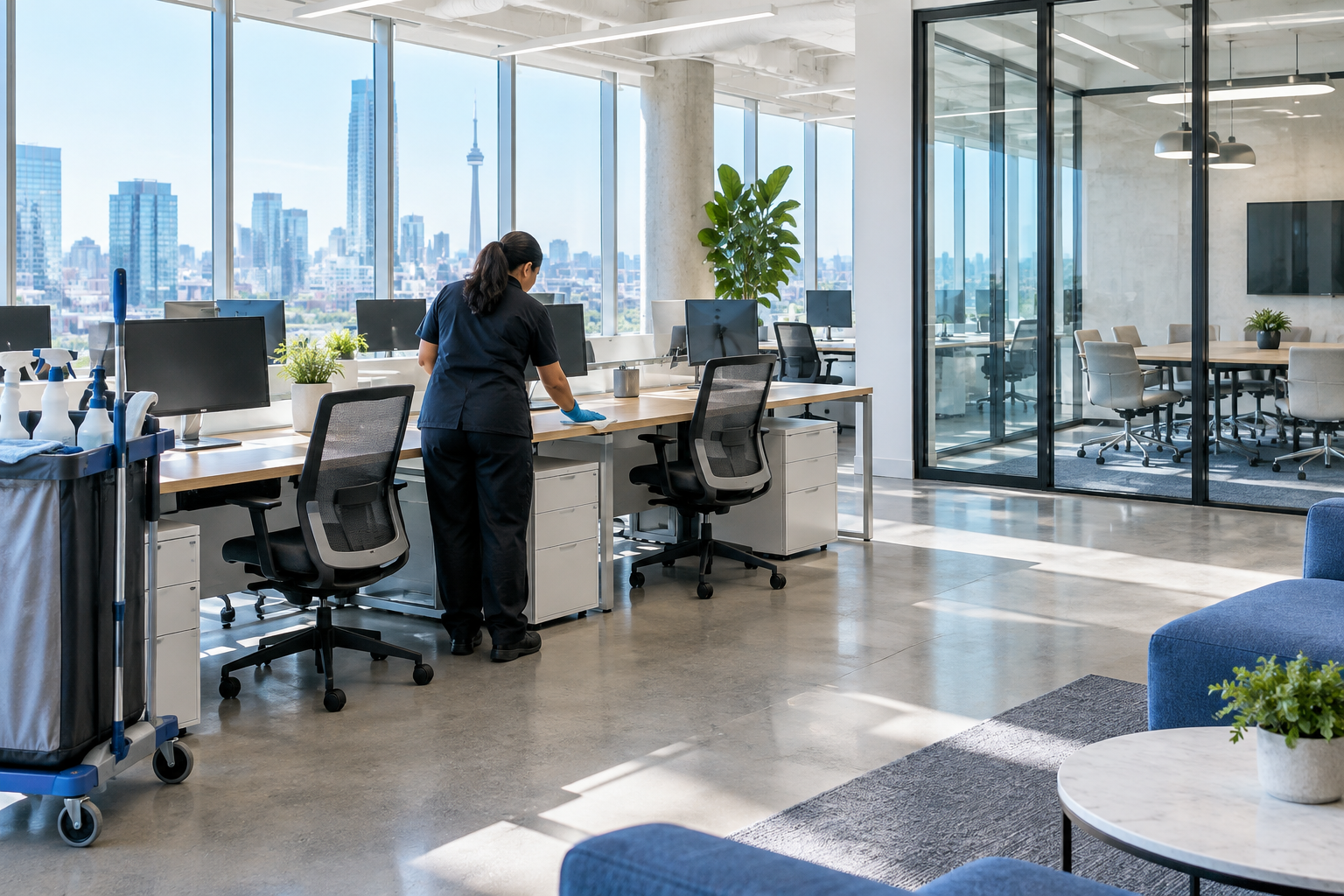
Occupied coworking spaces generally need cleaning each operating day, with additional checks and resets based on traffic, room turnover and visible soil.
The following is a starting schedule, not a universal specification. Adjust it to your opening hours, member behaviour and actual use.
| Area | Suggested starting frequency | Main tasks | Increase attention when |
|---|---|---|---|
| Hot desks | Each operating day; check between users | Clean clear desktops and shared contact points | Desks change users frequently |
| Meeting rooms and phone booths | Check after bookings; scheduled daily cleaning | Clear waste, clean tables and contact points, inspect floors | Food is served or bookings run back to back |
| Shared kitchen | Check during use; clean each operating day | Clean counters, sinks, tables and appliance exteriors | Lunch traffic or events leave recurring mess |
| Washrooms | Clean each operating day; check during opening hours | Clean fixtures, address touchpoints, replenish agreed supplies | Supplies run low or traffic increases |
| Entrances and circulation areas | Inspect during opening hours; clean routinely | Remove grit, vacuum mats, address wet tracks | Rain, snow and salt are tracked indoors |
| Carpets and upholstered seating | Routine vacuuming; periodic deeper cleaning | Remove loose soil and address approved spot treatments | Staining or embedded soil becomes evident |
Use booking information to anticipate demand without sharing unnecessary member details. A full meeting-room calendar is a better reason to add checks than an arbitrary weekday rule.
Ontario winters also change the workload. Wet mats and tracked-in salt need attention during occupied hours, not simply a more thorough evening mop.
What should a hot-desk and meeting-room cleaning checklist include?
A useful checklist defines what gets cleaned, who performs the reset and what must be left untouched.
Hot desks and shared equipment
Require desks to be cleared after use so cleaners can reach the working surface without moving personal belongings. The checklist should include:
- Remove litter and check for spills or crumbs.
- Clean accessible desktops and suitable chair contact points.
- Address shared keyboards, mice and controls using manufacturer-compatible methods.
- Inspect the surrounding floor and empty nearby bins as needed.
- Report damage, loose cables or stains requiring separate attention.
Avoid spraying liquid directly onto electronics. Personal devices, papers and items inside drawers should remain outside the routine scope unless there is an explicit agreement.
Meeting rooms and phone booths
Between bookings, check tables, door handles, chair arms, shared controls and waste. Remove used cups and food waste, and flag spills promptly rather than covering them with the next room setup.
A reset is not necessarily a full disinfecting service. If targeted disinfection is required, the product’s labelled contact time and surface compatibility must fit the task. A rushed wipe that dries too soon may not meet those instructions.
For phone booths, include accessible ledges and approved contact surfaces. Persistent stuffiness may also require a ventilation or maintenance review; cleaning alone will not resolve it.
How should shared kitchens and washrooms be managed?
Shared kitchens and washrooms need both professional cleaning and a named daytime owner because their condition can deteriorate between scheduled visits.
The daytime owner might be a community manager, reception employee or an assigned cleaning worker. The important point is that responsibility is explicit.
In kitchens, agree on the difference between cleaning a sink and handling everyone’s dishes. Define who loads the dishwasher, removes abandoned food, checks bins and wipes spills around the coffee station. Cleaning staff should not have to guess whether an unlabelled container can be discarded.
Include refrigerator interiors, microwave interiors and dishwasher care in the scope discussion. These tasks are easy to assume are included and equally easy to leave unassigned. Food-contact surfaces require appropriate products and any rinsing directed by the label.
For washrooms, separate cleaning, supply checks and supply purchasing. A service may replenish dispensers using stock provided on site without including the cost of that stock.
Use separate tools for washrooms and food areas to reduce cross-contamination. Report leaks, blocked fixtures and persistent odours as maintenance issues when cleaning does not resolve the cause.

What is included in shared office cleaning, and what costs extra?
Shared office cleaning includes only the tasks agreed in the scope, so operators should confirm routine work and periodic services before comparing prices.
A routine office cleaning service can be scoped around accessible surface cleaning, vacuuming, floor care, washrooms, kitchen surfaces and waste removal. Specify whether internal glass, appliance interiors, dishes and consumable replenishment are included rather than relying on the phrase “complete cleaning.”
Periodic carpet extraction, upholstery cleaning and floor treatments should be discussed separately. Where needed, ask about specialty cleaning services and confirm suitability for the materials in your space.
The main cost drivers are:
- Square footage and layout: private offices, booths and partitions affect access and working time.
- Frequency and hours: daytime checks and after-hours cleaning serve different needs.
- Traffic and turnover: rotating desk users and events create more reset work.
- Washrooms and kitchens: shared amenities often require concentrated attention.
- Flooring: carpet, resilient flooring and other finishes need different care.
- Special requirements: access restrictions, approved products and periodic work change the scope.
Use Arelli’s office cleaning pricing guide to prepare for a quote. A useful proposal explains the work behind the price and how changes in occupancy or service requirements will be handled.
Can green cleaning meet coworking hygiene expectations?
Green cleaning can support coworking hygiene when product selection, cleaning methods and any required disinfection are matched to the task.
Start by removing soil effectively. Routine cleaning and disinfection are different processes; a product suitable for general cleaning is not automatically a disinfectant. When disinfection is appropriate, follow the label, including any pre-cleaning, dilution and contact-time requirements.
For Canadian disinfectant products, ask whether they carry a Health Canada Drug Identification Number and are suitable for the intended use. Do not accept “green” or “natural” as a substitute for those checks.
Practical sustainability questions include:
- Are products correctly diluted rather than over-applied?
- Can washable microfibre tools be used with appropriate laundering and separation?
- Are lower-fragrance options available for scent-sensitive members?
- Can dispenser and liner choices reduce avoidable waste without compromising hygiene?
- Does waste sorting follow the building’s actual collection arrangements?
A strong fragrance is not evidence of cleanliness. Communicate the cleaning schedule and provide a simple reporting route instead of relying on scent or unsupported “germ-free” claims.
How do you choose a cleaner and measure member satisfaction?
Choose a cleaner who understands shared-space turnover, provides a clear scope and offers a practical process for resolving concerns.
During the walkthrough, show the provider your busiest kitchen period, booking patterns, access restrictions and recurring complaints. Explain how members use the space outside reception hours and who can approve additional work.
Ask these questions before agreeing to service:
- Who handles between-booking resets and unexpected spills?
- How are private offices, confidential papers and access credentials protected?
- What happens if a scheduled room is occupied?
- Who checks quality and follows up on recurring issues?
- Which services, supplies and periodic tasks are excluded?
Measure performance with specific observations: desks ready for incoming users, washroom supplies available, kitchen surfaces clean and reported concerns resolved. Review recurring complaint locations rather than treating every report as an isolated incident.
Arelli provides local crews, not a franchise, with 24/7 client support and an Arelli client app for reporting concerns and following up. The client care process gives operators a way to raise service issues; confirm site-specific response arrangements rather than assuming support availability means immediate on-site attendance.
For coworking and shared office spaces, a sample clean is a useful opportunity to assess agreed surfaces and communication. The ongoing scope should still address the whole facility and its operating pattern.
Frequently asked questions
These answers address common decisions Ontario coworking operators face when setting up or reviewing cleaning service.
Should hot desks be disinfected after every member?
Not automatically; the appropriate approach depends on use, contamination and site hygiene requirements. Check and clean between users as needed, and use targeted disinfection where appropriate with a surface-compatible product and its labelled contact time.
Is evening cleaning enough for a busy coworking space?
Evening cleaning can provide the main reset, but it cannot address a midday spill or an empty soap dispenser. Busy spaces should assign daytime checks to staff or include daytime cleaning coverage in the service plan.
Can members handle their own desk cleaning?
Members can clear belongings, remove cups and follow basic desk etiquette. That supports professional cleaning but should not replace a consistent service standard or shift responsibility for shared-space hygiene entirely onto users.
How can hybrid offices avoid paying for unnecessary cleaning?
Use occupancy and booking patterns to adjust lower-use areas while maintaining appropriate service for washrooms, kitchens and shared touchpoints. Agree on how schedule changes are approved rather than expecting crews to infer priorities from an apparently empty room.
What should be compared in coworking cleaning quotes?
Compare task lists, frequencies, service hours, supplies, exclusions and periodic work—not just the final price. Arelli offers Price Match on comparable written quotes and no cancellation fees; confirm the proposed scope suits your space.
How should cleaning work around confidential member information?
Set clear rules for papers, screens, private offices and locked storage. Cleaners should have access only where needed, with instructions to leave documents and personal items undisturbed and report areas they cannot safely clean.
Get a free sample clean
Arelli offers a free 45-minute sample clean before you commit. Share your busiest areas, booking patterns and cleaning concerns so the discussion focuses on how your coworking space actually operates.
Book a free sample clean and discuss a scope that keeps shared desks, kitchens and meeting rooms ready for members.