The headline sounds simple, but the signal behind it is more useful than the trophy itself. In York Region, Arelli's Consumer Choice Award run now includes 2023, 2024, and 2025, which makes 2025 the third consecutive win, not a four-year streak. A later winners list for 2025 still places Arelli Cleaning among the York Region janitorial-services winners, so the more practical question for facility managers is what repeated recognition says about consistency, staffing, and service control in the GTA 2025 York Region Consumer Choice Award winners.
Table of Contents
Key Takeaways and Next Steps for GTA Businesses
Arelli's Fourth Consecutive Consumer Choice Award Win
A regional award streak can say more about service consistency than a single headline ever does. Arelli's recognition cycle drew attention again through the 2026 York Region Consumer Choice Award winners announcement, which kept the company in the conversation as a recurring category winner in commercial cleaning and janitorial services.
The wording matters. Public company materials tie the streak to 2023, 2024, and 2025, so the clearest reading is a three-year consecutive run rather than a four-year streak. That correction does not weaken the signal for buyers. It makes the signal more precise.
For office managers, property teams, and regulated facilities, repeat recognition is usually more informative than a one-time badge. One award can reflect a strong year. A multi-year run points to a provider that stayed visible to customers and remained in enough good standing to keep its reputation in the regional mix.
Practical rule: awards work best as a starting signal, not a final verdict.
For GTA buyers, the question is whether the recognition aligns with operational steadiness. Arelli's own figures, 300+ recurring customers and 100+ cleaning crews, suggest a service model built around repeat work rather than isolated contracts Arelli Consumer Choice Award blog. That does not prove quality on its own, but it does show the company has to manage ongoing service relationships, scheduling, and follow-through.
The broader business profile adds context. A company page that points to multiple industry awards and a large recurring customer base gives buyers more to examine before they decide whether the provider fits their facility type, schedule, and risk tolerance Arelli company profile and awards page. For B2B firms and the Inc. 5000 list, that same logic applies, since repeated recognition only matters if the delivery model supports the promise behind it.
A cautious reading is the most useful one. A repeated Consumer Choice Award does not guarantee better cleaning at every site, but it does suggest the market has continued to recognise the business over time. For buyers comparing service providers, that can count as one data point among several, especially when the award history is paired with evidence of customer retention and capacity.
Understanding the Consumer Choice Award Methodology
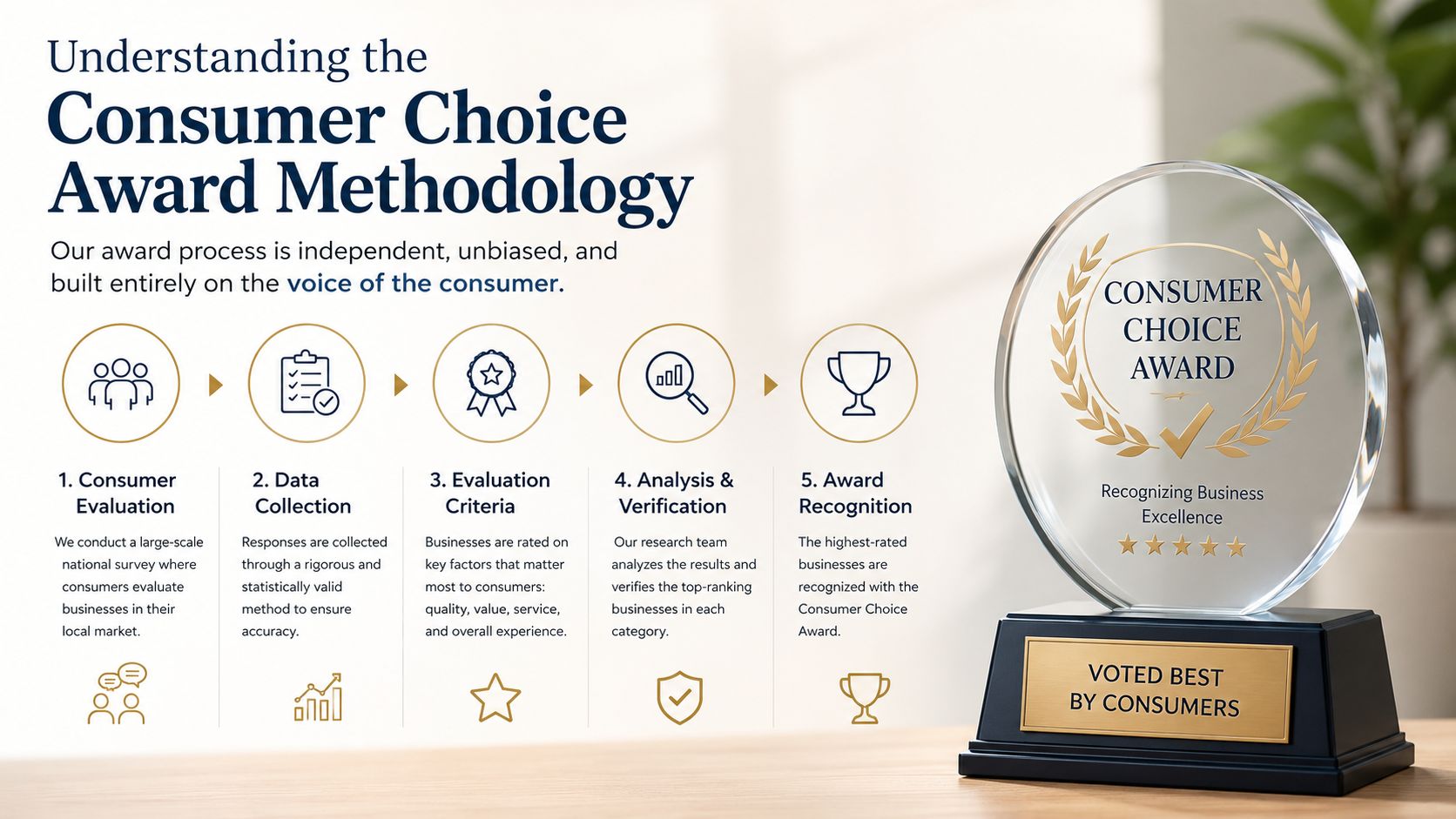
The Consumer Choice Award is framed as a reputation-based process rather than a simple popularity contest. Arelli's award page says winners are selected through authentic customer reputation data, not just raw vote totals Arelli Consumer Choice Award blog. For office managers and facility teams, that distinction matters because a badge only helps if it reflects how a provider has performed across real customer relationships in the region.
A single win can reflect a strong year, a burst of visibility, or a favourable run of attention. A repeated win is harder to dismiss because it suggests the company stayed relevant across more than one award cycle. In cleaning, that usually points buyers toward the qualities they ask about most, steady service, clear communication, and fewer recurring complaints.
The method still leaves room for questions. Reputation-driven awards rarely show the full survey base, the number of finalists, or how local weighting is applied. Buyers who care about operational fit should treat that as a reason to ask more, not less.
A useful way to read the award is as a trust signal, not a technical audit. It can indicate that the provider has kept public credibility in York Region and the GTA. It cannot tell a buyer whether the same crew will perform well in a clinic, warehouse, school, or office tower.
A repeat award can narrow the shortlist, but it should never close the discussion.
Facility teams usually get the clearest picture by pairing the award with service records, response procedures, and questions about site fit. That is the point where recognition becomes useful, because it gives context without replacing the buyer's own review. For teams that also want to understand how a provider supports its workforce, Arelli's careers page offers another window into the company's staffing approach.
Operational Metrics Behind Sustained Recognition
What keeps a cleaning provider in an award conversation year after year usually lives inside its operating system, not its marketing. Arelli's leadership says the company monitors number of cases per customer and per crew to decide whether retraining or reassigning crews is needed. That is a useful clue because it ties recognition to supervision, not image.
Quality control shows up in how problems move
If a cleaning company tracks issues at the customer and crew level, it can spot patterns before they turn into repeated complaints. That matters in office cleaning and commercial cleaning because the same missed task, if left uncorrected, tends to repeat in the same room, on the same shift, or with the same crew. A metric-driven correction loop gives managers a way to act before the client decides to switch providers.
The company also says direct customer feedback helped shape a transition from a standard Quality Log Book into the app used today, so crew members and the office can see customer concerns live. That shift is more than a technology upgrade. It turns feedback into a visible workflow, which reduces the risk that an issue gets stuck in one person's notebook or delayed until the next visit.
What this means on the ground
For buyers, the significance is practical. Live communication can help a site manager notice when a washroom, lobby, or shared area needs attention without waiting for a quarterly review. It also gives the office a cleaner paper trail when a concern needs follow-up, reinspection, or crew retraining.
Here's the useful takeaway for procurement teams:
- Trackable issues: ask whether concerns are logged by site, crew, and service date.
- Retraining triggers: ask what threshold leads to retraining or reassignment.
- Live communication: ask how quickly office staff and field crews see the same complaint.
- Closed-loop follow-up: ask how a resolved issue is confirmed back to the client.
The company's careers page can also matter indirectly, because sustained recognition in cleaning depends on retaining people who can work inside a system, not just sending out available labour Arelli careers page. In practice, buyers should read that as a reminder that the award is connected to workforce management as much as customer-facing service.
Evaluating Award-Winning Cleaning Providers
A recurring award can tell buyers that a cleaning provider has stayed visible with customers over time, but the question is whether that recognition aligns with day-to-day service delivery. For facility managers in the GTA, the useful test is operational consistency. Can the provider meet site standards, respect security rules, and handle communication without adding extra work for the client?
Commercial Cleaning Provider Evaluation Criteria
| Evaluation Criteria | What to Look For | Why It Matters |
|---|
| Award history | Repeated regional recognition, not a single appearance | Suggests the provider has stayed visible over more than one cycle |
| Operational transparency | Clear service scope, issue logs, and escalation paths | Helps buyers see how problems are handled |
| Compliance readiness | WHMIS knowledge, safety procedures, and documented training | Matters in regulated or high-risk environments |
| Staffing continuity | Stable crews, backup coverage, and retraining triggers | Reduces disruption and repeated handoff errors |
| Responsiveness | Clear channels for live communication and follow-up | Keeps small issues from becoming service failures |
| Pricing stability | Transparent quotes and defined scope changes | Helps avoid surprise costs during the contract |
| Site fit | Experience with offices, clinics, childcare, or industrial spaces | Cleaning quality depends on matching the environment |
For buyers comparing office sites, office cleaning services from Arelli Cleaning are one example of how a provider can present scope, communication, and service expectations in a way that is easier to assess. A Consumer Choice Award streak can help a provider stand out on a shortlist, but it should sit beside other evidence. A dental clinic may care more about compliance and predictable coverage than brand recognition. An industrial site may care more about early-morning access and workflow discipline than a trophy on a homepage.
How to compare providers without getting distracted by branding
The strongest comparison starts with the site's real risk profile. Busy reception areas need consistent appearance standards. Healthcare-adjacent sites need tighter sanitation routines. Childcare centres need a provider that can keep communication simple and document issues clearly.
Decision rule: choose the provider that can explain its process, not the one that only repeats its award history.
The award still has value. It shows the provider has earned regional recognition. It does not show whether the team structure, after-hours coverage, or escalation process fits the building. Buyers can close that gap by asking for proof of how the provider handles routine service, retention, and follow-up, then weighing that evidence against the site's needs.
Questions to Ask Before Hiring an Award-Winning Cleaner
An award can signal that a provider has pleased enough customers to stay visible in the market. It does not tell a buyer whether the provider fits a specific facility, schedule, or level of scrutiny. That's why a short question set is more useful than a marketing brochure.
What to ask
- How are crews reassigned or retrained? A strong answer should explain what triggers intervention, not just promise “quality service.”
- How are customer concerns logged and shared? Buyers should hear how the office and field crews stay aligned, especially when issues happen after hours.
- What does quality assurance look like in writing? The answer should include inspections, follow-up, and who owns the fix.
- How is pricing kept transparent? A clear response should separate base scope from extras, so the quote doesn't shift later.
- What happens if coverage changes? Buyers need to know whether the company can protect continuity when staff are away or a route changes.
- What emergency response capability exists? This matters for spills, urgent restroom issues, or unexpected site needs.
For sites where indoor contamination is a serious concern, it helps to pair cleaning questions with a basic facility-health review. A practical resource on office air quality and common workplace contaminants can help managers think about what's in the environment, not just what's visible on the floor Castus office air quality tips.
What to avoid hearing
A buyer should be cautious if the answer is mostly reputation language with little process detail. “We're award-winning” is not a coverage plan. “We have many happy clients” is not a retraining system.
The internal cleaning-supplies page is useful here because it reminds buyers that product selection and method matter as much as staff assignment Arelli cleaning supplies page. For procurement teams, the test is whether the provider can explain how it handles tools, routines, escalation, and communication without hand-waving.
Leadership Perspectives on Sustaining Excellence
A long-running award streak usually reflects a service culture that keeps listening after the first win. Arelli's leadership says the first actionable step for another cleaning service is simple, customers are always right, and the test is whether the company can meet those expectations. That framing is blunt, but it fits the commercial cleaning market, where consistency is easier to promise than to deliver.
What sustained recognition looks like from the inside
The current market makes that harder. Buyers in offices, healthcare-adjacent sites, schools, and industrial environments expect tighter sanitation discipline, more dependable staffing, and fewer surprises. Labour and cost pressures in Ontario also make it harder for janitorial services to absorb mistakes, because every missed shift or weak handoff affects client confidence quickly.
A leadership mindset that treats feedback as a service signal, not a complaint, tends to fit that environment better. It also explains why operational systems matter. A live quality log, retraining triggers, and clear communication can all support continuity when the site becomes busier or the schedule becomes more demanding.
If a provider wants repeat recognition, it has to earn repeat trust.
For readers comparing local office-cleaning firms, brand work can be part of that story too. A good background on identity and trust is useful because customers often judge a provider before they even visit the site. A neutral overview of brand identity agencies can show how businesses think about consistency, message, and trust across categories Moonb brand identity agencies.
What another provider can learn
The lesson isn't to copy a slogan. It's to build a feedback loop that treats each site as a live test of fit. In cleaning, the companies that last are the ones that can adapt crews, keep communication open, and make the standard visible to the client.
An internal background page on the company's story can help readers see how service identity and operations connect over time Arelli's story. For buyers, the bottom line stays the same. Long-term recognition is useful, but only when it's backed by a service model that survives real-world pressure.
Key Takeaways and Next Steps for GTA Businesses
For GTA facility managers, a multi-year Consumer Choice Award streak signals more than name recognition. It suggests a provider has kept enough customers satisfied to stay visible over time, which often points to steadier operations, clearer communication, and fewer service breakdowns. That is the practical question behind Arelli's regional run.
The award coverage places Arelli in York Region's janitorial-services category, while the company's own materials frame the recognition as a repeated result across recent years. For buyers, that history is useful context, but it does not replace a site-level review of staffing, scope, and response time. A provider can be well regarded and still be a weak fit for a particular building.
Three questions help narrow the field. Does the provider explain how it records quality issues and closes them out? Can it show how retraining or staff reassignment works after a missed task? Does the service model match the building type, whether the space is an office, clinic, childcare centre, or industrial site?
Readers who want to compare service details can start with the office cleaning Toronto page, then review the broader Arelli Cleaning locations page, the office cleaning services guide, and the page on cleaning supplies. Those pages help show how Arelli describes service coverage, recurring work, and the tools used to support day-to-day cleaning.
The next step is vendor selection. Ask for a site-specific quote, ask how supervision works, and ask how the company measures quality once service starts. Arelli is one option in that process, but the right choice is the one that can prove fit for the building, the schedule, and the level of risk involved.








.webp)